
Do No Soliciting Signs Work? What They Stop and What the Law Allows


A No Soliciting sign stops most commercial salespeople, rarely stops protected canvassers, and never applies to deliveries. Here is what the word means legally, why posting one is almost always allowed, and how to place and word yours so it counts.
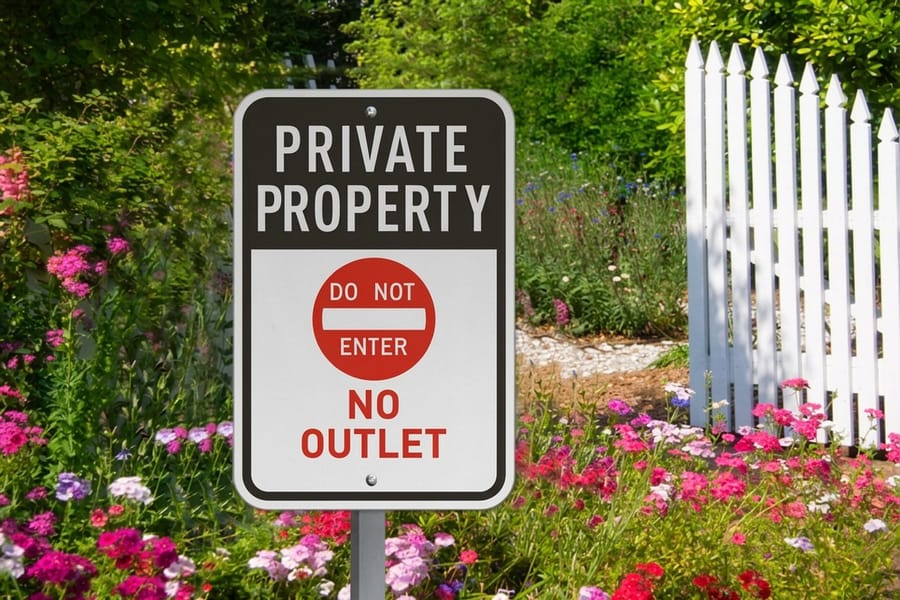
Yes on both counts, with one catch: a No Soliciting sign is legal to post on your own property almost everywhere, and it turns away commercial salespeople, but it does not stop political, religious, or petition canvassers, whose knock carries First Amendment protection a sales pitch does not. Enforcement is what varies. Political, religious, and petition canvassing carries stronger First Amendment protection than a sales pitch, so a sign is far less likely to stop it, and deliveries are not covered at all. The sign's real power is that it revokes the implied license to approach your door, which is what a trespass complaint is built on.
Quick answer
Who a No Soliciting sign stops, and who it does not
Post it and most commercial solicitors will skip your door. Sales reps working a territory answer to a company that does not want complaints, so a visible sign is usually enough. Canvassers carrying political, religious, or petition messages are treated as protected speech in most of the country and often knock anyway. Deliveries, contractors you booked, and utility staff were never covered. The sign's quieter job is legal: it withdraws the implied license that lets a stranger walk up and knock, which is the foundation of any later trespass complaint. Post at eye level by the entry, at every entrance, on stock that will still read clearly in three winters.
Watch it printed
See property signs on the press, in 94 seconds
Do No Soliciting Signs Actually Work?
Yes, on the people who were always going to follow the rules. That is the honest answer, and it is more useful than a flat yes or no.
Think about who actually walks up to a door uninvited. A rep for a home-security or solar company is working a territory on behalf of a business with a name, a license, and a reputation. For that person, one house is worth almost nothing and a complaint to the city or to their employer is worth quite a lot. They read the sign and skip you. The same goes for pest control crews, roofing canvassers after a storm, and anyone selling a subscription door to door.
Now think about who else knocks. A neighborhood political volunteer with a clipboard, a petition gatherer trying to make a ballot deadline, someone sharing a religious message. Those visitors are not selling anything, their activity is treated very differently under U.S. law, and many of them will knock anyway. Meanwhile the delivery driver, the postal carrier, and the utility meter reader are not soliciting at all, so the sign was never aimed at them.
So a No Soliciting sign is not a force field. It is a filter with a second job: it puts on the record, in a way anyone can see, that uninvited approaches are not welcome here. That second job is the one most people underrate, and it is where the legal side of this question starts. If you want the sign itself to look like it means business, 4OVER4.COM prints custom property signs on rigid stock built to stay legible outdoors for years.
What Soliciting Legally Means, and What It Does Not Cover
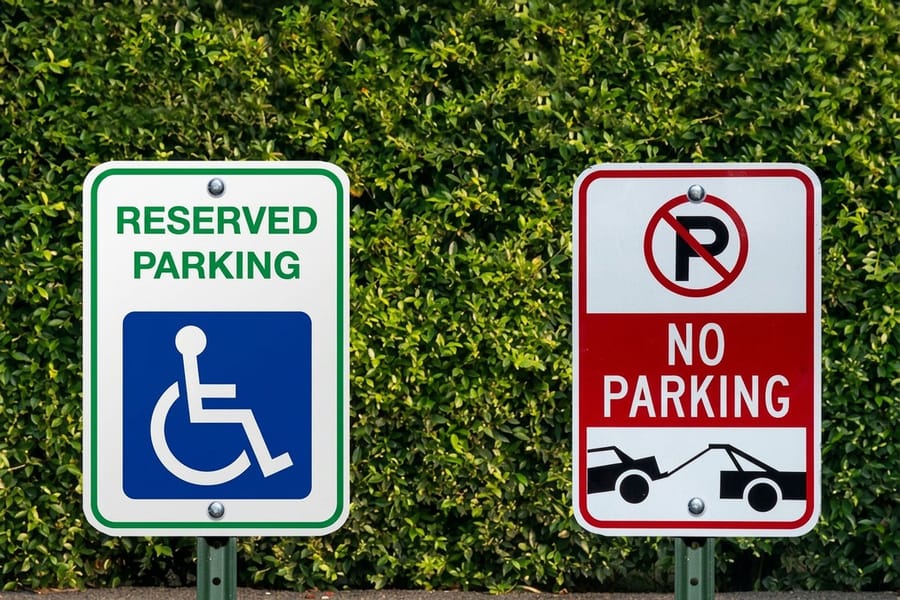
Most municipal codes define soliciting narrowly, and the definition matters more than the word does in everyday speech. The common thread across local ordinances is direct, in-person contact with the intent to sell, take an order, or collect money. Knock, pitch, ask for the sale. That is the behavior the word was written to describe.
Three things usually fall outside that definition, and this is where homeowner expectations and the code diverge:
- Non-commercial canvassing. Political campaigning, petition circulation, and religious outreach are expression, not commerce. Many local codes carve them out explicitly, and where they do not, courts have often read the carve-out in anyway.
- Deliveries and requested visits. A package carrier, a food courier, or the contractor you booked is completing a transaction you already consented to. No sign changes that.
- Passive printed material. A flyer or a door hanger left on a knob with nobody present involves no contact and no pitch, which is why most jurisdictions treat it as distribution rather than solicitation. We cover that split in depth in the door hanger legal guide.
Definitions genuinely vary. Some towns write "solicitation" broadly enough to reach any uninvited approach for any purpose, others keep it strictly commercial, and a few maintain a licensing scheme that treats charitable fundraising as its own category. The only reliable way to know which version applies to you is to read your own municipal code or call the city clerk, which usually takes one short phone call.
Are No Soliciting Signs Legal to Post?
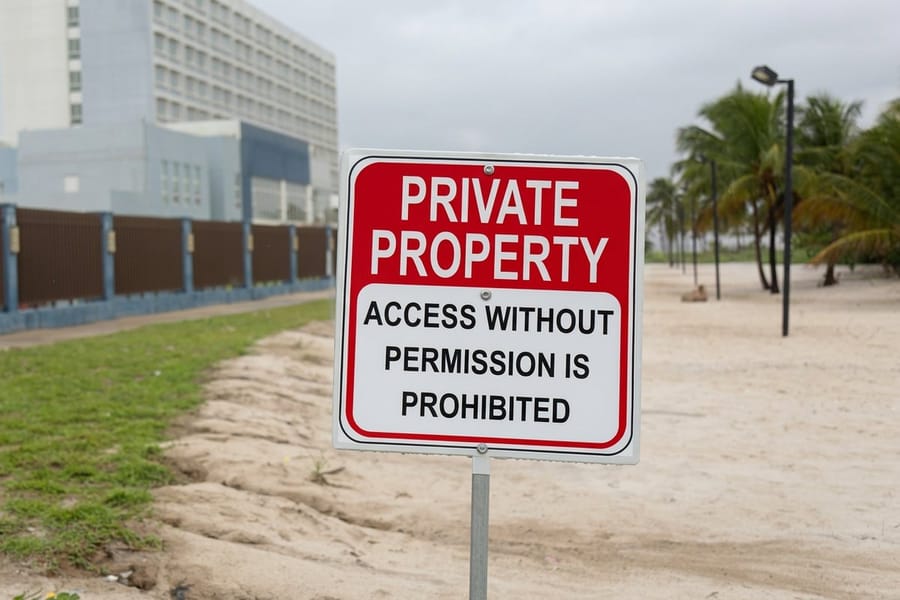
In practical terms, yes. Posting a sign on your own private property is your speech on your own land, and there is no general U.S. rule against telling the public that uninvited sales calls are unwelcome. The question that actually varies is not whether you may post it. It is whether anyone will enforce it for you, and how.
That enforcement question splits three ways. Some municipalities back the sign with an ordinance, meaning a solicitor who ignores a posted sign has violated the code and can be cited. Others treat the sign purely as private notice, so your remedy runs through trespass law rather than through code enforcement. And a third group is somewhere in the middle, with a registry or a permit scheme that gives the city a lever but leaves the doorstep encounter to you.
Where you can hit a genuine legal limit is the sign as an object rather than the sign as a message. Sign ordinances routinely regulate size, height, illumination, and how close a sign may sit to the public right of way. Historic districts add their own review. A homeowners association can restrict what may hang on a front elevation or a mailbox post. None of those rules are about the words "No Soliciting," but any of them can still make a particular sign non-compliant. Our guide to sign permits across U.S. states walks through how those approvals usually work.
Because the details differ so sharply by state and by town, treat everything on this page as background for a conversation with your city clerk or your attorney rather than as a statement of the rule where you live.
No Soliciting Sign Rules by State and City
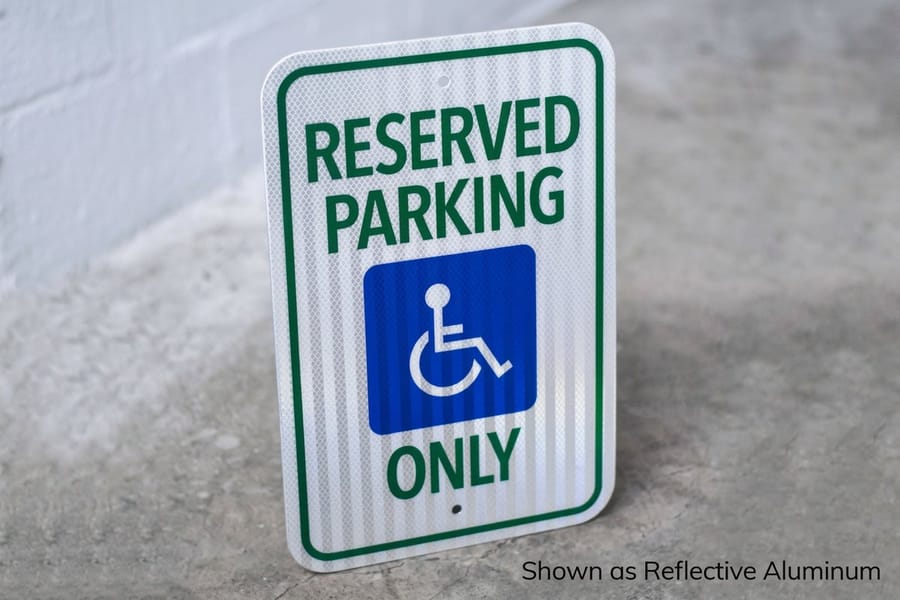
There is no national No Soliciting law. What exists is a small set of rule patterns that repeat from town to town, and knowing which ones your city uses tells you exactly how much weight your sign carries.
| Rule pattern | What it means at your door | Where it shows up |
|---|---|---|
| Solicitor permit or registration | A sales canvasser has to register with the city and carry a permit while working. If one ignores your sign you have a named business and a permit number to report. | Municipal codes across most states, including many New Jersey, Ohio, Texas and Florida cities. The city clerk or police department administers it. |
| Sign-honoring ordinance | The code itself says a solicitor may not approach a residence displaying a No Soliciting sign, so ignoring your sign is a code violation, not just rudeness. | City level, common in suburbs that also license peddlers. Ask the clerk whether the ordinance names posted signs. |
| Do Not Knock registry | The city keeps a list of addresses. Permitted solicitors receive the list and must skip those homes, with your sign as the visible reminder. | Municipal programs run by clerks in a growing number of towns, including suburbs in Ohio, Colorado and New Jersey. |
| Trespass after notice | State criminal trespass law treats a posted sign as notice, so a visitor who stays after seeing it can be handled as a trespasser rather than a nuisance. | State statutes. Texas Penal Code 30.05 counts a sign posted where intruders will see it as notice, and Florida statute 810.09 works the same way. |
| Political, religious and charitable carve-outs | Registration rules usually exempt canvassing that is not a sale, so those visitors may knock legally even where a sales rep may not. | Standard in most municipal codes, tracking First Amendment case law on door-to-door canvassing. |
| Sign placement and HOA limits | The words are fine, the object may not be. Size, height, illumination and setback limits still apply, and a homeowners association can restrict what hangs on a front elevation. | Local zoning and sign codes plus HOA covenants, nationwide. Historic districts add a review step. |
Two calls settle almost every version of this question: one to the city clerk to ask whether solicitors need a permit and whether the code mentions posted signs, and one to the non-emergency police line to ask how they handle a complaint about someone who knocked anyway. Write down what you are told, because it also tells you what wording to put on the sign. Where permits exist, citing your local ordinance number on the sign is unusually effective.
None of this is legal advice, and the rules change town by town. Confirm with your own clerk or attorney before you rely on any of it.
What the First Amendment Keeps Your Sign From Stopping

This is the part that surprises people, and it explains most of the frustration behind the question "why do they still knock?"
U.S. courts have repeatedly treated door-to-door canvassing as an old and protected form of communication. Handing out literature, discussing a candidate, asking for a signature, sharing a religious message: these have generally been held to sit near the center of what the First Amendment protects. Commercial speech, meaning a pitch whose purpose is a sale, has generally been given less protection and is easier for a government to regulate.
The practical consequence is that a city can usually restrict door-to-door selling far more aggressively than it can restrict door-to-door talking. Blanket bans that sweep in political and religious canvassing have run into serious constitutional trouble, and mandatory-permit schemes that require a canvasser to register with the town before speaking have as well.
None of that overrides your rights as a private property owner. You can still decline the conversation, ask a visitor to leave, and treat a refusal to leave as a trespass matter. What the constitutional backdrop changes is how much weight the sign carries: a sign aimed at commercial solicitors lines up with how the law already treats them, while a sign aimed at a political volunteer is asking the sign to do work the law does not fully back it up on. That is a big reason a combined No Soliciting and No Trespassing message tends to carry more practical weight than "No Soliciting" alone.
How a Posted Sign Revokes the Implied License to Approach Your Door
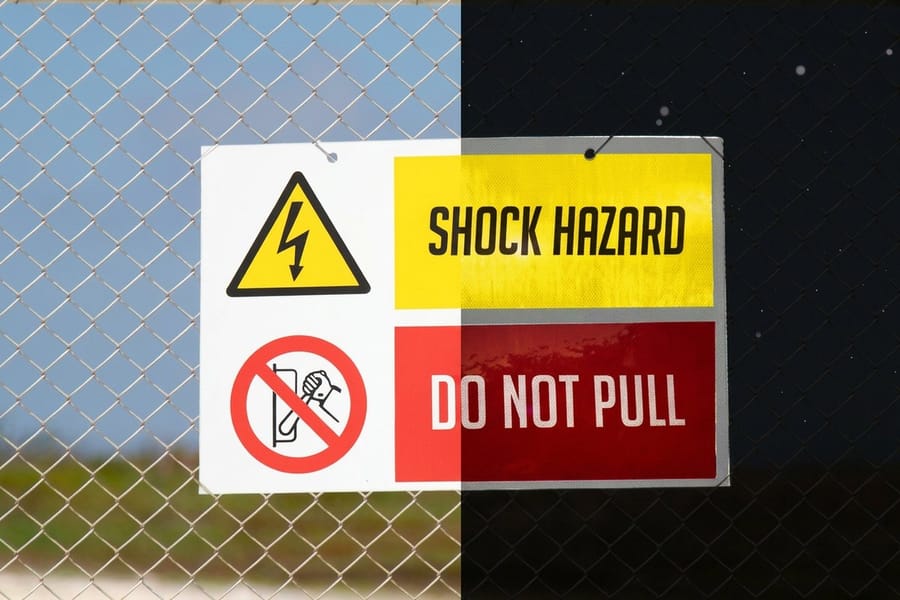
Here is the legal mechanism that gives the sign its real teeth, and it has nothing to do with the word "soliciting."
Under the common law used across most of the United States, a visitor has an implied license to walk up your front path, approach the door, knock, wait briefly, and leave. It is the reason a neighbor, a courier, or a stranger asking for directions is not committing a crime by stepping onto your walkway. The license is implied because a typical homeowner would consent if asked.
A clearly posted sign is how you withdraw that implied consent in advance. Once it is up and visible, a visitor can no longer claim that a reasonable person would have assumed they were welcome. That shift is what converts a repeat unwanted visit from an annoyance into something a police report or a code complaint can actually be built on, because the sign is the evidence that permission was revoked before the visit happened.
Two caveats matter. First, states differ on what a posted notice has to look like, where it has to sit, and whether a verbal warning is still required before a trespass charge attaches, which is exactly the ground our guide to no trespassing sign rules and posting laws covers state by state. Second, a sign nobody can see does nothing at all. If it is behind a storm-door frame, faded past reading, or tucked under a seasonal wreath, a visitor has a genuine argument that they never had notice, which is why placement and durability are not decoration on this particular sign.
The Do Not Call Registry, and Why There Is No Doorstep Version
People often reach for the same analogy: if I can put my phone number on the federal Do Not Call registry and stop the calls, why can I not do the same for my front door?
The comparison is useful because it shows what a sign is and is not. The federal registry is a single national list, run by the government, that telemarketers are legally required to check before dialing, with penalties attached. It is centralized, machine-readable, and enforced by a federal agency. Notably, even that registry carves out political calls, charitable solicitation, survey research, and callers you already do business with, which is a near-perfect mirror of the exemptions you meet at your own door.
There is no federal equivalent for doorsteps. Instead there is a patchwork: some cities run a voluntary no-solicitation registry that residents can join and licensed solicitors must consult, some rely entirely on posted signs, and many have nothing beyond a general peddler licensing rule. Your sign is the doorstep version of the registry, except that you are the one publishing it, and you are largely the one enforcing it.
That framing tends to reset expectations in a healthy way. The registry does not stop every call, and the sign will not stop every knock. Both mainly work on the operators who care about staying compliant, and both give you documentation when someone does not.
HOA Rules, Municipal Permits, and Community Registries
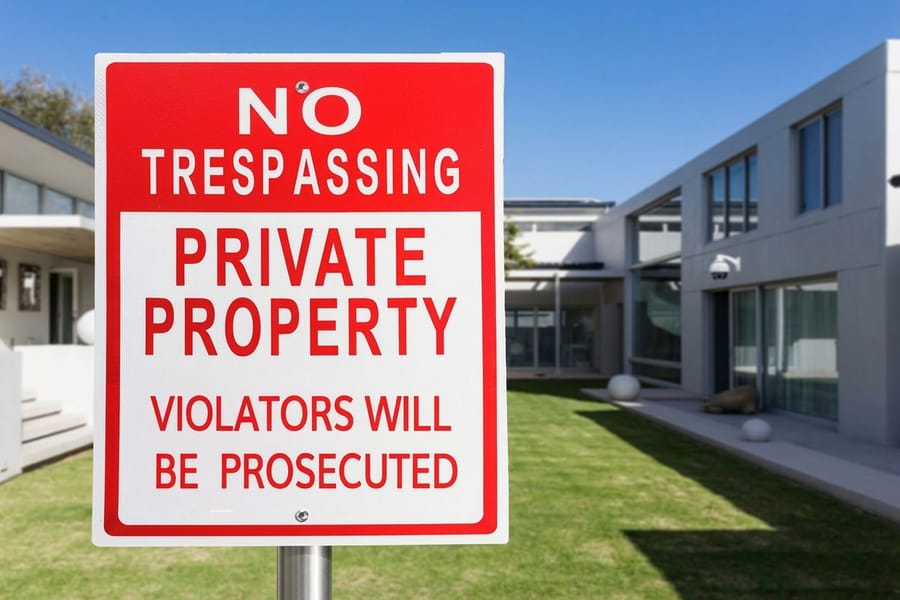
Three layers of rules sit on top of the question, and they can pull in opposite directions.
The municipality. Many cities require a peddler, canvasser, or transient merchant license before anyone can sell door to door. Those permits often come with hours, identification requirements, and an obligation to leave when asked. If your town has one, reporting an unlicensed solicitor is frequently the fastest practical remedy available to you, faster than any trespass process.
The homeowners association. An HOA can usually restrict solicitation on the common property it controls, and gated communities often post a community-wide notice at the entrance. The same association may also restrict your sign, through covenants on size, material, color, or placement on the front elevation. Read the covenants before ordering, because a sign that violates them can cost you a fine even while the message on it is perfectly lawful.
The community registry. Some towns maintain a voluntary list of addresses that do not want solicitors, and require licensed canvassers to check it. Where that exists, joining it and posting a sign together is a meaningfully stronger combination than either alone.
Property managers dealing with this at scale usually standardize the signage across a portfolio so every entrance carries the same wording and the same look. That is straightforward to print in one run, and it makes enforcement conversations much simpler when every door in the community says the same thing.
What to do when a solicitor ignores the sign
The sign did its job the moment it went up, because it put your refusal on the record. What you do next decides whether it also carries weight. Work the list in order and keep every step short.
- Ask them to leave, once. Point at the sign while you say it. In many states a spoken warning on top of the posted notice is what a later trespass complaint needs, and it never hurts.
- Get the company name and the permit. Licensed canvassers carry an ID or a permit number. A rep who will not show one has usually skipped the registration your town requires.
- Report it the same day. Call the city clerk if your town licenses solicitors, and the non-emergency police line if the visitor stayed after being told to go. Write down the time and what was said.
- Call the company. A complaint to a home security or solar firm costs a rep more than any fine, which is why most of them skip posted homes in the first place.
Two visits from the same company after a report is the pattern that gets a permit pulled. Keep the sign readable for that reason, on aluminum property signs that still show the wording in year three.
Where to Place the Sign So It Actually Carries Weight
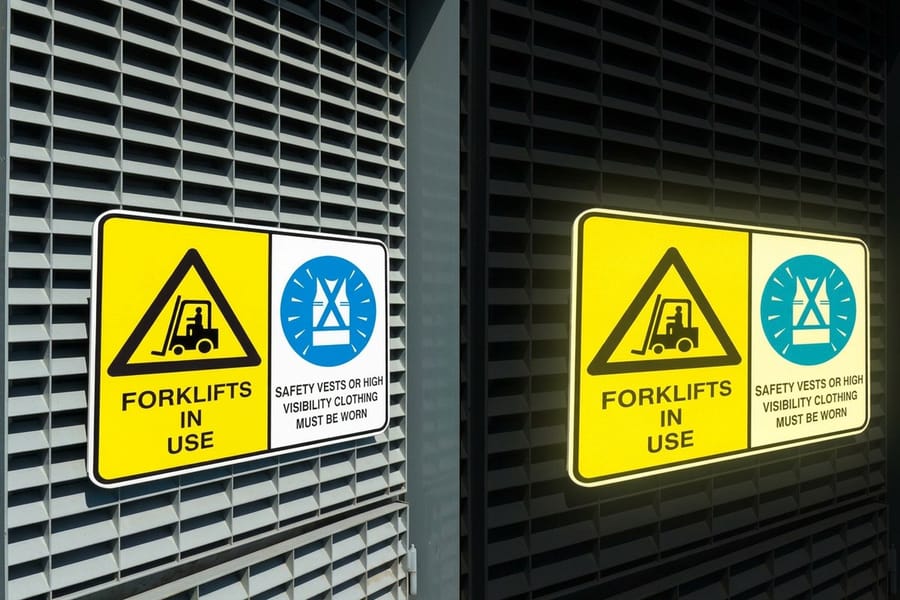
Placement is the difference between a sign that documents your position and a sign that a visitor can honestly say they missed. Work through the approach the way a stranger would.
- Eye level, next to the entry. Roughly 5 to 5 and a half feet off the ground, on the door itself or on the frame or wall immediately beside it, is where a person looks right before they knock.
- Visible from the approach, not just from the porch. If the walk curves, if there is a deep porch, or if a hedge blocks the sightline, add a second sign where the path leaves the sidewalk or driveway.
- One at every entry point. Side doors, garage service doors, and rear entrances on a corner lot all need their own. A single sign on the front door does not cover an approach a visitor never walks past.
- Nothing in front of it. Wreaths, planters, storm-door hardware, and package shelves quietly hide signs. Check it again after every seasonal decoration change.
- Face it square to the traffic. A sign angled to the wall reads as flat gray from ten feet away.
For commercial and multi-unit properties the same logic scales up. Post at the property line or gate, again at the building entrance, and again at any lobby or vestibule door, so a visitor passes the notice before every stage of the approach. Reflective stock helps at every one of those points once the light drops.
Wording That Holds Up, and Wording That Does Not

The best wording is boring, short, and impossible to misread from six feet away. Three lines is the practical ceiling.
"No Soliciting" is the standard and the one every canvasser recognizes instantly. It is also the narrowest, because it points at commercial sales. "No Soliciting or Trespassing" widens the notice to anyone on the property without permission, which is what gives it more reach against visitors whose activity is not a sale. "No Soliciting. Violators will be reported." adds a consequence without overclaiming one, and a line such as "Solicitors will be prosecuted" raises the stakes further, so only use it if you actually intend to file a report. Some homeowners cite their local ordinance number directly on the sign, which is unusually effective on licensed canvassers because it signals you have read the code.
Copy-ready lines. Lift any of these word for word. Each one is short enough to read from the sidewalk and specific enough to mean something at the door.
- No SolicitingThe standard. Every trained canvasser recognizes it on sight, which is exactly why it works on the commercial ones.
- No Soliciting or TrespassingWidens the notice past sales to anyone on the property without permission, which is what a trespass complaint needs.
- No Soliciting. Do Not Knock.Closes the loophole a rep uses when they claim they were not selling, only introducing themselves.
- Private Property. No Soliciting. Violators Will Be Reported.States a consequence you can actually carry out, since reporting means a call to the city or the company.
- No Soliciting per City Ordinance [number]Signals you have read the code. Licensed canvassers treat an ordinance number as a real risk to their permit.
- No Soliciting. Deliveries Welcome.Keeps couriers and contractors coming while turning away the pitch, so nothing you actually ordered gets skipped.
- Do Not Knock. Baby Sleeping.Non-legal but highly effective on people who would otherwise talk their way past a No Soliciting line.
- No Soliciting. No Exceptions.Removes the argument that a charity, a church, or a campaign is somehow not covered by your notice.
What underperforms: joke wording, long paragraphs, and anything that reads as decorative. A sign that is funny gives a visitor an easy excuse to treat it as a novelty rather than notice, and a sign with five sentences on it will not be read at all. Keep the type large enough that the main line is legible from the sidewalk, hold contrast high with dark text on a light field or the reverse, and leave real margin around the words. The same layout habits that make a roadside sign readable are covered in our guide to durable outdoor yard sign materials, and you can build the file itself in the Online Designer or start from a print-ready layout in the blank template library.
Materials That Survive Outdoors, and Where Door Hangers Fit

A No Soliciting sign is a permanent fixture, not a campaign piece, so the material question is simply which stock still reads clearly in year three.
Aluminum is the long-run answer. Rust-proof sheeting printed with UV-cured inks holds color and shape through full freeze and thaw cycles, mounts with screws or brackets, and is the standard for anything that has to look official. Our custom aluminum signs cover that job. Reflective aluminum adds a retroreflective face so the sign lights up under a porch light or headlights, which matters because most unwanted approaches happen in the evening. PVC and rigid plastic print smooth and sharp, cost less than metal, and suit a covered porch or an interior lobby door well. Coroplast is the budget option and is genuinely fine for a season, but it is the one most likely to fade or crack outdoors, so it is a poor fit for a sign meant to stay up indefinitely. The tradeoffs are broken down further in aluminum signs versus coroplast versus PVC.
One last distinction worth stating plainly, because it comes up constantly on both sides of the door. A door hanger left on a knob is not soliciting. Nobody knocked, nobody pitched, and nothing was sold at the door. It is passive printed material, which most jurisdictions treat as distribution rather than solicitation, in the same family as a flyer. Your sign is aimed at the person who wants your attention in real time. It is not aimed at a piece of card stock, and a business running a hanger drop should still skip posted homes as a matter of professionalism. The full breakdown lives in our guide to whether door hangers count as soliciting, and the mirror-image question for handing out cards is answered in is leaving a business card soliciting.
Buy it
Where to Get a No Soliciting Sign
Print one that outlasts the argument. All three stocks below are made for a permanent entry sign, ship printed to your wording, and start at the 12 by 18 inch size that suits a door, a gate post, or a fence rail.
| Sign | Sizes | Starts at | Best for |
|---|---|---|---|
| Property signs | 12 x 18 in, 2 x 4 ft, 3 x 6 ft, 4 x 8 ft | $48.00 | The default No Soliciting sign for a house, gate, or driveway entrance. |
| Aluminum signs | 12 x 18 in, 18 x 24 in, 24 x 36 in | $36.00 | Rust-proof metal that holds color through freeze and thaw, screw or bracket mounted. |
| Reflective aluminum signs | 12 x 18 in, 2 x 4 ft, 3 x 6 ft, 4 x 8 ft | $41.02 | A retroreflective face that lights up under a porch light, since most unwanted knocks come after dark. |
Not sure which stock to pick? The aluminum versus coroplast versus PVC guide compares them side by side, and the rigid signs category lists every size and mounting option.
Wally explains No Soliciting signs
The sign filters the sellers and documents the rest
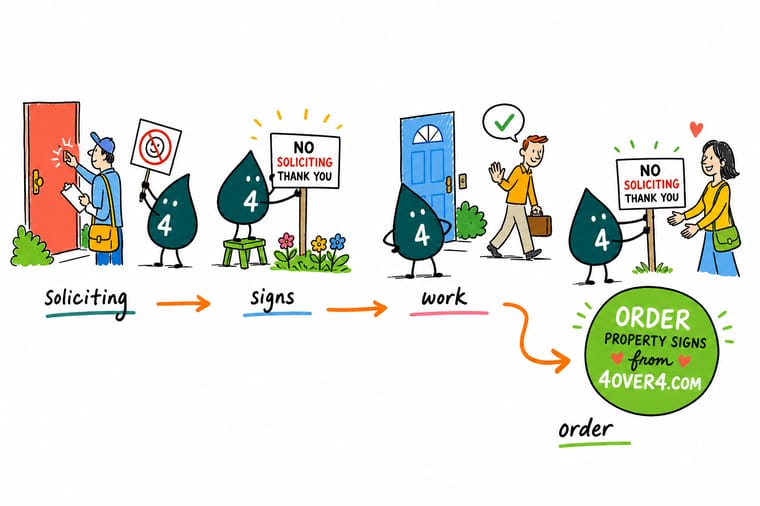
Wally puts the sign where a stranger looks right before knocking, at eye level next to the door and readable from the walkway. Commercial reps take the hint. Political and religious canvassers often will not, because their speech carries more protection than a sales pitch does. Either way the sign withdraws the implied license to approach, so a repeat visit becomes something you can report. Print it on aluminum or reflective stock and it will still be doing that job in year three.
Order property signs →Specs and pricing
Sign stocks, sizes, and starting prices
Compare the three stocks that suit a permanent entry sign, with live configuration options and starting prices straight from the 4OVER4.COM configurator.
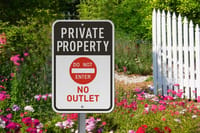


Print it
Print a No Soliciting sign that lasts


See it in use
Property and no soliciting signs customers ordered





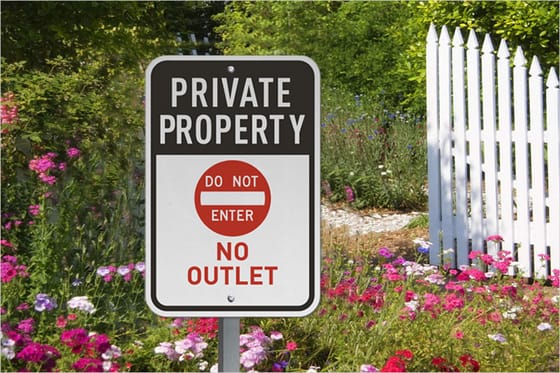
Explore more
Where to go next



By the numbers
Rigid sign work counted in years and products
Common Questions
Your No Soliciting sign questions, answered
Are no soliciting signs enforceable in Florida?
Florida treats a posted sign as notice under its criminal trespass statute, section 810.09, so a visitor who stays after seeing the sign and being told to leave can be handled as a trespasser. Many Florida cities also require door to door sellers to register with the city, and some tell registered solicitors to skip posted homes. The sign itself does not fine anyone. It gives you a documented refusal and a complaint the police or the clerk can act on, and enforcement is local, so check your own city code.
Is soliciting illegal in Ohio?
Not statewide. Ohio has no law banning door to door sales, so the rules come from each city, and most Ohio cities require a peddler or solicitor permit with set hours and an ID the rep has to carry. A growing number of Ohio suburbs also keep a Do Not Knock registry that permitted solicitors must check. Political, religious and charitable canvassing is usually exempt from the permit rule. A rep who ignores a posted sign in a permit town risks the permit, which is the practical teeth behind the sign.
Why do people put up "no soliciting" signs?
Three reasons, and only one of them is about sales pitches. The first is peace: fewer interruptions from roofing crews, pest control reps and subscription sellers working the block. The second is safety, because a home that visibly turns away strangers is a less attractive target for anyone using a sales script to check who is home. The third is legal footing: a posted sign withdraws the implied license to walk up and knock, so a repeat visit becomes something you can report rather than something you have to tolerate.
Do No Soliciting signs actually work?
They work selectively. Commercial salespeople and canvassing crews for home services generally respect a clearly posted sign, because a complaint is expensive for the company that sent them. Political volunteers, petition gatherers, and religious callers often continue anyway, since their activity is treated as protected speech rather than commerce in most places. Delivery drivers and postal carriers are unaffected, because they are completing a transaction you already agreed to.
Is it legal to post a No Soliciting sign on my house?
Posting a sign on your own private property is legal in the overwhelming majority of U.S. jurisdictions. It is your property and your speech. The limits people run into are usually about the sign itself rather than the message, for example an HOA rule on sign size, a historic district restriction, or a local sign ordinance covering placement near the street. Rules vary widely, so check your municipal code and any HOA covenants before you mount anything permanent.
Can a No Soliciting sign legally stop religious or political visitors?
Usually not on its own. U.S. courts have generally treated door-to-door religious and political canvassing as expression that carries strong First Amendment protection, while pure commercial sales gets less. A private homeowner can still ask any visitor to leave, and a posted sign supports that request, but the sign alone is a weaker tool against protected canvassing than it is against a salesperson.
Does ignoring a No Soliciting sign count as trespassing?
It can, depending on your state and how the visit unfolds. The common legal concept is an implied license: a stranger may normally walk up your path and knock. A visible sign is evidence that you withdrew that permission. Whether ignoring it rises to a chargeable trespass, and whether a warning has to come first, differs by state and by municipality, so treat the sign as documentation rather than as an automatic charge.
What should a No Soliciting sign actually say?
Keep it short and unambiguous. "No Soliciting" is the standard, and adding "No Trespassing" broadens it beyond sales. Some homeowners add a line such as "Solicitors will be prosecuted" or reference the local ordinance number. Avoid clever or joke wording on the sign you want taken seriously, because a sign that reads as a gag gives a visitor an easy excuse to treat it as decoration.
Where is the best place to put a No Soliciting sign?
At eye level, immediately next to or on the entry door, and visible from the direction people approach. If the walkway curves or the porch is deep, a second sign at the gate or the head of the driveway helps. Put one at every entry point a visitor could reasonably use, and do not hide it behind a storm door frame, a planter, or a wreath.
Get Started
Ready to print a sign people actually read?
Pick your stock and size, set your wording, and we print rigid signs that stay legible through rain, sun, and a few winters on the same wall.
Legal Disclaimer
Gold Standard guarantees apply to all standard orders placed through 4over4.com. Price match requires verifiable proof of a competitor's published price for an equivalent product with matching specifications and turnaround time. Satisfaction guarantee covers manufacturing defects and print quality issues. Contact support with order number and documentation. On-time delivery rate based on tracked orders 1999 to 2026. Individual results may vary based on shipping carrier performance.
