
Embossed Business Cards Explained


Embossing raises your design off the card, and leaves a matching deboss on the back. Here is how the effect works, why that reverse impression can be a feature, how to hide it, and how to design both sides.
Embossing presses a shape up on the front, which leaves a matching recessed deboss on the back. That reverse mark is the honest signature of a real emboss, not a defect. Show it as a two-in-one feature, or hide it with a double-thick card. 4OVER4 prints custom embossed cards on premium stock.
Start here
The emboss and deboss in one paragraph
Embossing and debossing are one impression seen from two sides. Raising a shape on the front pushes the stock up, which leaves the same shape recessed on the back. That deboss is the natural signature of a real emboss. Show it as a feature and keep the card slim, or hide it with a double-thick card. The diagram below shows exactly how it works.
Watch it printed
See embossed business cards on the press, in 136 seconds
What embossed business cards actually are
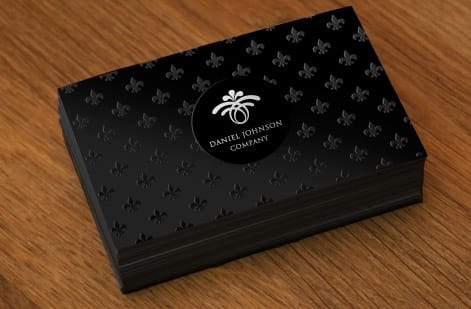
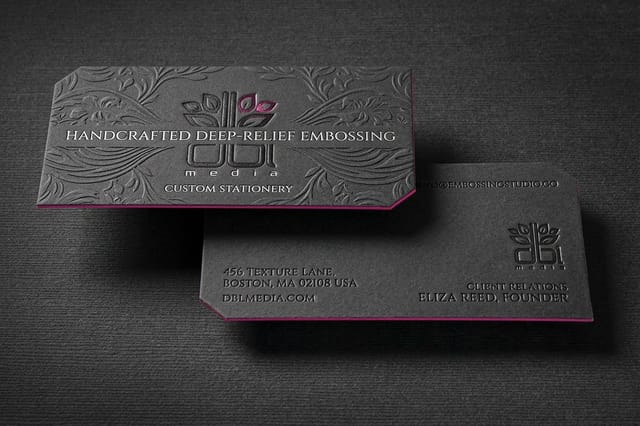
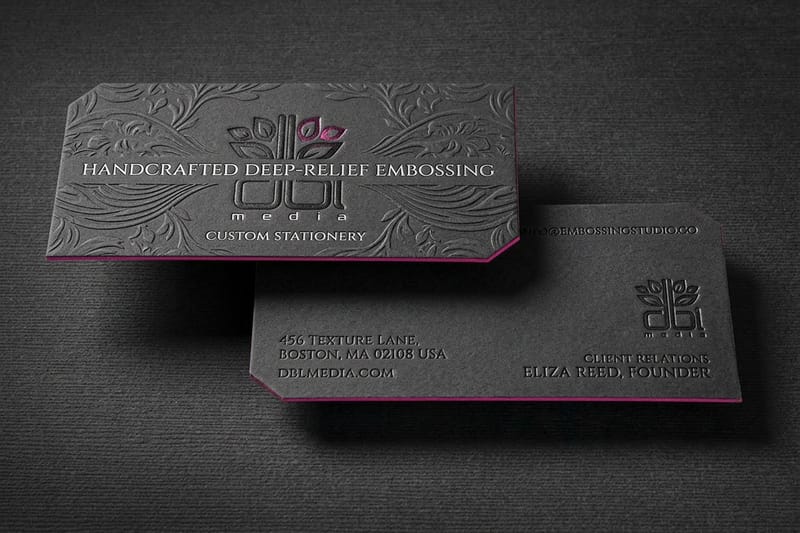
An embossed business card has part of its design physically raised off the surface. A custom die presses the stock from behind so a logo, monogram, or set of letters stands up in relief, turning a flat card into something you feel before you read. That tactile dimension is the whole point: it registers as quality on contact, in a way no printed effect can imitate. Real estate agents, creative professionals, luxury brands, startup founders, and event planners reach for it because a card that feels expensive makes the business behind it feel established.
Embossing comes in two main flavors. A blind emboss uses no ink or foil, so the shape reads purely through light and shadow, the most understated, luxurious version. Or you can combine the raised area with printed color or foil for a bolder, more visible effect. Either way, the impression is real, not simulated.
Because it is a physical process, embossing belongs to the family of premium finishes, alongside foil and spot gloss. You can order it directly on embossed business cards, or add it to other pieces through our embossing service. If you would rather not build the file yourself, our online design tool gives you a clean starting layout. This guide covers the effect, the deboss on the back, and how to design for both.
How embossing and debossing work together
Here is the part that surprises people: embossing and debossing are not two separate things you choose between on a single card, they are two sides of the same impression. To raise a shape on the front, the die pushes the stock upward from behind. That displacement has to go somewhere, so the exact same shape appears recessed, a deboss, on the back.
In other words, every genuine emboss creates a deboss on the reverse automatically. It is not an error, a print defect, or a sign of a cheap card. It is the honest, physical signature of the technique. A card that is raised on the front and perfectly flat on the back has usually been mounted or built from double-thick stock specifically to hide that reverse impression.
A few kinds of embossing are worth knowing before you order.
- Single-level embossing keeps every raised element at the same height. Clean, consistent, and professional.
- Multi-level embossing lifts elements to different heights for extra depth and dimension.
- Blind embossing uses no ink or foil on the raised area, so the texture alone carries the effect.
- Registered embossing aligns the raised areas precisely with printed elements like your logo or type.
For most business cards, registered single-level embossing is the safe pick. It lines up cleanly with your printed design and gives that deliberate, finished look.
Understanding this changes how you approach the design, because you are really designing one impression seen from two sides. The next sections cover why you might happily show the deboss, and how to hide it if you would rather. For a related dimensional finish that behaves differently, see our guide on spot UV printing.
Why letting the deboss show can be the smarter choice
Many designers deliberately let the deboss show, and for good reasons. It is cost-effective: a single embossing pass gives you a visible effect on both sides of the card, with no extra mounting or finishing to pay for. It keeps the card sleek and slender, because hiding the impression usually means a thicker or mounted stock, so showing it preserves a slim, elegant profile.
It also has a natural look and feel that reads as genuine craftsmanship rather than a printed imitation, and it adds design detail, a quiet texture on the reverse that rewards a second look and confirms the card is truly embossed. Taken together, that is a real two-in-one experience: one impression that gives the front presence and the back character.
Embraced on purpose, the deboss stops being something to hide and becomes part of the design language of the card. Position it thoughtfully on the back, keep the surrounding area open, and it looks entirely intentional. To see how designers use these effects, browse our card styles and finishes showcase.
How to hide the deboss for a flat back
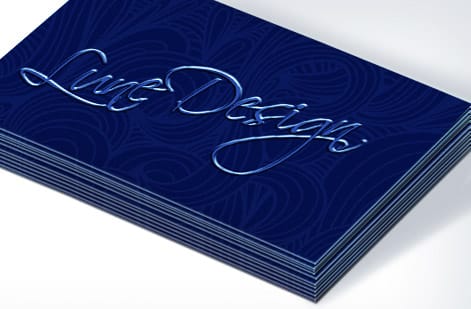
If your design truly needs a flat back, perhaps because the reverse carries dense information or a full photo, you have clean options. The most reliable is a double-thick or mounted card, where two sheets are bonded together so the impression is absorbed inside the card and never shows on the outer back surface. This gives you a raised front and a perfectly flat, printable reverse.
The second option is to design around it. Map exactly where the deboss will land and keep that area of the back layout open, so the impression sits in empty space and goes largely unnoticed. Avoid running heavy text or a full-bleed image across that spot, where a recessed shape would interfere. A heavier single stock also softens how pronounced the reverse feels, even without mounting.
The key is deciding early. Choosing between a visible deboss and a hidden one before you design lets you select the right stock and plan both sides from the start, rather than discovering the impression after the fact. Our guide to choosing the right card stock helps you match the weight to your goal.
Card stock and coating that hold the emboss
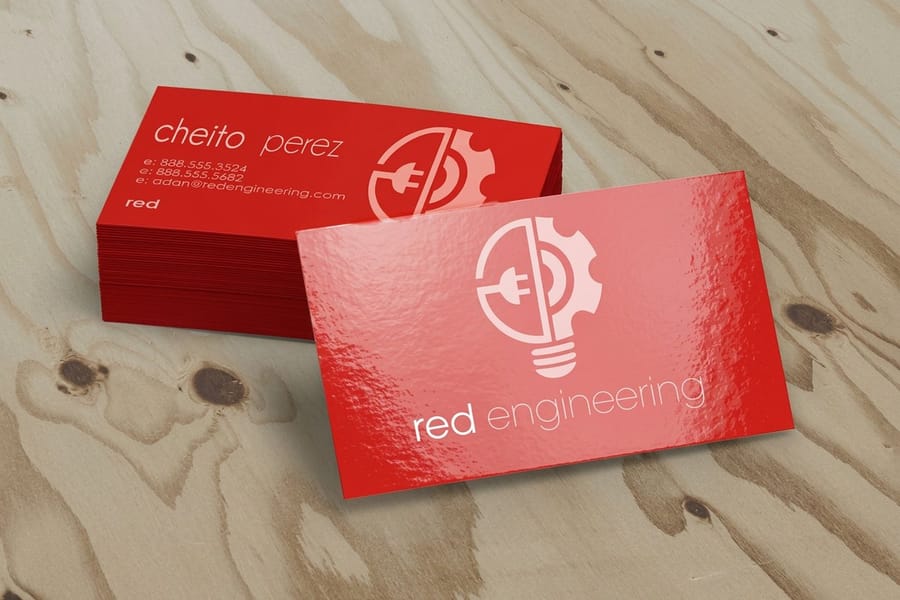
The stock you choose decides how well the embossing shows, because thicker paper gives the die more material to push into. 14pt stock is the standard weight for most cards and handles light embossing, though it will not hold a deep, dramatic raise. 16pt stock sits at about credit-card thickness and is the reliable middle ground, thick enough for a clear raised effect and affordable enough for larger runs. 32pt ultra-thick stock is where embossing really shows off: the extra material allows a deeper, more pronounced raise, and the card feels rigid and solid the moment it is picked up.
Coating matters too. A gloss coating shields the card from fingerprints, light scuffs, and moisture, and it deepens color saturation so blues read bluer, reds read richer, and black looks genuinely dark. A flat gloss card can show fingerprints, but the raised areas on an embossed card break up the surface enough that smudges are far less obvious. Embossing on a dark gloss background throws dramatic shadows, while the same texture on a light background stays subtle, so choose by brand personality.
4OVER4.COM carries more than 60 paper types across its business card lineup, and the coated gloss options in 14pt, 16pt, and 32pt all take embossing beautifully. If you want the shine without the raised texture, gloss laminated business cards give you the coating on its own.
Design tips for two-sided embossed cards
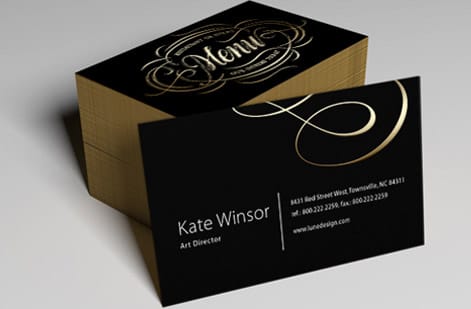
Great embossed cards are planned as a whole, both sides at once. Start by choosing a single focal element to emboss, a logo, monogram, or name. Embossing everything dilutes the effect, while one raised detail draws the eye and feels considered. Give it room; an emboss surrounded by open space reads far more elegantly than one crowded by other elements.
Next, coordinate the two sides. Because the deboss mirrors the emboss, decide what should sit opposite your raised element on the back. If you are showing the deboss, let it land in open space as a texture. If you are hiding it with a mounted card, you have full freedom on the reverse. Either way, never let the impression fall across critical back-of-card content by accident.
Finally, consider combining finishes with restraint. An emboss pairs beautifully with foil or a spot gloss where the raised shape sits, but one accent is plenty; two competing finishes cancel each other out. Embossing is also excellent logo discipline: one raised mark, printed clean, says more than a crowded card.
Embossing vs foil, spot UV, and letterpress
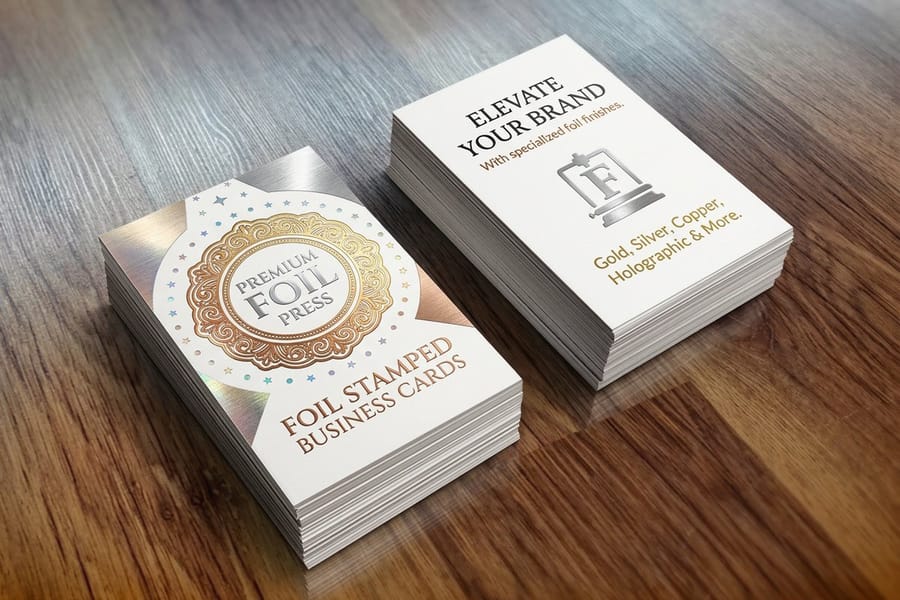
Against foil stamping, foil adds metallic shine while embossing adds physical height. You can combine the two with foil over a raised area, but on its own embossing gives you texture for less than foil. Compare it directly with foil stamped business cards if metallic is the look you are after.
Against spot UV, spot UV lays a shiny patch on a matte card as a purely visual effect with no texture, where an emboss delivers the feel. See it on spot UV business cards. Against letterpress, letterpress presses ink down into the paper for an indented, vintage feel, while embossing lifts the design up for something more modern and polished. Letterpress business cards are worth a look if you prefer that artisan touch.
Embossed gloss is raised varnish, not a die
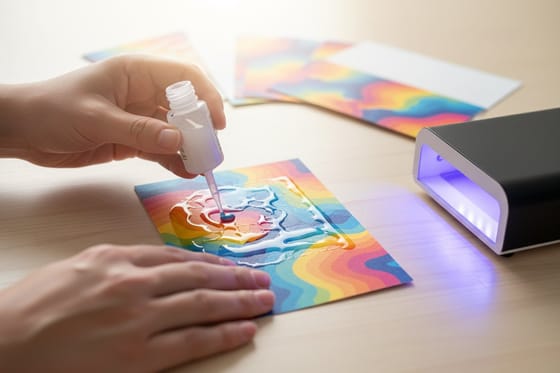
Some printers sell an embossed gloss or raised print business card. That product is a thick clear varnish cured on top of the printed sheet so a logo stands up as a glossy bump, and it is the same thing as raised spot UV. No die touches the paper, so the back of the card stays perfectly flat and there is no deboss to plan around. It also lets you raise fine lines and small type that a die would blur.
A true emboss is the opposite trade. The stock itself is shaped, the raised area carries the paper's own texture and color, and the mirror impression on the back is there whether you show it or hide it. If you want shine with height, raised spot UV gets you there in one pass and costs less. If you want the feel of pressed paper and a card that reads as crafted under a thumb, it has to be a die. Order a sample of each and the difference is obvious in hand.
Files and setup for a clean emboss
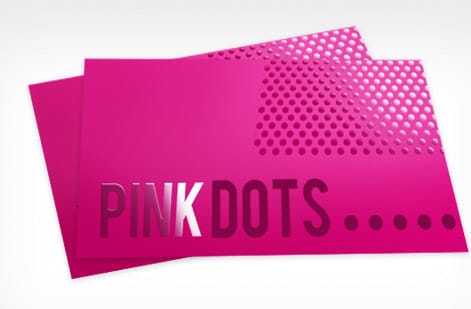
Embossing adds one requirement to a normal print file: a dedicated emboss layer. Supply the shape you want raised as a clean, separate vector, so the press can build a die that presses exactly there. Keep it apart from your printed artwork, and make sure the shape is solid and well defined, since fine hairlines and tiny details do not emboss crisply.
Everything else follows standard card setup. Work at 3.5 by 2 in with 0.125 in of bleed, keep text inside the safe margin, use CMYK for any printed color, place images at 300 DPI, and export a flattened press-ready PDF with the emboss layer clearly labeled. If you are combining the emboss with foil, that foil area needs its own layer too.
Every order runs through a free file check that confirms your bleed, resolution, and finishing layers before printing. Because the effect is physical, ordering a sample to feel the depth and inspect the deboss is especially worthwhile here. For the underlying rules, pair this with our guide on preparing print-ready files.
Mistakes that flatten an embossed card
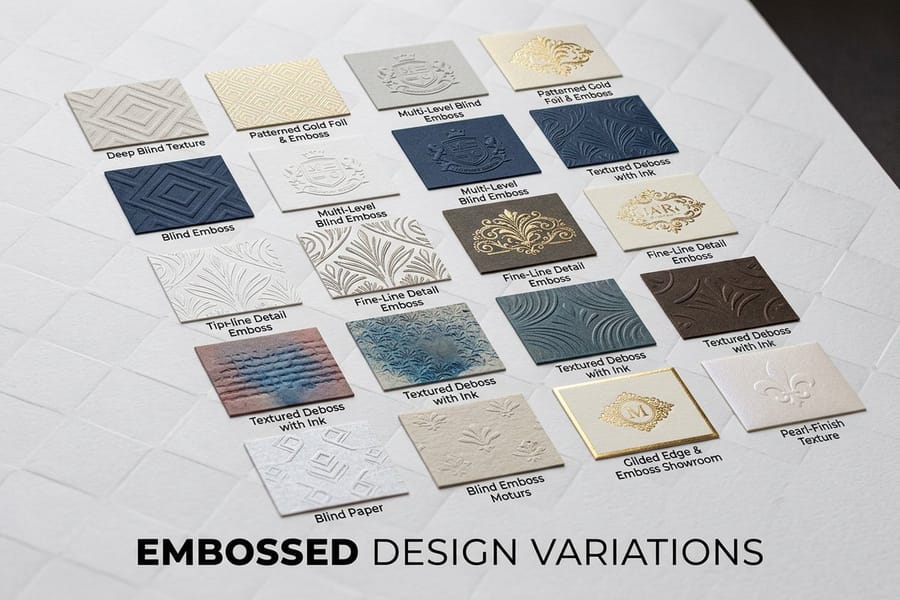
Even a strong design can fall flat with a few avoidable slips. Steer clear of these and your cards come back the way you pictured them.
- Using lines that are too thin. Anything under 1pt will not raise cleanly, so keep embossed elements bold.
- Embossing too much of the card. When everything is raised, nothing stands out. Pick one or two focal points and leave the rest flat.
- Ignoring file setup. Embossing needs its own vector layer marking the raised areas, and a flat file without it causes delays.
- Choosing stock that is too thin. Light embossing on thin paper reads cheap, so commit to at least 16pt.
- Embossing a QR code. A raised QR pattern can distort and stop scanning, so print the code flat and emboss the logo instead.
- Skipping the proof. Always review your digital proof so the raised areas line up with the print. A misaligned emboss looks like a mistake, not a feature.
Ordering embossed business cards
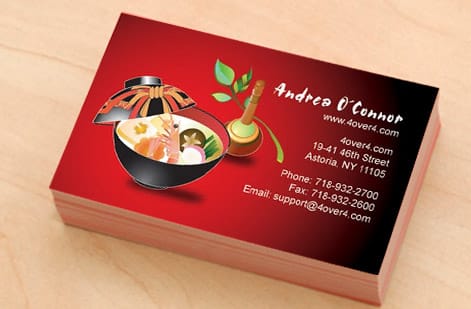
Once you have decided what to emboss, whether to show or hide the deboss, and which stock to use, ordering is straightforward. Choose the card, set your stock and any additional finishes like foil or spot gloss, decide on a single or double-thick option, and enter your quantity. The per-card price falls as the run grows, and the finishing is what creates the effect, so invest where it shows.
Because embossing lives in the physical detail, order a sample first. Feeling the depth of the raised shape and seeing exactly how the deboss reads on the back tells you far more than a screen preview, and it lets you confirm the impression before committing to the full run.
Start with embossed business cards, pair the emboss with a shine using spot UV business cards or raised foil business cards, or browse everything under business card printing. The live specs and pricing below show exactly what each option costs.
Wally reads the card with his fingertips
The deboss on the back is the emboss saying hello
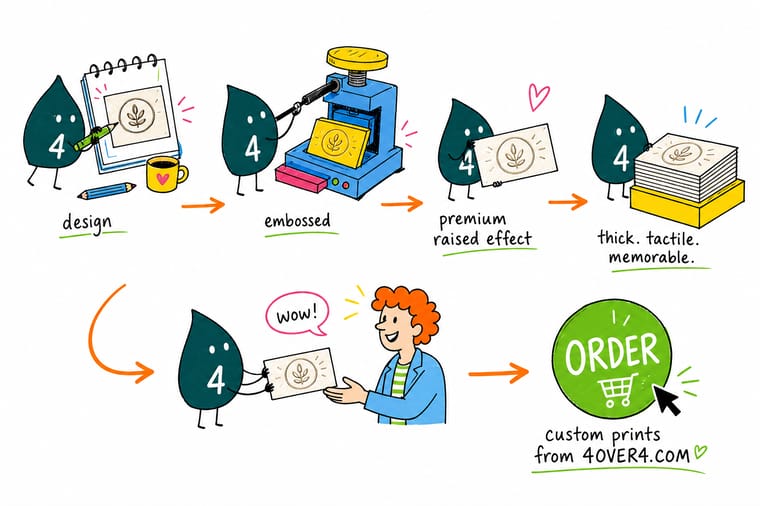
Wally knows the secret nobody tells you: every real emboss leaves a deboss on the back, because pressing a shape up on one side dips it down on the other. He treats that reverse mark as a feature, keeps the card slim, and designs the back so the impression lands in open space. Want a flat back instead? He reaches for a double-thick card. Either way, 4OVER4 presses it clean on premium stock.
Order embossed business cards →Quick reference
Emboss vs deboss, at a glance
Two sides of a single impression. This is how the raised front and the recessed back relate, so you can design for both.
| Aspect | Emboss | Deboss |
|---|---|---|
| Direction | Pressed up, raised | Pressed down, recessed |
| Where you see it | Front of the card | Back, as the mirror mark |
| Feel | Stands proud of the surface | Sinks into the surface |
| With no ink | Blind emboss, catches light | Blind deboss, subtle shadow |
| Common use | Logos, monograms, initials | A deliberate texture or accent |
| On one card | The intended raised effect | The natural byproduct of it |
Step by step
Design and order an embossed card in 7 steps
- Pick what to emboss Choose one focused element, a logo, monogram, or name, rather than embossing everything. The effect is strongest when it draws the eye to a single detail.
- Build the emboss on its own layer Supply the emboss shape as a separate clean vector layer so the press knows exactly where the die presses, kept apart from your printed artwork.
- Plan the back around the deboss Map where the reverse impression will land and keep that area of the back design open, so the deboss falls into space rather than across dense text.
- Decide blind or inked Choose a blind emboss for pure, inkless dimension, or combine the emboss with printed color or foil where the raised shape sits, depending on the look you want.
- Choose a stock that holds the impression A heavier, quality stock takes and keeps a crisp emboss. 14pt handles light embossing, 16pt at about credit-card thickness is the reliable middle ground, and 32pt ultra-thick stock gives the deepest raise. If you want a perfectly flat back, select a double-thick or mounted card option.
- Set files to press-ready standards Work at 3.5 by 2 in with 0.125 in bleed, text inside the safe margin, CMYK color, and a flattened press-ready PDF, with the emboss layer clearly labeled.
- Proof, sample, and order Order a sample to feel the depth and check the deboss on the back, then place the full run once the impression and both sides look right.
Specs and pricing
Embossed business card specs and live pricing
Once your emboss and stock are decided, price the run. Here are the live specs and price-per-unit for embossed business cards at 4OVER4.COM, straight from the configurator.
| Quantity | Price Per Unit | Total |
|---|---|---|
| 250 | $1.01 | $251.36 |
| 500 | 65.4¢ | $327.15 |
| 1,000 | 37.8¢ | $377.68 |
| 2,000 | 36.6¢ | $731.35 |
Order it
Print a card people feel before they read
See it in use
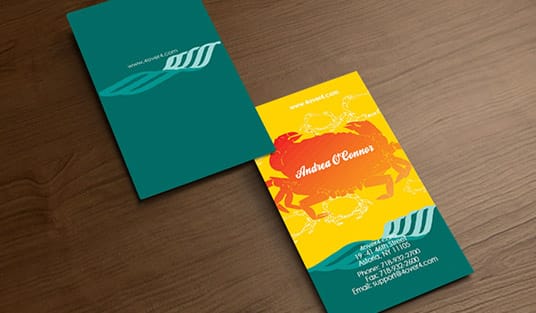
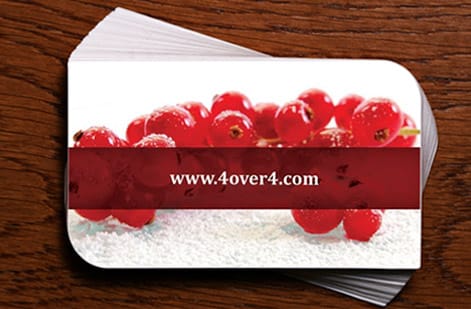
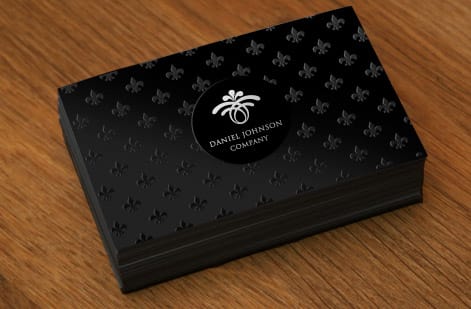
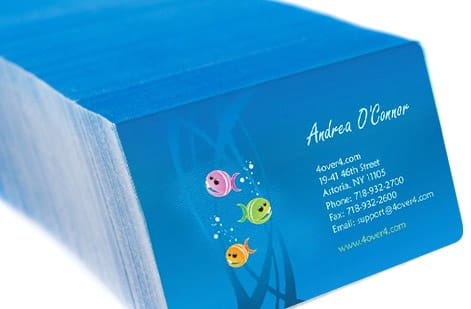
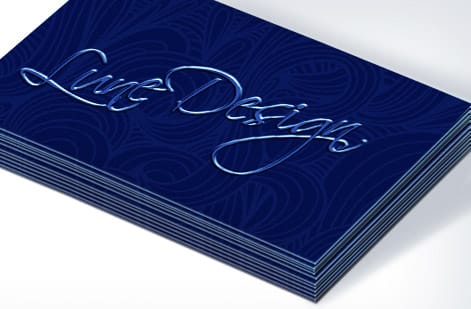
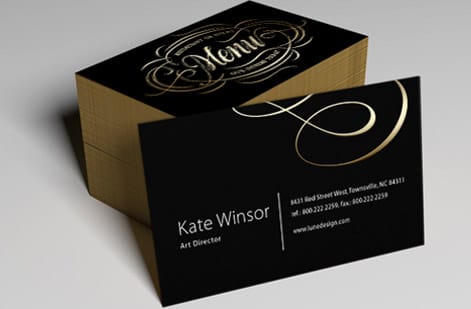
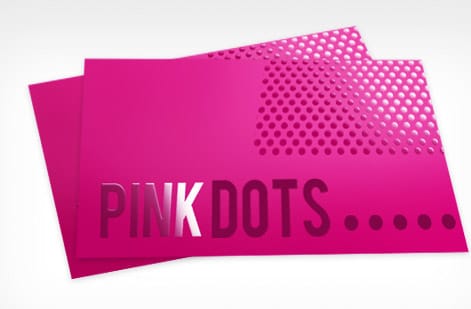
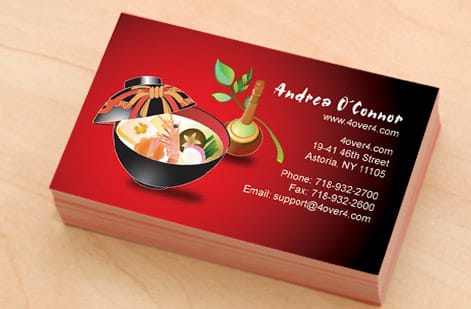
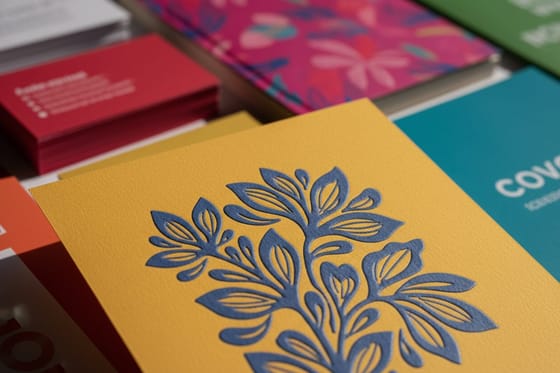
Embossed cards, raised type and all
Explore more
Where to go next
By the numbers
Sixty paper stocks an emboss can be struck into
Common Questions
Common questions about embossed business cards
Are embossed business cards worth it?
For a card that has to feel expensive on contact, yes. Embossing costs more than a flat print because a custom die is cut for the run, and the die is made once, so the per card price falls fast as the quantity grows. The return is a card people keep and hand around, which is why real estate, luxury and creative brands use it. For a card handed out by the hundred at a trade show, a flat card with spot UV does the job for less.
How do you emboss a business card?
Embossing needs a press and a die, so it happens at the printer rather than at a desk. You supply the shape as a separate vector layer, a metal die is cut to that shape, and the press pushes the stock up into it from behind, which raises the front and leaves the deboss on the back. Blind embossing skips the ink, and registered embossing lines the raise up with printed color or foil. Craft embossing tools exist for a handful of cards, but they cannot hold register across a run.
What are embossed business cards?
Embossed business cards have part of the design, often a logo, monogram, or name, physically raised off the surface of the card. A custom die presses the stock from behind so the chosen shape stands up in relief, creating a tactile, dimensional detail you feel the moment you hold the card. Embossing can be blind, meaning no ink or foil, so the shape reads purely through light and shadow, or it can be combined with printed color or foil on the raised area. Because the effect is physical rather than printed, it signals quality and craft in a way flat printing cannot.
Why is there a debossed impression on the back of an embossed card?
It is simply how embossing works. Raising a shape on the front means pushing the stock upward from behind, and that same displacement leaves a matching recessed impression, a deboss, on the back. The two are one action seen from two sides. Far from being a defect, this mirror mark is the honest signature of a real emboss, and many designers treat it as a feature: a subtle texture on the reverse that shows the card was genuinely embossed rather than merely printed to look raised. If you prefer a flat back, there are straightforward ways to hide it.
What are the benefits of letting the deboss impression show?
Several. It is cost-effective, because you get a visible effect on both sides of the card from a single embossing pass rather than paying for extra finishing. It keeps the card sleek and slender, since hiding the deboss usually requires a thicker or mounted stock, so showing it preserves a slim, elegant profile. It has a natural look and feel that reads as authentic craftsmanship. It adds design detail, a quiet texture that rewards a closer look. And it is a genuine two-in-one experience: one impression that gives your card presence on the front and character on the back. Embraced deliberately, the deboss becomes part of the design rather than something to apologize for.
How do I hide or fix the deboss if I want a flat back?
You have a few clean options. The most common is a double-thick or mounted card, where two sheets are bonded together so the impression is absorbed internally and the back stays flat. Alternatively, you can design around it: keep the back layout open in the exact area where the deboss lands, so the impression sits in empty space and goes largely unnoticed, and avoid running dense text or a full-bleed photo across that spot. A heavier single stock also softens how pronounced the reverse feels. Deciding early whether you want the deboss visible or hidden lets you choose the right stock and layout from the start.
What sizes, stocks, and finishes are available, and how are prices set?
Embossed business cards stay at the standard 3.5 by 2 in and are best on heavier, quality stocks that hold a crisp impression, with double-thick and mounted options when you want a flat back. Embossing pairs well with other premium finishes, so you can combine it with foil, spot gloss, or suede for layered effects. Price is driven by the stock, the embossing, any additional finishes, and quantity: specialty finishing adds to the cost of a plain card, while a larger quantity lowers the price per card as setup spreads across the run. You configure each option and the total updates live, and ordering a sample first is a smart way to confirm the depth and the reverse before a full order.
How much do embossed business cards cost?
Four things set the price: the stock you choose, the embossing itself, any additional finishes such as foil, spot gloss, or suede, and the quantity you run. Specialty finishing adds to a plain printed card, and heavier or mounted stocks add again, so there is no single number that fits every job. Rather than quote a range that will be wrong for your combination, we price it live: open the instant price calculator on /product/embossed-business-cards, pick your stock, whether you want the deboss shown or hidden with a double-thick or mounted card, any second finish, your quantity, and your turnaround, and the exact price for that exact card appears before you add it to the cart. Blind embossing, with no ink or foil in the impression, is priced the same way. Quantity is the biggest lever: the per-card cost falls as the run grows, because the die is made once and then used for the whole run, so if you know you will need more cards in three months it is usually worth printing them in the same order.
What is the minimum order for embossed business cards?
You do not need a large run. The quantity dropdown on /product/embossed-business-cards lists every run we print for embossed cards, from short quantities suitable for a single conference or a new hire up to bulk boxes for a whole sales team, and the smallest option shown for your chosen stock is the minimum. It can vary slightly by stock, because double-thick and mounted cards are built differently from a single sheet, so select the stock first and the available quantities update. Two things worth doing before you commit to a large run: order a sample so you can feel the depth of the impression and inspect the deboss on the back, since embossing is a physical effect that photographs poorly, and let the free file check confirm your bleed, resolution, and separate emboss layer. Both take very little time and they are far cheaper than reprinting a run that came back with a hairline shape that did not hold.
Can I emboss any element on the card?
Bold, simple shapes work best. Logos, large text, thick borders, and graphic marks raise cleanly, while fine lines under 1pt, tiny text, and busy illustrations do not. The die cannot reproduce fine detail at small sizes, so keep those on the flat printed layer and let one or two strong elements carry the emboss.
What paper thickness works best for embossed business cards?
Thicker stock gives better results, because the die has more material to push into. 14pt is the standard weight and handles light embossing, 16pt at about credit-card thickness is the dependable choice, and 32pt ultra-thick stock allows the deepest raised effect. 4OVER4.COM offers more than 60 paper types, and the coated gloss options in 14pt, 16pt, and 32pt all take embossing well.
Does a gloss coating work with embossing?
Yes, and the two suit each other. The gloss coating shields the card from fingerprints, light scuffs, and moisture, and it deepens color saturation so blues read bluer and black looks genuinely dark. The raised areas also break up the surface, so smudges are far less obvious than on a plain glossy card. Embossing on a dark gloss background throws dramatic shadows, while the same texture on a light background stays subtle.
How long does it take to receive embossed business cards?
Turnaround depends on quantity and finishing. Embossing adds a production step over standard cards, because a custom die is cut and mounted before the run, so plan for a little longer than a flat-printed order. The turnaround calculator at checkout shows exact timing for your job.
Can I add a QR code to an embossed business card?
Yes, but print the code flat rather than embossing it. A raised QR pattern can distort and stop scanning. Build a reliable one with our QR code generator that links to your site, portfolio, or contact details.
Get Started
Ready to print a card with real dimension?
Bring your logo or monogram to 4OVER4.COM and press it into premium stock with a custom emboss. Show the deboss as a feature or hide it with a double-thick card, and watch your price update live.
Legal Disclaimer
Gold Standard guarantees apply to all standard orders placed through 4over4.com. Price match requires verifiable proof of a competitor's published price for an equivalent product with matching specifications and turnaround time. Satisfaction guarantee covers manufacturing defects and print quality issues. Contact support with order number and documentation. On-time delivery rate based on tracked orders 1999 to 2026. Individual results may vary based on shipping carrier performance.
