
Foam Board Signs for Events, Displays and Presentations


Foam board signs are the lightweight, rigid standard for indoor display. Viewing distance sets the size, and 3/16 inch covers almost everything short of a lobby panel.
Foam board signs are rigid, lightweight printed panels made for indoor displays. A foam core between two coated print faces gives you a stiff, near-weightless sign that takes sharp full-color printing. Choose 3/16 in for standard easel and presentation signs and 1/2 in for larger panels, mount with an easel, standoffs, or a rail, and print at final size in CMYK with bleed for events, lobbies, retail, and trade shows.
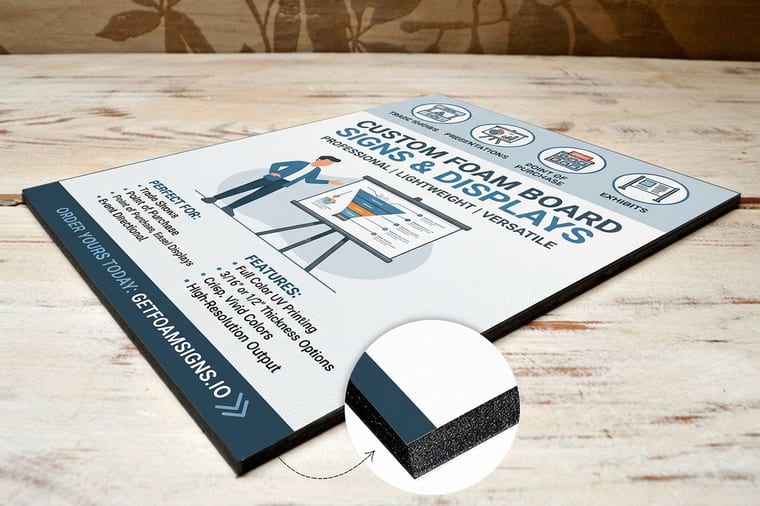
Start here
Light, rigid, and indoors
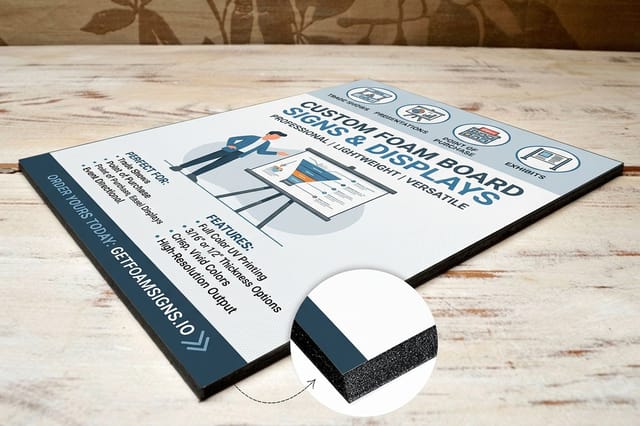
A foam board sign is a rigid, lightweight panel built for indoor display. A foam core bonded between two coated faces stays flat on its own and takes crisp full-color printing, which makes it ideal for events, lobbies, retail, presentations, and trade shows. Pick 3/16 in for standard signs and 1/2 in for large flat panels, mount it on an easel, wall, or rail, and print at final size in CMYK with bleed. The step guide below sums up the build.
What foam board signs are and where they shine

Foam board is one of the most useful sign materials in print, and it earns that spot by being two opposite things at once: rigid and almost weightless. The board is a layer of dense foam bonded between two smooth, coated paper faces. The foam gives it stiffness so it stands flat on its own, and the low weight means you can lift a large panel with one hand and mount it with the simplest hardware.
Those coated faces are what make it a sign rather than just a board. They take sharp, full-color CMYK printing, so a foam board sign reproduces photographs, brand colors, gradients, and fine text cleanly across the entire surface. The result reads crisp from across a room, which is exactly what an event, lobby, or retail display needs.
Foam board is the indoor default in signage. It is not built to weather a season outside, but for presentations, events, trade shows, and retail it is hard to beat on cost, clarity, and convenience. This guide covers where foam board signs do their best work, the sizes and thicknesses to choose, how to mount them, and how to prepare a clean print file.
Where foam board signs do their best work
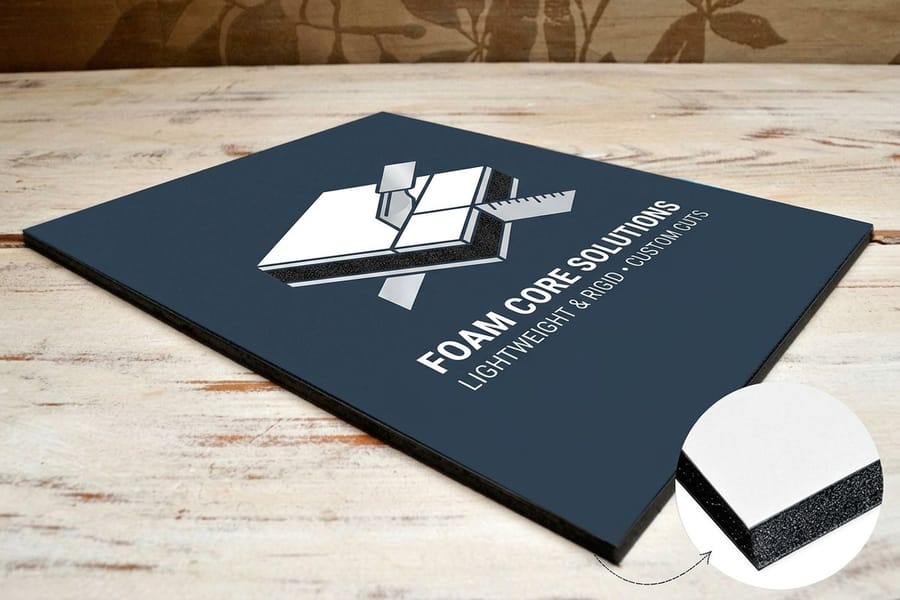
Foam board earns its keep anywhere a sign needs to look sharp, stand on its own, and move easily. At events and conferences it is the go-to for easel-mounted welcome signs, directional boards, and sponsor displays, because a single person can carry and set up a stack of them. In lobbies and offices it makes clean wall features, directory boards, and branded panels that hang with minimal hardware.
Retail and point-of-sale is another natural home. Foam board endcaps, promotional signs, and product callouts print vividly and pop into place fast. Real estate agents lean on it for open-house and listing boards, and presenters use it for pitch boards and project displays where a rigid, portable panel beats a projector. Weddings and celebrations use it for seating charts, welcome signs, and photo boards.
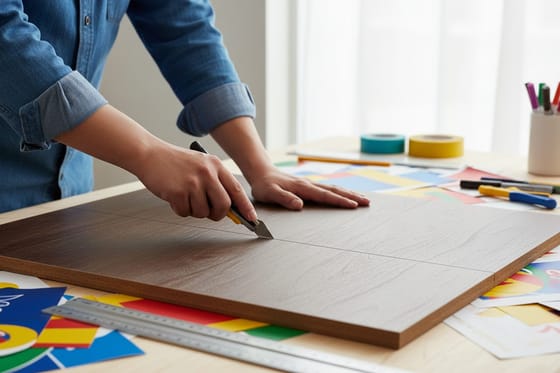
The common thread is short-to-medium-term indoor use where clarity and portability matter more than weatherproofing. When a job crosses into long outdoor exposure, foam board hands off to a rigid weatherproof board. Foam board signs also pair
What is a board print?
A board print is full-color artwork printed onto a rigid panel instead of loose paper. On foam board the print sits on the smooth coated face of a foam core panel, so the sign stays flat and stands on an easel, hangs on a wall, or drops into a rail with no frame behind it.
naturally with matching foam core posters and larger foam core displays for a coordinated set.Foam core, gator board, and how thick to go
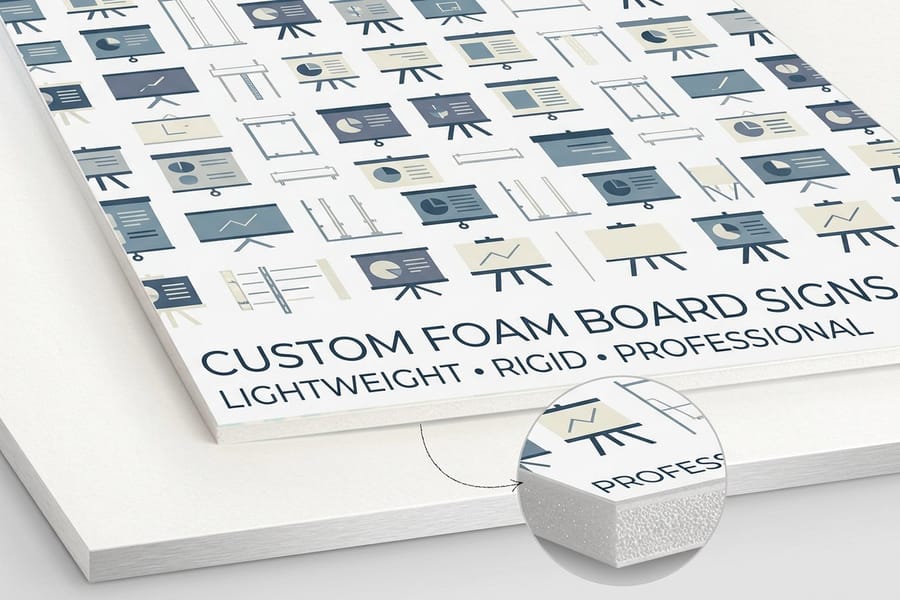
Not all rigid boards are the same, and the difference matters when you pick one. Standard foam board is the light, economical choice with paper-coated faces, which covers the vast majority of indoor signs. Gator board is a tougher cousin with a denser core and harder faces that resist dents, which suits signs that will be handled a lot or need to last longer indoors. Our guide on gator board and foam board compares the two in depth.
Thickness is the other lever, and it controls rigidity. The everyday standard is 3/16 in, which stays flat for posters, easel boards, and presentation panels up to poster size. When a sign gets large or needs to hold dead flat without any frame, step up to 1/2 in, which adds noticeable stiffness and resists bowing across a wide span.
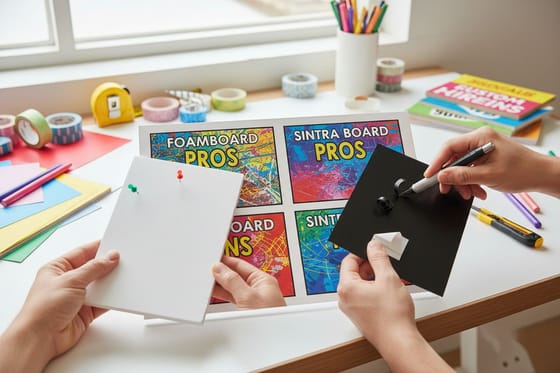
Choose thickness by span and handling, not just size. A small counter sign is fine at 3/16 in even if it gets picked up often, while a wide lobby panel benefits from 1/2 in so it does not sag in the middle. If your sign needs to survive real weather, that is the signal to leave foam board entirely for a weatherproof substrate, which our foam board versus Sintra guide addresses.
Foam board sign sizes and when to use each
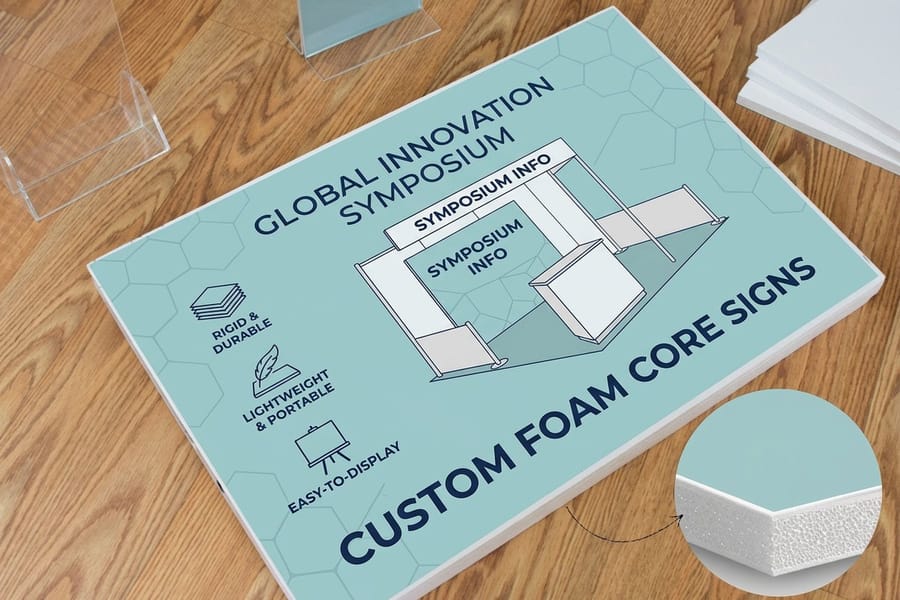
Sizing a foam board sign is really a question of viewing distance. The farther away people read it, the larger the panel and the type need to be. For close-range presentation and easel signs, 18 x 24 in is a comfortable, portable standard, and 24 x 36 in gives more presence for a welcome or feature board that people approach from a few steps back.
Go larger, toward 36 x 48 in and beyond, for lobby features, trade-show backdrops, and any sign read across a room. At those spans, reach for 1/2 in thickness so the panel stays flat. Smaller counter and tabletop sizes work for point-of-sale callouts and directional signs where the reader is right in front of the board.
Custom dimensions and shapes are available when a standard rectangle does not fit the space, and foam board cuts cleanly to shaped outlines. Whatever size you choose, design the file at the exact final dimensions so the type scale and margins are correct. Our foam board printing guide lists the popular sizes and shapes side by side.
Mounting and displaying foam board signs
The best thing about foam board display is how little it asks of you. Because the board is so light, simple hardware holds it securely. The most common setup is an easel: a folding tabletop or floor easel props the sign upright anywhere, which is why events and presentations rely on it. For walls, foam board mounts with removable adhesive strips, hook-and-loop tabs, or standoffs, none of which stress the panel.
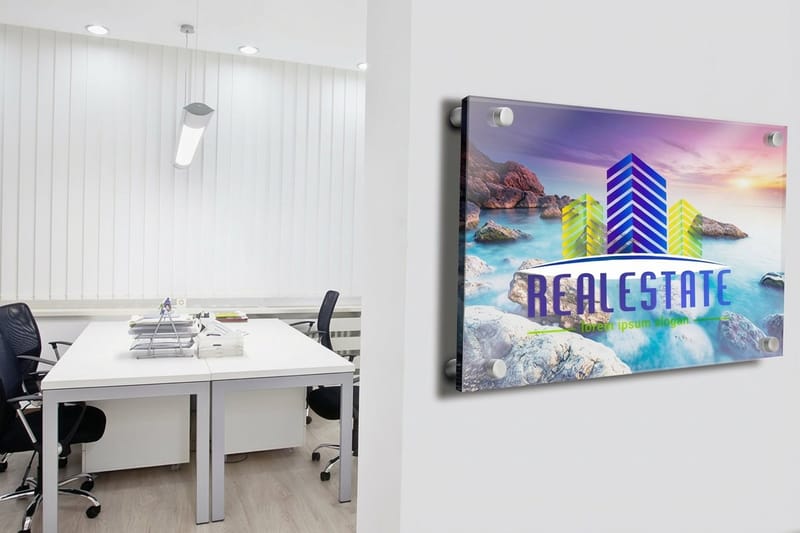
For a cleaner look, standoff hardware lifts the board slightly off the wall and casts a subtle shadow that reads as premium, a technique borrowed from acrylic and metal signage. Rail systems and sign holders let you slot boards in and swap them, which suits retail and directory displays that change often. Our companion article on the best ways to hang foam board prints walks through the damage-free options.
Plan the mounting before you finalize the design so any hardware clearance is built in. If a standoff will sit in a corner or a rail will grip an edge, keep important artwork clear of that zone. A little planning here keeps the finished s
| Size | Where it goes | Read from | Thickness |
|---|---|---|---|
| 11 x 14 in | Counter card, shelf callout, single offer | Right in front of the board | 3/16 in |
| 16 x 20 in | Counter price list, service menu, directional card | Right in front of the board | 3/16 in |
| 18 x 24 in | Tabletop or floor easel, presentation and welcome signs | A few feet back | 3/16 in |
| 24 x 36 in | Welcome or feature board people walk up to | A few steps back | 3/16 in |
| 36 x 48 in and up | Lobby feature, trade-show backdrop, wall panel | Across a room | 1/2 in |
Read that as a distance chart rather than a size chart. Find the row that matches how far away the reader actually stands, then set the file at those exact dimensions. If a size sits between two rows, take the larger panel: type that is slightly too big still reads, type that is slightly too small gets skipped.
Keep live type a half inch inside every edge and the panel reads clean at any of these sizes. The coated face holds small type because it does not absorb ink the way an uncoated sheet does.
Indoor durability and when to choose a rigid alternative
Handled with normal care, a foam board sign holds up well for the indoor jobs it is made for. The rigid core keeps it flat, and the coated faces resist scuffing during a run of events or a season on a wall. Gator board and 1/2 in thickness add toughness when a sign will be handled heavily or displayed for a long stretch indoors.
Its limits are moisture and sustained weather. Humidity can soften the faces over time, and rain, wind, and long sun exposure will degrade the board, so foam board is not the choice for outdoor signage that must last. This is a feature, not a flaw: foam board trades weatherproofing for the light weight and low cost that make it perfect indoors.
When a job genuinely lives outside, or needs to survive months in the elements, step up to a weatherproof rigid substrate. Coroplast handles outdoor yard and directional signs, and heavier PVC or aluminum boards suit permanent exterior signage. Browse the full rigid signs range to match the material to the environment, and use our foam board versus Sintra comparison to decide.
Printing foam board signs and prepping the file
Foam board printing is direct and forgiving, but a clean file still makes the difference between a sharp sign and a soft one. Build your artwork at the exact final sign dimensions in CMYK color so brand colors print true. Place photographs at 300 DPI at that final size and check them at 100 percent zoom, since a large sign reveals any low-resolution image the moment it is enlarged.
Add 0.125 in of bleed on every edge so background art runs past the cut and never leaves a white sliver, and keep all logos and text 0.125 in inside the trim in the safe margin. Choose single or double-sided printing depending on whether the sign will be seen from one side or both. Then flatten everything to a single press-ready PDF, which prints most predictably.
When you order with us, that file also runs through a free file check so a second set of eyes catches any issue before the press does. Set your size, thickness, sides, quantity, and turnaround in the configurator below, or order free samples first to feel the board in hand before committing to the full run.
Wally picks foam board when the sign has to travel light
Rigid, weightless, and sharp for any indoor display
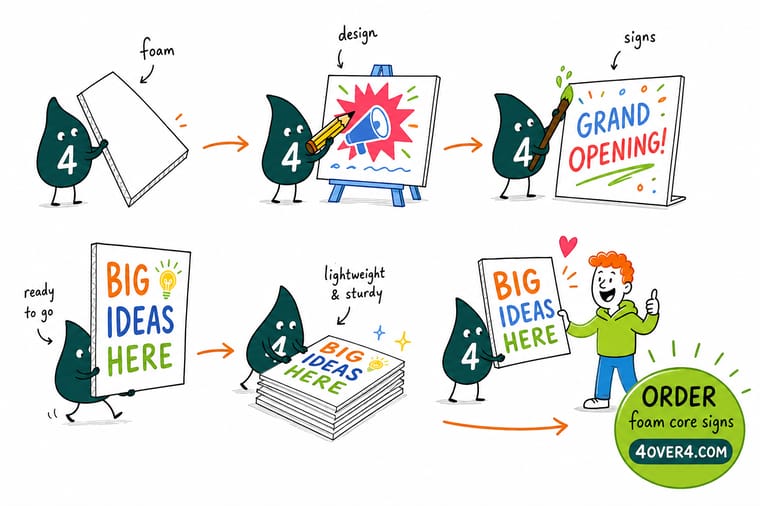
Wally reaches for foam board whenever a sign needs to look crisp, stand flat, and move without a crew. He sizes it to the viewing distance, chooses 3/16 in for easel boards or 1/2 in for the big flat panels, mounts it on an easel or standoffs, and prints it full color at final size. Perfect for events, lobbies, retail, and presentations, printed sharp at 4OVER4.
Print foam board signs →Quick reference
The foam board sign setup, at a glance
Match these choices to your display and your foam board sign is ready to print sharp and stand flat wherever it goes.
| Setting | Get it to | Why it matters |
|---|---|---|
| Core material | Foam core, coated faces | A rigid foam center with smooth printable faces keeps the sign flat, light, and ready for sharp full-color printing. |
| Standard thickness | 3/16 in | The everyday choice for posters, easel signs, and presentation boards up to poster size. |
| Heavy thickness | 1/2 in | Extra rigidity for larger panels that must stay perfectly flat without a supporting frame. |
| Best environment | Indoor, short to medium term | Foam board is built for events, lobbies, and retail. Outdoor or long-term jobs want a weatherproof rigid board. |
| Full-color CMYK, one or two sides | The coated face reproduces photos, gradients, and fine type crisply across the panel. | |
| Bleed and safe margin | 0.125 in each | Art runs past the trim so the cut edge stays clean, and key text sits clear of the edge. |
| File format | Flattened PDF at final size | A press-ready PDF built at the exact sign dimensions prints predictably every time. |
Step by step
Order a foam board sign in 7 steps
- Decide where the sign will live Pin down the setting first: an easel at an event, a lobby wall, a retail endcap, a trade show table. The location drives the size, the thickness, and the mounting.
- Choose the size for the viewing distance Match the panel to how far away people read it. Presentation and easel signs work at 18 x 24 in or 24 x 36 in, while a lobby feature can go larger.
- Pick the thickness Use 3/16 in for standard posters and easel boards. Step up to 1/2 in for larger panels that must stay rigid and flat on their own.
- Design in full color at final size Build the artwork at the exact sign dimensions in CMYK, place photos at 300 DPI, and keep a strong focal point that reads from across the room.
- Add bleed and hold text inside the safe margin Extend background art 0.125 in past the trim and keep logos and copy 0.125 in inside the edge so nothing important gets cut.
- Plan the mounting Decide up front whether the sign sits on an easel, hangs, or drops into a rail, and design any hardware clearance into the layout.
- Export a press-ready PDF and order Flatten to a single PDF, run it through our free file check, and set your quantity and turnaround in the configurator.
Specs and pricing
Foam board sign specs and live pricing
Once you know the size and thickness, quantity and turnaround are what is left. Foam core signs ship in 4 business days.
| Quantity | Price Per Unit | Total |
|---|---|---|
| 1 | $49.99 | $49.99 |
Print it
Print your foam board signs with 4OVER4
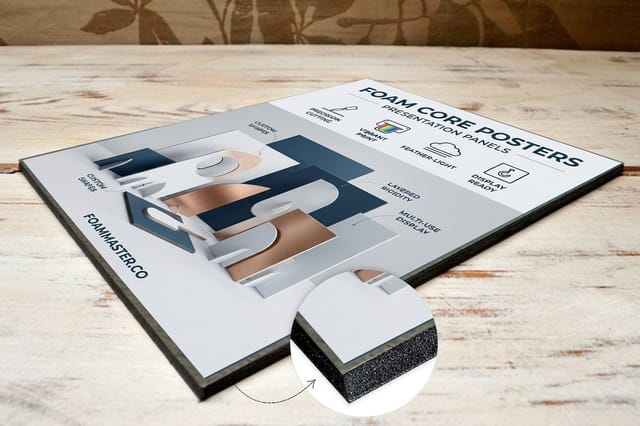
See it in use
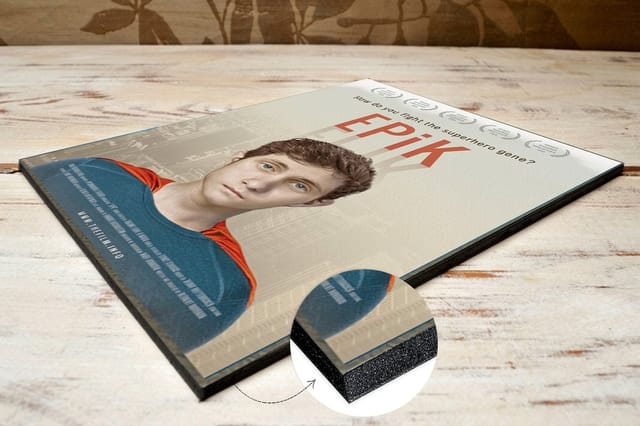
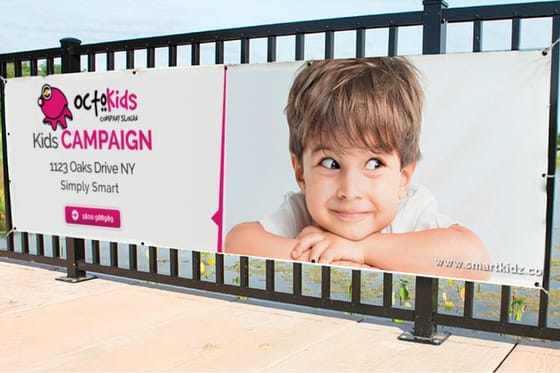
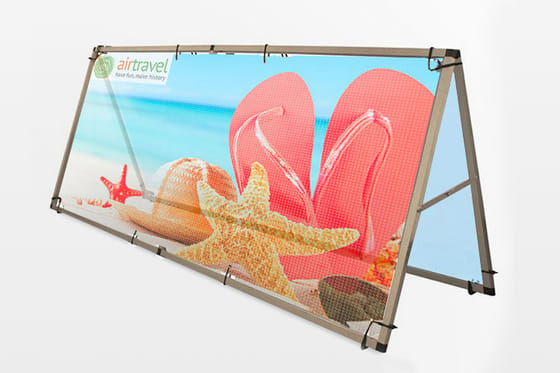
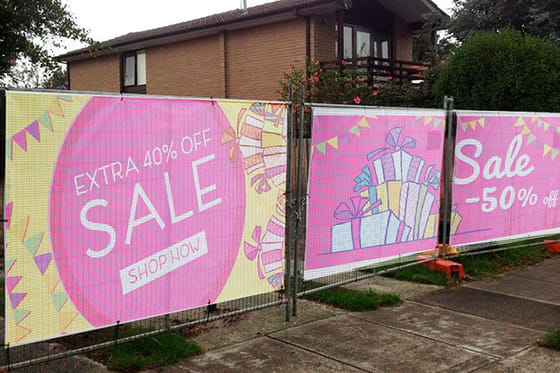
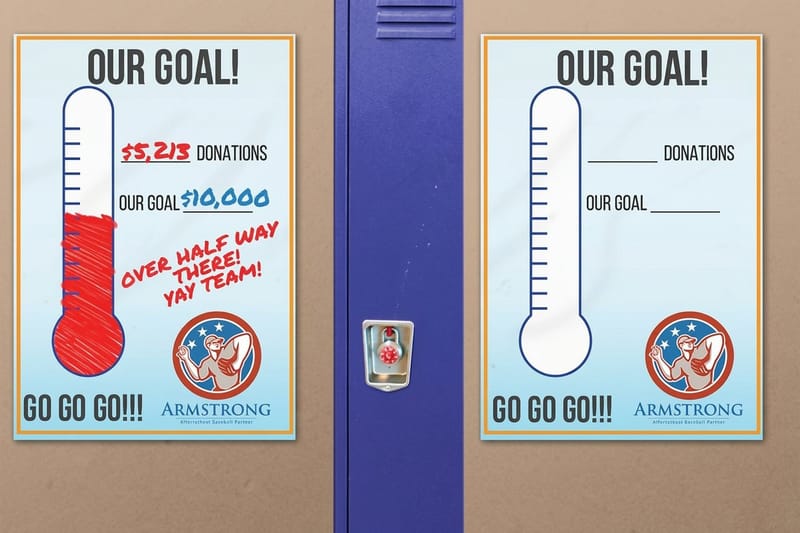
Easel boards we printed for events





Explore more
Where to go next

By the numbers
Foam board and sign stocks, with the delivery record
Common Questions
Common questions about foam board signs
What are foam board signs?
Foam board signs are rigid printed panels made of a lightweight foam core sandwiched between two smooth, coated print faces. That construction gives you a stiff, flat sign that weighs very little and takes sharp full-color printing, which is why foam board is the default for indoor displays, presentation boards, easel signs, and event signage. The board holds its shape without a frame, sits easily on an easel or a wall, and reproduces photos and logos cleanly across the whole surface.
How far back does the reader stand?
Start from where the sign will be used and how long it needs to last. For a one-day event or a presentation, standard 3/16 in foam board on an easel is ideal. For a larger lobby or retail panel that must stay dead flat, step up to 1/2 in thickness. Size follows viewing distance: 18 x 24 in and 24 x 36 in cover most easel and presentation needs, and you can go larger for feature displays. If the sign will face weather or live outdoors long term, a rigid weatherproof board is the better substrate. Our guide on foam board printing sizes and shapes walks the options in more detail.
What do foam board signs cost and how are prices set?
Price is driven by size first, then thickness, quantity, and whether you print one or two sides. A single easel-size board is inexpensive, and the per-unit price drops as you order more, which makes foam board economical for a set of event or presentation signs. You set the size, thickness, sides, and quantity in the configurator and the total updates live, so you can weigh a thicker board or a larger panel against your budget before ordering.
What sizes and thicknesses are available for foam board signs?
Foam board signs run from small counter and presentation sizes up through standard poster sizes like 18 x 24 in and 24 x 36 in and on to large feature panels, with custom dimensions available. Thickness is typically 3/16 in for everyday signs and 1/2 in for larger panels that need extra rigidity. Printing can be single or double sided in full color, and the board can be cut to standard rectangles or custom shapes depending on the display.
How long do foam board signs take to print and ship?
Turnaround depends on the size, thickness, and quantity, and many foam board orders qualify for fast production when placed early in the day. The configurator shows the available production and shipping options as you set your specs, so you can plan backward from your event or install date and choose a turnaround that lands the signs in time.
Are foam board signs suitable for outdoor use?
Foam board is designed for indoor and short-term use. It performs beautifully at events, in lobbies, at trade shows, and in retail, but moisture, wind, and sustained sun will degrade it over time. For outdoor signage or anything that needs to last months in the elements, choose a weatherproof rigid substrate such as coroplast or a heavier PVC or aluminum board. Our guide comparing foam board with Sintra board covers when to step up to a tougher material.
What board is best for a retail counter display?
3/16 in foam board at 11 x 14 in or 16 x 20 in. It stands flat on its own in a folding tabletop easel or a sign holder that grips the bottom edge, the coated face keeps small type and brand color sharp at arm reach, and the panel is light enough that one person can swap the whole counter set when a promotion changes. Go to 1/2 in only when the board is wide enough to need the extra stiffness, around 24 x 36 in and larger, and step up to 18 x 24 in when the sign sits behind the register and has to read from a few steps back.
Get Started
Order foam core posters, printed in 4 business days
Bring your artwork to 4OVER4.COM and print it on the size and thickness your display calls for. Foam core posters ship in the same 4 business days.
Legal Disclaimer
Gold Standard guarantees apply to all standard orders placed through 4over4.com. Price match requires verifiable proof of a competitor's published price for an equivalent product with matching specifications and turnaround time. Satisfaction guarantee covers manufacturing defects and print quality issues. Contact support with order number and documentation. On-time delivery rate based on tracked orders 1999 to 2026. Individual results may vary based on shipping carrier performance.
