
How to Address a Box So It Arrives Right the First Time


Jordan is our labels, packaging and sustainability voice, built from the knowledge of our production team, with over 20 years in printing.
Sorting machines read a box before any person does. Get the panel, the line order and the label right and your parcel stays inside automation. Get one detail wrong and it drops into manual handling, misses a truck, or comes straight back to you. The printed piece that keeps it there is an address label: standard address labels for a desktop printer, premium address labels for a branded box, and roll address labels for a label printer.
To address a box, put the delivery address on the largest flat face, clear of seams, tape and edges. Use four lines: recipient name, company or department, street number with street and unit, then city, state and ZIP+4. Add an international country name on a final line. Place your return address in the upper left of the same face and leave the upper right free for postage. Print in black block capitals without commas or periods, use standard abbreviations, and remove every old label first.
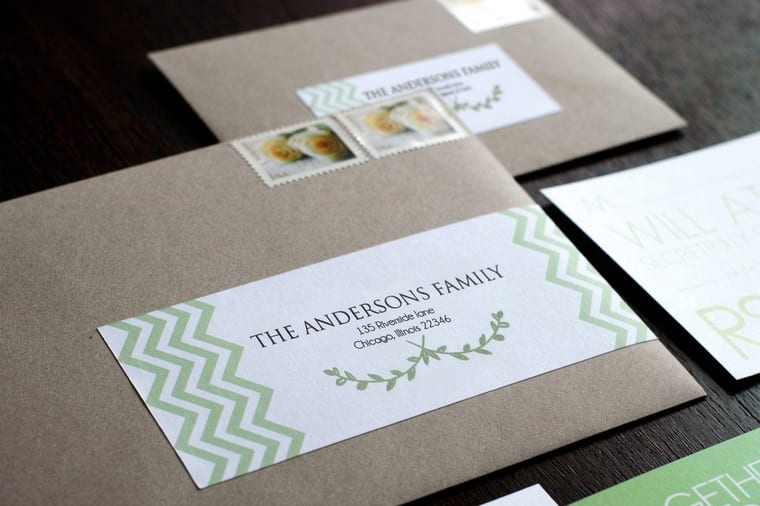
Start here
The whole method in one paragraph
Pick one flat face, keep it uncluttered, and format the address the way machines expect. The delivery address sits centered on the largest panel with an inch of clear space around it, printed in black block capitals with no commas or periods. Name first, then company or department, then the street with the apartment or suite on the same line, then city, state and ZIP+4. The return address goes upper left, postage upper right, and any old label comes off before the new one goes on. Everything else in this guide is detail on those five moves.
Watch it printed
See premium address labels on the press, in 94 seconds
Why the way you address a box decides whether it arrives

A parcel passes through more machines than people. It gets tipped onto a belt, photographed by an overhead camera, sorted by a barcode reader, thrown into a cage, driven across a state, and handed to a driver who reads the last two lines at arm's length in the rain. Every one of those steps assumes the address is printed where the system expects to find it, in the order the system expects to read it.
That is why addressing is not handwriting practice. It is formatting. A box with the unit number buried on the wrong line, or a label taped across the flap seam, does not fail dramatically. It quietly drops out of automation, gets keyed by hand, misses a truck, and shows up two days late or comes back to you marked undeliverable. The fix costs nothing: one clean face, the right line order, and a label that stays readable.
This guide covers the full sequence, from choosing the panel to printing the label. If you are still choosing the carton, the box size chart by product type and industry is the right starting point, and address label printing covers the formats that go on it.
What goes on the box, line by line

A delivery address is read from the bottom up by sorting equipment and from the top down by humans. Both work if you keep the lines in the standard order and give each element its own line. Nothing goes in the margins, nothing wraps, and nothing shares a line with a phone number.
- Line 1, recipient. The full name of the person, or the company name if the shipment is not for a named individual.
- Line 2, attention or department. Use this for a receiving dock, a floor, a suite tenant or an internal team. Skip the line entirely if it does not apply.
- Line 3, delivery address. Street number, street name, direction and unit designator on one line, for example 1225 BROADWAY FL 3 or 88 W MAIN ST APT 12.
- Line 4, city, state and ZIP+4. The last domestic line. Two letter state abbreviation, then the five digit ZIP and the four digit add-on if you have it.
- Line 5, country. International only, spelled out in English, on its own final line.
Your return address goes in the upper left corner of the same face, in smaller type, with the same line order. It is what saves the shipment when the delivery label is destroyed, so it is not optional on a box you cannot afford to lose. Small pre-printed standard address labels handle that corner in one press.
Where to place the address on the carton

Choose the largest flat panel and use it for everything. Splitting the return address onto one face and the delivery address onto another confuses handlers and doubles the chance of a misread. One face carries the delivery label centered or slightly above center, the return address in the upper left, and the postage or carrier stamp in the upper right.
Keep at least an inch of clear space on every side of the label. Stay off the seam where the top flaps meet, because that line flexes and lifts under strap tension. Stay off corners and edges, because a label that curves around a corner cannot be scanned at all. If the box has printed graphics, place the label on the quietest area you can find so the barcode has a plain background.
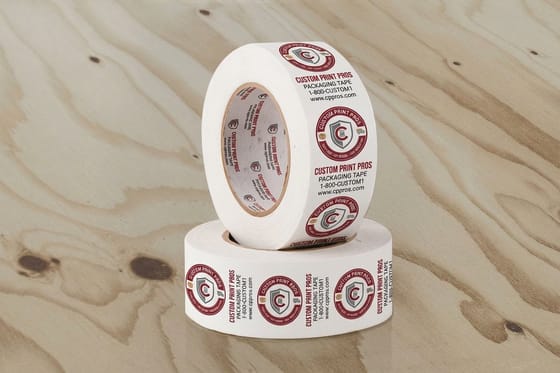
Remove or completely black out every old label, barcode and routing sticker before you ship a reused carton. A leftover barcode is the single most common cause of a parcel going back to the wrong city. If you are sealing with printed tape, plan the tape run first so it never crosses the label; the custom kraft tape guide and branded business tape cover how to keep branding and addressing out of each other's way.
From empty carton to drop-off, the shipping steps in order
Addressing is one step in a short sequence, and doing them in order avoids the classic mistake of labeling a box before it is sealed.
- Pack and cushion. Fill voids so nothing shifts, and slip a duplicate address slip inside before you close it.
- Seal every seam with packing tape, including the center seam on top and bottom. Tape does not go where the label will sit.
- Address the largest flat face: delivery block centered, return address upper left, in block capitals with no punctuation.
- Buy postage or print the carrier label online. A printed label with a barcode keeps the parcel inside automation, and premium address labels carry your own return block above it.
- Apply the label flat, smooth from the center out, and keep clear tape off the barcode.
- Drop it off, or schedule a pickup, and keep the receipt with the tracking number until delivery is confirmed.
Before you pick the carton, check it against the carrier limits, because an oversized box is refused at the counter no matter how well it is addressed.
| USPS service | Maximum weight | Maximum size |
|---|---|---|
| Ground Advantage | 70 lb | 130 inches length plus girth |
| Priority Mail | 70 lb | 108 inches length plus girth |
| Priority Mail Express | 70 lb | 108 inches length plus girth |
Girth is the distance around the box at its thickest point, and length is its longest side. Measure the packed box, since a bulging lid adds inches.
Formatting rules that keep your box inside automation
Postal automation was built around a narrow set of conventions, and following them costs you nothing. Set the address in block capitals. Drop commas and periods. Use a plain, unshaded sans serif face at roughly 10 to 12 point for the delivery address, left aligned, with single line spacing and no italics or script.
Use the official abbreviations rather than inventing your own: ST, AVE, BLVD, RD, DR, LN, CT and PKWY for street types, N, S, E, W, NE, NW, SE and SW for directions, and APT, STE, FL, RM and UNIT for secondary designators. Put the secondary designator on the same line as the street address whenever it fits, since a unit number stranded on its own line is a frequent cause of a failed match.
Add the ZIP+4 when you know it. The four digit add-on narrows delivery to a block face or a single building, which is exactly what a large office or apartment address needs. Print in black on white or another high contrast combination; brown kraft with black ink reads poorly under a scanner, which is why white labels are worth the extra step on kraft cartons, as covered in DIY kraft packaging boxes.
Printed labels versus writing on the box by hand
Writing directly on corrugated is the fallback, not the plan. Corrugated has a fluted texture that makes ink skip, it absorbs moisture, and marker bleeds across fibers until a 3 reads like an 8. If you write by hand, use a fine tip permanent marker, block capitals only, and go over any character that looks thin before it dries.
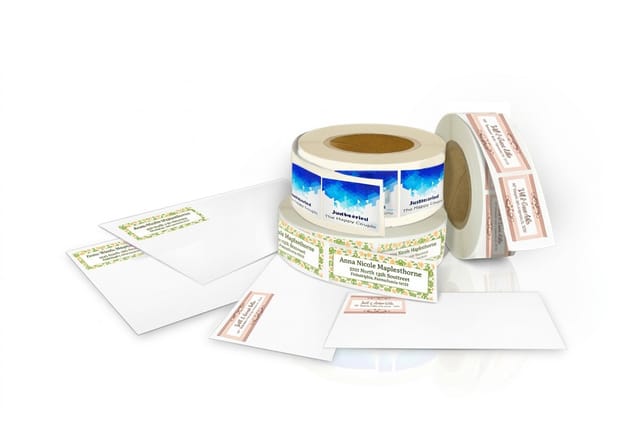
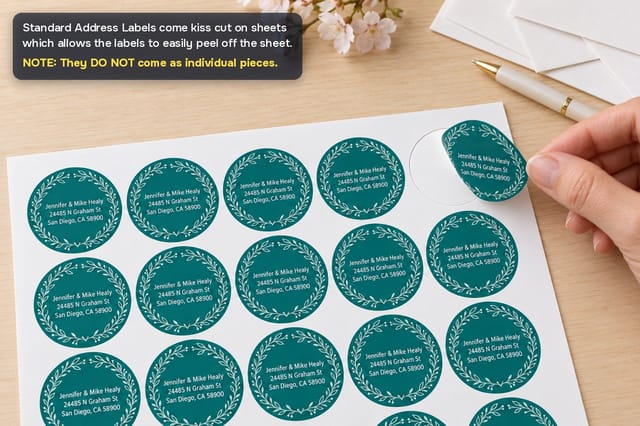
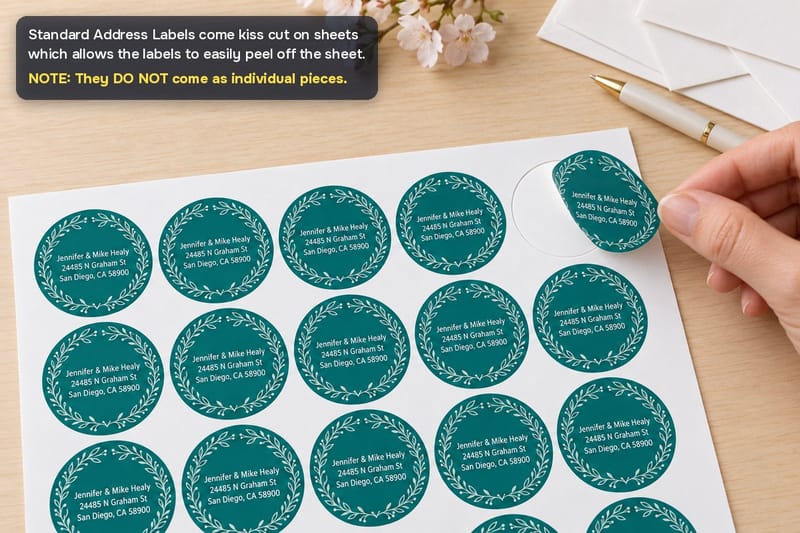
A printed label solves all of it at once. It gives you consistent type, a clean quiet zone around any barcode, an adhesive face that lies flat, and a surface that shrugs off a wet loading dock. For occasional shipments, a sheet of standard address labels in a desktop printer is enough. For a storefront or a fulfillment desk shipping every day, roll address labels feed a label printer or applicator without the sheet handling, and premium address labels upgrade the stock and finish when the outside of the box is part of the unboxing. See roll address labels in their product video before you set up a printer for them.
Apply from the center outward and smooth the label down with the flat of your hand so no corner lifts. A lifted corner catches on a belt and peels the label off in transit, which is the exact failure that a duplicate address slip inside the box is there to survive.
How to address a bubble mailer and other soft packaging
Bubble mailers, poly bags and padded envelopes follow the same line order but behave differently under a pen. The padded face compresses and springs back, so handwriting comes out uneven and a hard press can burst the air cells. Print the address on a label instead and let the label carry the flat surface.
Place the label on the smooth side of the mailer, centered, away from the seal strip, the perforated tear line and the padded seam at the edges. Choose a label small enough that it never wraps a rounded edge, because a mailer changes shape as it is stacked. Keep the return address in the upper left of the same face and leave the upper right clear for postage.
If your mailer already carries printed branding, put the label on the quietest panel so the barcode sits on plain stock. Anything glossy or heavily inked underneath a barcode reflects light back into the scanner and slows the read. The same logic applies to decorated cartons, which is why custom packaging boxes should always reserve one calm rectangle for shipping information. The custom packaging boxes we print sit together in one collection, so you can plan that panel before the art is drawn.
PO boxes, military addresses and international shipments
A PO box address replaces the street line entirely: PO BOX 4120, then the city, state and ZIP+4. Never put both a street address and a PO box on the same label, because the sorter honors the line directly above the city line and the other one becomes a coin flip.
Military and diplomatic mail uses its own pattern. The city line becomes APO, FPO or DPO, the state field becomes AA, AE or AP, and the unit and box number take the address line. Do not write the foreign city or country anywhere on a military address; it routes as domestic mail and a country name will send it into international handling by mistake.
For international parcels, write the destination address in English where possible, keep the postal code in the position that country uses, and put the destination country alone on the final line in capital letters. Add your own country to the return address as well. Customs paperwork lives in its own pouch on the outside of the box and should never overlap the address label.
The addressing mistakes that send boxes back
Most returned parcels fail for one of a short list of reasons, and each one is preventable in a few seconds at the packing table.
- An old label left on a reused box. Two barcodes on one carton is a routing coin flip. Peel it, cover it, or black it out completely.
- The label across the seam. Flaps flex, tape lifts, the barcode splits, and the parcel drops into manual handling.
- A missing unit number. Apartment, suite and floor numbers belong on the street line, not on an afterthought line below the city.
- Tape stretched over the barcode. Clear tape over the address is fine for weatherproofing, but glossy tape directly over a barcode creates glare that blinds the scanner.
- No return address. With no return address and a damaged label, the box has nowhere to go and becomes undeliverable freight.
- Handwriting in cursive or colored ink. Automation reads black block capitals. Everything else is a human sort, and human sorts are slow.
Two habits cover the rest: put a duplicate address slip inside the box before you seal it, and photograph the finished label before it leaves. The slip rescues the shipment if the label is torn off, and the photo settles any dispute about what was actually printed.
Sizes, stocks and what address label printing costs
Return address labels are usually around 1 by 2.625 inches, which is why a sheet holds thirty of them. Full delivery labels for cartons run from 2 by 4 inches up to the 4 by 6 inch format that carrier software prints by default. Choose the size by the panel: a label should look deliberate on the face, with clear space around it, not crammed edge to edge.
Stock choice follows the journey. White matte paper is the workhorse and takes laser and inkjet toner cleanly. Gloss adds color punch for retail packaging where the label is part of the presentation. Synthetic and durable faces resist water and abrasion for cold chain, outdoor storage or long haul freight. Adhesive matters as much as the face: permanent adhesive for corrugated, removable when the box is meant to be reused. Our Synthetic Labels story covers the durable face in more detail.
On price, Standard Address Labels start at $23.88, Premium Address Labels start at $29.16, and Roll Address Labels start at $322.98 because rolls are built for continuous high volume feeding rather than desk use. Quantity is the biggest lever on unit cost, so buying a full year of labels in one run beats monthly reorders. Compare formats across address label printing, or see how the return address options stack up in the return address label comparison.
Wally explains how carriers read your box
Machines read the label, people read the box
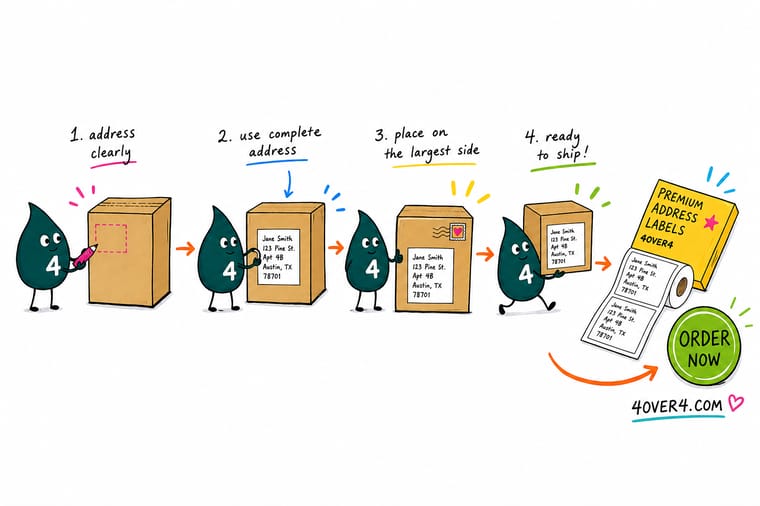
Wally packs a box the same way every time: peel the old label, choose the biggest flat panel, print the address in black capitals, and press the label down flat with an inch of space all around. Return address upper left, postage upper right, duplicate address slip inside. Ninety seconds of care at the packing table is what keeps a parcel out of the manual sort pile.
Order address labels →
Infographic
A correctly addressed box at a glance
One frame showing where each element belongs on the carton and the exact order of the address lines: name, company, street with unit, then city, state and ZIP+4, with the return address top left on the largest flat face. Save it and pin it above the packing table.
Every element on one face, in the order machines and drivers expect. The barcode area stays plain, the seam stays clear, and the return address gives the parcel a way home.
Specs and pricing
Premium address label specs and live pricing
Once the format is settled, the label itself is a short list of decisions: size, stock, finish and quantity. Configure them below and the price updates as you go.
| Quantity | Price Per Unit | Total |
|---|---|---|
| 25 | $1.17 | $29.16 |
Print it
Address labels for every shipping desk
See it in use
Address labels printed for real shipments







Explore more
Where to go next


By the numbers
Sixty paper types, address labels among them
Common Questions
Common questions about addressing a box
What do I write on a box when shipping it?
Two address blocks and nothing else on that face. The delivery block reads recipient name, company or department if there is one, street number and street with any apartment or suite on the same line, then city, state and ZIP+4. Your return address goes upper left in the same order and smaller type. Handling notes such as fragile go on a different face or a separate label.
What do I put for shipping location?
Shipping location, or ship-from address, is the place the parcel leaves from, which for most people is the return address you print upper left on the box. On a carrier or marketplace form it sets the origin for postage and transit time, so use the address where the box is actually collected or dropped off, not a billing address in another city.
Can I just write on a box to ship it?
Yes, for a plain parcel with postage paid at the counter, as long as the address is in black block capitals on the largest flat face and the return address is upper left. Marker on corrugated skips and smears, so a printed label reads faster and survives rain. Tracked and prepaid services still need the carrier barcoded label on top of anything you write.
How do I address a box correctly?
Write or print the delivery address on the largest flat face of the box, keeping it away from seams, tape and edges. Put the recipient name on the first line, the company or department on the second, the street number, street and unit on the third, and the city, state and ZIP+4 on the last domestic line. Add your return address in the upper left corner of the same face and leave the rest of that face clear.
Where exactly does the address go on a box?
On one side only, centered on the largest unbroken panel, with at least an inch of clear space around the label. Never split an address across a fold, a corner or the seam where the flaps meet, because that face bends open on the belt and the scanner loses the barcode. Keep the top right corner free for postage or the carrier stamp.
How do I address a bubble mailer?
The same rules apply, with one change: bubble mailers flex, so a handwritten address distorts. Print the address on a smooth label and press it onto the flat side away from the seal strip and the padded seam. Keep the label small enough that no part of it wraps around a rounded edge, and put the return address in the upper left of the same face.
Should I write the address by hand or print a label?
Print it whenever you can. Printed labels survive moisture, handling and machine sorting, and automated readers process them faster than handwriting. If you must write by hand, use block capitals, a permanent marker with fine tip, and press hard enough that the ink does not skip on the corrugated texture.
What size are address labels and what stocks are available?
Return address labels are commonly around 1 by 2.625 inches, while full delivery labels for boxes run larger, from 2 by 4 up to 4 by 6 inches. Stocks include white matte paper for laser and inkjet printing, gloss for color impact, and durable synthetic faces for shipments that see moisture. Roll formats feed applicators and label printers for high volume.
What do custom address labels cost and how is the price set?
Price scales with quantity, size, stock and finish. Standard Address Labels start at $23.88, Premium Address Labels start at $29.16, and Roll Address Labels start at $322.98 because rolls ship in high counts built for continuous feeding. Larger runs lower the unit cost sharply, so ordering a year of labels at once is usually cheaper than ordering monthly.
How long does address label printing take to produce and ship?
Most address label orders move into production the same business day when artwork is approved early, and turnaround options run from one business day to standard multi day production. Shipping time is added on top and depends on the destination. If a launch or a mailing date is fixed, choose the faster turnaround and upload print ready artwork to avoid a proofing round.
Get Started
Ready to label every box the right way?
Upload your return address or your full shipping details and print labels that stay readable from the packing table to the doorstep. Sheets for the desk, rolls for the line.
Legal Disclaimer
Gold Standard guarantees apply to all standard orders placed through 4over4.com. Price match requires verifiable proof of a competitor's published price for an equivalent product with matching specifications and turnaround time. Satisfaction guarantee covers manufacturing defects and print quality issues. Contact support with order number and documentation.
