
How to Choose an Invitation Printer That Gets Stock, Foil and Envelopes Right


Sofia is our design and templates voice, built from the knowledge of our production team, with over 20 years in printing.
Four answers tell you whether a printer can handle an invitation suite: the stock calipers, the finishing it owns, the envelopes it stocks, and the proof it shows you. Get all four before you pay.
Choose an invitation printer on four checks: named stock calipers rather than adjectives, whether foil and letterpress are pressed on real equipment or faked digitally, whether it sells envelopes cut to match its card sizes, and whether a proof comes before the press runs. Price is the fifth question. A quote that beats the others usually swaps 16pt for 14pt, replaces pressed foil with a gloss effect, or leaves the envelopes out of the total.
Quick answer
Stock, finishing, envelopes, proof, then price
The printer worth using can name the caliper of every stock it offers. That one answer predicts the rest, because a shop that tracks 14pt against 16pt against 32pt double thick also knows which of them will take a letterpress bite and which will only ever hold flat ink. Add the envelope question, since a card size you cannot buy an envelope for is a redesign, and the proof question, because dates and surnames are the copy people read past. Compare price last, on matched specs.
The Four Things That Separate Invitation Printers
Every printer will quote you a price for an invitation. Far fewer can tell you what they are actually printing it on, and that gap is where most disappointing orders come from.
Judge a shop on four answers: the stock calipers on its list, whether it presses real foil or letterpress, whether it sells the matching envelope, and whether you see a proof before the press runs. Price is the fifth question, not the first, because a cheap quote on the wrong stock is not cheap.
| What to ask | A good answer sounds like | Warning sign |
|---|---|---|
| Stock | Named calipers and coatings: 14pt gloss, 16pt matte, 18pt uncoated, 32pt double thick. | "Premium cardstock" with no number anywhere on the page. |
| Finish | Foil pressed with heat and a die; letterpress on a platen press; specific stocks named for each. | "Foil effect" or "metallic look" printed digitally, sold at foil prices. |
| Envelopes | Envelope sizes listed next to the card sizes, orderable in the same checkout. | Cards only, with envelopes described as something you can source anywhere. |
| Proof | A proof before production, with a change round included. | Straight to press, or a proof that costs extra and adds a week. |
| Turnaround | Production days counted from proof approval, with shipping quoted separately. | One vague delivery window that quietly includes the transit time. |
Read the warning sign column twice. Three of those five are not quality problems, they are disclosure problems, and they only surface after the box arrives. If you want the shortlist of printer types rather than the criteria, the guide on where to print invitations covers local shops, retail counters and online presses side by side.
Stock and Finish: How to Read the Spec Instead of the Adjective
Caliper is measured in points, and a point is one thousandth of an inch. It has nothing to do with paper weight in pounds, which is why two stocks described as "heavy" can feel completely different in the hand.
For a flat card at 5 by 7, 14pt is the entry point and it bends if someone props it against a glass. 16pt is the size where most people stop noticing thinness. 18pt uncoated has a softer surface that takes ink slightly warmer and feels closer to stationery than to a business card. Double thick stock at around 32pt is two sheets bonded together, and it is the only tier where a deep letterpress impression or a painted edge makes sense, because there is enough material to press into.
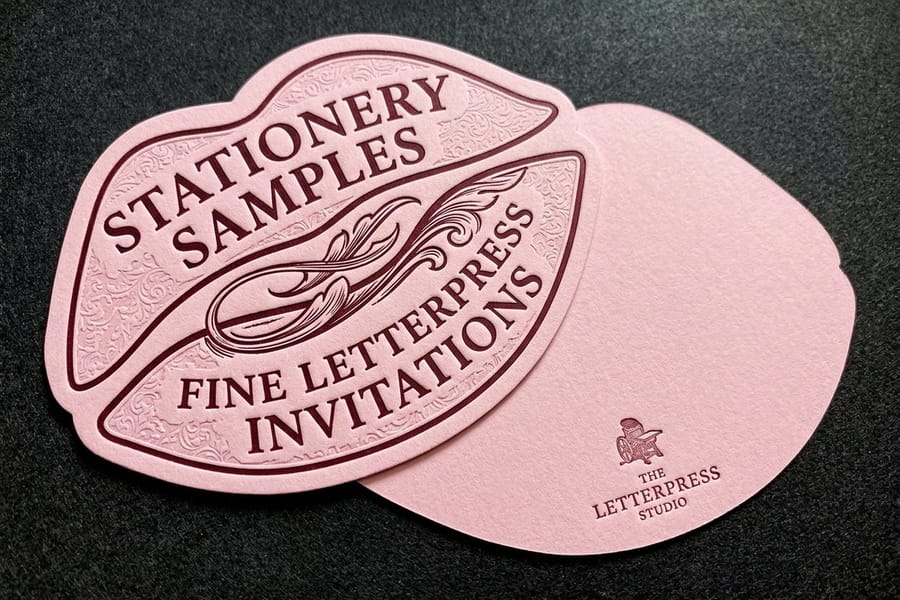
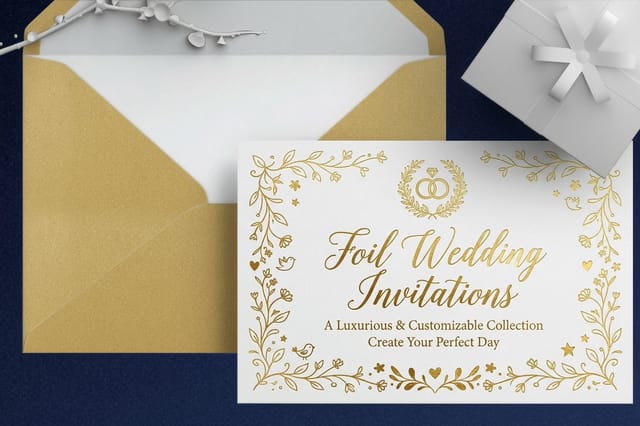
Finish follows from that. Foil stamping presses metal leaf into the sheet with a heated die, so it is genuinely reflective from any angle and it costs a plate. Digital gloss effects look similar in a product photo and flat in person. Letterpress needs soft, thick stock to show its bite, which is why it is never offered on 14pt gloss. The Letterpress invitations story shows the impression up close. Letterpress invitations start at $220.20 and foil wedding invitations start at $421.91, against $19.77 for flat invitation cards and $38.22 for folded invitations.
The trade-off nobody volunteers: coated gloss stock makes photographs sing and makes handwriting impossible, so if guests are writing on any part of the suite, that part has to be uncoated. Set the card size from a correct layout in the blank template library and check the full range in invitation printing before you commit to a finish.
Envelopes: The Half of the Job Most Printers Leave to You
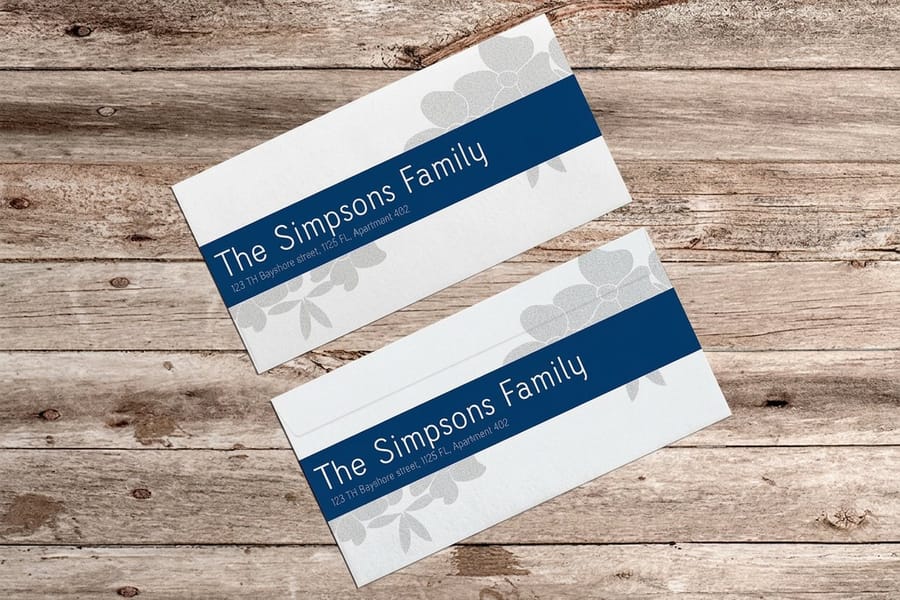
An invitation is not a card, it is a card and an envelope that have to agree. Get the pairing wrong and there is no fix short of reprinting one of the two.
The rule is simple. An envelope is cut about a quarter inch larger than the card in both directions, so a 5 by 7 card takes an A7 envelope at 5.25 by 7.25 inches. Choose the envelope you can actually buy, then set the card to fit it. Designers who do it the other way round end up with a 5.5 by 7.5 card that fits nothing on the shelf.
Three things worth deciding early. Printing on the envelope flap or face has to happen before the envelope is stuffed, so it belongs in the same order as the cards. Dark envelope stock cannot be printed with standard four color ink, because process ink is transparent and there is no white in the set, so a return address on a navy envelope has to be foil or white ink. And order more envelopes than cards. Addressing by hand ruins some, and a second short run at the end of the schedule is exactly the delay that pushes the mailing late.
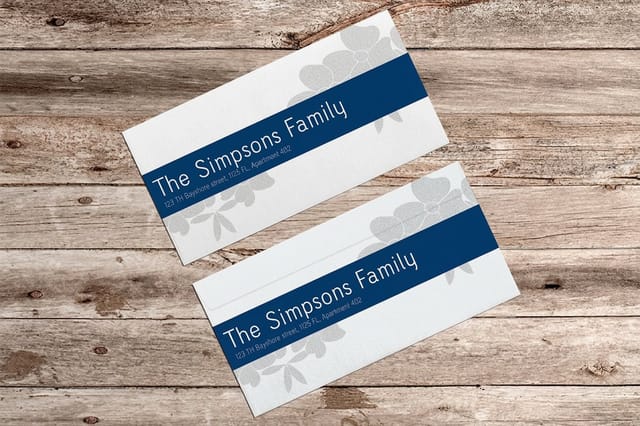
Our invitation envelopes start at $170.42 and are cut to the standard invitation sizes, so they pair with the cards without a measuring exercise. If your suite includes reply cards, RSVP cards start at $19.77 and take their own smaller envelope. The whole range sits in envelope printing, and the invitation size guide lists every card and envelope pairing in one table.
Proofs, Turnaround and What Actually Goes Wrong
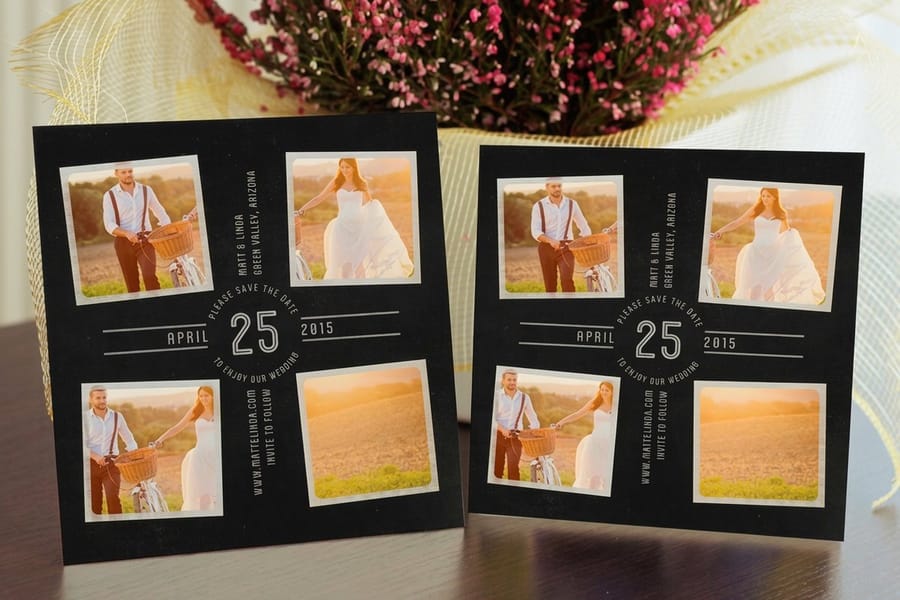
The errors that reach the mailbox are almost never printing errors. They are a wrong date, a misspelled surname, or a venue address copied from an old email, all approved by someone who read straight past them.
Treat the proof as the job. Read the names out loud. Check the date against a calendar rather than against your memory of it. Hand the proof to somebody who was not involved in writing it, because the person who typed the copy is the worst possible proofreader of it. On a wedding suite, confirm that the card, the reply card and the details card all say the same time, which is the single most common contradiction we catch.
Then plan the calendar backwards. Production days are counted from proof approval, not from payment, so a slow approval moves the ship date one for one. Wedding invitations usually mail six to eight weeks before the day, and save the dates go much earlier, so build in a proof round, an assembly evening and postal transit on top of the print time. Save the date cards start at $19.77 and buy you room when the full suite is not designed yet.
Two more habits worth having. Order a sample of the stock before you commit a large run, since a caliper you have held is worth more than any description of it, and check the free proofs policy so a change round does not turn into a second charge. If a competing quote comes in lower, the price match guarantee gives you a reason to compare the two specs line by line rather than by total.
Wally sizes up an invitation printer
Caliper, foil, envelope, proof, then price
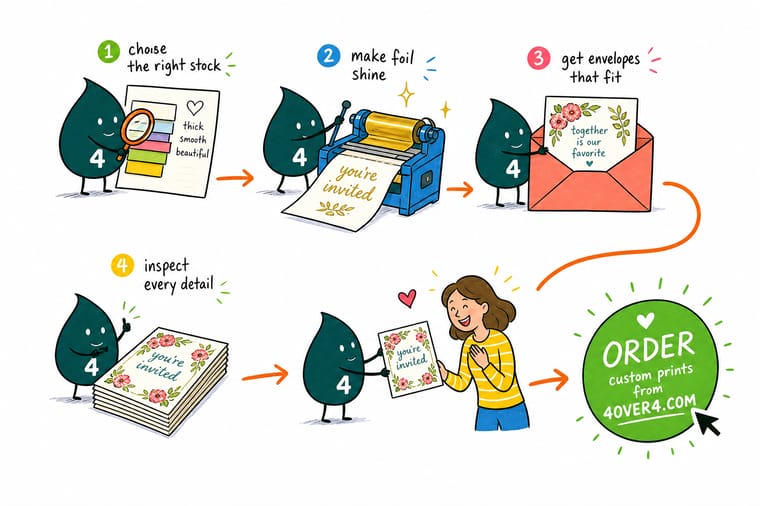
Wally asks four questions before he prints a single invitation. What is the caliper, in points, not adjectives. Is the foil pressed with a heated die or is it a gloss effect. Do you sell an envelope cut a quarter inch larger than this card. Do I see a proof before the press runs. He compares prices only after all four match, because the cheaper quote is usually a thinner sheet with the envelopes taken out.
Configure your invitation cards →%22%2F%3E%3Ccircle%20cx%3D%2243%22%20cy%3D%221%22%20r%3D%2218%22%20fill%3D%22%23f59e0b%22%20opacity%3D%220.15%22%2F%3E%3Ccircle%20cx%3D%2240%22%20cy%3D%2250%22%20r%3D%225%22%20fill%3D%22%23f59e0b%22%20opacity%3D%220.1%22%2F%3E%3Crect%20x%3D%2273%22%20y%3D%22-7%22%20width%3D%2228%22%20height%3D%2210%22%20rx%3D%224%22%20fill%3D%22%23f59e0b%22%20opacity%3D%220.08%22%20transform%3D%22rotate(8%2080%2030)%22%2F%3E%3C%2Fsvg%3E)
Specs and pricing
Invitation stocks, sizes, and starting prices
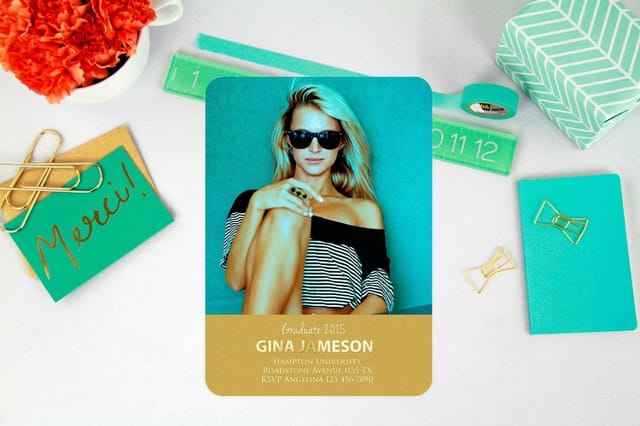
Flat, folded and letterpress side by side, with the live configuration choices and starting prices straight from the 4OVER4.COM configurator. Flat invitation cards start at 25 for $19.77 at 4.25 by 5.5, 5 by 7 or 6 by 6 inches, with 3 business days of production. Folded invitations start at 25 for $38.22, folding to the same three sizes, with 5. Letterpress invitations start at 100 for $220.20 in five sizes from 4 by 6 to 11 by 17 inches, with 10 business days.

Print it
Order the cards and the envelopes together
A 5 by 7 card takes an A7 envelope at 5.25 by 7.25 inches. Invitation envelopes start at 250 for $170.42 in 11 sizes from A2 to A10 on white wove, with 7 business days of production, and foil wedding invitations start at 500 for $421.91 in gold, silver, copper, rose gold and three more foils.
Explore more
Where to go next
Match every invitation size to its envelope, choose between folded and flat, see where the money goes on a wedding suite, and compare the places to print, then shop invitation and envelope printing.
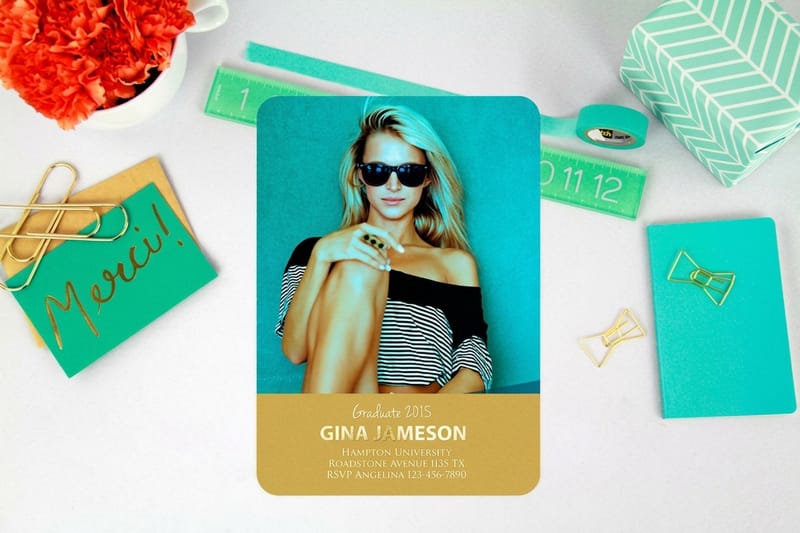
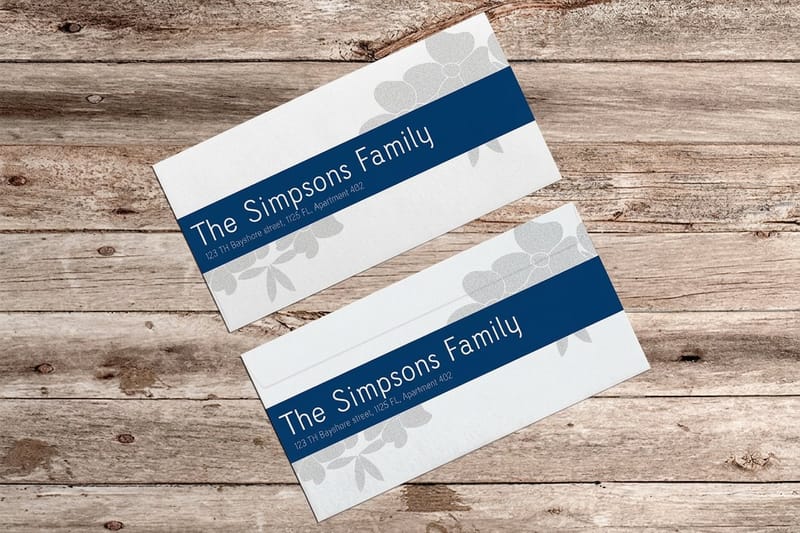
By the numbers
Invitation stocks, foil and matching envelopes in house
Common Questions
Your invitation printing questions, answered
What should I ask an invitation printer before I place the order?
Five questions cover most of it. Which stock calipers do you offer for this size. Is foil real foil pressed with heat and a die, or a digital gloss effect. Do you sell envelopes that match this card size, and can I order them separately. Do I get a proof before it prints, and can I make changes after seeing it. What is the production turnaround, counted from proof approval rather than from the moment I pay. A printer who answers all five in plain numbers is worth more than one who answers in adjectives.
Do I have to buy envelopes from the same printer as the cards?
You do not, but buying them together removes the two failures that ruin a suite. The first is fit: a card trimmed even a sixteenth of an inch large will not slide into a snug envelope. The second is color: paper white varies between mills, so a bright white card in a slightly warmer envelope looks like a mistake even when both are technically white. If you buy envelopes elsewhere, get them in hand and set your card size from the envelope opening, not from a chart. Our invitation envelopes start at $170.42 and are cut to the standard invitation sizes.
Is letterpress or foil worth the price on an invitation?
It depends on whether the piece is handled or scanned. An invitation is picked up, read slowly, and often propped on a shelf until the date, which is exactly the situation where a finish you can feel earns its cost. Letterpress invitations start at $220.20 and foil wedding invitations start at $421.91, against $19.77 for flat invitation cards. For a corporate open house going to two hundred people who will glance and recycle, flat printing on heavier stock is the better spend. For fifty wedding invitations, the finish is most of what people remember.
How far ahead do invitations need to be printed?
Work backwards from the mailing date, not the event. Wedding invitations are usually mailed six to eight weeks before the day, and save the dates six months to a year out, so the print job has to be finished, addressed and stuffed before that window opens. Add time for a proof round, for assembly at your kitchen table, and for the post office. Our timing rules of thumb are laid out in the guide on when to send wedding invitations.
Can a printer match the exact color I see on my screen?
Not from a screen, no. A monitor makes color with light and a press makes it with ink on paper, so a saturated screen blue will always print duller. Two things narrow the gap. Supply the file in CMYK so you see the printable version while you design, and for a brand color that has to be exact, ask about spot color rather than a four color build. Ordering a physical sample of the stock first tells you more than any screen calibration, and you can request one through free stationery samples.
What if I find the same invitation cheaper at a U.S. retail printer?
Send us the quote. The price match guarantee covers like for like work, which means the same stock caliper, the same size, the same finish and the same quantity. That comparison is the useful part on its own: quotes that look far cheaper usually turn out to be lighter stock, a digital foil effect instead of pressed foil, or a card price with the envelopes stripped out.
Get Started
Order 25 invitation cards from $19.77 with the envelope
Pick the caliper, choose flat, folded, foil or letterpress, add the matching envelopes, and approve a proof before anything goes on press.
Legal Disclaimer
Gold Standard guarantees apply to all standard orders placed through 4over4.com. Price match requires verifiable proof of a competitor's published price for an equivalent product with matching specifications and turnaround time. Satisfaction guarantee covers manufacturing defects and print quality issues. Contact support with order number and documentation.
