
How to Design Professional Holiday Cards That Clients Actually Keep


Sofia is our design and templates voice, built from the knowledge of our production team, with over 20 years in printing.
Professional holiday cards for clients and staff, designed step by step: sizing, folded versus flat, printed signatures, foil, envelopes and the schedule that gets cards read instead of stacked. The full process, in the order a printer would take you through it.
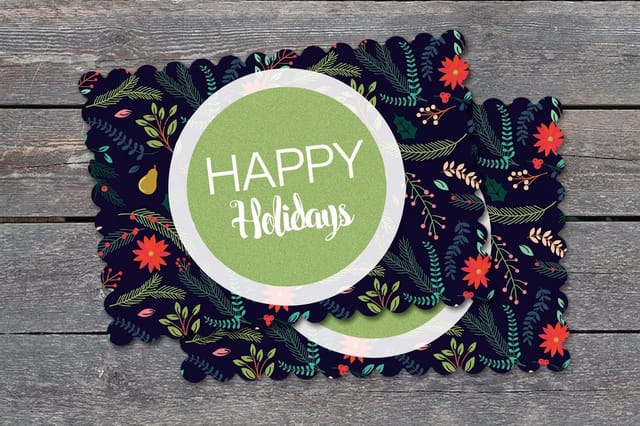
Start with the finished size and its envelope, choose folded over flat if anyone is going to sign the card, then build the file at the flat spread size with an eighth of an inch of bleed and a scored fold down the center. Keep the cover free of branding and put a small logo on the back panel. Set scanned signatures on the inside right panel rather than signing hundreds by hand. Have press ready art by the middle of November and the cards in the mail in the first week of December. For something smaller, mini cards print from 2 inches to 4 inches square on 14pt gloss cover as gift tags, without envelopes, and drink coasters print your holiday art on 48pt board in 3.5 to 4 inch squares or a 4 inch circle.
Quick answer
Size first, fold second, branding last and small
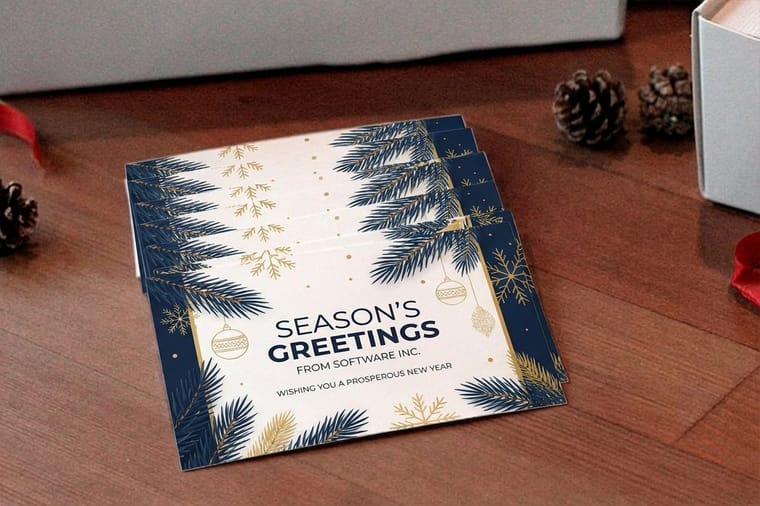
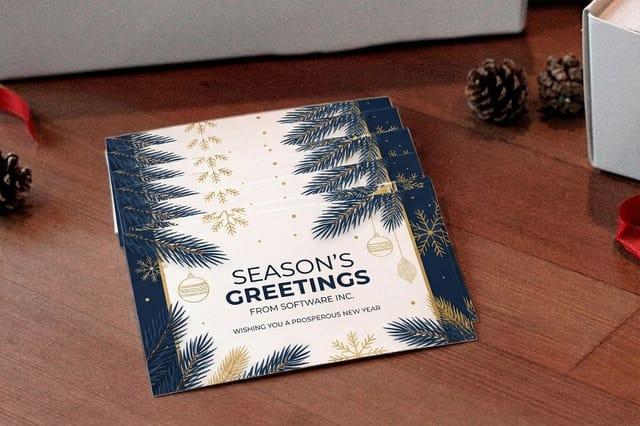
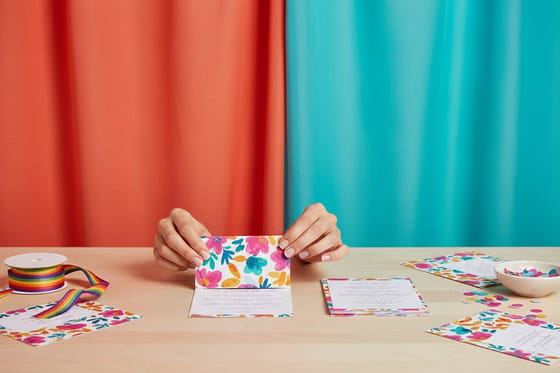
A professional holiday card is a folded 5 by 7 on cover stock, in a 5.25 by 7.25 envelope, with the artwork on the cover and the brand reduced to a small logo on the back. The interior spread carries a short message and a signature block, which is the reason the card gets kept rather than filed. Build the artwork as a flat 10 by 7 spread with the fold scored down the center, an eighth of an inch of bleed on the outside edges and type held a quarter inch inside the trim. Add foil or raised ink if the card should feel expensive, allow the extra day it takes, and keep any area that will carry a mailing label completely flat.
The Six Steps From Blank Page to Mailed Card
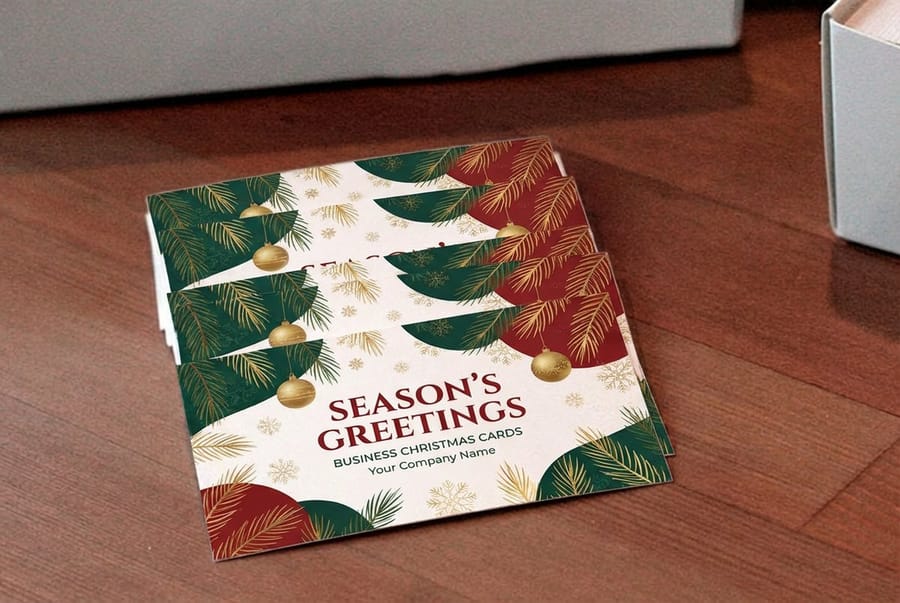
Work in this order and the card designs itself. Work out of order and you end up resizing artwork in the first week of December because the envelopes you bought are the wrong shape.
- Size and envelope, chosen together. Settle on 5 by 7 folded or 4.25 by 5.5 folded, then order the matching envelope in the same job. The envelope is always a quarter inch larger in both directions than the folded card.
- Folded or flat. This decides where the message lives, so it comes before any layout. The next section covers the trade.
- Build the file at the flat size. A folded 5 by 7 card is two 10 by 7 spreads with the fold down the middle, not four separate 5 by 7 pages. Add an eighth of an inch of bleed on every outside edge and keep type a quarter inch inside the trim.
- Write the inside before you design the outside. A message of two or three sentences and a signature block need very different space than a single line, and it is much cheaper to learn that now than after the cover art is approved.
- Set the signature block. Scanned signatures, set in black, sized like real handwriting. Four names across the bottom of the inside right panel is the layout that works.
- Proof on paper. Screens flatter dark backgrounds. A printed proof tells you whether that deep green is actually a muddy gray, and whether the gold reads as gold or as mustard.
Step three is the one that goes wrong most often. If you are building the file in Adobe software, our walkthrough of card setup in InDesign shows the spread and score exactly as the press wants it, and the blank template library has the sizes already ruled with bleed and safety lines.
Folded, Flat, or a Postcard, and What Each One Costs You
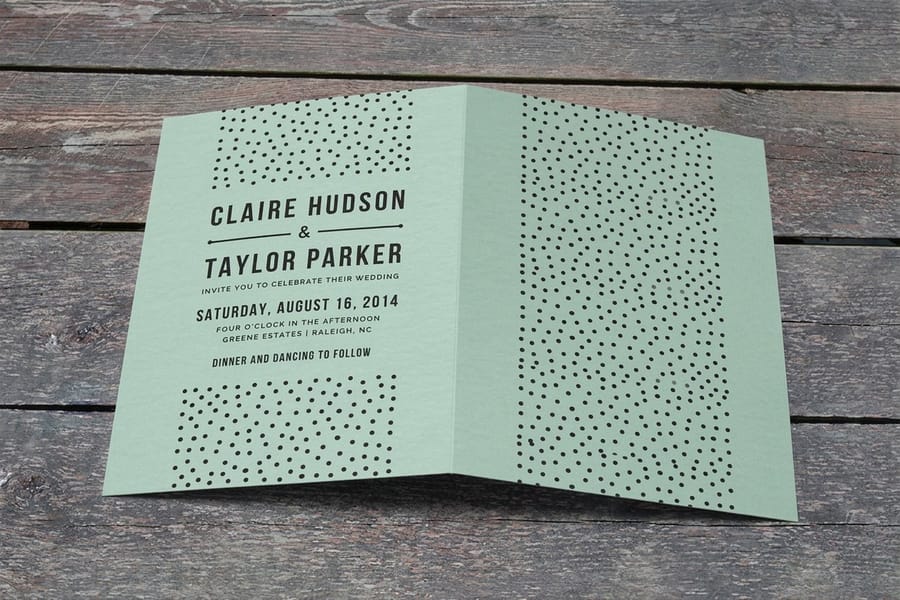
The fold is not a style choice. It is a decision about how much writing the card has to hold and how the piece travels through the mail.
| Format | Room to write | How it mails | Best for |
|---|---|---|---|
| Folded card | A full interior spread, two panels, easily holds a paragraph plus four signatures. | Needs an envelope, adds a scoring and folding pass to the job. | Clients and staff, anywhere a name is signed by hand. |
| Flat card | One back panel. Enough for a greeting and one signature, not four. | Needs an envelope, but no folding pass, so it is the cheapest card that still feels formal. | Large lists where the artwork carries the message. |
| Holiday postcard | Half a back panel once the address block takes its share. | No envelope at all, and it mails at the postcard rate. | Announcements, hours, promotions, anything that is really marketing. |
Read the middle column before the first one. A folded card is the only format where a handwritten signature has somewhere natural to sit, which is why it stays the standard for business holiday cards even though it costs more to produce. Business Christmas cards start at $17.57, and greeting cards in the heavier folded stocks start at $56.02, so the gap between formats is smaller than most people assume once the list is a few hundred pieces.
One physical detail decides whether a folded card looks professional or homemade: the fold has to be scored first. Scoring crushes a channel in the fibers so the sheet bends along a clean line. On 14pt or heavier cover stock, folding without a score cracks the coating along the spine and leaves a white split through your artwork. Every folded card we print is scored as part of the job, which is also why the folded versus flat comparison rests on budget rather than quality.
Putting Your Brand on the Card Without Turning It Into an Ad
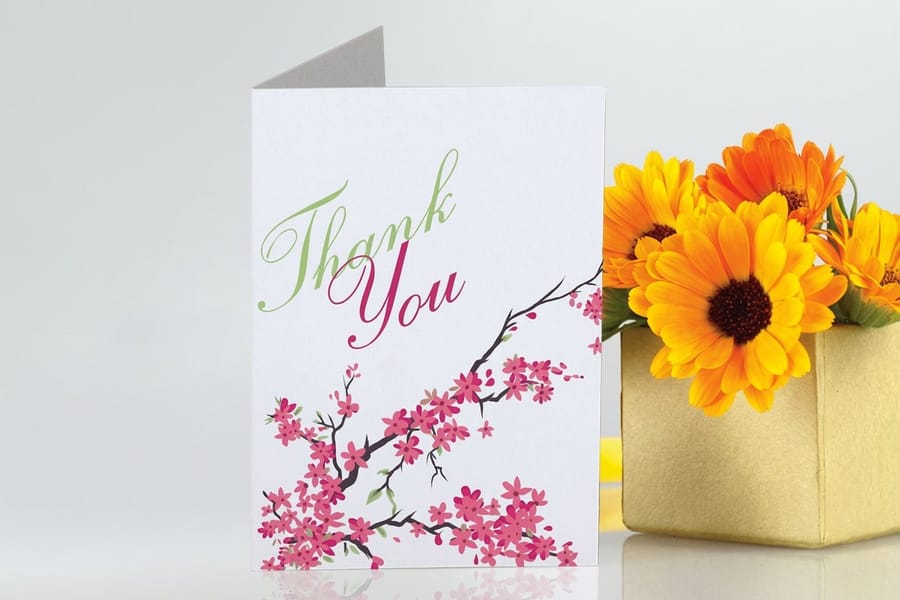
Here is the rule that separates a card people keep on the shelf from one that goes straight into recycling: the holiday comes first and the company comes second, visibly and unmistakably.
In practice that means the cover carries artwork and nothing corporate. No logo, no tagline, no brand color forced into a snowflake. The back panel carries the logo at roughly three quarters of an inch, one line with the website or phone number underneath, and white space around both. That is the whole brand presence. If your brand palette is a bright commercial blue and orange, use a restrained version of it or step away from it for this one piece, because holiday artwork in full brand colors reads as a press release.
What genuinely does carry the brand is consistency of typeface and paper. Print the card on a stock that feels like your other printed material, set the interior message in your brand text face, and the card is recognizably yours without a logo shouting from the cover. A kraft greeting card, starting at $193.15, does this well for brands that already use uncoated and natural materials, because the stock does the talking.
Then there is the signature, which is the highest value square inch on the card. Sign on white paper with a black felt tip, scan at 1200 dpi, push the contrast until the stroke is solid black, and place it at the size a hand would actually write. Four scanned signatures across the bottom of the inside right panel takes ten minutes to set up and saves an afternoon of the leadership team signing cards. If the list is small enough that people can genuinely sign by hand, do that instead, because nothing beats real ink. The wording that goes above the signatures is its own problem, and our holiday card message guide has language for clients, staff and vendors that does not read like a memo.
Foil, Raised Ink and the Finishes That Earn Their Cost
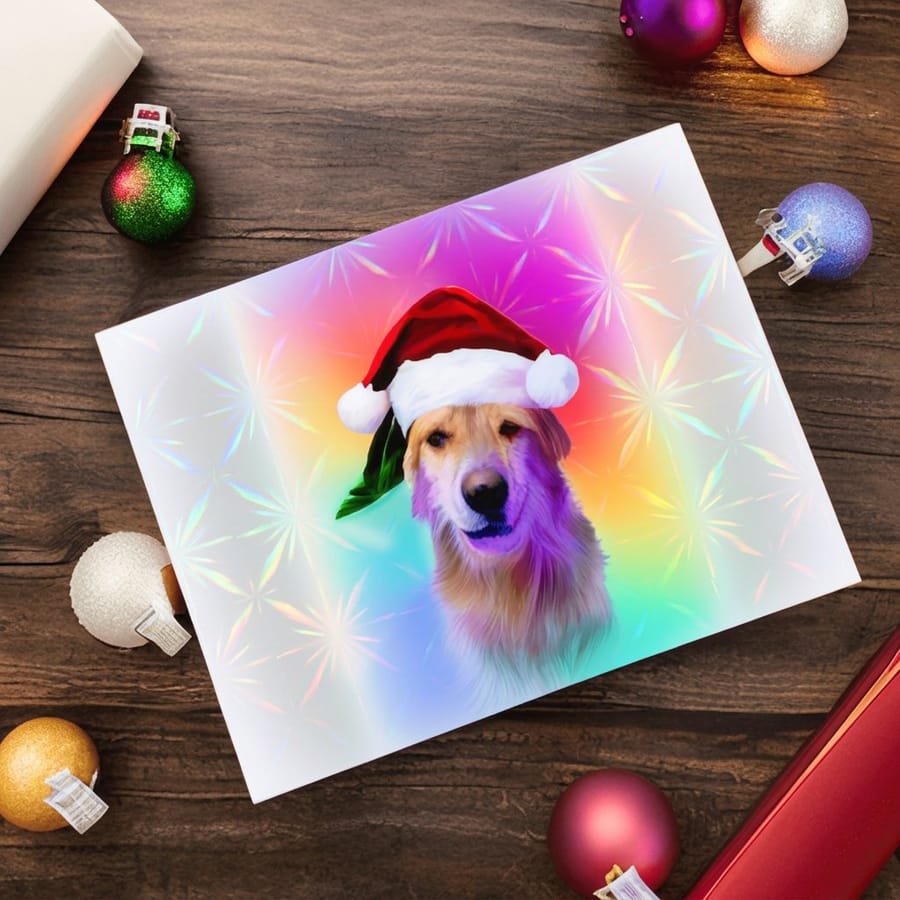
Holiday cards are one of the few printed pieces where a specialty finish reliably pays for itself, because the recipient holds the card, opens it, and often stands it up for a fortnight. Tactile detail gets noticed on a card in a way it never does on a flyer.
Foil stamping presses a thin metallic film onto the sheet with a heated die, and it is the finish most people picture when they think of an expensive holiday card. It sits brightest on dark uncoated stock, where the metal is the only shiny thing on the page. Raised ink, also called thermography, dusts resin powder onto wet ink and melts it into a glossy raised layer, which gives you texture at a much lower entry price because there is no die to cut. Our explainer on how raised ink works covers where each one is worth the money. Holographic stock takes a third route and puts the shine in the paper itself.
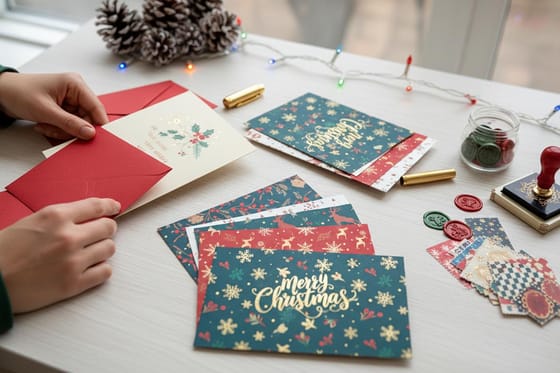
Now the limits, because every one of these has one. Foil and raised finishes both add a pass to the schedule, so allow an extra day and do not order them the week you need the cards. Raised ink softens under a laser printer fuser, so a raised card can never be run back through an office printer to add a name. Our raised foil greeting cards fold from 10 by 7 to 5 by 7 inches, so put the scanned signatures in the file or leave the inside for a pen. Fine detail is the other constraint: hairline strokes and small serif type do not hold in foil or in raised ink, so the smart move is to raise the mark and the greeting and leave the small print flat. And if the card is going into a window envelope or under a mailing label, keep that area free of any raised or foiled element, because a label will not sit flat on top of one.
Envelopes, Addressing and the Mid December Deadline
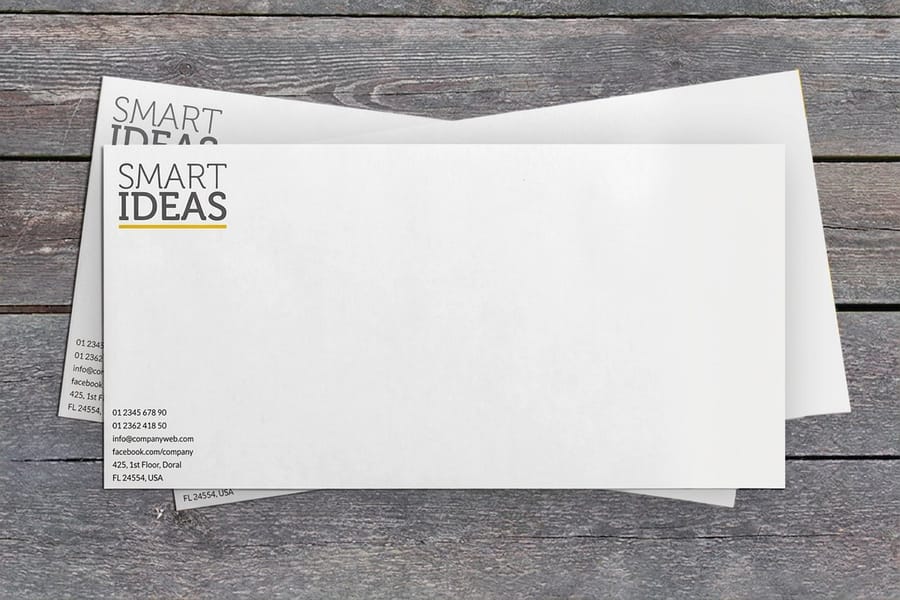
The envelope is half the impression and it is usually the afterthought. It is the first thing the recipient sees, and a card in a mismatched envelope from an office supply cupboard undoes the money spent on the card.
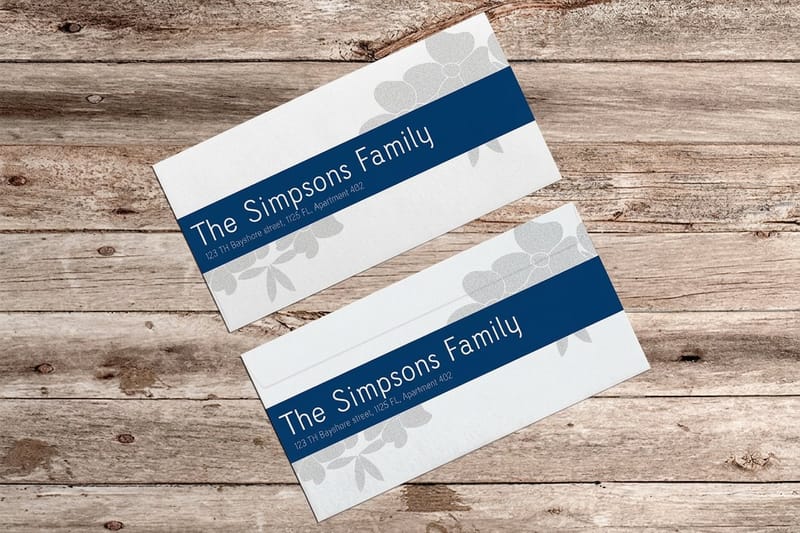
Order the envelopes with the card. Printed envelopes start at $142.99 and come back with your return address already printed, which removes the labeling step entirely and keeps the front of the envelope clean. Sizing is arithmetic: a quarter inch larger than the folded card in both directions, so 5.25 by 7.25 for a 5 by 7 card and 4.375 by 5.75 for a 4.25 by 5.5 card. If you are pairing sizes across several pieces, the card size guide lists the standard combinations in one table.
Two things about postage are worth knowing before you commit to a shape. Square envelopes carry a nonmachinable surcharge per piece because they do not travel through the sorting equipment properly, which is fine on a list of fifty and material on a list of two thousand. Anything rigid or lumpy inside the envelope, a magnet or a thick insert, triggers the same treatment. Addressing is the last decision, and hand addressing still beats a printed label for cards that matter; how to address holiday cards properly covers titles, couples and business salutations.
On timing, work backwards. Press ready art by the middle of November, cards in hand by the end of that month, addressed and mailed in the first week of December. That schedule survives a paper proof and one round of corrections. Browse the full range in the greeting card printing category or start from a design in the template gallery if you are not working with a designer.
Wally explains the holiday card
Envelope first, fold second, logo last and small
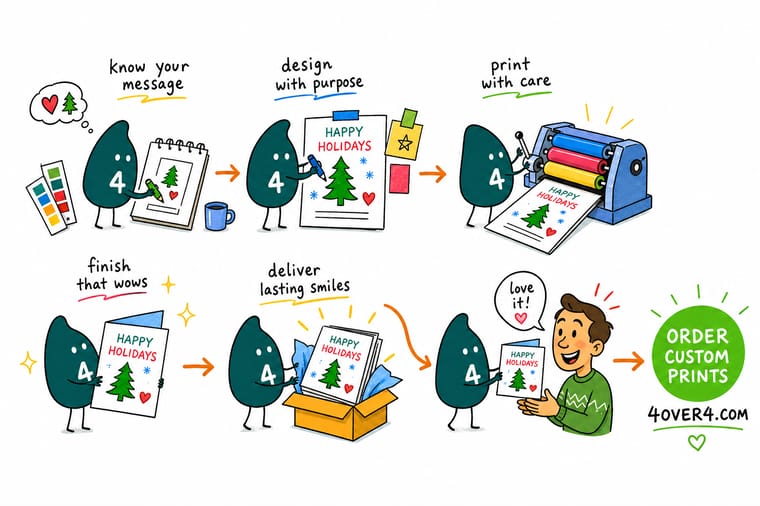
Wally picks the envelope before he picks the card, because a 5 by 7 card wants a 5.25 by 7.25 envelope and nothing else will do. He builds the file as one flat 10 by 7 spread, scores the center so the cover stock bends instead of cracking, and keeps the type a quarter inch inside the trim. The cover gets artwork only. The logo goes on the back at three quarters of an inch. The inside right panel gets the message and the scanned signatures, sized like real handwriting. Then he mails in the first week of December, while people are still reading their post.
Order business Christmas cards →%22%2F%3E%3Ccircle%20cx%3D%2241%22%20cy%3D%2249%22%20r%3D%2226%22%20fill%3D%22%2314b8a6%22%20opacity%3D%220.15%22%2F%3E%3Ccircle%20cx%3D%2278%22%20cy%3D%2258%22%20r%3D%2214%22%20fill%3D%22%2314b8a6%22%20opacity%3D%220.1%22%2F%3E%3Crect%20x%3D%2271%22%20y%3D%2228%22%20width%3D%2226%22%20height%3D%2234%22%20rx%3D%224%22%20fill%3D%22%2314b8a6%22%20opacity%3D%220.08%22%20transform%3D%22rotate(36%2080%2030)%22%2F%3E%3C%2Fsvg%3E)
Specs and pricing
Holiday card sizes, stocks and starting prices
Business Christmas cards are flat 2 by 3.5 inch cards on 14pt gloss cover from 100, greeting cards fold from 8.5 by 5.5 to 4.25 by 5.5 or from 10 by 7 to 5 by 7 inches on 14pt gloss cover from 50, and folded invitations add a 6 by 6 inch square and 18pt stocks from 25, with matching White Wove envelopes as an option on the folded cards. Compare the card formats side by side, with live size, stock and quantity choices and starting prices straight from the 4OVER4.COM configurator.


Print it
Order the card your clients keep on the shelf
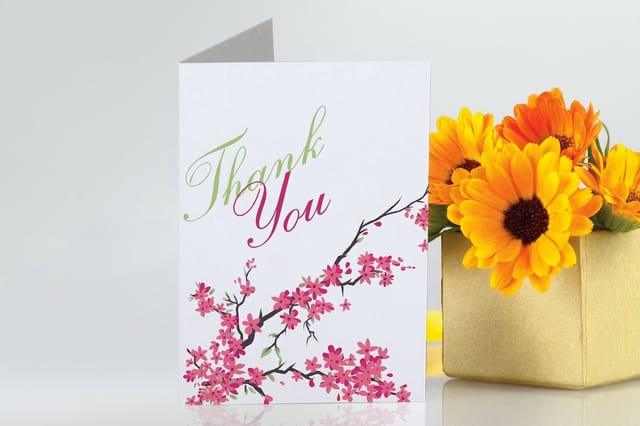
For the client list, order the custom Christmas card or the greeting card folded to 5 by 7 inches with matching envelopes, and sign the inside right panel. Keep the business Christmas card, a flat 2 by 3.5 inch card, for tucking into an order or a gift box.

Explore more
Where to go next
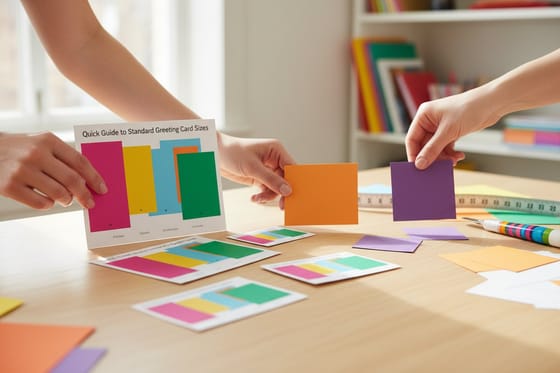
The sizes guide pairs each card with its envelope, and the folded versus flat guide says when a single sheet is the better job. The wording guide covers the message for clients and staff, and the addressing guide handles titles, couples and business salutations on the envelope.

By the numbers
Folded holiday cards scored before they fold
Common Questions
Your holiday card questions, answered
What size should a professional holiday card be?
Five by seven inches, folded, is the default for a business holiday card, because it holds a real message inside and it looks substantial in the hand. Four and a quarter by five and a half is the smaller sibling, cheaper to print and cheaper to mail, and it is the right call when the card carries a short thank you rather than a paragraph. Whichever you choose, order the matching envelope in the same job: a 5 by 7 card wants a 5.25 by 7.25 envelope so it slides in without a fight, and a 4.25 by 5.5 card wants a 4.375 by 5.75.
Should a business holiday card be folded or flat?
Folded, if anyone is going to sign it or write in it. The interior spread is the whole reason folded cards exist, and a card with four handwritten names inside reads as personal in a way a printed flat card never does. Flat wins when the design is the message, when the list runs into the thousands, or when the budget is fixed, because a flat card is a single sheet with no scoring or folding pass. There is a middle option people forget: a flat card with a generous back panel, printed with the greeting and left with white space for one signature.
How do I put a real signature on a printed holiday card?
Sign your name several times on plain white paper with a black felt tip pen, not a ballpoint, because a felt tip lays down solid ink that scans cleanly. Scan the best one at 1200 dpi in grayscale, raise the contrast until the stroke is solid black on pure white, then either trace it to vector or place it as a bitmap TIFF. Set it at the size a real signature would be, roughly two to three inches wide, and keep it in black rather than a brand color so it does not look like a logo.
Can I use my company logo on a holiday card?
Yes, small and on the back. The convention that works is a logo at around three quarters of an inch on the back panel with a single line of contact detail underneath, and nothing else. What breaks the card is a logo on the cover, a tagline, a promotional offer, or a QR code pointing at a sale. The moment a holiday card asks for something it stops being a gift and becomes advertising, and recipients sort it accordingly.
When do holiday cards need to be printed and mailed?
Have the artwork press ready by the middle of November and the addressed cards in the mail during the first week of December. That leaves room for a paper proof, a reprint if the proof is wrong, and the slower delivery that first class mail runs into once the holiday volume builds. Cards that arrive in the week before the holiday land in a pile of everyone else's. Cards that arrive in the first half of December get read.
Does a foil or raised finish delay the job?
It adds a finishing pass, so plan a day rather than a week. Foil stamping presses metallic film onto the sheet with a heated die, and raised ink builds a glossy resin layer on top of wet ink, and both happen after the printing itself is done. The practical warning is heat: a raised or foiled card should never go back through an office laser printer, because the fuser is hot enough to soften the finish and smear it. If names or addresses need to be added later, keep those areas flat.
Are square holiday cards a good idea?
They look good and they cost more to mail. A square envelope does not run through the postal service sorting equipment the way a rectangular one does, so it carries a nonmachinable surcharge on top of the normal rate, applied per piece. On a list of fifty that is noise. On a list of two thousand it is a line item worth checking before you commit to the shape. Everything else about a square card, the stock, the finishes, the folding, behaves normally.
Get Started
Order 25 holiday cards from $31.86
Pick your size, choose folded or flat, add foil or a raised finish, and order the matching envelopes in the same job so everything arrives together.
Legal Disclaimer
Gold Standard guarantees apply to all standard orders placed through 4over4.com. Price match requires verifiable proof of a competitor's published price for an equivalent product with matching specifications and turnaround time. Satisfaction guarantee covers manufacturing defects and print quality issues. Contact support with order number and documentation.
