
How to Offer Gift Cards for Your Business and Grow Repeat Sales


Choose how balances get tracked, set values that match your real ticket, print the terms the law requires, and put the cards where people are already standing.
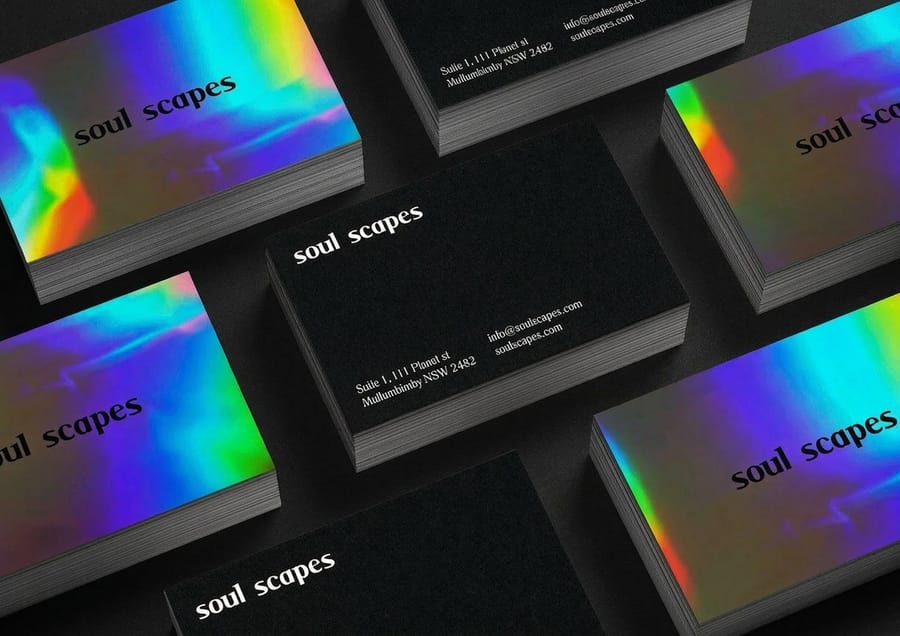
Start by deciding how a balance gets tracked: a point of sale gift card module, or serial-numbered printed certificates recorded in a log. Then set two or three fixed values against your average ticket, print the card at 3.5 by 2 inches on 16pt stock with the serial number, balance contact and expiry terms on the back, and sell it at the register with a holder. Federal law bars expiry sooner than five years from the date funds were loaded, and several states go further.
Quick answer
Tracking first, values second, printing third
The order matters more than the design. Settle whether customers can spend part of a card and return for the rest, because that answer alone decides between a point of sale module and numbered paper certificates. Set two or three fixed denominations around your average ticket rather than round numbers. Print at 3.5 by 2 inches on 16pt stock, put the serial number, the balance contact and the terms on the back, and leave the back uncoated if anyone will write on it. Sell at the register, with a holder, starting six weeks before the season you care about.
Decide How Balances Get Tracked, Then Print
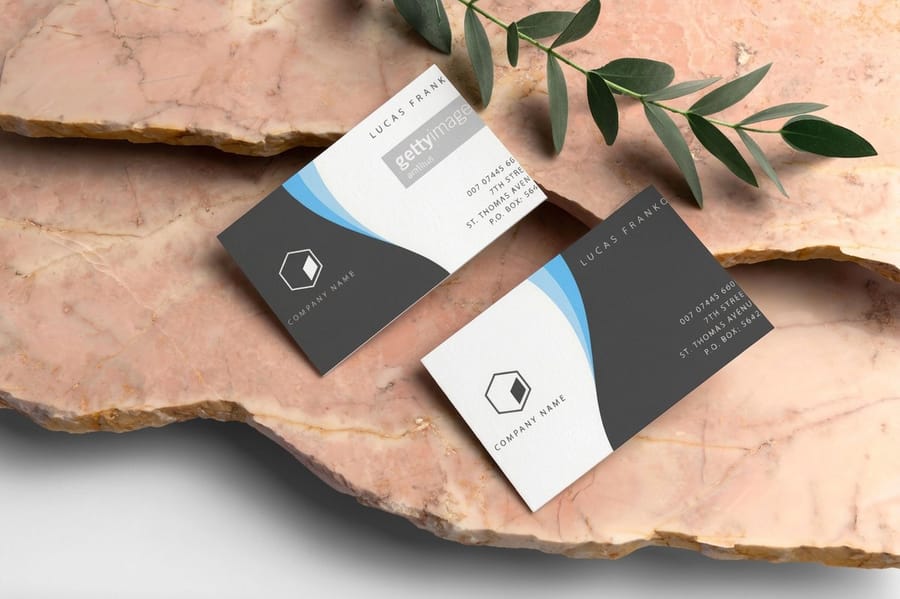
Owners usually start with the card and work backwards. That is the wrong end. The card is the cheap part of a gift card program. The expensive part is knowing, eight months later, that card number 0431 has $12 left on it and nobody has already spent that $12.
There are three ways to run it, and the choice is settled almost entirely by whether a customer can spend part of a card and come back for the rest.
| Setup | Balance tracking | Partial redemption | What you print |
|---|---|---|---|
| POS gift card module | Automatic, by card number or barcode | Yes, balance carries over | Cards with a printed or applied unique number that matches the system |
| Printed certificate plus a log | Manual, one row per card in a notebook or spreadsheet | Only with store credit handed back | Serial-numbered cards with write-in lines for value and date |
| Digital only, emailed code | Automatic | Yes | Nothing, which is also the problem at a gift-giving counter |
The middle row is where most independent shops land in year one, and it works, as long as the card says out loud what it does. A single line on the back that reads good toward one visit removes every awkward conversation at the register. The moment your volume makes that line embarrassing, move to the first row and reprint. Our gift card printing options cover both, because the physical card is identical either way.
Physical or digital gift cards, and when to run both
The table above hides a second decision inside the first. A card can be a printed rectangle, a code in an email, or both, and each format sells in a different place.
| Format | What you print | Cost to issue | Where it sells |
|---|---|---|---|
| Printed card | 3.5 by 2 inch card on 16pt, serial number and terms on the back | Custom business cards from $17.57 a run, or a proof run of free business cards at $0.00 | The register, in a holder, as a present |
| Digital code | Nothing | A monthly software fee, no print cost | Your website, at 11pm the night before a birthday |
| Both | The same card, with the code also printed on it | Card plus software | Counter and website, one balance log |
A single location shop with a counter sells more physical cards than digital ones, because a gift card is bought to be handed over and a bare email is a poor present. A service business booked online sells the reverse. Run both once the POS tracks balances, and print the code on the card so the two are one record. Print the physical card through custom business cards at 3.5 by 2 inches on 16pt, uncoated on the back if staff write on it.
The Expiry and Fee Rules You Have to Print
Gift card terms are not marketing copy, they are disclosure, and federal law requires them on the card. Three rules do most of the work.
- Five years, minimum. Funds loaded onto a retail gift certificate cannot expire sooner than five years from the date they were loaded. If you reload a card, the clock restarts from the newest funds.
- Dormancy fees are restricted. An inactivity fee cannot be charged until the card has gone twelve months without use, no more than one such fee per month is allowed, and the fee has to be disclosed on the card.
- The terms have to be legible on the card itself. A policy that lives only on your website does not satisfy this. It goes on the back panel, in type you can actually read.
Then there is state law, which is stricter in a lot of places and which nobody thinks to check. Several states bar expiry on retail gift certificates entirely. Several require you to hand over cash when a card drops below a small threshold and the holder asks. Others have escheatment rules that eventually turn abandoned balances over to the state. Two minutes on your state consumer protection page before you send the file to press is cheaper than a reprint of 500 cards.
Practically, this means keep the terms short and future proof. Do not print a year. Do not print a promotion end date on the same panel as the balance terms, because it reads as an expiry even when it is not one. Nothing here is legal advice, and a program tied to a franchise or a multi-state operation is worth ten minutes of an attorney's time.
Setting Values, Numbering Cards, and What It Costs
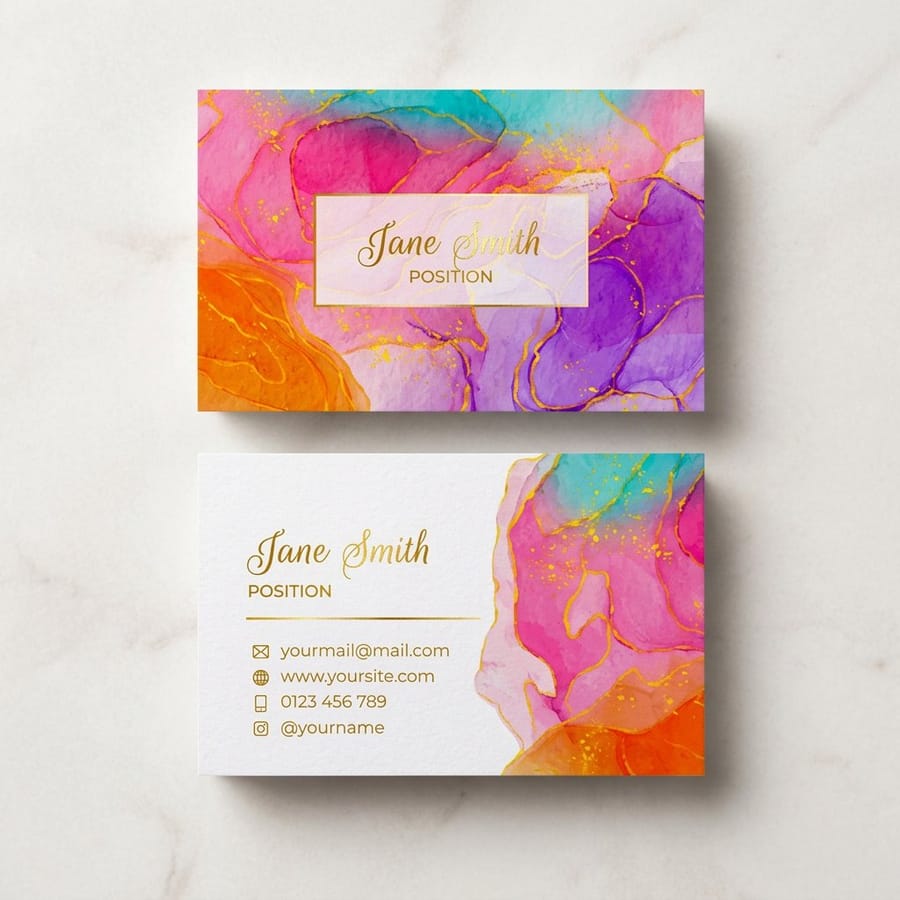
Fixed denominations beat open values for almost every small program. Three preset amounts remove the decision from the buyer and remove variable printing from the job. Set them against your real ticket: something a hair under one average purchase, something at roughly one and a half, and something that covers two people. For a salon with a $60 cut that is $50, $75 and $150. Guessing round numbers with no relationship to your prices is how you end up with a stack of $25 cards nobody can spend without adding cash.
Numbering is the part that catches people out. Printing a genuinely unique number on every card is variable data printing, a different setup with a different price. A static run with three ruled lines on the back, filled in with a pen at the counter and recorded in a log, is a standard press job at standard press pricing. Custom business cards start at $17.57 in that format, which is what a first run of counter certificates realistically costs. If you want a number on the card without paying for variable data, a numbered sticker roll applied by hand does the same job for a couple of cents each.
Prove the layout before you commit to a quantity. Order the design once as free business cards at $0.00 and look at the back panel in your hand rather than on a screen. Type that seemed fine at 200 percent zoom often turns out to be 5 point and grey on grey, and the write-in lines are usually too short for a real signature. That check has saved more reprints than any preflight tool.
Designing the Card So It Survives a Wallet
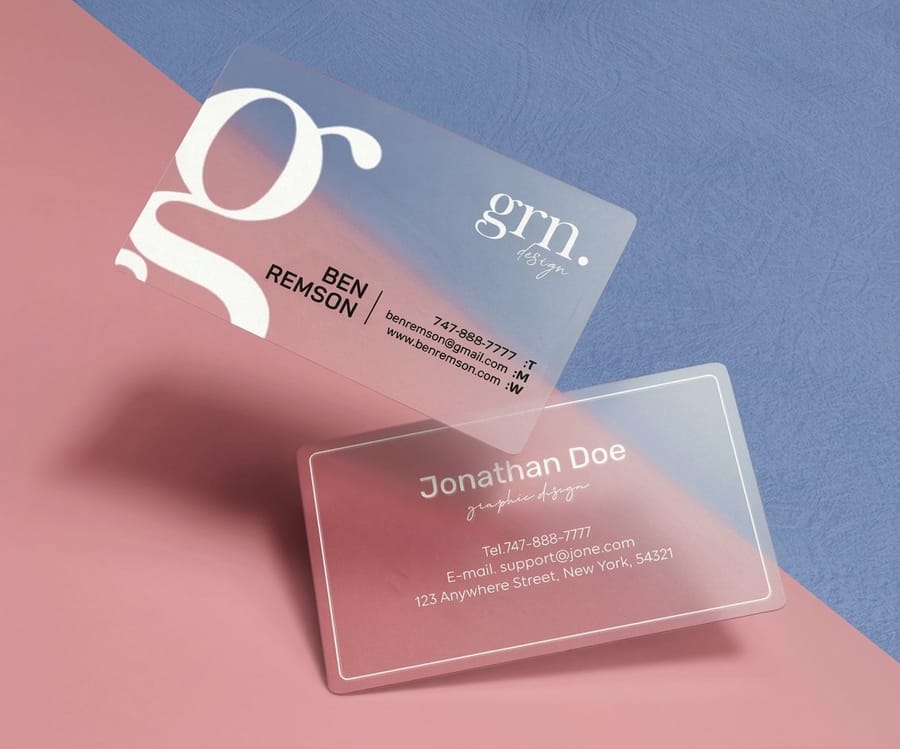
Build it at 3.5 by 2 inches with a standard eighth-inch bleed and keep type an eighth of an inch clear of the trim. A gift card sits in a wallet for months, so choose 16pt over 14pt. The difference is obvious the moment someone pulls a soft card out of a back pocket with a corner already curled.
Front and back have separate jobs. The front sells: your mark, the words gift card so it is not mistaken for a loyalty punch card, and the value if the denomination is fixed. The back is the working side and carries the serial number, the balance enquiry contact, the expiry statement, the cash redemption line and your address. If staff write in amounts, three ruled lines for value, issued by and date.
The coating decision is where these jobs go wrong. Gloss and UV look right on the front and refuse ballpoint ink on the back, so those ruled lines become decorative. Ask for gloss on the front and uncoated on the back, or take matte on both sides and accept a slightly quieter front. It is worth reading up on how weight and finish interact before you choose, and our card stock and coating guide covers what each finish does to ink. If your gift card and your everyday card need to look like relatives, order both together from business card printing so the stock and the color build match across the pair.
Selling the Cards, and the Money Behind Them

A gift card that lives in a drawer sells nothing. Put a small display where people already wait, which is the register, and keep a stack of card holders or small envelopes next to it, because a bare card handed over as a present feels like a receipt. Staff asking one question at checkout outsells every sign you can print.
Timing is the other half. December is obvious and it is also when print schedules are busiest, so order four to six weeks ahead of the season rather than in the first week of December. Mother's Day, graduation and Valentine's are the three that get forgotten and they are worth stocking for. If you build seasonal bundles, a card tucked into a package converts far better than a card on its own, which is the thinking behind these business gift basket ideas.
On the books, the money from a gift card is not yours yet. It is a liability until the card is redeemed, and treating it as revenue in December is how a business ends up short in February when the cards come back. Keep the log current, reconcile it monthly, and give unredeemed balances their own line. Service businesses that already hand out appointment cards have an easy version of this: same stock, same counter, one more reason to be handed something on the way out.
Where the extra sales from a gift card program come from
A gift card program earns in four places, and only one of them is the face value.
- Money now. The buyer pays in December and the cost of serving them lands in February. That is cash in hand for two months, which is exactly why the log has to treat it as a liability.
- New faces. The person who redeems a card is rarely the person who bought it, so every card sold is an introduction to someone who might never have walked in.
- Overspend. A $50 card is spent as $50 plus whatever it takes to round the visit up, and that difference is paid in fresh money. Fixed denominations set just under an average ticket, as the values section explains, are what make the overspend routine.
- Unredeemed balances. Some cards never come back. Do not plan on it, because several states send abandoned balances to the state under escheatment rules, and a card that expires early is illegal under federal law anyway.
Track all four in the same log, one row per card, and the program pays for its printing in the first season. The card itself is the cheapest line on that sheet.
Wally sets up a gift card program
A card, a serial number, and a log that knows what is left
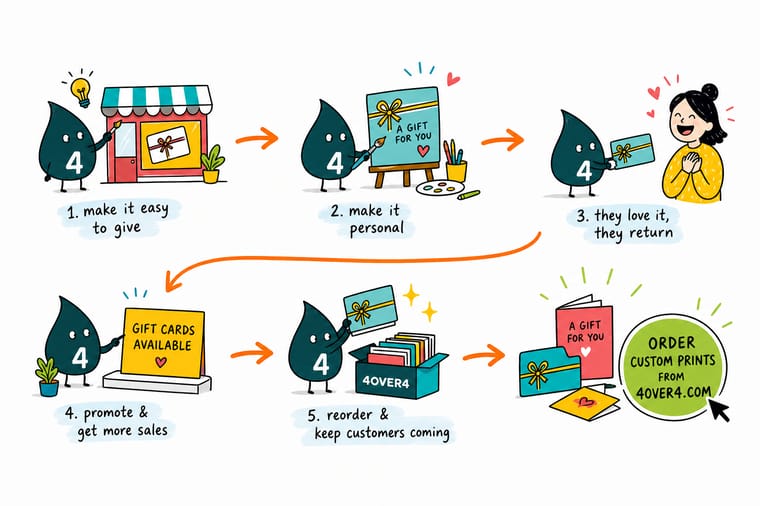
Wally sells a $50 card. He writes the value and the date on the back, notes card number 0431 in the log, and hands it over in a small envelope. When it comes back at $38, he has a decision he already made: the card was printed good toward one visit, so he gives store credit for the rest and closes the row. The card is the easy part. The log is what keeps the program honest.
Print your gift cards →Specs and pricing
Card stocks, sizes, and starting prices
Gift cards run on the same 3.5 by 2 inch card formats as everything else at the counter. Compare stock weights, coatings and starting prices straight from the 4OVER4.COM configurator.


Print it
Cards to start your program with

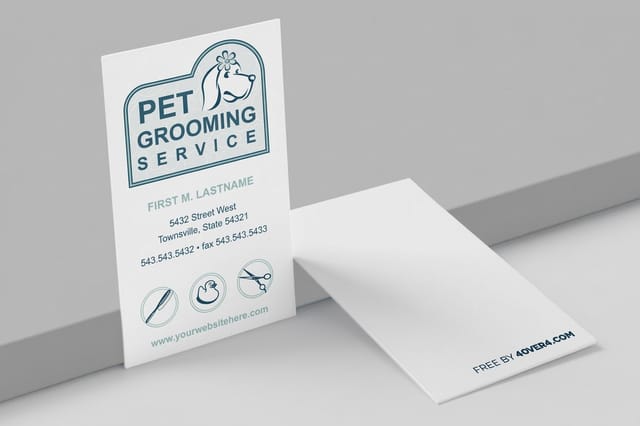
Explore more
Where to go next
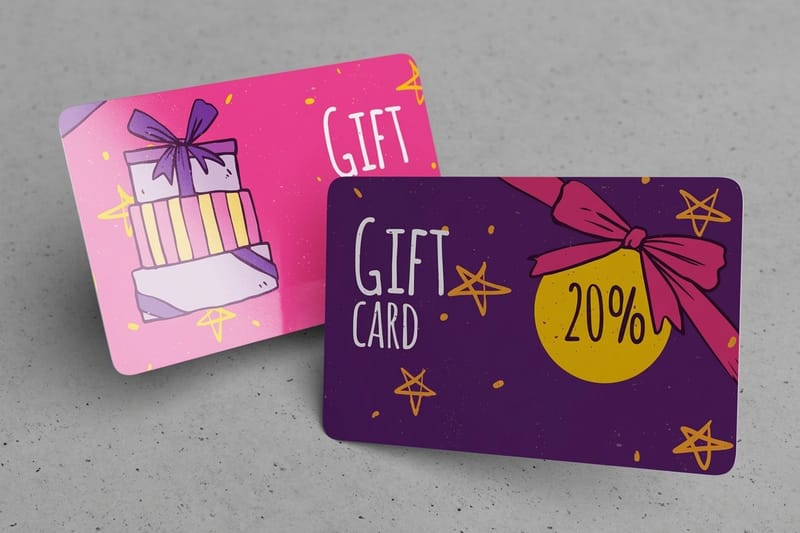


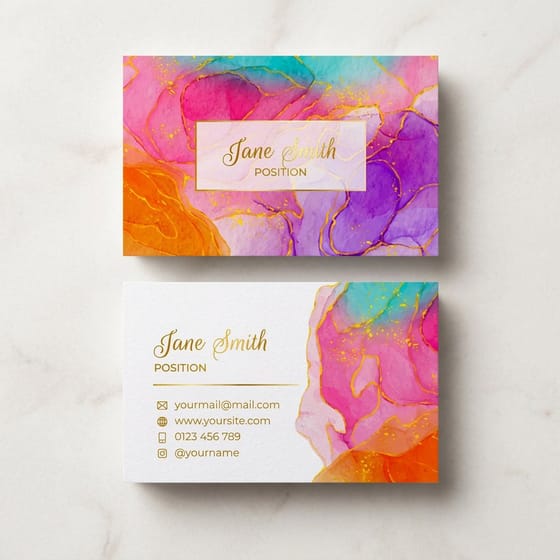
By the numbers
Counter printing you can plan a season around
Common Questions
Your gift card questions, answered
How to offer gift cards for your business?
Start with how a balance is tracked. Use the gift card module in your point of sale when a customer can spend part of a card and come back with the rest, or use printed certificates with serial numbers logged on paper when each card is good for a single visit. Price them at two or three fixed amounts, each one set around what your average customer spends. The card itself is a 3.5 by 2 inch piece on 16pt stock, with its serial number, a number to call for a balance and the expiry terms printed on the reverse, left uncoated when staff have to write on it. Put them in holders by the register, and order four to six weeks before the season you are stocking for.
How do I get gift cards made for my business?
Print them in the business card format: 3.5 by 2 inches with a 0.125 inch bleed on 16pt stock, gloss on the front and uncoated on the back so a pen works. Put your mark, the words gift card and the value on the front, and the serial number, balance contact, expiry statement, cash redemption line and address on the back. Order a proof run as free business cards at $0.00 to check the type size in your hand, then the real run through custom business cards from $17.57. A unique printed number on every card is variable data printing at a higher price, so most small programs use write-in lines or a numbered sticker roll instead.
Can you write off gift cards for your business?
Not the ones you sell, because the money you take in for them is a liability until the card is redeemed, and the cost of the goods or service is deducted when it is actually provided. Gift cards you give away are different: a card given to a client is a business gift, which the IRS caps at $25 per recipient per year as a deduction, and a card given to an employee is treated as wages, deductible to you and taxable to them. The printing cost of the cards themselves is an ordinary marketing expense. None of this is tax advice, so confirm your setup with an accountant.
What is the IRS rule for gift cards?
The IRS treats a gift card as cash. A card handed to an employee is taxable wages no matter how small, since the de minimis exception for tiny gifts does not cover cash equivalents, so it goes on the W-2 with withholding. A card given to a customer or vendor is a business gift with the $25 per person per year deduction limit. On the sales side, money received for gift cards is income under the advance payment rules, generally recognized in the year of sale or deferred one year, and unredeemed balances run alongside state escheatment law. Run the specifics past your accountant before the first card is sold.
Can I print gift cards on business card stock?
Yes, and most small programs do. A gift card and a business card are the same 3.5 by 2 inch rectangle, so the same 16pt stock, the same coating options and the same press run apply. What changes is the back panel: a business card carries contact details, a gift card has to carry the serial number, the balance enquiry contact and the terms. Order 16pt rather than 14pt, because a card that lives in a wallet for four months and gets handed to a cashier takes more abuse than a card that goes straight into a drawer.
Do gift cards have to have an expiration date?
They do not need one, and adding a short one is illegal. The federal CARD Act says funds on a retail gift certificate cannot expire less than five years after the date they were loaded, and the expiry terms have to be printed on the card itself. Some states remove expiry altogether for retail gift certificates. The simplest and safest line to print, if you have no reason to expire anything, is that the funds do not expire. Confirm the rule for your state before the file goes to press, because the terms are printed and a reprint is the only fix.
What happens if a customer spends less than the card is worth?
That single question decides your whole setup. With a point of sale gift card module the remaining balance stays on the card and the customer comes back for it. With printed certificates and no software you have two honest options: redeem the card in full and hand over change in store credit, or print the card as good for one visit and say so on the back. What you cannot do is quietly keep the difference, and in a handful of states a small remaining balance has to be paid out in cash on request.
How many gift cards should I order the first time?
Enough to cover a full holiday season plus the counter display, which for a single location shop usually means the low hundreds rather than fifty. Print economics push the same way: the setup is the same whether you run 100 or 500, so the per card price drops steeply as the quantity climbs. Order the run in fixed denominations you are confident about, and keep the design free of a printed year or a promotion date so leftovers are still usable next season.
Do I owe tax the day I sell a gift card?
Selling a gift card is not a sale of goods, it is money you are holding, so it sits on the books as a liability and turns into revenue when the card is redeemed. In most states sales tax is charged on the goods at redemption, not on the card at purchase, which is why a card sold at face value should not have tax added at the counter. Rules vary by state and the unclaimed balances of old cards are governed by separate escheatment law, so run your specific setup past your accountant before the first card is sold.
What should the back of a gift card actually say?
Five things. A unique serial number so you can look the card up, a way to check the balance such as a phone number or a page on your site, the expiry statement, a line on whether it can be exchanged for cash, and the business name with its address. If staff write in the amount, leave three ruled lines for value, issued by and date. Everything else on that panel is decoration and it competes with the part that has to be readable.
Get Started
Ready to put gift cards on your counter?
Pick a 16pt stock, set your denominations, and print cards with a back panel that carries the serial number and the terms exactly as they need to read.
Legal Disclaimer
Gold Standard guarantees apply to all standard orders placed through 4over4.com. Price match requires verifiable proof of a competitor's published price for an equivalent product with matching specifications and turnaround time. Satisfaction guarantee covers manufacturing defects and print quality issues. Contact support with order number and documentation. On-time delivery rate based on tracked orders 1999 to 2026. Individual results may vary based on shipping carrier performance.
