
How to Print Drink Labels That Survive the Ice Bucket


Jordan is our labels, packaging and sustainability voice, built from the knowledge of our production team, with over 20 years in printing.
Bottles sweat, cans get iced, and paper labels lose that fight every time. Size the label to the container, pick a stock that stays flat when wet, and choose between cut labels and rolls.
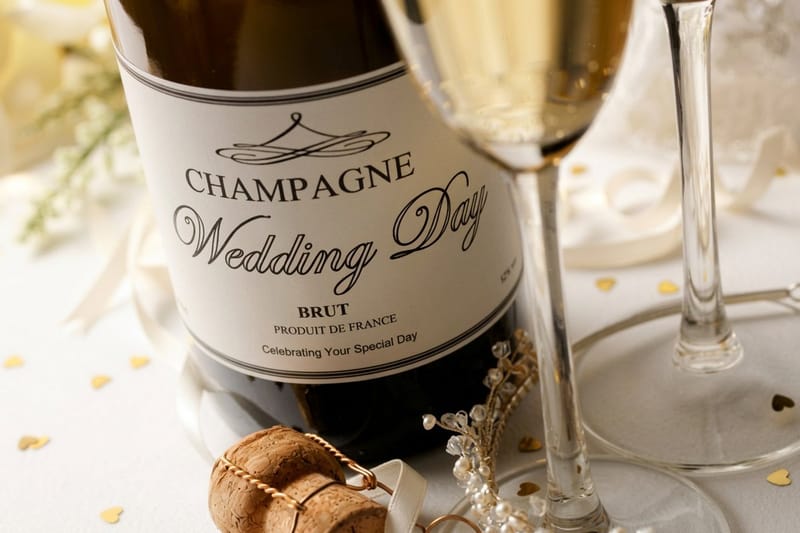
To print drink labels, measure the straight sidewall of the container, size the label to that band, and print on a waterproof film like BOPP rather than paper. Order cut labels from $23.88 when someone applies them by hand, or rolls from $322.98 when a label applicator on a bottling line does the work. For beer bottles, standard beer labels start at the same $23.88, and our guide to beverage packaging essentials for bottles, cans and labels covers the can wrap. A face label covers one panel; a full wrap needs the circumference plus a quarter inch of overlap. Beer and wine also carry mandatory compliance text, so reserve that space before designing.
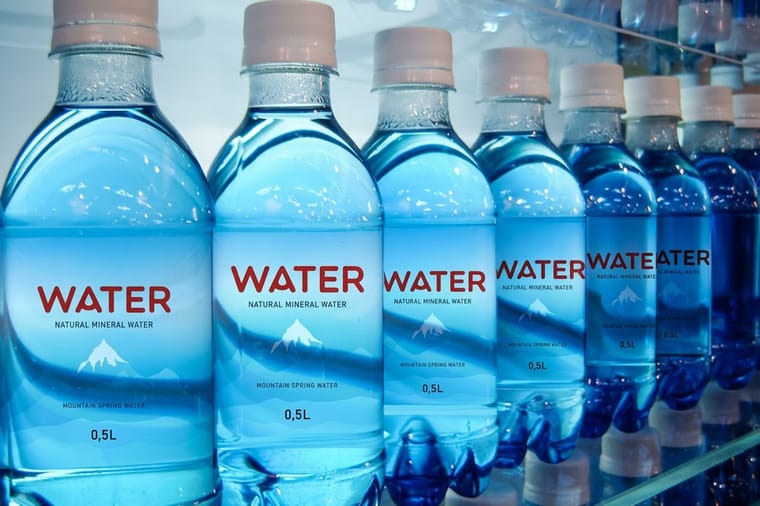
Quick answer
Measure the sidewall, go waterproof, then pick cut or roll
A drink label job is three decisions. Size: measure the straight band of the container with a paper strip and keep the label inside it, adding a quarter inch of overlap if it wraps fully. Stock: a waterproof film like BOPP, because condensation wrinkles paper within the hour. Format: cut labels from $23.88 when hands do the applying, rolls from $322.98 when a bottling line applicator does, wound in the unwind direction that machine expects.
Size the Label to the Straight Sidewall, Not the Bottle
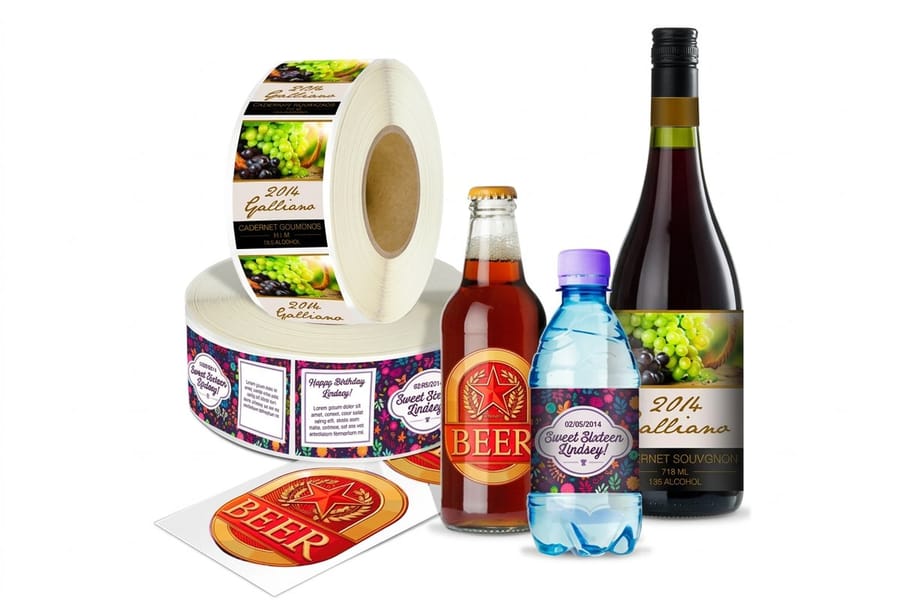
Every container has a band where the sidewall is actually straight, and that band is the only place a flat label lies flat. Above it the shoulder tapers, below it the base curves in, and a label that crosses either line wrinkles no matter how carefully it is applied.
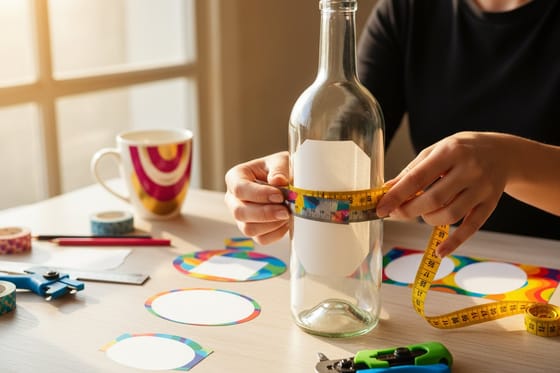
So the first step is a two minute measurement. Wrap a strip of paper around the container where the label will sit and mark where it overlaps: that is your circumference. Then measure the height of the straight band with a ruler. Your label must fit inside both numbers, with a little breathing room at the top and bottom edges.
Next, decide between a face label and a full wrap. A face label covers one panel, uses less material, and forgives a few degrees of rotation during hand application because the edges never meet. A full wrap circles the container completely, which looks continuous on the shelf but demands more precision: its width is the measured circumference plus about a quarter inch of overlap so the seam closes, and a crooked application shows as a spiraling seam. Cans are almost always full wraps; bottles go either way.
Standard sizes exist for the common formats, and we keep them measured out in the water bottle label size guide and the wine bottle label dimensions guide. When your container is not standard, size from your own measurement, and start the artwork from a correctly built file in the blank template library.
How to Print Drink Labels, Step by Step
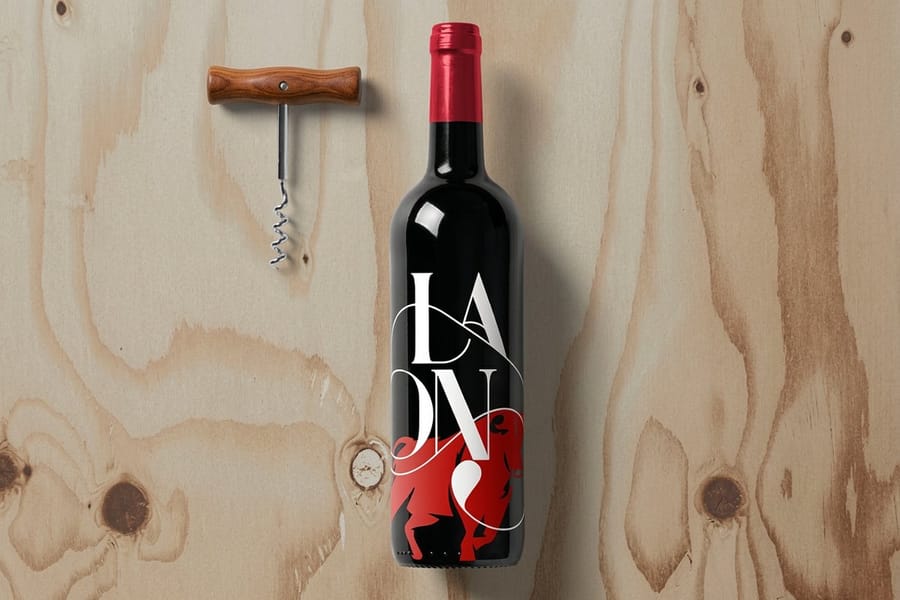
With the size settled, the rest of the job is five decisions in order.
One, lock the dimensions. Width by height, face or wrap, from your measurement in the previous section. Everything downstream depends on this, and resizing artwork later distorts type.
Two, pick the stock. For anything that gets chilled, iced or handled wet, that means a waterproof film. The next section covers why, but in brief, paper and drinks do not mix.
Three, build the file. Add an eighth inch of bleed on every side, keep text an eighth inch inside the trim, convert fonts to outlines, and work in CMYK. Our guide to crop marks and bleed explains the setup, and for beer or wine, place the mandatory government text first: the beer labeling compliance guide lists what has to appear before you spend the space on design.
Four, choose cut or roll. Hands apply cut labels, machines apply rolls. The last section teaches the difference, and the price gap is real: cut from $23.88, rolls from $322.98.
Five, order and check the proof. Upload the file to premium beverage labels or the format you picked, and read the digital proof at 100 percent zoom before approving. On a label the size of a playing card, a type error survives every glance except the careful one. The whole flow from file to doorstep is covered in how online printing works.
Waterproof Stock Is the Decision That Sinks Most Drink Labels
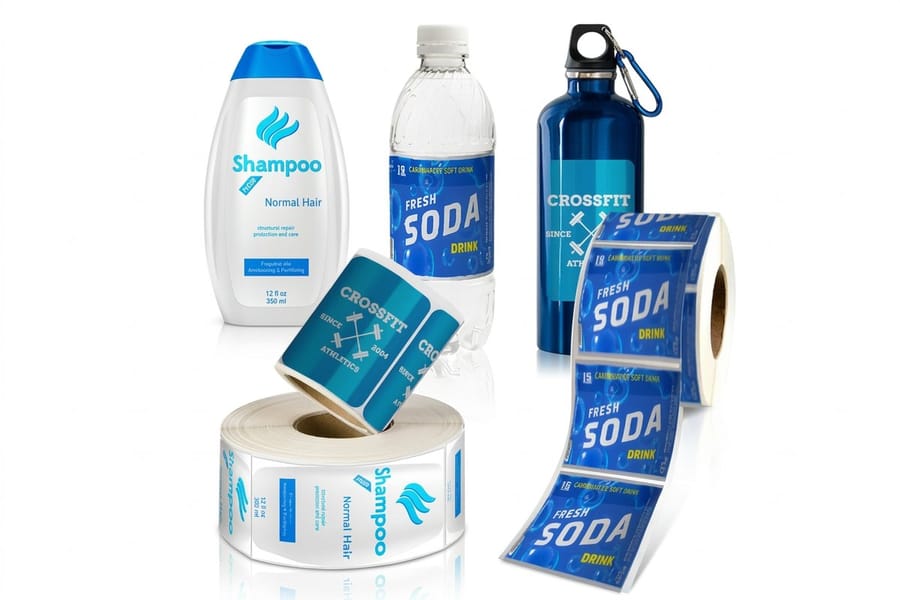
Here is the failure mode nobody designs for: the bottle is perfect at the tasting, then it goes into an ice bucket, and twenty minutes later the label is translucent, wrinkled at the edges, and sliding. The artwork was never the problem. The paper was.
Paper labels absorb water through their face and their cut edges. Condensation alone, the sweat that forms on any cold bottle in a warm room, is enough to start the wrinkling. Synthetic films do not absorb anything, which is why they are the default for drinks.
| Stock | In an ice bucket | Look and feel | Where it fits |
|---|---|---|---|
| Paper | Wicks water, wrinkles, can slide off. | Matte, natural, takes texture well. | Dry-stored products only: boxed teas, coffee bags, shelf goods that never chill. |
| BOPP film | Unaffected. Wipes dry. | Smooth, available white or clear for a no-label look. | The default for bottles and cans that get chilled or handled wet. |
| Vinyl | Unaffected, and stretches over curves. | Thicker and more conformable than BOPP. | Squeezable containers, kegs, growlers, and outdoor coolers. |
The trade-off is honest: film costs more than paper and its smooth face reads less crafty than an uncoated paper label. If the brand look demands paper texture and the product is stored dry, paper is a legitimate choice. For everything that touches ice or a refrigerator shelf, order roll waterproof labels or a cut waterproof stock, and browse the full range at waterproof label printing. The material decision in more depth lives in paper vs vinyl vs clear labels.
Cut Labels for Hand Application, Rolls for the Bottling Line
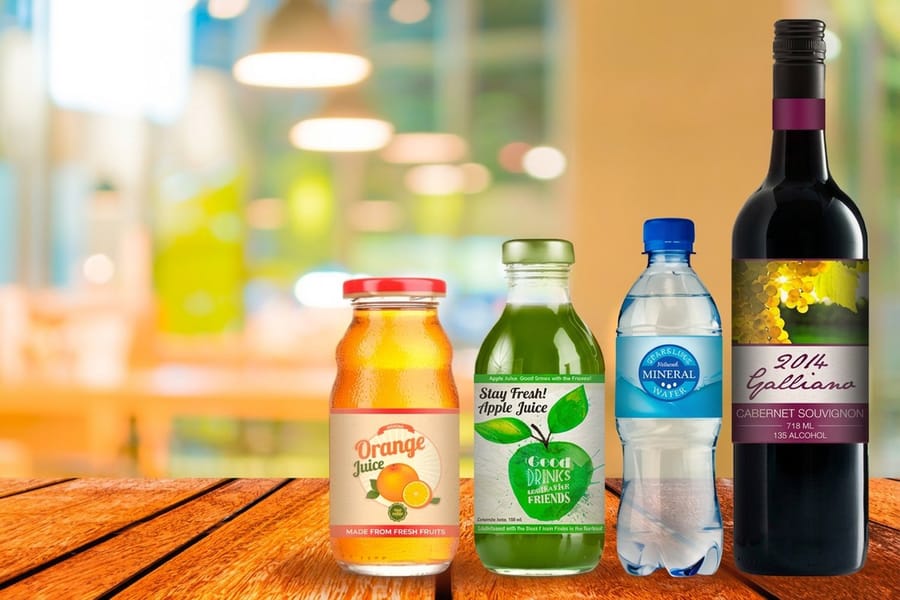
The format question is really a question about who does the sticking.
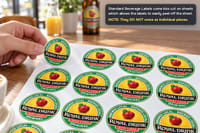
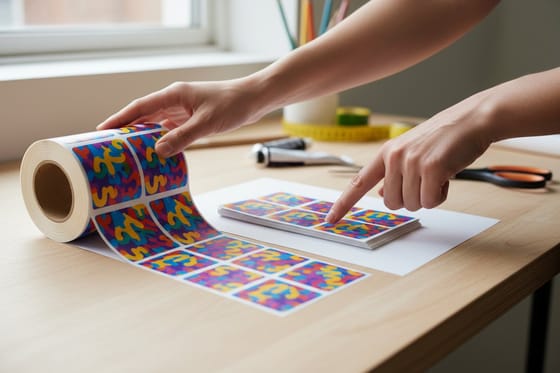
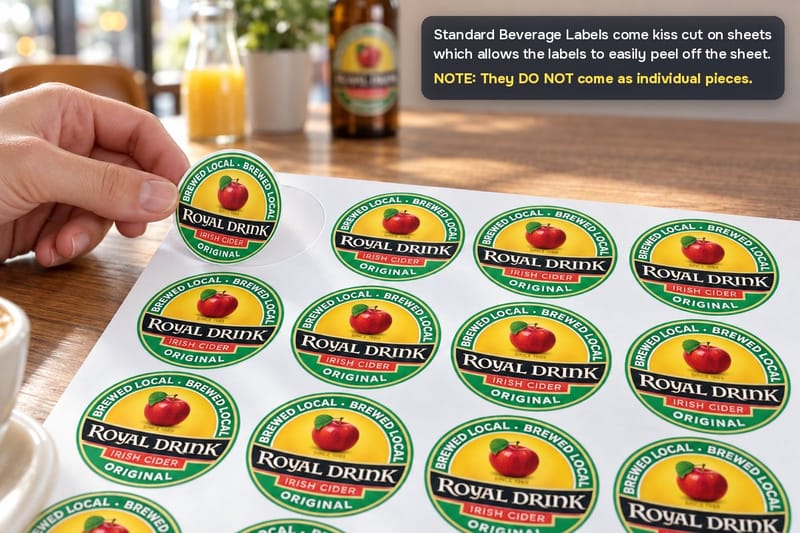
If a person applies each label, order cut labels. They ship flat, need no equipment, and are easier to place straight because you can see the whole label as you lay it down. Standard beverage labels start at $23.88 and premium beverage labels at $29.16, which makes small batches and label tests cheap enough to run often. There is no punishing minimum, so a fifty bottle experiment is a normal order, not a special request.
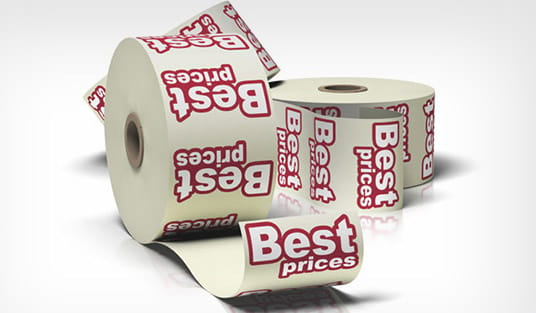
If a machine applies them, order rolls. A label applicator pulls a continuous web off a roll wound on a core, peels each label at speed, and wraps it onto the passing bottle. Roll beverage labels start at $322.98, which prices them for production volume rather than sampling. One spec matters more than any other: the unwind direction. A roll can present labels top first, bottom first, left or right edge first, and an applicator accepts exactly one of those. Confirm the orientation with your co-packer before ordering, because a roll wound the wrong way will not run.
The two formats coexist in most drink businesses: cut labels from the label printing range for farmers market batches and new flavor tests, rolls for the co-packed production run. The full comparison, including how die cut shapes behave in each format, is in roll labels vs sheet labels, and the bottle-specific options live under bottle label printing. Brewers will find their own range under beer labels printing. Wine and beer have their own shaped products in wine labels and beer labels, both from $25.
Wally explains drink labels
Measure the straight band, then let the stock do the fighting
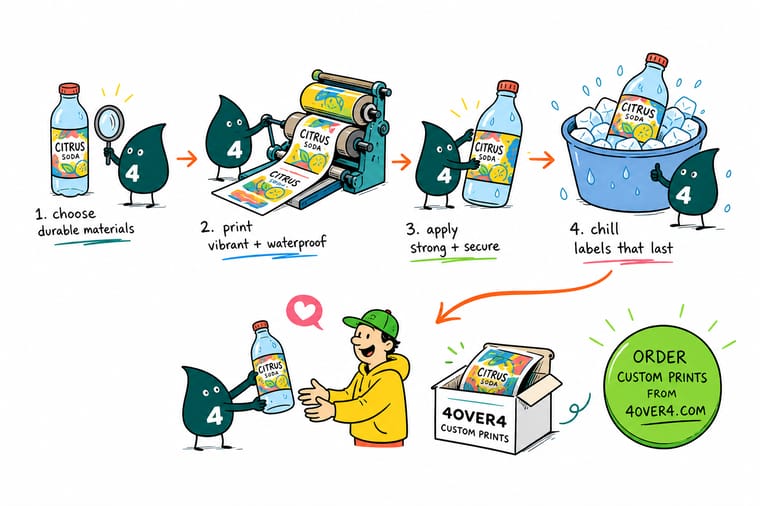
Wally wraps a paper strip around the bottle to find the circumference, marks the straight band between the shoulder and the base, and cuts the label to fit inside it. Then he picks the stock: the bottle is going into an ice bucket, so paper is out and waterproof BOPP is in. Fifty bottles for the farmers market get cut labels he applies by hand. The co-packed run gets a roll, wound exactly the way the applicator wants it, because a roll wound backwards is just a very neat paperweight.
Order beverage labels →
Specs and pricing
Beverage labels, sizes, and starting prices
Compare cut and roll beverage labels side by side, with live configuration choices and starting prices straight from the 4OVER4.COM configurator. Standard beverage labels start at $23.88 for 25 on uncoated, gloss, white vinyl or clear stock, premium beverage labels at $29.16 from 3 by 5 inches or any size, and roll labels at $322.98 from 100 on white or clear BOPP around a 3 inch core.
Print it
Order labels built for cold, wet bottles
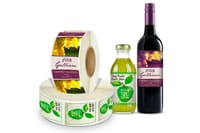
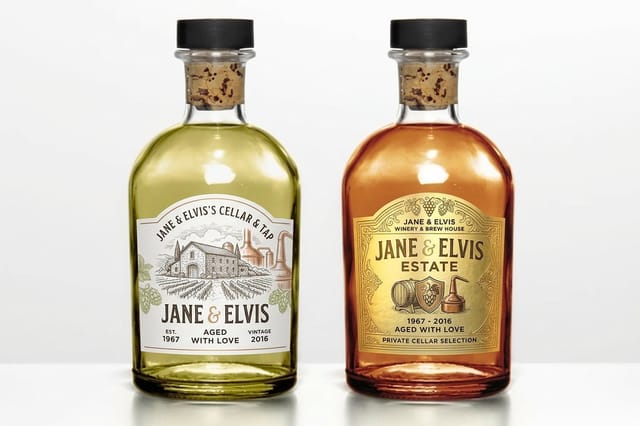
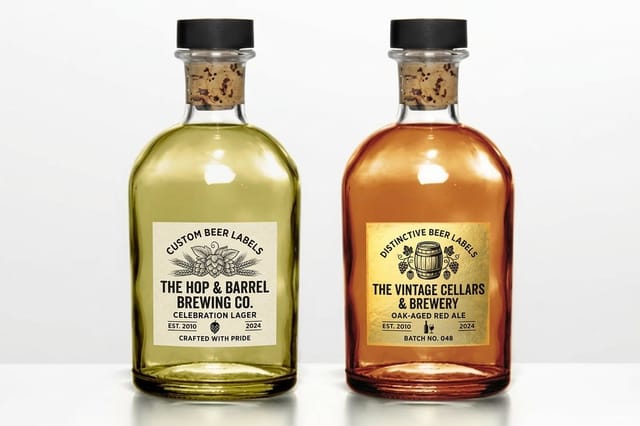
Premium beverage labels from $29.16 on white vinyl or clear film for sodas and juices, and custom wine and beer labels from 2 by 3.5 inches up to 5 by 7 or any size, from 25 labels.

Explore more
Where to go next
Guides cover roll against sheet labels, wine label dimensions, beer label compliance, water bottle label sizes and beverage label stocks, plus the waterproof label range and every sticker and label guide.
By the numbers
Waterproof film labels for bottles and cans
Common Questions
Your drink label questions, answered
What size should a drink label be?
Whatever the straight sidewall of your container allows. Wrap a strip of paper around the container to get the circumference, measure the height of the straight band between the shoulder taper and the base curve, and keep the label inside both numbers. A face label just has to fit the panel. A full wrap is the circumference plus roughly a quarter inch of overlap. Bottle shapes vary enough that measuring your actual bottle beats copying a chart, and our water bottle label size guide and wine bottle label dimensions guide list the common starting points.
What material should drink labels be printed on?
A waterproof synthetic film, usually BOPP, or vinyl for the most demanding cases. Drinks live in coolers, ice buckets and refrigerators, and condensation alone is enough to wrinkle a paper label within an hour. Paper only makes sense for a dry-stored product like a boxed tea that never sees moisture. If you are unsure, order the waterproof stock: the upcharge is small compared to replacing a batch of wrinkled labels.
Should I order cut labels or roll labels?
It depends on who applies them. If a person peels and sticks each label, cut labels are cheaper to start, ship flat, and are easier to keep straight. Standard cut beverage labels start at $23.88. If a label applicator machine does the work, it needs labels wound on a roll in a specific unwind direction, and roll beverage labels start at $322.98. The crossover point is volume: below a few hundred bottles per batch, hand application with cut labels is usually the right call.
What is unwind direction and why does my co-packer ask about it?
A roll can be wound with labels coming off the top or the bottom, leading with the left edge, right edge, top or bottom of the artwork. A label applicator only accepts one orientation, so a roll wound the wrong way is useless on that machine even though the labels themselves are perfect. Ask your co-packer or read the applicator manual for the unwind position before ordering rolls, and put it in the order notes.
Do beer and wine labels need approval?
In the United States, most beer and wine sold across state lines needs federal label approval through the TTB before it goes to market, and the label must carry the government warning and mandatory statements. That is a design constraint, not just paperwork: reserve space for the required text at the start. Our beer labeling compliance guide walks through what has to appear and where. Printing itself needs no approval, so sample and prototype runs are fine to order at any stage.
Can I print drink labels at home instead?
For a mockup, yes. For bottles that will be sold or chilled, home printers are the wrong tool: inkjet ink runs the first time condensation forms, and home label sheets are almost always paper. A professional run on waterproof BOPP with pigment-stable inks costs from $23.88 for cut labels, which is usually less than a cartridge and a pack of blank sheets. Our guide to printing labels at home covers where the DIY route genuinely works.
Get Started
Order 100 roll beverage labels from $322.98
Pick your size, choose a waterproof stock, and order cut labels for hand application or rolls for the bottling line. Cut beverage labels start at $23.88.
Legal Disclaimer
Gold Standard guarantees apply to all standard orders placed through 4over4.com. Price match requires verifiable proof of a competitor's published price for an equivalent product with matching specifications and turnaround time. Satisfaction guarantee covers manufacturing defects and print quality issues. Contact support with order number and documentation.
