
Beer Labeling Rules, Materials and Label Design That Survives the Cooler


Jordan is our labels, packaging and sustainability voice, built from the knowledge of our production team, with over 20 years in printing.
A 12 oz longneck, about 2.35 inches across, takes a label near 4 inches wide, and a 12 oz can needs a wrap of roughly 8.25 by 4 inches. Here is everything a beer label has to carry, at the sizes the rules specify, on a material that comes out of a cooler flat, written from the press side for brewers about to order their first run.
A US beer label must show the brand name, the class or type, the bottler name and address, the net contents and the government health warning, and in most cases TTB has to approve it through a COLA before the beer ships across a state line. On a 12 oz container the warning must be at least 2 mm tall and no denser than 25 characters per inch. Print it on white BOPP or vinyl with a permanent acrylic adhesive, because paper wicks condensation and lifts at the corners in a cooler.
Quick answer
Six required elements, two size rules, one material that stays put
Beer labeling is a compliance job and a materials job, in that order. TTB decides what the label says and how small the type may be. The cooler decides what it is printed on. Get the mandatory copy right and approved, then choose a film face stock and a permanent acrylic adhesive so the label survives condensation. The diagram below shows where each required element sits on a body label and the guides that keep it off the cut.
Label sizes
Standard beer label sizes for bottles and cans
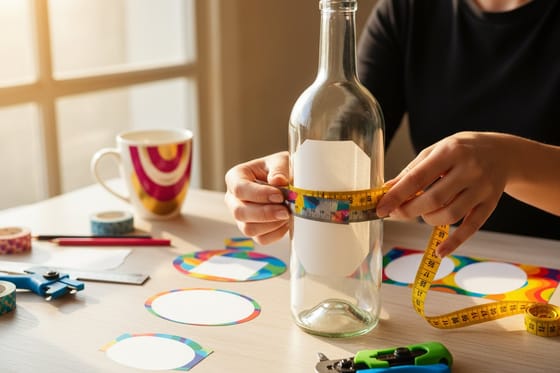
A 12 oz can label measures about 8.25 by 4 inches as a full wrap, and a 12 oz longneck takes a front label about 4 inches wide. Measure the straight wall of your own container, take an eighth of an inch off the top and bottom, and match it to the nearest preset size or order Any Size. Measure 16 oz cans and 22 oz bottles the same way before you order.
| Container | Across | Label style | Label size to start from |
|---|---|---|---|
| 12 oz longneck bottle | About 2.35 in, a little over 7 in around | Front label, with an optional back label and clean glass between | About 4 in wide as Any Size, as tall as the straight section of the barrel |
| 12 oz can | About 2.6 in | Full wrap, ends overlapping at the seam | About 8.25 x 4 in, ordered as Any Size |
| 16 oz can or 22 oz bottle | Measure your container | Wrap on a can, front and back on a bottle | Any Size, cut from your own measurement |
| 8 oz bottle or growler | Measure your container | Front label on vinyl for the tight curve or taper | Any Size on White Vinyl Permanent |
What US Law Requires on a Beer Label
Federal beer labeling sits with the Alcohol and Tobacco Tax and Trade Bureau, and the first question is whether your beer is a malt beverage under the Federal Alcohol Administration Act. Brewed with malted barley and hops, sold across a state line, the answer is yes, and TTB approves the label before you ship it.
The approval is a Certificate of Label Approval, filed through COLAs Online with a straight-on image of every label that goes on the container. Selling only within your own state puts you under the exemption route instead, which is a lighter filing but not a free pass, because your state alcohol board has its own rules and several of them are stricter than the federal set. Recipes with added fruit, spice, honey or coffee may also need a formula on file before the label application, though TTB Ruling 2015-1 removed that step for a long list of common ingredients.
| Mandatory element | What it has to say | Where designers get it wrong |
|---|---|---|
| Brand name | The name the beer is sold under. | A logo so stylised the brand name is not legible as text. |
| Class or type | Ale, lager, stout, porter, malt beverage, and so on. | Leaving it off because the beer name already says IPA. It is a separate required line. |
| Name and address | Bottler or importer, with city and state. | Setting it at 4 point because it is fine print. There is a legal minimum. |
| Net contents | 12 FL OZ, 16 FL OZ, 750 mL and so on. | Hiding it on the underside of the crown or the bottom of the can. |
| Government warning | The fixed wording, reproduced exactly. | Rewriting, condensing, or wrapping other copy into the same block. |
| Alcohol content | Optional federally for malt beverages, required by some states. | Printing an ABV the lab result does not support. |
Two more things ride along with the artwork even though TTB does not police them. Deposit legends for the bottle bill states, which is real estate you have to plan for if you distribute into New York, Michigan, Oregon, California, Maine, Iowa, Connecticut, Massachusetts, Vermont or Hawaii. And the UPC, which retail buyers will ask for and which needs quiet space around it to scan. Work both into the layout before you fall in love with the illustration.
On a 3 x 5 inch label, plan one solid light panel for the warning block at 2 mm type, the net contents and the bottler line, and keep all of it at least an eighth of an inch inside the die line. Upload a PDF at 100 percent with an eighth of an inch of bleed and fonts converted to outlines, then pick the free online proof or the next day hardcopy proof to check the small type before the run.
The Government Warning, Word for Word and at the Right Size
This is the single most common reason a label application comes back. The warning is not a paraphrase you write, it is a block you reproduce.
GOVERNMENT WARNING: (1) According to the Surgeon General, women should not drink alcoholic beverages during pregnancy because of the risk of birth defects. (2) Consumption of alcoholic beverages impairs your ability to drive a car or operate machinery, and may cause health problems.
Set GOVERNMENT WARNING in bold capitals and leave the rest in regular weight. Keep the block separate from surrounding copy so nothing reads as an extension of it, and keep it off busy artwork, because legibility is part of the requirement and a warning printed over a photograph of hops is a warning you can argue about.
The size rules scale with the container, and they cut both ways: a minimum height and a maximum character density.
| Container size | Minimum type height | Maximum characters per inch |
|---|---|---|
| 237 mL (8 fl oz) or less | 1 mm | 40 |
| Over 237 mL up to 3 litres | 2 mm | 25 |
| Over 3 litres | 3 mm | 12 |
A 12 oz bottle or can is 355 mL, so it lands in the middle band: 2 mm minimum, 25 characters per inch maximum. That second number is the one people miss. Condensing a typeface to squeeze the warning into a narrow strip can put you over the character limit even when the letters are tall enough. The rest of the mandatory copy has its own floor under 27 CFR part 7, generally 2 mm on anything larger than a half pint and 1 mm at a half pint or less, which is why the bottler line cannot be set at whatever size looks tidy.
None of this is a substitute for reading the regulation or talking to a beverage attorney, and TTB is the only authority on whether your specific label passes. What we can tell you is what happens on press: at 2 mm, in a light weight, over a dark background, the counters in the letters fill in. Set the warning in a plain sans at a weight that survives, in solid black on a solid light panel, and it prints every time.
Materials That Survive an Ice Bucket
Beer labels get wet. That is the whole design brief for the material, and it is where most first-time craft labels fail. A bottle goes into a cooler, condensation forms on the glass under the label, and whatever cannot handle standing water gives up.
- Uncoated paper wicks water from the edge inward. It darkens, softens and lifts at the corners. It is the cheapest option and the right one only for a beer that is opened at the brewery within a day.
- Coated paper with a laminate buys you time. The laminate stops the surface absorbing, but water still reaches the cut edge, so it is a compromise rather than a fix.
- White BOPP film is the default for bottled beer. It does not absorb water at all, it takes full color cleanly, and it comes off the bottle in one piece rather than in shreds.
- Vinyl conforms better than BOPP on a tight curve or a shaped bottle, which matters on 8 oz bottles and on growlers with a pronounced taper.
- Clear film gives the no-label look on a pale beer, and only there, because there is no white ink under the color to keep type opaque over a dark beer.
The adhesive decides more than the face stock. Permanent acrylic is what you want for glass, and it has conditions: a clean dry surface, room temperature at application, and roughly 24 hours to reach full bond strength. Most permanent acrylics stop grabbing somewhere around 40 degrees, so labeling cold bottles out of the cold room, or bottles still beaded from the rinser, is the fastest way to a case of curled corners. Label warm, let the cases rest a day, then chill.
Test it yourself before you commit a batch. Label one bottle, leave it overnight, then stand it in ice water for thirty minutes and run a thumbnail along the edge. If the corner lifts, the problem is the adhesive or the application, not the print. Our waterproof labels start at $84.68 for 25 on a White Vinyl Permanent face stock built for exactly this, and the BOPP versus vinyl comparison goes deeper on how the two films behave under a curve.
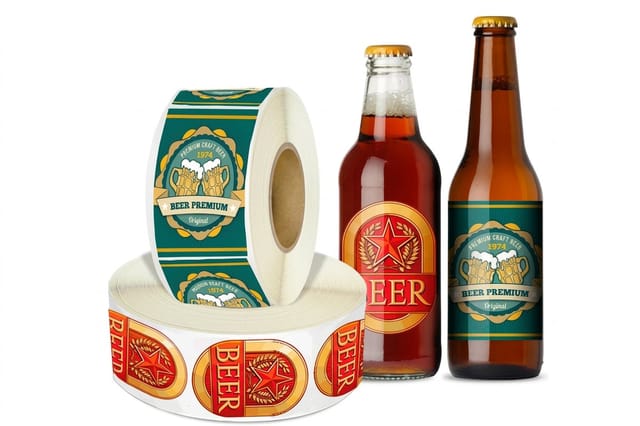
On the order form, sheeted premium beer labels come on White Vinyl Permanent, Clear Label Permanent, Hi-Gloss and Semi-Gloss stock in sizes from 3 x 5 to 5 x 7 inches or Any Size, and print in 3 business days. Roll beer labels come on White BOPP, Clear BOPP, bright silver metallic foil or 70lb Eggshell Felt, with gloss or matte lamination, on a 3 inch core, and print in 6 business days.
Sizing the Die and Choosing a Finish
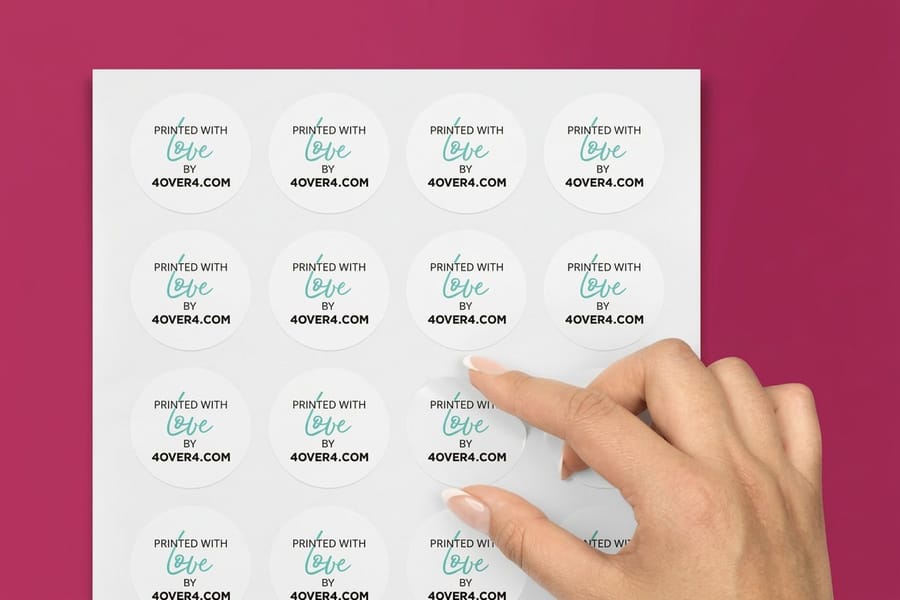
Start with the bottle, not the artboard. A standard 12 oz longneck runs about 2.35 inches across, so the barrel is a little over 7 inches around, and a 4 inch wide label covers rather more than half of it. Height is the tighter constraint, because the straight section of the barrel is short and anything taller wrinkles where the shoulder curves away. Measure the flat part of the bottle you actually buy, take an eighth of an inch off top and bottom, and cut the die to that.
Cans behave differently. A 12 oz can is about 2.6 inches across, so a full wrap needs roughly 8.25 inches of width with an overlap, and the straight wall is around 4 inches tall. Small breweries label cans with pressure sensitive film all the time, but be honest about volume: past a few thousand cans a run, shrink sleeves or direct print from the can supplier usually cost less per unit than labels plus the labor to apply them.
Build the file the way you would any print job. An eighth of an inch of bleed past the die line, all mandatory copy at least an eighth of an inch inside it, fonts converted to outlines, and artwork at 100 percent size. Trim on a die-cut label wanders by up to a sixteenth of an inch, so a border sitting right on the die line will look off center on half the run. Start from a correctly sized layout in the blank template library rather than guessing.
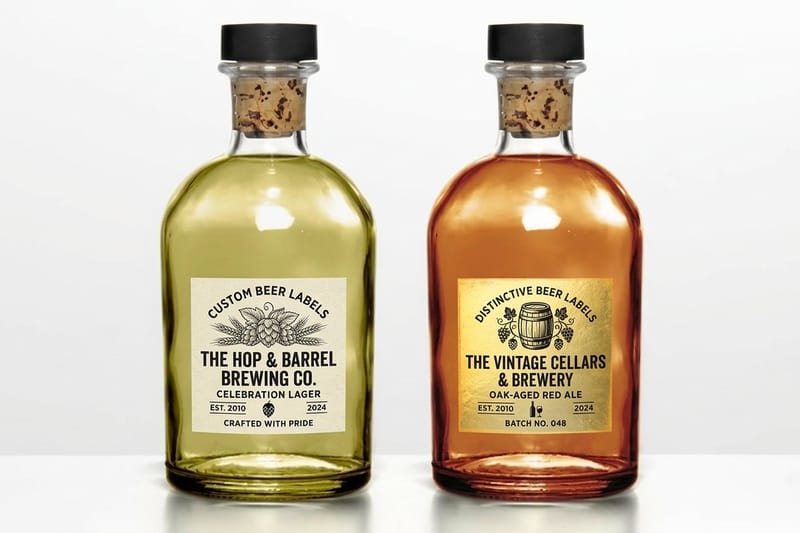
Finishes are where craft labels earn their shelf presence, and each one costs something. Matte laminate reads handmade and hides fingerprints, which is why so many small breweries use it, but it flattens photographic artwork. Gloss laminate makes color pop and shows every smudge. Metallic labels add a metallic foil accent to the front of a semi-gloss label under a High Gloss UV coating, from $108.75 for 500 in 7 business days, so keep the foil for the logo or the beer name. The metallic labels video shows the foil on finished labels. And a laminate does more than look good: it protects the ink from scuffing against the six pack carrier during shipping, which is a real failure mode on unlaminated stock. If you want the label die to become part of the brand, custom die-cut labels start at $93.37 for 25 in any shape you can draw.
Sheets or Rolls, and What Each One Costs
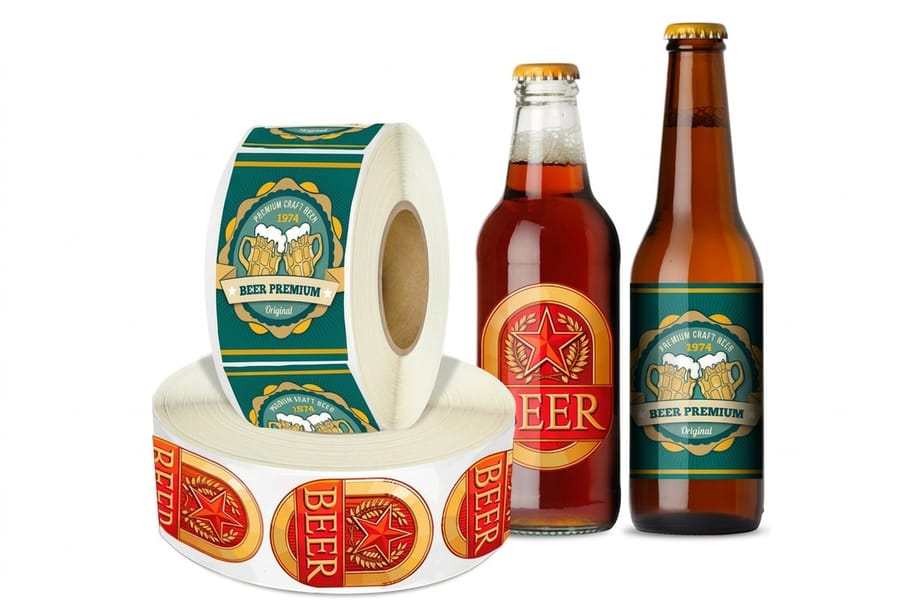
The format decision is really a labor decision. Sheeted labels are peeled and placed by hand, one bottle at a time. Roll labels feed an applicator. Nothing else about the print changes.
| Format | Starts at | How it is applied | Best for |
|---|---|---|---|
| Premium beer labels | $29.16 for 25 | Hand applied from sheets. | Pilot batches, one-off releases, taproom-only beers, label tests before you commit. |
| Roll beer labels | $322.98 for 100 | Machine applied from a roll. | Regular production where hand labeling has started eating a full shift. |
| Waterproof labels | $84.68 for 25 | Hand applied, film face stock. | Anything that lives in ice, including growlers and crowlers. |
| Die-cut labels | $93.37 for 25 | Hand applied, custom shape. | Shield, oval, hexagon or any outline that carries the brand. |
Rolls cost more to start and less per bottle, and they only help if you have an applicator or a co-packer who does. Ordering rolls without a machine leaves you peeling labels off a liner in a long strip, which is worse than sheets. Rolls wind on a 3 inch core, and the configurator asks which edge of the copy dispenses first, top, bottom, left or right. Match it to your applicator, because a roll wound the wrong way out is a roll you cannot run.
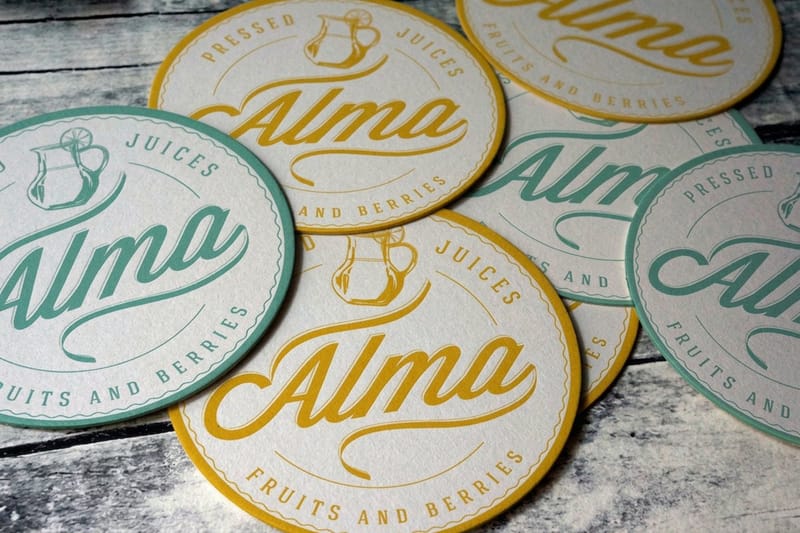
Beyond the bottle, the same artwork usually wants a few companions. Drink coasters start at $10.98 for 10 and are the cheapest branded thing in a taproom. If a smaller neck or cap label is the beer label size you need, standard beer labels start at $23.88 for 25 in circles, ovals and rectangles. Browse everything at the beer labels category, or step back to the wider labels range if you also print for a cidery or a distillery. If you are still deciding on sizes, how to choose the correct label size works through the measuring step in detail, and how label printing works covers what happens after you upload the file.
Wally checks your beer label
Approval first, then a material that laughs at condensation
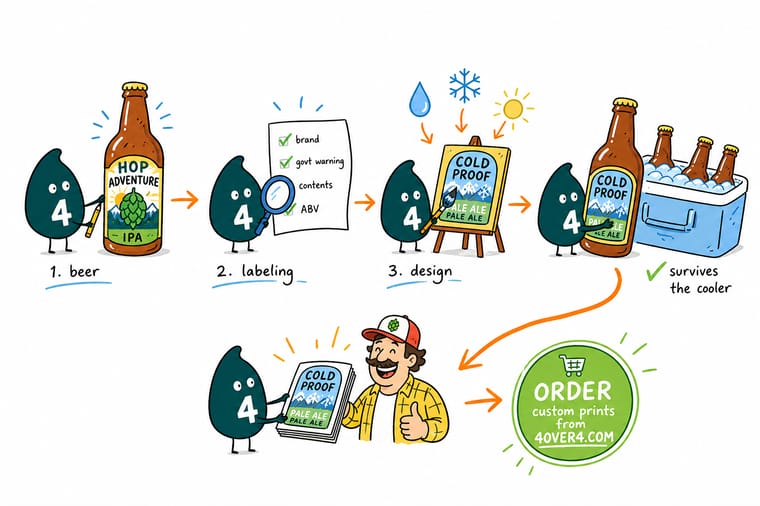
Wally reads the label before the press does. Brand name, class or type, bottler and address, net contents, and the government warning reproduced word for word at 2 mm on a 12 oz bottle. Then he puts the bottle in ice for half an hour. Paper goes soft at the corners. White BOPP with a permanent acrylic adhesive comes out flat, which is why he prints beer on film and hands the paper back.
Order premium beer labels →%22%2F%3E%3Ccircle%20cx%3D%2242%22%20cy%3D%221%22%20r%3D%2217%22%20fill%3D%22%2314b8a6%22%20opacity%3D%220.15%22%2F%3E%3Ccircle%20cx%3D%2240%22%20cy%3D%2250%22%20r%3D%225%22%20fill%3D%22%2314b8a6%22%20opacity%3D%220.1%22%2F%3E%3Crect%20x%3D%2272%22%20y%3D%22-7%22%20width%3D%2227%22%20height%3D%2210%22%20rx%3D%224%22%20fill%3D%22%2314b8a6%22%20opacity%3D%220.08%22%20transform%3D%22rotate(7%2080%2030)%22%2F%3E%3C%2Fsvg%3E)
Specs and pricing
Beer label sizes, materials and starting prices
Sheeted premium beer labels start at $29.16 for 25 in 3 x 5 to 5 x 7 inches and print in 3 business days, roll beer labels cost $322.98 for 100 to 500 on a 3 inch core in 6 business days, and waterproof labels start at $84.68 for 25 on White Vinyl Permanent. The live choices for each come from the 4OVER4.COM configurator.

Print it
Order labels built for wet glass
Order sheets for a pilot batch you label by hand, rolls in White or Clear BOPP when an applicator runs the bottles, and die-cut labels from $93.37 for 25 when the shape carries the brand.

Explore more
Where to go next
Follow the label from file to press, pick between BOPP and vinyl for a wet bottle, compare wine bottle label sizes, and see what a shopper reads on a shelf in two seconds.
By the numbers
Film face stocks for a wet cooler
Common Questions
Your beer labeling questions, answered
Do I need TTB approval for my beer label?
If your beer is a malt beverage under the Federal Alcohol Administration Act, meaning it is brewed with malted barley and hops, and you sell it across state lines, you need a Certificate of Label Approval before the labeled bottles leave the brewery. You apply through COLAs Online with a legible image of every label on the container. If you sell only inside the state where you brew, you can apply for the exemption instead of a full COLA, though your state alcohol board still has its own filing. Beers brewed without malted barley or without hops, which includes many gluten-free and sorghum beers, fall outside the FAA Act and are labeled under FDA food rules instead, so they carry an ingredient list and a Nutrition Facts panel and no COLA.
What has to appear on a beer label?
Six things: the brand name, the class or type designation such as ale, lager, stout or malt beverage, the name and address of the bottler or importer, the net contents, the government health warning, and any special declarations your recipe triggers. Those declarations include FD&C Yellow No. 5, aspartame, and a sulfite statement when the beer contains 10 parts per million or more. Alcohol content is optional under federal rules for malt beverages, though several states require it, which is why nearly every label carries it. Everything on that list has to be readable, in English, on a label the buyer can see without turning the bottle upside down.
What is the exact government warning wording?
Use the two-part statement quoted in full in the warning section of this guide: part (1) covers the Surgeon General advice on pregnancy and birth defects, part (2) covers driving, machinery and health problems. Copy it from the source exactly. The words GOVERNMENT WARNING appear in capitals and bold, the rest does not, and the block sits separate from any other copy so nothing reads as part of it. Do not paraphrase it, do not break it into bullet points, and do not run it across a busy photograph.
Can I put my beer label on a clear film?
Yes, on a pale beer. Clear BOPP on rolls and Clear Label Permanent on sheets are transparent, so every ink picks up whatever is behind it, and our beer label lines print CMYK with no white ink layer. Dark type on clear film reads well over a lager or a wheat beer and disappears over a stout. For a dark beer, choose White BOPP or White Vinyl Permanent so the warning block, the net contents and the bottler line stay legible.
Why did my labels curl off in the cooler?
Almost always application, not the label. Pressure sensitive adhesives need a clean dry surface at room temperature to wet out, most permanent acrylics stop grabbing below roughly 40 degrees, and full bond strength takes about 24 hours. Labeling bottles straight out of a cold room, or bottles still damp from the rinser, gives the adhesive nothing to hold. Label warm and dry, let the cases sit a day before they go cold, and test one bottle in an ice bucket for half an hour before you commit the batch.
What is the standard size of a label?
For a 12 oz longneck, the standard front label is about 4 inches wide, cut to the height of the straight barrel. Our sheeted beer labels come in 3 x 5, 3 x 6, 4 x 4, 4 x 6, 5 x 5 and 5 x 7 inches, plus Any Size. A 12 oz can wrap runs about 8.25 by 4 inches, so order it as Any Size.
Are beer bottles 12 or 16 oz?
Both sizes are in use, and your label has to say which: the net contents line reads 12 FL OZ or 16 FL OZ. The 12 oz longneck is the standard bottle, about 2.35 inches across, and takes a front label near 4 inches wide. Measure any 16 oz or larger container before you size the die, because its straight wall sets the label height.
How wide should the label be on a 12 oz longneck?
A standard 12 oz longneck is about 2.35 inches across, so the barrel measures a little over 7 inches around. A 4 inch wide label covers more than half of it and leaves clean glass on the back, which is the usual look. What matters more is height: the straight section of the barrel is short, and any label taller than it will wrinkle where the shoulder starts curving. Measure the flat part of your own bottle, subtract an eighth of an inch top and bottom, and size the die from that.
Get Started
100 to 500 roll beer labels cost $322.98, printed in 6 business days
Pick your size and die, choose a film face stock that handles condensation, and we print beer labels that stay flat from the bottling line to the cooler.
Legal Disclaimer
Gold Standard guarantees apply to all standard orders placed through 4over4.com. Price match requires verifiable proof of a competitor's published price for an equivalent product with matching specifications and turnaround time. Satisfaction guarantee covers manufacturing defects and print quality issues. Contact support with order number and documentation.
