
How to Remove Stickers and Sticky Residue From Metal


Seven safe ways to lift stickers and dissolve sticky residue from metal, ordered from gentlest to strongest, plus a cleaner long-term fix so you never scrub glue off again. Painted panels, brushed stainless, anodized aluminum and chrome each get their own rule, because the finish decides which solvent is safe.
To get sticky residue off metal, soften the adhesive first, then dissolve it. Warm the sticker with a hair dryer, lift it with a plastic scraper, then wipe the leftover film with rubbing alcohol on bare steel or cooking oil on painted metal, and finish with warm soapy water. Match the method to the finish, and never scrape a cold, dry sticker with a blade.
On painted metal, stop at cooking oil. Acetone and lacquer thinner dull automotive clear coat and single stage paint in seconds, while warm soapy water, low heat and oil lift the glue and leave the finish alone. On brushed stainless, wipe along the grain and keep blades and scouring pads off it. Chrome and anodized aluminum take alcohol and oil but nothing abrasive. Jump straight to painted metal or stainless steel if that is the finish in front of you.
Start here
Warm it before you pull it
Soften the adhesive, lift the sticker, then dissolve the residue. Heat from a hair dryer loosens the glue, a plastic scraper lifts the label, and rubbing alcohol or cooking oil clears the tacky film that stays behind. Painted and coated metal stays on the gentle end of the list, bare steel can take anything, and the diagram below maps the flow from first pass to a clean, dry surface.
Why adhesive grips metal so stubbornly

Metal is smooth, hard, and non-porous, which is exactly what pressure-sensitive adhesive loves. The glue flows into every microscopic dip in the surface and grips with its full contact area, so the paper or vinyl on top tears away while the sticky layer stays welded to the metal. Heat and time only make it worse, curing the adhesive harder the longer a label bakes in the sun.
The good news is that the same chemistry that makes the bond strong also makes it easy to break with the right nudge. Warmth softens the adhesive back toward a liquid, and oils and solvents dissolve it outright. That is the whole game: soften or dissolve the glue first, then lift, and never fight a cold, dry sticker with a blade.
This guide walks the seven methods that actually work, from the gentlest to the strongest, then points you to a cleaner long-term answer. If you are labeling metal on purpose, a removable-adhesive vinyl decal peels off without any of this, which is where the last section heads.
Test a hidden spot and gather your supplies

Before you treat the whole surface, dab your chosen product on a hidden corner and wait a minute. This matters most on painted, powder-coated, and aluminum metal, where a strong solvent can dull or lift the finish. If the test spot stays clean and unmarked, you are clear to continue. If it hazes or softens the paint, drop down to a gentler method.
Keep the tool list short and non-metal. A hair dryer, a bottle of rubbing alcohol, some cooking oil, dish soap, baking soda, and a plastic scraper or old gift card will clear almost any sticker on metal. The plastic edge is the key detail, since it lifts softened adhesive without the scratches a razor or putty knife leaves in stainless and paint.
With a safe spot confirmed and your supplies in reach, start at the top of the method list and only move down if the gentle option leaves residue behind. Working gentle-to-strong protects the metal and still clears even old glue.
Removing adhesive from painted metal without damaging the paint
Glue on painted metal is the one job where the residue is tougher than the surface holding it, so the order matters more than the product: warm soapy water first, gentle heat second, cooking oil third, and a solvent only if all three leave a film. Soak a cloth in warm water with a drop of dish soap, hold it flat on the residue for two or three minutes, then push at the softened edge with a plastic scraper or an old gift card held almost flat to the panel. Most label glue on painted appliances, cabinets, lockers and signage gives up right there with the paint untouched.
If the glue is a cured vinyl adhesive that shrugs off soap, warm it with a hair dryer on low, circling the nozzle about four inches from the panel for thirty to forty five seconds. Warm, not hot: the paint should feel like a car roof in the sun, never too hot to keep a finger on it. The heat pulls the adhesive back toward a liquid so the plastic edge slides underneath instead of dragging color with it. Keep a heat gun away from painted metal entirely, and never hold the airflow in one spot.
Cooking oil is the safest solvent for baked enamel and powder coat, the finishes on most appliances, filing cabinets, tool boxes and painted signage. Wet the residue with oil, give it ten minutes, rub in small circles with a cloth, then wash the oil off with warm soapy water so nothing is left to hold dust. Oil breaks the tack without attacking pigment or clear coat, which is why it is the default on any panel you are not willing to repaint.
Two things stay off painted metal: acetone and lacquer thinner. On automotive clear coat and on single stage paint both soften the finish in seconds and leave a dull patch that only polishing or a respray will fix. Rubbing alcohol is fine on bare and stainless steel but can haze single stage paint, so it gets tested first. Citrus based adhesive removers sit in between, strong on old sun cured glue and usually paint safe, and they still get a dab on a hidden corner and a full minute of waiting before they touch the visible panel.
The hidden spot test above counts double here. If the test patch hazes, or the cloth picks up any color, drop back to soap and heat and accept a slower job. And if you are the one applying the label, a removable-adhesive vinyl decal comes off painted metal in one pull with no solvent involved at all.
Removing stickers from stainless steel
Stainless has a grain, the fine brushed lines running one direction across the panel, and every wipe has to follow it. Warm the sticker with a hair dryer, lift a corner with a plastic scraper, then wipe the residue with rubbing alcohol or cooking oil on a soft cloth, always along the lines and never in circles. A green scouring pad, steel wool or a razor blade will clear the glue and leave cross grain scratches that catch the light for good, the one kind of damage on stainless you cannot buff out at home. Fridge doors, dishwasher fronts, splashbacks and equipment plates all behave the same way: soften, wipe with the grain, then finish with warm soapy water so no oil film is left behind.
Order clean-removal decals so it never happens again
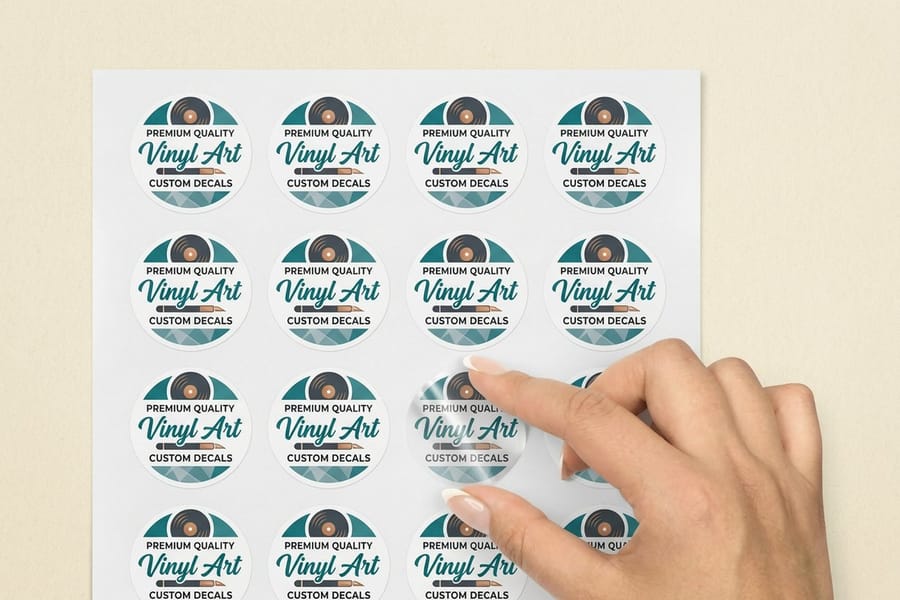
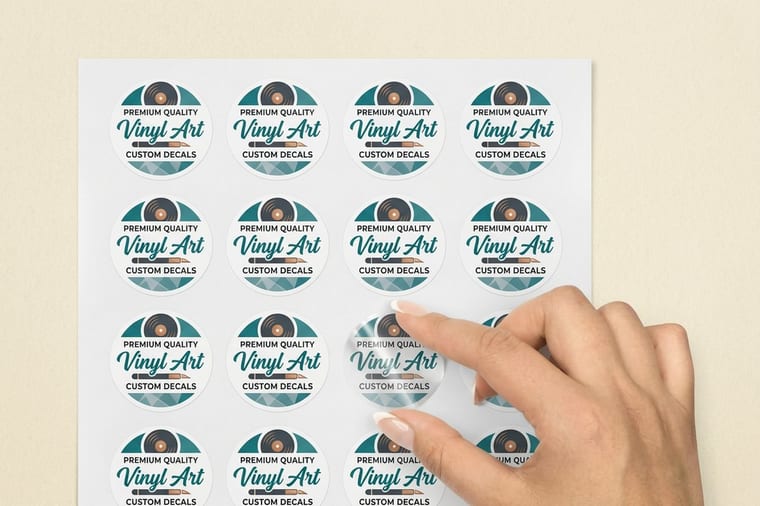
If you are the one putting labels on metal, whether it is asset tags on equipment, branding on a van, or window and door graphics, the residue problem is avoidable from the start. A removable-adhesive vinyl decal is engineered to hold firmly while it is in use and then peel away in one clean pull, leaving nothing to scrub. That turns a twenty-minute cleanup into a two-second peel.
At 4OVER4 you can order vinyl decals and die-cut decals cut to any shape, printed in full color, and specified with the adhesive strength your job needs. For vehicles and outdoor metal, custom car decals use weather-tough vinyl that survives sun and washes yet still removes cleanly when you retire the design. Browse the full metal printing collection for signs and plates built for the same surfaces.
Not sure which adhesive or material fits? Our online design tool lets you lay out the decal and pick the finish, and the live specs panel below shows every option and price for vinyl decals before you commit.
Wally warms it, lifts it, and skips the scrubbing
Soften first, and the glue lets go on its own
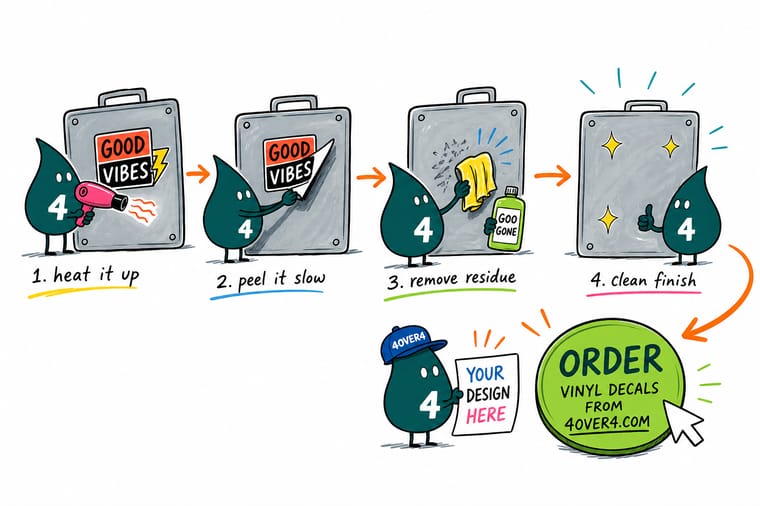
Wally never fights a cold sticker. He warms it with a hair dryer until the adhesive softens, slides a plastic card under a corner, and lifts the whole thing in one pull. Any tacky film left behind gets a wipe of oil or alcohol, then warm soapy water. Better yet, print a removable vinyl decal next time and the peel is clean from the start, with nothing to scrub.
Order clean-removal decals →Method by method
The 7 methods, gentlest to strongest
- Method 1: Hair dryer Hold a hair dryer four to six inches from the sticker on a medium setting and warm it for one to two minutes until the surface feels hot to the touch. The heat softens the adhesive so the sticker lifts from a corner in one piece. This is the safest first move on painted and stainless metal because nothing touches the finish but warm air.
- Method 2: Oiling Coat the sticker and any leftover film with cooking oil, olive oil, or coconut oil and let it soak for ten to fifteen minutes. The oil creeps under the adhesive and breaks its grip, so the label slides off and the residue wipes away with a cloth. Follow with warm soapy water so the surface is not left greasy.
- Method 3: Rubbing alcohol Dampen a cloth with isopropyl alcohol of seventy percent or higher and press it onto the residue for thirty seconds, then rub in small circles. Alcohol cuts adhesive fast and flashes off clean, which makes it ideal for bare steel and chrome. Test a hidden spot first on painted metal, since it can dull some coatings.
- Method 4: Baking soda Mix baking soda with a little cooking oil or water into a thick paste, spread it over the residue, and let it sit for five minutes. The mild grit lifts adhesive without the deep scratches a blade leaves, so it works well on brushed and stainless finishes. Wipe with the grain, then rinse.
- Method 5: Warm soapy water For fresh or paper labels, soak the area in warm water with a few drops of dish soap for ten minutes. The water swells the paper and loosens the glue so the whole thing floats off. It is the gentlest option of all and the right starting point on delicate coated or painted metal.
- Method 6: Petroleum jelly Smear a thick layer of petroleum jelly over dried, hardened residue and leave it for fifteen to twenty minutes. It softens old adhesive that has cured hard in the sun, letting you roll it off with your thumb or a plastic scraper. Clean the film afterward with soapy water.
- Method 7: Commercial remover When residue refuses to budge, a citrus-based or adhesive-remover product is built for the job. Apply it per the label, wait the stated dwell time, and wipe. Keep solvent removers off painted surfaces unless the product says it is paint-safe, and always work in a ventilated space.
Quick reference
Which method for which metal
The safe method changes with the finish. Match your surface to this table before you reach for anything stronger than warm water.
| Metal surface | Best methods | Why |
|---|---|---|
| Bare or galvanized steel | Any method | Uncoated steel shrugs off heat, alcohol, and solvent removers, so reach for whatever is fastest. |
| Stainless steel | Heat, baking soda, oil | Avoid abrasive pads and blades that leave visible scratches across a brushed grain. |
| Painted or powder-coated metal | Warm soapy water, then heat | Start gentle and skip strong solvents that can lift or dull the finish. |
| Aluminum | Oil, mild alcohol | Soft and prone to marring, so lift with a plastic edge rather than metal. |
| Chrome trim | Alcohol, heat | Wipes clean quickly, but keep grit off polished chrome to protect the shine. |
Specs and pricing
Vinyl decal specs and live pricing
Skip the scrubbing next time with a decal built to peel off clean. Vinyl decals run 25 for $93.37, which is $3.73 each.
| Quantity | Price Per Unit | Total |
|---|---|---|
| 25 | $3.73 | $93.37 |
| 50 | $1.91 | $95.56 |
| 100 | 100.0¢ | $99.95 |
| 200 | 56.3¢ | $112.59 |
| 300 | 41.4¢ | $124.13 |
| 400 | 33.9¢ | $135.65 |
| 500 | 29.2¢ | $146.10 |
| 600 | 26.4¢ | $158.17 |
Order it
Decals that come off as clean as they went on
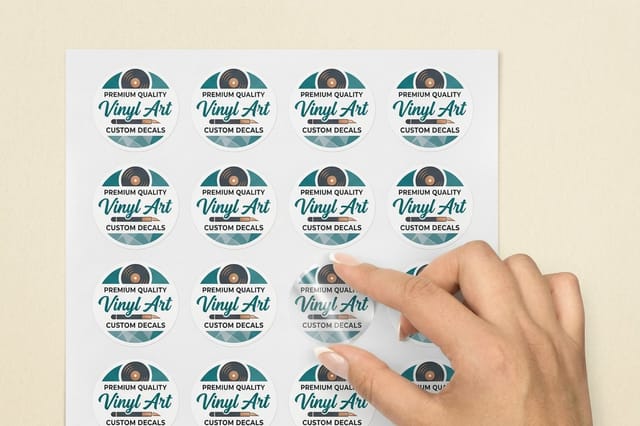
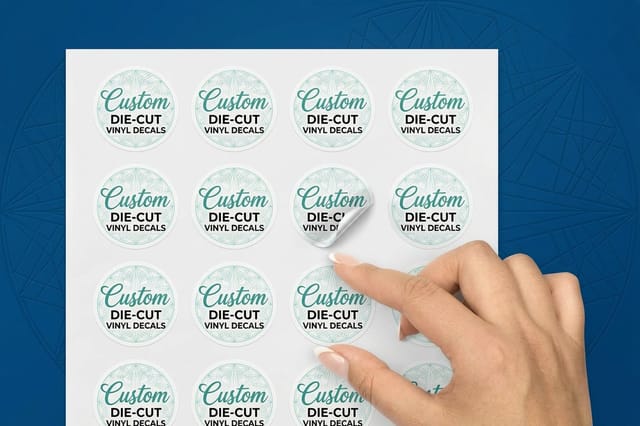
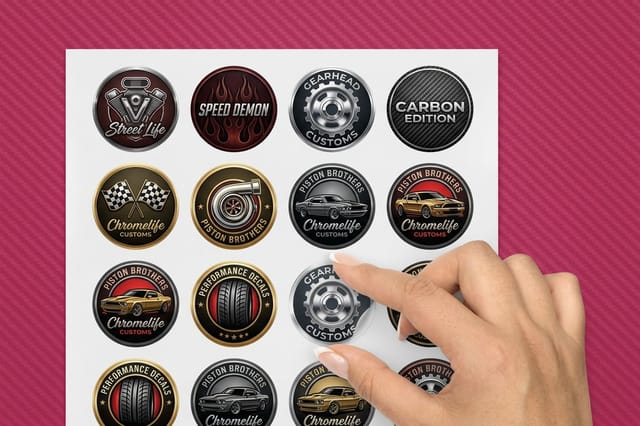
See it in use
Decals we cut on repositionable vinyl





Explore more
Where to go next



By the numbers
Permanent and repositionable white vinyl
Common Questions
Common questions about removing stickers from metal
What is the best way to remove sticky residue off metal?
Start with heat, then move to a solvent only if you need it. Warm the residue with a hair dryer for a minute so it softens, lift what you can with a plastic scraper, then wipe the tacky film with rubbing alcohol of seventy percent or higher on bare steel and chrome, or with cooking oil on painted and coated metal. Finish with warm soapy water so nothing greasy or streaky is left behind. Working from gentle to strong protects the surface and clears even old, hardened glue.
How do I get stickers off metal without scratching it?
The scratches almost always come from scraping dry with a blade. Soften the adhesive first with warm air from a hair dryer or a ten-minute soak in oil, then lift only with a plastic card, an old gift card, or a plastic putty knife. On stainless and brushed metal, wipe with the grain rather than across it, and choose baking-soda paste over a metal scouring pad. If you never bring a hard edge to a cold, dry sticker, the metal stays unmarked.
How do I remove sticker glue from painted metal safely?
Painted and powder-coated metal is the surface that needs the most care, because the same solvents that clear glue can also dull or lift paint. Begin with warm soapy water and a hair dryer, which will handle most labels on their own. If residue remains, use cooking oil or petroleum jelly instead of alcohol or a solvent remover, since oils break down adhesive without attacking the finish. Always test any stronger product on a hidden spot first and stop the moment the paint looks affected.
Is this metal painted, coated or bare?
Match the method to how tough the metal finish is. Bare, galvanized, or stainless steel can take heat, alcohol, baking soda, or a commercial remover. Painted, coated, and aluminum surfaces should stay on the gentle end: warm soapy water, heat, and oils. The quick-reference table above pairs each common metal with the methods that clear the glue without harming the surface, so you can pick with confidence before you start.
What does it cost to order clean-removal decals, and how are prices set?
A run of removable vinyl decals starts around $93, and the per-unit price drops as the quantity climbs. Price is driven by a few simple levers you set in the configurator: quantity, size, the vinyl material, and any finish or lamination. Everything updates live as you adjust it, so you can see exactly how a larger run or a bigger decal changes the total before you order. Because these decals are made to peel off clean, you skip the residue problem entirely on the next round.
Will these methods work on old, hardened residue?
Yes, but old glue that has cured in heat or sun needs a longer dwell time. Give oil or petroleum jelly a full fifteen to twenty minutes to soak in and soften the hardened film before you try to lift it, and repeat the soak if the first pass only loosens part of it. A citrus-based adhesive remover is the strongest option for glue that has been baking on metal for months, as long as the surface is bare or the product is labeled safe for the finish.
Get Started
Done scrubbing glue? Print a decal that peels off clean.
Order removable vinyl decals from 4OVER4.COM in any shape, color, and adhesive strength your job needs. Die-cut decals price the same at 25 for $93.37.
Legal Disclaimer
Gold Standard guarantees apply to all standard orders placed through 4over4.com. Price match requires verifiable proof of a competitor's published price for an equivalent product with matching specifications and turnaround time. Satisfaction guarantee covers manufacturing defects and print quality issues. Contact support with order number and documentation. On-time delivery rate based on tracked orders 1999 to 2026. Individual results may vary based on shipping carrier performance.
