
How To Start A Small Business From Home In 2026


"Starting a business from home in 2026 is more accessible than ever, but the path from idea to first customer still follows a clear order. The practical route below ends with the printed essentials that make a home venture look established from day one."
Start a home business by validating the idea, handling the legal basics, building a brand, and then launching with the materials customers can hold. Test that people will pay before you build, register the business and separate your finances, name and brand it, set up a workspace, market on a budget, and put your name on business cards, flyers, and signage so a kitchen-table venture reads as a real company.
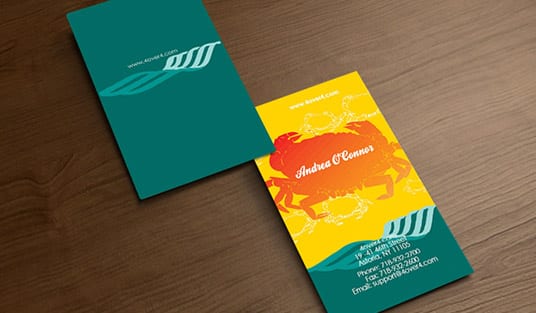
Validate the idea before you spend a dollar

The most expensive mistake a new founder makes is building before checking that anyone will pay. Before you invest in inventory, software, or a polished setup, prove demand. Talk to real potential customers, offer a paid pilot or pre-sell your product, and watch what people actually spend money on rather than what they say they like. If you cannot get a handful of paying commitments, the idea needs work, not more money.
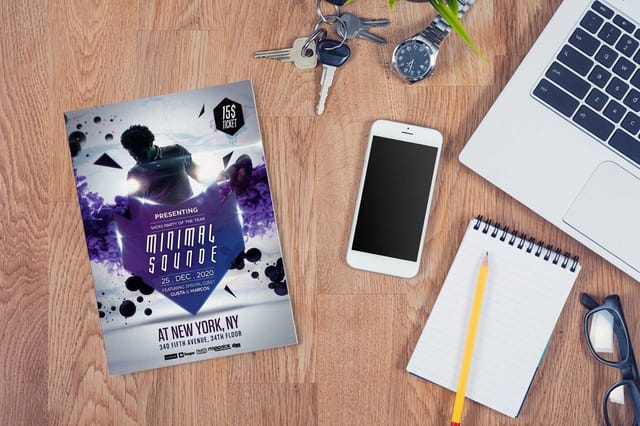
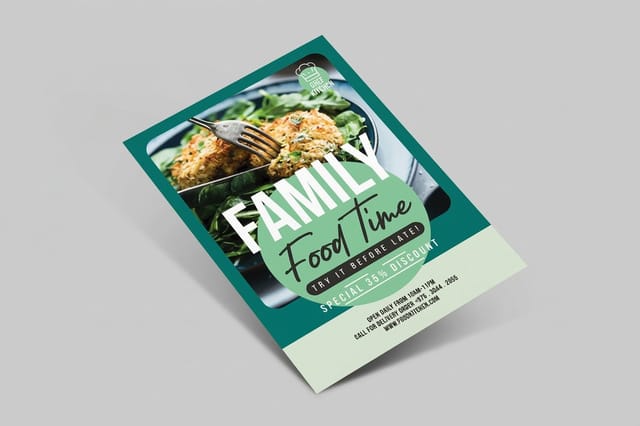
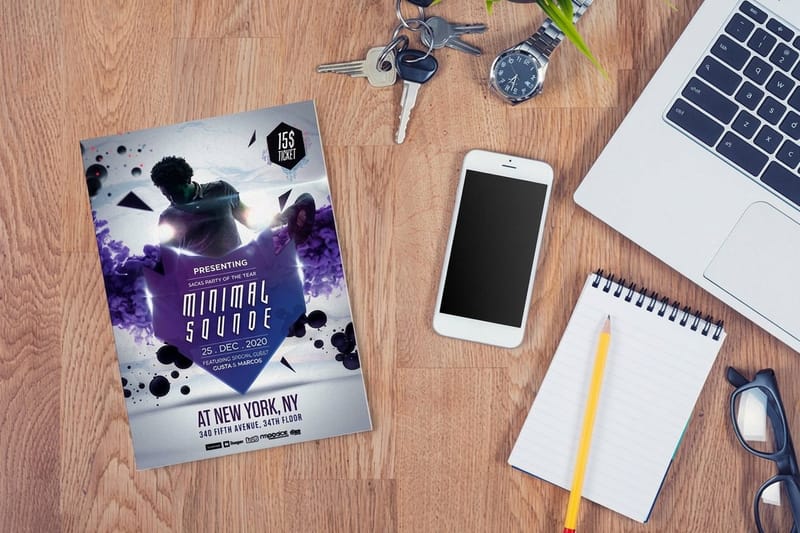
Cheap, tangible marketing is one of the fastest ways to test. A small run of flyers or business flyers announcing your offer, handed out or posted locally, tells you in days whether the phone rings. That real-world signal beats a survey every time. It is also the moment your home business first meets the public, so make the offer clear and the design clean.
Treat this stage as research you can hold. Every flyer you hand out is a tiny experiment, and the results tell you whether to push forward, adjust the offer, or pivot before you have sunk real capital.
Handle the legal and money basics
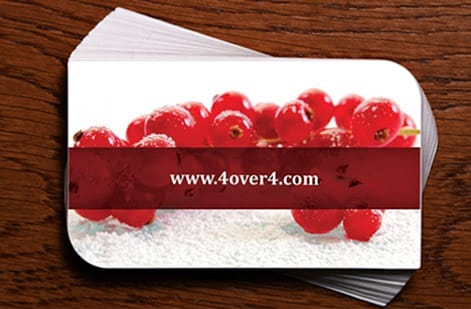
Once demand is real, make the business real. Choose a structure, most home businesses start as a sole proprietorship or an LLC for liability protection, and register it with your state. Get an EIN from the IRS, check whether your city requires a home-occupation permit or license, and understand the sales tax rules for what you sell. None of this is glamorous, and all of it protects you.
Then separate your money. Open a dedicated business bank account and route every sale and expense through it, so bookkeeping stays clean and your personal finances are shielded. This is also when a professional identity starts to matter: a set of business cards with your registered name signals to vendors, banks, and customers that you are a legitimate operation, not a hobby. If your brand needs to protect its mark, our guide on how to trademark a logo walks the process.
Getting the legal foundation right early is far cheaper than untangling it after you have customers, contracts, and revenue flowing.
Name and brand the business
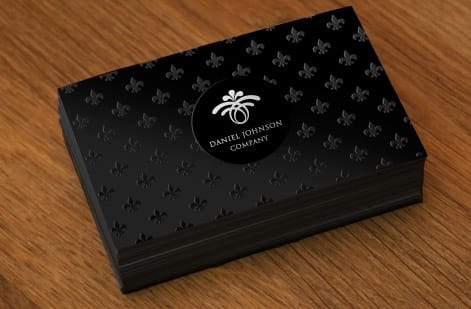
Your name and brand are how customers remember and refer you. Pick a name that is clear, easy to spell, and available as a domain and on social platforms. Then build a simple visual identity: one logo, a small color palette, and a consistent font. It does not need to be elaborate. A clean, consistent mark applied everywhere beats a fancy logo used inconsistently.
You do not need to hire an agency to look professional. Our online design tool and ready-made design templates let you build a coherent brand and drop it onto every printed piece, and our guides on logo design best practices and building a brand identity keep your choices sound. For a deeper foundation, see what branding actually is.
Consistency is the whole trick. When your card, your flyer, and your sign all share the same logo and color, a stranger sees one confident company instead of a scattered side project.
Set up at home and market on a budget

A productive home setup does not require a dedicated office. Carve out a consistent workspace, keep business supplies separate from household ones, and set boundaries so work does not bleed into every hour. For inventory or shipping-based businesses, a corner with good organization and a small print station for labels and packaging inserts goes a long way.
Marketing on a shoestring rewards presence over spend. Ask happy customers for referrals, show up at local markets and events, and put physical materials in people's hands. A well-designed flyer on a community board, a yard sign for a local service, or a stack of cards left at a partner business reaches your neighbors more reliably than a small ad budget. See our small business benchmarks for where new ventures actually find their first customers, and our marketing plan guide to sequence it.
The through-line is that a home business grows on trust and visibility, both of which physical, professional materials build faster than a logo that only ever lives on a screen.
The launch checklist and the print essentials

When you are ready to open, run a simple launch checklist: business registered and licensed, bank account open, brand and logo set, website or social profiles live, pricing decided, and your introducing materials printed and in hand. That last item is what turns launch day from an announcement into a working storefront, even a virtual one.
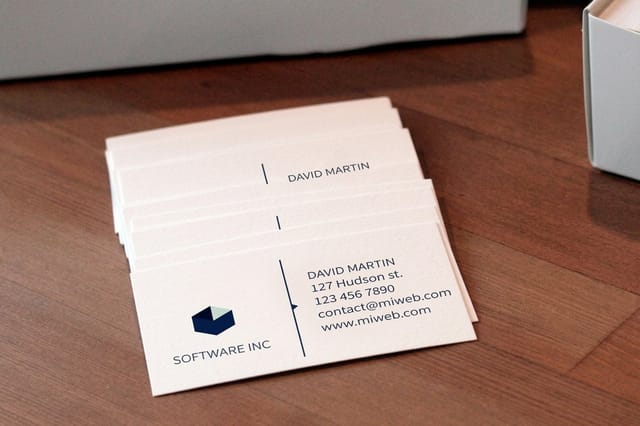
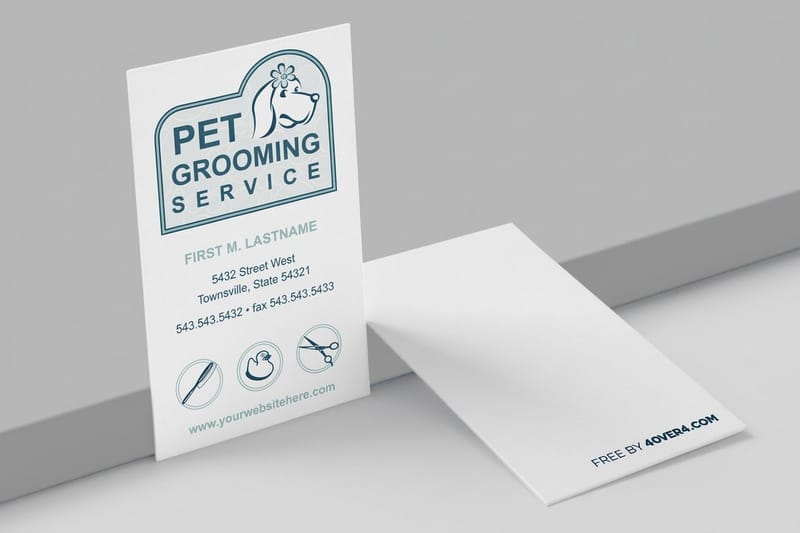
The core print kit for almost any home business is small and cheap. Order business cards to hand out at every meeting, flyers to announce your offer locally, and, for a service that works in the field, yard signs to advertise on-site. Print them all on-brand with the same logo and color, using the live specs and pricing panel below, and a home venture instantly looks established.
Start with the cards, add flyers as you market, and grow the kit as the business does. Every piece you print is your name working for you when you are not in the room.
Wally turns a kitchen table into a business
Validate, register, brand, then print your name
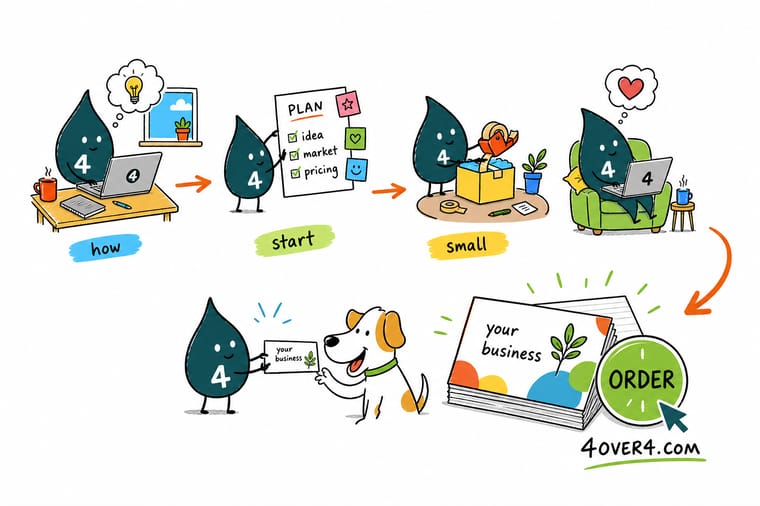
Wally starts with one idea, checks that people will pay, registers the business, builds a simple logo, and then prints the essentials that make it real: a card to hand out, a flyer to announce the offer, a sign for the front. A home venture stops looking like a hobby the moment your name is on something a customer can hold. Build the brand, and 4OVER4 prints the kit.
Print your launch essentials →Quick reference
Home business essentials at a glance
| Detail | What to know | Why it matters |
|---|---|---|
| Validate | Paid pilots or pre-sales | Confirm people will pay before you spend on inventory or setup. |
| Structure | Sole proprietor or LLC | Register with your state and get an EIN from the IRS. |
| Finances | Dedicated business account | Keeps bookkeeping clean and shields personal money. |
| Brand | One logo, small palette | Applied consistently across every card, flyer, and sign. |
| Workspace | Consistent, separated | A dedicated corner with a small print station for labels. |
| Marketing | Referrals + local print | Materials in real hands beat a small ad budget for local reach. |
| Print kit | Cards, flyers, signage | The essentials that make a home venture read as established. |
Step by step
Start a home business in 7 steps
- Validate demand with real buyersPre-sell or run a paid pilot and hand out flyers locally to confirm people will actually pay before you invest.
- Register and license the businessChoose a sole proprietorship or LLC, register with your state, get an EIN, and check for a home-occupation permit.
- Separate your financesOpen a dedicated business bank account and route every sale and expense through it from day one.
- Build a simple brandPick a clear name, create one logo and a small color palette, and apply them consistently everywhere.
- Set up your workspaceCarve out a consistent work area, keep business supplies separate, and add a small print station if you ship.
- Market on a budgetLean on referrals, local events, and printed materials handed to real people instead of a big ad spend.
- Print the essentials and launchOrder on-brand business cards, flyers, and signage, then run your launch checklist and open for business.
Specs and pricing
Business card specs and live pricing
Standard business cards print on 14pt Gloss Cover in 3 business days, and 100 of them start at $17.57. Set your stock and quantity below.
| Quantity | Price Per Unit | Total |
|---|---|---|
| 100 | 17.6¢ | $17.57 |
| 200 | 11.5¢ | $23.07 |
| 300 | 9.15¢ | $27.46 |
| 400 | 7.96¢ | $31.86 |
| 500 | 7.25¢ | $36.26 |
| 600 | 6.77¢ | $40.64 |
| 700 | 6.43¢ | $45.04 |
| 800 | 6.18¢ | $49.43 |
Order it
Print your home business essentials at 4OVER4
Explore more
Where to go next

By the numbers
The print shop behind a home business
Common Questions
Common questions about starting a home business
How do I start a small business from home?
Work in order: validate that people will pay for your idea, register the business and get an EIN, separate your finances with a business bank account, build a simple brand with one logo and color palette, set up a consistent workspace, and market on a budget through referrals, local presence, and printed materials. Finish by printing the essentials, business cards, flyers, and signage, so your home venture looks established the day you launch.
What do I actually need to launch a home business?
At minimum: proof that customers will pay, a registered business structure and any required local license, a business bank account, a simple brand, and a way to reach customers. On the physical side, a small print kit of business cards and flyers covers introductions and local marketing, with signage added for service businesses. These low-cost items do more to make you look credible than almost anything else you can buy early on.
How much does it cost to start and what are the print essentials priced at?
A home business can start for very little beyond registration fees and your time. The print essentials scale with quantity: unit prices drop sharply as you order more cards or flyers, and you set size, stock, and finish in the 4OVER4 configurator with the price updating live. Start with a modest run of business cards and flyers, then reprint larger quantities as demand grows and the per-piece cost falls.
How much does it cost to start a home business?
The unavoidable costs are your state registration fee, which varies by state and by whether you file as a sole proprietor or an LLC, and any home-occupation permit your town charges. Everything else is a choice. An EIN is filed with the IRS, a business bank account is opened before your first sale, and the brand can be one logo and a small color palette. On the print side, start with a modest run of business cards and flyers, set size, stock and finish in the 4OVER4 configurator and watch the price update live, then reprint in larger quantities once demand is proven and the per-piece cost falls.
What licenses do I need to start a business from home?
It depends on your state, your town and what you sell, so work through four checks in order. First, register the structure, a sole proprietorship or an LLC, with your state. Second, get an EIN from the IRS. Third, ask your city or county whether a home-occupation permit is required, since many residential zones limit signage, customer traffic and deliveries. Fourth, if you sell physical goods, check whether your state requires a sales tax permit, and if you handle food, childcare, cosmetics or trades, check the specific license that category carries. Do this before you print anything, because your legal name and any license number belong on the cards and labels.
What are the best home businesses to start in 2026?
The ones that need no inventory and no storefront start fastest: freelance services such as design, writing, bookkeeping and marketing, tutoring and coaching, cleaning and pet care, repair and handyman work, resale, and small-batch makers working under a cottage food or craft license. The test is the same for all of them: can you get someone to pay for a paid pilot this month, before you spend on setup. Whichever you pick, the introduction is physical. Business cards, flyers and labels are what make a home venture read as established the moment someone meets you.
What printed materials help a new home business look professional?
Business cards return the most per dollar, since you hand them out at every meeting. Flyers announce your offer locally and test demand cheaply. Yard signs advertise service businesses on-site, and branded items like letterhead or stickers reinforce the identity. Printed on-brand with the same logo and color, this small kit makes a kitchen-table venture read like an established company to customers, vendors, and partners.
How long does it take to print my launch materials and ship them?
Turnaround depends on the product, quantity, stock, and finish, and each product page shows the current production time for your configuration. Business cards and flyers are among the fastest items to produce, and you can add expedited shipping to hit a launch date. Prepare your files correctly the first time using our print-ready guidance so a reprint does not delay your opening.
Get Started
Order 100 cards from $17.57 and 50 flyers from $39.54
Print on-brand business cards, flyers, and signage on the stock and finish you want, and watch the price update live as you configure each piece.
Legal Disclaimer
Gold Standard guarantees apply to all standard orders placed through 4over4.com. Price match requires verifiable proof of a competitor's published price for an equivalent product with matching specifications and turnaround time. Satisfaction guarantee covers manufacturing defects and print quality issues. Contact support with order number and documentation. On-time delivery rate based on tracked orders 1999 to 2026. Individual results may vary based on shipping carrier performance.
