
How To Trademark A Logo And Protect Your Brand


"Trademarking a logo turns your mark into legally protected property. What follows is the real process, what it protects, how long it takes, what it costs, and how to get from a registered mark to a printed brand customers recognize."
To trademark a logo, confirm it qualifies, search for conflicts, file an application with the USPTO, and respond to the examiner until it registers. A trademark protects a logo used to identify goods or services in commerce, unlike copyright which protects the artwork itself. Filing costs run roughly $250 to $350 per class through the USPTO, and registration typically takes about 8 to 12 months.

Trademark basics: what it is and what it protects

A trademark is a word, phrase, symbol, or design that identifies the source of goods or services and distinguishes them from everyone else's. When your logo functions as that identifier in the market, it can be trademarked. Registration gives you the exclusive right to use the mark for your goods or services nationwide, plus the legal standing to stop others from using something confusingly similar.
It helps to know what a trademark does not do. It does not protect an idea, and it does not cover a logo you never actually use in commerce. It protects the mark's job as a brand signal. The stronger and more distinctive your logo, the more protectable it is, which is one more reason to invest in a solid mark. Our guide on logo design best practices helps you build one worth protecting, and our online design tool and design templates get it print-ready.
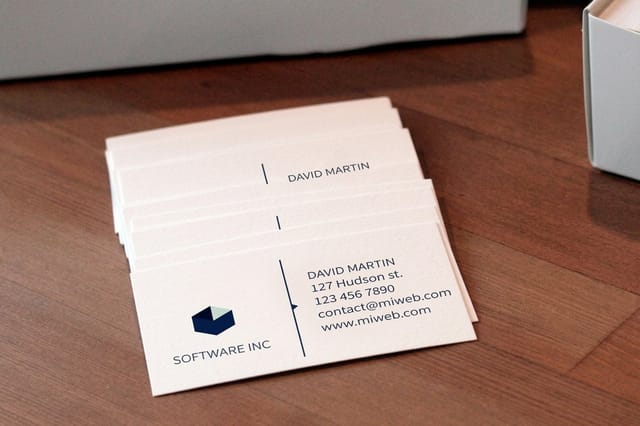
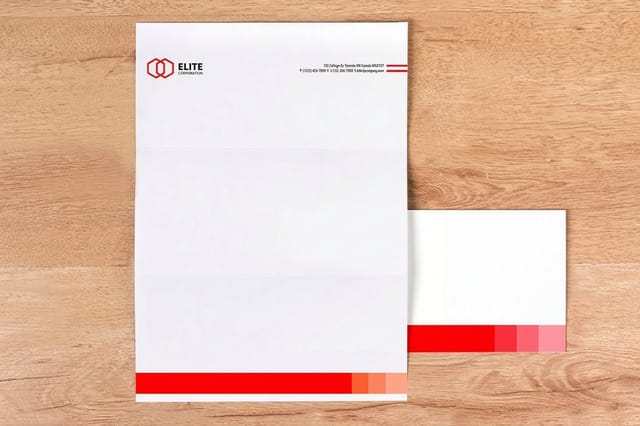
Once you own the mark, it belongs on everything customers touch. A protected logo on your business cards, letterhead, and packaging is what makes the registration pay off in recognition.
Trademark vs copyright: which one you actually need
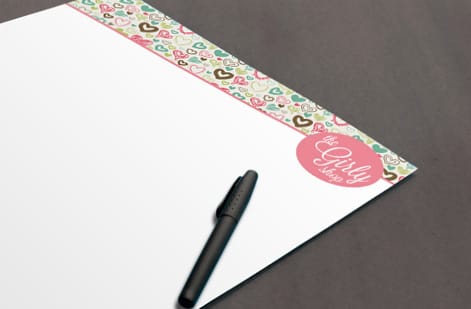
People mix these up constantly, and the difference matters. Copyright protects original creative work, the actual artwork of your logo, automatically the moment it is created. A trademark protects the logo's function as a brand identifier for specific goods or services. For a business logo you often want both: copyright covers the design, and a trademark covers its use as your brand.
In practice, the trademark is the one you file for, because it is what lets you stop a competitor from using a confusingly similar mark in your market. Copyright is automatic but narrower for brand purposes. If your logo also includes a distinctive name or tagline, those can be part of what you register. Put the protected identity to work across a coordinated stationery set, and our custom stationery guide shows how to keep it consistent.
In brief, copyright happens on its own, a trademark is something you claim and register, and a strong brand usually leans on the trademark to defend its logo.
The process of trademarking a logo, step by step
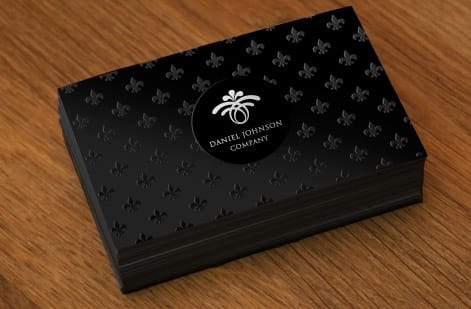
The path is more procedural than difficult. First, confirm your logo qualifies and is distinctive enough to register. Second, run a clearance search for existing marks that are similar in your class of goods or services, since a conflict is the most common reason applications fail. Third, file your application with the United States Patent and Trademark Office through the TEAS system, selecting the correct class and describing your goods or services precisely.
After filing, an examining attorney reviews the application, which can take several months. They may issue an office action raising questions or objections, and you respond to resolve them. If it clears, the mark is published for opposition for 30 days, and if no one successfully objects, it proceeds to registration. Many founders file themselves, while others use a trademark attorney to navigate objections. Either way, keep using the mark on real materials like printed envelopes and cards, because a trademark is grounded in actual use in commerce.
Set expectations on timing: from filing to registration commonly runs about 8 to 12 months when things go smoothly, and longer if an office action needs a substantive response.
What it costs, how long it takes, and DIY vs a lawyer

Federal filing fees run roughly $250 to $350 per class of goods or services through the USPTO, so a logo used across two distinct classes costs more than one used in a single class. If you hire a trademark attorney, add their fee, typically several hundred dollars and up, in exchange for a proper clearance search and help handling objections. For a straightforward mark with no conflicts, many owners file successfully on their own.
Timing usually lands around 8 to 12 months from application to registration, driven mostly by the examination queue and whether an office action arises. It is slow, but the protection is nationwide and lasts as long as you keep using the mark and file the required maintenance documents. While you wait, you can use the TM symbol to signal a claim, switching to the encircled R only after registration is granted.
Weigh the cost against what you are protecting. If your brand is central to how customers find and choose you, a few hundred dollars and a year of patience is cheap insurance for the logo you are printing on every piece.
Owning your mark and when you may not need one
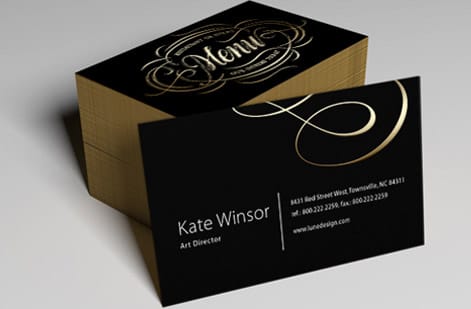
Once registered, a trademark is an asset you own, maintain, and can even license or sell. Keep using it consistently, watch for infringers, and file the maintenance paperwork on schedule so the registration does not lapse. Using the mark the same way everywhere, on your cards, letterhead, signage, and packaging, both strengthens the brand and reinforces your legal claim to it.
There are cases where a full federal trademark is not urgent. A purely local business with no plans to expand, a very early idea still being tested, or a generic mark that is hard to protect may all wait. Common-law rights arise from use even without registration, though they are weaker and local. If you are still validating the venture, our guide on starting a business from home covers the sequence, and you can register once the brand proves itself.
Whether or not you file today, put your logo to work now. Use the live specs and pricing panel below to print a coordinated set of business cards and letterhead that carry your mark into every customer interaction.
Wally protects the mark, then prints it everywhere
Search, file, register, then put it in every hand
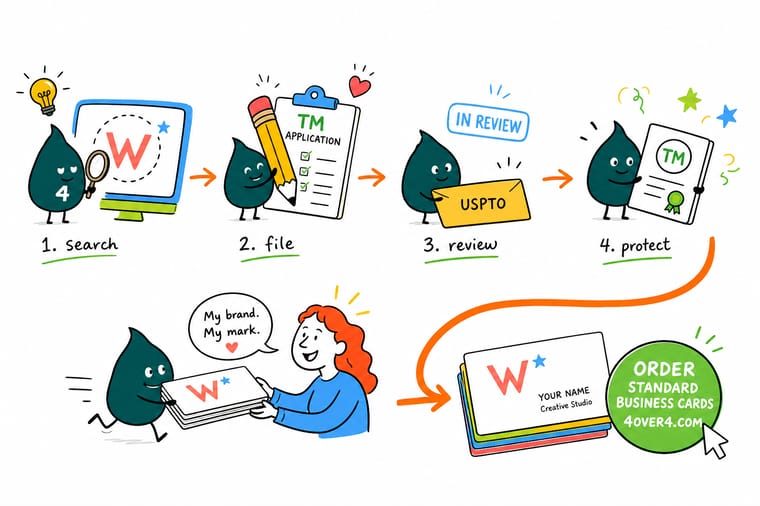
Wally runs the clearance search, files the application with the USPTO, answers the examiner, and comes out the other side with a registered logo that is legally his. Then the real payoff: that protected mark goes on the cards, the letterhead, the envelopes, every place a customer meets the brand. A trademark defends the logo, and printing it consistently makes it worth defending. 4OVER4 puts your mark on the page.
Print your branded set →Quick reference
The key details, at a glance
| Detail | What to know | Why it matters |
|---|---|---|
| What it protects | A brand identifier in commerce | Your logo's role in distinguishing your goods or services. |
| Trademark vs copyright | Identifier vs artwork | Copyright is automatic; a trademark is registered and enforced. |
| Clearance search | Similar marks in your class | The step that prevents the most common rejection. |
| Where to file | USPTO TEAS system | Select the correct class and describe goods or services precisely. |
| Cost | ~$250-$350 per class | Add an attorney fee if you want help with search and objections. |
| Timeline | ~8-12 months typical | Examination, a possible office action, then a 30-day publication. |
| Symbols | TM before, R after | Use TM to claim; use the encircled R only once registered. |
Step by step
How to do it in 7 steps
- Confirm your logo qualifiesMake sure the mark is distinctive and actually used to identify your goods or services, not generic or purely descriptive.
- Run a clearance searchSearch the USPTO database and the market for similar marks in your class to avoid a conflict-based rejection.
- Choose the right classIdentify the class or classes of goods or services your logo covers, since fees and protection are per class.
- File through the USPTOSubmit your application in the TEAS system with a clear image of the mark and a precise description of use.
- Respond to the examinerIf an office action arrives, answer the objections or questions promptly to keep the application moving.
- Clear publicationAfter examination, the mark is published for 30 days for opposition before it proceeds to registration.
- Use and maintain the markPrint your registered logo consistently across materials and file the required maintenance documents to keep it active.
Specs and pricing
Live specs and pricing
Letterheads print on 70# uncoated text or 24# Royal Laid in 5 business days, and 50 of them start at $99.95.

| Quantity | Price Per Unit | Total |
|---|---|---|
| 100 | 17.6¢ | $17.57 |
| 200 | 11.5¢ | $23.07 |
| 300 | 9.15¢ | $27.46 |
| 400 | 7.96¢ | $31.86 |
| 500 | 7.25¢ | $36.26 |
| 600 | 6.77¢ | $40.64 |
| 700 | 6.43¢ | $45.04 |
| 800 | 6.18¢ | $49.43 |
Order it
Bring your project to 4OVER4

Explore more
Where to go next




By the numbers
Where a registered mark gets printed
Common Questions
Common questions
How do I trademark a logo?
Confirm your logo is distinctive and used to identify your goods or services, run a clearance search for similar existing marks, then file an application with the USPTO through the TEAS system in the correct class. An examining attorney reviews it, may issue an office action you respond to, and if it clears it is published for opposition for 30 days before registering. From filing to registration typically takes about 8 to 12 months.
What is the difference between a trademark and a copyright for a logo?
Copyright protects the original artwork of your logo automatically when it is created, while a trademark protects the logo's function as a brand identifier for specific goods or services and must be registered to be fully enforceable. For a business logo you often benefit from both, but the trademark is the tool that lets you stop competitors from using a confusingly similar mark in your market.
What does it cost to trademark a logo?
Federal filing fees through the USPTO run roughly $250 to $350 per class of goods or services, so covering multiple classes costs more. Hiring a trademark attorney adds their fee in exchange for a thorough clearance search and help with objections, while a straightforward, conflict-free mark can often be filed on your own. The registration then protects your mark nationwide as long as you maintain it.
How long does it take to trademark a logo?
A typical timeline runs about 8 to 12 months from filing to registration, driven mostly by the examination queue and whether the examiner issues an office action that needs a response. There is also a 30-day publication window for opposition before the mark registers. You can use the TM symbol to signal your claim while the application is pending and switch to the encircled R only after registration is granted.
Do I always need to trademark my logo?
Not always. A purely local business with no expansion plans, a very early idea still being validated, or a generic mark that is hard to protect may reasonably wait, and common-law rights arise from use even without registration, though they are weaker and local. If your brand is central to how customers find you or you plan to grow, federal registration is worth the cost. Either way, put the logo to work on printed materials now.
Get Started
Order 50 letterheads from $99.95 and 250 envelopes from $142.99
Print a coordinated set of business cards, letterhead, and envelopes carrying your mark, on the stock and finish you want, with the price updating live as you build it.
Legal Disclaimer
Gold Standard guarantees apply to all standard orders placed through 4over4.com. Price match requires verifiable proof of a competitor's published price for an equivalent product with matching specifications and turnaround time. Satisfaction guarantee covers manufacturing defects and print quality issues. Contact support with order number and documentation. On-time delivery rate based on tracked orders 1999 to 2026. Individual results may vary based on shipping carrier performance.
