
Legal Envelope Sizes Every Law Office Should Know


The sizes, the fold math that decides which one you need, the standard window position, and where a firm's mail quietly crosses from letter rate into flat rate.
A law office needs four sizes: a #10 at 4.125 by 9.5 inches for letter correspondence, a #14 at 5 by 11.5 inches when the enclosure is a legal sheet, a 9 by 12 catalog for briefs that stay flat, and a 9.5 by 14.5 catalog when the flat enclosure is legal size. The one that catches people is the #10: an 8.5 by 14 sheet folded in thirds is 4.67 inches tall and a #10 opening is 4.125, so it does not fit.
Quick answer
Four sizes, and one fold that decides between two of them
The choice is made by what goes inside, not by what the envelope is called. A letter size sheet folded in thirds is 3.67 inches tall and drops into a #10. A legal sheet folded in thirds is 4.67 inches tall, which is half an inch more than a #10 opening, so it needs a #14 at 5 by 11.5 or a fold in half into a 6 by 9 booklet. Anything that must arrive unfolded goes into a 9 by 12 or a 9.5 by 14.5 catalog and pays flat postage from the first ounce.
The Four Envelope Sizes a Law Office Actually Orders
Most firms discover they need exactly four, and they discover it the hard way when a legal sheet will not go into the box of envelopes that just arrived. The list below is what a stationery order should cover.
| Envelope | Size in inches | What it holds | How it mails |
|---|---|---|---|
| #10 business | 4.125 x 9.5 | 8.5 x 11 folded in thirds | Machinable letter |
| #14 legal | 5 x 11.5 | 8.5 x 14 folded in thirds | Letter, exactly at the length limit |
| 6 x 9 booklet | 6 x 9 | 8.5 x 11 folded in half | Letter, 6 inches is under the 6.125 height cap |
| 9 x 12 catalog | 9 x 12 | 8.5 x 11 unfolded | Flat rate from the first ounce |
| 9.5 x 14.5 catalog | 9.5 x 14.5 | 8.5 x 14 unfolded | Flat rate from the first ounce |
Read the last column before the second one. The jump from letter to flat happens the moment a piece passes 6.125 inches tall, 11.5 inches long, or a quarter inch thick, and it is the single biggest cost line in a firm's mail. A retainer letter in a #10 and the same letter unfolded in a 9 by 12 are not close in price.
Two of these are optional for most practices. The 6 by 9 booklet is worth stocking if partners dislike three panel folds on signature pages, and the 9.5 by 14.5 only earns its shelf space in firms that still file paper exhibits. If you want the wider view of what prints well on each size, the guide to full color envelope sizes covers the same dimensions from the artwork side.
The Four Sizes in Millimetres, and the C Series a Foreign Firm Will Quote
American envelopes are sold by number and inch, and a paralegal on a matter with overseas counsel will meet the metric names instead. Here is the same list in millimetres, plus the three international sizes a firm working on A4 paper will quote.
| Envelope | Inches | Millimetres | Sheet it takes |
|---|---|---|---|
| #10 business | 4.125 x 9.5 | 105 x 241 | 8.5 x 11 folded in thirds |
| #14 legal | 5 x 11.5 | 127 x 292 | 8.5 x 14 folded in thirds |
| 6 x 9 booklet | 6 x 9 | 152 x 229 | 8.5 x 11 folded in half |
| 9 x 12 catalog | 9 x 12 | 229 x 305 | 8.5 x 11 flat |
| 9.5 x 14.5 catalog | 9.5 x 14.5 | 241 x 368 | 8.5 x 14 flat |
| DL | 4.33 x 8.66 | 110 x 220 | A4 folded in thirds |
| C5 | 6.38 x 9.02 | 162 x 229 | A4 folded in half, or A5 flat |
| C4 | 9.02 x 12.76 | 229 x 324 | A4 flat |
Two mismatches catch firms out. An A4 sheet is 210 by 297 millimetres, taller and narrower than a US letter sheet, so a DL is the overseas cousin of the #10 and a C4 the cousin of the 9 by 12. And the US legal sheet has no metric twin at all, which is why only a #14 or a 9.5 by 14.5 catalog carries an 8.5 by 14 page. If the firm's letterhead is going abroad, print the correspondence on letter size and let the #10 do the job on both sides of the water.
Why a Legal Sheet Will Not Go Into a #10
This is arithmetic, not preference. Fold an 8.5 by 14 sheet in thirds and each panel is 14 divided by 3, which is 4.67 inches. A #10 envelope has an opening 4.125 inches tall. The packet is roughly half an inch too deep.
What happens in practice is worse than a tight fit. The packet goes in at an angle, the leading corners crease, and the flap will not close flat over the extra bulk. On a stack of fifty pieces the mail room notices around number six and starts trimming the fold, which puts a second crease across the body of the letter. Nobody wants a demand letter that arrives looking chewed.
Three real fixes, in the order most firms should consider them. Print the correspondence on 8.5 by 11 and reserve legal sheets for pleadings, which is what the size is for. Or order law firm letterhead in letter size and keep a smaller box of #14 envelopes for the legal sheets that genuinely must go out folded. Or fold the legal sheet in half rather than thirds and mail it in a 6 by 9 booklet, which stays a machinable letter and gives the recipient a single clean crease.
The #14 has its own catch worth naming. At 11.5 inches long it sits exactly on the postal ceiling for a machinable letter, so there is no headroom. Any oversize variant, a clasp, or a rigid insert pushes the piece out of the letter category and into flat rate or a nonmachinable surcharge.
Window Envelopes and Where the Address Block Has to Sit

A window envelope removes an addressing step, which matters when a paralegal is sending the same notice to forty parties. It also permanently constrains your letterhead, and that trade is worth understanding before you commit.
The standard single window on a #10 is 1.125 inches tall and 4.5 inches wide, positioned 0.875 inch from the left edge and 0.5 inch up from the bottom. Every line of the recipient address has to fall inside that rectangle, and it has to stay inside when the letter shifts a few millimeters in transit. A four line address with a long firm name and a suite number is where layouts break.
Two habits keep it clean. Build the inside address block on the letterhead as a fixed position element rather than something that moves with the date line, and print one test sheet, stuff a real envelope, and hold it to a light before running the job. Double window stock, where the second opening shows the return address, is the option to reach for when firm letterhead already carries the return address in a place the envelope cannot show.
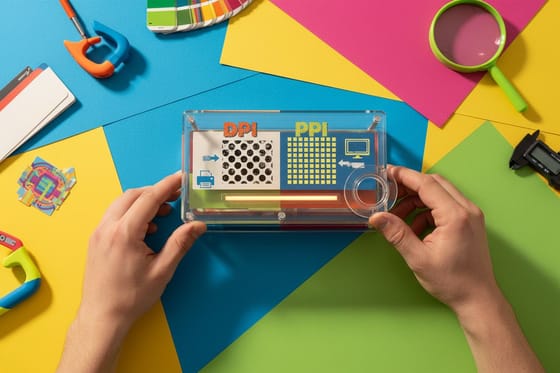
If the return address is being printed rather than shown through a window, resolution is the other thing that goes wrong. Small reversed type on a colored envelope panel needs real pixel density, and the difference between DPI and PPI is where most fuzzy return addresses start.
Mailing Briefs, Exhibits, and Anything With Real Bulk

Once an enclosure is thicker than a quarter inch the envelope decision changes character. You are no longer choosing a size, you are choosing whether the contents survive the trip and what they look like when the recipient opens them.
A 9 by 12 catalog handles a letter size document set flat and is the default for briefs. Step to 10 by 13 when there is a folder inside or an exhibit tab set, because a catalog envelope filled to its exact dimensions splits at the bottom seam. For legal size pages that must stay unfolded, 9.5 by 14.5 is the size, and it is worth confirming the recipient's mail room accepts flats before assuming it.
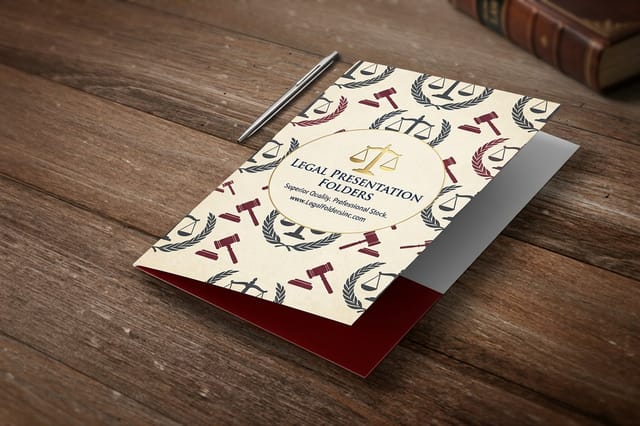
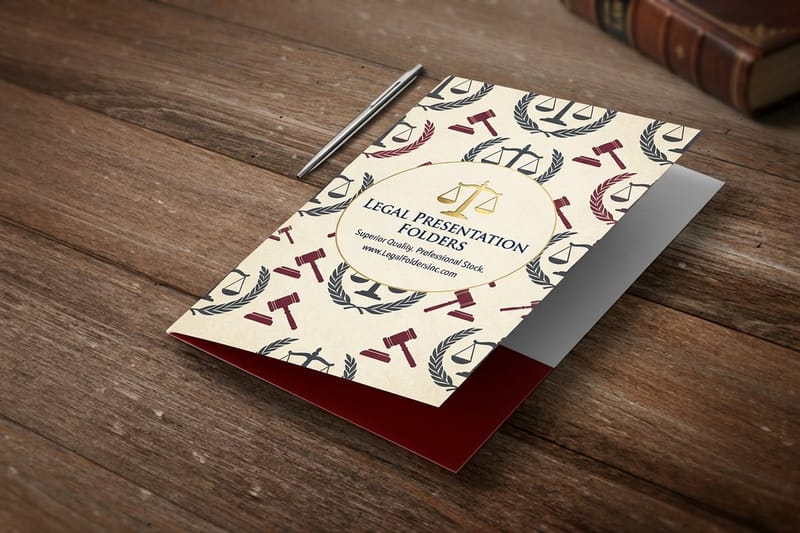
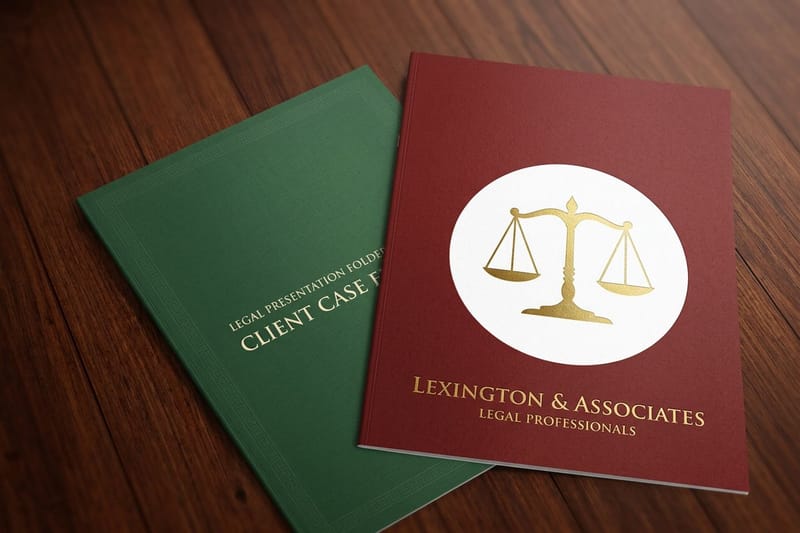
Presentation matters more than firms admit on anything handed over rather than filed. Legal presentation folders are cut for 8.5 by 14 pages and start at $844.54 for a run, which reads high until you divide it across a case set that gets handed to a client, opposing counsel and a judge's chambers. Pocket depth is the spec to check against your page count, and the guide to standard folder sizes lays out the dimensions.
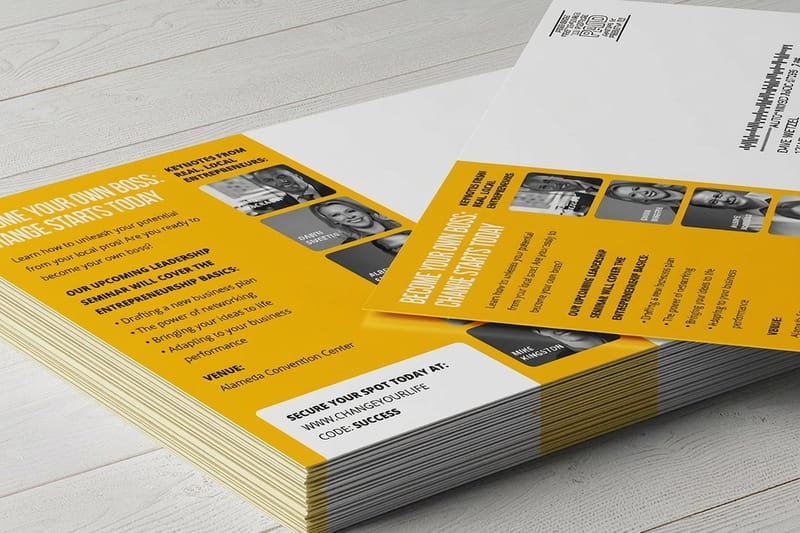
The rest of the stationery should match. Ordering envelopes, letterhead and folders from the same run keeps the ink build and the paper batch consistent, which is the whole point of the legal printing collection. If any of this mail is going out as a campaign rather than case correspondence, the direct mail statistics roundup is a useful sanity check on what actually gets opened, and the postcard and envelope pairing guide covers the fit rules for anything smaller than a letter.
Wally sizes up the envelope
The fold decides the envelope, every time
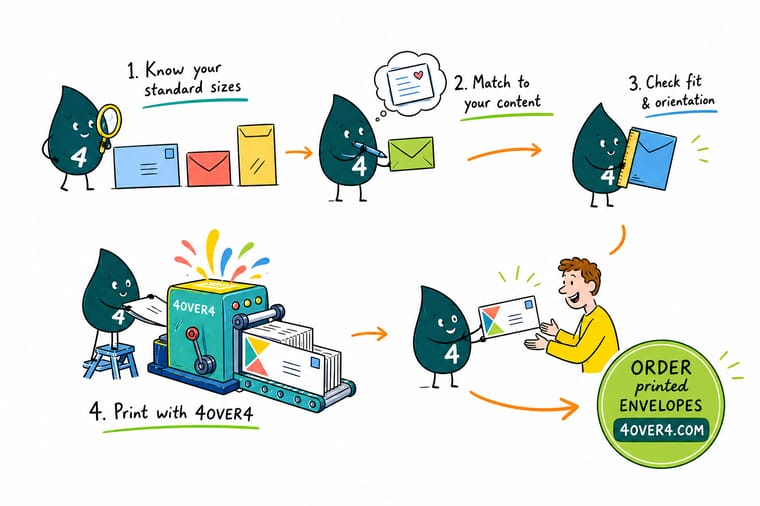
Wally folds a letter sheet in thirds and it is 3.67 inches tall, so it slides into a #10. He folds a legal sheet the same way and gets 4.67 inches, which is half an inch too deep for the same envelope, so he swaps to a #14 at 5 by 11.5. When the pages have to arrive flat he stops folding entirely and reaches for a 9 by 12 catalog, and he checks the postage first because that one mails as a flat.
Order matching law firm letterhead →Specs and pricing
Legal stationery specs and starting prices
Stock weights, sizes and live starting prices for the two pieces that have to match whatever envelope you order, straight from the 4OVER4.COM configurator.

Print it
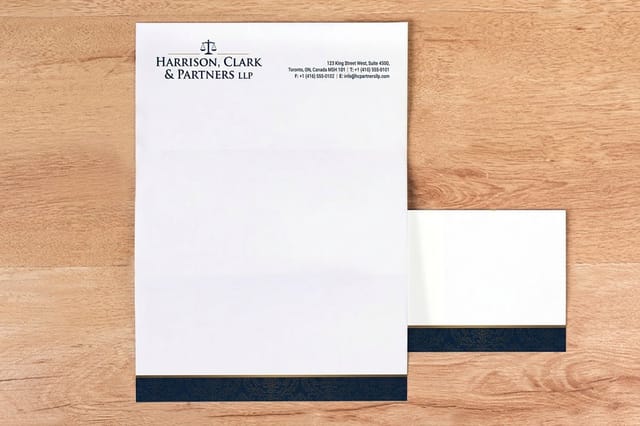
Print the stationery the envelopes have to match
Explore more
Where to go next
By the numbers
The shop behind your envelope order, in numbers
Common Questions
Your legal envelope questions, answered
Is a C5 envelope A4 size?
No. A C5 envelope is 162 by 229 millimetres and takes an A4 sheet folded once, or an A5 sheet flat. The envelope that holds A4 unfolded is the C4 at 229 by 324 millimetres, and the one that takes A4 folded in thirds is the DL at 110 by 220 millimetres. In American terms a C5 sits between a 6 by 9 booklet and a 9 by 12 catalog.
Is a 9x12 envelope considered a large envelope?
Yes. USPS calls anything over 6.125 inches tall, 11.5 inches long or a quarter inch thick a large envelope, which is its word for a flat. A 9 by 12 catalog envelope is 9 inches tall, so it pays flat postage from the first ounce even when it holds a single page. That is the trade for sending a brief unfolded.
Is 5x7 a standard envelope size?
It is a standard for invitations and cards rather than for correspondence. A 5 by 7 card mails in an A7 envelope, which measures 5.25 by 7.25 inches, and USPS treats it as a machinable letter as long as it stays under a quarter inch thick. A law office rarely stocks it, because none of its sheets fold to that size, but a firm sending event or holiday cards will want a box of A7s.
What size is a legal envelope?
In the envelope trade a legal envelope is a #14, which measures 5 by 11.5 inches. It is built to take an 8.5 by 14 legal sheet folded in thirds. People often use the phrase loosely for a #10 business envelope at 4.125 by 9.5 inches, because a #10 is the standard for legal correspondence, but a #10 will not accept a folded legal sheet. If someone in the office asks for legal envelopes, confirm which sheet is going inside before ordering.
Will an 8.5 by 14 legal sheet fit in a #10 envelope?
No. Folding 8.5 by 14 into thirds produces a packet 8.5 inches wide and roughly 4.67 inches tall. The opening on a #10 is 4.125 inches. The half inch of difference is enough that the paper buckles at the corners going in and looks creased coming out. The options are a #14 at 5 by 11.5, folding the legal sheet in half into a 6 by 9 booklet envelope, or printing the letter on 8.5 by 11 in the first place.
What size envelope holds a brief without folding it?
A 9 by 12 catalog envelope takes 8.5 by 11 pages flat, and a 9.5 by 14.5 catalog takes 8.5 by 14 flat. Both mail as flats rather than letters, so the postage is higher from the first ounce. If the brief is going into a presentation folder or has a thick exhibit set behind it, step up to 10 by 13 so the contents are not fighting the seams.
Where does the window sit on a #10 envelope?
The standard single window is 1.125 by 4.5 inches, positioned 0.875 inch in from the left edge and 0.5 inch up from the bottom edge. Every address line has to sit inside that rectangle with a small margin, including when the letter shifts a little in the envelope. Firms that use windows should set the inside address block on the letterhead once, print a test sheet, and stuff a real envelope before running a whole job.
Do square or oversized envelopes cost more to mail?
Yes. USPS charges a nonmachinable surcharge on square envelopes and on letters that are rigid, clasped, or have an aspect ratio outside roughly 1.3 to 2.5. Clasp envelopes and anything with a string and button closure fall into the same bucket. For routine firm mail that is a reason to stay with a plain gummed or self seal rectangle and keep the volume machinable.
Should envelopes be printed to match the letterhead?
If the firm name appears on both, yes, and it should be the same ink and the same stock weight. A 24 lb writing envelope next to a 70 lb text letterhead reads as two different firms once the recipient holds them. Order the envelope and the letterhead together so the paper batch, the ink build and the return address setting all match rather than drifting between reprints.
Get Started
Ready to print stationery that matches across the whole firm?
Pick your stock, set the return address once, and we print letterhead and folders that stay consistent from one reprint to the next.
Legal Disclaimer
Gold Standard guarantees apply to all standard orders placed through 4over4.com. Price match requires verifiable proof of a competitor's published price for an equivalent product with matching specifications and turnaround time. Satisfaction guarantee covers manufacturing defects and print quality issues. Contact support with order number and documentation. On-time delivery rate based on tracked orders 1999 to 2026. Individual results may vary based on shipping carrier performance.
