
Standard Envelope Sizes for Printing


The #10 at 4.125 by 9.5 inches is the size most business mail rides in, but it is one of a small family worth knowing. Anything wider than about 6.125 inches can cross into nonmachinable postage, and that sets the budget.
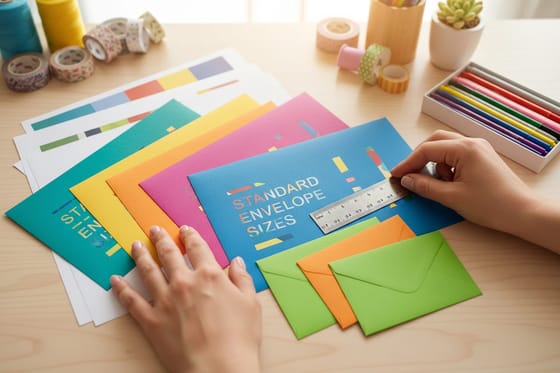
The standard envelope size is the #10, at 4.125 by 9.5 inches, which holds a letter folded in thirds. Reply mail uses the #9 (3.875 by 8.875 inches) that nests inside a #10, flat documents use the 6x9 and 9x12 booklet sizes, and invitations use the A-series such as the A7 (5.25 by 7.25 inches). 4OVER4.COM prints all 41 size and style options.
Quick answer
The short version on envelope sizes
The standard business envelope is the #10, at 4.125 by 9.5 inches, and it holds a letter folded in thirds. From there, the sizes fan out by job: the #9 (3.875 by 8.875) nests inside a #10 for reply mail, the compact #6 3/4 (3.625 by 6.5) suits short notes and checks, the 6x9 and 9x12 booklet sizes mail flat documents uncreased, and the A-series (A2 through A9) carries invitations and flat cards. 4OVER4.COM prints all 41 size and style options, with windows, self-seal flaps, and security tints.
Every size, one table
Complete envelope size chart
Commercial, announcement, baronial, booklet and catalog sizes used in the US, plus the ISO C-series and DL used almost everywhere else. Dimensions are width by height, and every size below prints to your brand at 4OVER4.COM.
| Envelope | Inches | Millimeters | Insert it fits | Series | USPS mailability |
|---|---|---|---|---|---|
| #6 3/4 | 3.625 x 6.5 in | 92 x 165 mm | A short note, a check, or a receipt | Commercial | Machinable letter |
| #9 | 3.875 x 8.875 in | 98 x 225 mm | A reply or remittance slip, nested unfolded inside a #10 | Commercial | Machinable letter |
| #10 | 4.125 x 9.5 in | 105 x 241 mm | A letter-size sheet folded in thirds | Commercial | Machinable letter |
| #11 | 4.5 x 10.375 in | 114 x 264 mm | A thicker folded letter or a small multi-page set | Commercial | Machinable letter |
| #14 | 5 x 11.5 in | 127 x 292 mm | Legal-size sheets folded once, or a bulky letter packet | Commercial | Machinable letter, at the length limit |
| A2 | 4.375 x 5.75 in | 111 x 146 mm | A 4.25 by 5.5 inch note card or RSVP card | Announcement | Machinable letter |
| A6 | 4.75 x 6.5 in | 121 x 165 mm | A 4.5 by 6.25 inch flat card or photo print | Announcement | Machinable letter |
| A7 | 5.25 x 7.25 in | 133 x 184 mm | A 5 by 7 inch invitation, the wedding standard | Announcement | Machinable letter |
| A9 | 5.75 x 8.75 in | 146 x 222 mm | A larger invitation or a folded suite with inserts | Announcement | Machinable letter |
| A10 | 6 x 9.5 in | 152 x 241 mm | A tall program, certificate, or slim booklet | Announcement | Machinable letter, at the height limit |
| Baronial #5 1/2 | 4.375 x 5.75 in | 111 x 146 mm | The same card an A2 takes, behind a deep pointed flap | Baronial | Machinable letter |
| Booklet 6 x 9 | 6 x 9 in | 152 x 229 mm | A half-folded letter, a small catalog, or a stack of cards | Booklet | Machinable letter under 0.25 in thick, otherwise flat rate |
| Booklet 9 x 12 | 9 x 12 in | 229 x 305 mm | A full 8.5 by 11 inch sheet, uncreased | Booklet | Flat rate, too large for letter mail |
| Catalog 10 x 13 | 10 x 13 in | 254 x 330 mm | A thick catalog, press kit, or bound report | Catalog | Flat rate, too large for letter mail |
| C4 | 9.02 x 12.76 in | 229 x 324 mm | An unfolded A4 sheet, the international 9x12 | ISO C | Flat rate, too large for letter mail |
| C5 | 6.38 x 9.02 in | 162 x 229 mm | An A4 sheet folded once, or an A5 booklet | ISO C | Non machinable, taller than the 6.125 in letter limit |
| C6 | 4.49 x 6.38 in | 114 x 162 mm | An A4 sheet folded in quarters, or an A6 card | ISO C | Machinable letter |
| DL | 4.33 x 8.66 in | 110 x 220 mm | An A4 sheet folded in thirds, the European #10 | ISO C | Machinable letter |
USPS treats a piece as a machinable letter only when it stays inside a narrow box: at least 3.5 by 5 inches, no more than 6.125 inches tall or 11.5 inches long, no thicker than 0.25 inches, under 3.5 ounces, rectangular, evenly thick, and bendable. There is one more rule that catches people out, the aspect ratio. Divide length by height, and the result has to land between 1.30 and 2.50. A square envelope sits at 1.00 and fails it, which is why squares carry the non machinable surcharge no matter how light they are. Go past the letter maximums and the piece is not surcharged, it simply reprices as a large envelope, or flat, which is why a 9x12 costs what it costs.
The envelope design templates open at the correct trim for each size, and the full color envelope printing sizes guide covers how the five business formats behave once there is ink across the whole face.
How big is a standard envelope?
A standard envelope is the #10, and it measures 4.125 by 9.5 inches. That is the size a regular 8.5 by 11 inch letter drops into after a fold in thirds, and it carries the bulk of everyday business mail. When someone says "a standard envelope," this is the one they mean. It is the number worth memorizing, but it is not the whole story: printing runs on a family of sizes, each shaped around what goes inside.
The commercial sizes cluster near the #10 and get smaller as the number drops, from the #9 down to a compact #6 3/4. The booklet and open-end sizes, named by their inches like 6x9 and 9x12, go bigger for flat pieces that should never be folded. The A-series sits apart, sized for cards and invitations. Below, the four most common formats are drawn to scale so the differences stop being abstract.
You can print any of these to your exact brand at 4OVER4.COM envelope printing, and if you would rather lay out the artwork as you go, the online designer builds it in the browser before you order. The rest of this guide walks each size in turn, with real dimensions and the job it does best.
The #10 envelope: 4.125 x 9.5 inches
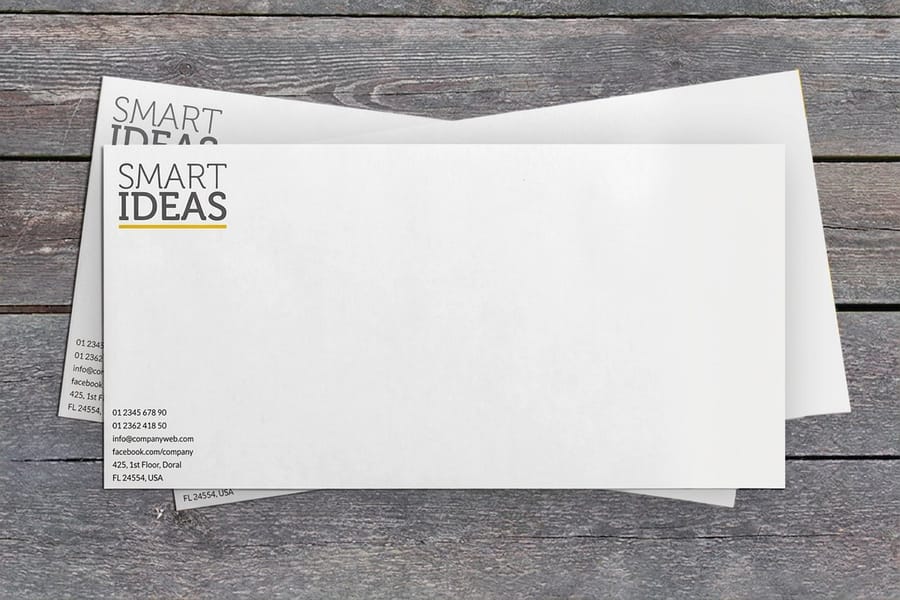
The #10 measures 4.125 by 9.5 inches, and it is the answer any time someone asks for the standard business envelope size. A letter-size sheet folded in thirds slides in cleanly, which is exactly why invoices, statements, cover letters, and checks nearly always arrive in one. If you print a single envelope size, print this one.
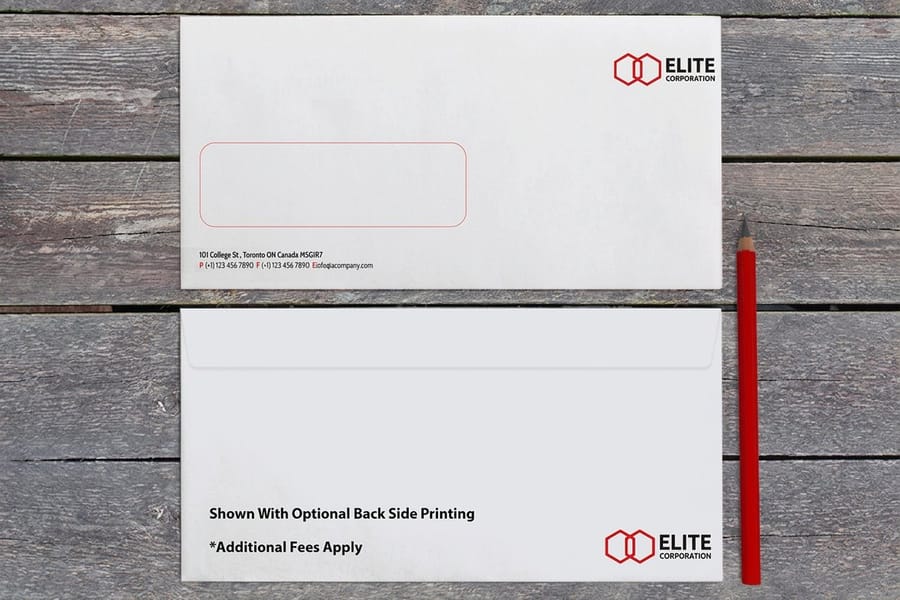
Because it carries most business mail, the #10 comes in more variations than any other format. 4OVER4.COM prints it plain, as a window version that frames the address already on your insert, and with self-sealing Peel and Seel or Simple Seal flaps that skip the licking. A security tint, the fine pattern printed inside, keeps a check or statement from being read against a bright light, which is standard on payroll and billing mail. A run of printed envelopes starts at $142.99 for 250 and lets you brand the front, the back, and the flap.
Envelopes rarely mail alone, so if you are building a matching set, pair the #10 with custom letterheads for stationery that reads as one system from the mailbox to the desk. Before any run prints, you can add a free online proof to catch a typo in the return address.
The #9 envelope: 3.875 x 8.875 inches
The #9 is 3.875 by 8.875 inches, and its whole reason for existing is to fit inside a #10. Slip an unfolded #9 into a #10 and you have the classic bill-and-return pairing: the customer opens the outer envelope, pulls out the reply envelope already printed with your address, and mails their payment back without folding a thing.
That nesting habit makes the #9 the default for remittance and response mail. It turns up in utility bills, membership renewals, and pledge drives, usually printed with a return address and a simple prompt. For pledge and offering programs, deeper donation envelopes give the flap room to double as a form the donor fills in. If the reply piece is doing quiet fundraising work, the direct mail response rate benchmarks show how much a pre-addressed envelope moves the needle.
6 x 9 envelopes: the compact flat mailer
Once a piece should not be folded, the naming switches from numbers to plain inches. A 6 x 9 envelope is 6 inches wide and 9 inches tall, an open-end or booklet format that holds a half-folded letter, a small booklet, or a short stack of cards flat. It is the step up you reach for when a #10 would crease the contents but a full 9x12 is more envelope than the job needs.
Marketers like the 6x9 because it stands out in a stack of #10s without jumping to oversized postage. It gives a promotional insert or a small catalog room to breathe, and the larger front is a bigger canvas for full-color art. Printed on smooth White Wove or a textured Royal stock, it reads as a deliberate mailing rather than a routine letter. If you are planning a campaign around it, the direct mail campaign guide covers how format, offer, and timing pull together.
9 x 12 envelopes: the full flat and open-end size
A 9 x 12 envelope is 9 inches wide and 12 inches tall, sized to swallow a full 8.5 by 11 inch sheet without a single fold. Reports, contracts, brochures, and press materials mail flat and arrive crease-free, which matters when the document is the impression. When the contents are thicker, a 10 x 13 gives a catalog or a press kit the extra room it needs.
These are usually open-end envelopes, meaning the flap and opening are on the short 9-inch side, so a stack of pages loads straight in. Print the front with your logo and return address and the mailer looks like it came from a real company before anyone slides the contents out. For a matched set of the flat pieces that go inside, browse the standard printing collection, and lean on the online designer to keep the envelope art aligned with everything else.
A2, A6, A7, and A9 envelopes for invitations and cards
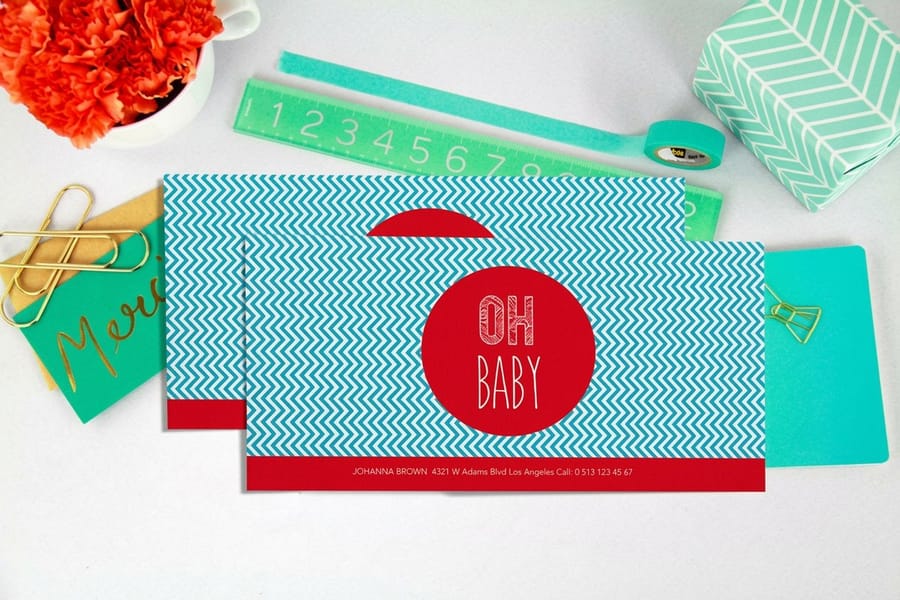
Not every mailing is a bill. When the envelope should feel like an event, the A-series is the family to know. These are sized to hold flat cards rather than folded letters, and they climb in tidy steps:
- A2, 4.375 by 5.75 inches for a small note card or an RSVP.
- A6, 4.75 by 6.5 inches for a 4 by 6 photo or announcement card.
- A7, 5.25 by 7.25 inches, the standard home for a 5 by 7 invitation.
- A9, 5.75 by 8.75 inches for a larger invitation or a folded suite.
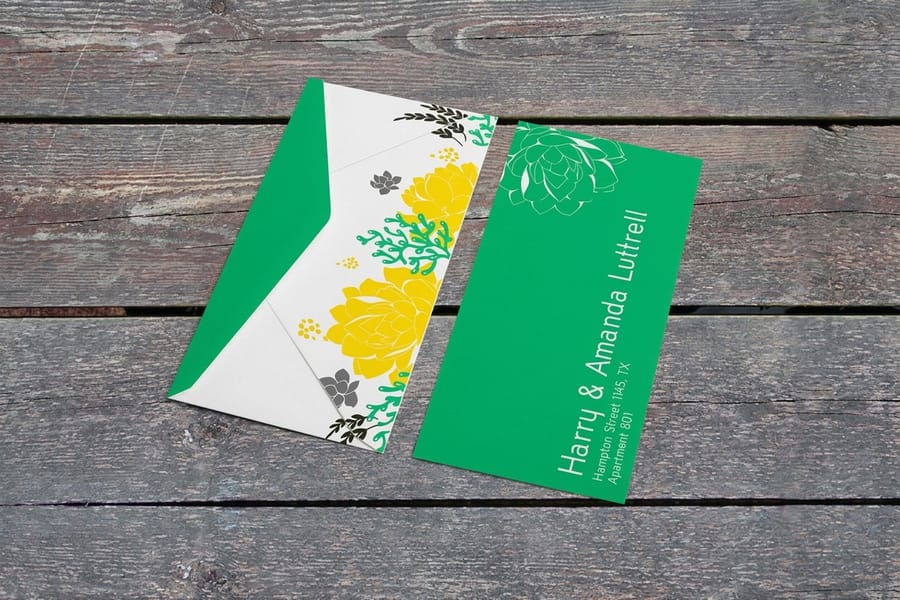
4OVER4.COM also prints true square envelopes from 5 up to 6.5 inches, which read as modern and deliberately different. Squares can trip postal automation and carry a nonmachinable surcharge, so they suit pieces where the extra postage buys attention. Match any of these with invitation envelopes and a printed card, and the whole suite arrives looking intentional. For a start-to-finish example, the wedding invitations case study follows one from design to mailbox.
Which envelope size for which mailer

Three questions settle it: what goes inside, how personal it should feel, and what you want to spend on postage. Work from the insert first, and the size usually picks itself.
- A folded letter, invoice, or statement wants a #10, with a window if the address is already on the sheet.
- A reply or payment piece tucked inside a bill wants a #9.
- A short note, receipt, or check wants a compact #6 3/4 at 3.625 by 6.5 inches.
- A flat report or brochure that should never fold wants a 9 x 12 or, for thicker kits, a 10 x 13.
- A promo insert or small catalog wants a 6 x 9.
- A flat invitation or announcement card wants the matching A-size.
One more lever quietly sets the cost: anything wider than about 6.125 inches or with an unusual proportion can cross into nonmachinable postage, so if the budget is tight, staying inside the standard #10 and #9 range keeps every piece at the base rate. Once you know the size, the specs and price below come straight from the live configurator. If a term trips you up along the way, the printing terms glossary defines it.
Wally sizes up your envelopes
Pick the format around what goes inside, then print it to your brand
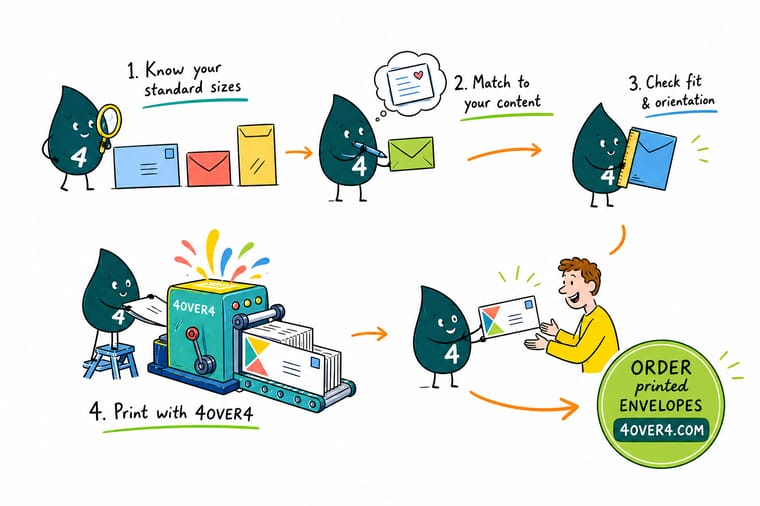
Wally treats the size chart like a fitting room: a folded letter rides in a #10, a reply slip nests in a #9, a flat report mails uncreased in a 9x12, and an invitation earns its A7. Get the size right and everything from postage to first impression falls into place. When you know which one you need, 4OVER4 prints it in 41 size and style options, with windows, self-seal flaps, and security tints, starting at $142.99 for 250.
Order printed envelopes →Specs and pricing
Printed envelope specs and pricing
Once you know the size, here is what a made-to-order run gives you at 4OVER4.COM, with live specs and price-per-unit straight from the configurator. Printed envelopes start at $142.99 for 250 and drop sharply per piece as the run grows.
| Quantity | Price Per Unit | Total |
|---|---|---|
| 250 | 57.2¢ | $142.99 |
| 500 | 29.2¢ | $146.12 |
| 1,000 | 15.4¢ | $153.87 |
| 2,500 | 12.8¢ | $319.95 |
| 5,000 | 10.6¢ | $529.40 |
Print it
Order envelopes in the size you need
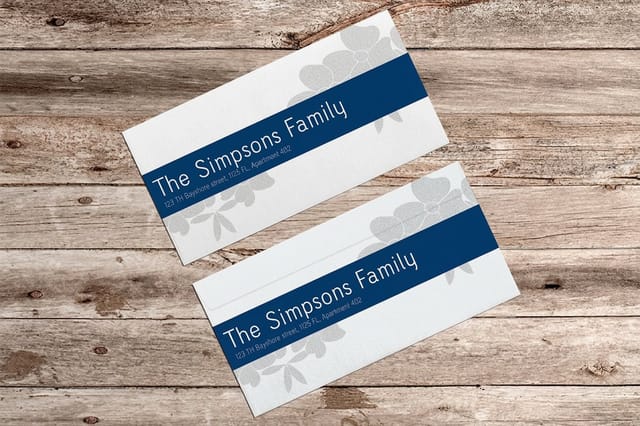
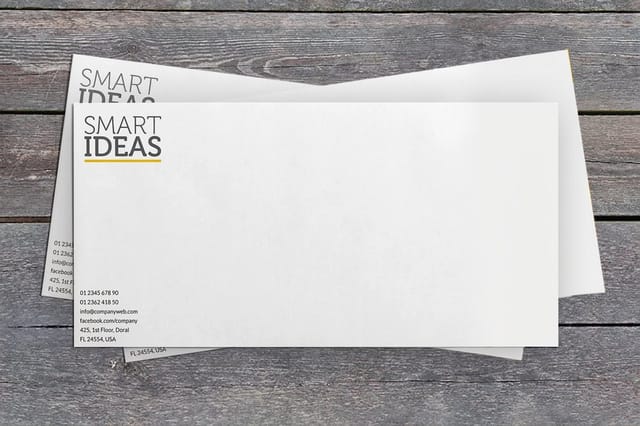
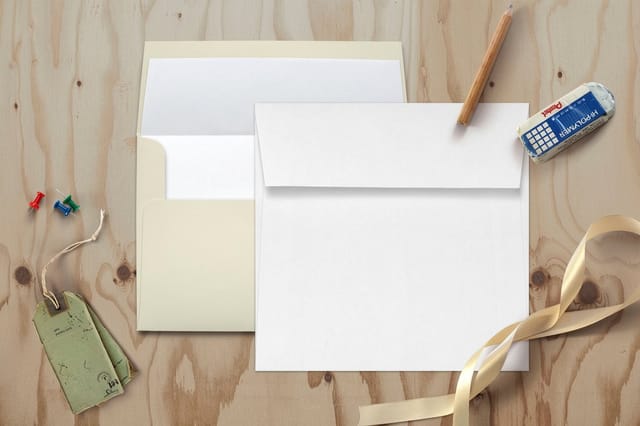
See it in use
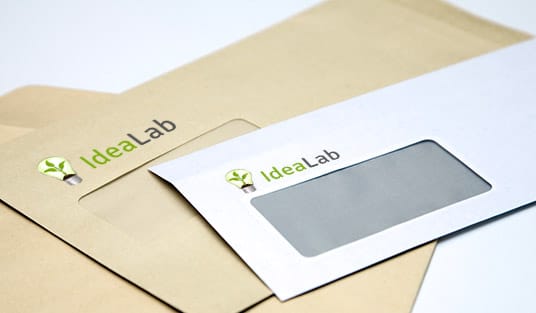
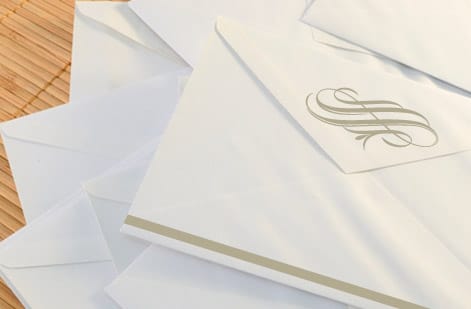
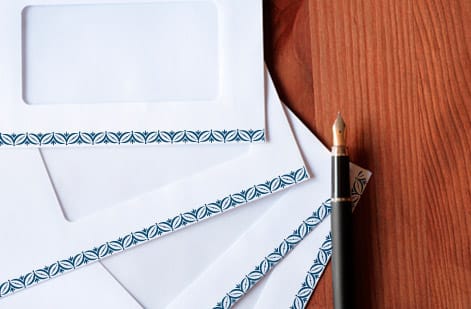
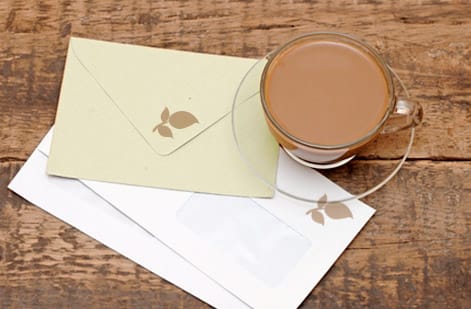
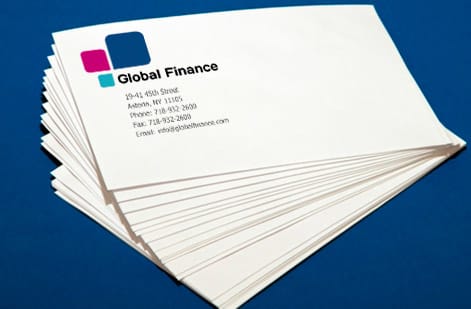
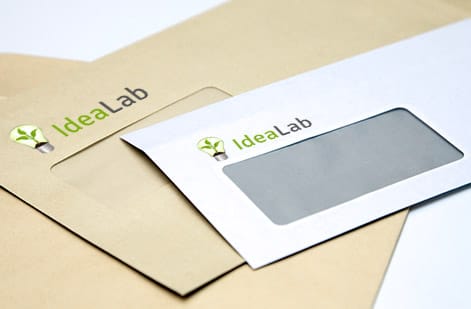
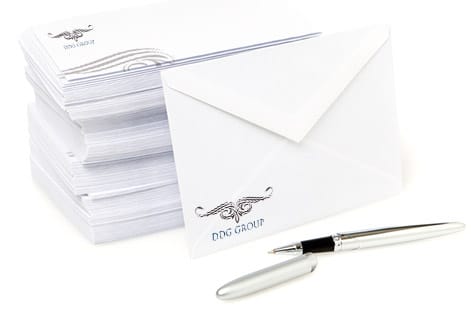
Envelopes we printed across five formats

Explore more
Where to go next

By the numbers
Forty one envelope sizes on five stocks
Common Questions
Common questions about envelope sizes
What is a #10 envelope size?
A #10 envelope measures 4.125 by 9.5 inches. It is the standard business envelope, sized to hold a regular 8.5 by 11 inch letter folded in thirds. Invoices, statements, cover letters, and checks almost always arrive in one, and it comes in the widest range of styles: plain, window, self-seal, and security tint.
What size is a #9 envelope?
A #9 envelope is 3.875 by 8.875 inches, just small enough to slide unfolded inside a #10. That nesting trick is its whole purpose: it is the pre-printed reply envelope a customer pulls out of a bill or a pledge letter and mails straight back, with no folding on their end.
What are the standard envelope sizes for printing?
The commercial range runs from the compact #6 3/4 (3.625 by 6.5 inches) through the #9 (3.875 by 8.875) and the everyday #10 (4.125 by 9.5). For flat pieces there are booklet and open-end sizes like 6x9, 9x12, and 10x13, and for cards and invitations there is the A-series, from the A2 (4.375 by 5.75) up to the A7 (5.25 by 7.25) and A9 (5.75 by 8.75). 4OVER4.COM prints 41 size and style options in all.
What fits in a #10 without folding twice?
Start with the insert. A folded letter wants a #10, an unfolded flat report wants a 9x12 or 10x13, a short note or check wants a #6 3/4, and a flat invitation card wants an A-size. Then weigh how formal the piece should feel and what you want to spend on postage, since oversized or square formats can cross into a higher rate.
What is an A7 envelope used for?
The A7 measures 5.25 by 7.25 inches and is the standard home for a 5 by 7 inch invitation or flat card. It suits weddings, announcements, and event mailings where the piece stays flat and the envelope is meant to feel like an occasion rather than a bill.
What envelope size do I need to mail a document without folding it?
For a flat 8.5 by 11 inch sheet or a small report, reach for a 9x12 booklet or open-end envelope, which holds the page uncreased with room to spare. A 6x9 handles a folded-in-half letter or a small booklet, and a 10x13 takes a thicker catalog or press kit. All three print with your logo and return address at 4OVER4.COM.
What are all the standard envelope sizes?
The commercial numbers run #6 3/4 (3.625 by 6.5 inches), #9 (3.875 by 8.875), #10 (4.125 by 9.5), #11 (4.5 by 10.375) and #14 (5 by 11.5). The announcement A-series runs A2 (4.375 by 5.75), A6 (4.75 by 6.5), A7 (5.25 by 7.25), A9 (5.75 by 8.75) and A10 (6 by 9.5), with the baronial #5 1/2 matching the A2 behind a deeper pointed flap. Flat sizes are the 6x9 and 9x12 booklet and the 10x13 catalog. Internationally you will meet the ISO C-series, C4 (229 by 324 mm), C5 (162 by 229 mm), C6 (114 by 162 mm) and DL (110 by 220 mm). The full chart with millimeters and USPS notes is at the top of this guide.
What is a C5 envelope size?
A C5 is 162 by 229 mm, or 6.38 by 9.02 inches. It is the ISO size that holds an A4 sheet folded once, or an A5 booklet flat, which makes it the international counterpart to the US 6x9. Because it stands 6.38 inches tall, it clears the 6.125 inch USPS letter limit, so a C5 mailed inside the US is priced as a large envelope rather than a letter.
Which envelope sizes are machinable with USPS?
A piece runs through letter automation when it is at least 3.5 by 5 inches, no taller than 6.125 inches, no longer than 11.5 inches, no thicker than 0.25 inches, under 3.5 ounces, rectangular, uniformly thick and bendable, with a length divided by height between 1.30 and 2.50. That covers the #6 3/4, #9, #10, #11 and #14, the A2 through A10, the baronial, the C6 and the DL. Squares fail the ratio test at 1.00 and pay the non machinable surcharge, and the 9x12, 10x13, C4 and C5 are simply priced as large envelopes.
Get Started
Order 250 printed envelopes at $0.57 each
Pick your size, drop in your logo and return address, and we print a crisp, on-brand envelope in the exact format your mailer needs.
Legal Disclaimer
Gold Standard guarantees apply to all standard orders placed through 4over4.com. Price match requires verifiable proof of a competitor's published price for an equivalent product with matching specifications and turnaround time. Satisfaction guarantee covers manufacturing defects and print quality issues. Contact support with order number and documentation. On-time delivery rate based on tracked orders 1999 to 2026. Individual results may vary based on shipping carrier performance.
