
Pages vs Sheets in Printing and How Booklet Page Counts Really Work


Emma is our prepress and print production voice, built from the knowledge of our production team, with over 20 years in printing.
Printers count pages, customers count pieces of paper, and quotes go wrong in the gap between the two. Here is what each word means and how to count your own job before you order.
A page is one printed side. A sheet is the press sheet that carries four pages once it is folded, so a booklet always has four times as many pages as sheets. That is why saddle stitched and perfect bound counts read 4, 8, 12, 16 and never 10 or 14. Flat pieces such as flyers and folded brochures have no page count at all: they are quoted in sides, written 4/4 or 4/0, and in panels rather than pages.
Quick answer
One sheet, two leaves, four pages
Divide by four to go from pages to sheets, and multiply by four to go the other way. A page is a side you can number. A leaf is one piece of paper in the finished booklet and carries two pages. A press sheet folds into two leaves, so it carries four. The covers count, blanks count, and anything folded rather than bound is measured in sides and panels instead.
Page, Leaf, Sheet and Side in a Printer Vocabulary
Four words get used as if they were interchangeable, and they are not. Getting them straight takes about a minute and saves an entire round of back and forth on a quote.
| Term | What it is | How to count it | Where you meet it |
|---|---|---|---|
| Page | One printed side, numbered. | Every side, including blanks and covers. | Booklets, catalogs, anything bound. |
| Leaf | One piece of paper in the finished piece, carrying two pages. | Page count divided by two. | Flipping through the finished job. |
| Sheet | The press sheet before folding, carrying four pages once folded. | Page count divided by four. | Quotes, paper orders, shipping weight. |
| Side | Front or back of a flat piece, with no numbering. | One or two, written as 4/4 or 4/0. | Flyers, folded brochures, postcards. |
The trap sits between rows two and three. A customer holding a 24 page booklet counts twelve pieces of paper and calls them sheets. The printer means the six unfolded press sheets that produced them. Both people are right in their own vocabulary and the numbers differ by half, which is exactly how a quote ends up doubled or halved.
One more habit worth building: read page numbers as sides. Page 4 and page 5 face each other because they sit on two different leaves, not on one. Page 4 is the back of one leaf and page 5 is the front of the next. That is why a spread crossing the gutter has to be built as two pages in the file, never as one wide artboard. Our guide to booklet binding methods covers how each binding style handles that gutter.
Why Bound Page Counts Move in Fours
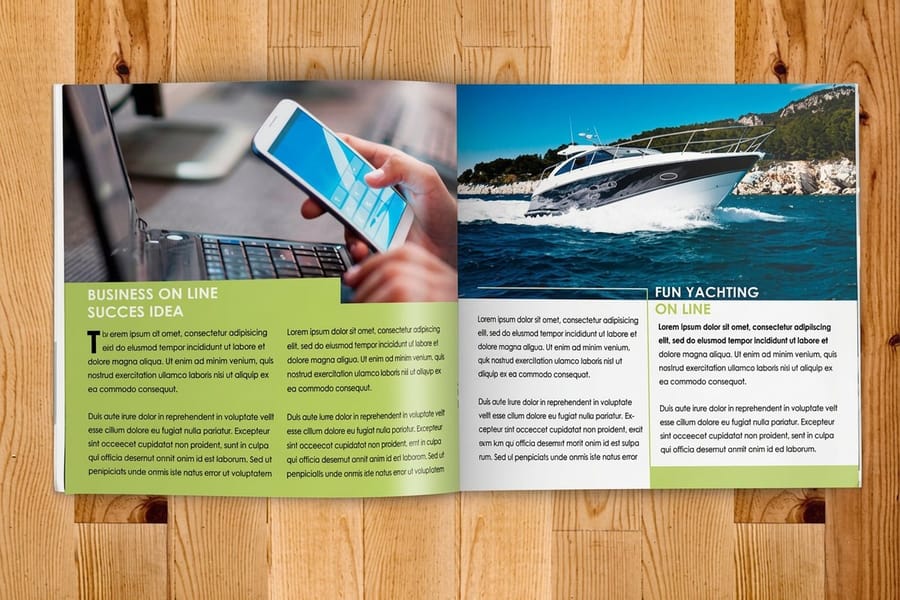
Fold a sheet of paper in half. You now have two leaves and four surfaces you can print on. That single physical fact sets the rule: saddle stitched and perfect bound page counts arrive in multiples of four, and nothing you do in the design file changes it.
Follow one sheet of an 8 page booklet. The front of that sheet carries page 8 on the left and page 1 on the right. The back of the same sheet carries page 2 on the left and page 7 on the right. Fold it, nest it inside the second sheet, staple through the spine, and the pages fall into order. Arranging pages in that scrambled order is called imposition, and the software does it, but knowing the pattern explains why the count cannot be odd.
The exceptions are worth knowing. Wire-O and coil binding punch individual leaves, so those counts move in twos rather than fours. Perfect binding still folds signatures before gluing the spine, so it keeps the multiple of four rule and usually wants a minimum thickness before the spine can hold glue at all. On thick stitched jobs the inner pages also push outward as they wrap around each other, which is a separate margin problem covered in our guide to page counts and creep.
On our booklets the count includes the cover, so every option maps to a whole number of press sheets:
| Pages, cover included | Press sheets | Leaves |
|---|---|---|
| 8 | 2 | 4 |
| 12 | 3 | 6 |
| 16 | 4 | 8 |
| 24 | 6 | 12 |
| 32 | 8 | 16 |
| 48 | 12 | 24 |
| 60 | 15 | 30 |
The cover can print on the same 100 lb gloss text as the inside, or on a heavier 80 lb gloss cover or 14pt gloss cover. Upload one PDF with the pages in reading order, cover first, and the configurator builds the sheets from it.
Saddle stitch booklets start at $240.55 and the configurator only offers counts that actually fold, so a page count that cannot exist will never appear in the dropdown. If your job is short, a 4 page booklet is a single folded sheet and the smallest bound piece there is.
Flat Pieces Are Counted in Sides and Panels
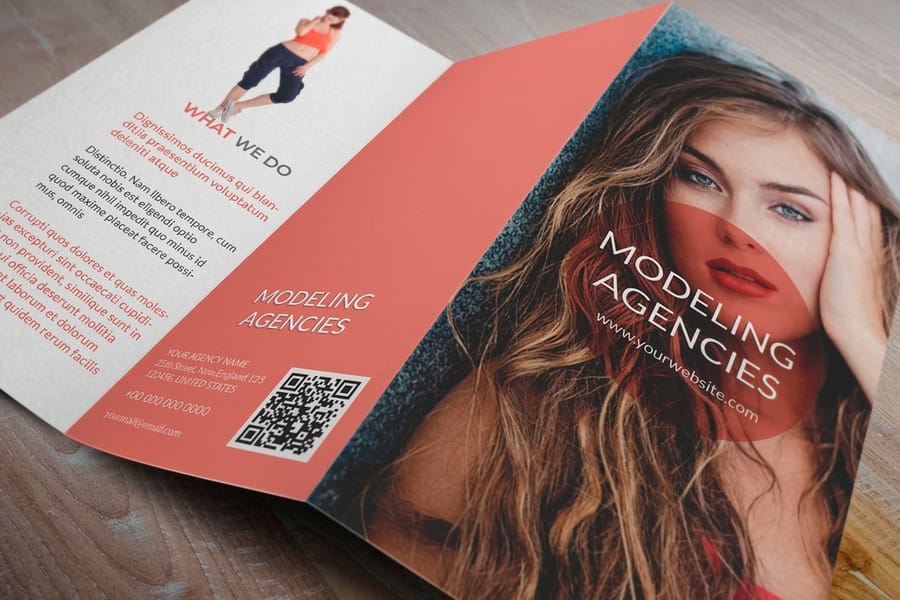
Nothing that is folded rather than bound has pages at all. A tri fold brochure is one sheet with two sides and six panels, three on the front and three on the back. Ask for a 6 page brochure and a printer will ask you to describe it again.
The quoting shorthand for these is a pair of numbers. 4/4 is full color on both sides. 4/0 is full color on the front and nothing on the back, which is cheaper and common on event flyers. 4/1 puts full color on the front and a single black on the reverse, useful for a back that is only terms and contact details. The number is the count of inks, and 4 is the four process colors.
Panels behave differently from pages in one way that catches people out: they are not all the same width. On a roll fold, the panel that tucks inside has to be roughly an eighth of an inch narrower or it buckles at the fold. Our brochure fold types guide lists which panel shrinks in each fold, and the correctly sized layouts sit in the blank template library.
Prices follow the format rather than the content. Standard flyers start at $39.54 as a single sheet, standard brochures at $57.11, and standard newsletters at $75.80 because a newsletter is usually several folded sheets nested together without a stitch. A booklet costs more than any of them because it adds folding, collating and binding to the same press work. The standard newsletters video shows those nested sheets.
Counting Your Own Job Before You Ask for a Price
Do this before you open the configurator and the quote will match what you receive.
- Export your layout to a single PDF and read the total page count from the PDF reader, not from the spreads shown in your design software.
- Decide whether the cover is self cover, printed on the same stock as the inside, or a separate heavier cover. A separate cover is four extra pages on its own sheet.
- Round the inside count up to the next multiple of four and choose where the blanks go. An intentionally blank inside back cover is fine. Two blanks in the middle of a catalog section is not.
- Divide by four to sanity check the sheet count, then multiply by your quantity to sanity check the shipping weight. A 32 page catalog at 1,000 copies is eight sheets each, which is a pallet conversation rather than a box.
Worked example. A product catalog runs to 26 pages of content with a separate cover. The inside rounds up to 28 pages, which is seven folded sheets, plus a cover sheet printed on heavier stock. Quoted as a plus cover job that is 32 pages total, and two of the four blank slots become a contents page and a back page with your address block, leaving no accidental blanks anywhere.
When the count is settled, standard booklets and standard catalogs both start at $240.55 and share the same page count options, so the choice between them is about content and stock rather than construction. If you are still deciding on the format itself, booklets versus catalogs lays out the difference, and the full booklets and catalogs range shows every binding we run.
Wally explains pages vs sheets
One sheet, folded once, is four pages
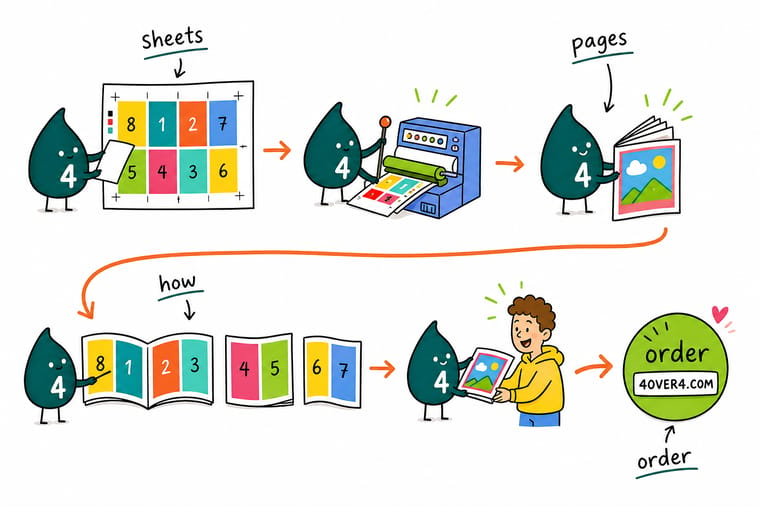
Wally holds up a single press sheet. Flat, it is one thing. Folded once, it is two leaves and four numbered pages, which is why he can print you a 12 page booklet or a 16 page booklet but never a 14. Ask him for 14 and he will quietly make it 16 and ask where you want the two blanks. Flyers and folded brochures are a different conversation: those have sides and panels, not pages.
Configure a booklet page count →
Specs and pricing
Page counts, sizes and starting prices
Every page count in these configurators is a multiple of four, because every one of them is a folded sheet. Prices come straight from the 4OVER4.COM configurator. Booklets and catalogs offer the same 14 counts, 8 to 60 pages, at 5.5 x 8.5, 8.5 x 11 or 11 x 11 inches, from 25 copies for $240.55 with 7 business days of production.

Print it
Order the format your page count fits
Twenty-five booklets from $240.55 once the count reaches 8 pages, the same saddle stitched build for a longer run, or 50 brochures from $57.11 when one folded sheet holds the job.

Explore more
Where to go next
See why inner pages drift on thick booklets, compare the four bindings, decide between a booklet and a catalog, and count brochure panels by fold.


By the numbers
The booklet line that counts your pages
Common Questions
Your page count questions, answered
Is a page the same as a sheet of paper?
No. A sheet is the physical piece of paper. A page is one printed side of it. A single sheet folded once gives you two leaves and four pages, which is why a booklet always has more pages than sheets. When a customer says a 20 page booklet, a printer hears five folded sheets plus whatever the cover arrangement is.
How many sheets are in a 16 page booklet?
Four, if it is saddle stitched and self cover. Divide the page count by four, because every folded sheet carries four pages: two on the front of the sheet and two on the back. A 32 page booklet is eight sheets, a 48 page booklet is twelve. If the job has a separate cover on heavier stock, that cover is one more sheet and the four cover pages are usually counted inside the total.
Why do booklet page counts have to be a multiple of four?
Because folding is what makes the pages. You cannot fold half a sheet, so pages arrive four at a time. Perfect binding has the same constraint since it also folds signatures before gluing them. Wire-O and coil binding are the exceptions, because those punch loose leaves and bind them individually, so any count that is a multiple of two works there.
Do the front and back covers count as pages?
Yes, in almost every quote you will see. On a self cover booklet, where the cover is the same stock as the inside, page 1 is the front cover and the last page is the outside back. On a plus cover job the cover is a heavier stock printed separately, and the four cover pages are added to the inside count, so a 16 page inside section with a cover is described as 20 pages.
What do 4/4 and 4/0 mean on a print quote?
They describe sides, not pages. The first number is the ink on the front, the second is the ink on the back, and 4 means full color CMYK. So 4/4 is full color both sides and 4/0 is full color on the front with a blank back. Flat products like flyers and folded brochures are always quoted this way, because they have no page count to speak of.
My document is 14 pages. What happens when I order?
It becomes a 16 page booklet with two blank pages. The better move is to place those blanks deliberately: an inside back cover left blank for notes reads as a design decision, while two blanks in the middle of a product section reads as a mistake. Add the pages in your layout file before you upload so the numbering matches what you approved.
How do I check the page count in my design file before ordering?
Count the pages panel, not the spreads. Design software shows facing pages side by side, and it is easy to look at eight spreads and report eight pages when the file is really sixteen. Export a single PDF of the whole document, open it, and read the page total the PDF reader gives you. That number is the one to type into the configurator.
Get Started
Know your page count? Get it priced.
Pick the page count, the stock and the binding, and we fold, collate and stitch it so the numbers land where your file says they should.
Legal Disclaimer
Gold Standard guarantees apply to all standard orders placed through 4over4.com. Price match requires verifiable proof of a competitor's published price for an equivalent product with matching specifications and turnaround time. Satisfaction guarantee covers manufacturing defects and print quality issues. Contact support with order number and documentation.
