
Saddle Stitch vs Perfect Binding and How to Pick the Right One


Tobias is our voice for cutting, binding and large format, built from the knowledge of our production team, with over 20 years in printing.
Two ways to hold a booklet together, and the page count usually decides for you. Each does something different to the paper, costs a different amount, and needs its own file setup.
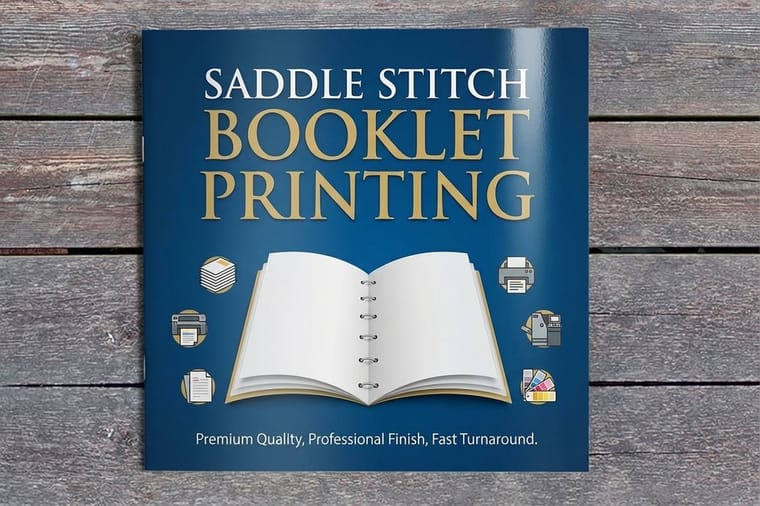
Saddle stitch nests folded sheets and drives two staples through the fold, so the page count has to divide by four and the practical ceiling is around 64 pages on text stock. Perfect binding mills the folds off the spine, glues the page edges into a wrapped cover, and needs roughly 40 pages of bulk before the glue holds. The stapled booklet opens flat and costs less. The glued book carries a printed spine and stands on a shelf. Under 40 pages only saddle stitch works, over 64 pages only perfect binding does, and in between the choice is yours.
Quick answer
Staples through a fold, or glue on a milled spine
Saddle stitch works from 8 pages to roughly 64 and always in multiples of four; perfect binding starts near 40 pages and has no real upper limit. A stapled booklet lies flat on every spread and costs less to make. A glued book gives you a printed spine, survives on a shelf, and adds a curing step to the schedule. Bulk moves both limits: heavy coated interior stock lowers the saddle stitch ceiling and lets perfect binding start sooner.
What the Bindery Actually Does to Each One
The two processes handle paper in opposite ways, and every rule further down this page falls out of that difference.
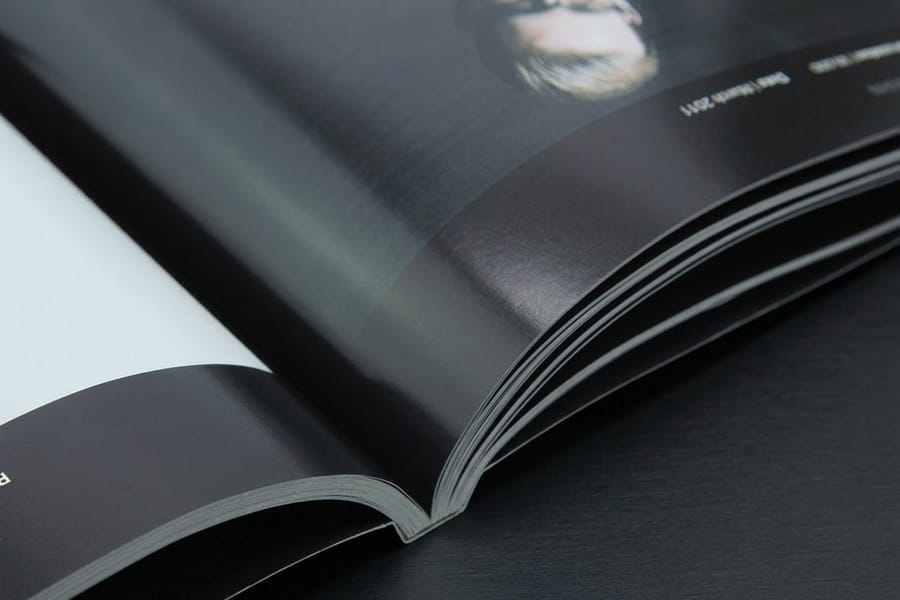
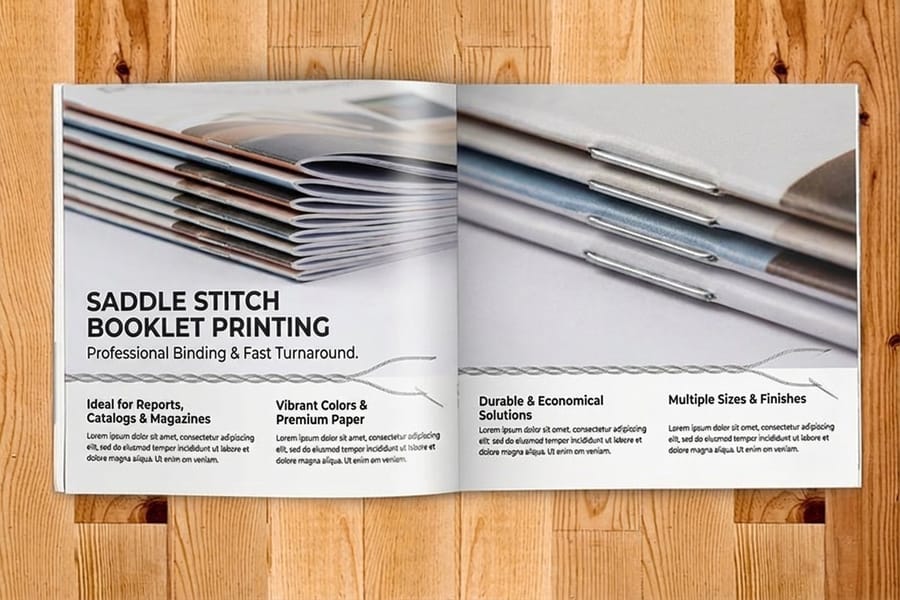
Saddle stitch. Printed sheets are folded once, nested one inside the other like a newspaper, and driven through a stitcher that pushes two wire staples through the fold and clinches them on the inside. The book then gets a three side trim. It is one continuous inline operation, which is why it is fast and why it costs the least of any binding we offer.
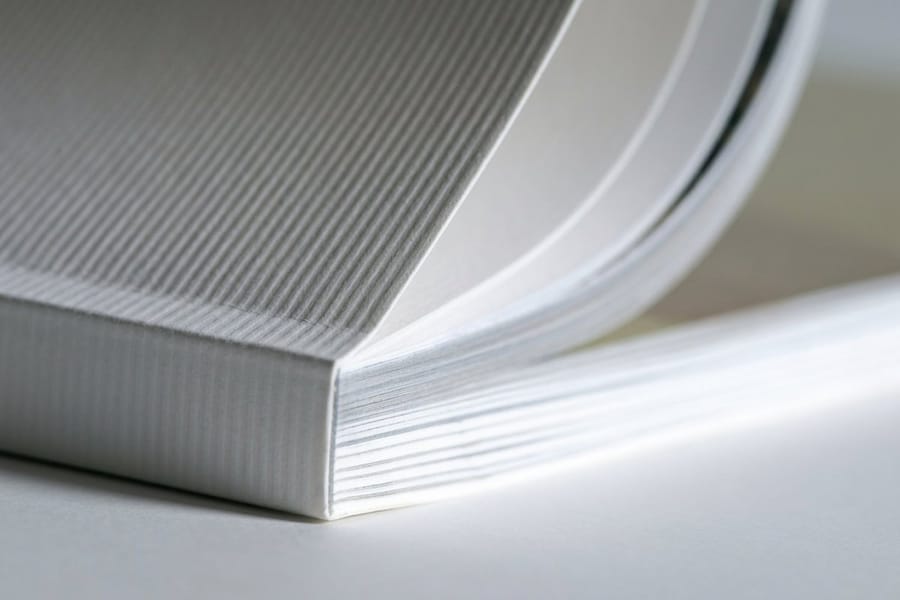
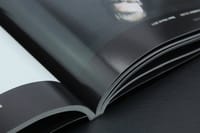
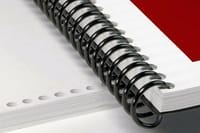
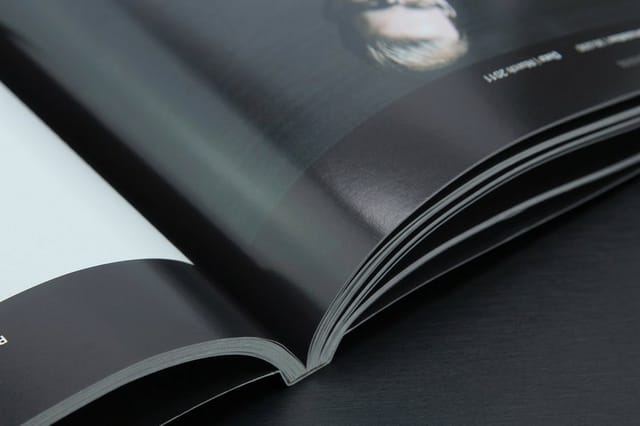
Perfect binding. Folded signatures are gathered in order into a block, then the spine edge is milled off, roughly a sixteenth of an inch of paper ground away so the fold turns into hundreds of individual page edges. Hot glue goes onto that roughed face, the printed cover is wrapped around and nipped, the glue cures, and the three open sides are trimmed. Every one of those steps is a place the book can be improved or ruined. A calligraphy workbook is a good test of the choice, and our guide to that kind of one off book printing binds it with a coil so it opens flat.
The milling step is the one people never picture. It is why a perfect bound page can be pulled out of the book if the glue is poor, why coated stock and PUR adhesive belong together, and why the binding needs a minimum amount of paper to work at all. Our guide to binding types for books and booklets covers the mechanical bindings that sit either side of these two.
The Page Count Rule That Settles Most Jobs
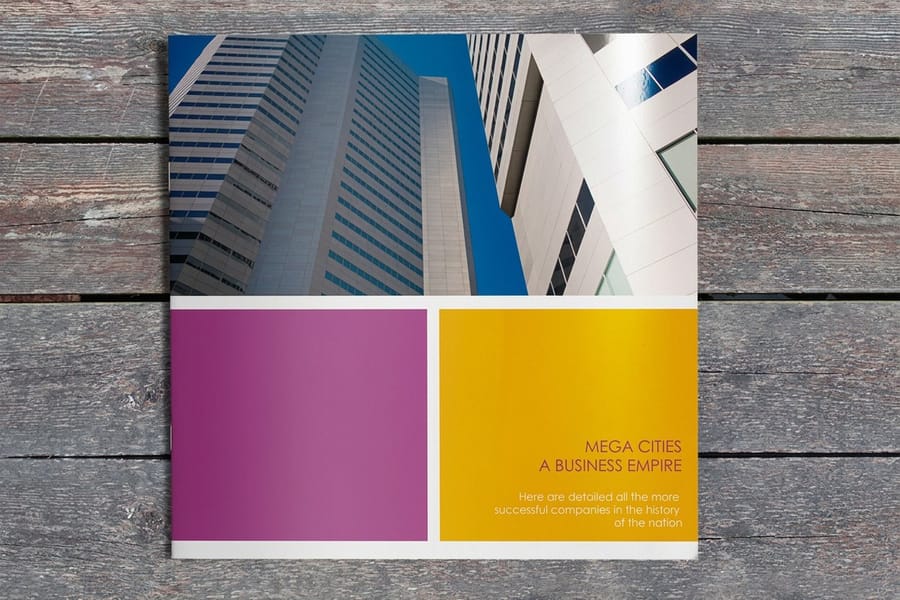
Before anyone argues about the look, check the page count. It rules out one option far more often than budget does.
Saddle stitch runs in multiples of four, because every folded sheet carries four pages. Eight, twelve, sixteen, twenty. There is no such thing as a 22 page saddle stitched booklet. The upper limit is not a fixed number, it is bulk: as the nested sheets get thicker they gape at the fore edge, the staples strain, and the inner margins drift. On text weight paper we are comfortable well past 40 pages, and around 64 the format starts to argue with you.
Perfect binding has the opposite problem. It takes any even page count, but it needs enough thickness for the glue to hold, which lands near 40 pages on ordinary text stock and lower on heavy coated paper. Under that, the milled spine is too shallow and the book cracks at the first opening.
| What you are deciding | Saddle stitch | Perfect binding |
|---|---|---|
| Page count | Multiples of four only, from 8 pages up. | Any even count, from roughly 40 pages up. |
| Practical ceiling | Bulk stops it, often near 64 pages on text stock. | Hundreds of pages, limited by the binder, not the format. |
| Spine | A folded edge with two staples. Nothing to print. | A flat printed spine that reads on a shelf. |
| Lay flat | Opens flat on every spread. | Springs shut. The reader holds it open. |
| Starting price | $240.55 for 25 booklets | $375.05 for 10 books |
| Sizes we print | 5.5 x 8.5, 8.5 x 11 and 11 x 11 in. | 5.5 x 8.5, 6 x 6, 6 x 9 and 8.5 x 11 in. |
| Page counts we print | 8 to 60 pages, cover included. | 40 to 300 inside pages. |
| Stocks | 100# gloss or silk text, 70# uncoated text, or cover weights inside, with a text or cover weight cover. | 100# gloss or silk or 70# uncoated inside, 14pt or 80# gloss cover with optional velvet, silk or gloss laminate. |
| Files to upload | Single pages in reading order, cover included. | Single interior pages plus one flat cover with the spine width built in. |
| Best fit | Programs, newsletters, short catalogs, event guides. | Annual reports, thick catalogs, portfolios, manuals for a shelf. |
Read the first two rows together. Between 40 and 64 pages both bindings are open to you, and that overlap band is the only place where the decision is genuinely about taste, budget and how the piece will be used. Our guide to booklet sizes shows which trims each binding allows. Outside it, the page count has already chosen. If your content is still fluid, our standard catalog sizes and booklet formats guide shows which trim sizes impose cleanly, which is the cheapest way to land on a workable count.
What Each Binding Costs, and What Slows It Down
Binding is a smaller share of the invoice than most people expect. A Saddle Stitch Booklet Printing starts at $240.55 and a Perfect Bound Book starts at $375.05, and between those two numbers sit differences in page count, stock and quantity that usually matter more than the staples or the glue.
What actually drives the cost of a bound job, in order: how many pages, how many copies, what the interior paper is, and whether the cover is a separate heavier stock with a coating. Doubling the page count changes the price far more than moving from stitching to gluing. If you are pricing a long print run, take the page count to the nearest multiple of eight or sixteen rather than four, because a full press signature wastes less paper.
Turnaround is where the two really split. Saddle stitching happens inline and the booklet leaves the bindery the same day it is folded. Perfect binding needs the glue to cure before the three knife trim, so a glued book carries an extra step in the schedule. Plan for it when you have an event date. Our Standard Booklets are the fastest route when a deadline is already tight, and the whole booklets and catalogs range shows live pricing as you change the page count.
Setting Up Files for Staples and for Glue
Supply single pages in reading order, not spreads, and let the imposition happen here. Both bindings then need one specific defense in the layout.
For saddle stitch, defend the outer margin. Nested sheets creep: the inner pages push out at the fore edge and the final trim cuts them all flush, so a page number sitting near the edge on page 2 can sit noticeably closer to it on page 20. Keep live text a quarter inch inside the trim, keep folios generous, and ask for creep compensation on anything past 40 pages or on bulky stock.
For perfect binding, defend the gutter. The glue takes a strip of the inner margin and the book does not open flat, so content near the spine curves away from the reader. Give inner margins more room than outer ones, half an inch is a sensible starting point on a letter size book, and never run a headline or a face across the spine. Build the cover as one flat piece, front and spine and back together, with the spine width calculated from the real caliper of your paper.
Everything else is standard print file discipline: bleed on every edge that carries color, fonts outlined or embedded, images at full size. Our guide to bleed and trim explains why the bleed matters more on a bound job than a flat one, and the blank template library gives you a correctly sized starting file. If you are still choosing interior paper, paper weight and thickness is the piece that moves both binding limits.
The Verdict, and the Third Option People Forget
Under 40 pages, saddle stitch. It costs less, it ships sooner, it opens flat, and a glued spine that thin will crack. Over 64 pages, or any time the piece has to stand on a shelf with its name showing, perfect binding. Those two rules settle the large majority of booklet jobs before anyone opens a design file.
In the overlap band, ask how the piece is used. Handed out at an event, read once and recycled: saddle stitch, and put the money into the paper instead. Kept, referenced, sat in a rack next to competitors: perfect binding, because the printed spine is doing sales work every day the book is on a desk. A thick catalog earns the glued spine. A twelve page program does not.
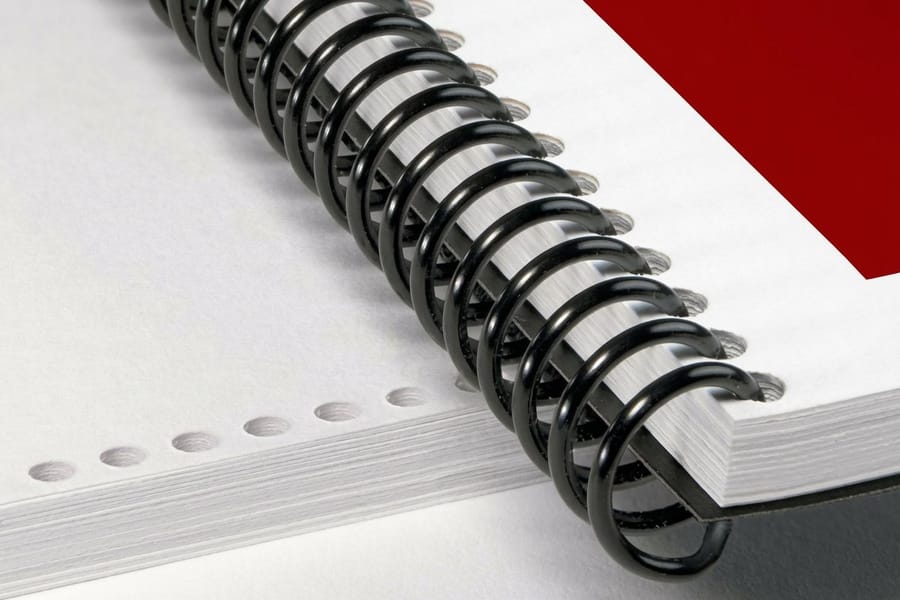
The third option is the one nobody asks for and half the jobs actually need. If the reader has to write in it, cook from it, or lay it flat on a bench, a Spiral Coil Books beats both: it opens completely flat, folds back on itself, and holds a high page count without any bulk penalty. It starts at $423.28, so it is the most expensive of the three, and it looks less formal than a glued book. Manuals, workbooks and recipe books are usually worth it. Browse the full books printing range to compare the bound formats, or the binding options collection to see every spine we make.
Wally explains the two spines
Count the pages first, argue about the look second
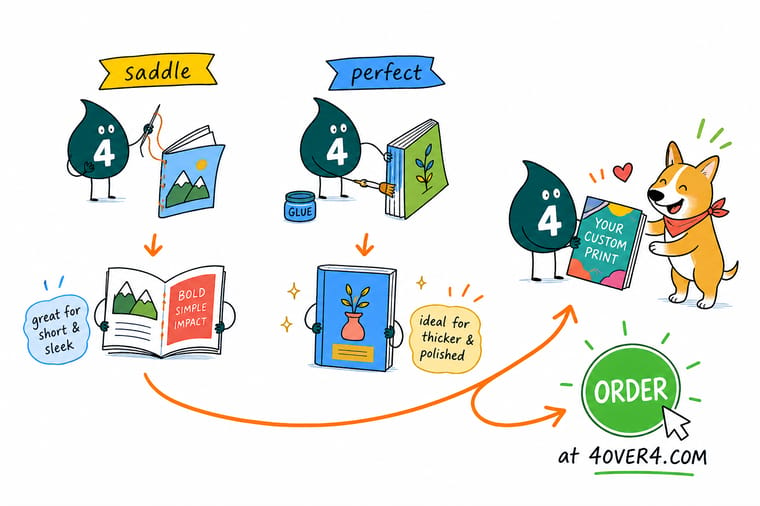
Wally folds his sheets, nests them like a newspaper and staples through the crease. That is saddle stitch, and it only works in fours: eight, twelve, sixteen. For the fat one he stacks the signatures, grinds the folded edge off the spine, glues the raw page edges and wraps a printed cover round it. That needs about forty pages of paper before the glue has anything to hold. Thin book, staples. Thick book, glue. Somewhere in the middle, ask whether it needs a name on the spine.
Compare booklet and book pricing →
Specs and pricing
Bound formats, page counts, and starting prices
Stapled, glued and coil bound side by side, with live configuration choices and starting prices straight from the 4OVER4.COM configurator. The coil book shares the perfect bound sizes and stocks, from 10 for $423.28 in black or white plastic coil, and both bind on the long or the short edge.
Print it
Order the binding your page count allows
Stapled booklets start at 25 for $240.55 with 8 to 60 pages, glued books at 10 for $375.05 with 40 to 300 inside pages, and standard booklets use the same stapled build for programs and newsletters.

Explore more
Where to go next
Four guides cover every binding type, booklets against catalogs, standard formats and paper bulk, and two category pages price every stapled, glued and coil bound format.

By the numbers
The shop that binds either way, in numbers
Common Questions
Your booklet binding questions, answered
Does a saddle stitched booklet have to be a multiple of four pages?
Yes, and there is no way around it. Every sheet in a saddle stitched booklet is folded once, so it contributes four pages: two on the front, two on the back. A 22 page booklet cannot exist. You either add two pages of content, or you let two pages run blank, which is why so many booklets end with a notes page or an inside back cover that carries the contact details. Count the cover as four of those pages if it is printed on the same stock as the inside, and count it separately if it is a heavier self cover.
What is the minimum page count for perfect binding?
Around 40 interior pages on ordinary text stock, because the spine has to be thick enough for the milling blades to rough up and for the glue to grab. Below that the block is too thin, the glue line dominates the spine, and the book wants to crack open at the first spread. On heavy coated stock you can hit the same thickness with fewer pages, and on very light paper you will need more. If your page count is close to the line, send us the paper and page count before you commit the layout.
Which one is cheaper?
Saddle stitch, at every page count where both are possible. At 4OVER4.COM a Saddle Stitch Booklet starts at $240.55 and a Perfect Bound Book starts at $375.05. Stapling is a fast inline operation, while perfect binding adds gathering, milling, gluing, a wrapped cover and a three knife trim, and glued books need time to cure before they are trimmed. That cure step is also why perfect binding usually adds a day or more to the schedule.
Does a perfect bound book lie flat when you open it?
No, and that is the most common complaint after delivery. The glued spine holds the pages as a block, so a reader has to hold the book open, and a spread photograph loses a strip of image into the gutter. If the piece is a manual, a workbook, a cookbook or sheet music, either saddle stitch it or move to a mechanical binding such as a Spiral Coil Book, which opens flat and folds back on itself.
How do I work out the spine width for a perfect bound cover?
Take the number of interior pages, divide by two to get the number of sheets, then multiply by the caliper of the paper in inches. A 96 page book is 48 sheets, and at 0.004 inch per sheet that is a 0.192 inch spine. The cover stock adds its own thickness on top. Caliper varies by mill and by whether the stock is coated, so ask us for the caliper of the exact paper on your order rather than working from a generic chart, then build the cover as one flat piece with the spine measured in the middle.
What is creep, and do I have to correct it?
Creep is what happens when folded sheets nest inside each other: the innermost sheets push further out at the fore edge, and the final trim cuts them all flush, so the inner spreads end up with a narrower outer margin than the cover. On a 16 or 24 page booklet on text weight paper it is barely visible. Past about 40 pages, or on bulky stock, it starts to show as page numbers that drift toward the edge. Keep live text at least 0.25 inch inside the trim, and tell us if you want creep compensation applied during imposition.
Can I saddle stitch a thick booklet on cover stock?
Only up to a point, because bulk is the limit rather than page count on its own. Every folded sheet has to bend around the ones inside it, and thick coated cover stock fights that bend, so the booklet gapes at the fore edge and the staples strain. Text weight paper is what makes high page counts practical in saddle stitch. If the brief calls for a heavy feel and a lot of pages, the honest answer is a perfect bound book with a cover stock wrap and lighter interior paper.
Get Started
Saddle stitch runs 25 for $240.55, perfect bound 10 for $375.05
Set your page count, pick the interior stock, and we staple it or glue it and ship from our New York plant. Tell us the count and we will say which binding it allows.
Legal Disclaimer
Gold Standard guarantees apply to all standard orders placed through 4over4.com. Price match requires verifiable proof of a competitor's published price for an equivalent product with matching specifications and turnaround time. Satisfaction guarantee covers manufacturing defects and print quality issues. Contact support with order number and documentation.
