
How Print Delivery and Turnaround Times Really Work


Nadia is our customer education voice, built from the knowledge of our production team, with over 20 years in printing.
Production days and shipping days are quoted separately and counted separately. They stack in a fixed order, the cutoffs sit at set times, and only one upgrade actually buys you time.
The turnaround time on a print product is production only: the business days your job spends on press and in finishing. Delivery is that number plus carrier transit, which is quoted separately at checkout. The production clock starts when the artwork passes preflight, not when you pay, and neither clock counts weekends or holidays. On short lanes production owns your timeline; on long ones the carrier does, which is why upgrading the shipping service often buys more days than upgrading the press.

Quick answer
Two clocks, counted in business days, added together
Turnaround is the production window. Transit is everything after the job leaves the building. The quoted turnaround starts once your file passes preflight and covers press time plus finishing. The carrier then adds 1 business day to New England and up to 5 to the west coast on ground service. Neither clock runs on a Saturday, so a Thursday finish usually means a Monday first transit day. Work backward from the date you need the boxes, not forward from the day you order.
Turnaround and Shipping Are Two Separate Clocks
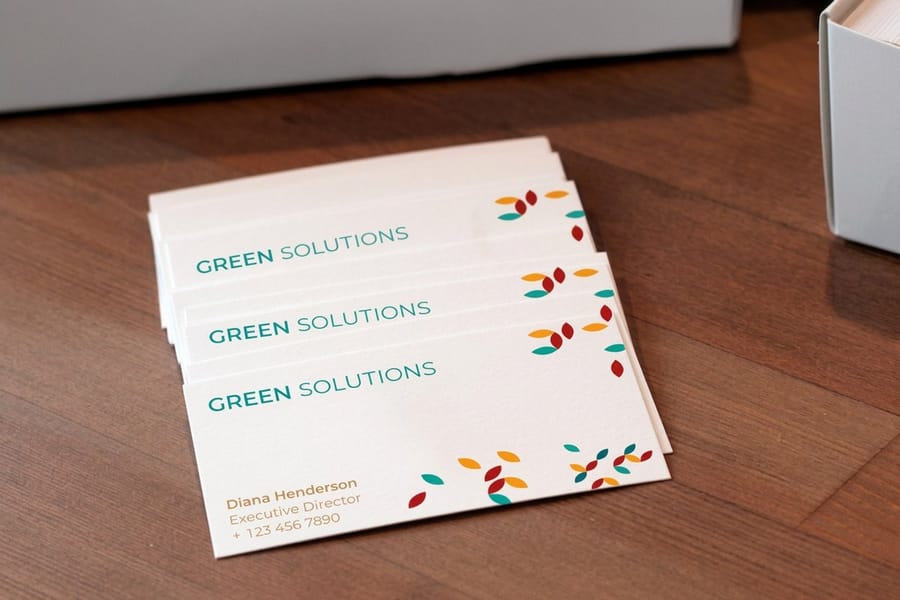
A print order runs on two clocks that never overlap. The first is production, which is the number you pick on the turnaround selector. The second is transit, which the carrier quotes at checkout. Add them together and you have your arrival date. Read either one alone and you will be wrong by days.
Between those two clocks sit two smaller stages people forget: the preflight check before production starts, and the handoff on the day the job leaves the plant. A job that finishes production Thursday afternoon is not in a truck Thursday morning. It makes the pickup that evening and its first transit day is Friday.
| Stage | Who controls it | Usual length | What stretches it |
|---|---|---|---|
| File check | You, mostly | Same working day for a print ready PDF | Low resolution art, missing bleed, RGB color, live text inside the trim margin. |
| Production | The plant | The business days shown on the turnaround selector | Custom sizes, folding, scoring, coating and any finish that needs a second pass. |
| Handoff | The pickup schedule | Hours, not days | Finishing that lands after the carrier has already collected for the day. |
| Transit | The carrier | 1 to 5 business days by ground from New York | Distance, residential delivery, a bad address, and weekends the truck sits out. |
The practical rule: decide your arrival date first, then work backward through transit, then through production, then leave yourself a day for the file. Our guide to how online printing works walks the same path forward, from upload to delivery, if you want to see the whole chain in order.
In shipping terms, turnaround time means the production days only, counted from an approved file to the day the job leaves the plant; the carrier's transit days come after it. The table adds the two clocks for four of our products at their standard turnaround, by ground from New York.
| Product | Standard turnaround | Arrives in New England | Arrives in California |
|---|---|---|---|
| Standard business cards, 100 from $17.57 | 3 business days | About 4 business days after approval | About 7 to 8 business days after approval |
| Club flyers, 50 from $16.48 | 3 business days | About 4 business days after approval | About 7 to 8 business days after approval |
| Postcards, 50 from $16.48 | 3 business days | About 4 business days after approval | About 7 to 8 business days after approval |
| Yard signs, 1 from $25 | 5 business days | About 6 business days after approval | About 9 to 10 business days after approval |
Add a day in front of either column if the file still needs fixing, and remember that neither clock runs on a weekend.
Reading a Turnaround Option Before You Pay for It

Every product page carries its own turnaround list, because the options depend on what the job needs after the press. Business cards on standard stock can move fast. The same cards with a raised finish cannot, since the finish is a separate pass on a separate machine.
Three things to check on that selector before you commit. First, the cutoff time, which is the hour by which an approved file has to be in for today to count as day one. Miss it by ten minutes and every date shifts by a working day. Second, whether the option is available for the size and quantity you configured, since large runs and custom trims are often excluded from the fastest tier. Third, what the upgrade costs relative to shipping, because they are interchangeable ways of buying the same days.
That last point is where most money gets wasted. Same Day Business Cards start at $17.57 and Standard Business Cards also start at $17.57, which tells you something useful: the speed is not sitting in the from price, it is priced inside the configurator once you choose the turnaround. Configure both, look at the totals side by side, and you will see exactly what the day is costing you.
Build the file first and none of this gets tense. Start from a correctly sized layout in the blank template library, and check it against our print ready file guide before you upload.
How Many Days Shipping Adds, by Where You Are

We print in Queens, New York, so distance behaves the way it does for anyone shipping out of the northeast. Ground service is cheap and predictable near the plant and slow on the west coast. These are the typical ground transit windows, in business days, counted from the day after the job is collected.
| Where it is going | Ground transit | When ground is enough | When to upgrade |
|---|---|---|---|
| New York and New England | 1 business day | Almost always. Air service buys you hours, not days. | Only if you miss the production cutoff and need to claw a day back. |
| Mid Atlantic and Carolinas | 1 to 2 business days | Any deadline with three or more working days of slack. | Tuesday events with a Friday approval. |
| Midwest and Southeast | 2 to 3 business days | Standard reorders and stock you are topping up. | Anything landing on a Monday, since the weekend eats the buffer. |
| Texas and the Mountain states | 3 to 4 business days | Planned campaigns booked a week out. | Event material, where two day air is usually cheaper than rush production. |
| California and the Pacific northwest | 4 to 5 business days | Bulk quantities where cost per piece matters more than the date. | Most deadline work. On this lane the carrier, not the press, owns your timeline. |
The checkout screen shows the carrier's own estimate for your exact address, and that estimate beats any table including this one. Use the table to plan and the checkout to confirm. Weight matters too once a run gets large, because a pallet of postcards at $16.48 and a tube of banners do not travel on the same terms. Our guide to carrier size and weight limits covers where those thresholds sit.
What Same Day and Rush Printing Actually Buy

A rush upgrade does not make ink dry faster. It buys a place at the front of the queue and a dedicated slot on a press that would otherwise be ganging your job with a dozen others. That is the whole mechanism, and it explains every limit that comes with it.
Because the job runs alone or in a small gang, the fast tier costs more per piece and supports fewer options. Standard stocks, standard trims and common quantities move. Custom die cuts, thick specialty stocks, raised finishes, foil and anything that needs a second machine usually do not, since the constraint is machine time rather than press time. Large format is its own case: a yard sign at $25 or a banner is cut and finished by hand, so the fast lane there is shorter than people expect.
Two situations genuinely justify paying for it. One, a fixed public date, such as a trade show or an opening, where late material has no value at all. Two, a reprint after an error, where you have already lost the buffer. Outside those, ordering three days earlier costs nothing and does the same job. Club flyers start at $16.48, and the same run booked with slack instead of urgency is the cheapest version of every deadline strategy.
If you want the full list of what can be rushed and what cannot, our guide to same day and rush printing options goes product by product, and the flyer printing category shows the turnaround each flyer type supports.
Working Backward From a Hard Deadline

A print buyer with a fixed event date counts backwards, and a Friday morning event on the west coast shows how.
- Arrival target: Wednesday, two days before the event. Never plan for the material to land on the day it is needed.
- Minus ground transit: 4 to 5 business days to the coast, so the job has to leave Queens by the previous Wednesday or Thursday.
- Minus production: a 2 day turnaround means approval by the Monday before that.
- Minus the file check: upload the previous Friday, which gives one working day to fix anything preflight flags.
That is nine working days for a job whose turnaround said two, and nothing in it was a delay. The shape of the count is the point: transit and the weekend take more of the calendar than production does on any long lane.
Two habits shorten it honestly. Ship to the venue or to a commercial address rather than a home, because residential delivery adds a day on some services and a redelivery attempt on others. And place the order with the artwork already approved internally, since waiting on a colleague to sign off on a proof is the delay we see most often and the only one nobody bills for. If any term on the schedule is unfamiliar, our printing terms page defines what each stage means on an order.
Wally explains the two clocks
Production days first, transit days second, weekends never
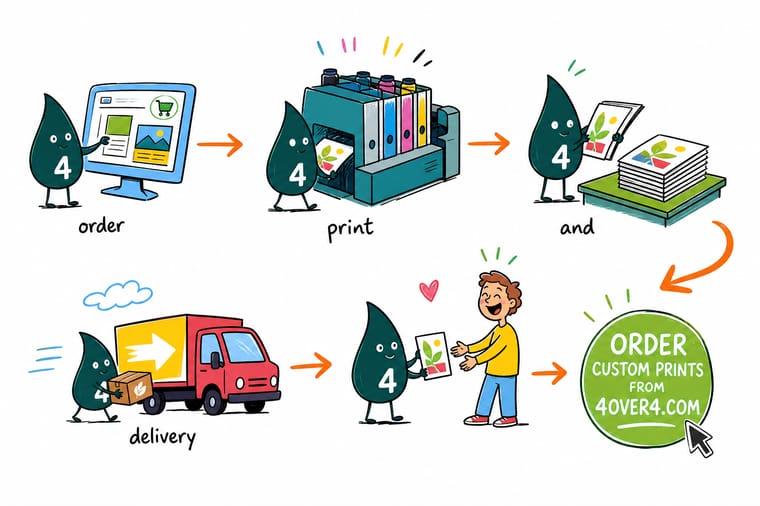
Wally checks your file, and only then does the production clock start ticking. Two business days on press, then the boxes go on the truck and a completely different clock takes over: one day to New England, up to five to California. Saturday counts on neither. So when Wally says two days, he means two days of printing, and the date you circle on the wall is that plus the miles.
Order same day business cards →%22%2F%3E%3Ccircle%20cx%3D%2248%22%20cy%3D%2220%22%20r%3D%2223%22%20fill%3D%22%23334155%22%20opacity%3D%220.15%22%2F%3E%3Ccircle%20cx%3D%2254%22%20cy%3D%2227%22%20r%3D%22-3%22%20fill%3D%22%23334155%22%20opacity%3D%220.1%22%2F%3E%3Crect%20x%3D%2278%22%20y%3D%22-9%22%20width%3D%2233%22%20height%3D%2220%22%20rx%3D%224%22%20fill%3D%22%23334155%22%20opacity%3D%220.08%22%20transform%3D%22rotate(43%2080%2030)%22%2F%3E%3C%2Fsvg%3E)
Specs and pricing
Fast turnaround products, sizes, and starting prices
Same day business cards start at $17.57 for 100 on stocks from 14pt gloss to 80pt UltraWhite. Club flyers and postcards start at $16.48 for 50, in 14 sizes from 2.5x2.5 to 6x11. The turnaround tiers for each sit in the live panels below, and the price moves as you pick one.



Print it
Order print that makes your date
Business cards from $17.57 for 100, club flyers from $16.48 for 50, and 4mm coroplast yard signs from $25 at 12x18 to 18x24 with an optional H-stake. Check the turnaround selector on each before you approve the file.



%22%2F%3E%3Ccircle%20cx%3D%2243%22%20cy%3D%221%22%20r%3D%2218%22%20fill%3D%22%23f59e0b%22%20opacity%3D%220.15%22%2F%3E%3Ccircle%20cx%3D%2240%22%20cy%3D%2250%22%20r%3D%225%22%20fill%3D%22%23f59e0b%22%20opacity%3D%220.1%22%2F%3E%3Crect%20x%3D%2273%22%20y%3D%22-7%22%20width%3D%2228%22%20height%3D%2210%22%20rx%3D%224%22%20fill%3D%22%23f59e0b%22%20opacity%3D%220.08%22%20transform%3D%22rotate(8%2080%2030)%22%2F%3E%3C%2Fsvg%3E)
Explore more
Where to go next
Next reads by the clock you are fighting: which products take a faster tier, where each handoff in an online order adds a day, banner schedules, and the carrier size limits that change the service a heavy box gets.





By the numbers
Delivery you can plan around at 4OVER4
Common Questions
Your delivery and turnaround questions, answered
Does the printing turnaround time include shipping?
No. Turnaround is the production window only: the business days your job spends on press, in the cutter, and through any finishing step such as folding, scoring or coating. Transit sits on top of it and is quoted separately by the carrier at checkout. The arrival date you should plan around is turnaround plus transit, and both are counted in business days. Reading the two numbers as one is the single most common reason a print order feels late when it was actually on schedule.
When does the turnaround clock actually start?
When the artwork is approved, not when the payment goes through. Every file goes through a preflight check for resolution, bleed, trim safety and color mode, and a job that fails that check waits for a corrected file. Upload a print ready PDF and the job usually enters the queue the same working day. Upload a 72 dpi RGB screenshot with no bleed and you have added a round trip that no rush upgrade can recover.
Do weekends and holidays count toward turnaround?
No, and it catches people out twice, because the plant and the carrier both observe them. A 2 day turnaround approved on a Thursday finishes production on Monday rather than Saturday, then ground transit starts on Tuesday. Around a federal holiday you lose another working day on each side of the job. If a deadline falls on a Monday, work backward from the previous Friday and treat that as your real drop dead date.
Is same day printing really printed the same day?
Production is, provided the approved file lands before the cutoff shown on the product page and the job is a straightforward one. Same Day Business Cards start at $17.57 and run on a dedicated fast schedule, but they still have to travel to you afterward. If you need them in your hand the next morning in another state, you are buying same day production plus an overnight carrier service, and both parts have to be selected.
Can I upgrade the turnaround after I have placed the order?
Sometimes, and the honest answer is that it depends on where the job already sits. Before it is imposed onto a press sheet there is usually room to move it up the queue for the price difference. Once it is ganged with other jobs on a sheet, pulling it out means reprinting it, so the faster fix at that point is to upgrade the shipping service instead. Call it early rather than after the fact.
What actually delays a print order?
In order of how often we see it: artwork that fails preflight, slow proof approval on the customer side, a custom size or a finish that needs a separate pass, and an address the carrier cannot deliver to without a second attempt. Weather and carrier backlogs exist but sit well below file problems. Four of those five are inside your control, which is why starting from a correctly built template beats paying for rush after the fact.
Get Started
Got a date you cannot move?
Pick the product, choose the turnaround that fits your calendar, and let the checkout show you the carrier's own arrival estimate before you pay.
Legal Disclaimer
Gold Standard guarantees apply to all standard orders placed through 4over4.com. Price match requires verifiable proof of a competitor's published price for an equivalent product with matching specifications and turnaround time. Satisfaction guarantee covers manufacturing defects and print quality issues. Contact support with order number and documentation.
