
Printing on FSC Paper and the Rules for Carrying the Logo


What the FSC mark certifies, how the three labels differ, and the paperwork that has to exist before the logo is allowed anywhere near your artwork.
FSC certifies the forest the fibre came from and every company that owned the material afterward, not the printed piece itself. Anyone can buy FSC paper, but the FSC logo may only appear on a job produced by a printer holding a valid Chain of Custody certificate, on stock invoiced to them with an FSC claim, using approved label artwork that carries that printer’s license code. Break any link in that chain and the paper is identical while the right to the mark is gone.
Quick answer
The claim travels on paperwork, not on the sheet
Certified fibre is physically indistinguishable from uncertified fibre, so FSC works entirely through documentation. A Forest Management certificate covers the forest. A Chain of Custody certificate covers each company that owns the material afterward, and each one has to state the FSC claim on its sales invoice. Your printer applies the label under their own license code, on a job produced under that certificate, using artwork approved in a permitted color and size. If any link in that sequence is missing, the paper still came from the same trees and the finished piece still may not carry the mark.
What FSC Certification Actually Covers
The Forest Stewardship Council certifies two separate things, and mixing them up is where most FSC confusion starts. Forest Management certification audits how a forest is run: what gets cut, what gets left, how workers and local communities are treated. Chain of Custody certification audits every company that takes ownership of the material after it leaves that forest, so the mill, the merchant and the printer each hold their own certificate.
Nothing physical proves any of this. Certified fiber looks, feels and prints exactly like uncertified fiber from the same species. The claim lives entirely in documentation, which is why an FSC claim must be written on the sales invoice at every handover along the chain. Take a pallet of certified sheets, sell it through a merchant who is not certified, and the paper is unchanged while the claim is gone.
That is the mental model to keep. You are not buying a greener sheet, you are buying a documented one. Everything else on this page follows from it, including why your printer, not you, controls whether the logo can appear. If you are still deciding which stock to run before you worry about certification, start with our guide to choosing the best paper for a printing project and check certification against the shortlist afterward.
The Three FSC Labels and What Each One Claims
Designers tend to treat the FSC logo as one mark. There are three on-product labels, they make different claims, and the wrong one in your artwork is a straightforward compliance problem.
| Label | What is in it | What it does not mean | Where you meet it |
|---|---|---|---|
| FSC 100% | All fibre from FSC certified forests. | Not recycled. This is virgin fibre. | Speciality and uncoated grades, less common in commodity paper. |
| FSC Mix | At least 70 percent certified or reclaimed fibre, balance from controlled wood. | Not 70 percent recycled, and controlled wood is a risk screen rather than a certified forest. | Most everyday commercial printing stock. |
| FSC Recycled | Reclaimed fibre only, majority post-consumer. | Makes no claim about forest management at all. | Recycled-content jobs where reuse is the message. |
Two details in that table trip people up. Controlled wood is not certified wood: it is material screened against a set of unacceptable sources, which is a floor rather than an endorsement. And FSC Mix is often accounted for on a credit system, where a mill that took in a certified volume may sell an equal labeled volume out. The balance is audited and legitimate, but it means the fiber in your specific pallet is not necessarily 70 percent anything. Say the label is FSC Mix. Do not tell your customers their box is 70 percent certified forest.
The artwork itself is regulated too. Labels come in fixed portrait and landscape versions, in green or in black and white, with the registered trademark symbol, the certificate holder's license code and a minimum size below which the text stops being legible. You may not recolour it to match a brand palette, stretch it to fit a panel, or drop a logo into a pattern. If you are picking spot inks for a job that will carry the mark, our guide to two color and spot ink printing explains what happens to a green when it is printed as a single spot on an uncoated sheet.
Who Is Allowed to Put the FSC Logo on a Printed Job

Four conditions have to hold at once. The company producing the job holds a valid Chain of Custody certificate. The stock was bought with an FSC claim stated on the supplier invoice. The job is produced and invoiced under that certificate. The label artwork is approved for use and carries that certificate holder's license code, not a code borrowed from a paper mill or a stock image.
Almost every buyer fails the first condition, which is normal and not a problem. You are not the one who applies the mark. Your printer is, under their code, on their responsibility. What that means practically is an order of operations: ask whether the job will run under a Chain of Custody certificate before the label is designed into the layout. The expensive version of this is artwork that has been approved internally with an FSC logo on the back panel, and then somebody checks and the answer is no.
Brands that want to talk about FSC in advertising without labelling a product sit in a different lane again, under a promotional license, and even then the wording is governed. Saying your packaging is printed on FSC certified paper when the job did not run through a certified chain is the claim that gets challenged.
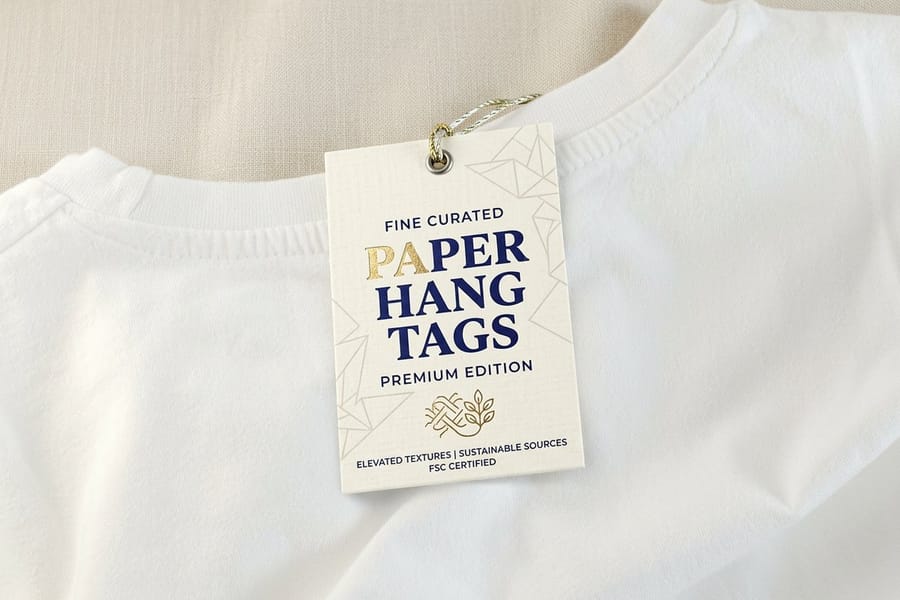
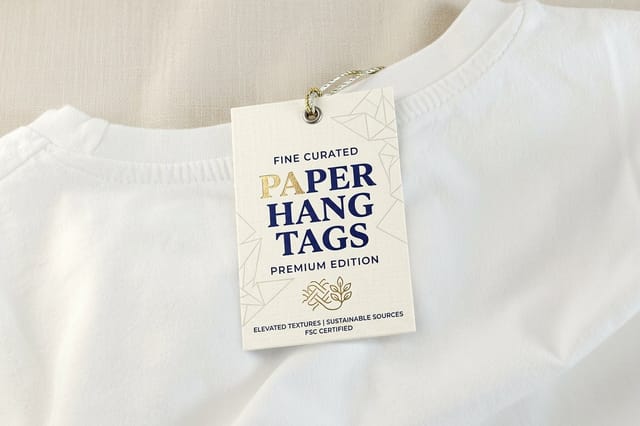
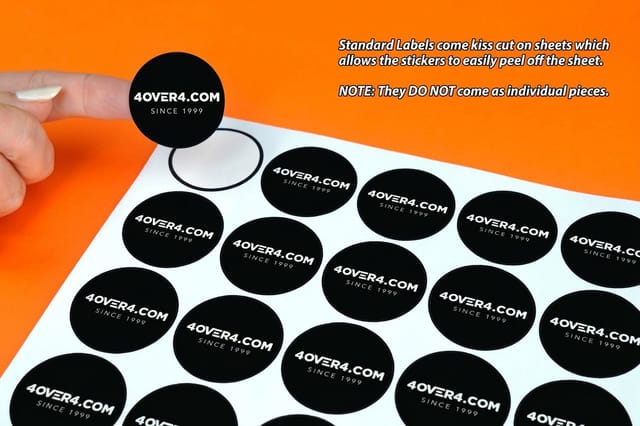
The products where this comes up most are the ones a customer physically holds. Paper hang tags start at $25.27 and are the classic place a retail brand wants the mark, because the tag is the last thing touched before a purchase. Standard labels start at $23.88 and raise the same question on jars, boxes and refill packs. In both cases the label is small, so if the mark is going on, plan its position and its minimum legible size at layout stage rather than squeezing it in at proof.
Where FSC Stops: Substrates, Inks and Finishes
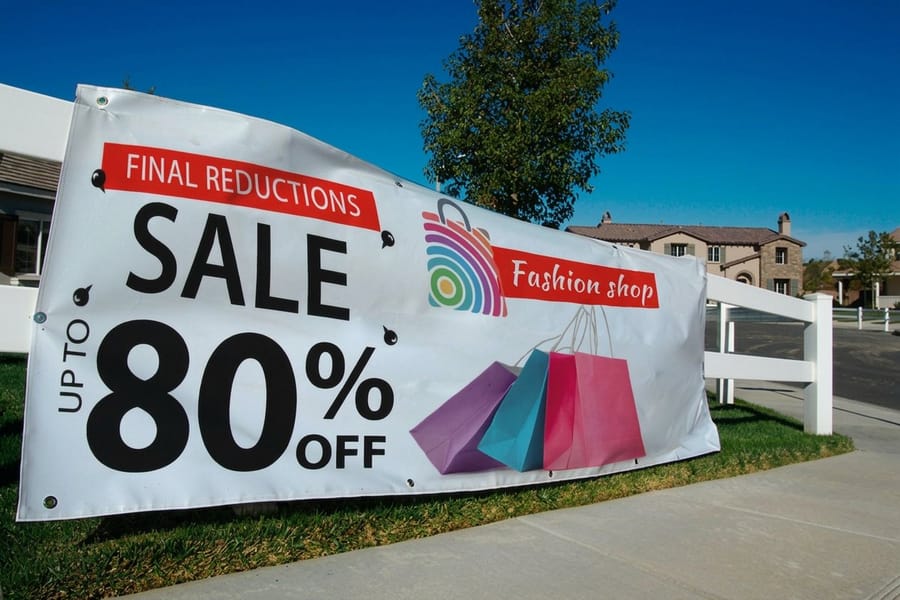
Chain of Custody covers forest-based material. That is the whole scope, and it rules out more of a typical order than people expect. A vinyl outdoor banner at $79 is a plastic substrate with no fibre in it. A cotton printed t-shirt at $21.96 is a textile. Neither can carry an FSC mark, and ordering certified paper elsewhere in the same job does not extend anything to them.
Inks, coatings, laminate films and foils are also outside it. They are not certified material and the label says nothing about them, which is worth knowing because a lot of buyers assume an FSC logo is a general environmental score for the finished piece. It is not. It is a sourcing claim about fiber. Carbon, water use, deliverability of the piece into a recycling stream, whether the job was needed at all: none of that is in scope.
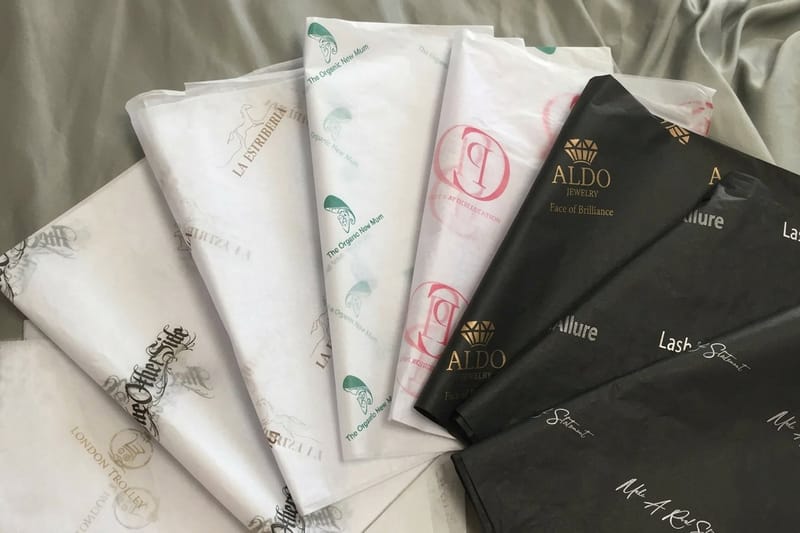
Which leads to the useful counter-question. If the goal is a genuinely lower-impact job rather than a logo, the levers are ordinary ones. Print the quantity you will actually use. Choose an uncoated sheet that recycles cleanly instead of a gloss laminate. Keep greeting cards, which start at $56.02, and packaging paper on the same certified stock so the whole order tells one story. Printed tissue paper for wrapping and packing sits in the same fibre family and is easy to keep consistent.
Then write the claim carefully. Our comparison of the papers we print on most is a better starting point for that conversation than a logo, and the logo and branding guides cover how marks like this behave once they are inside a brand system with everything else fighting for the same corner of a tag.
Wally explains the FSC chain
The logo follows the invoice, not the paper
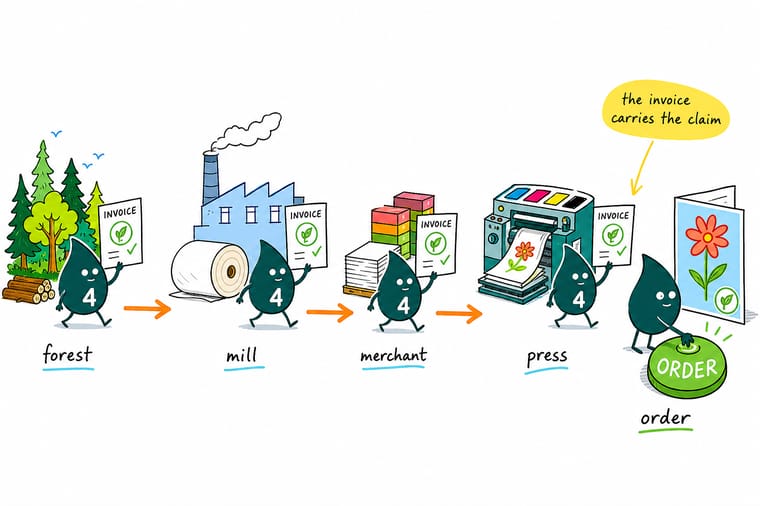
Wally walks the sheet backwards. Forest with a management certificate, mill with a chain of custody certificate, merchant with one too, then the printer. At every handover somebody wrote the FSC claim on the invoice. That paper trail is the only reason the finished job may wear the label, because the fiber itself proves nothing. Miss one certificate anywhere along the line and Wally still prints your job on exactly the same paper, just without the mark on the back.
Order paper hang tags →Specs and pricing
Paper products, sizes, and starting prices
The paper jobs where the FSC question comes up most, with live configuration choices and starting prices straight from the 4OVER4.COM configurator.



Print it
Order the paper products a certified claim can follow

Explore more
Where to go next





By the numbers
Certified stock and the chain of custody
Common Questions
Your FSC questions, answered
Can I put the FSC logo on my artwork if I buy FSC paper myself?
No, unless you hold your own Chain of Custody certificate, and almost no design buyer does. The right to apply the label sits with the certified company that produces and sells the finished item, and the label carries that company's license code rather than yours. What you can do is ask your printer whether the job will run under their certificate and on stock invoiced with an FSC claim. If the answer is yes, they place the approved label. If the answer is no, print on the same paper and leave the mark off.
Does FSC mean the paper is recycled?
Not usually, and this is the single most common misreading of the mark. FSC 100% is virgin fiber from certified forests. FSC Mix blends certified and reclaimed fiber with controlled wood. Only FSC Recycled is a claim about reclaimed content, and a piece labeled that way is making no statement about forest management at all. If recycled content is what your brand wants to advertise, say recycled content and name the percentage rather than leaning on a green tree logo to imply it.
What is the C number that appears under the FSC logo?
It is the license code of the certificate holder, written in the form FSC followed by a registered trademark symbol and a C with six digits. It identifies which certified company stands behind that specific label, and it is how anyone can look the claim up in the FSC public database. Two jobs printed on identical paper by two different printers carry two different codes. A label without a code, or with a code copied from a supplier's website, is not a valid label.
Does FSC paper cost more than uncertified stock?
On common commercial grades the premium is small and sometimes invisible, because a large share of mainstream printing paper already runs under FSC Mix. The real cost shows up in choice. Certified versions of speciality stocks, unusual weights, colored sheets and some textured finishes are stocked in fewer options, so you may end up substituting a grade or waiting on a mill order. Decide on the mark before you fall in love with a paper, not after.
Can a laminated, foiled or coated piece still carry the FSC label?
The label speaks about the forest-based material, so surface treatments do not automatically remove it, but they are not covered by it either and the certificate holder makes the call on any given job. There is a separate problem worth naming: a plastic laminate makes the piece far harder to recycle, so a laminated card with an FSC mark on the back sends two contradictory signals. If the environmental message matters more than the finish, drop the lamination.
Is FSC the same as PEFC, SFI or a recycled symbol?
No. PEFC and SFI are separate forest certification schemes with their own standards, their own audits and their own trademarks, and a company certified under one is not automatically entitled to use another. You cannot swap the logos, and you cannot describe PEFC stock as FSC. If your supplier offers a certified sheet, check which scheme it belongs to before the mark is designed into the layout, because the artwork and the wording differ.
Get Started
50 paper hang tags cost $25.27, or 51 cents each
Pick your stock, tell us where the job is going, and we will print tags, labels and cards that hold their color and their edge.
Legal Disclaimer
Gold Standard guarantees apply to all standard orders placed through 4over4.com. Price match requires verifiable proof of a competitor's published price for an equivalent product with matching specifications and turnaround time. Satisfaction guarantee covers manufacturing defects and print quality issues. Contact support with order number and documentation. On-time delivery rate based on tracked orders 1999 to 2026. Individual results may vary based on shipping carrier performance.
