
Real Estate Investor Marketing That Fills Your Pipeline With Motivated Sellers


Investor marketing is an engine: a motivated-seller list, mailed with yellow letters and postcards on a repeating schedule, tracked by cost per deal. The build order follows.
Real estate investor marketing finds motivated sellers through a targeted list mailed with yellow letters and postcards, repeated over weeks and measured by cost per deal. Build the list first, lead with a personal letter, reinforce with postcards, follow up across channels, and scale the lists and formats that source the cheapest deals.

Start here
List, mail, repeat, measure
Build a motivated-seller list, mail it with yellow letters and postcards, repeat over weeks, and track cost per deal. The list is the decision that matters most, letters earn the first response, postcards drive repeatable follow-up, and measurement tells you what to scale. The funnel below shows how a clean list becomes signed contracts.
What real estate investor marketing really is

Real estate investor marketing is not about promoting listings. It is about finding motivated sellers and off-market deals before anyone else does. Where an agent markets a property to buyers, an investor markets themselves to owners, reaching out directly to people who might sell for speed or certainty rather than top dollar.
The engine of that outreach is direct mail. A targeted list of likely sellers, contacted through yellow letters and postcards and reinforced by phone and text, is what generates a steady flow of seller leads. The goal is a predictable pipeline you can evaluate, negotiate, and close, not a single sale.
This definitive guide walks that engine in the order you would actually build it: the list first, then the mail formats, then the message, the follow-up sequence, and finally the measurement that tells you what to scale. Every step maps to a printed piece, and each piece is something you can order and mail this week from the real estate collection.
Building a motivated-seller list

Everything in investor marketing rests on the list. Mail the right owners a mediocre piece and you will still get leads; mail the wrong owners a beautiful piece and you will get silence. So the work that pays happens before you print anything, in choosing who receives the mail.
Build the list from signals of motivation: absentee and out-of-state owners, pre-foreclosures, probate and inherited properties, tax-delinquent owners, code violations, and long-held vacant homes. Pull these from county records and list providers, then clean and deduplicate the data so you are not spending postage on dead addresses. Our guide on building or renting a mailing list goes deep on the sources.
The tighter and more motivated the list, the harder every downstream dollar works. That is why seasoned investors invest more effort in the list than in the mailer. Once the list is clean, you are ready to choose the formats that reach it, starting with the two that carry most campaigns: letters and postcards.
Yellow letters for a personal first touch

The yellow letter is the classic investor first touch. It is a direct-mail piece styled to feel personal and handwritten, traditionally on yellow legal-pad paper in a plain printed envelope, carrying a short, informal note that you would like to buy the recipient's property.
It works precisely because it does not look like advertising. In a mailbox stuffed with glossy corporate mail, a piece that reads like a neighbor reaching out gets opened and read, which lifts response among motivated sellers who ignore everything that looks mass-produced. The plain envelope is part of the effect, so keep the outside understated and let the message do the work.
Yellow letters shine as the opening move in a sequence. They earn attention and a sense of a real person behind the outreach, then postcards reinforce that message over the following weeks. Keep the copy short, specific, and free of hype, with one clear way to respond.
Investor postcards for repeatable follow-up

If yellow letters open the conversation, postcards keep it going. A direct-mail postcard is read the instant it lands, because there is no envelope to open. Your message is in front of the owner immediately, which makes postcards the backbone of a repeating campaign.
Postcards are also the format for testing. They are affordable to print at scale, so you can trial different messages, offers, and designs across segments of your list and let response tell you what works. Lead with a clear statement that you buy homes in the area, keep the design clean and high-contrast, and make the phone number impossible to miss. Our guide on running a direct mail campaign covers message and cadence.
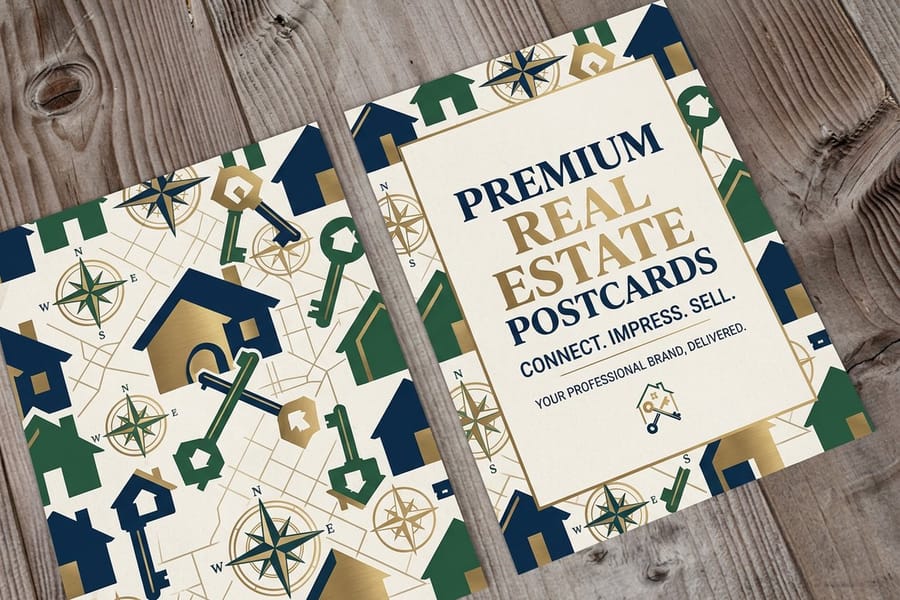
Use postcards on a schedule, not as a one-off. A series spaced over weeks keeps you in front of sellers until their timing aligns with yours, and formats like real estate postcards are built for exactly this kind of ongoing outreach.
Multichannel follow-up and cadence

The single biggest reason investor campaigns fail is stopping too soon. Motivated sellers rarely act on a first touch, because the mail has to reach them at the moment their situation and their willingness to sell align. Repetition is what converts, so plan a sequence, not a blast.
A typical cadence leads with a yellow letter, then reinforces with postcards spaced over several weeks, while you layer in phone and text follow-up for owners who respond. Each channel does something the others cannot: mail earns trust and stays in the home, calls and texts create urgency and let you qualify quickly.
When a seller does respond, speed matters, because motivated sellers usually contact several buyers. Answer fast, and log every response against the list and the mail piece that produced it. That discipline sets up the final step, which is measuring what actually works.
Measuring ROI and scaling what works
Direct mail is only as good as your tracking. Record responses by list and by mail piece, then calculate two numbers: cost per lead, meaning campaign cost divided by the leads it produced, and cost per deal, meaning campaign cost divided by the deals that closed. Those figures turn marketing from a guess into a system.
They tell you exactly which lists, formats, and messages to scale and which to cut, and they let you compare mail fairly against every other channel. Because a single wholesale or flip deal can return many times the cost of a campaign, the goal is not to spend the least on mailing but to source the most profit per marketing dollar.
With the numbers in hand, scaling is simple: put more budget behind the lists and formats producing the cheapest deals, and reinvest as your pipeline grows. Order your postcards, real estate postcards, and envelopes together at 4OVER4.COM, and use the live pricing panel below to plan each mailing.
Wally works the list, then the sequence
A tight list, mailed again and again, measured by cost per deal
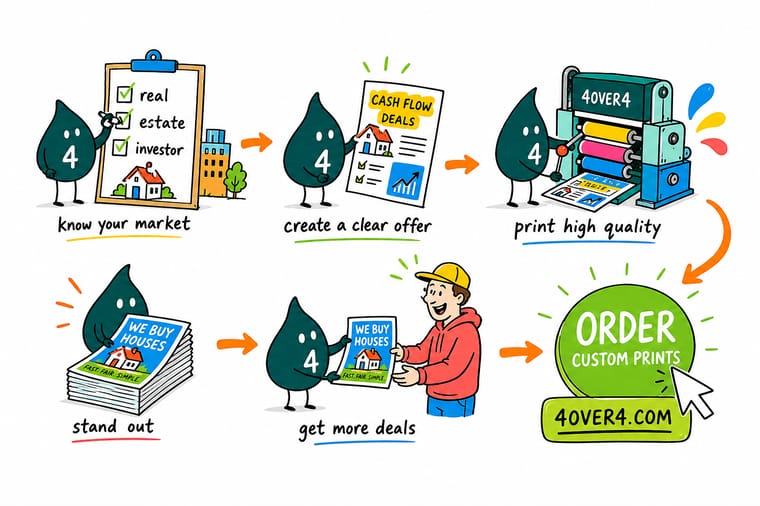
Wally will tell you the list beats the letter every time. Build a motivated-seller list, open with a personal yellow letter, reinforce with postcards over weeks, and follow up by phone and text. Then track cost per lead and cost per deal, and pour budget into whatever sources the cheapest deals. Print the letters, envelopes, and postcards together at 4OVER4 and keep the pipeline full.
Print your investor mail →Step by step
Run an investor mail campaign in 6 steps
- Build a motivated-seller listPull records that signal motivation, such as absentee owners, pre-foreclosures, probate, tax delinquency, or long-held vacant property, and clean the data before you mail.
- Choose your formatsPair yellow letters for a personal first touch with postcards for repeatable, high-visibility follow-up. Most strong campaigns use both, not one or the other.
- Write a direct, human messageSay who you are, that you buy homes in the area, and how to reach you. Keep it short, specific, and free of hype, with a single clear call to respond.
- Mail in a sequence, not a blastPlan several touches over weeks. A first letter, then postcards spaced out, keeps you in front of sellers until their timing lines up with yours.
- Answer fast and track every leadMotivated sellers call several buyers. Pick up quickly, and log every response against the list and mail piece that produced it.
- Measure cost per lead and scaleCalculate what each lead and each deal costs to source, then put more budget into the lists and formats that produce the cheapest deals.
Specs and pricing
Direct mail postcard specs and live pricing
Postcards are the workhorse of investor marketing. Here are the live specs and price-per-unit for direct mail postcards at 4OVER4.COM, straight from the configurator.

| Quantity | Price Per Unit | Total |
|---|---|---|
| 500 | 17.9¢ | $89.68 |
| 1,000 | 17.1¢ | $170.53 |
| 2,000 | 9.35¢ | $186.95 |
| 3,000 | 6.84¢ | $205.13 |
| 4,000 | 5.58¢ | $223.31 |
| 5,000 | 4.83¢ | $241.51 |
| 6,000 | 4.56¢ | $273.85 |
| 7,000 | 4.37¢ | $306.18 |
Print it
Print every investor piece at 4OVER4



See it in use
Investor mail we printed and sent







Explore more
Where to go next




By the numbers
Mailer stock and the catalog it comes from
Common Questions
Common questions about investor marketing
What is real estate investor marketing?
Real estate investor marketing is how investors find motivated sellers and off-market deals, rather than competing for listed properties. It centers on direct outreach to a targeted list of property owners who may be ready to sell, most often through direct mail such as yellow letters and postcards, supported by follow-up across phone, text, and online channels. Unlike agent marketing, which promotes listings to buyers, investor marketing is about generating a steady flow of seller leads you can evaluate, negotiate, and close, so the goal is a predictable pipeline rather than a single sale.
How do I build a motivated-seller list?
Start from the signals that suggest an owner might sell at a discount for speed or certainty. Common sources include absentee or out-of-state owners, pre-foreclosures, probate and inherited properties, tax-delinquent owners, code violations, and long-held vacant homes. You can pull these from county records, list providers, and data services, then clean and deduplicate the data so you are not mailing bad addresses. The tighter and more motivated the list, the better every downstream dollar performs, which is why experienced investors spend more effort on the list than on the mail piece itself.
What are yellow letters and why do they work?
A yellow letter is a direct-mail piece styled to look personal and handwritten, traditionally on yellow legal-pad paper in a plain envelope, with a short, informal note saying you would like to buy the recipient's property. It works because it does not look like corporate mail. In a mailbox full of glossy advertising, a piece that reads like a neighbor reaching out gets opened and read, which lifts response among motivated sellers. Yellow letters pair naturally with plain printed envelopes and are usually the personal first touch in a sequence that postcards then reinforce.
Are postcards or letters better for investor marketing?
They do different jobs, and strong campaigns use both. Postcards are read instantly because there is no envelope to open, which makes them ideal for repeatable, high-visibility follow-up and for testing messages quickly and affordably at scale. Letters, especially yellow letters, feel personal and are better for a first touch that earns attention and trust. A common approach is to lead with a letter, then reinforce with a series of postcards over several weeks, combining the personal feel of mail that gets opened with the frequency and low cost of mail that gets seen.
How many times should I mail a seller?
More than once, and usually several times. Motivated sellers rarely respond to a first touch, because the mail has to reach them at the moment their situation and their willingness to sell align. Planning a sequence of touches over weeks keeps you in front of the list until that timing lines up, which is why single-blast campaigns underperform. The exact number depends on your budget and list quality, but treating direct mail as a repeated campaign rather than a one-time send is one of the biggest differences between investors who generate consistent leads and those who do not.
How do I measure the ROI of investor direct mail?
Track the numbers that connect spend to signed deals. Record responses by list and by mail piece, then calculate cost per lead by dividing campaign cost by the leads it produced, and cost per deal by dividing it by the deals that closed. Those figures tell you which lists, formats, and messages to scale and which to cut, and they let you compare direct mail fairly against other channels. Because a single wholesale or flip deal can return many times the cost of a mail campaign, the goal is not to minimize mailing cost but to maximize the profit each marketing dollar sources.
Get Started
250 printed envelopes cost $142.99, or 57 cents each
Print your yellow letters, envelopes, and postcards together at 4OVER4.COM, plan your sequence, and watch the price update live as you build each mailing.
Legal Disclaimer
Gold Standard guarantees apply to all standard orders placed through 4over4.com. Price match requires verifiable proof of a competitor's published price for an equivalent product with matching specifications and turnaround time. Satisfaction guarantee covers manufacturing defects and print quality issues. Contact support with order number and documentation. On-time delivery rate based on tracked orders 1999 to 2026. Individual results may vary based on shipping carrier performance.
