
When a Print Order Outgrows Parcel and Has to Move as Freight


Ground, air and freight carry printed work under different rules. Weight and size limits decide which one you get, freight adds paperwork once you cross the line, and there is a way to work the deadline backwards.
Ground parcel carries a print order until a single carton passes 150 lb, 108 inches of length, or 165 inches of length plus girth, at which point it becomes freight. Air uses the same carton limits and only compresses transit time, so it never recovers production days. Less than truckload freight takes over for palletized, oversize or roughly ten carton and larger shipments, priced on pallet space and density rather than per box.
Quick answer
The carton decides the mode, and the calendar decides the rest
Mode is a consequence of size, not a preference. A print order ships ground while every carton stays under 150 lb and inside the 108 inch length and 165 inch length plus girth limits. Break one limit, or stack up enough cartons that a pallet is cheaper than the pile, and the shipment becomes less than truckload freight with a bill of lading, a delivery appointment and accessorial charges attached. Air changes nothing about those limits. It only shortens transit, which is why a rush production upgrade usually moves a deadline further than an overnight shipping label does.
Ground, Air and Freight, and the Line Between Them
Three modes carry printed work, and the choice is rarely a preference. Size, weight and the delivery date make it for you.
| Mode | Typical transit | Size and weight it handles | What it suits |
|---|---|---|---|
| Ground parcel | 1 to 5 business days in the lower 48 | Up to 150 lb and 165 inches of length plus girth per carton | Cards, flyers, postcards, brochures, short banner runs, sample packs |
| Air parcel | Overnight to 2 days | Same carton limits, with tighter cutoff times | Event material, proofs, badges, anything already late |
| LTL freight | 2 to 7 business days, appointment based | Palletized loads, oversize and overlength pieces | Bulk catalogs, large postcard runs, displays, rigid signage |
Read the third column before the second. Transit speed only matters once a shipment is legal for the mode, and the fastest way to lose two days is to book air for something a parcel carrier will refuse at the counter. Freight looks slower on paper, but it moves one consolidated unit that arrives together, while a ten carton parcel shipment can straggle in across three separate days.
Cost behaves differently in each lane too. Parcel is priced per box, so ten boxes cost roughly ten times one box. Freight is priced per shipment against the space and class it occupies, so the eleventh carton on a pallet is nearly free. That is the whole reason the switch exists.
The Limits That Force a Print Order Out of Parcel
Parcel carriers publish hard ceilings, and a shipment only has to break one of them to fall out of the network. The numbers worth memorising:
- 150 lb per package. Not per shipment. One carton at 151 lb is a freight problem even if it is the only carton.
- 108 inches of length. This is the one that catches large format. A rolled banner in a long tube can weigh under ten pounds and still be too long to ship as a parcel.
- 165 inches of length plus girth. Girth is twice the width plus twice the height. Bulky boxes fail this before they fail the weight limit.
- Dimensional weight. Length times width times height in inches, divided by a divisor that is commonly 139 for domestic retail service. The carrier bills the higher of dimensional and actual weight, which is why an underfilled box costs real money.
Paper is where weight sneaks up on people. A carton of printed sheets is closer to a carton of books than to a carton of packing peanuts, so a run that reads as modest on an order confirmation can turn into six or eight heavy cartons on the dock. The productive question to ask a printer is not how many pieces, it is how many cartons and what does each one weigh. Once you have that, the mode answers itself.
Large format inverts the problem. Banners, posters and display graphics are light and awkward, so they get caught by length and by dimensional weight rather than by the scale. Setting a banner up at a size that ships sanely is part of the design job, and our guide to banner sizes and print ready setup covers the sizes that stay inside a normal tube.
What Freight Actually Involves Once You Cross the Line
Freight is not simply a bigger parcel. It runs on different paperwork, a different pricing model and a different delivery ritual, and every one of those can surprise a first time shipper.
The unit is the pallet. A standard American pallet is 48 by 40 inches, cartons are stacked on it in an interlocking pattern, the stack is wrapped and often banded, and the whole thing travels as one handling unit on a bill of lading. Less than truckload means your pallet shares a trailer with other shipments, so it may be unloaded and reloaded at a terminal along the way. That is why freight transit is quoted as a range rather than a promise, and why a well built pallet matters more than it does in parcel.
Pricing runs on density and class. Carriers assign a freight class from the National Motor Freight Classification, and dense, stackable, damage resistant goods class low, which means cheap. Printed matter on a pallet is about as dense as commercial freight gets, so it usually lands in the low classes and rides at a good rate per pound. The corollary is unpleasant for light bulky loads: a pallet of foam board or rolled displays takes the same floor space as a pallet of catalogs but classes far higher, and pays for the air it carries.
Then come the accessorials, and this is where budgets break. A liftgate to lower the pallet when there is no dock, residential delivery, limited access sites such as schools, churches, mall storefronts and construction trailers, inside delivery past the curb, and the appointment call itself all carry separate charges. Declare them when you book. Discovering that a driver cannot deliver costs you the accessorial anyway plus a redelivery fee and a lost day.
Doing the Deadline Math Before You Buy Speed
Every print deadline has two clocks, and people habitually buy the wrong one. The first clock is production: proofing, press, drying, cutting, folding, binding, packing. The second clock is transit. Air shipping only touches the second one.
Work backwards from the event date. Take the day the material has to be in hand, subtract the transit days for the mode you plan to use, and that is your ship date. Then subtract the printer's stated turnaround, and that is the day the approved file has to be in. If the answer is a date that has already passed, the fix is a faster turnaround or a smaller run, not a faster truck. Upgrading a five day ground move to overnight buys four days at most, and a rush production upgrade often buys more for less.
Air is genuinely worth it in three cases. When the pieces are light and valuable relative to their weight, such as badges, tickets, proofs or a single set of samples. When the route is coast to coast, where ground burns four or five days and air burns one. And when the alternative is missing the event entirely, at which point the shipping line is the cheapest part of the disaster. Outside those, ground with a day of slack built in beats air with none.
One more piece of the same math: approve the file early. Most missed print deadlines are file problems, not shipping problems, and a rejected file can burn a day before production even starts. Our guide to commercial print ready files covers the setup that gets a job through preflight on the first pass, and the rest of the shipping and postage guides cover the delivery side.
Packing and Labeling So the Carrier Cooperates
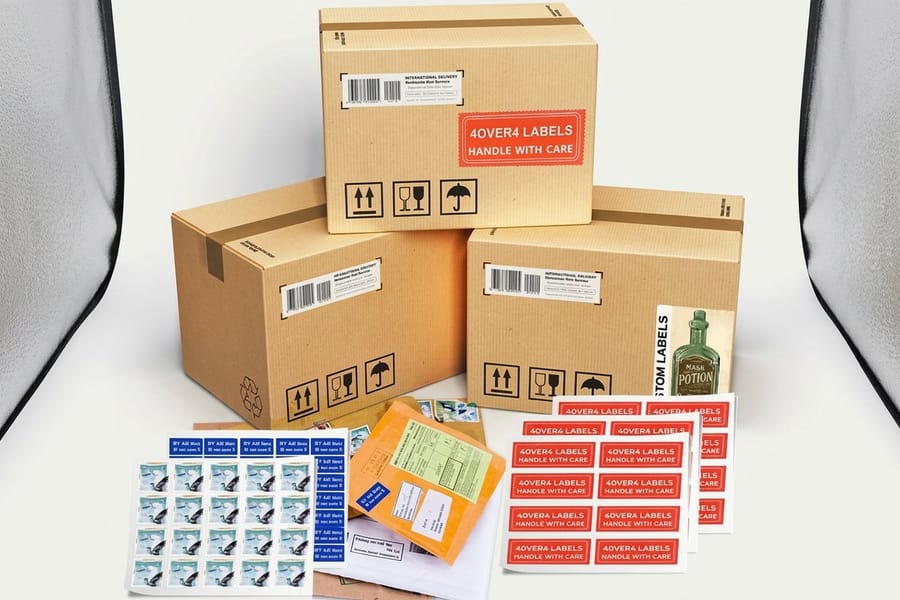
The mode you pick decides the price. The way you pack decides whether the shipment arrives in the state it left in, and whether the carrier bills you for the space you wasted.
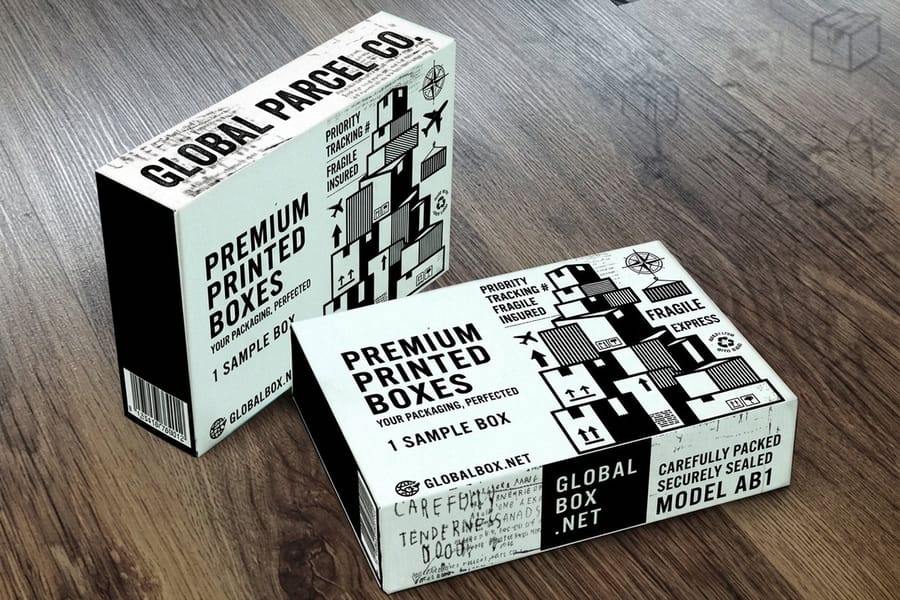
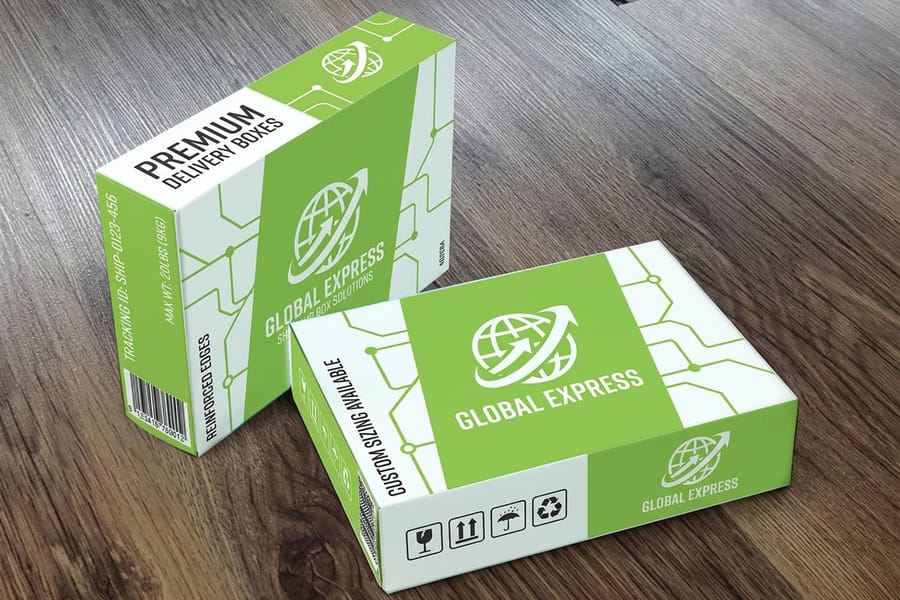
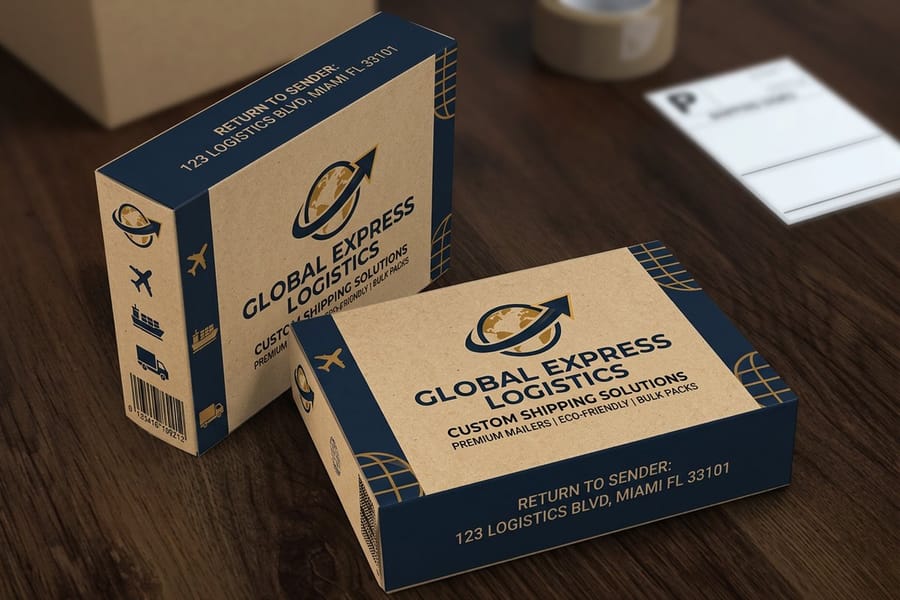
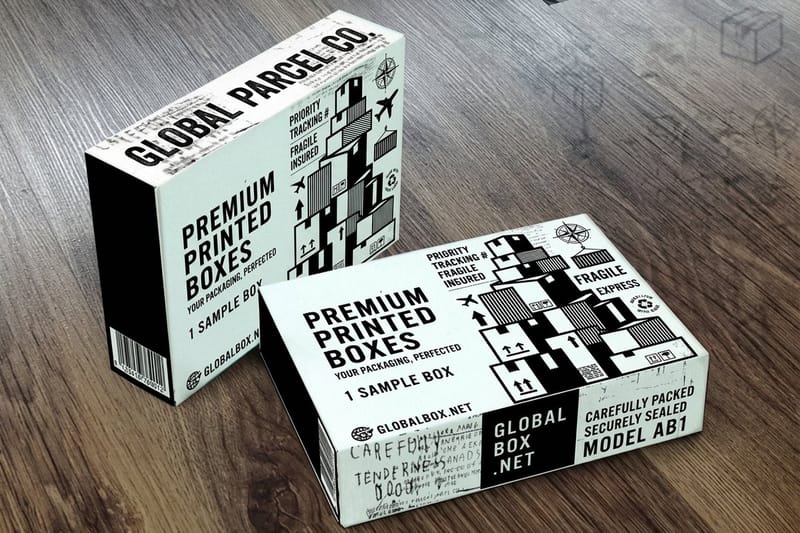
Size the box to the contents. An oversized carton costs you twice, once in dimensional weight and once in the damage that comes from letting a stack shift in transit. Printed sheets should be banded or shrink wrapped in lifts, corners protected, and the void filled so nothing slides. Custom printed shipping boxes start at $711.78 for a printed run, which makes sense for a repeated fulfilment box rather than a one off, and the payoff is a carton that fits the product and carries your brand on the doorstep.
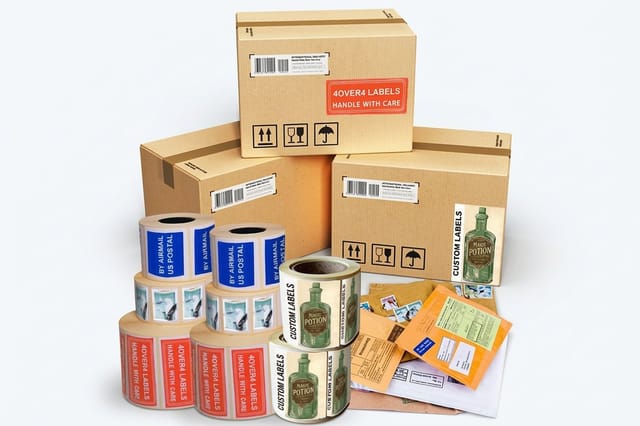
Labels have rules of their own. The carrier routing label needs a flat, clean surface, no tape across the barcode, and no second label competing next to it. Put a branded label on a different face. Standard shipping and mailing labels start at $23.88 on sheets, which suits a desk workflow, and roll shipping and mailing labels start at $322.98 and feed an applicator or a thermal printer once you are boxing in volume. Premium shipping and mailing labels add a tougher face stock for boxes that will see weather or a long freight route.
Freight adds a layer parcel does not have. Every carton on the pallet needs its own label, the pallet needs the bill of lading number visible, and the wrap should not bury the paperwork. Take a photo of the finished pallet before it leaves. If a claim ever comes up, that photo is the difference between a paid claim and an argument. The full range sits in shipping label printing if you are setting a fulfilment workflow up from scratch.
Wally explains the parcel to freight line
One carton, 150 pounds, and the tape measure
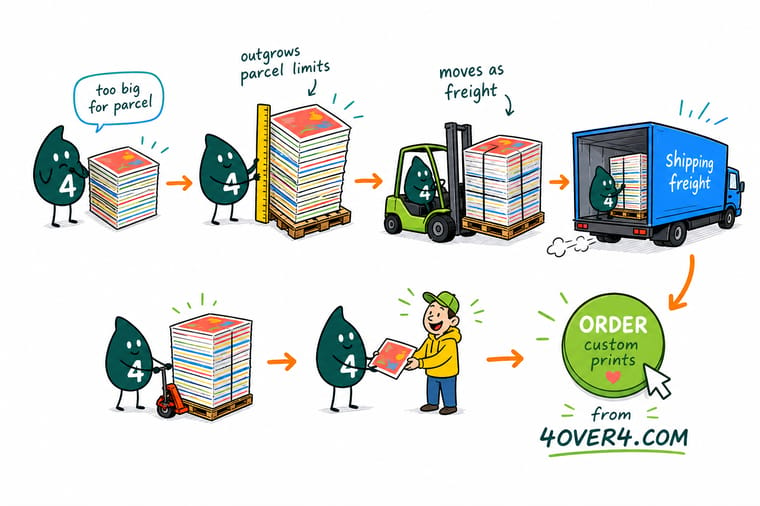
Wally puts the carton on the scale first. Under 150 pounds, under 108 inches long, under 165 inches of length plus girth, and it goes on the brown truck at parcel rates. Break any one of those and it goes on a pallet, wrapped and banded, with a bill of lading and a delivery appointment. Wally counts cartons too. Two or three, ship parcel. Ten or twelve, price the pallet, because on freight the eleventh carton is nearly free.
Order standard shipping labels →Specs and pricing
Label and box options, sizes, and starting prices
Compare the fulfilment products side by side, with live configuration choices and starting prices straight from the 4OVER4.COM configurator.



Print it
Kit the boxes out before the truck arrives

Explore more
Where to go next




By the numbers
Print that ships on schedule from 4OVER4
Common Questions
Your print shipping questions, answered
How do I know if my print order ships ground or freight?
Weight and dimensions decide it, not the product. A parcel carrier will accept a single carton up to 150 lb, up to 108 inches long, and up to 165 inches of length plus girth. An order that fits inside those limits ships ground, even if it takes several cartons to do it. An order that busts any one of them, or that runs to enough cartons that the carrier would rather see a pallet, moves as freight. In practice the switch happens around ten to twelve full cartons, or the moment a single piece is too long or too heavy to lift.
At what quantity does a paper order get too heavy for parcel?
Sooner than most people guess, because paper is dense. A carton of printed sheets behaves like a carton of books, so a run that looks small on an invoice can fill several boxes. The useful habit is to think in cartons rather than in pieces: ask the printer how many cartons the run makes and how much each one weighs, then compare that count against the ten to twelve carton range where a pallet starts winning on price. Large format is the opposite problem, where a rolled banner is light but long enough to trip the length limit on its own.
Is it cheaper to split a heavy order into more boxes?
Up to a point, yes. Splitting keeps a shipment inside parcel rates and avoids freight paperwork entirely, and for two to six cartons it is almost always the cheaper answer. Past roughly ten cartons the per box handling charges stack up and one pallet of less than truckload freight usually costs less than the pile of parcels, while also arriving as a single unit instead of trickling in over three days. The break point moves with distance, so ask for both quotes on anything borderline.
What is dimensional weight and why does a light box cost so much?
Carriers charge for the space a package occupies as well as its actual weight. They multiply length by width by height in inches and divide by a dimensional divisor, commonly 139 for domestic retail service, then bill on whichever number is higher. That is why a big carton of foam board or a long tube of rolled banners can cost more to ship than a small heavy box of cards. Packing tighter, using a box that actually fits the contents, and rolling rather than laying flat all pull the billable weight down.
Do I need a loading dock to receive a freight delivery?
Not necessarily, but you have to say so up front. A freight truck arrives with the pallet at trailer height, and without a dock the driver needs a liftgate to lower it to the ground. Liftgate service, residential delivery, limited access locations such as schools and mall storefronts, and inside delivery are all separate accessorial charges added to the quote. Declaring them at booking is cheaper than having them added after a failed delivery attempt, which also costs you a redelivery.
Will paying for air shipping actually get my order sooner?
Only if production is already finished. The clock on a print order has two halves, the time on press and in bindery, and the time in transit. Air compresses the second half and leaves the first untouched, so on a job that has not printed yet, buying a faster turnaround usually moves the delivery date more than buying a faster truck. Air earns its price on true emergencies, on cross country runs where ground takes five days, and on light, high value pieces such as event badges or a set of proofs.
Should I ship with my own branded labels or the carrier default?
The carrier label carries the barcode and has to stay readable and unobstructed, so it is never optional. A branded label sits alongside it on the box, and it changes what the recipient sees before the tape comes off. Printed labels start at $23.88 for a sheet run of Standard Shipping and Mailing Labels at 4OVER4.COM, and roll labels feed an applicator or a thermal workflow when the box count climbs. The rule that matters is placement: keep the branded label on a different face or well clear of the routing label, and never tape over a barcode.
Get Started
250 shipping boxes cost $711.78, or $2.85 each
Print the labels, size the boxes to the contents, and know before you order whether the run ships as parcel or rides a pallet.
Legal Disclaimer
Gold Standard guarantees apply to all standard orders placed through 4over4.com. Price match requires verifiable proof of a competitor's published price for an equivalent product with matching specifications and turnaround time. Satisfaction guarantee covers manufacturing defects and print quality issues. Contact support with order number and documentation. On-time delivery rate based on tracked orders 1999 to 2026. Individual results may vary based on shipping carrier performance.
