
Duplex Business Cards Explained and When a Double Thick Card Is Worth It


Emma is our prepress and print production voice, built from the knowledge of our production team, with over 20 years in printing.
Duplex business cards are two printed sheets joined by one glue line and trimmed as a single card, with a seam on every edge people notice. The mounting works a specific way, only some stock pairings hold up, and past a point a single thick sheet is the better card.
A duplex business card is two separate sheets of stock bonded face to face with adhesive, then trimmed as one card, so the caliper roughly doubles and a thin seam shows along every cut edge. Printers duplex to reach a thickness no single sheet offers, to put two different surfaces on one card, or to slip a dyed core between the faces so the seam becomes a colored stripe. It costs more than double a single sheet at the same caliper, it will not take a fold, and the bond can creep in heat.

Quick answer
Two sheets, one glue line, double the caliper
Duplexing bonds two printed sheets into a single card and trims them together, so the finished caliper is close to the sum of the two. Two 16pt sheets land near 0.032 inch, the same as a credit card. A third dyed sheet between them makes a triplex card, where the glue line reads as a band of color around the whole perimeter. You pay for two press runs, adhesive, a mounting pass and cure time, and you give up the ability to fold the card. Where the edge is part of the design, that is money well spent. Where you only want weight, a single 32pt sheet gets there cheaper and cannot come apart.
Duplex business cards
Duplex business cards by caliper, size and price
Pick the finished caliper first, because it decides the pairing. Two 16pt sheets bond to about 32pt, two 14pt sheets to about 28pt, and a 16pt face mounted to 32pt board reaches about 48pt. A dyed third sheet in the middle turns the seam into a colored stripe, the triplex card. Every version stays flat, since a bonded card cracks along the glue line when it is scored.
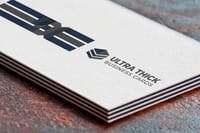
The same three results print from one sheet at 4OVER4.COM, in the standard 2 x 3.5 size. Ultra Thick Business Cards start at 50 for $36.62 in 32pt, 48pt, 64pt or 80pt UltraWhite Uncoated Cover. Layer Cake Business Cards add a colored center in five shades from 50 for $39.11. Edge Painted Business Cards paint the perimeter of a 32pt UltraWhite card from 250 for $141.70. All three run on a 5 business day standard turnaround.
What a Duplex Business Card Actually Is
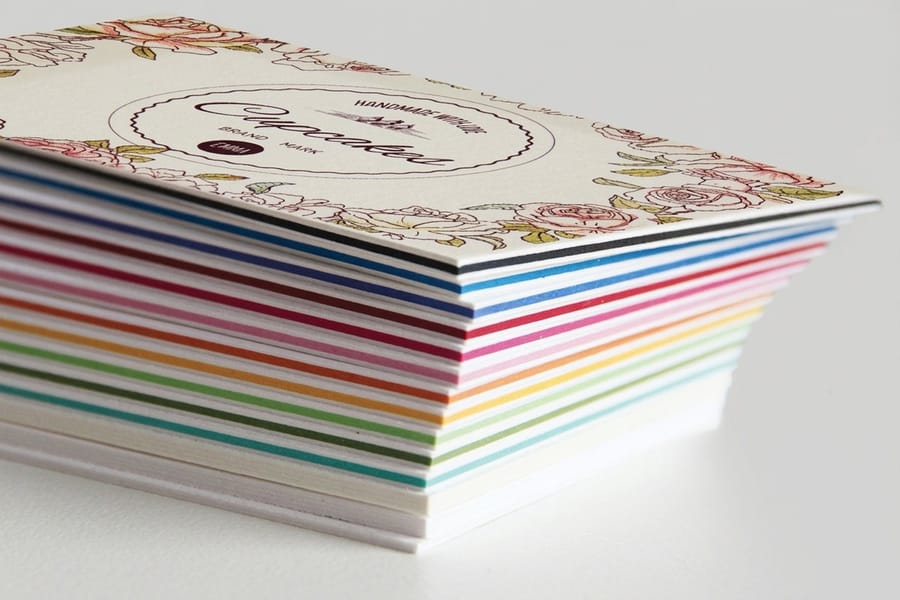
Duplexing is a bindery operation, not a stock. Two sheets print flat and separately, an adhesive layer goes between them, and a mounting press bonds the pair into one board that is then trimmed to card size. Nothing about the printing changes. Everything about the edge does.
You will see three names for the same idea. Duplex is the process word. Double thick describes the result. Mounted is what an older bindery calls it, borrowed from mounting a print to board. A triplex card is the same operation with a third sheet, usually dyed all the way through, sitting between the two printed faces.
The reason anyone bothers is that a duplex pair does two things a single sheet cannot. It reaches a caliper that mills do not stock in a printable cover weight, and it puts two different surfaces on the two faces of one card. A brown kraft front with a smooth coated back is one glue pass away, and impossible from a single sheet. If you are still deciding how heavy the card needs to feel, the business card thickness chart is the faster place to start, and business card stock explained covers what each surface does to your artwork.
How Duplex Mounting Works, Step by Step
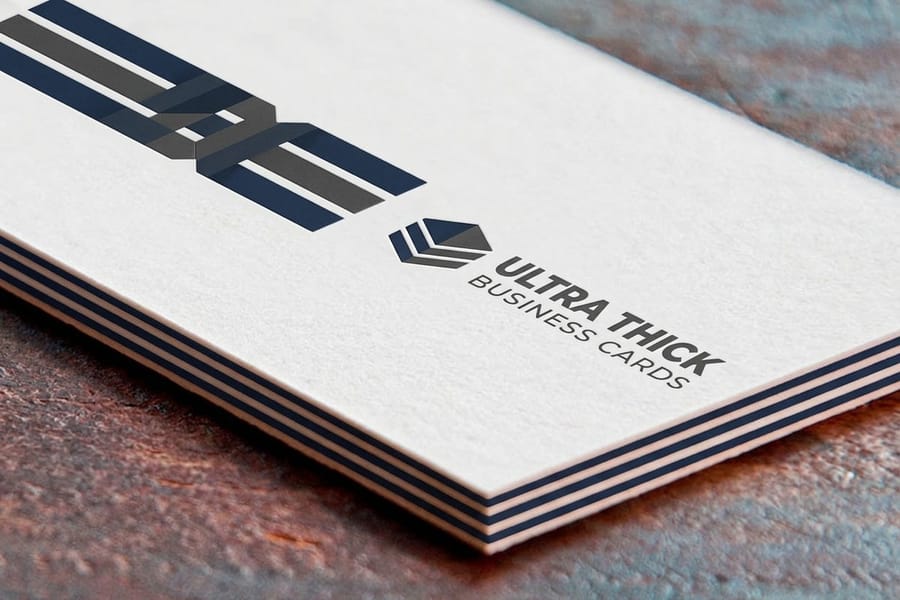
Four steps, and the order of the last two is the whole trick.
One, both halves print as normal sheets. Usually oversized, so there is grip room around the artwork. Ink has to be dry before anything touches it, which is why a duplex job sits overnight when a flat one would already be trimming.
Two, adhesive goes on one face. Cold glue on a roller for most work, a heat-activated film for laminated or coated stock that glue struggles to wet.
Three, the pair goes through a mounting press. Pressure squeezes out air and evens the bond line. Trapped air becomes a bubble you can see under a coated face and feel under an uncoated one.
Four, the bonded board cures, then gets trimmed. Trimming last is what makes the edge look deliberate. Cut each sheet first and the two halves never line up, so you get a lip along one side of every card.
Two consequences follow from that order. Front-to-back registration is set when the sheets meet, not on press, so artwork that has to align through the card, such as a rule that continues from front to back around the edge, is a gamble. And the cure adds a day or two before anything ships, which is why duplex rarely appears on a rush schedule. Our business card file setup guide covers the bleed and safety margins that keep a thick card trimming clean.
What Duplexing Buys You and What It Costs
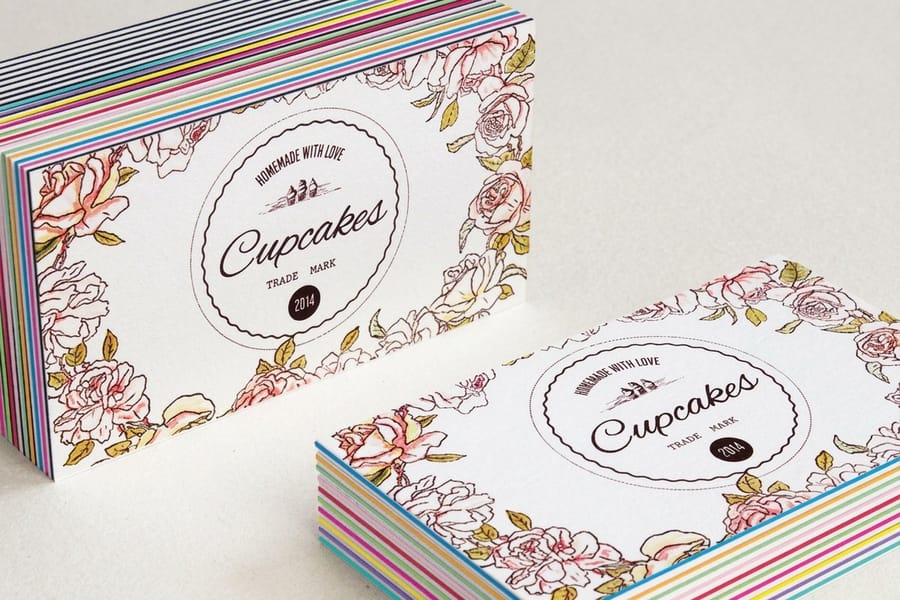
The gain is real and narrow. A duplex card gives you weight in the hand, a visible edge treatment, and two unrelated surfaces on one piece. People handle a 32pt card differently from a 16pt one; they turn it over, and they keep it longer. That is worth paying for when the card is handed across a table rather than mailed in a stack of 5,000.
The cost is easy to underestimate because it is not just the second sheet. You pay for two press runs, the adhesive, the mounting pass, the cure time, and a higher spoilage rate, since a bubble or a misfeed ruins the whole board rather than one sheet. That stacks up to well beyond double the price of a single-sheet card at the same finished caliper.
There is also a durability trade nobody advertises. Adhesive creeps under sustained heat and uncoated fibers absorb humidity, so a bonded card left in a car door pocket through a summer can lift at a corner. A laminated pair resists it because the film seals both faces, which is one reason silk laminated business cards pair better than raw uncoated sheets. A single thick sheet has no bond line to fail at all.
Stock Pairings That Work, and What Each Edge Shows
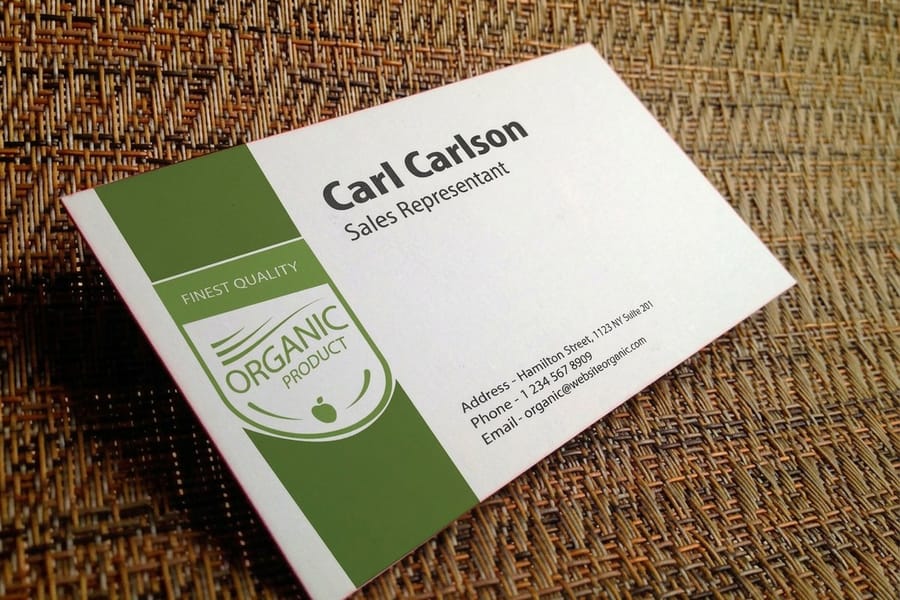
A pairing is chosen for the edge first and the faces second. Here are the combinations that keep coming back, what they finish at, and what the cut edge gives you.
| Pairing | Finished caliper | What the edge shows | Where it fits |
|---|---|---|---|
| Two 16pt uncoated sheets | About 0.032 in, 32pt | A pale seam you find with a fingernail before you find it with your eye. | The cheapest way into a double thick card when the edge is not the point. |
| Two 16pt silk laminated sheets | About 0.037 in with film on both faces | Film closes over the join, so the edge reads as one solid slab. | Cards that live in wallets and get handled daily. |
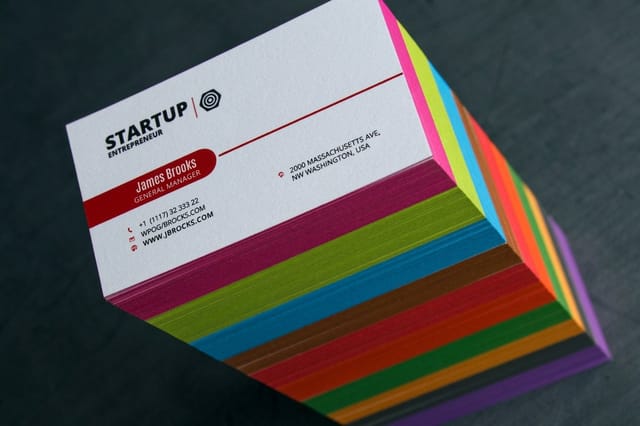
| Two printed sheets around a dyed core | 46pt to 60pt depending on the core | A hard band of color around the full perimeter. The triplex look. | Studios, agencies, anyone who wants the card recognized edge on. |
| 14pt kraft plus 14pt coated white | About 0.028 in | Brown fiber on one half of the edge, bright white on the other. | A natural face with a back that still holds photographic color. |
| 16pt face mounted to 32pt board | About 0.048 in | A deep pale edge with plenty of surface for paint to grip. | Cards headed for an edge painting pass. |
| Two 18pt cotton sheets | About 0.036 in, softer than the number suggests | A slightly fuzzy edge that never stays perfectly crisp. | Deep letterpress, where the sandwich swallows the impression. |
Read the third column before the second. Thickness is a feeling, but the edge is the part people actually see, and it decides whether the extra money reads on the card. The last row is worth a note: a bonded cotton pair takes a deep impression without the bruise showing through to the other side, because the second sheet absorbs it. That is the one job where duplexing beats every single-sheet alternative outright. Our guide to stock and coating for embossed cards goes further into what survives a die.
Colored Edges, Colored Cores, and the Thickness Ladder
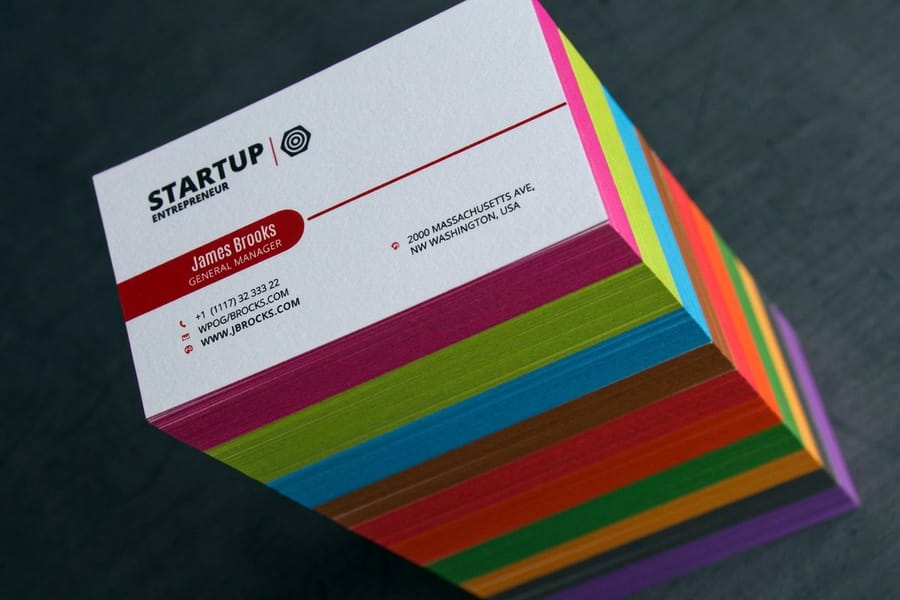
Once a card is thick enough for the edge to register as a surface, you have two ways to use it, and they look nothing alike.
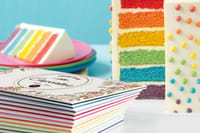
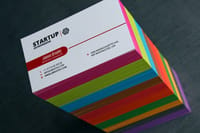
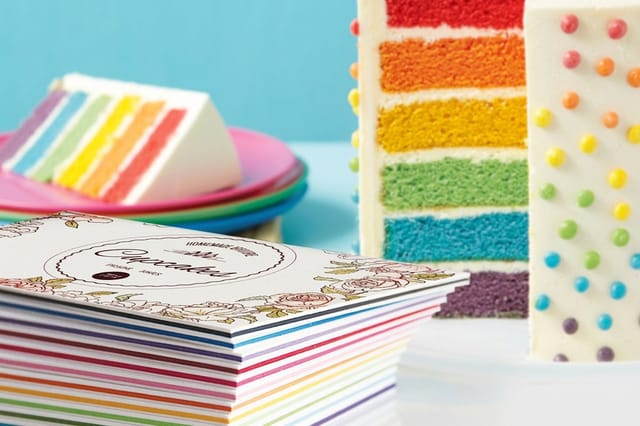
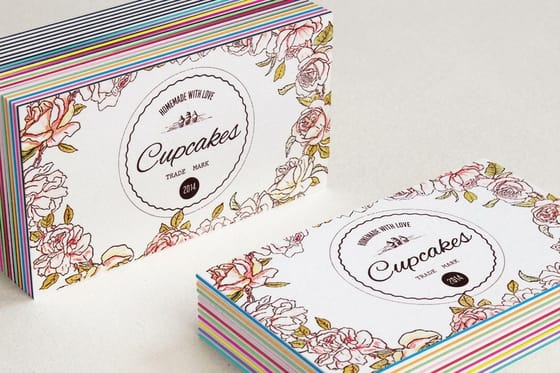
A dyed core puts the color inside the board, so the stripe is part of the material and cannot chip or wear off. Layer Cake Business Cards work this way, with the core available in black, blue raspberry, orange fizz, red or pacific breeze, on 32pt, 46pt or 60pt UltraWhite Uncoated Cover, or 40pt and 56pt Gloss Cover. Fifty cards start at $39.11, a hundred run $67.85, and a thousand come to $233.31. To see the stripe before you order, open the layer cake business cards story.
A painted edge lays color onto the outside of the trimmed stack after cutting, which opens up shades a mill would never make a core in. Edge Painted Business Cards use a bright 32pt UltraWhite uncoated base with the perimeter painted in one of 16 colors, from $141.70. Uncoated stock matters here: paint keys into open fiber and skates off a laminated face.
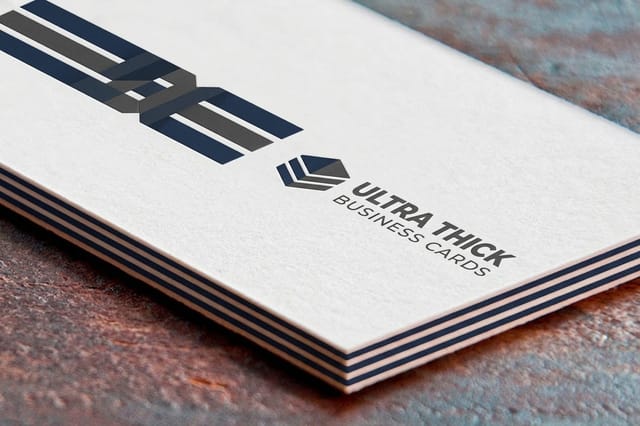
If the edge is not the goal and you simply want the card to land with weight, skip both and climb the caliper ladder. Ultra Thick Business Cards start at 32pt, which already matches a bonded pair of 16pt sheets, and step up through 48pt, 64pt and 80pt in UltraWhite Uncoated Cover, plus 40pt, 56pt and 72pt in Gloss Cover. Fifty cards are $36.62, and the per-card price falls toward ten cents as the run climbs to 10,000. Somewhere around 48pt the card stops reading as paper and starts reading as an object.
When a Single Thick Sheet Beats a Duplex Card
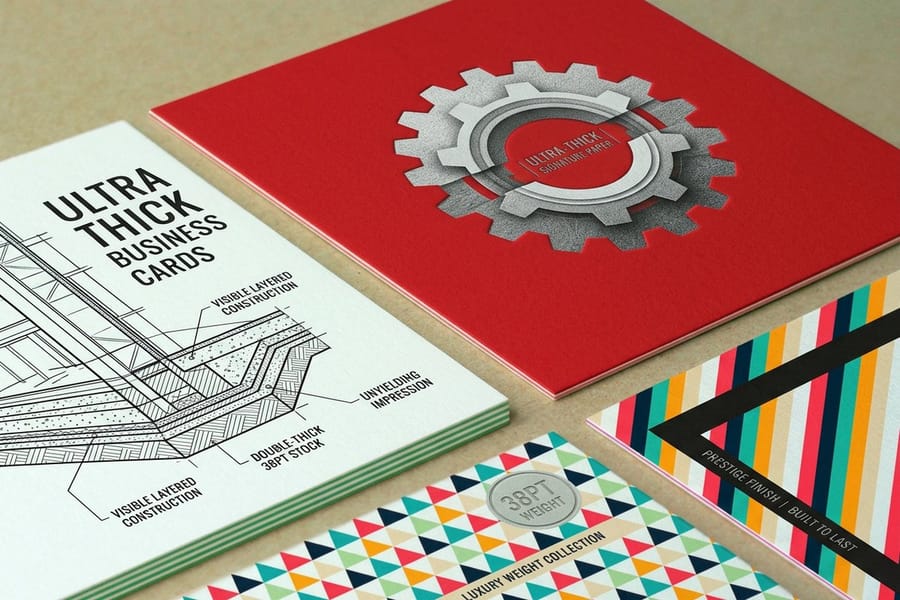
Most people searching for duplex cards want thickness, not glue. If that describes you, one sheet is the better buy on every axis that matters.
It is cheaper, because there is no second press run and no bindery pass. It is faster, because nothing has to cure before it trims. It cannot delaminate, because there is no bond. It takes a score better, since the fibers compress as one body instead of two. And the edge is one uninterrupted color, which suits a minimal design far better than a seam nobody planned for.
Duplexing earns its place in three cases, and they are specific. When the two faces need genuinely different stocks. When a deep letterpress or blind emboss must not show on the reverse. And when the design calls for a core color the mill does not offer, in which case a custom sandwich is the only route. Outside those three, a single caliper wins.
The price comparison is blunt. Standard Business Cards at 14pt to 16pt start at $17.57 per 50. Ultra Thick starts at $36.62 for a card twice as heavy. A duplex pair reaching that same 32pt has to cover two sheets, glue, mounting and cure on top. Browse the full range on business card printing before you commit to a bonding pass you may not need, and what business cards cost and why breaks down where the money actually goes.
How to Order a Double Thick Card Without Guesswork
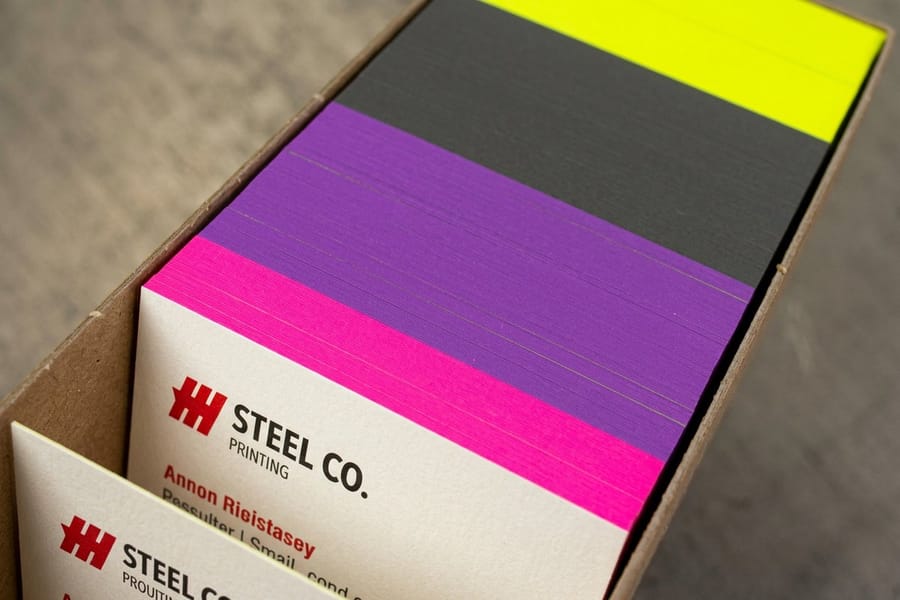
Work from the edge inward. That order stops the two mistakes people make on thick cards.
- Decide what the edge does. Plain, a dyed stripe, or a painted band. This picks the product before anything else does.
- Pick the caliper. 32pt reads as premium and still slides into a wallet. 48pt and up is a statement and will not fit a slim card case.
- Set the ink sides. 4/0 prints the front only, 4/4 prints both. On a thick card a blank back looks intentional, not cheap.
- Keep artwork off the trim. Extend backgrounds 1/8 inch past the trim on all four sides, and hold type at least 1/4 inch inside it. At this caliper the blade has more material to travel through and the edge is a surface people inspect.
- Order a proof if the color matters. Uncoated 32pt drinks ink and prints a shade softer than the same file on gloss. A next day hardcopy proof settles that before 1,000 cards do.
Start from a correctly sized layout in the blank template library, and if you want to feel the difference between 32pt and 80pt before you spend anything, request free paper samples and hold them yourself. Nothing on a screen tells you what 0.08 inch feels like between two fingers.
Wally explains duplex cards
Glue two sheets, trim them as one, and the edge does the talking
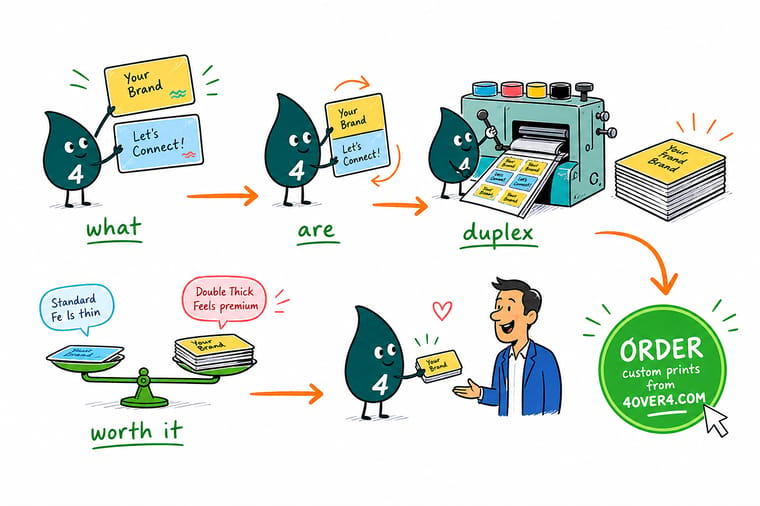
Wally prints two sheets, runs glue between them, presses out the air and lets the bond cure before he trims. The card comes out twice as thick with a seam around every edge. Slide a dyed sheet into the middle and that seam turns into a stripe of color you can spot across a table. Ask him to fold it and he will refuse, because the glue line cracks. Ask him for weight alone and he will hand you one thick sheet instead, which costs less and never comes apart.
See Layer Cake business cards →
Specs and pricing
Thick card options, calipers, and starting prices
The three routes to a double thick card at 4OVER4.COM. Ultra Thick adds 40pt, 56pt and 72pt Gloss Cover to its four uncoated calipers, Layer Cake runs 32pt, 46pt or 60pt uncoated or 40pt and 56pt gloss, and Edge Painted comes in 2 x 3.5, 2.125 x 3.375 or 2.5 x 2.5. Set the caliper, size and ink sides in each widget to see its price.
Print it
Order a card people feel before they read it
32pt reads as premium and still slides into a wallet, while 48pt and up will not fit a slim card case. Ultra Thick and Layer Cake offer a next day hardcopy proof, the safe call on uncoated stock that prints a shade softer than gloss.
Explore more
Where to go next
The thickness chart ranks every caliper from 12pt up, the stock guide matches surfaces to artwork, and the cost guide shows where the money goes between stock, ink and finishing passes.


By the numbers
Duplex, layer cake and ultra thick card stocks
Common Questions
Your duplex card questions, answered
What is a duplex business card?
A duplex business card is two sheets of stock bonded face to face with adhesive so they behave as one card. Each half prints on its own, the pair goes through a mounting press, the glue cures, and only then is the card trimmed to size. Because the trim happens last, the edge cuts clean instead of showing two mismatched sheets. The printing trade also calls these double thick cards or mounted cards, and the term duplexed usually describes the process rather than a specific stock.
What is the difference between duplex and triplex business cards?
Count the sheets. A duplex card is two; a triplex card is three, with a dyed sheet sandwiched between the two printed outer layers so the cut edge shows a band of solid color the whole way around. Triplex is the reason most people go looking for duplexing in the first place, because that stripe is the visible payoff. Layer Cake Business Cards at 4OVER4.COM give the same effect with a color seam in black, blue raspberry, orange fizz, red or pacific breeze, starting at $39.11 for 50 cards.
How thick is a duplex business card?
Add the two calipers and expect a small bonus from the adhesive and any laminate. Two 16pt sheets finish near 0.032 inch, which is 32pt and about the thickness of a credit card. Two 14pt kraft sheets land near 0.028 inch. A 16pt face mounted to a 32pt board reaches roughly 0.048 inch and starts to feel like a chip rather than a card. For a full ladder of calipers and what each one feels like, the business card thickness chart lays them out side by side.
Can you fold or score a duplex card?
Not reliably. Scoring compresses fibers on the inside of a fold, and in a bonded card the two layers compress by different amounts, so the glue line opens and the outer sheet cracks along the crease. If the job needs a fold, use a single sheet in a foldable weight and score it properly. This is the most common reason a duplex idea gets abandoned halfway through a proof.
Does 4OVER4.COM print duplex business cards?
We reach the same three results without a bonding pass, which is faster and removes the risk of a glue line opening later. For raw thickness, Ultra Thick Business Cards run 32pt, 48pt, 64pt and 80pt in UltraWhite Uncoated Cover plus 40pt, 56pt and 72pt in Gloss Cover, from $36.62 per 50. For the colored stripe on the edge, Layer Cake Business Cards carry a dyed core from $39.11. For a solid painted perimeter in one of 16 colors on a 32pt UltraWhite base, Edge Painted Business Cards start at $141.70.
Do duplex cards ever come apart?
A properly cured card handles normal wallet life without trouble, but adhesive is the weak point in every bonded stock. Sustained heat softens the bond, and uncoated fibers pull moisture from humid air, which is how a corner starts to lift after a summer in a car door pocket. Laminated pairs hold up better because the film seals the faces. A single thick sheet removes the question entirely, which is why we print heavy cards from one caliper.
Is a duplex card worth the extra cost?
It depends on whether anyone will see the edge. A duplex or triplex card costs two sheets plus a bindery pass plus curing time, so it usually runs well above a single sheet at the same finished caliper. If the design uses the edge, with a colored core or a painted perimeter, that money buys a detail people notice while holding the card. If the card just needs to feel substantial, spend it on caliper instead: 32pt from one sheet costs about double Standard Business Cards at $17.57 per 50 and feels identical in the hand.
Get Started
Layer cake cards run 50 for $39.11, edge painted 250 for $141.70
Pick your caliper from 32pt to 80pt, add a colored core or a painted edge, and we print a card that lands on the table instead of floating onto it.
Legal Disclaimer
Gold Standard guarantees apply to all standard orders placed through 4over4.com. Price match requires verifiable proof of a competitor's published price for an equivalent product with matching specifications and turnaround time. Satisfaction guarantee covers manufacturing defects and print quality issues. Contact support with order number and documentation.
