
How an Offset Printer Works, From Plate to Finished Sheet


Emma is our prepress and print production voice, built from the knowledge of our production team, with over 20 years in printing.
Plates, blankets, ink and water balance, makeready, and the moment a long run gets cheaper than a short one. This guide shows what an offset press does, why it still owns high volume work, and how to set the quantity, stock and file for your next job so the unit price works in your favor.
An offset printer is a press that transfers ink from an aluminum plate onto a rubber blanket, and from that blanket onto paper. The plate never touches the sheet, which is where the word offset comes from. Each ink color gets its own plate and its own unit, so a full color job takes one trip through the machine. Because plates and makeready cost the same at any quantity, the price per piece keeps dropping as the run grows, which is why offset owns high volume printing.

Start here
The whole process in one paragraph
An offset press prints indirectly. Your file is imaged onto flat aluminum plates, one per ink color. Each plate is inked and dampened so that image areas hold ink and everything else holds water. The inked image transfers to a rubber blanket, and the blanket presses it onto the sheet as it travels through the machine. Setup is expensive and fixed. Running is cheap and fast. That imbalance is the entire reason offset dominates long runs and loses badly on short ones.
Definition
What an offset printer is, and what the name means
An offset printer is a printing press, sheetfed or web, that inks an aluminum plate, offsets the image onto a rubber blanket, and presses the blanket onto the sheet. The name means that indirect transfer: the plate never touches the paper. A four color machine repeats the step four times, once each for cyan, magenta, yellow and black, and its setup costs the same for 500 pieces as for 50,000. Quantity pricing shows the effect: 50 postcards cost $16.48, while 100,000 cost $1,721.38, under 2 cents each.
Why the press behind your job quietly sets your unit cost

Two printers can quote the same brochure and land three hundred dollars apart, and nothing in the artwork explains the gap. The difference is usually the machine the job was routed to. One shop imaged it on a toner device where every sheet costs the same. The other put it on an offset press where the expensive part happened once, before the first good sheet came off.
That single decision drives price, color behavior, stock options, and how long you wait. It also decides whether ordering more is smart or wasteful. On a toner run, doubling quantity roughly doubles cost. On press, doubling quantity might add twenty percent, because the plates and setup are already paid for. The flyer listing shows the same shape: 50 flyers cost $39.54, about 79 cents each, and 25,000 cost $783.15, about 3 cents each.
Knowing how the press works lets you ask better questions before you buy. You stop guessing at quantity, you stop assuming a heavier stock is unaffordable, and you can read a quote for what it actually is. Our guide to how online printing works covers the ordering path once you know which method you want.
What is an offset printer?
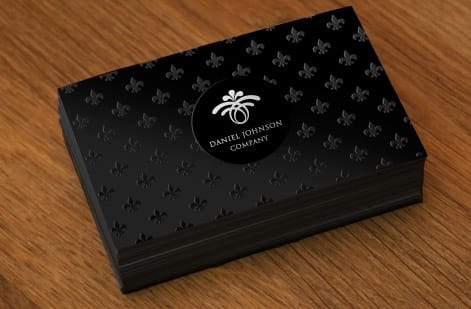
An offset printer is a printing press that never lets the image carrier touch the paper. The artwork is imaged onto a thin aluminum plate, the plate picks up ink, the ink transfers to a rubber blanket cylinder, and the blanket lays it down on the sheet. That middle handoff is the offset, and it is the reason the process carries the name.
The chemistry underneath is lithography. The plate is flat, not carved. Image areas are treated to accept greasy ink and repel water, non image areas do the reverse, and a dampening system keeps that separation clean while the press runs. Ink and water balance is the single thing an operator watches most closely on a running job.
Machines come in two families. Sheetfed presses take individual sheets and dominate commercial work like cards, brochures, folders, and packaging. Web presses take paper off a giant roll at speed and handle catalogs, newspapers, and long direct mail runs. If you are weighing this against a machine on your own desk, a desktop business card printer compared with online printing makes the scale difference obvious.
How ink actually travels from plate to finished sheet

Every printing unit on the press repeats the same short sequence, and a four color press simply stacks four of them in a row. The sheet enters, gets gripped, and passes through each unit in one continuous trip, picking up cyan, magenta, yellow, and black in turn before it reaches the delivery pile.
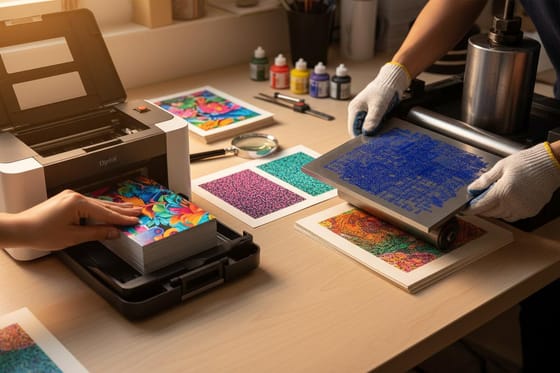
Here is the path in order. Prepress imposes your file and outputs one plate per color. The plate mounts on the plate cylinder. Rollers feed a measured film of ink across it while the dampening system feeds water. The inked image transfers to the blanket cylinder. The impression cylinder pushes the sheet against that blanket under pressure, and the image lands. The sheet moves to the next unit and repeats.
Two details matter for anyone buying print. Registration is how precisely those four colors stack on top of each other, and it is what makes small type look crisp instead of fuzzy. Drying is the other. Ink sits on the surface of coated stock and needs time or a coating before the job can be cut, folded, or bound, which is why a press job is not usually a same afternoon job.
Plates and makeready: the fixed cost that decides everything
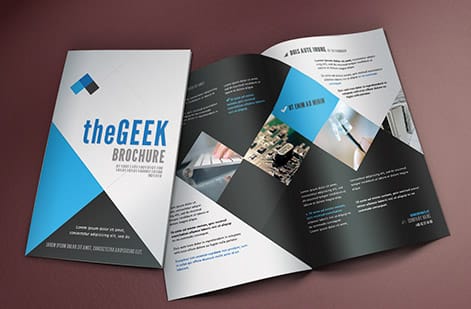
Before a single sellable sheet exists, the press has already spent money. Plates are imaged and mounted. Ink keys are set across the width of the sheet. The operator runs waste sheets, pulls one, compares it to the proof, adjusts, and repeats until color and registration are right. That whole ritual is makeready, and it is the same work for a run of eight hundred as for a run of eighty thousand.
Once color settles, the economics flip completely. The press is producing thousands of impressions an hour and the only additional cost is paper and a small amount of ink per sheet. This is the entire reason offset unit prices look strange to newcomers. The tenth thousand costs a fraction of what the first thousand did.
It is also why very short offset runs feel overpriced. You are paying full setup and spreading it across too few pieces. If your quantity is small and your deadline is tight, the sensible move is digital, and the digital versus offset comparison lays out exactly where each one earns its keep.
Offset vs digital and where the cost lines cross

Digital presses image straight from the file with toner or inkjet. No plates, no makeready, essentially no fixed cost. That makes the first hundred pieces cheap and the ten thousandth piece exactly as expensive as the first. Offset is the mirror image: heavy fixed cost, very low cost per additional sheet.
Plot both as lines and they cross. Below the crossover, digital is cheaper. Above it, offset pulls away and keeps widening the gap. For typical commercial work the crossing point sits somewhere in the low thousands, but it moves. Larger sheets, heavier ink coverage, and more finishing steps push it down and favor press earlier. Small trim sizes and light coverage push it up.
Never treat the crossover as a fixed number you memorized once. Get both prices for your actual quantity, on your actual stock. Price the exact size and stock at 500, 1,000, 2,500 and 5,000 pieces and note where the per piece figure stops falling fast. Multi page work behaves differently again, and the booklet specific breakdown shows how page count and binding shift the answer for saddle stitched and perfect bound jobs.
Color, consistency, and what offset still does better
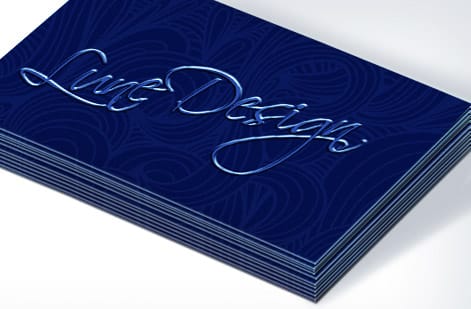
The quality argument used to be a rout. It is now a set of specific advantages rather than blanket superiority, because digital presses have improved enormously. Still, on the things that separate good print from acceptable print, offset holds real ground.
Large solid areas lay down flatter and denser, without the faint banding or mottling toner can leave. Gradients roll off more smoothly. Fine reversed type stays legible because registration is mechanically tight. Ink sinks into uncoated stock the way people expect uncoated to look, instead of sitting on top of it with a slight sheen.
The bigger practical advantage is sameness. Sheet nine thousand matches sheet one hundred. If you are printing a brand identity system across cards, folders, and collateral, that stability is worth more than a single dramatic sample. Offset also runs true spot colors, mixed to a specific formula rather than simulated from four process inks, which is the only reliable way to nail a demanding brand color. Test it on the stock you will order: brochures come on 100# gloss text, 100# silk/matte text, 70# uncoated text and 14pt gloss cover, and a next day hardcopy proof shows the ink on the real sheet.
When an offset run is clearly the right call

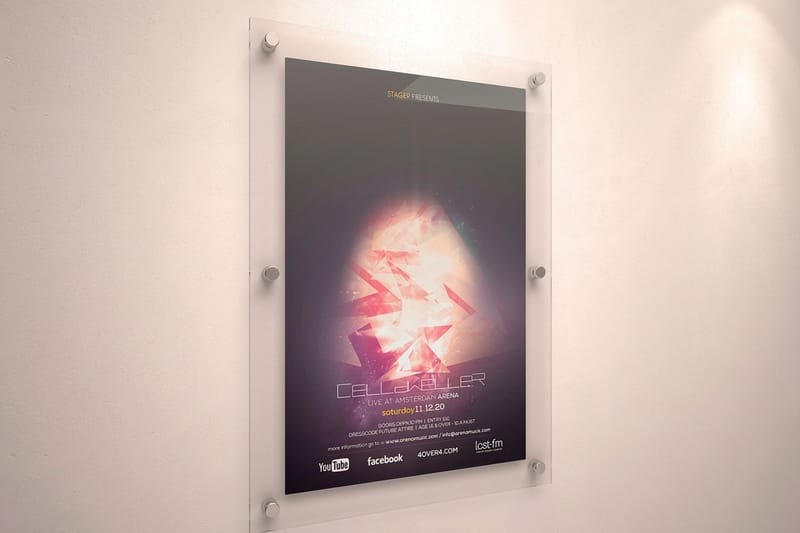
Some jobs announce themselves. A campaign mailing to a list of twenty thousand households. An annual catalog. Packaging inserts ordered by the pallet. Event collateral for a national rollout. Any time the quantity is large and the artwork is fixed for every recipient, press is where the money goes furthest. The configurator reflects that scale: flyers and brochures run up to 25,000 pieces and postcards up to 100,000.
Mail is the classic case, because postage and list costs already push you toward volume, and the piece itself is identical apart from the address block. That address layer gets imprinted separately, which keeps the offset economics intact. If you are planning that kind of program, how direct mail marketing works walks through the sequence, and buyers comparing full service mail houses often start with our PostcardMania alternative breakdown.
Bound and dated products lean the same way. Planners, workbooks, manuals, and anything printed once for a whole year benefit from committing to a single run, which is partly why a well organized planner tends to be a press product rather than a reprint every month.
Stocks and finishing an offset press opens up

Press work removes most of the material limits that short run digital imposes. Heavy cover weights feed without fighting the machine. Textured and uncoated sheets take ink properly. Large flat sheets let a printer gang several pieces onto one pass, which is quietly where a lot of the savings come from on multi item orders.
Inline and offline finishing then does the rest. Aqueous and UV coating protect the surface and control gloss. Soft touch lamination changes how the piece feels in a hand. Foil stamping, embossing, die cutting, scoring, folding, and binding all become routine options rather than special requests.
Not every product needs a press, though. Large format signage and rigid plastic pieces run on their own equipment with their own economics, and the pricing logic is different again. The right question is never which machine sounds most impressive, but which one produces your specific piece for the least money at the quality you need.
How to order an offset run without owning a press
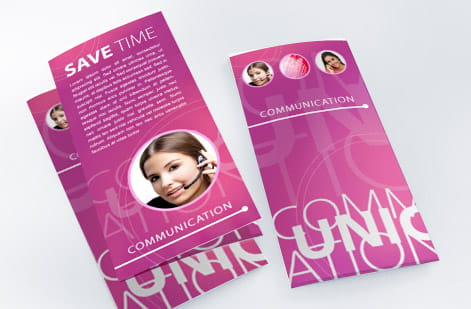
A used four color sheetfed press is a serious capital purchase before you count the plate imaging system, the operator, the space, the power, and the waste. Almost nobody outside the printing trade should be buying one. The point of production printing is that you rent the capacity for the length of one job.
What you actually do is simpler. Set your quantity honestly, including the extras you will inevitably need. Choose stock and finish. Upload a press ready file in CMYK at 300 DPI with bleed past the trim. Approve the proof carefully, a free online proof or a next day hardcopy proof, because once plates are made a change means starting over. Standard brochures, flyers and postcards take 3 business days of production once the proof is approved. Then let production route the job to whichever method your quantity justifies.
That routing decision is ours to make and yours to benefit from. See the full path in how ordering works at 4OVER4, and if you are still deciding between methods, the offset and digital comparison is the fastest way to settle it.
Wally explains the offset press
Expensive to start, almost free to keep going
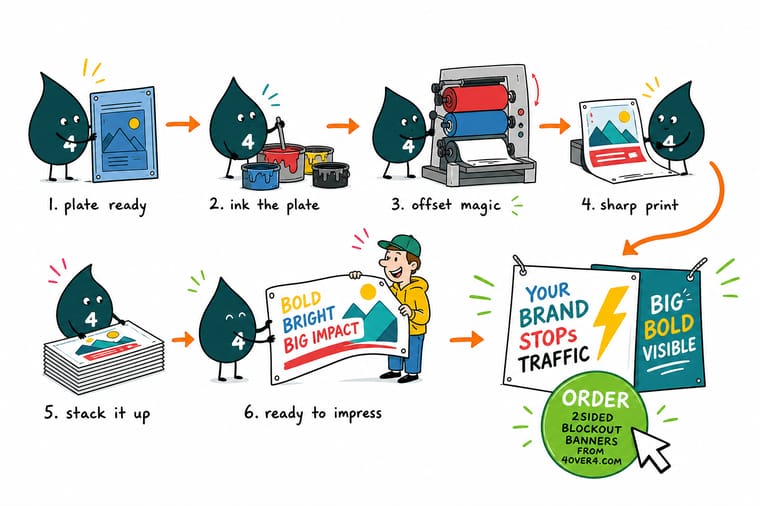
Wally thinks of an offset press like renting a stage. Building the set costs the same whether ten people watch or ten thousand, so the trick is filling the seats. Plates and makeready are your set build. Once color is dialed in, every extra sheet costs little more than paper. Ask for the price at two quantities and you will see the curve immediately.
Configure your print run →
Infographic
Inside an offset press, step by step
Seven stages, from the aluminum plate through the ink train, dampening, blanket and impression to four units in a row and the dry, finished sheet on the delivery pile. On a CMYK job the press carries four plates, one for each ink.
Every stage repeats once per ink color. Four units, four plates, one sheet, and a delivery pile that has to dry before finishing can begin.
Specs and pricing
Live specs and quantity pricing to test the curve
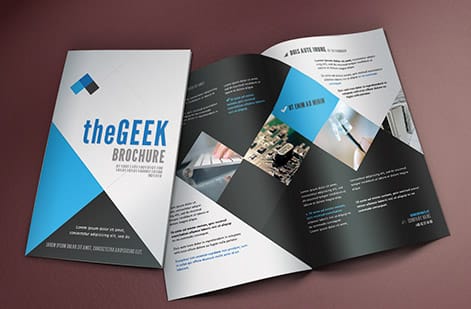
The fastest way to feel how volume pricing works is to move the quantity and watch the unit price fall. On brochures, 50 pieces cost $57.11, about $1.14 each, and 25,000 cost $1,119.25, under 5 cents each, across sizes from 5.5 by 8.5 to 11 by 25.5 inches on four stocks. Check the specs, then step the quantity up and compare what each piece costs.

| Quantity | Price Per Unit | Total |
|---|---|---|
| 50 | $1.14 | $57.11 |
| 100 | 82.4¢ | $82.38 |
| 200 | 53.3¢ | $106.55 |
| 300 | 41.0¢ | $123.02 |
| 400 | 34.9¢ | $139.49 |
| 500 | 31.2¢ | $155.97 |
| 600 | 26.7¢ | $160.36 |
| 700 | 23.5¢ | $164.75 |
Print it
Products worth ordering in volume


See it in use
Offset work our customers received





Explore more
Where to go next


By the numbers
Offset capacity, counted in stocks and products
Common Questions
Common questions about offset printers
What is an offset printer?
An offset printer is a press that prints by transferring ink from a thin metal plate onto a rubber blanket, and from that blanket onto paper. The plate itself never touches the sheet. Each ink color gets its own plate and its own printing unit, so a full color job passes through four units in a single trip through the machine. The method is built for volume, consistency, and a very wide range of stocks.
How do I choose the right offset printer for a job?
Start with quantity, then sheet size, then ink. Runs in the low thousands and up favor offset. A large flat sheet, a heavy cover stock, or a job that has to hold an exact brand color also point that way. If you need fifty personalized pieces tomorrow, digital wins instead. The practical choice is usually not which press you buy but which production method your printer routes the job to.
What does offset printing cost and how are prices set?
Price is setup plus running. Setup covers plates, ink adjustment, and the makeready sheets burned before color settles, and it is fixed per job. Running cost is paper plus impressions, and it is small per piece. That is why the quoted unit price drops sharply as quantity climbs, and why doubling a run rarely doubles the invoice.
What sizes, stocks, and finishes work on an offset press?
Sheetfed presses commonly handle sheets from small formats up to roughly 28 by 40 inches, which lets a printer gang many pieces onto one pass. Stocks run from lightweight text through heavy cover, coated gloss and matte, uncoated, and specialty sheets. Finishing adds aqueous or UV coating, soft touch lamination, foil, embossing, die cutting, scoring, folding, and binding.
How long does an offset job take to print and ship?
Offset carries a front loaded schedule. Prepress and plating happen first, then the press run, then drying time before anything can be cut, folded, or bound. Coated stocks with heavy coverage need that dry window. Plan on a longer production window than a same day toner job, and add transit time for the finished skids or cartons.
Is offset printing better quality than digital?
On long runs, offset still holds an edge in flat solid areas, subtle gradients, and color that stays identical from the first sheet to the last. Modern digital presses have closed much of the gap on short runs and photographic images. The honest answer is that quantity, stock, and color requirements decide the winner more often than the press badge does.
Can an offset press print variable data like names and codes?
Not on its own. A plate carries one fixed image, so every impression is identical. Variable content is added either by running the shell offset and imprinting the personalized layer digitally, or by running the whole job digitally. Direct mail programs use that hybrid route constantly to get offset economics with personalized addressing.
Get Started
Ready to put your next run on production equipment?
Set your quantity, pick your stock, upload the file, and let the production team route it to the method that prints it best for the money.
Legal Disclaimer
Gold Standard guarantees apply to all standard orders placed through 4over4.com. Price match requires verifiable proof of a competitor's published price for an equivalent product with matching specifications and turnaround time. Satisfaction guarantee covers manufacturing defects and print quality issues. Contact support with order number and documentation.
