
What Bindery Equipment Does and the Bound Pieces It Creates


Bindery is the finishing stage that turns printed sheets into a bound piece. The equipment produces three binding styles, and your page count picks between them.
Bindery is the finishing stage of printing, everything after the ink dries that turns flat sheets into a bound piece. Folding, cutting, and trimming machines shape the sheets, and binding machines join them by saddle stitch, perfect binding, or coil. The binding you pick follows your page count and how the piece will be used.
Start here
Where printed sheets become a product
Bindery is where printed sheets become a bound piece. Folding, cutting, and trimming machines prepare the sheets, and binding machines join them by saddle stitch, perfect binding, or coil. Which one you choose follows your page count and how the piece will be used. The diagram below shows the three core spines side by side.
What bindery means
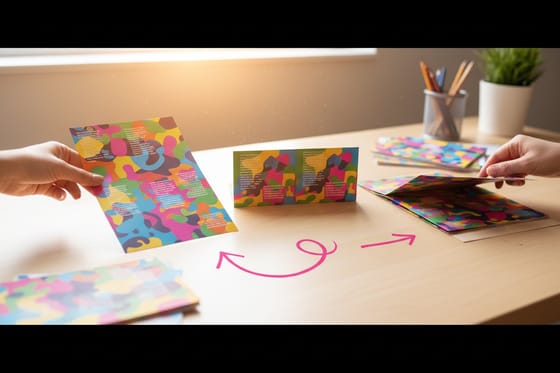
Bindery is the finishing stage of printing, everything that happens after the ink is printed and dried. It is the work that turns flat printed sheets into a usable, finished piece by folding them, trimming and cutting them to size, gathering the pages in order, and binding them into a booklet, catalog, or book. The same word names the department or facility where that work happens.
It is the difference between printed paper and a printed product. A press lays down the ink, but a stack of loose sheets is not yet a booklet. The bindery is where those sheets become something a reader can hold, flip through, and keep. A job is not truly complete until it clears finishing.
Everything in this guide, from the equipment to the binding styles, sits inside that stage. When you order booklets or a perfect-bound book from us, the bindery is what delivers the bound piece to your door.
Bindery versus finishing: the same department, two words
In most print shops bindery and finishing name the same room, and people on the floor use them interchangeably. Bindery is the older trade word for the department that folds, gathers, trims, and binds. Finishing is the wider word for everything done to a printed sheet after it leaves the press. Every bindery operation is a finishing operation, but not every finishing operation happens in the bindery.
The overlap is the page work: folding sheets into signatures, scoring so a heavy cover creases without cracking, gathering and collating pages in order, trimming on the guillotine or the three-knife trimmer, then saddle stitching, perfect binding, or coiling. If the operation exists to hold pages together in the right sequence, both words cover it.
Finishing reaches past that into surface work, which changes how a sheet looks, feels, and survives handling rather than how it is held together: gloss, matte, or soft-touch lamination, spot UV, foil stamping, embossing and debossing, die cutting to a custom shape, rounded corners, drilling for a ring binder, perforating a tear-off stub, and shrink wrapping the finished stack. A flat postcard never gets bound, yet it still gets finished.
Say bindery when you mean the spine, the page order, and the trim. Say finishing when you mean coating, foil, or a cut shape layered on top of that. Both sets of options sit in the same configurator when you price booklets, and the printing terms glossary spells out any word on your quote that you do not recognize.
Types of bindery equipment
Bindery equipment falls into two broad groups that work in sequence. Finishing machines shape and prepare the sheets. Folders crease them into signatures, and gathering and collating machines put the pages into the correct order before binding. This is the prep that makes a clean bind possible.
Cutting and trimming machines square everything up. Guillotine cutters trim stacks to size, and three-knife trimmers finish the top, face, and bottom of a bound book in one pass so the edges are flush. Precise trimming is what gives a finished piece its crisp, professional edge.
Then the binding machines join the pages, by stapling at the fold, gluing a spine, or punching and coiling. Each method needs its own equipment, which is why the binding you choose is really a choice of machine. Our companion guide to binding types maps those methods in detail.
Binding types the bindery produces
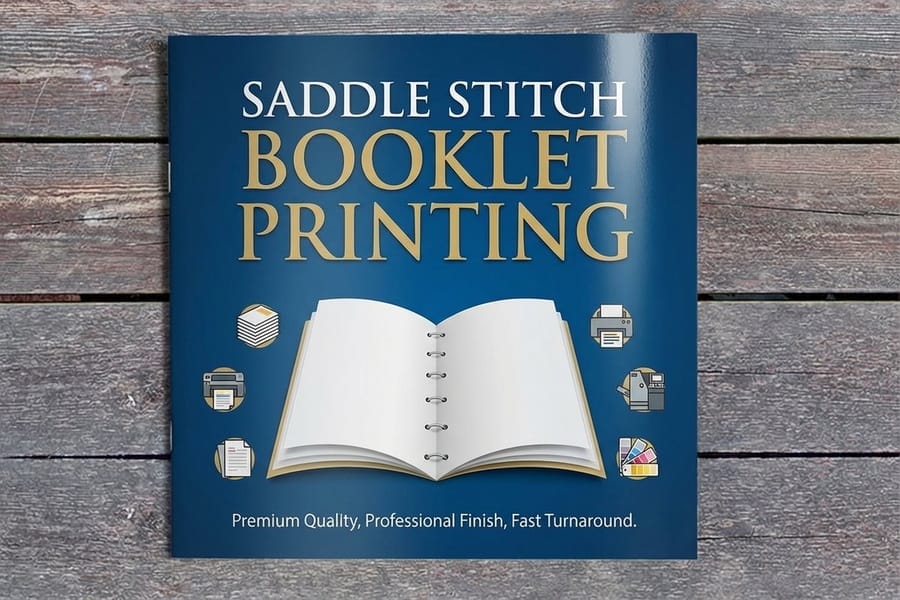
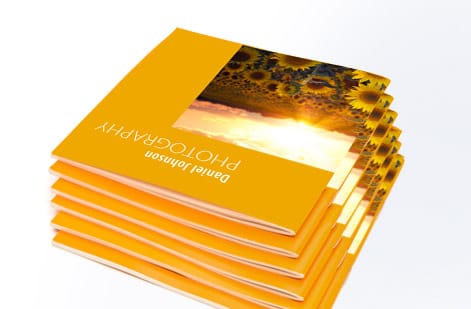
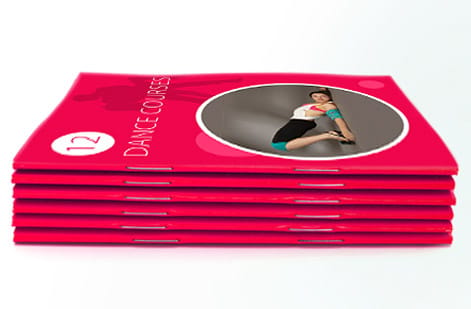
The three most common bindings each suit a different thickness and use. Saddle stitch nests folded sheets and staples them right at the fold, which suits slim booklets and catalogs of roughly 8 to 64 pages. It is the lightest and most economical option, which is what a saddle-stitched booklet needs when it will be mailed or handed out.
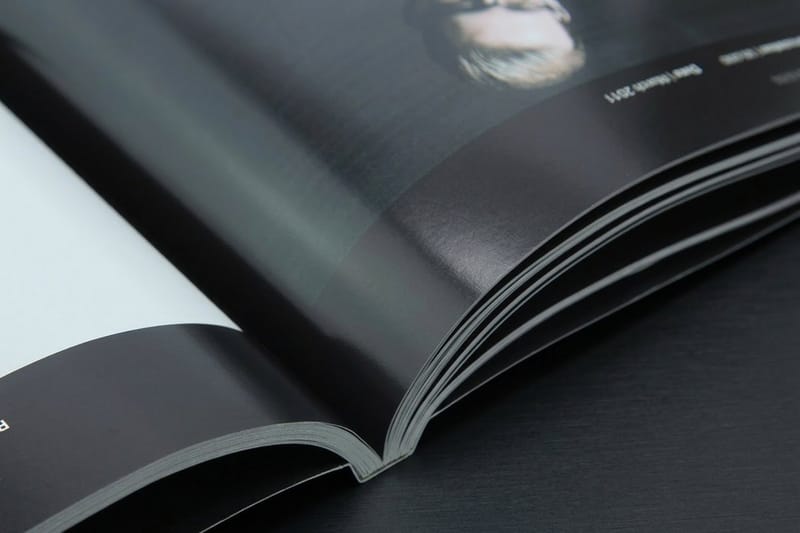
Perfect binding gathers the pages and glues them into a flat, printable square spine. It fits thicker pieces from about 40 pages up, and it delivers the shelf-ready look of a real book or premium catalog, with a spine you can print on. Coil and spiral punch the pages and bind them with a plastic or metal coil so the piece lays completely flat and turns a full circle, which is ideal for manuals and workbooks.
A fourth option, Wire-O, uses a twin-loop wire for a crisper lay-flat look than coil. The reference table below lines up page ranges and best uses, so you can match the binding to your booklet at a glance.
Applications: matching binding to the job
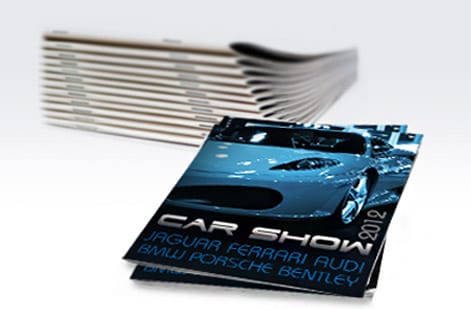
The binding follows the application, because how a reader holds a piece changes what it needs. Saddle-stitched booklets cover product catalogs, event programs, magazines, and mailers, since they are light, inexpensive, and easy to distribute in quantity.
Perfect-bound books earn their keep where presence matters: annual reports, premium catalogs, novels, and anything meant to sit on a shelf with a printable spine facing out. The square spine reads as substantial and professional, which is why it is the default for a piece you want people to keep.
Coil, spiral, and Wire-O are made for pieces that must stay open and flat while in use, such as training manuals, cookbooks, workbooks, planners, and directories. If someone needs both hands free while they follow along, a lay-flat binding is the answer. Match the binding to the job and the finished piece simply works better in the reader's hands.
Order professionally bound booklets
Ordering a bound piece is straightforward once you know your page count and binding. Lay out your file as single pages in reading order, keep bleed around every page, and hold important content a little clear of the spine, since perfect binding and coil both take a small margin there. Our system imposes the pages for the press and the bindery, so you never build printer spreads yourself.
Choose a heavier cover stock to protect the piece and a lighter interior to keep a thick book from getting bulky, then set your binding, page count, size, and quantity. Every copy is folded, gathered, and bound in-house so the whole run matches, and the price updates live as you adjust the specs.
Browse the full range in booklets and catalogs, or start with the booklets below and let the specs panel guide your choices.
Wally takes sheets and hands back a booklet
Fold, gather, bind, one clean spine
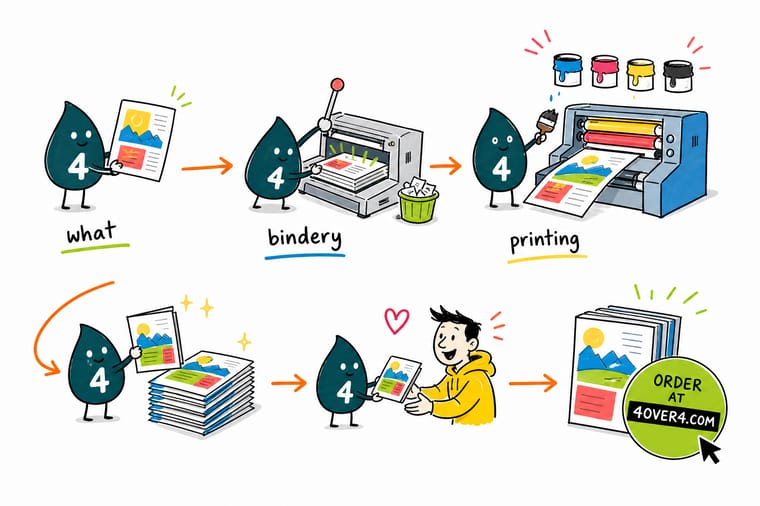
Wally runs your printed sheets through the bindery: they get folded, trimmed, gathered in order, and bound into a finished piece. Slim booklet, saddle stitch. Thick book, perfect bound. Lay-flat manual, coil. Upload pages in order and 4OVER4 binds every copy to match, so it arrives finished.
Order bound booklets →Quick reference
Binding styles at a glance
The binding follows your page count and how the piece is used. Here is when each spine fits.
| Binding | Spine | Best for |
|---|---|---|
| Saddle stitch | Folded and stapled spine | Folded sheets nested and stapled at the fold. Best for slim booklets and catalogs, roughly 8 to 64 pages, and the most economical option. |
| Perfect bound | Glued square spine | Pages gathered and glued into a flat, printable spine. Best for thicker books, magazines, and catalogs from about 40 pages up, with a professional shelf look. |
| Coil and spiral | Punched and coiled | Pages punched and bound with a plastic or metal coil. Lays completely flat and turns a full 360 degrees, ideal for manuals, workbooks, and directories. |
| Wire-O | Twin-loop wire | A double-loop wire through punched holes. Also lays flat with a crisper look than coil, good for presentations and premium notebooks. |
Page count and handling decide the rest. This is how the four bindery spines behave once the job is bound and in a reader's hands.
| Binding | Page count it suits | Does it lay flat | Cost per copy |
|---|---|---|---|
| Saddle stitch | 8 to 64 pages, always a multiple of 4 | Opens flat across the middle spread, springs shut near the covers | The lowest of the four, one pass on the stitcher plus the trim |
| Perfect binding | 40 pages and up, enough bulk to glue a square spine | No, the glued spine resists and the book wants to close | Higher, the glue line and the three-knife trim each add a step |
| Coil (spiral) | 8 pages to several hundred, any page count including odd numbers | Yes, and it folds all the way back on itself | In the middle, punching and coil insertion happen per copy |
| Wire-O | 8 to roughly 300 pages, any page count | Yes, flat and fully folded back, with tighter page alignment than coil | Close to coil, the wire itself costs a little more |
Two habits prevent most reprints. Saddle stitch page counts have to land on a multiple of 4, because every folded sheet carries four pages, so add or drop pages before you upload rather than after. And anything that has to stay open on a desk, a counter, or a music stand wants coil or Wire-O, not glue.
Step by step
Order a bound piece in 6 steps
- Count your pages first The page count points you to a binding. Slim pieces suit saddle stitch, thicker ones want perfect binding, and reference pieces benefit from coil.
- Pick the binding for how it will be used Choose coil if it must lay flat, perfect bound for a square shelf spine, or saddle stitch for a light, mailable booklet.
- Set up pages in reading order Lay out your file as single pages in sequence, not as printer spreads. Our system imposes them for the press and the bindery.
- Add bleed and mind the spine Keep bleed around every page and hold important content away from the spine, since perfect binding and coil both take a little margin there.
- Choose stock for cover and interior A heavier cover stock protects the piece, while a lighter interior keeps a thick book from getting bulky. Pick both in the configurator.
- Order and let us bind it Set your page count, binding, stock, and quantity, and 4OVER4 folds, gathers, and binds every copy so it arrives finished.
Specs and pricing
Booklet specs and live pricing
Once you know your binding and page count, size, stock, and quantity set the price. Here are the live specs and price-per-unit for booklets at 4OVER4.

| Quantity | Price Per Unit | Total |
|---|---|---|
| 25 | $9.62 | $240.55 |
| 50 | $6.04 | $302.06 |
| 100 | $3.61 | $361.37 |
| 200 | $2.22 | $444.85 |
| 300 | $1.65 | $495.38 |
| 400 | $1.29 | $515.14 |
| 500 | $1.06 | $531.61 |
| 600 | 91.5¢ | $549.19 |
Print it
Ready to order professionally bound booklets?
See it in use
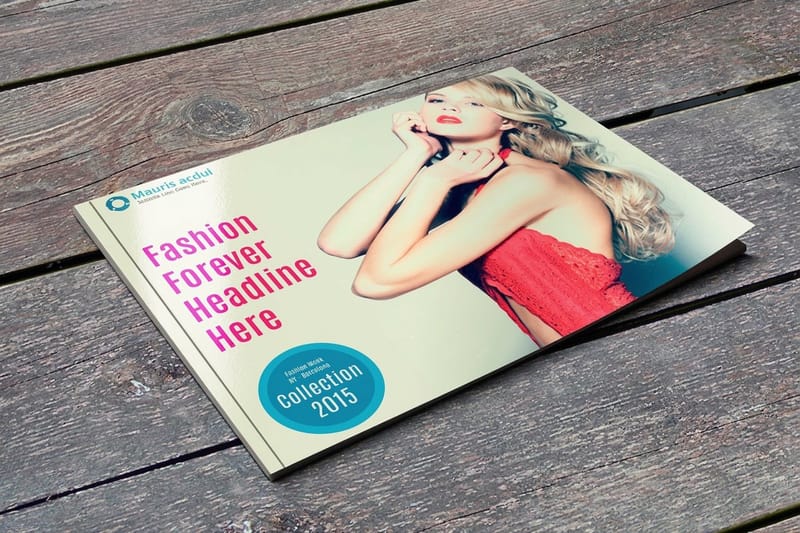
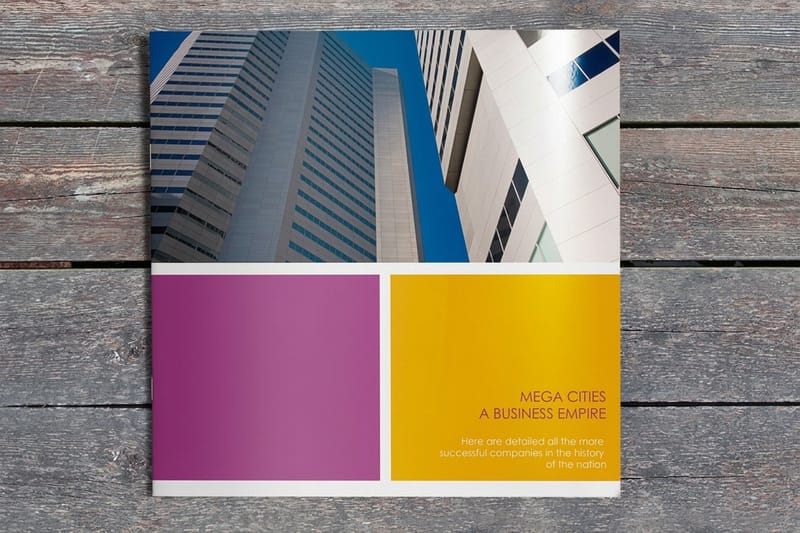
Real bound work, produced in-house

Explore more
Where to go next

By the numbers
Stitchers, folders, and perfect binders
Common Questions
Common questions about bindery in printing
What is bindery in printing?
Bindery is the finishing stage of printing, everything that happens after the ink is printed and dried. It is the work of turning flat printed sheets into a usable, finished piece: folding them, trimming and cutting them to size, gathering them in order, and binding the pages together into a booklet, catalog, or book. The word also refers to the department or facility where that work is done. A printed job is not truly complete until it passes through the bindery, which is where a stack of sheets becomes a bound product.
What are the main types of bindery equipment?
Bindery equipment falls into two broad groups. Finishing machines shape and prepare the sheets: folders crease them, and gathering and collating machines put pages in order. Cutting and trimming machines, including guillotine cutters and three-knife trimmers, square everything up and cut the piece to its final size. Then binding machines join the pages, whether by stapling at the fold for saddle stitch, gluing a spine for perfect binding, or punching and coiling for spiral and Wire-O. Together this line of equipment is what a bindery uses to convert printed sheets into a finished, bound piece.
What binding types does a bindery produce?
The three most common are saddle stitch, perfect binding, and coil or spiral. Saddle stitch nests folded sheets and staples them at the fold, which suits slim booklets and catalogs of roughly 8 to 64 pages and is the most economical. Perfect binding gathers pages and glues them into a flat, printable square spine, which fits thicker books and magazines from about 40 pages up and gives a professional shelf look. Coil and spiral punch the pages and bind them with a plastic or metal coil so the piece lays completely flat, which is ideal for manuals and workbooks. Wire-O, a twin-loop wire, offers a crisper lay-flat option.
What are bound pieces used for?
The binding follows the application. Saddle-stitched booklets work for product catalogs, event programs, magazines, and mailers, because they are light and economical. Perfect-bound books suit annual reports, premium catalogs, novels, and anything that needs a printable spine and a shelf-ready look. Coil and spiral bindings are made for pieces that must stay open and lay flat while in use, such as training manuals, cookbooks, workbooks, planners, and directories. Choosing the binding is really about how the reader will hold and use the finished piece.
How many pages before I need a glued spine?
Start with the page count and the way it will be used. For a slim piece up to around 64 pages that will be mailed or handed out, saddle stitch is light and cost effective. For a thicker piece from about 40 pages up that needs a square spine and a professional presence, perfect binding is the choice. If the piece must lay flat and stay open, like a manual or workbook, pick coil, spiral, or Wire-O. Then choose a heavier cover stock to protect it and a lighter interior to control bulk. Our booklet product pages let you set page count, binding, and stock with live pricing.
What does professional binding cost and how are prices set?
Price depends on the binding type, page count, paper stock, size, and quantity, and it updates live in the configurator as you set each option. Saddle stitch is generally the most economical because it uses staples and fewer steps, while perfect binding and coil add finishing work and cost a bit more per piece. More pages and heavier stocks raise the price, and larger runs lower the price per unit. Set the specs for the bound piece you need and the total adjusts as you go, so you can balance binding, page count, and quantity against your budget.
What does a bindery do?
A bindery turns printed sheets into a finished product. It folds sheets into signatures, gathers those signatures into page order, trims the stack square on a guillotine or a three-knife trimmer, and then binds it: staples at the fold for saddle stitch, glue along the spine for perfect binding, or a punched edge for coil and Wire-O. Scoring, drilling, and perforating happen in the same department. Until a job clears the bindery it is a stack of paper, not a booklet.
Is bindery the same as finishing?
Nearly, but not exactly. Bindery is the trade name for the department that folds, gathers, trims, and binds pages. Finishing is the wider word for everything done after the press, so it also covers lamination, spot UV, foil stamping, embossing, and die cutting, which work on the surface of a sheet instead of holding pages together. Every bindery job is a finishing job. A laminated flat postcard is a finishing job that never sees a binder.
Get Started
25 saddle-stitched booklets cost $240.55, or $9.62 each
Bring your pages to 4OVER4 and we fold, gather, and bind every copy to match. Choose saddle stitch, perfect binding, or coil and watch your price update live.
Legal Disclaimer
Gold Standard guarantees apply to all standard orders placed through 4over4.com. Price match requires verifiable proof of a competitor's published price for an equivalent product with matching specifications and turnaround time. Satisfaction guarantee covers manufacturing defects and print quality issues. Contact support with order number and documentation. On-time delivery rate based on tracked orders 1999 to 2026. Individual results may vary based on shipping carrier performance.
