
Yard Sign Dimensions and Standard Sizes That Actually Get Read


Tobias is our voice for cutting, binding and large format, built from the knowledge of our production team, with over 20 years in printing.
Six sizes cover nearly every yard sign printed in the country, from a 12 x 18 sidewalk marker to a 24 x 36 road panel. This guide gives you each one at real dimensions, the H stake that fits it, and the viewing distance it holds.
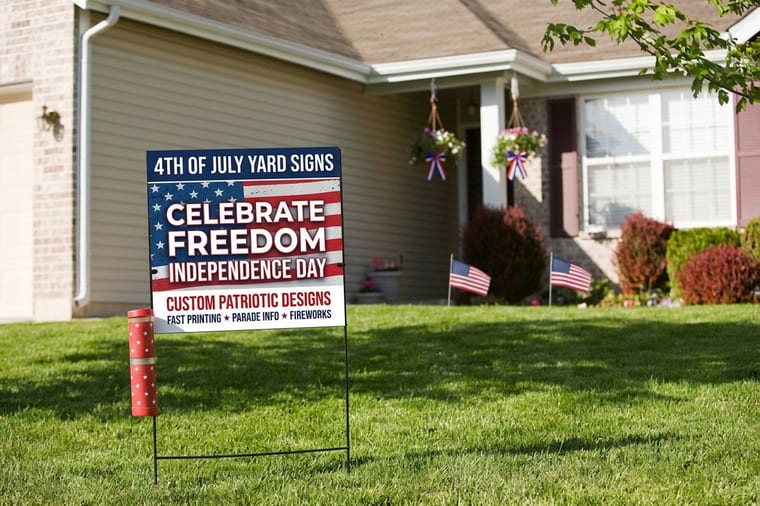
The standard yard sign is 18 x 24 inches in portrait orientation on 4mm corrugated plastic, mounted on a 10 x 30 inch wire H stake. The other common sizes are 12 x 18 for close range, 24 x 18 landscape, 24 x 24 square, 24 x 36 for road traffic, and 6 x 24 riders. Choose by viewing distance: every inch of letter height reads from roughly 10 feet away, so match the panel to the headline the reader has to catch. The Plastic Yard Signs video overview walks through the standard panel.
Start here
How far each panel size reads from the road
Yard sign dimensions describe the printed panel, not the finished installation. The standard panel is 18 x 24 inches portrait, with 12 x 18, 24 x 18, 24 x 24, 24 x 36 and 6 x 24 riders filling out the rest of the range. A 10 x 30 inch wire H stake adds about 20 inches of height under the panel. Size the sign by working backwards from the reader: distance sets letter height, letter height sets the panel.
Why yard sign dimensions decide whether anyone reads your message
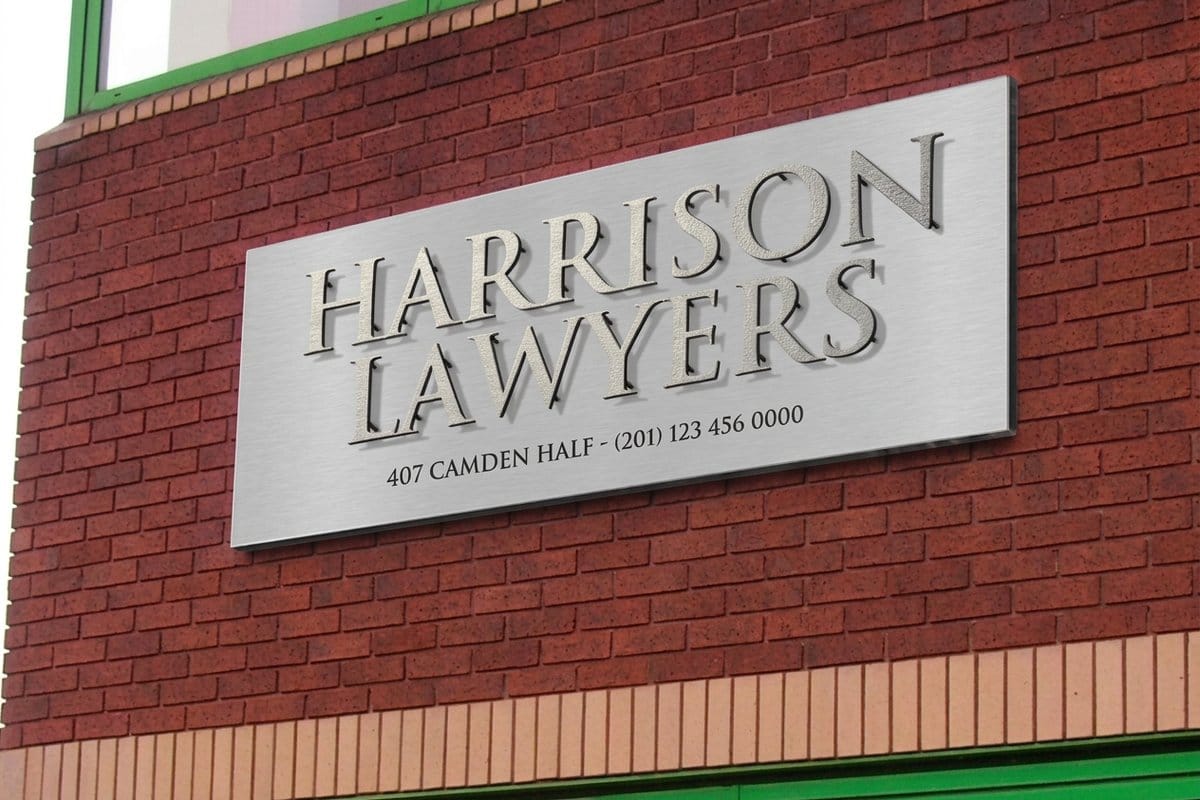
A yard sign gets somewhere between two and six seconds of attention. That window is set by how fast the reader is moving and how far away they are when the sign enters their field of view. Dimensions are what turn those seconds into a readable message, because size controls how large the headline can be while still leaving margin.
Pick a panel that is too small and the type shrinks below the threshold where a passing driver can resolve it. Pick one that is too large for the setting and you pay for surface area nobody sees, or you trip a local sign ordinance. The right size is the smallest panel that still carries your headline at a readable height. For a listing sign that job is spelled out in detail in the guide to real estate sign sizes.
The standard yard sign sizes and what each one is for

Six sizes cover almost every yard sign printed in the United States. They are not arbitrary. Each one comes from a sheet size that cuts efficiently, a stake that is sold everywhere, or a sign ordinance that caps total square footage. Learn the six and you can size any campaign in a minute.
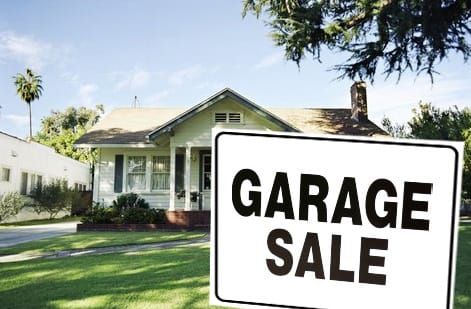
- 12 x 18 inches. Compact portrait. Open house arrows, garage sales, lawn care door hangers turned into signs, anything read from a sidewalk.
- 18 x 24 inches. The standard. Political races, real estate listings, contractor job sites, event directionals.
- 24 x 18 inches. The landscape version of the standard, used when a long business name or phone number needs one unbroken line.
- 24 x 24 inches. Square. Strong for a logo mark, a QR code or a single word, and it reads the same from either approach direction.
- 24 x 36 inches. The road sign. Built for 30 mph and up, and the size that still works when it sits 30 feet back from the curb.
- 6 x 24 inches. The rider. Clipped above or below the main panel to add a price, a date, a name or a phone number.
Every one of those panels is available printed single sided or double sided. Double sided matters more than most people expect, because a sign on a corner lot is approached from two directions and a blank back is a wasted impression.
18 x 24 inches, the size everything else is measured against
Portrait 18 x 24 is the yard sign default for three reasons that reinforce each other. Wire H stakes are manufactured at 10 x 30 inches and grip an 18 inch panel perfectly. Most municipal codes allow temporary signs up to three square feet, and 18 x 24 is exactly three. And 4mm corrugated plastic at that size stays rigid without needing a frame.
Inside those 18 by 24 inches, a workable layout gives the headline about 4 inches of cap height, a supporting line about 2 inches, and contact details about 1.5 inches. That leaves roughly 2 inches of clear margin all around, which stops the design from looking crowded and keeps text away from the trim edge.
Color choice compounds size. A dark headline on a light panel holds up at a longer distance than the reverse, and the best colors for real estate yard signs hold true for any industry planting a sign on a lawn.
12 x 18 inches when the reader is on foot

The 12 x 18 panel exists for close range. Sidewalk traffic, apartment complexes, farmers markets, campus paths and driveway entrances all put the reader within 15 feet, and at that distance a full size panel is overkill and often looks aggressive on a small lawn.
The tradeoff is copy discipline. At 12 inches wide you have room for a headline of about six characters per inch at readable size, which in practice means three or four words plus an arrow. Anything longer either shrinks below the legible threshold or crowds the edge.
Watch the stake fit at this size. A standard 10 inch wide H stake covers nearly the full 12 inch panel width, so the legs sit close to the edges. Insert them fully into the flutes and press from the top of the panel, never the middle, or the plastic bows.
24 x 36 inches for traffic that is not slowing down

Once vehicles are moving at 30 mph or faster, the reading window collapses to about two seconds and the sign has to be readable from 150 feet or more. That is where 24 x 36 earns its cost. The panel gives you room for a headline at 6 to 8 inches of cap height, which is the range that stays sharp at highway approach speeds.
Copy has to shrink as the panel grows, which feels backwards until you watch it happen. Four words and one number is the working limit. A phone number is only worth including if it is the single largest element after the headline, and a URL is usually better replaced with a memorable business name.
Support matters at this size. A single wire stake will hold a 24 x 36 panel in still air and fold it in the first storm, so use two stakes spaced across the width, or step up to Aluminum Sign Panels on posts when the sign needs to stay up for a season rather than a weekend.
Landscape 24 x 18 and square 24 x 24, and when to break from portrait

Portrait is the default because it reads as a sign rather than a poster, but two other orientations solve specific problems. Landscape 24 x 18 gives you 24 inches of horizontal run, which is what a long company name, a phone number or a two part message needs to stay on one line. Breaking a phone number across two lines costs more legibility than most people realize.
Square 24 x 24 is the choice when a logo or a single icon carries the message. It reads identically from either approach direction, which suits a corner lot, and it gives a QR code enough surrounding quiet space to scan reliably at a stop.
Both orientations use the same stakes and the same stock as the standard, so the only real decision is the shape of your content. If your layout is fighting the portrait proportion, the layout is telling you to switch. The same reasoning behind format choices in the poster sizes and dimensions guide applies directly here.
Riders and toppers, the 6 x 24 strip that adds one more fact

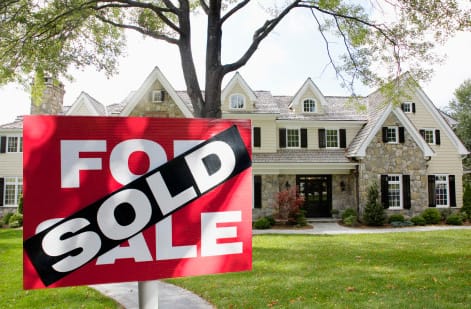
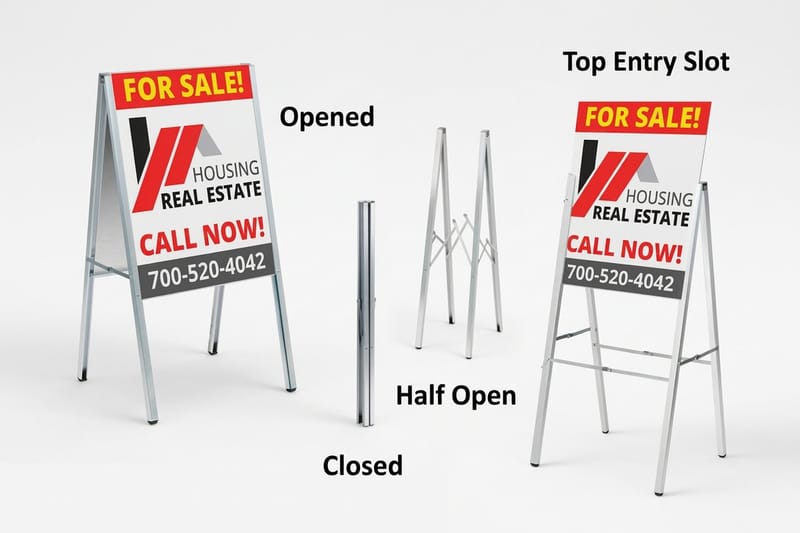
A rider is a narrow panel, almost always 6 x 24 inches, that clips above or below the main sign on the same stake or frame. Real estate uses them for Sold, Price Reduced and agent names. Contractors use them for a phone number that changes between crews. Event organizers use them for dates that change every year while the main artwork stays put. Riders also clip to the frame shown in the Real Estate H-Frame story.
The economics are the point. Reprinting a 6 x 24 rider costs a fraction of reprinting the full panel, so anything on your sign that changes more often than annually belongs on the rider. Keep the rider to one line, three or four words at most, at roughly 3 inches of cap height.
Order riders in the same stock and finish as the main panel. A gloss rider next to a matte sign reads as a mismatch even from a distance, and mixed stocks weather at different rates.
H stake fit, flute direction and the real height of the finished sign
The panel size is only half the dimension question. The stake determines how high the sign sits and whether it survives wind. The standard wire H stake is 10 inches wide by 30 inches tall, with roughly 10 inches driven into the ground and 20 inches of leg supporting the panel from behind.
That means an 18 x 24 panel on a standard stake puts the top edge of your sign about 44 inches off the ground, near eye level for a standing adult and slightly above hood height for a passing car. Design with that in mind and put the headline in the upper third, where it clears grass, snow and parked cars.
- Flutes run vertically on any staked sign, so the legs slide into the channels and carry the panel weight.
- Match stake width to panel width. A 10 inch stake for 18 inch and wider panels, a 9 or 10 inch stake pressed fully home for 12 inch panels.
- Two stakes for 24 x 36. Space them about 12 inches apart, centered, to stop the panel from pivoting in gusts.
- Press from the top edge when installing, never the middle of the panel, or you crease the plastic.
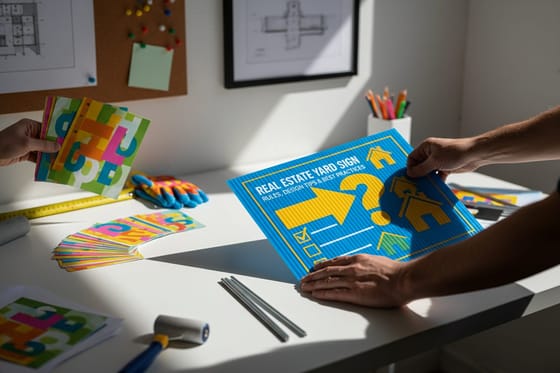
Placement rules vary by town and by association, and the practical limits are covered in the guide to yard sign rules and best practices.
How far your sign has to be readable, and the size that gets you there

Signage legibility follows a simple working rule used across the trade: every inch of letter height buys roughly 10 feet of readable distance for a viewer who is paying attention, and closer to 8 feet for a driver scanning while moving. Run your own numbers backwards from where the reader will be standing or driving.
A 3 inch headline reads at about 30 feet, which covers a sidewalk or a driveway. A 5 inch headline reads at about 50 feet, which is the depth of a typical front lawn plus the width of a residential street. An 8 inch headline reads at about 80 feet, and that is the minimum for a road with real speed.
Now map letter height onto panel size. A 3 inch headline fits comfortably on 12 x 18. A 5 inch headline needs 18 x 24. An 8 inch headline needs 24 x 36. That single chain, from viewer distance to letter height to panel size, answers the sizing question faster than any chart.
Choosing your size in five steps and getting it printed

The decision has a fixed order, and following it prevents the most common mistake, which is designing a beautiful layout and then discovering it will not fit the size the site allows.
- Step 1. Measure the reading distance. Stand where the reader will actually be and pace it out to the sign location.
- Step 2. Convert distance to letter height. Divide the distance in feet by 10 for pedestrians, by 8 for traffic, to get the minimum cap height in inches.
- Step 3. Pick the panel that carries that headline with at least 1.5 inches of clear margin on every side.
- Step 4. Check the local limit. Confirm the allowed square footage, the setback and any duration rule before you order the run.
- Step 5. Decide sides and riders. Double sided for corners and two way traffic, plus a rider for anything that will change.
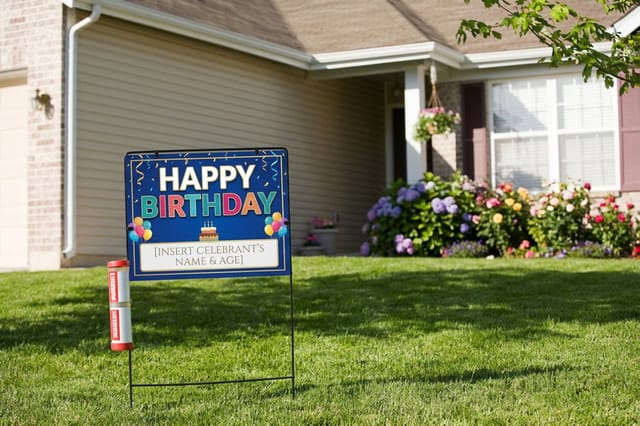
With the size settled, printing is straightforward. 4th of July Yard Signs start at $25 and Birthday Yard Signs start at $25 on 4mm corrugated plastic with stakes available, while Aluminum Sign Panels start at $29 when the install needs to outlast a season. Build files at full size, 100 to 150 dpi at scale, with 0.125 inch bleed and all critical text at least 0.25 inch inside the trim. If you are sizing other pieces for the same event, the RSVP card size guide covers the paper side of the same problem.
How to use a yard sign template at your size

Once the size is settled, start the artwork from a template built for it rather than a blank page. The template already carries the trim, the bleed and the safe zone, so the work is mostly staying inside its lines.
- Step 1. Download the template for your size. 12 x 18, 18 x 24 or 24 x 36, from the blank template library, in the orientation your layout needs.
- Step 2. Keep the art inside the safe zone. All critical text at least 0.25 inch inside the trim, with 1.5 inches of clear margin around the headline.
- Step 3. Extend the background to the bleed. Run color and images 0.125 inch past the trim on every edge so the cut never leaves a white sliver.
- Step 4. Leave room for the H stake. The legs slide into the vertical flutes from the bottom edge, so keep the headline in the upper third, where it clears grass, snow and parked cars.
- Step 5. Export and upload. Build at full size, 100 to 150 dpi at scale, export a PDF and upload it with the size and sides you chose.
Yard Signs start at $25 on 4mm coroplast at 12 x 18, 18 x 24 or 24 x 36 inches, with H stakes and grommets as options in the configurator.
Wally explains yard sign sizes
Measure the reader first, then the sign
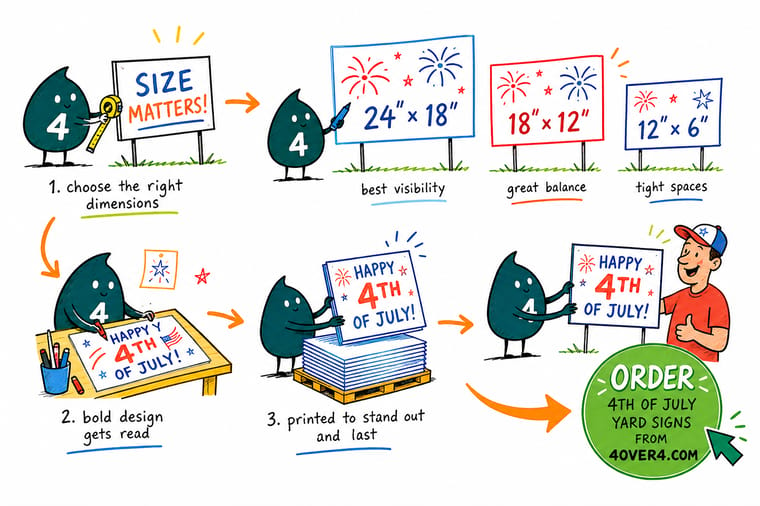
Wally never starts with the panel. He walks to the spot where the reader will actually be, paces the distance back to the lawn, and divides by ten to get the letter height he needs. Only then does he pick a size. That habit is why his signs read from the street while everyone else is squinting at a beautiful design nobody can see.
Design and print yard signs →
Infographic
Yard sign sizes at a glance
One frame, every standard panel drawn to relative scale, with the job each size is built for. Save it before you brief a designer or place an order.
Relative scale matters more than the numbers alone. A 24 x 36 panel carries three times the surface of a 12 x 18, and the letter height that surface allows is what turns a sign into a message people can actually read.
Specs and pricing
Yard sign specs and live pricing
Once the size is settled, the rest of the order is stock, sides and quantity. Here are the live specs and current price breaks so you can see what your run costs before you build the file.
| Quantity | Price Per Unit | Total |
|---|---|---|
| 1 | $25.00 | $25.00 |
Print it
Order your yard signs at 4OVER4
See it in use
Yard signs we cut and printed in house





Explore more
Where to go next

By the numbers
Coroplast panels and aluminum sign panels
Common Questions
Common questions about yard sign dimensions
What is the standard yard sign size?
The standard yard sign is 18 inches wide by 24 inches tall, printed on 4mm corrugated plastic and mounted on a 10 x 30 inch wire H stake. That size became the default because it is large enough to read from a slow moving car, small enough to stay inside most homeowner association and municipal sign rules, and it matches the stake width sold in every hardware store. If someone orders a yard sign without naming a size, 18 x 24 is what arrives.
What size do I need for a 35 mph road?
Start with how the sign will be read. For foot traffic and driveways, 12 x 18 or 18 x 24 is plenty. For a road with 30 to 40 mph traffic, move up to 24 x 36 and cut the copy back to a headline and one action. Then check the constraints: the permitted sign area in your town, the setback from the curb, and whether the stake you own fits the panel width. Size the sign to the slowest constraint, not the biggest ambition.
What do yard signs cost and how are prices set?
Pricing at 4OVER4.COM starts at $25 for 4th of July Yard Signs and $25 for Birthday Yard Signs, while Aluminum Sign Panels start at $29 for a longer lasting rigid option. Price moves with four things: the panel size in square inches, the quantity, single sided or double sided printing, and the substrate. Doubling the quantity almost never doubles the price, because the setup is spread across the run.
What sizes, stocks and finishes are available for yard signs?
The common sizes are 12 x 18, 18 x 24, 24 x 18, 24 x 24, 24 x 36 and 6 x 24 riders. Corrugated plastic in 4mm is the standard outdoor stock, light enough for a wire stake and rated for months of sun and rain. Aluminum panels are the step up for permanent installs on posts or walls. Finishes stay matte on purpose, since gloss creates glare that erases the message in direct sun.
How long does yard sign printing and shipping take?
Most yard sign orders print in one to three business days once the artwork passes prepress, then ship on the transit time you pick at checkout. Larger runs and double sided panels can add a day. The fastest way to protect your date is to upload a print ready file with 0.125 inch bleed and all text at least 0.25 inch inside the trim, so nothing bounces back for a fix.
Do yard signs fit standard H stakes at every size?
A 10 x 30 inch wire H stake fits any panel 18 inches wide or wider without modification. At 12 inches wide the stake legs sit close to the panel edges, so use a 9 or 10 inch stake and push it fully into the flutes. For 24 x 36 panels, two stakes or a heavier gauge stake keeps the sign upright in wind.
Should the flutes on a corrugated yard sign run vertically or horizontally?
Vertically, in almost every case. The flutes are the hollow channels inside the corrugated plastic, and the stake legs slide into them. Vertical flutes let the stake carry the panel and stiffen it against wind. Horizontal flutes are only used for wall mounting or frame mounting, where no stake is involved and the panel is fastened at the corners.
Get Started
Yard signs print on 4mm white coroplast, five business days
Pick the size the reading distance calls for, upload your file, and let 4OVER4 print it on weatherproof stock with the stake that fits.
Legal Disclaimer
Gold Standard guarantees apply to all standard orders placed through 4over4.com. Price match requires verifiable proof of a competitor's published price for an equivalent product with matching specifications and turnaround time. Satisfaction guarantee covers manufacturing defects and print quality issues. Contact support with order number and documentation.
