
Postcard Marketing Statistics That Prove ROI


Response rates, ROI benchmarks, cost per piece, and advertising effectiveness, set against the order data behind 25 plus years of printing postcards at 4OVER4.
Postcards get opened, read, and acted on while digital inboxes overflow. They pull a stronger response than most direct mail formats, cost less to print and mail, and often clear the median direct mail ROI. With 150,000 plus businesses printing with 4OVER4.COM and 10 billion plus cards produced, the data backs up what marketers already feel: a card in someone's hand works.
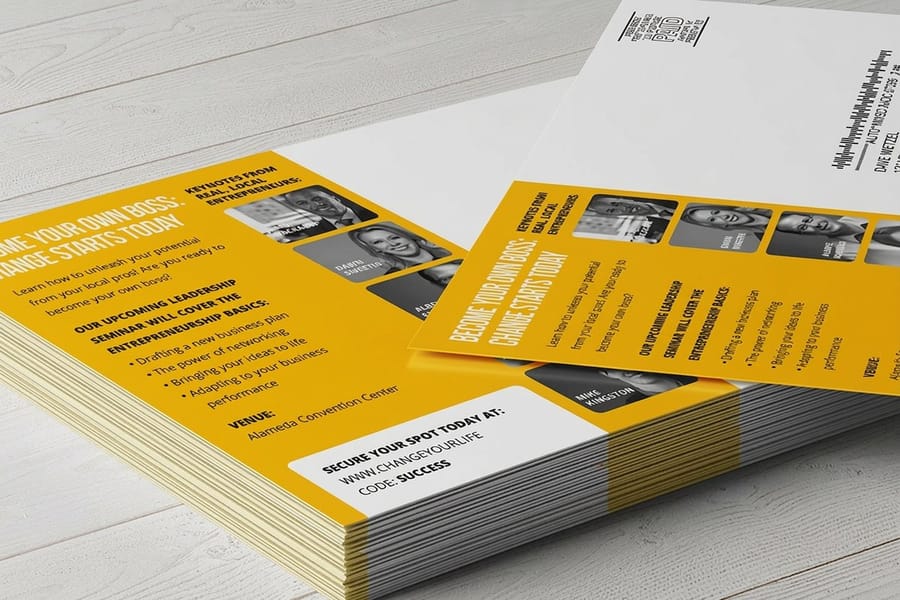
The postcard numbers
What response and ROI look like for a postcard run
Postcard marketing statistics tell a clear story. Physical mail still gets opened, read, and acted on, and postcards outperform other direct mail formats on response because there is nothing to open. They cost less to print and mail, and once you know how to measure ROI of a postcard marketing campaign the numbers speak for themselves. With 150,000 plus businesses trusting 4OVER4.COM for their print, the benchmarks below give you a single reference point for planning your next drop.
By the numbers
Response, ROI, and cost per card in four numbers
Here are the headline figures marketers reach for first when they plan a postcard mailing, drawn from industry benchmarks and our own production data. House lists pull a response range that lands postcards at the high end, the median direct mail ROI already beats most digital channels, and 60 plus paper types let you match the feel to the campaign. Set those benchmarks against 25 plus years of printing postcards at 4OVER4.COM and the picture stays consistent.
Why the numbers matter
Why these postcard performance numbers deserve your attention
Postcard marketing statistics are decision tools, not trivia. When you split a budget across channels you need hard numbers behind every line, and postcards give you some of the clearest ones in marketing.
Direct mail is growing again after years of digital dominance, and postcards sit right at the sweet spot of that trend. Low cost, high visibility, and no envelope to slow the reader down. Our direct mail statistics breakdown covers the wider channel if you want the full picture.
Knowing how to measure ROI of a postcard marketing campaign starts with the benchmarks. What counts as a good postcard response rate, and what a realistic cost per acquisition looks like. Our direct mail ROI page runs the math so you can plan your next drop with confidence.
Response rates
Average response rate for direct mail postcards
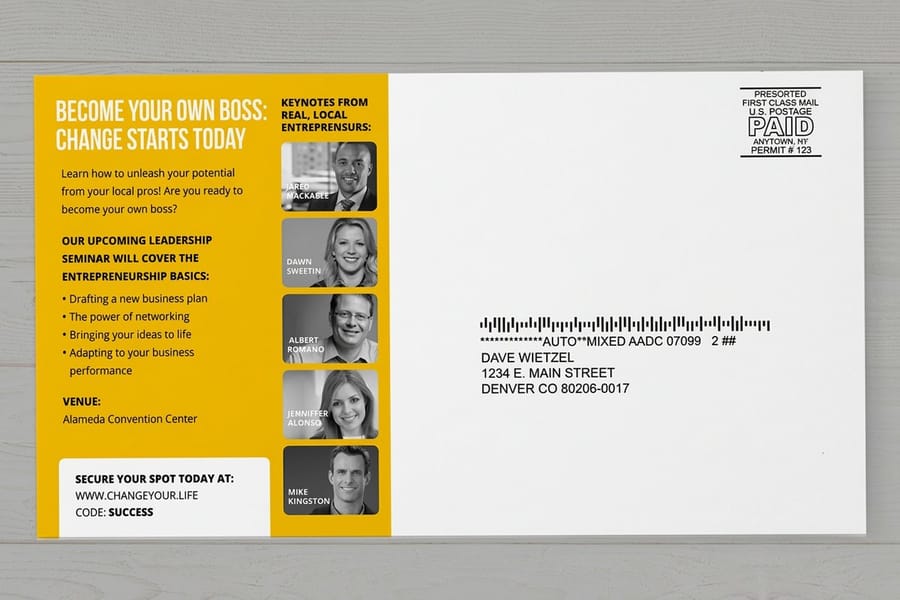
The average response rate for direct mail postcards consistently beats other mail formats. The reason is friction, or the lack of it. There is no envelope to open, so the recipient reads your message the second they lift it from the mailbox.
Response to a house list runs well above what most digital channels return, and postcards land at the higher end of that range. Prospect lists pull lower, yet still hold up strongly against email and paid search. Our direct mail vs email comparison lays the two side by side.
We sent 5,000 postcards to our past customers and pulled our best response in five years. The physical piece cuts through in a way email never has.
Verified customer, Restaurant Owner
That gap holds even before you count the brand impression a postcard leaves while it sits on a kitchen counter for days.
ROI by industry
Postcard marketing ROI by industry
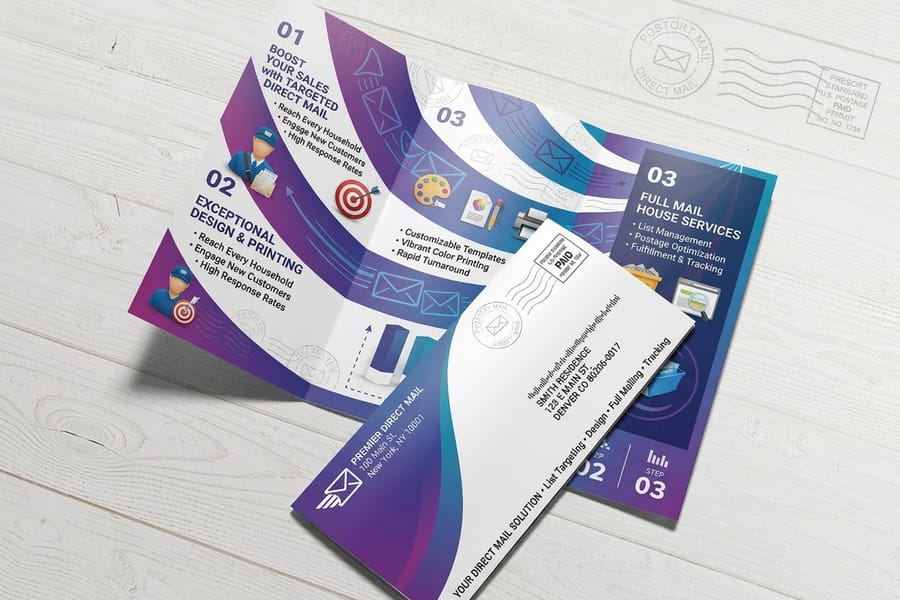
How to measure ROI of a postcard marketing campaign is refreshingly simple. Take the revenue the campaign generated, subtract every cost from printing and postage to design and list, divide by total cost, and multiply by 100.
Postcards often beat the median direct mail ROI because they are cheaper to print and mail than letters, catalogs, or dimensional pieces. No envelope, no insert, and no extra postage weight.
- Real estate uses just listed and just sold cards to drive neighborhood awareness and inquiries.
- Restaurants and local services see high redemption from coupon cards with a clear offer and expiry.
- Healthcare and dental book steady appointments from reminders and new patient offers.
- Home services fill HVAC, plumbing, and landscaping schedules with seasonal cards.
- E-commerce wins back lapsed buyers at rates email re-engagement rarely matches.
The variable that decides postcard advertising effectiveness is your offer. A vague visit us today never pulls what a specific 15 percent off your first order does. For a wider view, our direct mail effectiveness research covers every format.
Cost per piece
Cost per piece and cost per acquisition
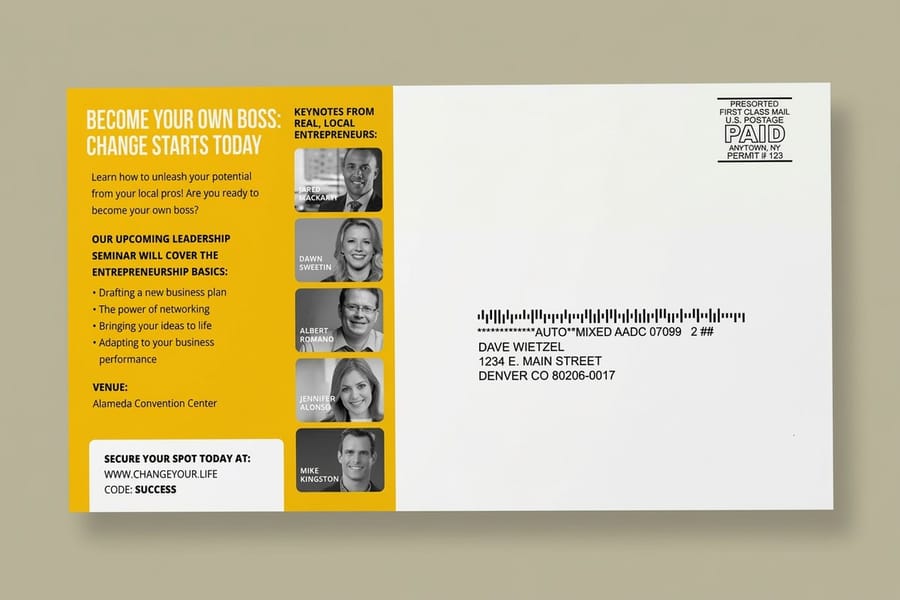
Postcard marketing statistics look even stronger once cost enters the picture. A standard card is inexpensive to print, and marketing mail postage keeps the per piece total low.
Run the numbers on a modest mailing at a typical response rate and the return climbs fast, because each response can be worth many times the cost of the piece that earned it.
Digital ads rarely match that math. A click is not a customer, and it vanishes the moment the tab closes. A postcard on a desk keeps working for days.
Print vs digital
How physical mail outperforms digital in key metrics
Postcard response rates do not exist in a vacuum. Smart marketers compare channels, and here is where postcards consistently win.
- Open rate equivalent is near total, because there is nothing to open and the message is right there.
- Recall runs higher, since physical mail takes less cognitive effort to process than digital media.
- Trust favors print, with no spam filter to bypass and no unknown sender friction.
- Longevity is real, because the average piece stays in the household for well over two weeks.
None of this means dropping digital. The best campaigns run both, mailing a postcard and then retargeting the same audience online. Our direct mail hub covers those multichannel plays in depth.
What drives response
What drives postcard advertising effectiveness
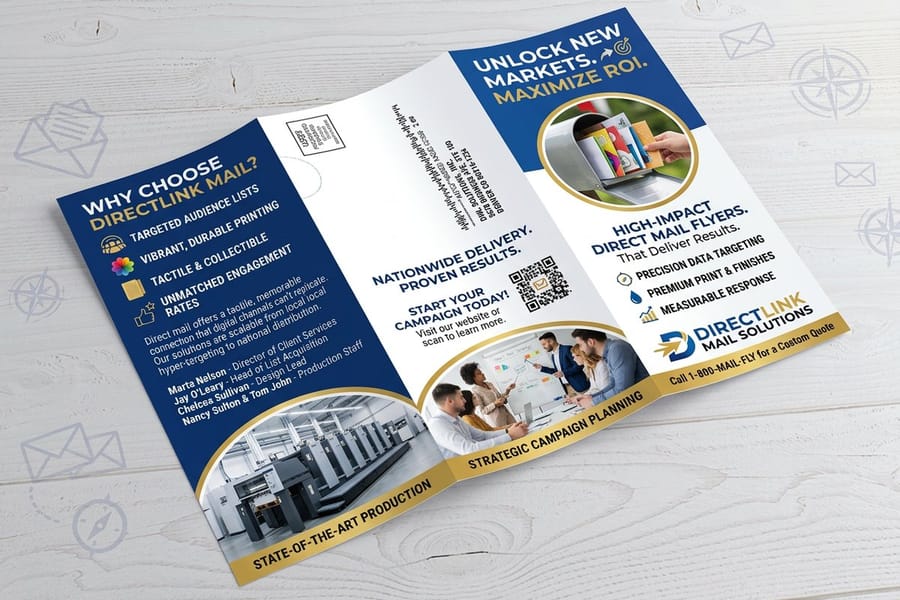
Not every postcard performs. A handful of design and strategy choices separate the campaigns that pay off from the ones that get tossed.
Size matters. Oversized cards are noticed first in a stack of standard mail, and the lift in response usually covers the extra postage.
Stock shapes perception. A flimsy card gets binned, while a thick, soft touch piece feels worth keeping. 4OVER4.COM offers 60 plus paper types so the feel matches your brand.
One clear call to action wins. Pick a single next step, whether that is a call, a URL, or a QR scan, and cut the competing messages.
Personalization lifts response. Variable data lets you tailor the name, offer, and image to each recipient, and personalized cards pull well above generic ones.
Our print data
What 4OVER4 print data reveals about postcard campaigns
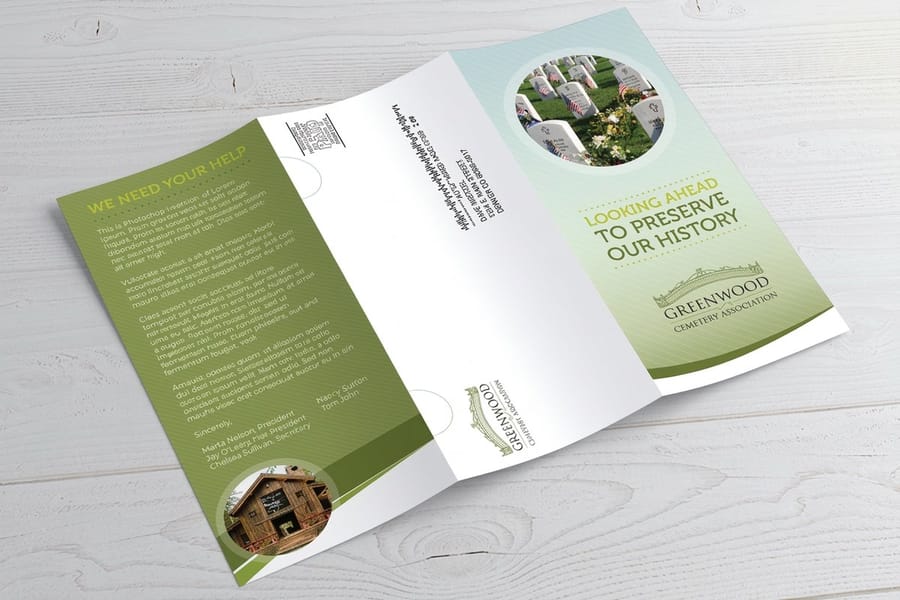
Third party postcard marketing statistics are valuable, but our own order data from 150,000 plus businesses adds another layer of insight.
- Reorder behavior is telling, as postcard buyers tend to reorder within a couple of months, a sign the campaigns are working.
- Paper preference leans thick, with 16pt and above dominating postcard orders.
- Size trends keep shifting, as oversized formats grow as a share of total postcard volume year over year.
These patterns confirm the broader data. Investing in quality paper and larger sizes is a performance decision, not a vanity one.
Data to doorstep
How 4OVER4 turns postcard data into results
Knowing the postcard marketing statistics is one thing. Acting on them is another, and 4OVER4.COM makes the jump from data to doorstep easy.
Want to test an oversized format against a standard card. Order both and have test batches in hand fast, because speed matters when you run A/B tests on a live list.
With 60 plus paper types and multiple finishes, you can match a card's tactile quality to the response data. Thicker stocks pull better, and 16pt, 32pt, and Ultra Thick options are ready to go.
Every order ships with our 5 Gold Guarantees, and same day printing means your test campaign can be in the mail this week.
Format and industry
How each format and industry performs
Not all direct mail formats perform equally, and effectiveness varies by industry, but the trend holds: when a physical card lands in someone's hands, they pay attention. Match the right format to the right audience and the postcard response rate follows.
| Format | Where it wins |
|---|---|
| Postcards | Best cost to response ratio, nothing to open, instant visibility. |
| Letters | Room for detailed offers, strong for finance and fundraising. |
| Self-mailers | Cost-effective middle ground for invitations and announcements. |
| Catalogs | Highest average order value, strongest for retail and e-commerce. |
| Dimensional mail | Highest open rates for high-value B2B targets, higher cost. |
| Industry | How they use it |
|---|---|
| Real estate | Just listed and just sold cards drive neighborhood awareness. |
| Restaurants | Coupon cards with a clear offer and expiry pull redemptions. |
| Healthcare and dental | Reminders and new patient offers book appointments. |
| Home services | Seasonal cards fill HVAC, plumbing, and landscaping schedules. |
| E-commerce | Win-back cards to lapsed buyers beat email re-engagement. |
Your format choice should match your goal. Driving traffic to a website calls for standard postcards. Standing out for a competitive neighborhood calls for oversized cards. Running a seasonal sale calls for a coupon card with a hard expiry. Each industry has its own benchmarks, but the common thread is geographic and personal relevance.

Side by side
How postcards stack up against other channels
Postcard marketing statistics get most useful when you stack them against other channels. The average direct mail response rate shifts by format, list, and industry, and postcards keep the best cost to response ratio of the bunch.
| Channel | Trust | Response and recall | Cost | Trackable |
|---|---|---|---|---|
| Postcards | High, held and often kept | Highest response per dollar, strong recall | Low per piece | Yes, with codes and QR |
| Lower, easy to ignore | Low open and click, low recall | Very low per send | Yes | |
| Paid social | Lower, scrolled past | Low intent, short attention | Low cost per impression | Yes |
| Display ads | Lowest, banner blindness | Low click-through | Low cost per impression | Yes |
Postcards win on trust, response rate, and memorability. Digital wins on speed and cost per impression. The smartest marketers do not pick one or the other, they use both. A postcard that drives someone to a landing page combines the strengths of both channels.
If you want to make your next mailer impossible to ignore, consider formats like 3D lenticular postcards that add a visual wow factor right in the mailbox. Dimensional and specialty formats consistently outperform standard flat mail on both open and response rates.
Make it relevant
Pair print with one digital touch
Personalized postcards outperform generic ones by a wide margin, and a single well timed digital follow up compounds that lift. Variable data lets you customize the name, offer, and image per recipient, and a light retargeting push keeps the message in front of the same audience after the card lands.
Myths vs facts
What buyers get wrong about postcard cost and response
A few myths keep marketers from running postcards that would pay off. The pairs below set each common assumption against what the postcard marketing statistics actually show, so you can plan your next campaign on evidence rather than habit.
Email always beats postcards on results.
Email costs less per send, but postcards pull far higher response and better recall, which is what actually drives revenue per piece.
You cannot measure postcard ROI the way you measure digital.
Add a unique URL, QR code, or dedicated phone number per batch and you can track response, cost per acquisition, and ROI down to the mailing.
Postcards are too expensive for a small business.
Every Door Direct Mail reaches whole neighborhoods without a list, and a concentrated local audience often returns the strongest response.
Bigger postcards are a waste of postage.
Oversized cards get noticed more in the mailbox, and the lift in response usually more than covers the extra postage.
Wally turns the postcard data into your next mailing
Statistics are only step one. The card is step two.
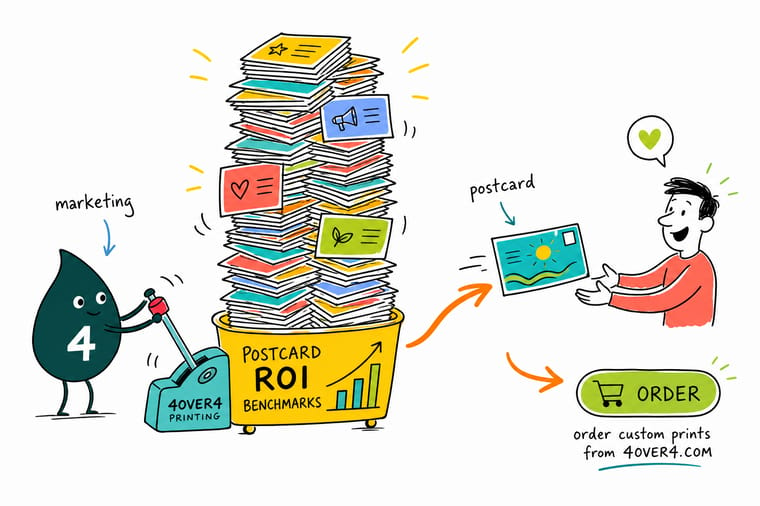
A postcard has no envelope, so the offer is read the moment the card is picked up. Wally's rule is simple. Pick the size that fits your offer, print it heavy on the stock that signals quality, and let the response rate do the rest. Standard Postcards start at 50 for $16.48 on 14pt cover and print in 3 business days.
Order postcards →Proof, not promises
What 247 postcard reviews and our press data show
Here are the latest figures on postcard performance from our side of the press, the volume, delivery, and quality signals that round out the picture for marketers planning campaigns in 2026 and beyond. A 99.8 percent on-time delivery rate keeps your mail drop on schedule, and a 4.9 out of 5 postcard rating across 247 verified reviews shows the print quality holds up run after run.
Stock, finishing and price
Postcard pricing and specifications
Standard Postcards start at 50 for $16.48 and climb through 14pt, 16pt, and 24pt Ultra Thick Gloss Cover. The price per card falls as the run grows, so the table below is the real input to any ROI model on this page.
| Quantity | Price Per Unit | Total |
|---|---|---|
| 50 | 33.0¢ | $16.48 |
| 100 | 24.2¢ | $24.16 |
| 200 | 15.9¢ | $31.86 |
| 300 | 12.8¢ | $38.45 |
| 400 | 11.3¢ | $45.04 |
| 500 | 10.3¢ | $51.62 |
| 600 | 9.89¢ | $59.31 |
| 700 | 9.57¢ | $67.00 |

Start from a blank
Blank templates for postcards
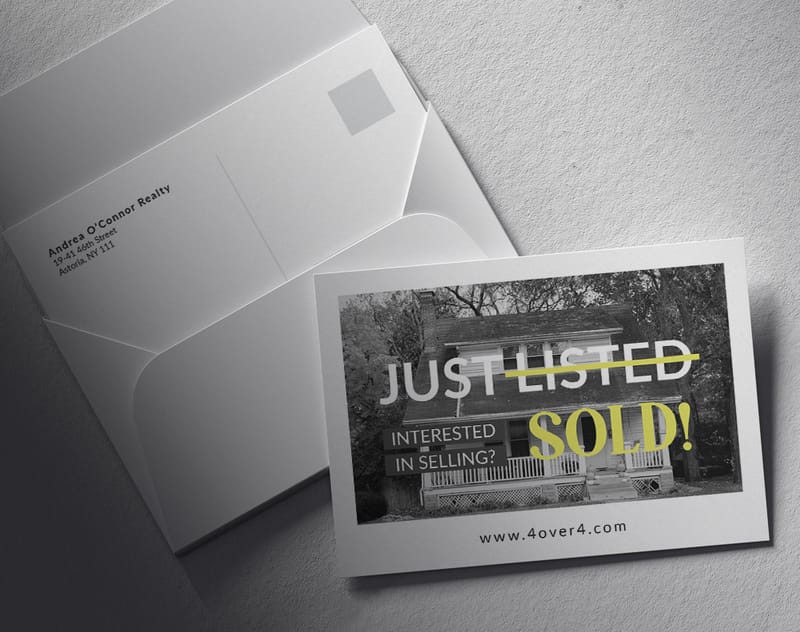
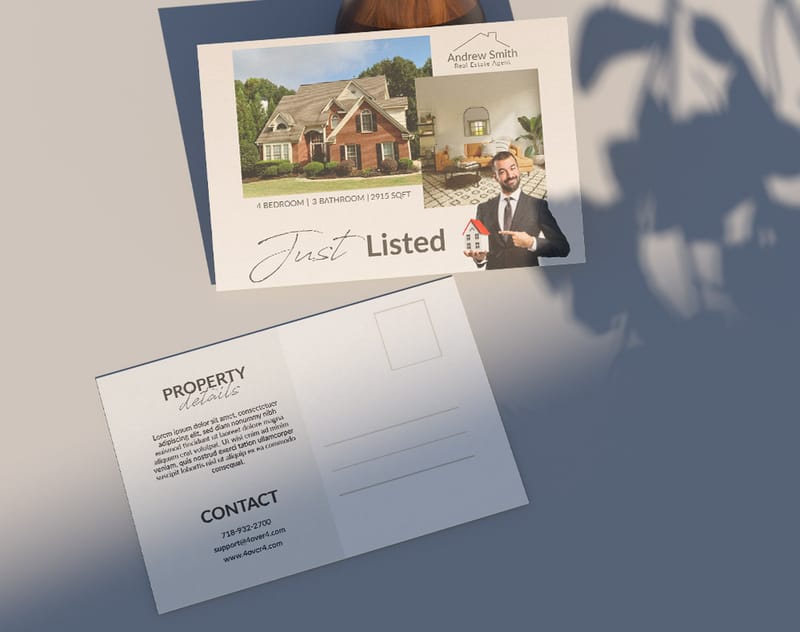
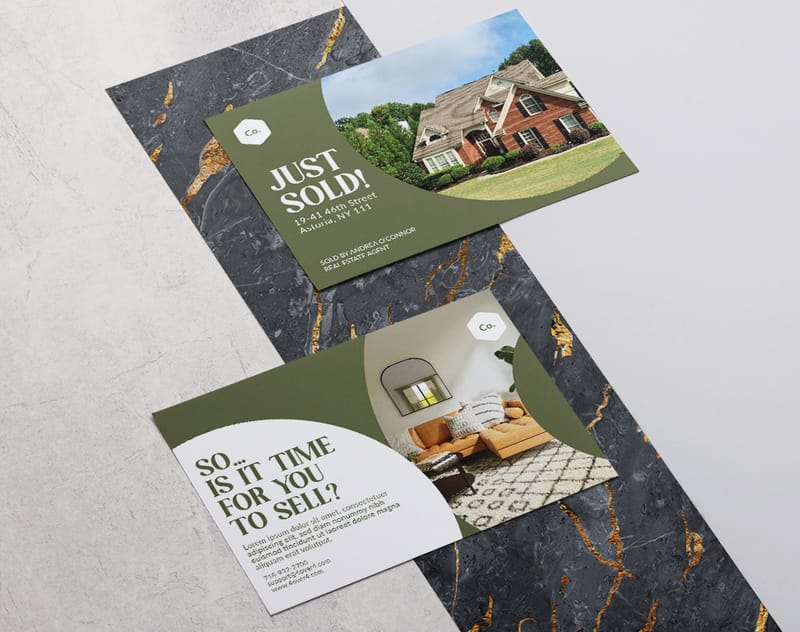
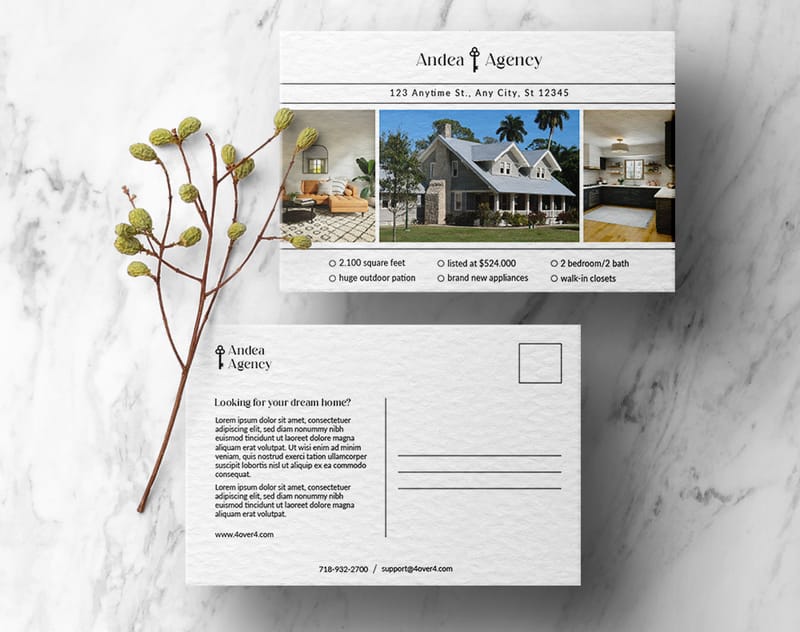
Need a head start on design? These blank postcard templates make it easy to get your artwork print-ready, with bleed and safe margins already built in.

Ready to customize
Ready made postcard designs for listings and offers
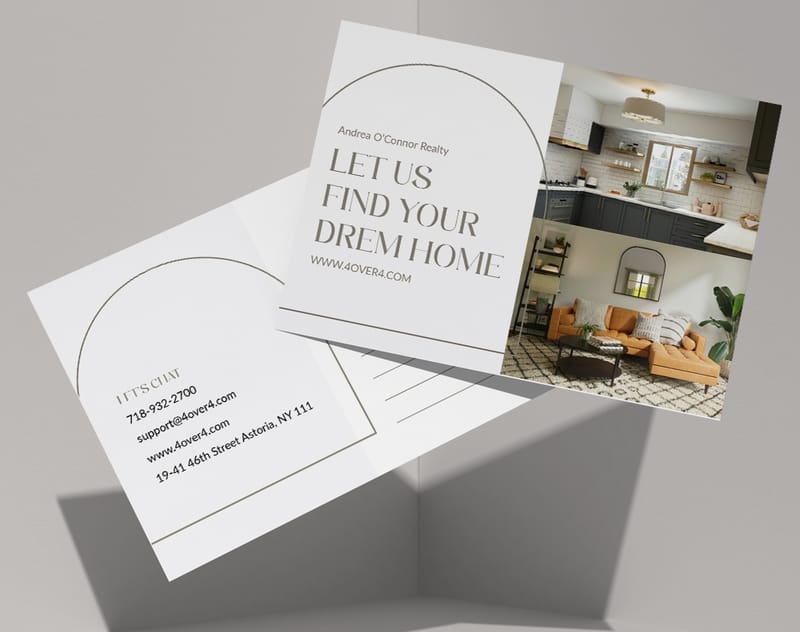
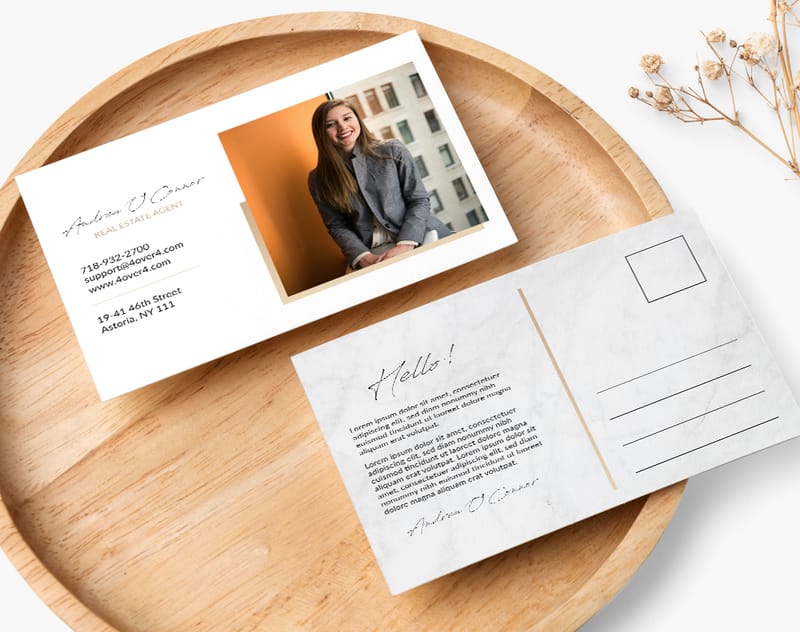
Prefer to start from a proven layout? These free postcard templates open in the online designer, ready to customize with your brand, offer, and call to action.
Print it
The direct mail products marketers reach for most
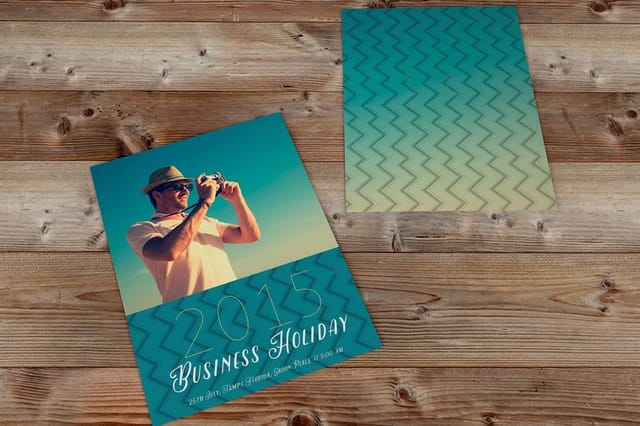
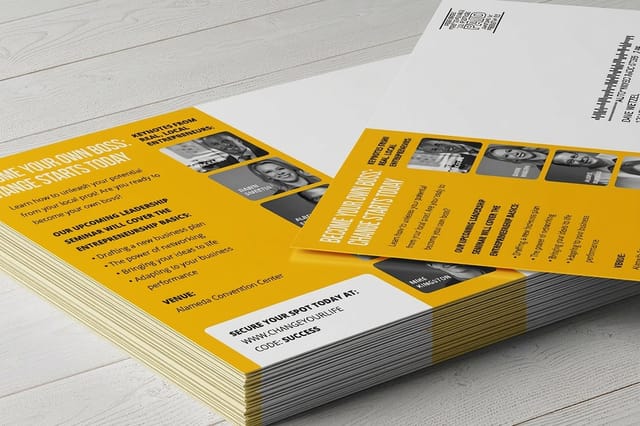
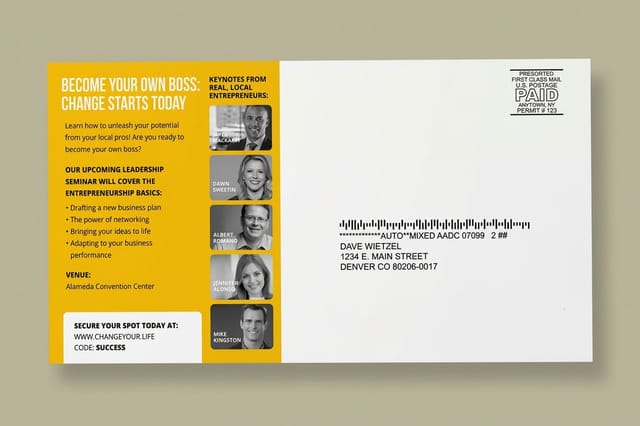
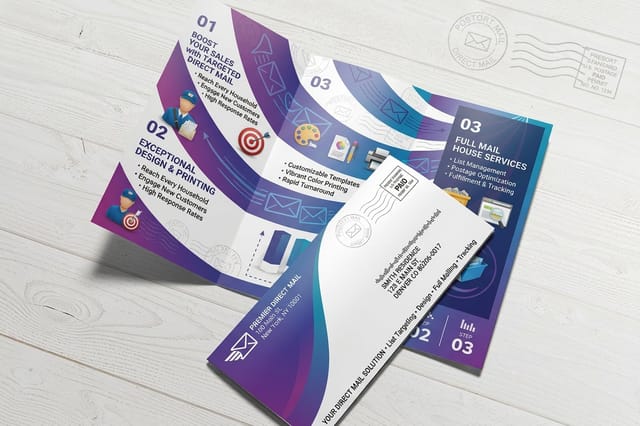
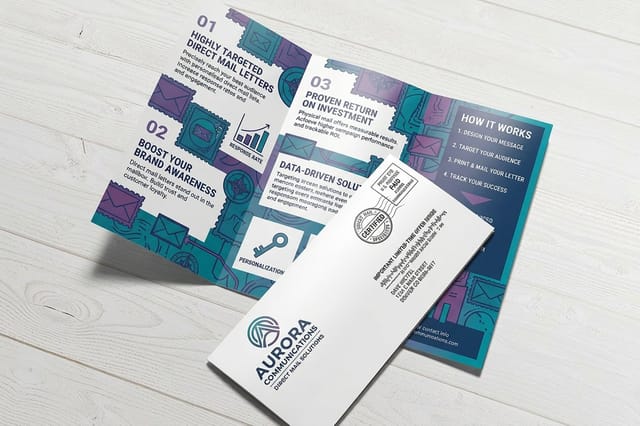
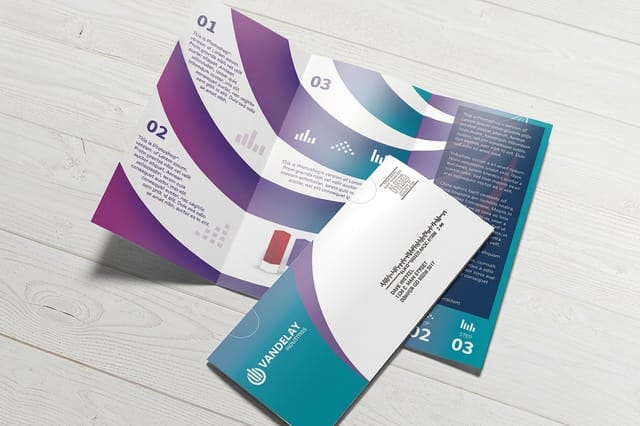
Standard Postcards start at 50 for $16.48 on stock from 14pt Gloss Cover to 24pt Ultra Thick. Direct Mail Postcards start at 500 for $89.68 and print in 4 business days. These are the pieces behind the response numbers above.
Why marketers trust us
The postcard printing record behind these benchmarks
Every benchmark on this page sits on a long record of getting mail printed right. A 4.8 out of 5 average across 10,000 plus reviews, 150,000 plus businesses served, and postcards printed since 1999 are the trust signals behind the numbers, so you can plan a mailing knowing the cards will land sharp and on time.
How we built this
How we compiled this postcard marketing data
Every postcard statistic on this page comes from published industry research, USPS reporting, or 4OVER4.COM's internal order and review data, drawn from 10,000 plus reviews and 150,000 plus businesses served. We cross-reference multiple sources before including any data point, and figures represent the most recent available data. Numbers are updated as new research becomes available to keep these postcard marketing benchmarks current and reliable.

Get Started
Order 50 postcards for $16.48, printed in 3 business days
Pick a size, drop in your design or a free template, and we will print it sharp on premium stock and ship it on time.
Legal Disclaimer
Gold Standard guarantees apply to all standard orders placed through 4over4.com. Price match requires verifiable proof of a competitor's published price for an equivalent product with matching specifications and turnaround time. Satisfaction guarantee covers manufacturing defects and print quality issues. Contact support with order number and documentation. On-time delivery rate based on tracked orders 1999 to 2026. Individual results may vary based on shipping carrier performance.
Explore more
Postcard products, mailing guides, and ROI reviews
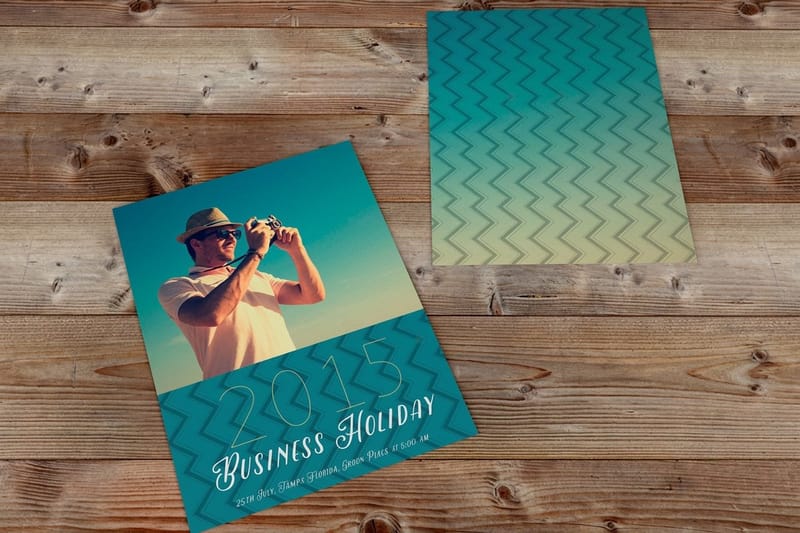 Product Postcards Print the direct mail format with the highest response per dollar.
 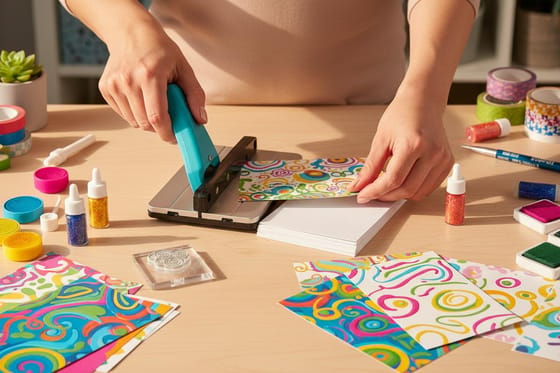 Guide How to Make Postcards Design, print, and mail a postcard campaign step by step.
 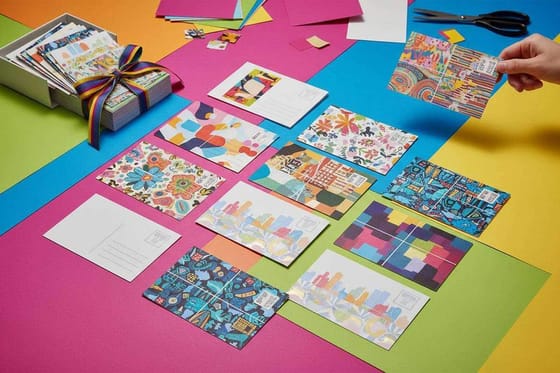 Showcase Postcard Showcase Real customer postcards across stocks, finishes, and sizes.
  Statistics Direct Mail Effectiveness The engagement and recall research behind the numbers.
  Alternative 4OVER4 vs PostcardMania How our postcard pricing and stock options compare.
  Location Postcards in New York Local postcard printing and mailing for NYC businesses.
  Case study Nonprofit Mail Case Study How a nonprofit doubled donations with direct mail.
  Reviews Postcard Reviews What 150,000 plus businesses say about our postcards.
  Benefit Bulk Discounts Per-piece price drops fast as your mailing quantity climbs. FAQs Printing FAQs Answers on stock, sizes, proofs, and mailing turnaround.
 Questions and answers
Common questions about postcard data and performance
Response rates, ROI, size, stock, and test volume, answered.
What is the average response rate for direct mail postcards?
The average response rate for direct mail postcards runs about 2.7 percent to 4.4 percent for house lists of existing customers and roughly 1 percent to 2 percent for cold prospect lists. Postcards tend to beat letters and self-mailers because the message is visible the instant the piece is picked up, with no envelope to open. A strong offer, personalization, and an oversized format can push those numbers higher.
How do you measure ROI of a postcard marketing campaign?
To measure ROI of a postcard marketing campaign, subtract every campaign cost, including printing, postage, design, and list, from the revenue the campaign generated, divide that figure by total cost, and multiply by 100. Use a unique URL, QR code, or dedicated phone number to attribute each sale to the mailing. The median direct mail ROI sits near 29 percent, and postcards often beat it thanks to lower production cost.
Are postcards more effective than email marketing?
Postcard marketing statistics consistently show higher response than email. Physical mail also stays in the household for well over two weeks, giving your message repeated exposure that an email rarely gets. The strongest approach runs both together, a postcard first and then an email and retargeting follow up. Our direct mail vs email comparison breaks the two down side by side.
What postcard size gets the best response rate?
Oversized postcards in formats like 6x9 and 6x11 consistently outperform the standard 4x6 card. They are harder to miss in a stack of mail and give you more room for the offer and imagery. Postage runs a little higher, but the added response usually more than covers the difference.
Does paper thickness affect postcard advertising effectiveness?
Yes. Thicker stocks of 16pt and above read as higher quality and stay in the home longer, since recipients are slower to bin a sturdy, well printed card. 4OVER4.COM offers stocks up to 32pt Ultra Thick, which feels solid in hand and signals that your business invests in quality. That tactile impression directly supports postcard advertising effectiveness.
How many postcards should I send for a test campaign?
A minimum of 1,000 to 2,000 postcards per version gives you a statistically meaningful read. Testing two designs means 2,000 to 4,000 pieces total, each tracked with its own code or landing page. That sample size lets you confidently spot the winning design, offer, or audience before you scale the mailing up. Order free samples first to pick the stock that fits.
