
13 “We Buy Houses” Postcard Ideas That Motivated Sellers Actually Answer


Nadia is our customer education voice, built from the knowledge of our production team, with over 20 years in printing.
Why Investor Postcards Still Beat a Cold Call
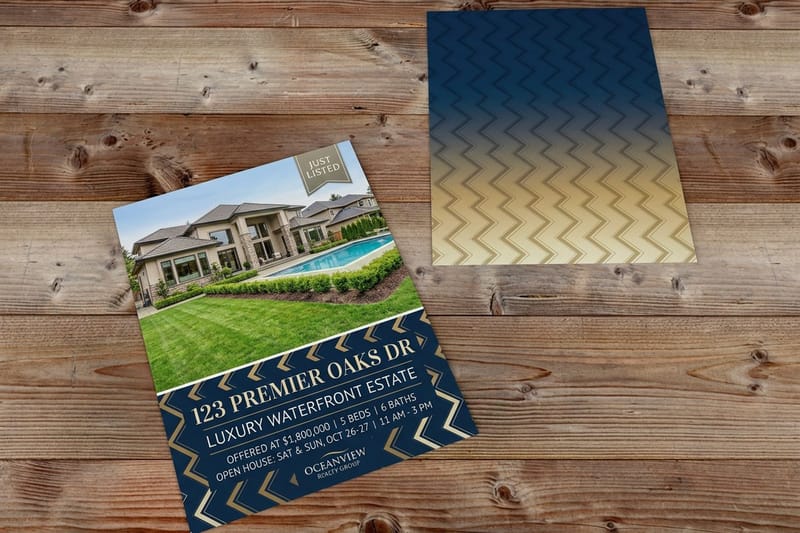
Motivated seller postcards reach owners who rarely answer an unknown number and almost never fill out a form on a stranger’s website. A real estate postcard is different. It lands in the hand, it takes two seconds to read, and it sits on the kitchen counter until the day the roof leaks or the tenant stops paying. That delay is the whole point. You are not buying a response today, you are buying the moment they finally decide to sell.
The investors who make direct mail work treat it like a farm, not a lottery. They pick a list they can name, they mail it on a schedule, and they keep the message simple enough to read at a glance. The 13 ideas below are the angles that keep earning calls, each one written so you can hand it to a designer or drop it straight into a print-ready layout. Local service businesses run the same schedule; these auto body shop marketing ideas that fill your bays show it built around repeat mailings to one area.
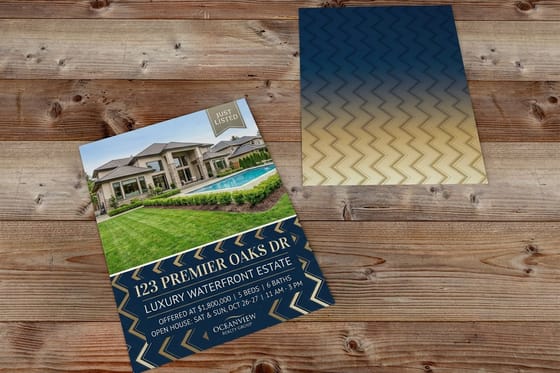
Testing one angle against another does not take a big budget. Real Estate Postcards run 50 for $16.48, so you can mail a small batch of each headline to the same list and let the phone pick the one that earns the full run.
What separates a card that gets called from one that gets tossed
Three things, in order. The offer has to be legible from arm’s length. The card has to look like it came from a person rather than a corporation. And the phone number has to be the largest thing on the back. Everything else is decoration.
Shop the category
Real estate printing collection
Postcards, signs, brochures, and cards built for investors and agents working the same blocks.
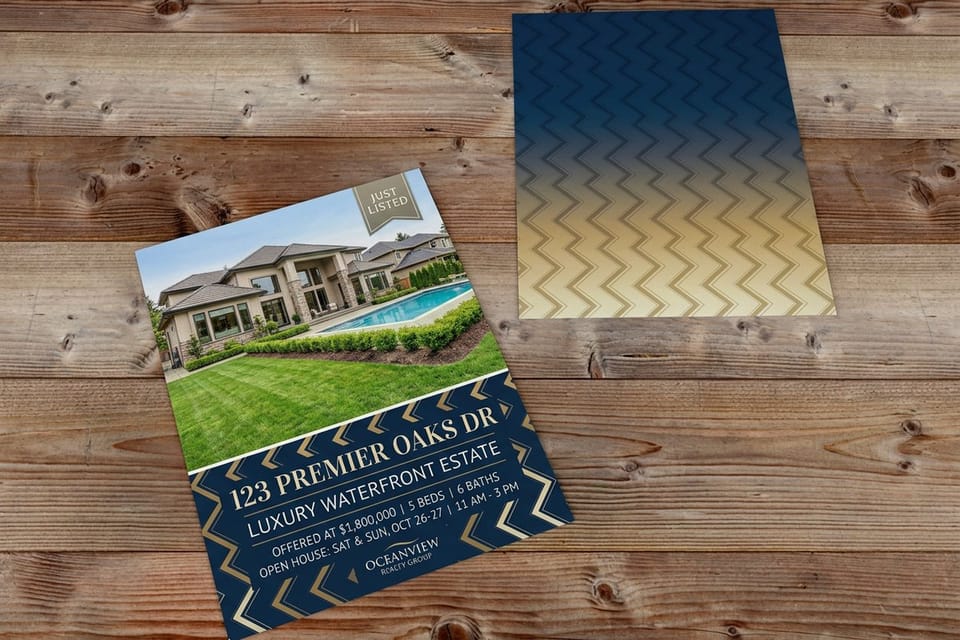
Motivated Seller Postcards, Spec by Spec
A motivated seller postcard is a short, direct card mailed on a schedule to owners with a reason to sell: absentee landlords, heirs, tax delinquent parcels and expired listings. The spec most investors run is simple, and every piece of it is on the Real Estate Postcards order form.
- Size. 4 x 6 in for a lean test, 6 x 9 in or 6 x 11 in when you want the card to sit on top of the stack.
- Stock. 16pt Gloss Cover or 14pt Uncoated Cover; uncoated suits the handwritten yellow letter look, gloss suits a photo of a house you bought.
- Ink. Full color on both sides, so the offer sits on the front and the phone number and short FAQ on the back.
- Personalization. Turn on variable data to print the street or the owner's first name on each card.
- Quantity and budget. 50 cards start at $16.48, and quantities step up in one order, so a 2,000 name list mailed six to eight times is one planned run per quarter.
Ideas 1 to 4: Lead With the Offer, Not the Introduction
Sellers in distress scan for the promise and skip paragraphs. These four cards put the offer in the first three seconds, in a headline that runs across the full width of a 4 x 6 in card, and use the rest of the space to remove friction. Keep the front to one sentence and one number, and let the back carry the proof.
- 1. The blunt cash card. Front reads “We buy houses in [City] for cash.” No logo lockup, no stock photo of a smiling couple, just the sentence and a phone number sized like a headline.
- 2. The as-is card. “No repairs. No cleanout. No agent fees.” This is the card for the house with a failed inspection and a garage full of forty years of belongings.
- 3. The seller-picks-the-date card. “Close in 10 days or in 10 weeks. Your call.” Control is the thing most sellers think they lose when they call an investor, so hand it back on the front of the card.
- 4. The specific street card. Print the neighborhood name or the street into the headline: “We are buying on Maple Ridge.” Variable data makes one card feel like a hundred different ones.
Print these on a heavier card stock than the coupon mail they sit next to. A 16pt card stays flat in the mail stream and feels more deliberate in the hand than a thin coupon sheet.
Print picks
Three formats every investor campaign uses
Live prices, ready to customize with your headline, your photo, and your number.
 Real Estate Postcards 50 for $16.48 The workhorse of investor mail, sized and stocked to survive the trip.
 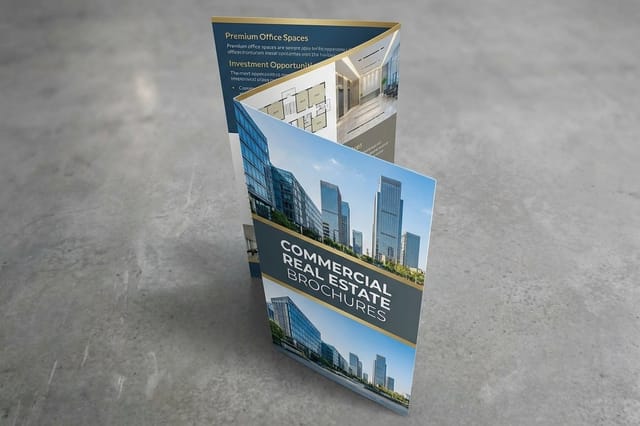 Commercial Real Estate Brochures 50 for $57.11 The leave-behind that answers every question after the walkthrough.
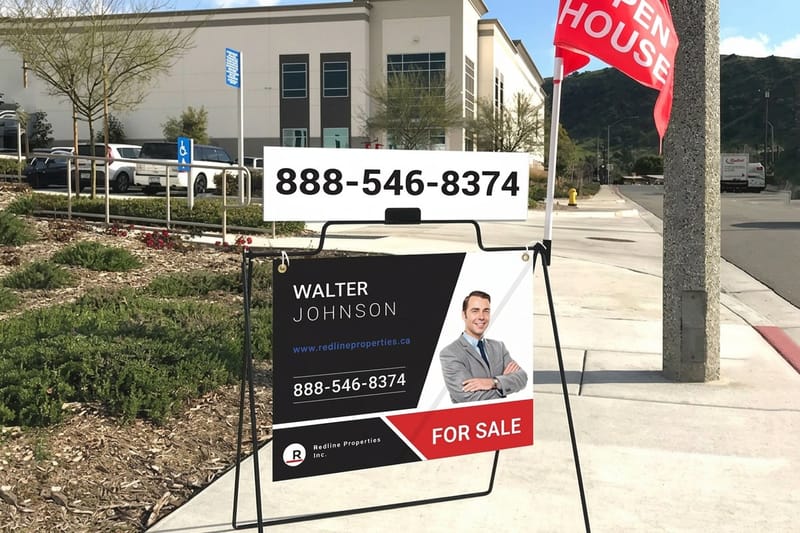
 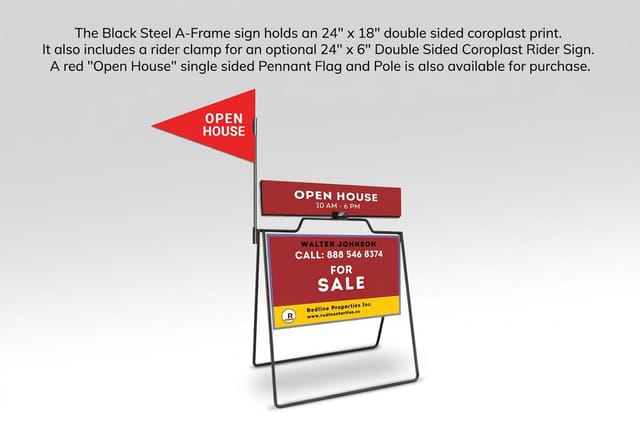 Real Estate a Frame $65.90 each Street level presence on the blocks you are already farming by mail.
 Ideas 5 to 8: Write Like a Neighbor, Not a Billboard
The second family of cards trades volume for warmth. They tend to pull fewer calls, but the sellers who do call have usually thought about selling for a while and want to talk it through. Use these on lists where you know the situation.
- 5. The yellow letter look. A handwriting typeface on a yellow background, short lines, one ragged margin. It reads like a note from someone on the block rather than a mailer, and investors keep coming back to it because it does not look like advertising.
- 6. The inherited property card. “Managing a house you did not plan to own?” Written for heirs and probate lists, where the pain is distance and paperwork, not price.
- 7. The tired landlord card. “Done with the calls at midnight?” Aim it at absentee owners with long tenancies. Lead with the relief, mention the cash second.
- 8. The introduction card. “I live and invest in [City] and I am looking for one more house this quarter.” Small headshot, first name, local number. This is the card that earns referrals from people who are not selling.
Tone is the whole trick here. Read the card out loud before you approve the file. If a sentence sounds like a mortgage advertisement, cut it. Sellers who are behind on payments have heard every version of that voice and have learned to ignore it.
Ideas 9 to 11: Prove You Actually Close

Every seller who has considered an investor has heard the horror story: the buyer who tied up the house, wholesaled the contract, and vanished. On a card, proof means a street name, a month and a photo of a closed house, printed full color on a gloss stock so the photo holds up. Credibility cards exist to answer that fear before it becomes an objection on the phone.
- 9. The just-bought card. A photo of the last house you closed nearby with the street name and the month. “We bought this one on Grant Street in March. Yours could be next.” Proximity plus proof beats any adjective.
- 10. The face card. Your photo, your first name, and one line about how long you have been buying in the area. Sellers call people, not entities, and a face makes the number feel answerable.
- 11. The FAQ back. Keep the front to the offer and turn the back into four short questions: how fast, what fees, what condition, what happens next. Answer each in one line.
When a seller does call, the follow-up piece matters as much as the card. A printed brochure left on the counter after the walkthrough keeps working while the family talks it over, and it prevents your numbers from being remembered wrong.
Quantity and price
Real estate postcard pricing and specs
Real configurator numbers. The bigger the run, the lower the cost of every card you mail.
| Quantity | Price Per Unit | Total |
|---|---|---|
| 50 | 33.0¢ | $16.48 |
| 100 | 24.2¢ | $24.16 |
| 200 | 15.9¢ | $31.86 |
| 300 | 12.8¢ | $38.45 |
| 400 | 11.3¢ | $45.04 |
| 500 | 10.3¢ | $51.62 |

Ideas 12 and 13: Formats That Survive the Mail Pile
The last two ideas are not about words at all. They are about physics. A card that is a different shape or a different size than everything else in the stack gets handled separately, and handling is the first step toward reading.
- 12. The oversized card. Go large enough that the piece cannot hide inside a catalog. The headline can run twice the size, and the card arrives face up because there is nothing to bury it under.
- 13. The two-sided checklist. Front carries the offer, back carries a short checklist a seller can actually use: title, liens, tenants, cleanout, closing date. Useful mail gets kept, and kept mail gets called.
If you work commercial deals or multi-unit buildings alongside single family houses, keep a second piece in the sequence with room to breathe. A folded brochure carries floor plans, a track record, and the terms a serious owner wants to see in writing before a meeting.
The follow-up piece
Commercial real estate brochures
Room for floor plans, terms, and a track record when the postcard has already earned the meeting.

Building the Motivated Seller List Behind the Card
The best card in the world mailed to the wrong list is an expensive way to print your phone number. Investor mail lives or dies on targeting, and the good lists are all built from public records plus a filter for time and pressure.
- Absentee owners with a mailing address in a different county, held long enough to have real equity.
- Probate and inherited filings, mailed gently and never in the first weeks.
- Tax delinquent parcels, where the deadline itself creates the motivation.
- Code violations and vacancy flags, the houses your driving-for-dollars route already found.
- Expired listings that never sold on the open market and still need a solution.
Scrub the list against your own do-not-mail file every single time, and keep the addresses standardized so the postal software does not reject a run. A clean list of two thousand names mailed eight times beats a dirty list of twenty thousand mailed once.
Own the street too
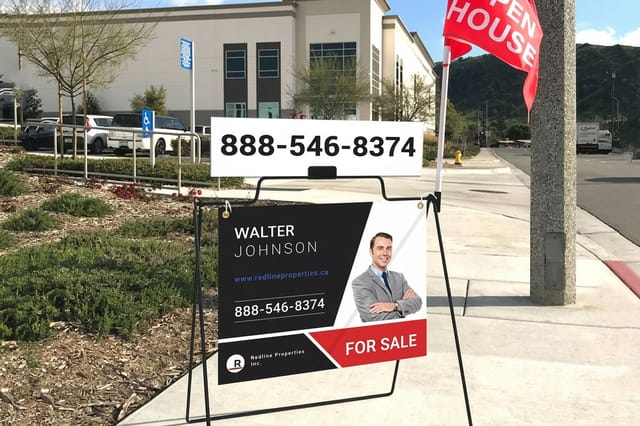
Real estate A frame signs
Mail builds recognition slowly. A sign on the corner of the block you are farming makes the name familiar before the card even lands.
Copy and Call to Action Rules for Investor Postcards
Once you pick an angle, the writing follows a short set of rules. Break them and response drops, follow them and even an average design performs. These are the ones that hold up across every list type.
- One idea per card. If the front says cash, as-is, fast close, and no fees, it says nothing.
- Give one action. A phone number, and one alternative at most. Two numbers and a website is three decisions.
- Write to one person. “You” and “your house,” never “homeowners in your area.”
- No jargon. Sellers do not know what ARV, assignment, or subject-to means, and the words that confuse them also make them suspicious.
- Say what happens next. “Call and we will look at it this week, no obligation” removes the fear of a sales trap.
Track responses per angle, not per mailing. Use a different phone extension or a different call tracking number on each version so you can tell which idea earned the conversation. After two rounds you will know which two cards deserve the budget.
Compare formats
Popular postcards, side by side
Stock, finish, size, quantity, turnaround, and price lined up so you can pick without guessing.
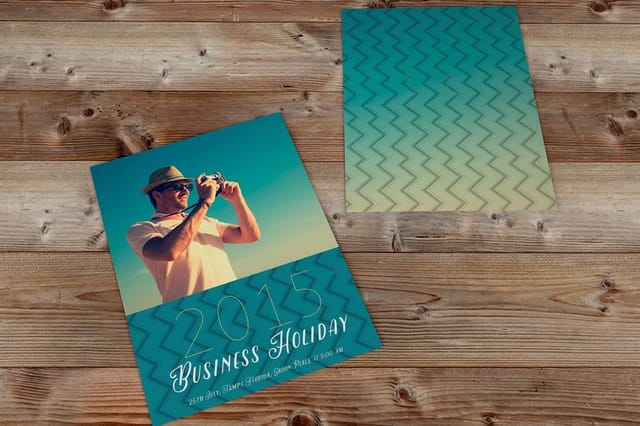 Standard Postcards |  Metallic Foil Postcards | 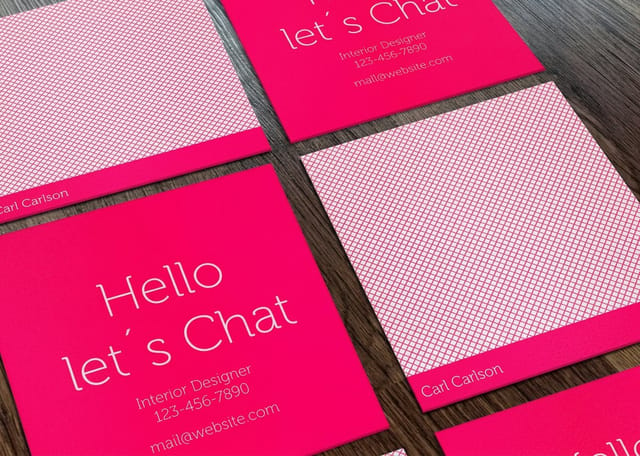 Mini Cards | 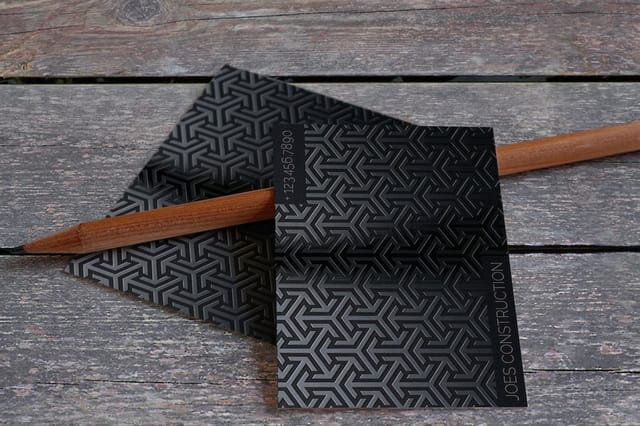 Spot UV Postcards | |
|---|---|---|---|---|
| Min price | $16.48 | $421.91 | $17.57 | $190.02 |
| Paper / stock | 14pt Gloss Cover | 16 Point Silk Laminated | 14pt Gloss Cover | 16pt Gloss Cover |
| Finish | Standard Finish | - | Standard Finish | - |
| Size | 2.5" x 2.5" | 4" x 6" | 2" x 2" | 2" x 6" |
| Default qty | 50 | 500 | 100 | 1,000 |
| Turnaround | 3 business days | 7 business days | 3 business days | 5 business days |
| Rating | ||||
| View & customize | View & customize | View & customize | View & customize |
Farming a Zip Code With Repeat Mailings
A single drop is a test, not a campaign. Sellers respond on their timeline, and the card that gets thrown away in February is the card they remember in July when the tenant leaves. Repetition is what turns a list into a pipeline.
Pick a geography you can afford to own. Mail the same list every four to six weeks, rotating between the blunt offer, the neighbor voice, and the proof card so the mailbox never sees the same piece twice in a row. Keep the phone number and the name constant across all of them, because that consistency is what builds recognition.
Pair the mail with something visible on the street. Signs on the corners you are farming make the postcard feel like part of a real presence rather than a mailer from out of state, and sellers who have seen the name twice call sooner.
The same discipline applies to the rest of your investor marketing. If you want the full system behind the mail, the real estate investor marketing guide lays out the sequence, and the real estate investment new customer suite collects the print pieces that go with it.
Printing, Stock, and Mailing Setup
Print decisions are where investors quietly lose margin. Too light a stock and the card creases in the sorting machine. Too glossy a finish and a handwritten-style card stops looking handwritten. Match the physical piece to the angle you chose.
Start from a print-ready layout in the design templates library so bleeds, safe zones, and the address block are already correct, then swap in your headline and number. If you are comparing print vendors before you commit a run, the Moo postcards alternative breakdown covers where the money actually goes on a bulk order.
Match the stock to the message
- Blunt cash offers. Heavy gloss, saturated color, big type. Loud is the point.
- Yellow letter style. Uncoated stock so it reads as paper, not as advertising.
- Proof and face cards. A silk or matte cover stock, because photos of houses and people hold up better without glare.
- Oversized formats. Thicker card weight so the piece stays flat through the mail stream.
Start fast
Postcard templates and print-ready blanks
Free layouts with the bleeds and address block already correct, plus exact-size blanks for your own design file.









Wally helps you pick the angle before you print
One promise on the front, one number on the back, mailed on a schedule
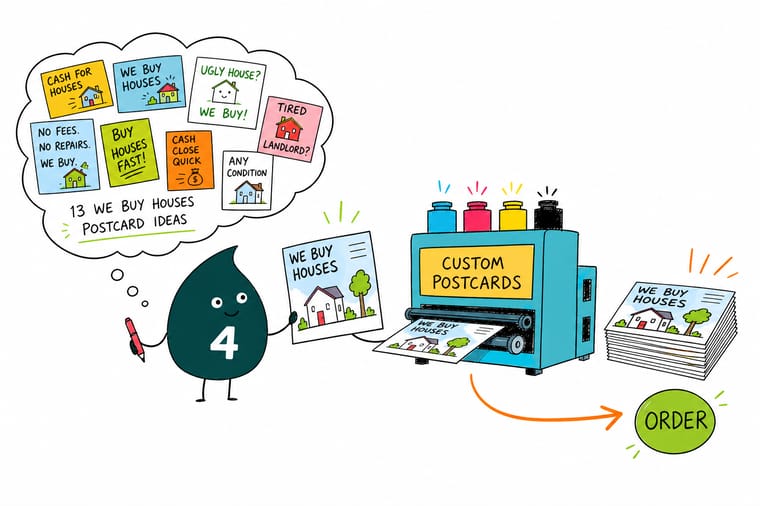
Most investor postcards fail for the same reason: they try to say four things at once. Pick a single promise, cash, as-is, or a closing date the seller chooses, and let the back of the card answer the four questions every seller has. Then mail the same list every four to six weeks, rotating two or three versions, and give each one its own tracking number so the calls tell you which idea to keep printing.
Design your investor postcards →What to Take From These Investor Postcard Ideas
Keep reading
The rest of the investor print stack
The investor marketing guide, the new customer suite, business card ideas for agents, and door hanger ideas for the blocks you farm.
 Guide Real Estate Investor Marketing The full system behind the mail, from list to closing table. Kit Investor New Customer Suite Every print piece a new investor brand needs, bundled.
  Article Real Estate Business Card Ideas What to hand a seller after the postcard does its job.
  Article Real Estate Door Hanger Ideas Cover the same blocks on foot between mail drops.
 Explore more
More real estate marketing built on print
Postcards at 50 for $16.48, brochures at 50 for $57.11, an A frame sign with its metal frame for $65.90, and door hanger and yard sign ideas for the blocks you farm.
Guide Investor Marketing Guide The definitive walkthrough for buying houses off market. Kit Investor New Customer Suite A bundled print set for a new investing brand. 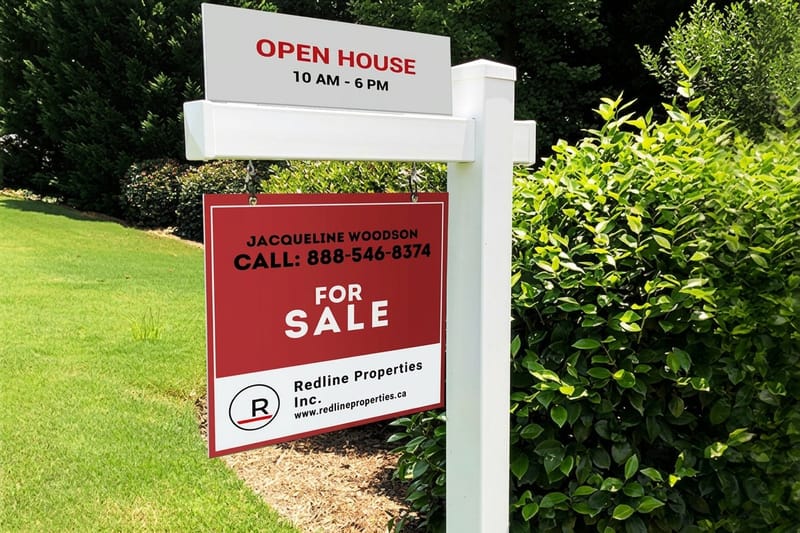 Collection Real Estate Printing Postcards, signs, brochures, and cards for property pros. Product Real Estate Postcards The mailer behind every one of these 13 ideas. Product Commercial Brochures The follow-up piece for bigger deals and owners. Product Real Estate A Frame Street presence on the blocks you already mail.
  Article Memorial Day Postcard Ideas Seasonal angles for the same farming list. Article Real Estate Business Cards Card ideas for agents and investors alike. Article Door Hanger Ideas Six door hanger angles that pair with mail.
  Article Best Yard Sign Colors Color choices that stay readable from a moving car.
  Alternative 4OVER4 vs Moo Postcards How the two compare on bulk postcard runs.
 Ready to put one of these 13 cards in the mail?
Pick the angle, choose a stock that matches the tone, and print a full quarter of mailings at once so the per-piece cost works in your favor.
We Buy Houses Postcard Questions
What should a we buy houses postcard say?
One promise on the front and one action on the back. Pick a single angle, cash, as-is, or a closing date the seller chooses, and write it in a sentence anyone could read at arm’s length. On the back, answer the four questions every seller has: how fast, what fees, what condition, and what happens after they call. Then make the phone number the largest element on the card. For the wider campaign around that card, see the investor marketing guide.
How do I choose the right real estate investor postcards?
Choose by list, not by taste. Absentee owners and tax delinquent records suit the blunt cash offer, while probate and inherited lists suit the quieter inherited property or introduction card. Print two versions, track them with separate numbers, and let the calls pick the winner.
What do real estate investor postcards cost and how is the price set?
Real Estate Postcards start at $16.48 for 50, and the final price moves with four things: quantity, size, paper stock, and turnaround. Per-piece cost falls sharply as the run grows, which is why investors order a full quarter of mailings at once rather than drop by drop. Heavier stocks and oversized formats add cost per piece but survive the mail better. Configure the exact combination on the Real Estate Postcards page to see live pricing.
How often should I mail the same motivated seller list?
Every four to six weeks, for at least six to eight touches. Before each drop, take out the owners who called, sold or asked to be removed, so the next run only goes to live prospects. A 2,000 name list mailed six times is 12,000 cards, so price the quarter as one order rather than six small ones.
What size and stock work best for investor postcards?
Real Estate Postcards come in 14 sizes, from 2.5 x 2.5 in up to 6 x 11 in, on 22 stocks. A 4 x 6 in card keeps a test cheap, and 6 x 9 in or 6 x 11 in gives a blunt offer room to run large. For a handwritten note, the cream and 16pt uncoated stocks take ink well, and optional variable data can print each owner's street on the card. Pair either with signage like a Real Estate a Frame on the same blocks.
