
15 Print Marketing Examples That Still Win Customers


The print pieces that still win customers are the ones with a trigger behind them: a past buyer, a finished job next door, a birthday, an opened parcel. Copy the trigger rather than the artwork, ask for exactly one action, and print a deadline the reader can see from across a kitchen.
The 15 examples at a glance
| Example | The tactic behind it | Where it wins | Product at 4OVER4 |
|---|---|---|---|
| 1. The reactivation postcard | A deadline on a customer who already bought once | Salons, dentists, auto service, any repeat visit | Direct mail postcards |
| 2. The oversized card | Size as the attention buy, not a bigger discount | Crowded mailboxes, competitive local trades | Direct mail postcards |
| 3. The letter that looks personal | A sealed envelope changes the opening ritual | High value services, legal, financial, B2B | Printed envelopes |
| 4. The birthday mailer | A calendar trigger nobody else is using that week | Restaurants, retail, memberships | Direct mail postcards |
| 5. The just finished a job door hanger | Proximity plus proof, dropped the same afternoon | Roofing, landscaping, HVAC, pest control | Door hangers |
| 6. The one offer flyer | One offer, one date, one way to respond | Openings, events, seasonal pushes | Standard flyers |
| 7. The objection brochure | Each panel answers the question that stalls the sale | Consultative sales, clinics, contractors | Standard brochures |
| 8. The card people keep | A finish worth touching turns a card into a keepsake | Anyone who meets buyers face to face | Premium business cards |
| 9. The fridge magnet | A permanent place in the kitchen beats a folder | Emergency trades, takeout, schools | Standard magnets |
| 10. The branded notepad | Daily use, and your number leaves with every sheet | Offices, clinics, trade counters | Standard notepads |
| 11. The insert card in the box | The one moment a customer is guaranteed to be paying attention | Ecommerce, subscription, makers | Custom mailer boxes |
| 12. The printed mailer box | The delivery becomes the ad on the doorstep | Ecommerce with repeat purchase | Custom mailer boxes |
| 13. The sticker customers apply | A piece good enough that the customer distributes it | Coffee, craft, software, skate and outdoor | Premium stickers |
| 14. The finished job yard sign | Social proof planted in the exact target street | Home services, real estate, remodeling | Yard signs |
| 15. The event banner with one line | Readable at 30 feet, so it works at walking speed | Fairs, storefronts, sponsorships | Vinyl banners |
Read the table as a menu rather than a checklist. Most businesses only need two of these running at once, one that reaches people who already bought and one that reaches the street or the parcel. You can order direct mail postcards and set the mailing list in the same configurator.
Five direct mail examples that earn the second look
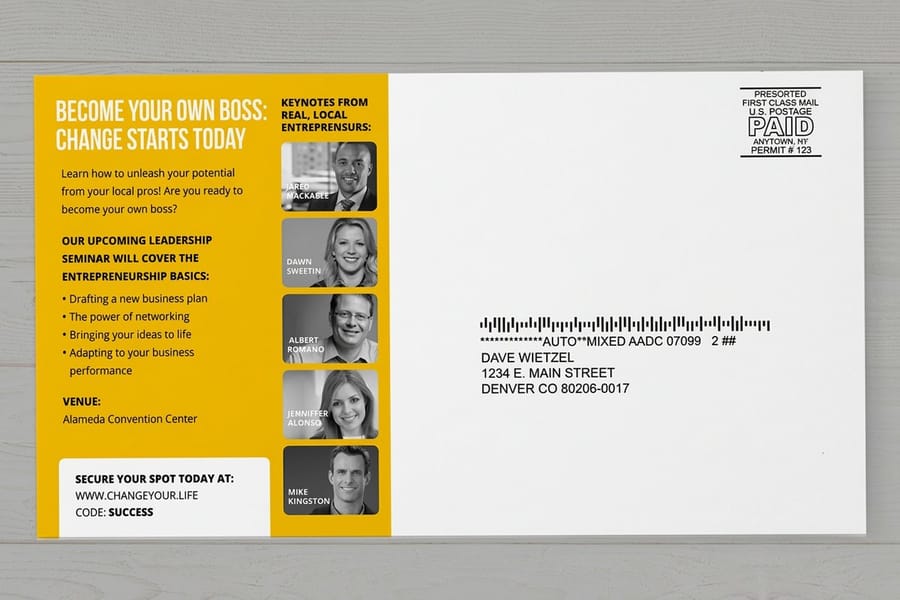
Mail has one advantage nothing on a screen can copy. It arrives in a place the recipient already checks, it stays on the counter, and nobody has to be logged in to see it. The examples below are the mail pieces that keep earning replies, and in each case the piece is not the clever part. The trigger behind it is.
All five run on the same economics. Direct mail postcards start at $89.68 for a run, so a test is a small line in a marketing budget rather than a decision that needs a meeting.
Examples one to three
1. The reactivation postcard. Pull the customers who bought once and never came back, put a real deadline on the card, and send it. The tactic is not the discount, it is the list. You are talking to people who already trusted you once, which removes the hardest part of the sale. Keep the offer specific, keep the expiry inside four weeks, and print the date large enough to read from the kitchen counter.
2. The oversized card. When every competitor mails the same standard size, the differentiator available to you is physical, not verbal. A larger card wins the stack because it is the one the recipient has to move. Spend the extra there rather than on a deeper discount, because a bigger discount attracts a worse customer and a bigger card attracts the same one.
3. The letter that looks personal. A sealed printed envelope at $142.99 changes how the piece is handled. People open envelopes standing up and read cards while walking to the bin. For a service worth thousands, that difference in ritual is worth the extra cost per piece. Keep the outside quiet, address it properly, and let the contents do the selling. Size decides the postage band as much as the look, so check the full color envelope sizes before you commit the artwork.
Examples four and five
4. The birthday mailer. A birthday is the only date in a customer record that is guaranteed to be true and guaranteed to matter to them. It also arrives in a week when almost nobody else is mailing that person commercially. We broke the mechanics down in birthday mailers that win repeat customers, and the rule is that the greeting has to come before the offer, not after it.
5. The just finished a job door hanger. Finish a roof, a driveway or a lawn, then walk the twenty houses either side the same afternoon with a door hanger that says which house you just worked on. Neighbours have the same roof age, the same trees and the same problem, and they can see the evidence from their own window. It is the cheapest targeting in local marketing and it requires no data at all.
Five handout examples that survive the first pocket
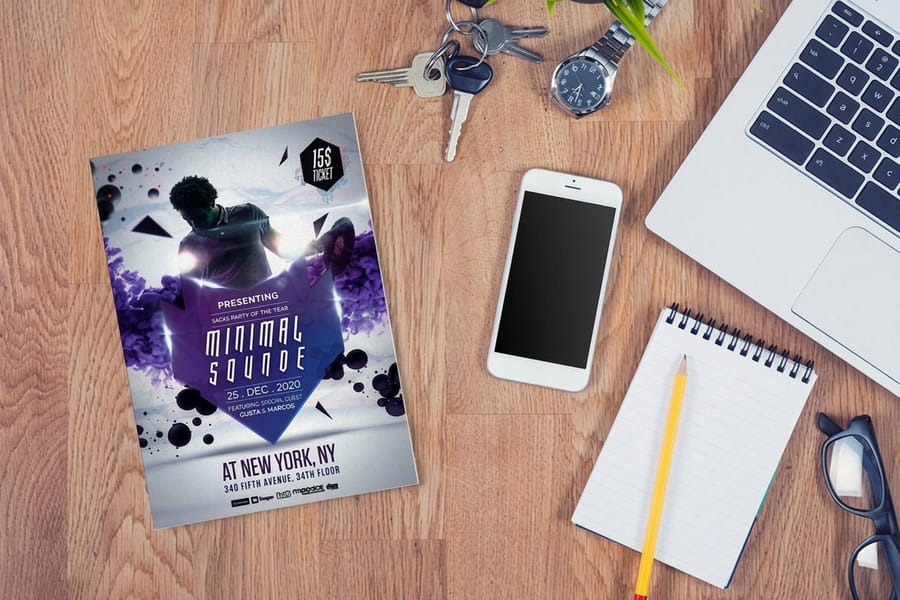
A handout has a brutal test to pass. Somebody is holding it, deciding in about two seconds whether it goes in a pocket or a bin, and usually deciding while walking. Everything that survives that test is either useful, beautiful, or so single minded that the offer registers before the decision is made.
These five are ordered by how long the piece stays in circulation, from a flyer that has one evening of life to a magnet that outlives the campaign that paid for it.
Examples six to eight
6. The one offer flyer. The flyers that fail try to list everything a business does. The ones that work carry one offer, one date and one way to respond. Standard flyers start at $39.54, which is cheap enough that you can print three versions of a single offer, drop them in three areas, and let the response tell you which headline to keep.
7. The objection brochure. Write down the five questions that stall your sale, then give each one a panel. A brochure at $57.11 is not a company profile, it is an answer sheet a prospect can take away and show to the person who has to approve the spend. That second reader is who most brochures forget, and who most decisions actually depend on.
8. The card people keep. A premium business card at $17.57 does something a contact form cannot. It gets touched. A heavier stock, a soft finish or a raised element changes the card from information into an object, and objects get kept in a drawer rather than photographed and forgotten.
Examples nine and ten
9. The fridge magnet. A magnet at $19.68 buys something no ad platform sells, which is a permanent position in the room where household decisions are made. It only works if you earn the space: put the number large, put one line of what you fix, and leave room for the customer to write their own note on it if they want.
10. The branded notepad. A notepad at $93.37 gets used every day and loses a sheet every time. Each of those sheets carries your name onto somebody else’s desk, which is the rare piece of print that distributes itself. It belongs anywhere a customer takes notes while talking to you, from a service counter to a consultation room.
Five packaging and signage examples that keep working
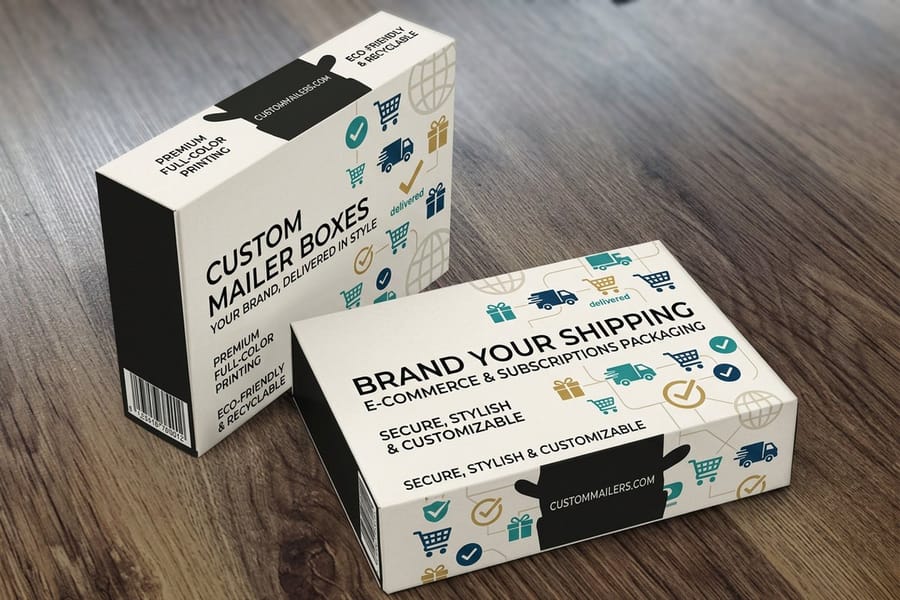
The last five run on a different logic. Nobody has to agree to receive them. They are already part of something the customer wanted, whether that is the parcel they ordered or the street they live on, which is why they keep producing customers long after a campaign flight has ended.
They are also the examples most businesses skip, because the piece belongs to operations rather than marketing. That is exactly why the space is still open.
Examples eleven to thirteen
11. The insert card in the box. The moment a parcel is opened is the only guaranteed moment of full attention you get. A single card inside, printed on a stock that feels deliberate, is where the reorder code, the referral ask or the care instructions belong. One ask per card, because two asks reliably produce none.
12. The printed mailer box. A custom mailer box starts at $711.78 and turns every delivery into a piece that sits on a doorstep, rides in a lift and gets photographed. It is the only advertising your customer carries into their own home for you, and unlike a paid impression, the shipping was already a cost you were paying.
13. The sticker customers apply. A premium sticker at $29.16 is the only print piece in this list where the customer chooses to distribute it. That makes the design bar higher than the rest: it has to be something a person wants on a laptop or a bottle without being paid to want it. Get that right and the piece runs for years.
Examples fourteen and fifteen
14. The finished job yard sign. A yard sign at $25 left on a completed job is proof placed in exactly the street where the next customer lives. Ask permission, leave it a week, and take a photograph of it in place before you collect it, because the same sign then does a second job in your gallery.
15. The event banner with one line. A vinyl banner at $79 is read at walking speed by somebody who is already looking at something else. That gives you one line, and the discipline is to spend it on what you do rather than on your name. Large type, high contrast, and nothing at the bottom, because bottoms of banners are blocked by people.
What a print campaign costs at 4OVER4.COM
Print pricing moves with size, stock, finish and quantity, and the per piece cost drops sharply as the run grows. The numbers below come straight from the live configurator for direct mail postcards, which is the format most of the examples above start with.
Quantity and price
Direct mail postcard pricing and specs
Real configurator numbers, where a larger run lowers the cost of every card in it.
| Quantity | Price Per Unit | Total |
|---|---|---|
| 500 | 17.9¢ | $89.68 |
| 1,000 | 17.1¢ | $170.53 |
| 2,000 | 9.35¢ | $186.95 |
| 3,000 | 6.84¢ | $205.13 |
| 4,000 | 5.58¢ | $223.31 |
| 5,000 | 4.83¢ | $241.51 |
You can also earn coins on every order and redeem them against future printing, which stretches a campaign budget across one more drop.
Choosing the stock that matches the tactic
Stock is a marketing decision, not a production one. A piece meant to be kept needs weight in the hand, because weight is what stops somebody binning it without reading. A piece meant to be read once and acted on can be lighter, and the money saved goes into the list instead. Heavier stock for anything that has to survive a pocket, a fridge or a drawer; lighter stock for a single evening of life.
Print it
Direct mail postcards, printed and mailed
Upload the list, pick the stock, and 4OVER4.COM handles the addressing and the drop.
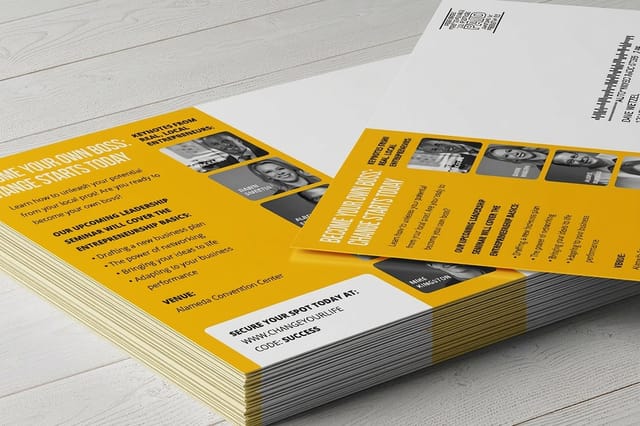
Finish changes both the look and the handling. Gloss lifts photography and shrugs off a wet mailbox, matte reads calmer and premium and is easier to read in bright light, and an uncoated stock stays writable, which matters for any piece a customer is meant to fill in or scribble a date on. For the pieces that get handed over rather than mailed, a heavier premium business card is where a small budget shows most, because it is the only piece in this list that gets touched during a conversation.
Which examples fit your industry
Different businesses reach customers at different moments, so here is where each set of examples pays back fastest.
- Home services. The door hanger after a finished job and the yard sign left on the lawn are the two highest yielding pieces on this list, because both are targeted by proximity rather than by data.
- Ecommerce and makers. The insert card and the printed mailer box turn fulfilment into marketing. The shipping cost is already committed, so the only new spend is the print.
- Restaurants and retail. Birthday mailers and magnets keep a place in the kitchen, which is where the decision about tonight actually gets made.
- Clinics and consultative services. The objection brochure and a personal letter in a sealed envelope suit a sale that needs a second reader before anyone approves the spend.
- Events and seasonal businesses. The one offer flyer and a banner readable at 30 feet cover the two ranges that matter at an event, in the hand and across the field.
Blanks for the fifteen formats
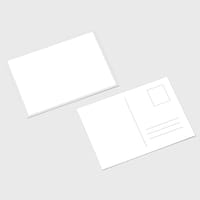
If you are not starting from scratch, templates cut the slowest part of the job. 4OVER4.COM sizes its blanks to exact product specs, so your artwork lines up with the cut lines, the bleed and the address block the post office needs. Grab a print ready blank from the blank template library with bleed and trim already marked.
Start fast
Blanks for the fifteen formats
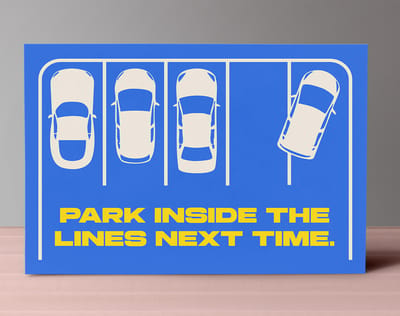
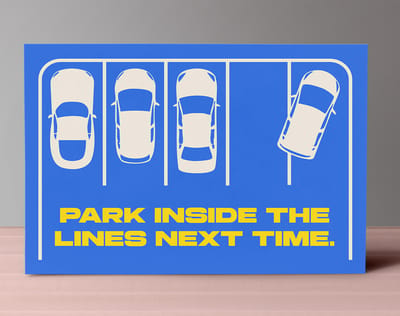
Postcard blanks with the address panel already marked off.

Wally sorts the fifteen examples into two piles
Copy the trigger, not the artwork
Every winner on this page has a reason to arrive: a past customer, a finished job next door, a birthday, an opened parcel. Pick one trigger you already have in your business, print one piece for it with a single ask and a visible deadline, and give it a code so you can tell what it earned. 4OVER4.COM prints and mails the whole list, from postcards and flyers to boxes, signs and stickers.
Order direct mail postcards →What to remember about print marketing
Rules that hold across all fifteen examples
- One piece, one ask. Every winner in this list asks for exactly one thing. A piece with two calls to action gets neither, because the reader resolves the ambiguity by putting it down.
- Print the deadline, not just the offer. A discount without an expiry is a coupon that lives in a drawer. A date turns the same offer into a reason to act this week.
- Write for the distance. A mail piece is read at arm’s length, a banner at 30 feet. Set your type for the real reading distance and cut the copy that does not survive it.
- Spend on the stock, not the discount. A heavier stock or a laminate changes how a piece is handled. A deeper discount only changes who responds, and rarely for the better.
- Give the piece a reason to be kept. Utility beats persuasion over time. A magnet, a notepad or a sticker keeps working long after the campaign that funded it has finished.
Explore more
More ways to print and promote
The cheapest example here is a postcard at $0.18 a household, the dearest a mailer box at $2.85.
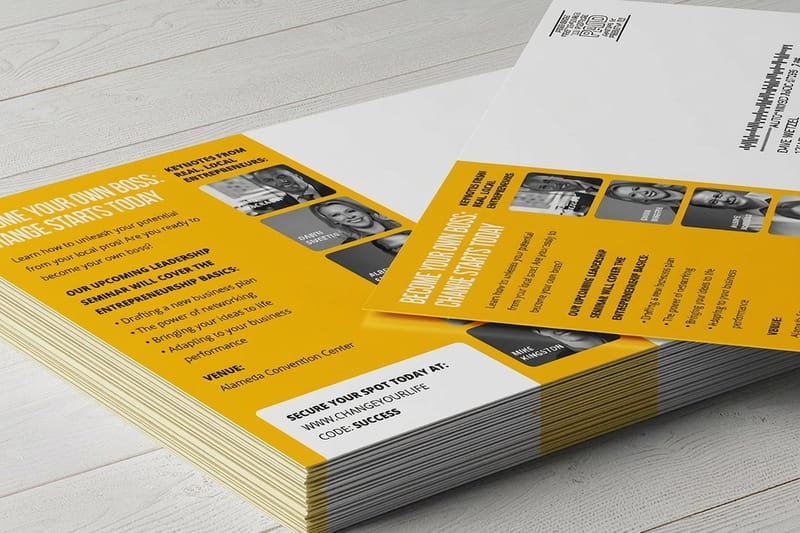 Product Direct Mail Postcards Printed, addressed and mailed for you, from list to letterbox.
 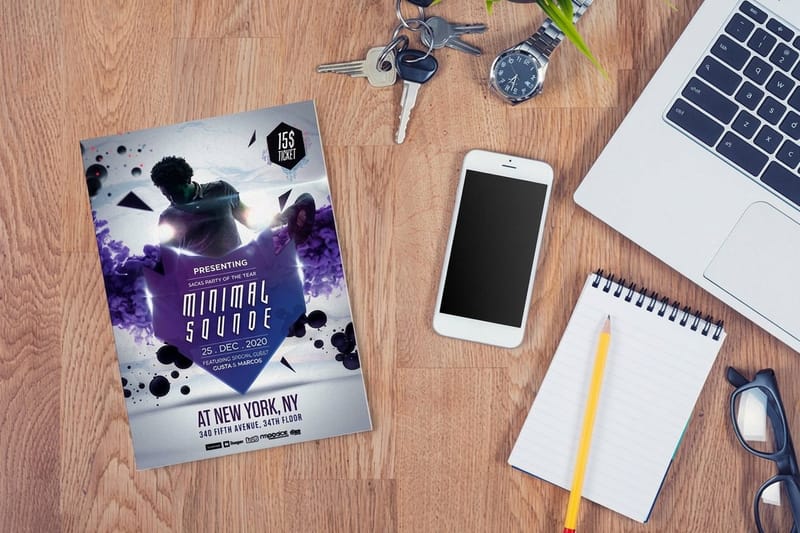 Product Standard Flyers The cheapest way to test three versions of one offer.
 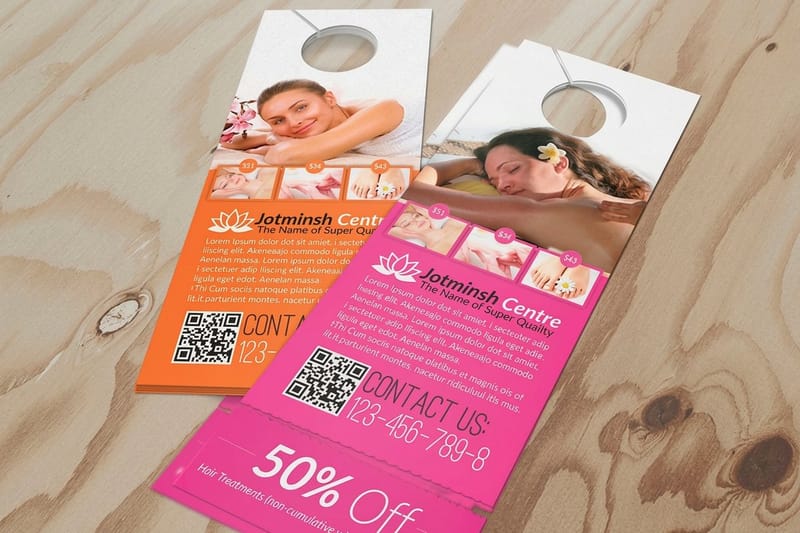 Product Door Hangers The piece to drop on the twenty houses next to a finished job.
 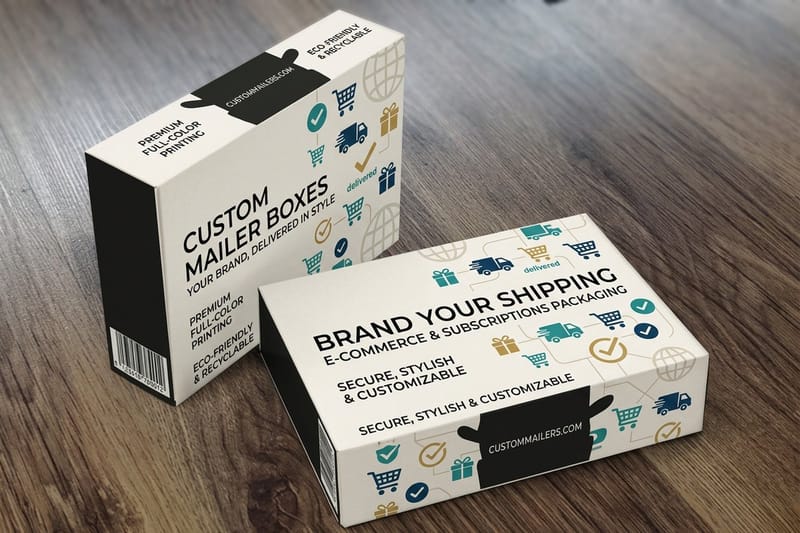 Product Custom Mailer Boxes Turn a delivery you already pay for into a doorstep ad.
 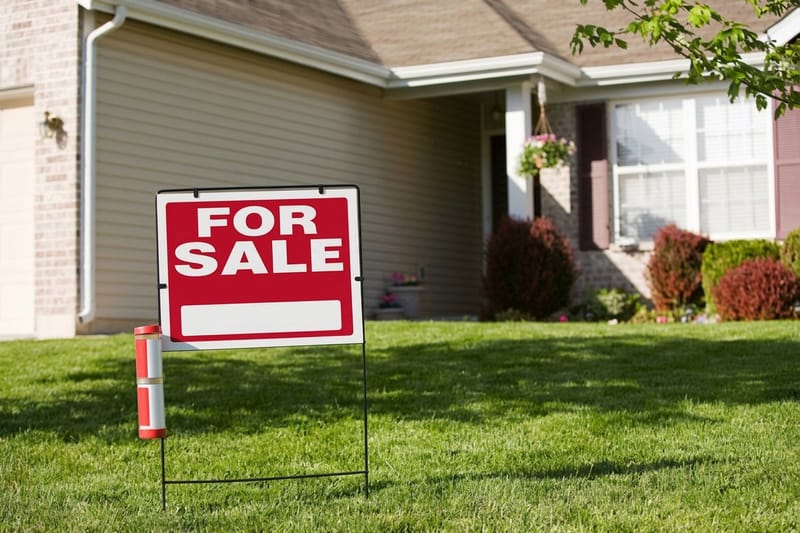 Product Yard Signs Proof planted in the street where the next customer lives.
 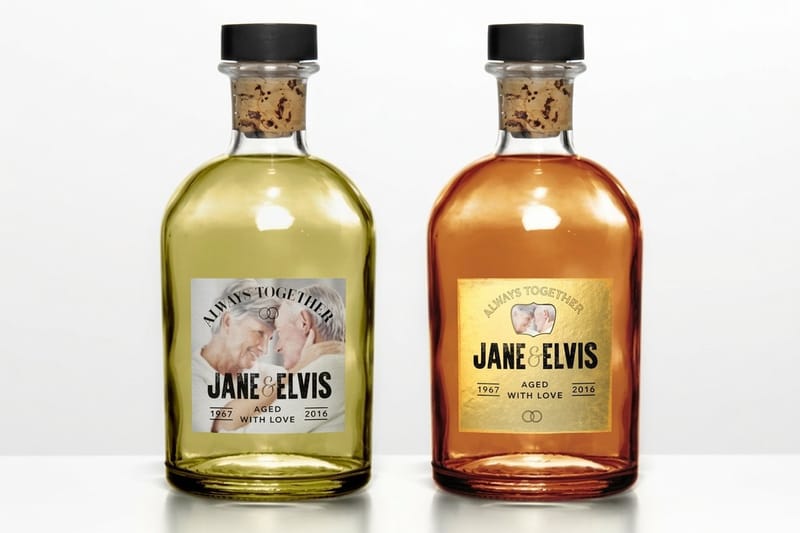 Product Premium Stickers The one piece your customers choose to distribute for you.
 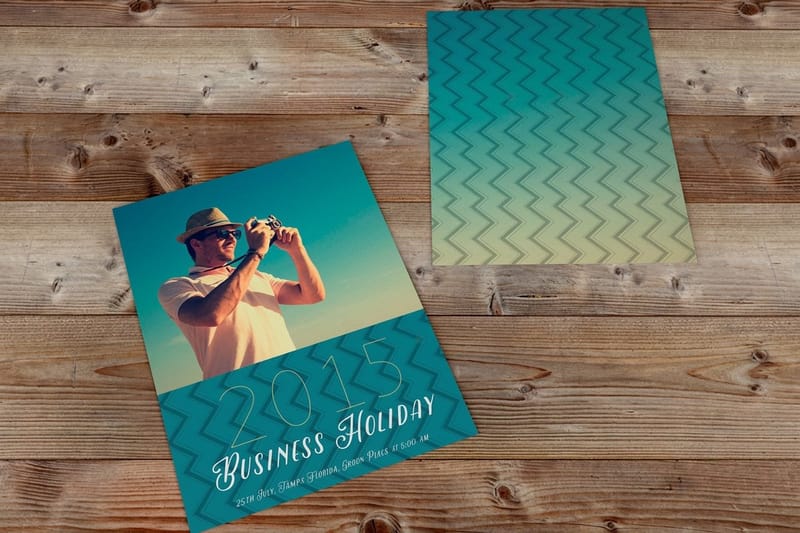 Category Postcard Printing Every size, stock and mailing option in one place.
 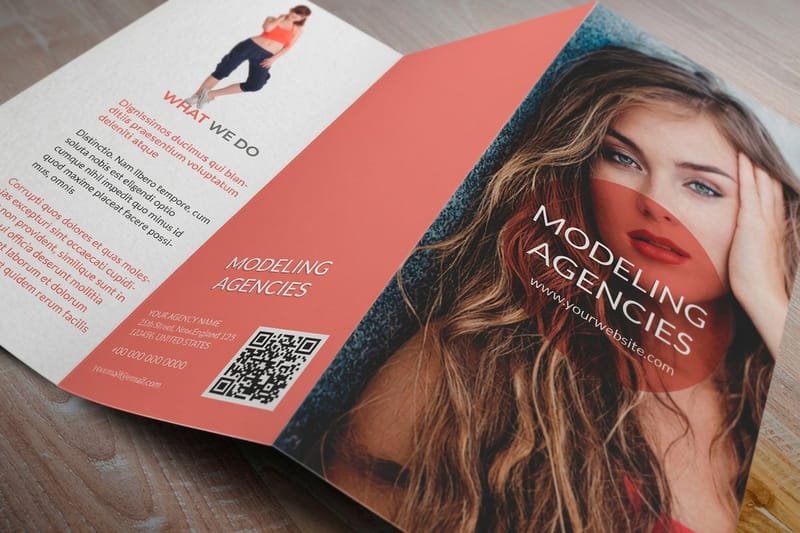 Category Brochure Printing Folds, panels and stocks for the take away answer sheet.
  Guide Print Advertising Guide The formats, what each one costs you and where it pays back.
  Guide What Is Marketing Collateral The pieces a sales conversation needs, in order. Article HVAC Marketing Strategies The same tactics applied to a single seasonal trade.
 Ready to print the first one?
Pick the format, drop in your design or a free template, and 4OVER4.COM prints it sharp on premium stock and mails it for you if you want it mailed.
Common questions about print marketing examples
Does print marketing still work when everything else is digital?
It works for the reason it always did, which is that a printed piece occupies physical space in a place the recipient already looks. A postcard on a counter, a magnet on a fridge and a sign in a street do not compete for a slot in a feed and cannot be skipped in two seconds. The examples on this page are not nostalgic choices, they are formats that solve a problem digital struggles with: reaching somebody who is not currently looking for you, in a moment when there is nothing else demanding attention. The practical approach for most businesses is not print instead of digital, it is print as the thing that moves somebody to a page, a call or a door.
Which print marketing example should a small business start with?
Start with the piece that talks to people who already bought from you. A reactivation postcard to past customers costs less to produce than a cold campaign, has a far smaller list to pay for, and speaks to an audience that has already decided you are trustworthy. Direct mail postcards start at $89.68 at 4OVER4.COM, so a first test is affordable. Once that piece is earning its cost back, add a second format that fits how you already operate, whether that is a door hanger after each job, an insert card in every parcel, or a yard sign on completed work.
How do I measure whether a print piece worked?
Give each piece a way of identifying itself. A unique offer code, a dedicated phone number, a specific landing page URL or a printed QR code that points somewhere no other channel points will all separate print responses from the rest of your traffic. Then decide the measurement window before you mail, because print responses arrive over weeks rather than hours and a campaign judged after three days will always look like a failure. Track cost per response rather than response rate on its own, since a small list of past customers usually beats a large cold list on the number that matters.
How much should a first print campaign cost?
Enough to be a real test and small enough that a poor result is not painful. At 4OVER4.COM standard flyers start at $39.54, magnets at $19.68, yard signs at $25 and direct mail postcards at $89.68, so most of the examples here are testable for a few hundred dollars once you add the list or the drop. Spend the budget on the audience and the stock rather than on quantity. A thousand pieces to the right list beats ten thousand to a bought one, and the print quality is what decides whether the piece is handled or binned.
What is the most common mistake in these campaigns?
Asking for more than one thing. A card that offers a discount, promotes a new service, lists five phone numbers and invites a social follow gives the reader a decision to make, and the easiest decision available is to put it down. The pieces that win in this list each ask for a single action with a single deadline. The second most common mistake is the reverse of a discipline problem: printing before the list exists. The audience decides most of the result, and no amount of design rescues the wrong recipients.
More frequently asked questions →
Keep reading: the print advertising guide covers what each format costs you across a year, how to build the offer sits upstream of every example here, and the landscaping ideas list shows the same tactics applied to one trade. The pool company ideas do the same for a seasonal business.
