
Business Cards in Mailboxes, the Law Most Marketers Ignore


Emma is our prepress and print production voice, built from the knowledge of our production team, with over 20 years in printing.
Leaving business cards in mailboxes, is it legal or not
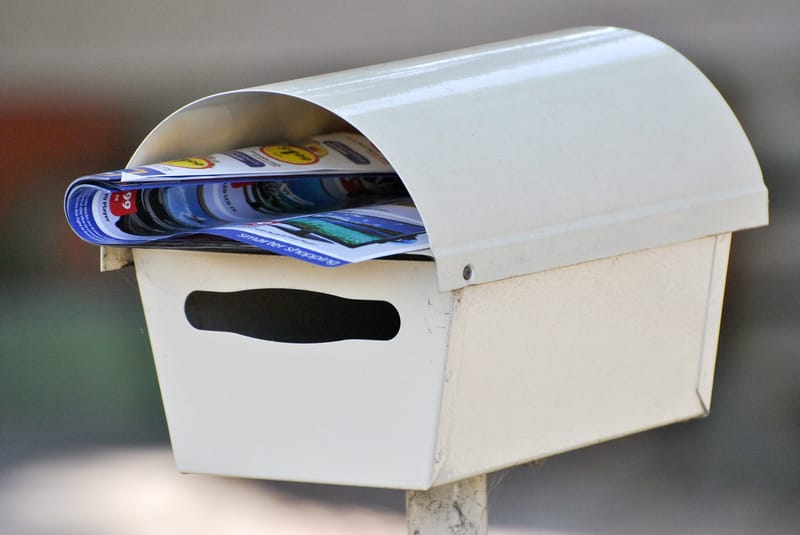
No. Leaving business cards in mailboxes is illegal under federal law in the United States. A mailbox is reserved for stamped mail that a carrier delivers, and 18 U.S.C. 1725 makes it an offense to drop mailable matter into one without postage, whether that is one 2 x 3.5 in card or a stack of 500. The fine is assessed per piece, not per street. The legal versions of the same idea are printed pieces made for the job: door hangers on 14pt or 16pt gloss cover that go on the knob, from $290.41 for 250, and direct mail postcards that the carrier delivers, from $89.68 for 500. 4OVER4.COM has helped over 150,000+ businesses find better, legal ways to hand out their cards and grow a client base.
If you have ever thought about stuffing a few business cards into neighborhood mailboxes as a quick marketing tactic, you are not alone. It looks easy and it looks cheap. It can also land you in legal trouble, dent your brand reputation, and waste perfectly good cards. Here is what you actually need to know, the law, the risks, and the alternatives that work far better.
If you are serious about getting your cards in front of real people, professional business cards deserve a smarter route than the mailbox shortcut.
Picture a roofer with 500 fresh cards the week after a hailstorm. Walking them into mailboxes risks 500 separate violations. Hanging door hangers on the same street, or mailing postcards to it, reaches the same homes legally, and the cards go to the homeowners who call back for a quote.
Federal law and your mailbox, what most people miss
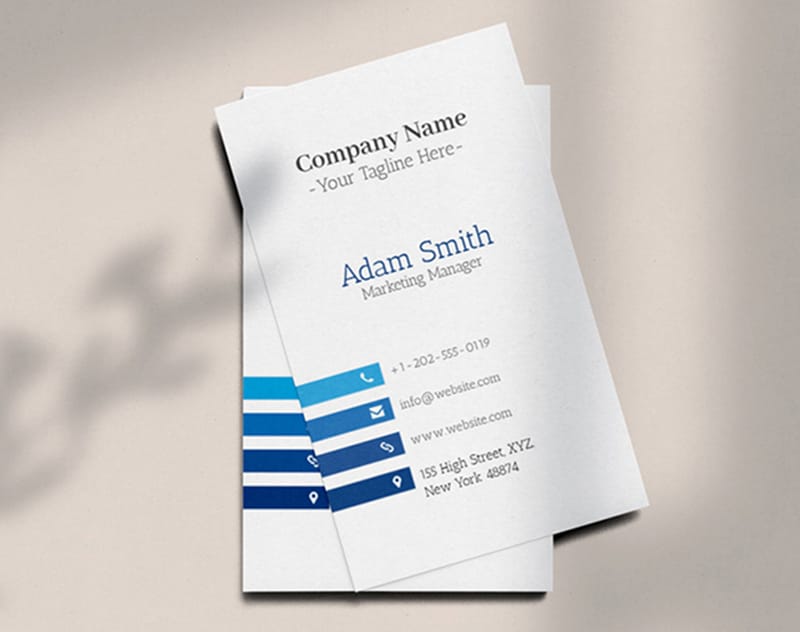
The statute people quote here is usually the wrong one. 18 U.S.C. 1708 is the mail theft law and it has nothing to do with dropping off a card. The provision that actually applies is 18 U.S.C. 1725, which covers mailable matter deposited in a letter box without postage paid on it. A standard 2 x 3.5 in business card is mailable matter. Slide one in and you are inside that section. The USPS Domestic Mail Manual section 508 says the same thing from the operations side: a receptacle approved by the Postal Service is for carrier-delivered mail, and nothing else goes in it.
The fine is written per piece. That detail is the one people miss. Walk a street of forty houses and you have not committed one violation, you have committed forty. Check the current penalty figure on the DMM page before you quote a number to anyone, since it is set by statute and gets restated over time.
This is not an obscure rule that nobody enforces. Carriers report boxes stuffed with unstamped material because it slows their route down, and local postmasters have the authority to escalate it. One homeowner complaint is enough to start the paperwork. For a small business owner, a single fine can wipe out months of marketing budget.
Enforcement runs through the U.S. Postal Inspection Service, not the local police. A complaint filed there triggers a real investigation, and repeat offenders face escalating consequences up to possible criminal charges. The size of the card does not matter, and an empty looking box does not matter either. A mailbox is treated as federal property once it is installed for postal use, and a jammed card can block a check, a medical notice, or a legal document. Add the neighbors who share the complaint online and the reputation damage comes free.
What counts as a mailbox and what does not
The boundary is narrower than most people assume, and it is worth knowing exactly where it sits.
The mailbox itself is off limits, inside and out. So is the slot in a front door and the bank of boxes in an apartment lobby. The post and the flag count as part of the receptacle, so taping a card to the post or clipping one to the flag is the same offense as opening the lid. The rule covers everything that is not stamped, addressed mail: business cards, flyers, door hangers, coupons, and menus. Only postal personnel may place items inside a residential box.
A newspaper tube mounted under the box is not a mail receptacle, and that is the one gray area on a typical street. Papers get delivered there by private carriers, not USPS. Local ordinances still apply, and some towns treat it as littering.
The door and the porch are fair game under federal law. A door hanger on the knob, a card wedged in the screen door, a piece left on the step: none of that touches the postal system. Check the town ordinance and any HOA rules first, because solicitation rules are set locally.
Why mailbox stuffing hurts your brand
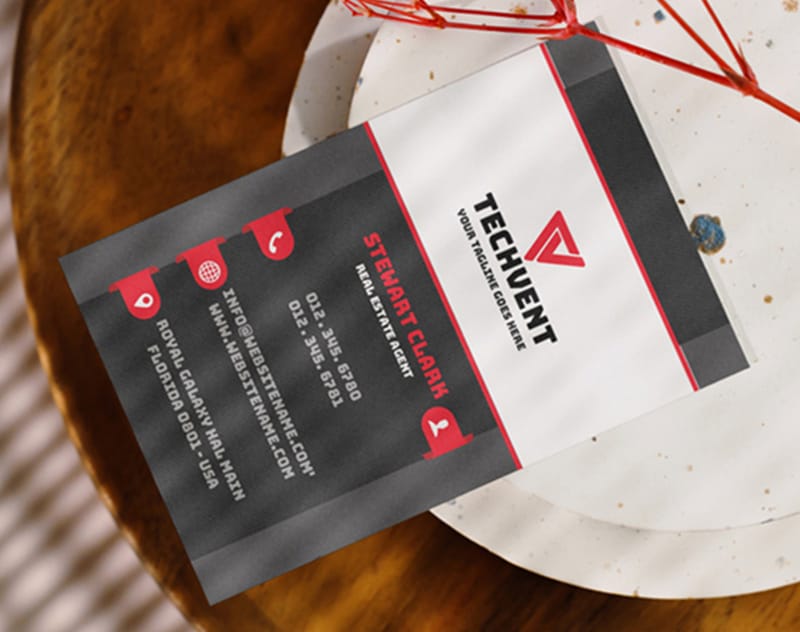
Set the legal issues aside for a second. Even if it were allowed, a 2 x 3.5 in card dropped unasked into a stranger mailbox lands wedged between a utility bill and a catalog, the worst setting for a first introduction. Think about how you feel when you find random flyers crammed next to your electric bill. Annoyed. Exactly.
Unsolicited materials in a mailbox get tossed almost immediately. There is no context, no introduction, and no reason for the homeowner to care. Your carefully designed card lands in the recycling bin before anyone reads your name.
Compare that with handing someone a card at a networking event, tucking one inside a personalized letter, or leaving a small stack at a coffee shop after the owner says yes. Those moments carry intent and permission. They feel professional instead of spammy. A thick, textured card on premium stock says you take your work seriously, and the medium matters as much as the message.
Legal alternatives that actually generate leads
So you cannot use mailboxes. Good news, the alternatives are more effective anyway. Here is what works now, and why each one beats the mailbox drop.
Direct mail services
This is the legal way to get your card into a mailbox. USPS-compliant campaigns let you target specific neighborhoods, demographics, or zip codes, and your card arrives as legitimate mail that recipients are more likely to read. You can attach a card to a letter, postcard, or promotional piece, and people keep business cards attached to letters at a far higher rate than standalone mailers. That small detail makes a big difference. Order business cards built for your direct mail campaign, pair them with direct mail postcards, or cover a whole carrier route with EDDM and let the post office do the delivery. The direct mail postcards web story lays out the stocks and volume pricing.
If you do it the legal way, a few USPS specs keep your mailers compliant:
- Size. envelopes generally run 3.5 to 6.125 inches tall and 5 to 11.5 inches long to qualify as standard mail.
- Weight. keep letters under 1 ounce to hold the standard postage rate.
- Return address. always print one so undelivered mail comes back to you and communication keeps flowing.
Door hangers and door-to-door distribution
You cannot put anything inside a mailbox, but you can hang materials on doorknobs or leave them on porches in most areas. Door hangers with a business card attached give you neighborhood reach without breaking federal law. Check your local ordinances first, since some HOAs and cities have their own rules about solicitation.
Leaving a card on a door is legal across almost every U.S. location and counts as a generally protected form of solicitation. Generally legal is not the same as always welcome, so these habits keep a door campaign both legal and well received:
- Check local ordinances first. a few cities want a solicitor permit even for leaving printed material, and a five minute call to the city clerk settles it.
- Respect No Soliciting signs. skip any door or entrance that posts one, because ignoring it invites fines or a trespassing complaint.
- Get manager permission at apartments. leaving cards on individual unit doors without approval can get you banned from the property.
- Secure the card. a card that blows off the handle onto the sidewalk is litter, not marketing, so wedge it in the frame or use heavier stock.
- Keep the content professional. anything offensive or misleading on a card left in public view creates real liability.
Not sure whether a doorstep drop even counts as solicitation? The piece on when leaving a business card becomes soliciting clears up the gray area.
Community boards and local businesses
Coffee shops, gyms, libraries, laundromats, and coworking spaces often have bulletin boards or card displays. Ask permission, leave a small stack, and refresh them every couple of weeks. This puts your card in front of people who are already in your target area. For designs that stand out on a crowded board, classy business card design inspiration is worth a look before you print.
Partner businesses, card bowls, and windshields
A few more spots generate leads with zero federal exposure. Find a non competing shop that serves the same customers, like a florist for a wedding photographer, and ask the owner to swap cards. The Florist Business Cards web story shows what the florist side of that swap can carry. Drop yours in the fishbowl by a restaurant register, which is free and fair game. Car windshields are legal in most public lots, though private lots and littering ordinances apply, so check first. The companion piece on leaving business cards on cars covers the windshield rules in full, and this list of 20 places to leave print materials goes wider still.
Hand them out
Standard business cards, ready to share
The everyday workhorse for events, packages, and community boards, printed on stock that feels solid.
Networking events and trade shows
Face-to-face exchanges remain one of the highest-converting ways to hand out business cards. When you pass someone a card during a real conversation, they remember you and they connect the card with a person, not a random piece of paper in their mailbox. Cards printed on heavier stock, like 32pt ultra-thick, feel big in the hand, and that tactile impression sticks. People keep sturdy, well-designed cards and toss the flimsy ones.
Include cards in every package and correspondence
If you ship products, drop a business card in every box. If you send invoices, tuck one in the envelope. Every piece of outgoing mail is a chance to reinforce your brand without breaking any laws. Businesses just getting started can order free business cards from 4OVER4.COM to test designs before committing to a larger run.
Designing cards worth keeping, not tossing
Whether you hand cards out at events or send them through direct mail, the card itself has to earn its place in someone’s wallet. A generic white card with black text is going in the trash. A bold, textured card with a unique finish gets a second look. 4OVER4.COM offers 60+ paper types so you can match the card to your brand, from the hefty feel of 32pt stock that real estate agents love to the uncoated, textured options artists gravitate toward.
A few design basics separate cards people keep from cards people bin:
- Know your audience. tailor the card content to your profession so it feels relevant to the people who hold it.
- Readable fonts. keep your name, company, job title, and contact details clear and prominent.
- Design basics. use sensible font sizes, the CMYK color model, and enough white space for a clean, professional look.
A card left on a door works harder than one handed over with a smile. There is no handshake and no conversation, so the card carries the whole pitch, and it has about two seconds to earn its keep before it hits the trash. Build it around these elements:
- A clear value line. Licensed Plumber, Same Day Service tells the homeowner exactly why to keep the card. A vague tagline goes straight to recycling.
- The phone number as the largest element after your name. someone picks the card off a mat and reads it from arm's length, so tiny fonts and crowded detail lose the call.
- A QR code. a code that opens your booking page or a special offer removes friction, since the homeowner scans and lands exactly where you want.
- Weather resistance. sun, rain, and humidity punish paper. Plastic and laminated cards hold up, and 30Mil Frosted Plastic Cards still look sharp after hours in the elements.
- A call to action. Call for a free estimate or Scan for 10 percent off gives the homeowner a reason to act.
Thicker cards simply survive the outdoors better, and this guide to business card thickness from 14pt to 48pt helps you match stock to the weather. To keep the layout readable at arm's length, see what you should not put on a business card.
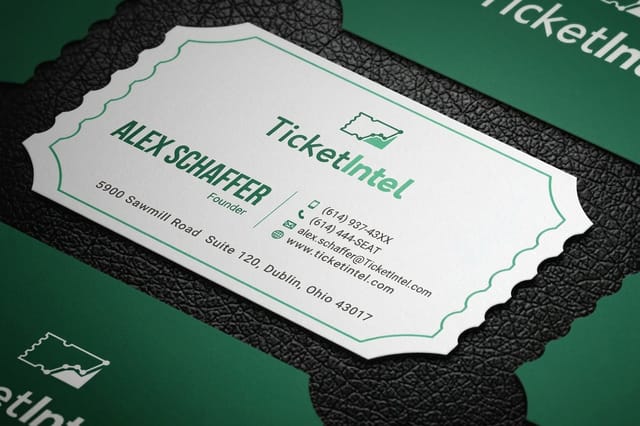
Some standout formats are hard to throw away. 3D Lenticular Business Cards create a motion effect that stops people mid-conversation. Artist Business Cards let your work speak before you do. Black Business Cards make a dramatic first impression with foil or white ink, and for something truly different, 30Mil Clear Plastic Cards are transparent, waterproof, and unlike anything your competitors hand out. Want to break the rectangle entirely? Die-Cut Any Shape Business Cards follow your own outline. Need a starting point? Browse the 4OVER4.COM Design Templates to find a layout for your industry and customize it in minutes.
Stand out
Die-cut any shape business cards
Break the rectangle and cut your card to any outline for a card people keep on the desk.
Quantity and price
Business card pricing and specs
Real configurator numbers, where the per-unit cost drops hard as your quantity climbs.
| Quantity | Price Per Unit | Total |
|---|---|---|
| 100 | 17.6¢ | $17.57 |
| 200 | 11.5¢ | $23.07 |
| 300 | 9.15¢ | $27.46 |
| 400 | 7.96¢ | $31.86 |
| 500 | 7.25¢ | $36.26 |
| 600 | 6.77¢ | $40.64 |

State and local regulations beyond federal law
Federal law covers the mailbox, and your town and HOA cover the porch. Before a door hanger run, ask the city clerk whether you need a solicitation permit and which hours distribution is allowed, and check whether the street sits under an HOA. Some cities prohibit leaving any commercial materials on residential property without a solicitation permit. Others restrict door-to-door distribution to certain hours or require you to register with the city clerk. HOA-governed communities often ban all unsolicited commercial materials on common property, and breaking those rules can get you shut out of entire neighborhoods.
The rules that most often trip up a route are these:
- Solicitation permits. some cities require a permit for any door to door activity, often under 50 dollars, and every card left without one is a potential citation. The permit costs less than the fine.
- No solicitation zones. gated and HOA governed neighborhoods enforce their own policies, so clear it with management first.
- Time of day limits. many ordinances hold door to door activity to roughly 9 AM to 7 PM, and staying inside that window avoids complaints.
- Littering ordinances. if your cards blow onto sidewalks you can be cited, so secure them and print on heavier stock.
- Private property. business parks, malls, and apartment complexes are private, and the manager can bar distribution outright.
Before any physical campaign, check three things, federal mailbox regulations that are non-negotiable, your state solicitation laws, and any local or HOA restrictions. Weigh the real downside of getting it wrong:
- Fines. unauthorized mailbox use can bring penalties that vary by local law and the nature of the violation.
- Legal action. residents can pursue civil suits, which means court fees and possible damages.
- Reputation damage. people read mailbox stuffing as unprofessional and intrusive, which sours how they see your business.
- Compliance. sticking to postal rules keeps your outreach legal and protects your brand identity.
For marketing that stays eco-conscious in every sense, the 4OVER4.COM Green Printing options use sustainable materials and processes so you can reach your audience responsibly.
Apartment buildings, condos and gated communities
A multi unit building changes the question, because two separate rules are stacked on top of each other. The bank of boxes in the lobby is a postal receptacle exactly like a box on a post, so a card slipped into a slot there breaks the same federal rule. Cluster boxes in a shared parking area work the same way. The lobby door is usually the second obstacle, since the building itself is private property and the manager decides who walks the hallways.
Ask first and the campaign gets easier, not harder. A property manager who says yes will often let you leave a stack at the front desk or pin one card to the community board, which puts you in front of every resident without a single door knock. A manager who is never asked tends to bin the lot and tell residents that a stranger was in the building.
Gated communities and HOA neighborhoods usually publish their own solicitation policy, and it is normally stricter than the town ordinance. Read it before you plan a route. Where the answer is no, the legal way in is the mail stream itself, so pair a standard business card with an addressed mailer and let the carrier deliver it for you.
How direct mail compares to mailbox stuffing
Line the two approaches up side by side and direct mail wins on every column of the table below. Leaving business cards in mailboxes costs the cards and an afternoon walking the block, while 500 direct mail postcards start at $89.68 before postage and the carrier does the walking. The hidden costs of the mailbox drop are steep. Fines, brand damage, and zero tracking mean you never know if it worked.
| Method | Legality | Cost per household | What it takes to run |
|---|---|---|---|
| Mailbox stuffing | Illegal. 18 U.S.C. 1725 covers unstamped matter in a mail receptacle, and the fine is per piece. | The card and your shoe leather, until the first complaint. Then the fine outweighs the whole run. | Print cards, walk the street, open every box. No list, no permission, no way to know who saw it. |
| EDDM | Legal. This is the sanctioned way to reach every box on a route, and the carrier does the delivering. | Print cost plus USPS EDDM postage per piece. Check the current EDDM rate on the USPS site before you budget. | Pick carrier routes by zip, print to an EDDM-eligible size, bundle and drop at the post office with the paperwork. See what EDDM is and whether it fits you. |
| Door hangers | Legal under federal law. The knob is not a mail receptacle. Local solicitation ordinances and HOA rules still apply. | Print cost plus your time, or a distributor fee if you hire the walking out. | Print door hangers, check the town ordinance, walk the route or pay someone to. Nothing to file with anyone. |
Direct mail costs more per piece, but you get targeting, tracking, and legal compliance baked in. You can measure response rates, test different designs, and scale what works. That is marketing. The other approach is gambling. With 10 billion+ cards printed over 25+ years, 4OVER4.COM pairs professional printing with distribution that actually delivers, no guesswork and no fines.
Compare formats
Popular business cards, side by side
Stock, finish, quantity, turnaround, and from-price across our most-ordered business cards.
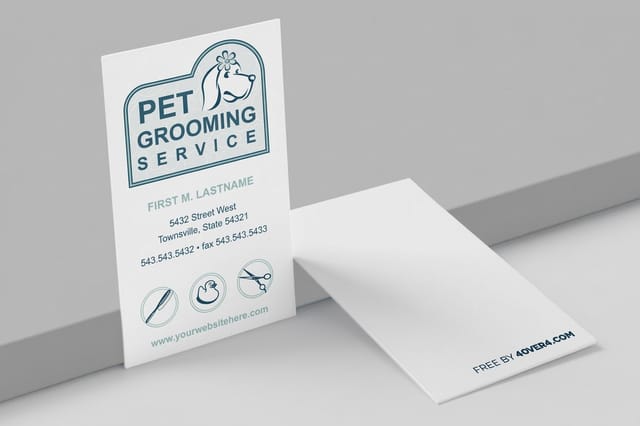 free business cards | 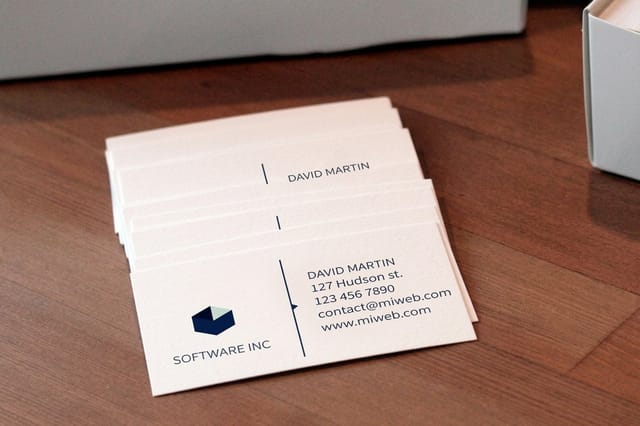 Standard Business Cards |  3D Lenticular Business Cards | 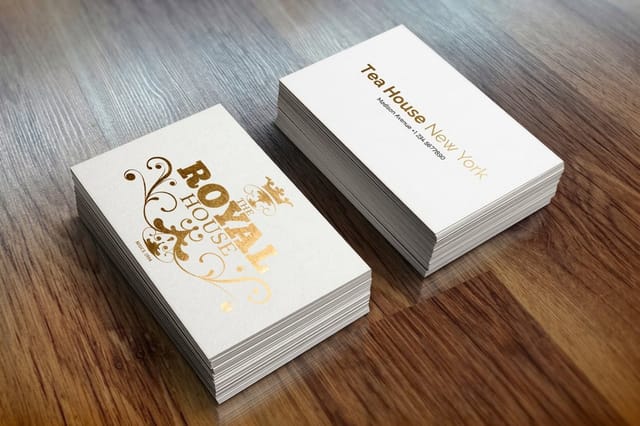 Metallic Foil Business Cards | |
|---|---|---|---|---|
| Min price | Free | $17.57 | $690.88 | $222.13 |
| Paper / stock | 14pt Gloss Cover | 14pt Gloss Cover | 31pt Lenticular Lens | 16 Point Silk Laminated |
| Finish | - | Standard Finish | - | - |
| Size | 2" x 3.5" | 2" x 3.5" | 2" x 3.5" - Vertical | 2" x 3.5" |
| Default qty | 200 | 100 | 500 | 500 |
| Turnaround | 5 business days | 3 business days | 22 business days | 7 business days |
| Rating | ||||
| View & customize | View & customize | View & customize | View & customize |
Tracking and measuring your results
One of the biggest problems with mailbox drops is that you cannot track anything. Did anyone see your card? Did they call? Did they toss it? You never know. Direct mail campaigns let you print a unique phone number, QR code, or landing page URL on each card, so you know exactly how many people responded and what your cost per lead was. That data drives smarter decisions on the next run.
Seasonal campaigns without touching a mailbox
Holidays are when the temptation to walk a street with a box of cards is strongest, and it is also when carriers are watching their routes most closely. The rule does not soften in December. If you want a seasonal push into homes, run it as EDDM so the carrier delivers your piece with the rest of the mail, or hang it on the door where the postal rules do not reach. Print a dated offer on the card so you can tell which run brought the calls in.
A seasonal card also travels well inside something else. Slip one into every order you ship, attach one to an invoice, leave a small stack at the counter of a shop that said yes. Branded stickers or labels on the outside of the package pull the same weight, and the Logo Sticker Design Ideas guide has ways to use them across those touchpoints.
Building a distribution strategy that scales
One-time card drops, legal or not, do not build momentum. A real strategy means you are consistently getting cards into the right hands through several channels at once. Plan your quantities around the method:
- Networking events. plan for 50 to 100 cards per event so you never run out mid-conversation.
- Direct mail campaigns. budget 500 to 2,000 pieces depending on your target area.
- Community boards. leave 20 to 30 cards per location and refresh them every couple of weeks.
4OVER4.COM offers quantity tiers that make scaling affordable, so ordering in bulk drops your per-card cost and lets you distribute widely without blowing the budget. You can also fold direct mail into a broader campaign, where the card rides along inside creative promotional materials and strengthens the connection with each prospect.
For the cards themselves, 4OVER4.COM has printed business cards since 1999, with 10,000+ reviews and a 4.8 out of 5 star rating, durable finishes including UV coating, soft touch lamination, and spot UV, die cut shapes, waterproof plastic options, and 99.8% on-time delivery so the cards arrive before the campaign starts. Running a trade or service brand? These plumbing business card ideas and real estate business card ideas show how different fields dress up the same durable stock.
Start fast
Templates and print-ready blanks
Business card templates and exact-size blanks so your design lands inside the cut line. Grab a print-ready 3D Lenticular Business Cards blank or a Black Business Cards blank to start.





Wally keeps your cards legal and in the right hands
Skip the mailbox, win the neighborhood the legal way
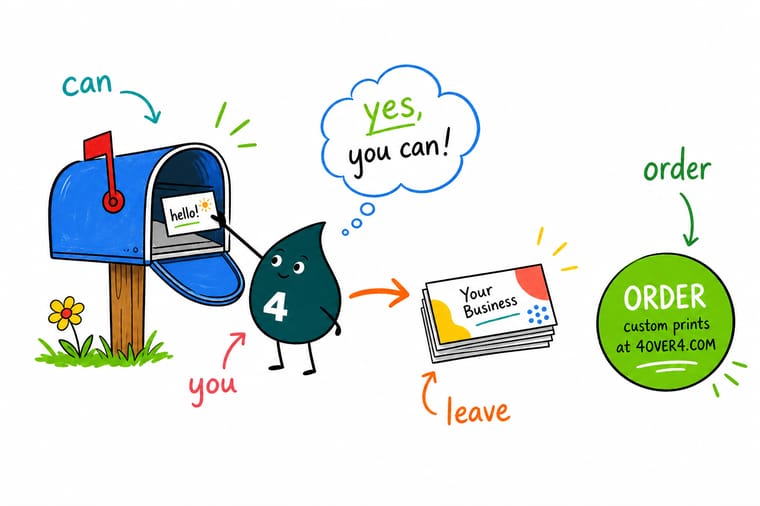
Skip the mailbox. It is illegal under federal law and your card ends up in the trash anyway. The moves that work are legal direct mail, cards handed out at events, a small stack on a community board with permission, and one tucked into every package. Print them on stock that feels solid and people keep your card instead of tossing it.
Order business cards →What to remember before you distribute business cards
Explore more
More ways to print and share business cards
Standard, black, plastic and artist business cards, plus the design templates, so the next card you print reaches people by hand or by mail.
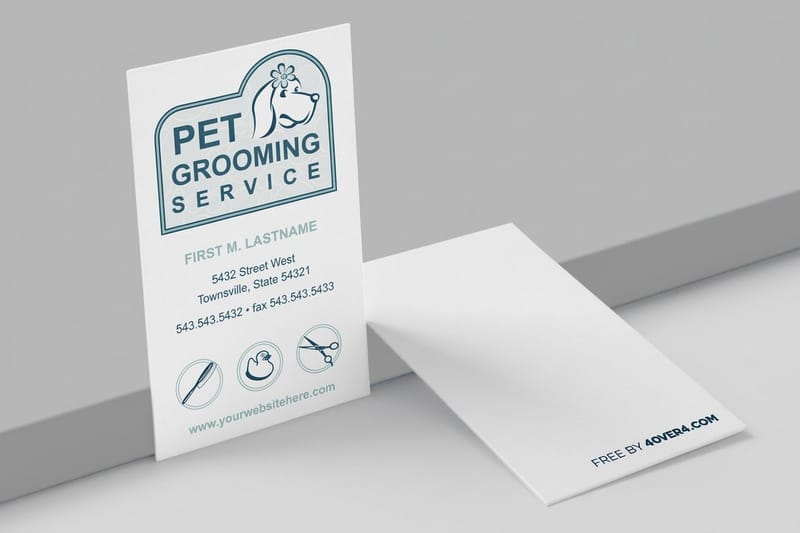 Shop Business Cards Printing Browse every business card format in one place.
 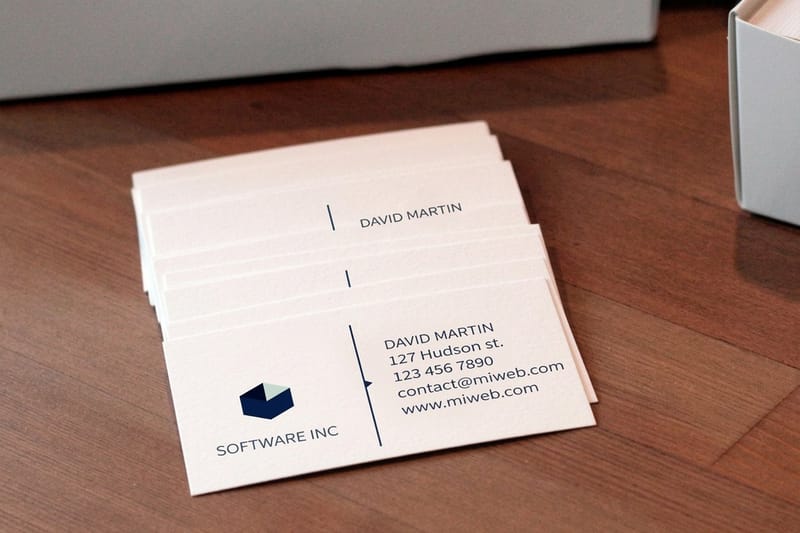 Product Standard Business Cards The everyday workhorse on premium stock.
 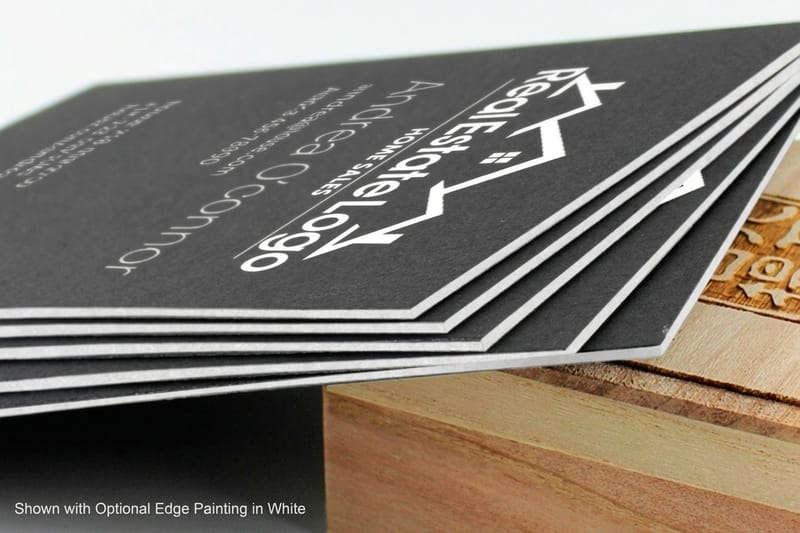 Product Black Business Cards Rich, saturated stock with foil or white ink.
  Product Clear Plastic Cards Transparent, waterproof, unlike anything else.
 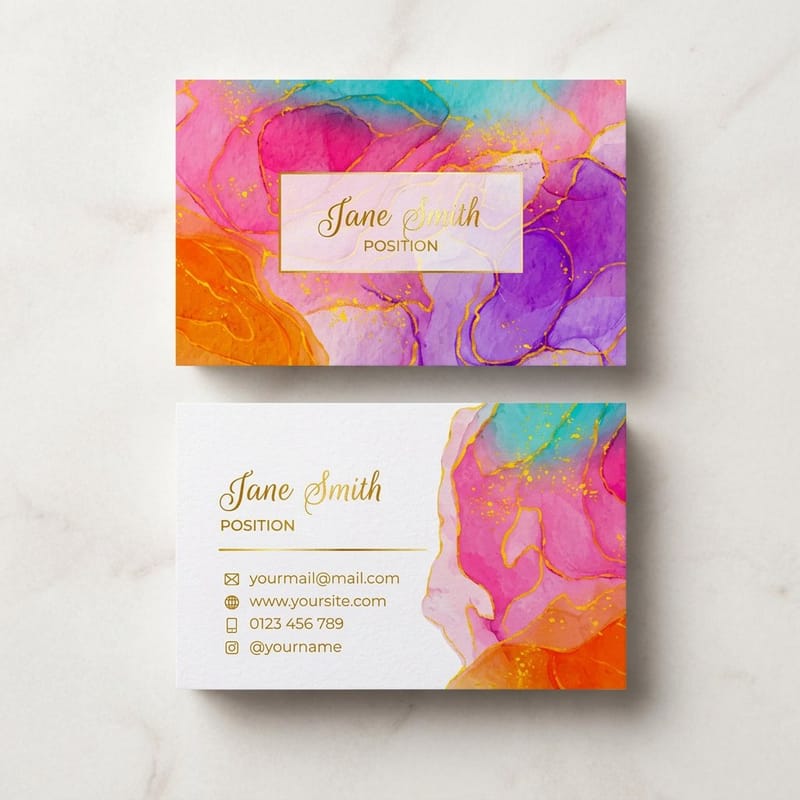 Product Artist Business Cards A card that doubles as a portfolio piece.
  Article Logo Sticker Design Ideas Extend your brand across more touchpoints.
  Benefit Green Printing Reach your audience with sustainable materials.
  Benefit Same Day Printing Order today, ship today on rush jobs.
  Templates Design Templates Ready-to-customize layouts for your industry.
 Print business cards worth keeping
Skip the mailbox. Pick your stock, drop in your design or a free template, and 4OVER4.COM prints it sharp, as fast as same day.
Common questions about distributing business cards legally
Where can I leave business cards for free?
Plenty of places cost nothing. Community boards in coffee shops, gyms, libraries and laundromats will take a small stack if you ask the manager first. Fishbowls by a restaurant register are free and open to anyone. Partner shops that serve the same customers will often swap stacks with you, and every package you ship can carry one at no extra cost.
Is it illegal to leave business cards around?
Not usually. The mailbox is the one place federal law puts off limits, and almost everywhere else comes down to local rules. Private property needs the owner's permission, a posted No Soliciting sign is worth respecting, and some towns treat cards left loose on cars or doorsteps as littering. Ask before you leave a stack and you stay on the right side of all three.
Can I put a note in my neighbor's mailbox?
No, and the rule does not soften for neighbors or for a handwritten note. Only postal personnel may place items inside a residential box, so an unstamped note breaks the same federal law a business card does. Hand it over in person, tuck it into the screen door, or put a stamp on it and let the carrier deliver it.
Can you send business cards in the mail?
Yes, and that is the legal route into a mailbox. A card on its own is below the minimum size the post office will accept as a single piece, so attach it to a letter, a postcard or a promotional mailer and post the whole thing. People keep a card that arrives clipped to a letter far more often than a loose sheet. An EDDM run covers a whole carrier route without a single address.
What are the best practices for leaving business cards in mailboxes?
There is no safe way to do it, because leaving business cards in mailboxes is illegal under federal law. The best practice is to skip the mailbox entirely and use legal channels instead. Attach your card to a USPS-compliant direct mail piece, hand cards out at events, or leave a small stack on a community board with permission. Those routes reach the same people without the fine.
How do I choose the right business cards for neighborhood marketing?
Pick a stock that feels solid, like 16pt or 32pt, so recipients keep your card instead of tossing it. Matte finishes read well for professional services, while glossy or spot UV catches eyes on a community board. For waterproof durability at outdoor locations, try 30Mil White Plastic Cards that hold up in any weather. The 30mil white plastic cards web story runs through the pricing and turnaround.
What makes leaving business cards in mailboxes effective for marketing?
It is not effective, it is risky. Cards placed illegally in mailboxes get thrown away and can trigger fines. Legal direct mail campaigns with USPS compliance deliver measurable results instead. 4OVER4.COM has helped 150,000+ businesses print cards designed for distribution methods that actually convert, from trade shows to targeted mailers.
How much should I budget for distributing business cards legally?
Budget depends on your method. Standard business cards from 4OVER4.COM start at competitive per-card pricing, and bulk orders drop the cost per unit fast. Direct mail adds postage and targeting fees but delivers trackable return. For community board placements and event handouts, 500 to 1,000 cards on quality stock usually costs less than a single mailbox-stuffing fine. For a door to door route, add any local permit fee, usually under 50 dollars, plus your time walking the route.
Is it illegal to put business cards on doors?
No. Leaving a business card on a door, a door handle, or a welcome mat is legal in almost every U.S. area, and it counts as protected solicitation. Check your local ordinances for a permit rule, respect any No Soliciting sign, and get manager approval before working an apartment complex. The mailbox is the one hard limit, because anything unstamped placed inside it breaks federal law.
What business cards hold up best on doors and porches?
Pick thick, durable stock that shrugs off weather. A 32pt card or a plastic card will not wilt in rain or blow off a handle, and finishes like UV coating add protection. Waterproof options such as 30Mil Clear Plastic Cards are close to indestructible on a doorstep.
