
Black Business Cards

Important Artwork Notice!
CMYK images cannot be printed on black card stock without using 5th Color White as a backer to your CMYK image(s). Review the information at the link provided before ordering.
See Black Business Cards in action
Midnite Black stock that is black through the core, 32pt to 80pt, printed in white ink or color plus white, with optional edge paint in 20 colors or a custom mix, from $40.62 per 50.
- From $40.62 per set of 50, with the per-card price falling across 20 quantity tiers up to 10,000.
- 4 solid black stocks: 32pt, 48pt, 64pt and 80pt Midnite Black Uncoated, where the black runs through the core, not printed on top.
- Printed in white ink on one or both sides, or full color plus white (CMYK and White), so your logo reads bright against the black.
- Edge painting in 21 colors, from metallic gold, silver and copper to fluorescents, plus a custom color mix.
- 3 sizes (2" x 3.5", a 2" x 2" square and a 1.75" x 3.5" slim), 1 to 6 business day turnaround, rated 4.9 out of 5 across 75 reviews.
Black Business Cards That Feel as Serious as They Look
Hand one over and the difference lands before anyone reads a word. The black isn't printed on top; it runs all the way through the core, so the face, the back and the cut edge are one deep black that never flashes white when it scuffs. These solid black cards start at $40.62 for a set of 50 and are rated 4.9 out of 5 across 75 reviews. Heavy in the hand and rich in a photo, they're the card a designer, a salon, a tattoo studio or a high-end agency reaches for precisely to be remembered, printed online by a shop that has done exactly this since 1999.
The black core is the canvas, and you decide how the type sits on it: bright white ink, or full color plus white where the artwork needs it. For every other card style, see business cards printing.
Fifty black cards cost $40.62. A designer testing a layout needs that set; a studio handing cards to every client needs a stack, and the per-card price falls at each of the 20 tiers up to 10,000. Each tier below shows the set total.
What Makes a Black Business Card Different
A solid black card is black through the core, not a white card with ink sprayed over it. That changes everything you can feel. The edges are black without any extra finishing, a fingernail scratch stays black instead of revealing a pale line, and the stock has the dense, matte hand that reads as expensive the second it lands in a palm. You are not paying for a color, you are paying for a material. Most printers hand you a printed-black card and hope you do not look at the rim. This one holds up to the look.
How Do You Print on a Solid Black Card
You cannot lay white or bright artwork on black with ordinary CMYK ink, because regular ink is translucent and the black swallows it. So these run with a dedicated white ink layer. You get four setups: white ink on the front only, white ink on both sides, full color plus white on the front, or full color plus white on both sides. White ink alone gives you that clean, high-contrast designer look. Full color plus white lets a photo or a colored mark sit on the black without going muddy. Either way the white prints opaque and crisp, not gray.
Black on Black Business Cards: Spot UV and Embossing
Black on black is the effect people mean when they say a card looks expensive without saying anything: the same black, twice, once matte and once glossy, so your logo only appears when the card catches the light. It is the quietest way to put a mark on a card, and it works because the eye reads the change in sheen, not a change in color.
Two routes get you there.
- Raised gloss on matte black. A clear gloss layer is applied only where your artwork sits, so the untouched card stays flat matte and the shape sits above it, catching a highlight as the card turns. Order this as a spot UV business card, or as a raised spot UV business card when you want the gloss to stand physically proud rather than just shine.
- Emboss or deboss. No ink at all: the shape is pressed into the board, and on a thick uncoated black the shadow inside the impression does the work. This asks more of the stock than gloss does, which is where the heavier 64pt and 80pt weights earn their keep.
What the artwork needs is the part most people get wrong. Supply the spot UV area as its own layer, in solid 100% black, vector, with no gradients, no drop shadows and no transparency; anything soft in that layer has to become a hard edge before it can be applied, and if you leave that decision to the file, it gets made for you. Keep strokes generous, avoid hairline outlines, and remember the effect is invisible in a flat photograph, so judge it in the proof by shape and placement rather than by contrast.
Stock matters too. An uncoated black such as the 32pt to 80pt Midnite Black holds the contrast best, because the base surface has no shine of its own for the gloss to compete with.
Foil on Black: Gold, Silver and Copper
Foil is the loud version of the same idea. Where spot UV whispers, a metallic foil on a solid black card is a mirror sitting in a matte field, and gold, silver and copper each read differently against black: gold warms it, silver looks technical and cold, copper lands between the two and photographs best in warm light. Order it as a foil business card, or as a raised foil business card when you want the metal to sit above the surface.
Three limits are worth knowing before you design:
- Coverage. Foil is stamped from a heated die, so it suits a logo, a name or a rule, not a full-bleed metallic background. Large solid foil areas are harder to lay down evenly than small ones, and they show every speck of dust on the board.
- Stroke weight. Fine type and hairline rules are where foil fails first, because the die has to hold an edge and the foil has to release cleanly across it. Set foil type heavier than you would set ink, and avoid thin-stroke scripts and small serif text in foil.
- Contrast. Metallic against black is the highest contrast pairing on any card, which means it takes over the layout. Give the foil element room and let the rest of the information run in white ink; two loud elements on one black card cancel each other out.
What Is Edge Painting and Why Add It
Edge painting is a thin band of color hand-applied along the cut edge of the card, and on a black stock it is a showstopper. Picture a black card with a single bright line of metallic gold running around the rim. You can paint that edge in any of 21 colors, from metallic gold, silver and copper to fluorescent pink, orange, blue and green, with classic shades like royal blue, red and hunter green in between, plus a custom color mix if you want to match a brand exactly. It is the detail people turn the card over to look at twice. Want only the painted-edge look on a lighter stock instead? The Edge Painted Business Cards do exactly that.
How Thick Can a Black Business Card Be
These come in four thicknesses, all Midnite Black Uncoated: 32pt, 48pt, 64pt and a heavyweight 80pt. The thicker you go, the more the card behaves like a small object instead of a slip of paper, and the more edge there is to paint. An 80pt black card with a metallic edge has real heft in the hand. If you love the weight but want a different surface, the soft, velvety hand of the Velvet Business Cards and the warm nap of the Suede Business Cards read premium too, and our heavyweight Ultra Thick Business Cards push the same thick-stock feel across more colors. Every stock, ink setup and edge color is grouped below exactly the way the live builder on this page presents them.
Black core stock versus black printed on white board
Two cards can look identical face-on and be completely different products. The difference is visible at the cut edge, and it is the single thing to check before you order any black card anywhere.
- Black through the core. The four stocks on this product, 32pt, 48pt, 64pt and 80pt Midnite Black Uncoated, are black all the way through. Cut them and the edge is black. Scuff a corner and it stays black. There is no white line anywhere on the card, which is exactly why a black card either looks intentional or looks like a printing accident.
- Black printed on white board. The cheaper route lays a heavy solid black ink over a white sheet. Face-on it can pass, but the trimmed edge shows a white line around the whole card, the corners go white as soon as they are handled, and heavy ink coverage over a large area is where scuffs and roller marks appear.
The thickness choice then decides how the black edge reads. At 32pt the edge is a fine dark line. At 80pt it is a visible black band you can see across a table, and that band is also the surface that carries edge painting, which is why edge paint in one of the 21 colors, whether metallic gold, silver, copper or a fluorescent, looks dramatic on the thick weights and subtle on the thin ones. Printing runs in white ink on one or both sides, or full color plus white, so your logo stays bright against the core black rather than sinking into it.
What Sizes Do Black Business Cards Come In
Three sizes. The standard 2" x 3.5" is the one that slides into any wallet or cardholder and is the safe pick for most jobs. A 2" x 2" square breaks the rectangle and looks deliberate, which suits a logo-led design. The slim 1.75" x 3.5" trims the height for a leaner, more modern profile. All three carry the same stocks, white-ink options and edge colors, so the look stays consistent whichever shape fits your design.
Design It Without a Designer
You do not need a design background for this to look sharp. Start from one of our business card design templates, then swap the colors, the copy and the logo in the online editor. Keep the layout simple and let the black and the white do the work. A black card rewards restraint more than clutter.
Ready-to-Edit Business Card Design Templates
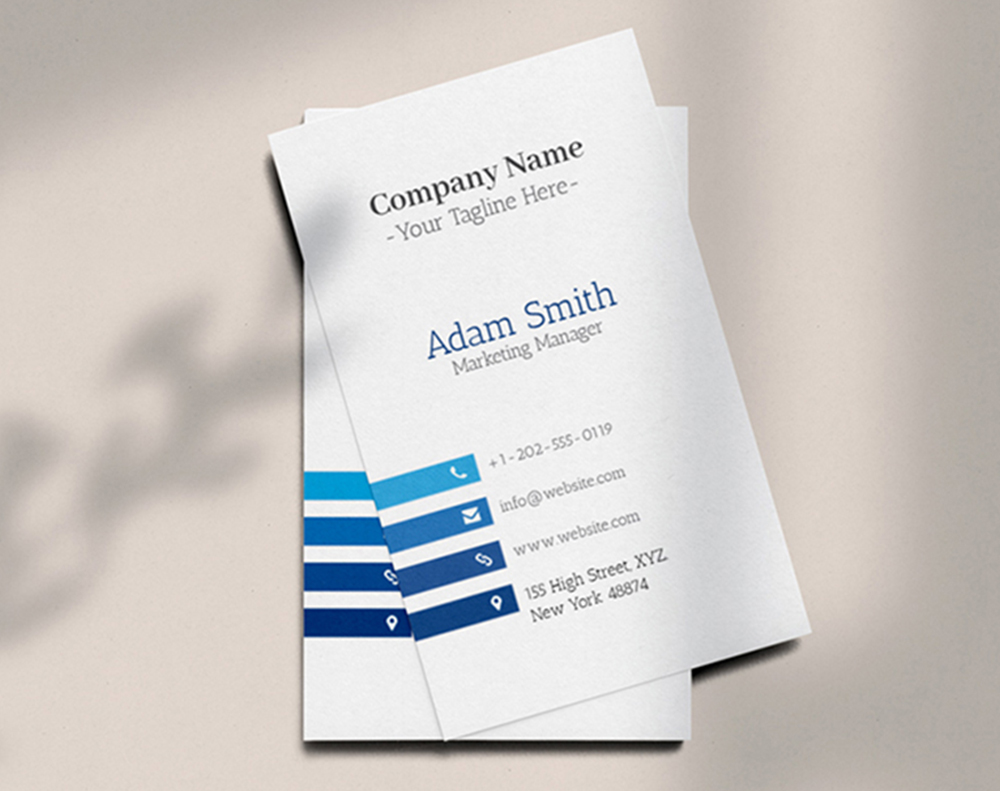
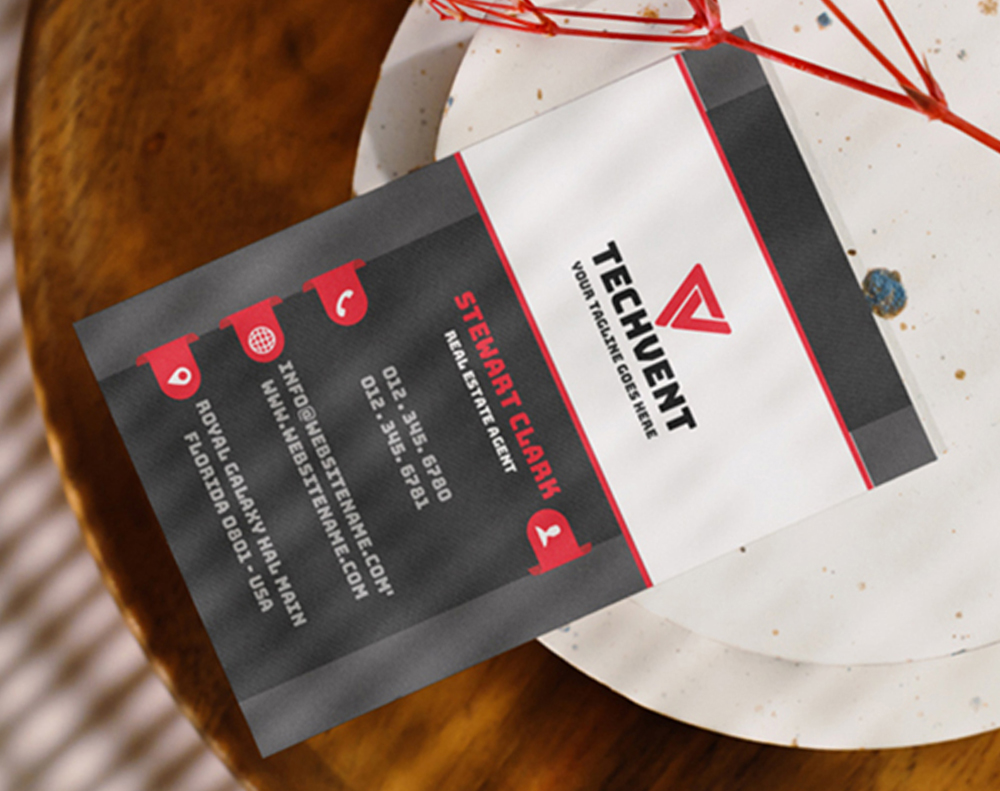
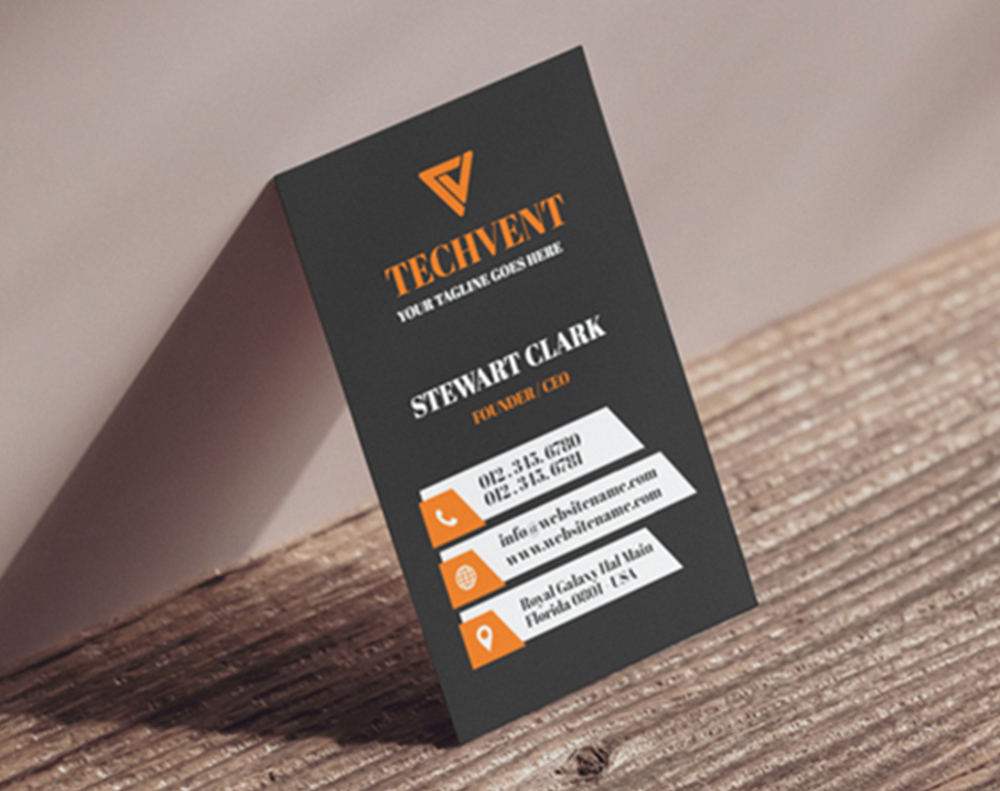
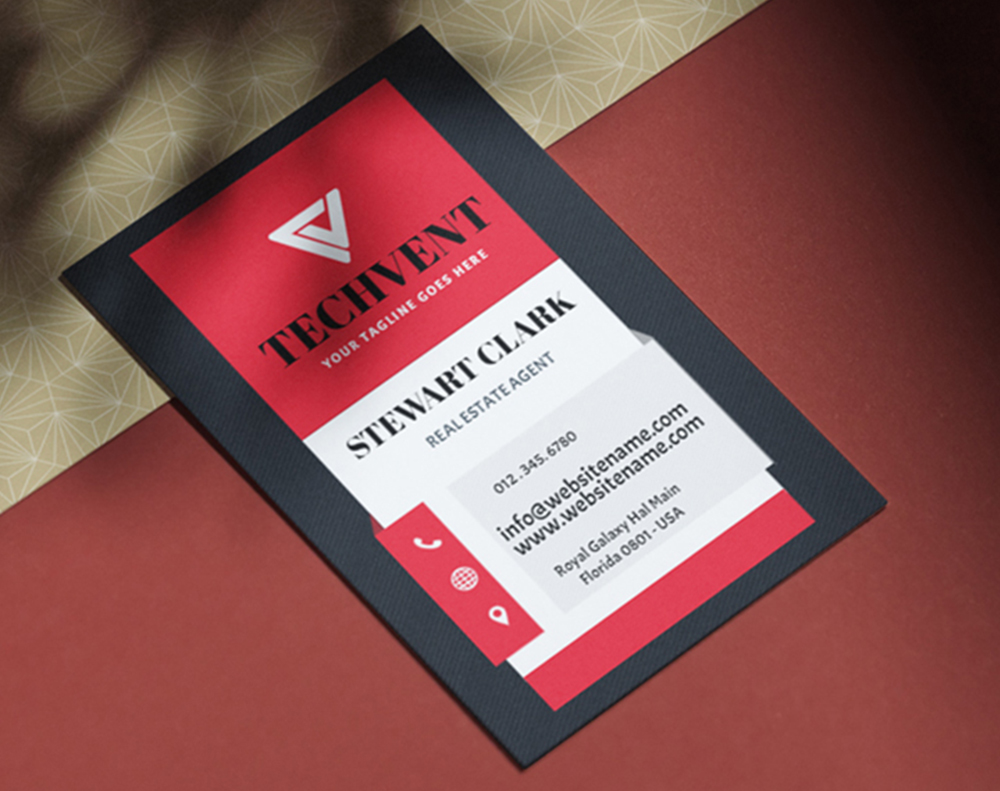
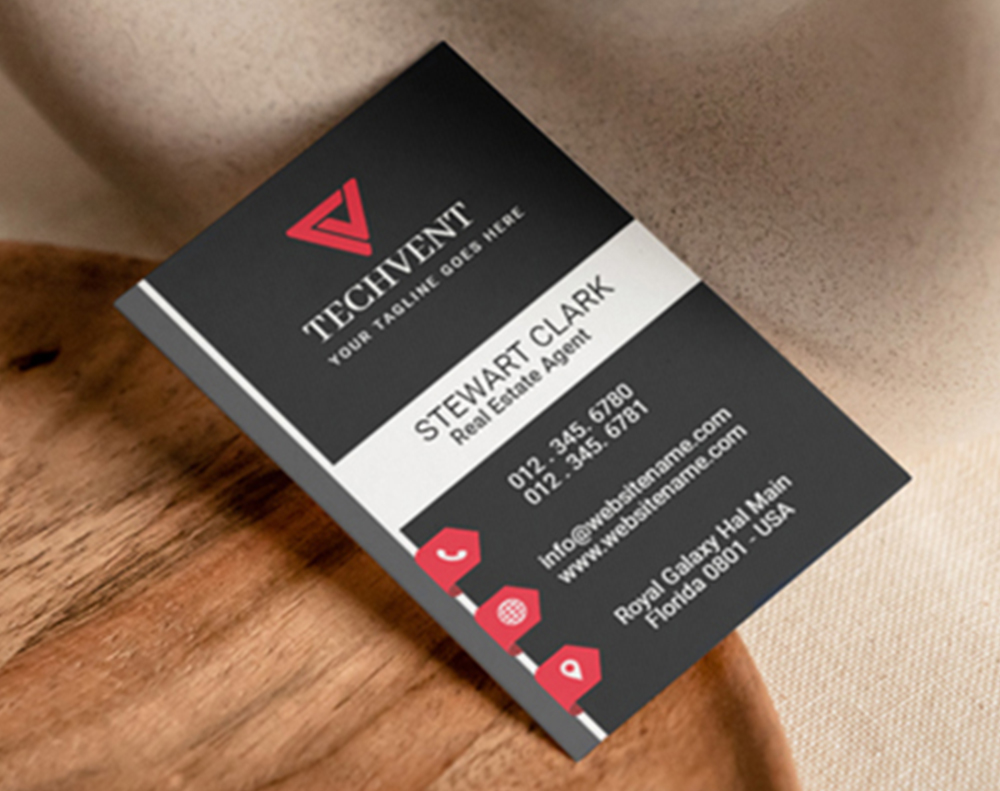
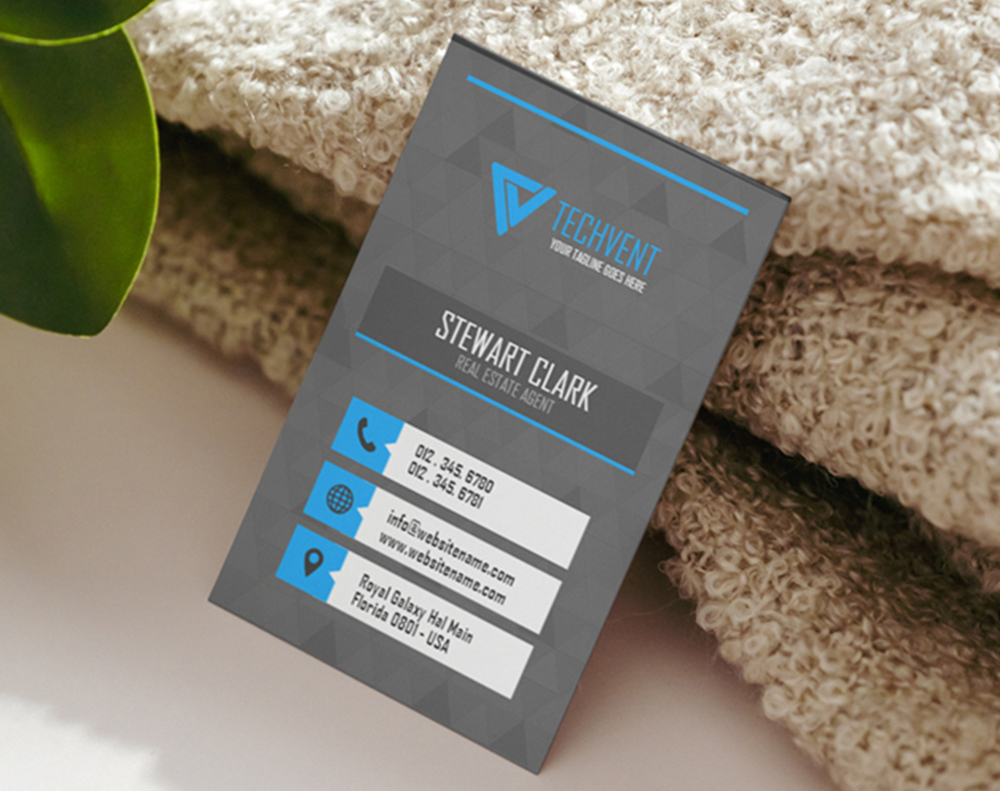
Already have your own artwork? Skip the editor and download a press-ready blank instead. The blank business card template is built at the real trim size with the bleed and safe margin already drawn in, and if you are going for the painted look, the edge painted blank template shows where the rim color lands. Drop your white-ink art onto the black, keep fine lines bold enough to hold, and upload.
Press-Ready Blank Templates

How Many Black Business Cards Should You Order
A black card is the one people keep, so you hand out fewer of them than a throwaway flyer, but you still want a healthy stack. Drag the slider below to set your quantity anywhere from 50 up to 10,000 and watch both the set total and the true per-card cost update live. It is an easy way to find the point where one more step up barely moves the budget but covers a lot more handshakes.
How Much Do Black Business Cards Cost
Black business cards start at $40.62 for a set of 50, and the per-card price keeps dropping as the quantity climbs, so the real cost comes down to how big a run you order and which extras you add. A thicker stock, white ink on both sides and a painted edge each add to the base, and a free online proof lets you confirm exactly how the white reads before anything goes to press. Size the run on the slider above and the set total updates live, so there are no surprises at checkout.
How Do Black Cards Compare to Our Other Premium Cards
Spot UV and a basic value card are the other routes to a card people notice, and the chart below prices them beside these black cards. Our Spot UV Business Cards add a raised gloss over a matte base, while the everyday Standard Business Cards cover the budget end.
Wally makes black look expensive
Why a $40.62 stack of solid-black cards out-talks any white one in the pile.
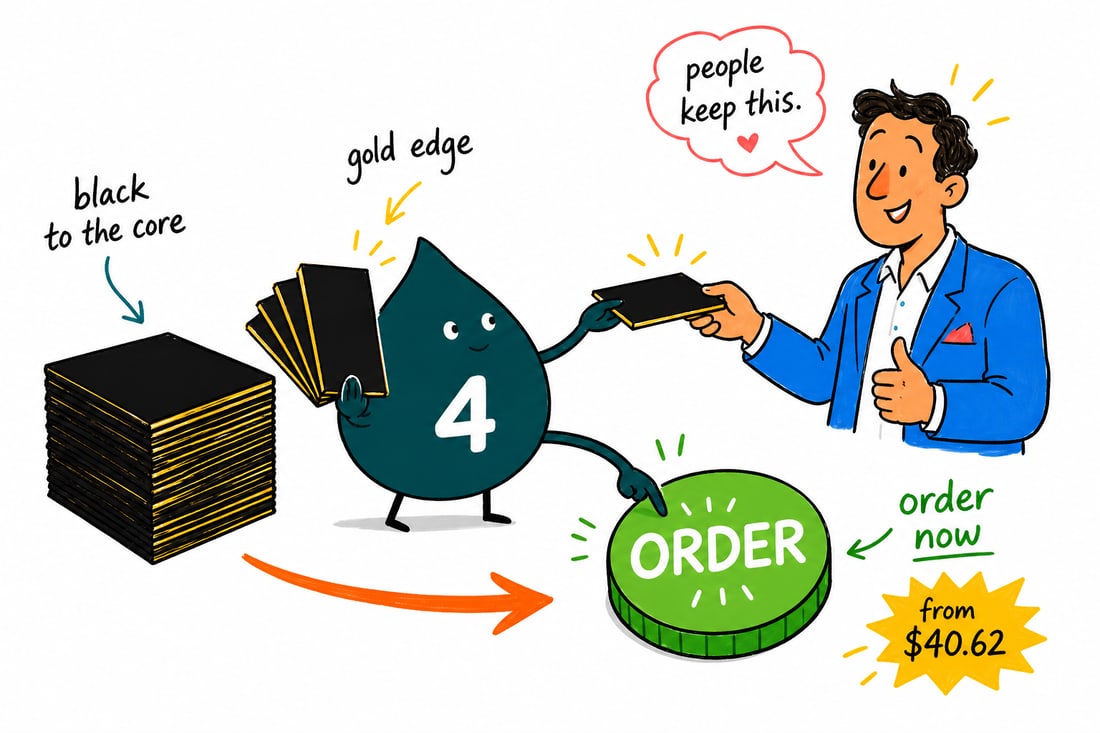
Fifty black business cards start at $40.62, printed on stock that's black to the core with a metallic edge you can spot across a room. In a stack of plain white cards, yours is the one people keep. Pick your thickness, paint the edge, and Wally gets them in your hand fast.
See How a Finished Black Card Lands
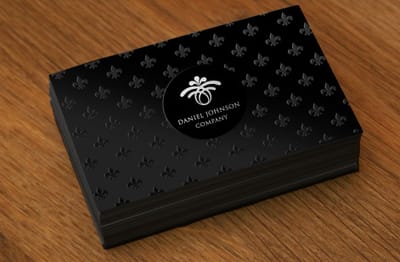
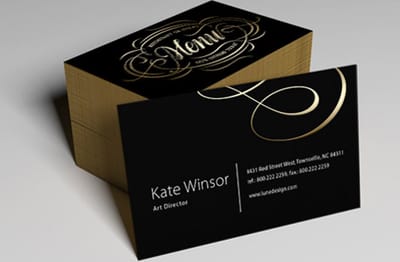
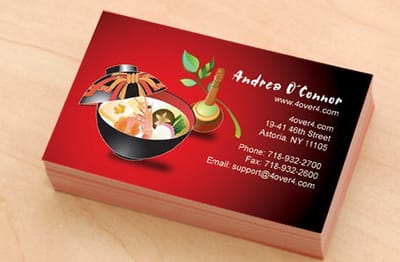
White ink on Midnite Black and a gold edge look different in a hand than on a screen. The cards below are real orders we ran across the stocks, ink setups and edge colors, so you can see each combination before you choose. Tap any print to see it larger.
Real Business Cards Our Customers Printed
How Fast Can You Get Black Business Cards
Black business cards print in 1 to 6 business days. The standard run gives the white ink and any edge paint time to set, and when a date sneaks up you can buy the schedule forward step by step, down to as fast as 1 business day, for a set amount on top of the base price. So you only pay for speed when you actually need it. Compare every turnaround tier below and see exactly what each rush adds before you pick.
See the Rest of Our Business Cards
Black cards are one stop in a much larger lineup, and you can scan the full print product range any time. If a foil, a soft finish or a printed-edge version would serve you better, the rest of the family is one tap away, and black cards sit alongside our wider business stationery collection. Each option below shows its own starting price and links straight to its product page, so finding the right fit takes seconds.
More From Professional Business Cards


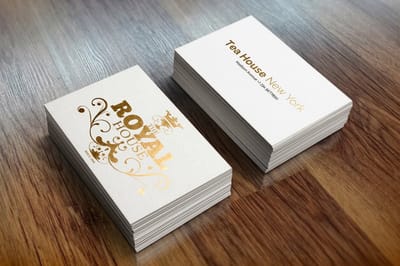


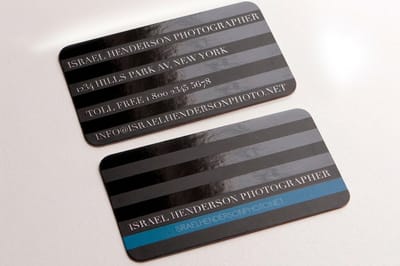


If the black card is the starting point rather than the destination, three neighbors are worth opening in another tab. Edge painted business cards put the color on the cut edge instead of the face, and our edge painting collection shows the full color range across products. Suede business cards take the opposite approach to the same problem: instead of a black core, a soft coated surface that changes how the card feels rather than how dark it reads.
Why Print With 4OVER4.COM
You cannot walk into our Queens plant before you order, so the numbers below stand in for the visit. They cover every order since we started printing online in 1999, including on-time shipping.
Print Your Black Business Cards Today
At 4OVER4.COM, quality comes first, and it's backed by a satisfaction guarantee and 25+ years of printing since 1999. Whatever the stock, ink setup or edge color, these black cards are built to feel heavy, photograph rich and hold their look from face to rim. Print your black business cards today.
One last thing before you check out. A black card rarely travels alone, so here are the products our customers most often order alongside their black business cards, each priced and ready to drop into the same cart.
Pairs Well With Black Business Cards

Black Business Cards: Frequently Asked Questions
How much do black business cards cost?
They start at $40.62 for a set of 50, and the per-card price keeps dropping across 20 quantity tiers all the way up to 10,000. A thicker stock, white ink on both sides, or a painted edge each add to that base price.
How do you print a logo on a solid black card?
With a dedicated white ink layer, because ordinary CMYK ink is translucent and the black would swallow it. You get four setups: white ink on the front only, white ink on both sides, full color plus white on the front, or full color plus white on both sides.
Are these printed black or black all the way through?
Black all the way through. The stock is Midnite Black Uncoated, so the face, the back and the cut edge are all the same deep black, and a scuff never flashes white the way a printed-black card does.
What edge paint colors can I choose?
You can paint the cut edge in any of 21 colors, including metallic gold, silver and copper, fluorescent pink, orange, blue and green, classic shades like royal blue, red and hunter green, plus a custom color mix to match a brand exactly.
What sizes and thicknesses come in black?
Three sizes: the standard 2 inch by 3.5 inch, a 2 inch by 2 inch square, and a slim 1.75 inch by 3.5 inch. Each is available in four thicknesses, 32pt, 48pt, 64pt and a heavyweight 80pt.
How fast can I get black business cards?
They print in 1 to 6 business days. The standard run lets the white ink and any edge paint set, and you can buy the schedule forward step by step down to as fast as 1 business day. A free online proof lets you confirm how the white reads before it goes to press.
Questions about Black Business Cards? See answers