
Dental Direct Mail That Fills Open Hygiene Columns


Nadia is our customer education voice, built from the knowledge of our production team, with over 20 years in printing.
A dentists mailing list is one of two things: the household list you rent or saturate around the practice, or the patient list already sitting in your practice management software. The second one is free, it converts better than anything you can buy, and most practices mail it far less often than they mail strangers.
Three ways a dental practice mails
| Route | Who receives it | Where the list comes from | Best for | The main limit |
|---|---|---|---|---|
| EDDM saturation | Every household on the carrier routes you pick | No list, no names, chosen on the USPS route map | A new practice, a new location, or a move down the street | Your existing patients get the mailer too, and the piece must clear the letter size limits |
| Rented consumer list | Households you filter by age, income, homeownership or children | Rented per thousand, usually licensed for one use | Implants, ortho, pediatric, or any service with a narrow buyer | Costs more per piece than EDDM, and a stale list wastes postage on movers |
| Your own recall list | Patients of record who are overdue for hygiene | Exported from your practice management software | Filling next month’s open hygiene columns | It only grows as fast as your new patient flow does |
Most practices end up running two of these at once: an EDDM saturation on a 6 x 11 in card for general dentistry, and a filtered list for implants, dentures or aligners, where a smaller card printed 4/1 carries the address on its black back. You can hand the mailing to our direct mail service or print and drop it yourself.
The list decides more than the design
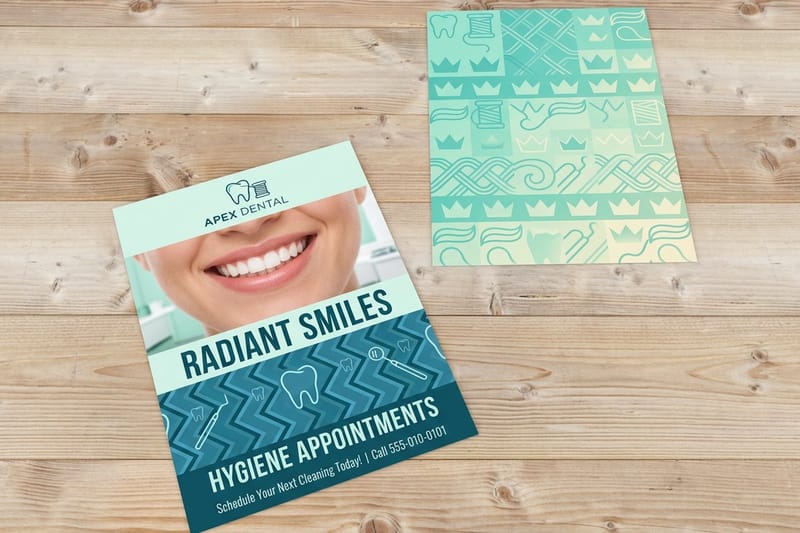
Two mailings can carry identical artwork and land in different worlds. One goes to households ten minutes from the chair, the other to a rented file that has not been cleaned since the last election, and the second one loses before it is printed. Spend the planning time on who receives the card, then design it.
Start with what you already own. Export the addresses of your last few hundred active patients and look at the ZIP codes. The pattern is usually blunt: a handful of ZIPs produce most of the practice, and the rest trickle. Those ZIPs are the ones worth saturating, because you have proof people in them will drive to you.
Only after that does the question of renting a list make sense. Our guide to building or renting a mailing list covers the mechanics, and what direct mail is and how to use it is the plain overview if this is your first campaign.
When EDDM is the right answer
Every Door Direct Mail skips the list entirely. You open the USPS route tool, pick carrier routes around the practice, and every mailbox on those routes gets a piece. There is no name on the card and no address to buy, which is why the postage is the cheapest option a practice has.
The catch is that saturation means saturation. Your current patients receive the new patient offer, which stings if the offer is better than what they pay. The other catch is physical: an EDDM piece has to be bigger than a letter, so 6.5 x 9 or 6.5 x 11 inches, not a 4 x 6 card. Read how EDDM Retail works and the EDDM postcard sizes before you set an artboard.
What to filter on when you rent
A rented consumer list earns its extra cost only when the filter matches the service. Pediatric and ortho want households with children in a narrow age band. Implants and dentures skew older and want homeowners. A general practice opening in a new development wants new movers, because a household that just moved has no dentist and is actively looking for one.
Ask the list broker two questions before you pay: when was the file last updated against the national change of address database, and is the license one use or unlimited. Both answers change your real cost per piece more than the price per thousand does.
New patient mailers and recall cards do different jobs
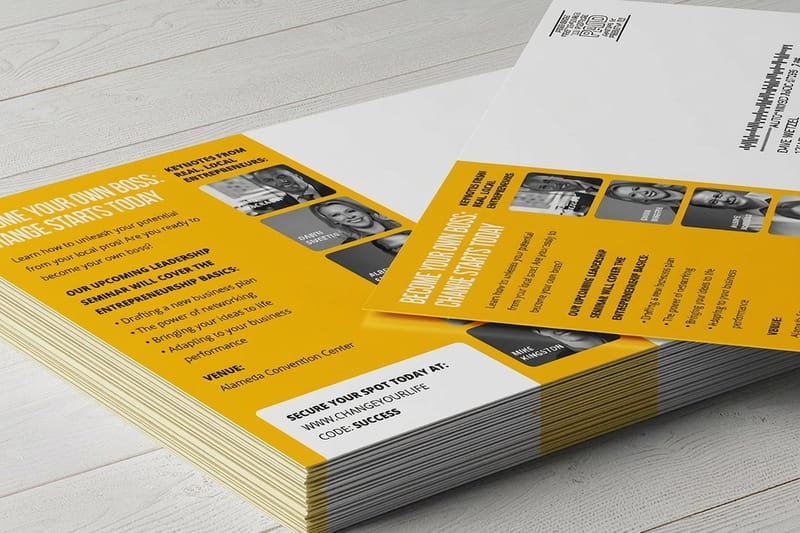
A new patient mailer is cold. It has one job, which is to make a stranger call, and it does that with an offer specific enough to price. A recall card is warm. It goes to someone who already sat in your chair, and its job is to remove the friction between intention and appointment.
Practices get into trouble when they print one card and expect it to do both. The offer that pulls a stranger reads insulting to a patient of record, and the gentle nudge that works on a lapsed patient says nothing to a household that has never heard of you. Print two. Dental postcards start at $16.48, so running two designs costs less than most people assume. Tap through the dental postcards story to compare the builds.
What belongs on a new patient postcard
The headline is the offer, not the practice name. A new patient exam with x-rays at a named price beats "Welcome to our practice" every time, because the first one answers the question the reader is actually holding. Put the practice name and the smiling team lower down where they do their real work, which is reassurance after interest.
Then remove the friction. A cross street, not just an address. The insurance line that matters locally, whether that is the PPO plans you take or the fact that you have a membership plan for the uninsured. Evening or Saturday hours if you have them. One phone number, printed large, and a booking link. Our direct mail design best practices and QR codes on postcards cover the layout side.
Give the card a way to be measured. A distinct offer code, a dedicated phone number, or a landing page that only the mailer points to. Without one you will be arguing about whether mail works instead of knowing.
Recall mail, and the line you do not cross
Recall postcards are the highest-return mail a dental office sends, because the recipients already chose you once. Export patients with no completed hygiene visit in the last nine to eighteen months, drop the ones who transferred, and mail the rest a card that says they are due and gives two ways to book.
A postcard is readable by everyone who handles it, so keep clinical detail off the mail side. "You are due for a cleaning" is fine. A procedure name, a treatment plan, or a balance is not something to print on an open card. If the message needs privacy, it belongs in an envelope, which is what direct mail letters are for at $238.73 including the mailing.
The version that outperforms a plain card is a magnet postcard at $19.68. It mails flat like a postcard, then the magnet panel peels off and lives on the fridge with your number on it until the patient books. Pair it with dental appointment cards at $17.57 handed out at checkout, and the same number is in two places.
Size, postage and what a piece really costs
Postage is decided by dimensions, and dimensions are decided before anyone opens a design file. The USPS postcard rate covers rectangular cards from 3.5 x 5 inches up to 4.25 x 6 inches. Go one eighth of an inch past that and the same card is billed as a letter, which is why 5 x 7 postcards cost more to send than they look like they should.
Push further and you land in EDDM territory, where the piece must break at least one letter limit: taller than 6.125 inches, longer than 11.5 inches, or thicker than a quarter inch. That is the reason the standard EDDM sizes look oversized. They are built to fail the letter test on purpose, in exchange for saturation postage.
The honest way to budget is per piece delivered, not per card printed. Add printing, the list or the EDDM bundling, postage, and the labor of getting it to the post office. Direct mail cost per piece works through the arithmetic, and postage cost by size and rate tier shows where each size lands.
The address side is not free design space
The bottom right of the address side has to stay clear for the USPS barcode, and the address block needs its own quiet zone. Practices lose a print run when a logo or a tagline wanders into that area and the job comes back for a reset. The rules are specific rather than complicated: postcard address side layout and clear zone rules lays them out, and how to address a postcard correctly covers the block itself.
If you would rather not manage any of it, direct mail postcards at $89.68 arrive printed, addressed and mailed from our end, with the postage handled. How postcard mailing services work explains what changes on your side when you hand that off. Our postcard mailing services page lists what that handoff covers.
Dental postcard pricing and specs
Dental postcards come in 14 sizes from 2.5 x 2.5 to 6 x 11 in and 22 stocks, the 14pt and 16pt gloss covers among them, printed 4/0, 4/1 or 4/4 in a 3 business day standard turnaround. The variable data option prints a different name or code on each card, so a recall card can carry the patient's first name and a new patient card its own tracking code. The smallest run, 50 cards at 2.5 x 2.5 in on 14pt gloss, costs $16.48, enough to test a recall design on one week of overdue patients. The numbers below come from the live configurator, so you can size a campaign budget before you commit to a drop schedule.
Quantity and price
Dental postcard pricing and specs
Real configurator numbers, where a larger run lowers the cost of every card in it.
| Quantity | Price Per Unit | Total |
|---|---|---|
| 50 | 33.0¢ | $16.48 |
| 100 | 24.2¢ | $24.16 |
| 200 | 15.9¢ | $31.86 |
| 300 | 12.8¢ | $38.45 |
| 400 | 11.3¢ | $45.04 |
| 500 | 10.3¢ | $51.62 |
You can also earn coins on every order and redeem them against later printing, which matters when the same postcard goes out four times a year.
Stock and finish for a card that gets handled
A mail piece is sorted by machine, carried in a bag, and read standing over a bin. Thin stock arrives creased and goes straight in. 14pt or 16pt cardstock is the working range for dental mail, and 16pt is noticeably more rigid once the card is larger than 4 x 6 inches, which is exactly where EDDM sizes live.
Print it
Dental postcards, ready to mail
New patient offers and hygiene recall cards on cardstock that survives the sorting machine.
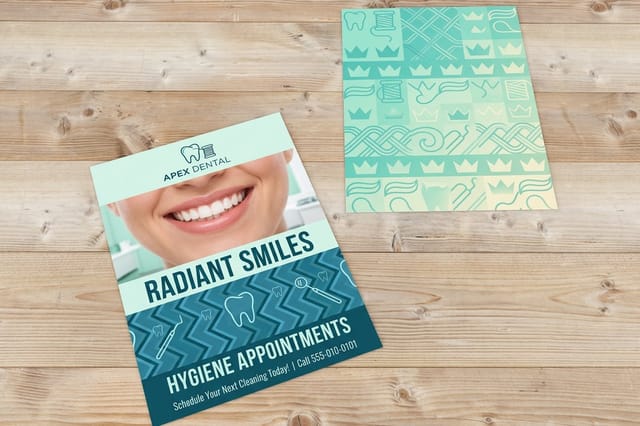
Finish decides both the look and what you can write on. Gloss lifts photography and color, which suits a team photo and a bright offer panel. Matte cuts glare and reads calmer, closer to how a clinical brand usually wants to present itself. Uncoated stays writable, so a front desk can hand-write an appointment time on it. If the card is going out as a recall reminder that someone will pin up, the magnet version does that job better than any coating, and a dental brochure at $57.11 is the piece to reach for when implants or a membership plan need more room than a card allows.
What to mail by practice type
The right route changes with what you sell, so the route changes by practice type.
- General practice. Saturate the three or four ZIPs your current patients already come from, with a priced new patient exam as the headline. Mail the same routes again rather than chasing new ones.
- Pediatric dental. Rent a list filtered to households with children in your target age band. School calendar timing beats calendar quarters, so mail before the summer and before the winter break.
- Orthodontics. Two audiences, two cards: parents of eleven to fourteen year olds, and adults in their thirties and forties for clear aligners. The same artwork will not carry both.
- Implants and dentures. A narrow, older, homeowner filter and a longer message. A postcard opens the door, then a brochure or a letter does the explaining that a card has no room for.
- New location or new owner. EDDM the carrier routes around the door for the first three months. Nobody is searching for a practice they do not know exists yet.
If you want the wider clinical picture rather than the dental one, healthcare direct mail covers the same ground for medical clinics, and chiropractic recall postcards show the same recall mechanic in another practice type.
Blanks sized so the artwork clears the trim
Starting from a correctly sized blank saves the most common reprint, which is artwork that ignores the trim. Open the blank for the size you will mail, 6 x 11 in for an EDDM drop or 4 x 6 in for a recall card to your own list, and keep the office phone number and the booking link inside the safe line. 4OVER4.COM builds its blanks to exact product specs, with bleed and cut lines already marked, so nothing important sits where the knife lands. Grab one from the blank template library, or start from a layout in the design template library.
Start fast
Blanks sized so the artwork clears the trim
Postcard blanks at the USPS rate sizes, with the address panel kept clear.

Wally splits the new patient card from the recall card
Two audiences, two messages, one print run
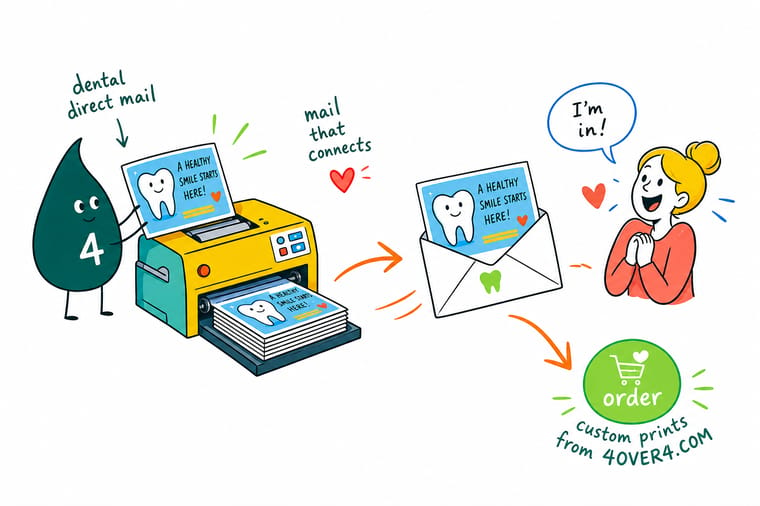
Print the cold card at 4.25 x 6 inches to hold the USPS postcard rate, and lead it with a priced new patient exam. Print the recall card from your own patient export, keep clinical detail off it, and give the reader two ways to book. Design at 300 DPI in CMYK with 0.125 inch bleed, keep the bottom right of the address side clear for the barcode, and 4OVER4.COM prints, addresses and mails both.
Order dental postcards →What actually fills a hygiene column
Design rules that hold at every size
- Lead with the offer. A named price on a new patient exam gives the reader something to weigh. The practice name at the top gives them nothing they can act on.
- One call to action, repeated. Phone number, booking link, and a QR that goes to a booking page rather than the homepage. Three routes to the same action, not three different actions.
- Print two versions, not one. Cold prospects and lapsed patients need different messages. Splitting the run costs less than the wasted half of a single compromise card.
- Keep clinical detail off an open card. Due for a cleaning is fine on a postcard. Anything that names a procedure or a balance belongs in an envelope.
- Track it or stop arguing about it. A dedicated number or an offer code turns the whole debate about whether mail works into a number you can read at the front desk.
- Mail the same routes again. The first drop is a test. Response builds when the same households see you a third and fourth time, which is why one mailing rarely proves anything.
Explore more
More ways to print and mail
Direct mail letters run 500 for $238.73 in 6 business days and magnet postcards print on 17pt indoor magnet.
Product Dental Postcards New patient and recall cards, printed from $16.48. Product Direct Mail Postcards We print, address, and mail them with the postage handled. 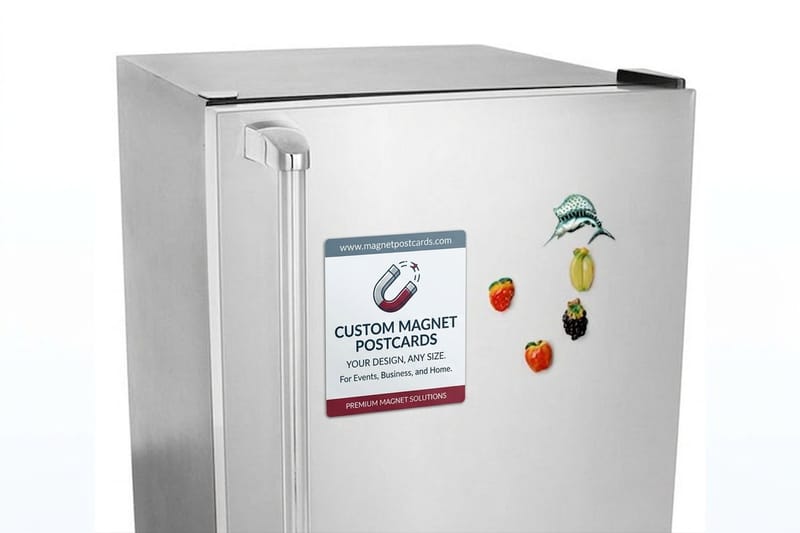 Product Magnet Postcards Mails flat, then the magnet lives on the fridge with your number.
 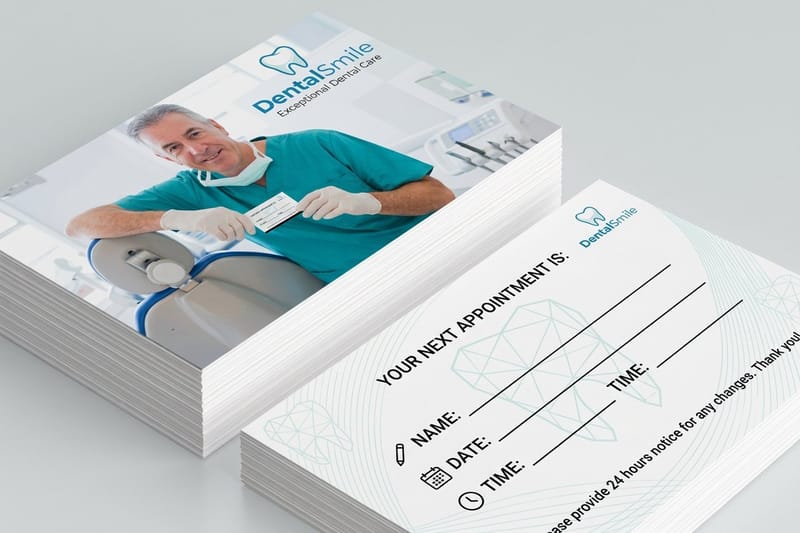 Product Dental Appointment Cards Handed out at checkout so the next visit is already booked.
 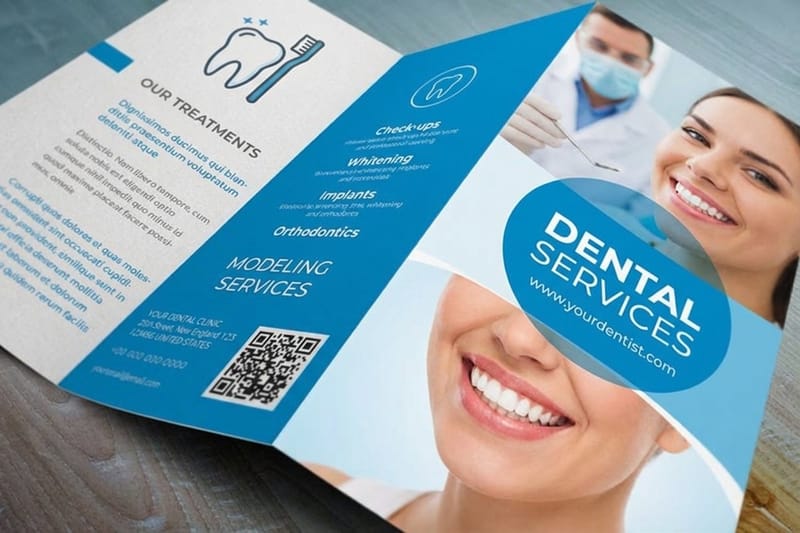 Product Dental Brochures Room to explain implants, ortho, or a membership plan.
  Category Postcard Printing Every postcard size, stock and finish in one place.
 Ready to mail your next drop?
Pick your size, upload the artwork or start from a free template, and 4OVER4.COM prints it on 14pt or 16pt stock and mails it for you if you want the postage handled.
Common questions about dental direct mail
Where do I get a dentists mailing list?
It depends on which direction you are mailing. If you are a dental practice mailing households, you either rent a consumer list from a broker filtered by age, income, homeownership or children, or you skip the list entirely and use EDDM to saturate the carrier routes around your office. If you are a supplier mailing dentists, you buy a professional list built from state license records and association files, and you check when it was last verified, because dentists move practices and retire. In both cases the number that matters is not the price per thousand, it is how recently the file was cleaned against the national change of address database.
Is EDDM or a targeted list better for a dental practice?
EDDM is better when your service is one that almost every household needs, which describes general and family dentistry. You get the lowest postage, no list cost, and full coverage of the streets nearest your door. A targeted list is better when the service has a narrow buyer, such as orthodontics, implants or pediatric care, because paying more per piece to reach only the right households beats paying less to reach everyone. Many practices run both: EDDM for the general new patient offer, a filtered list for the higher value services.
What should a new patient dental postcard actually say?
Lead with a priced offer, such as a new patient exam with x-rays at a specific number, because that is the only thing on the card a stranger can evaluate. Then remove the reasons not to call: the insurance plans you accept, evening or Saturday hours, a cross street so people know where you are, and a phone number printed large enough to read at arm’s length. Add a code or a dedicated number so you can tell which mailing produced which call. Save the team photo and the practice history for the second half of the card, where reassurance belongs.
Can we mail recall reminders on a postcard?
Yes, provided the card says nothing clinical. Anyone who handles the mail can read a postcard, so a reminder that a patient is due for a cleaning is appropriate and a procedure name, treatment plan or account balance is not. Keep the mail side to the practice name, the fact that they are due, and two ways to book. If the message genuinely needs detail, put it in an envelope instead. Confirm your own policy with whoever handles compliance for the practice, because the rules apply to the process as well as the printed piece.
How often should we mail the same neighborhood?
Plan a sequence, not a drop. A single mailing tells you almost nothing, because response builds as the same households see the practice name repeatedly, and the third or fourth piece often outperforms the first. A practical rhythm for a general practice is four to six mailings a year to the same carrier routes, alternating a new patient offer with something less transactional such as a hygiene reminder or a new service announcement. Changing the ZIP codes every time resets that recognition and is the most common reason a campaign underperforms.
