
How Postcard Mailers Work, From Mailing List to Mailbox


Nadia is our customer education voice, built from the knowledge of our production team, with over 20 years in printing.
A card mailer, or postcard mailer, is a single printed card sent through the mail with no envelope, the rare marketing piece that cannot be ignored on arrival because its message shows the moment it lands. This guide follows one all the way through, from choosing the offer and the audience to designing both panels, printing the run, paying the right postage and counting what came back.
Postcard mailers work in seven stages. You set one offer, choose an audience as either a saturation carrier route or a targeted address list, design an offer panel and a rules bound address panel, preflight the file, print the run on cover weight stock, then have the addresses standardized, barcoded and presorted before the mailing is handed to the Postal Service. Size and thickness set the postage rate, and a unique code on the card lets you measure the response.

Start here
From list to mailbox, start to finish
A postcard mailer is a printed card sent without an envelope, so the message is visible on arrival. You decide one offer, pick either a saturation route that covers every address in an area or a targeted list of specific records, design an offer panel and an address panel that respects the carrier clear zones, print the run on cover weight stock, then standardize, barcode and presort the addresses before handing the mailing off. Postage is priced separately from printing, and the card size sets the rate.
The term
Card mailer meaning, and the card you print for one
A card mailer is a postcard sent on its own through the mail, with one panel for the offer and one for the address and postage. There is no envelope to open, so the card has to meet the machine rules by itself. The postcard rate covers cards from about 3.5 by 5 inches up to about 4.25 by 6 inches and at least seven thousandths of an inch thick; anything larger mails at letter or flat rates.
Our direct mail postcards start at 500 pieces in nine sizes up to 6 by 11 inches, on 14pt or 16pt gloss or matte cover or 14pt uncoated, printed on one or both sides with 4 business days of production.
Why a piece of card stock still beats an unopened inbox

A postcard mailer has one structural advantage over almost every other channel. It cannot be left unopened, filtered into a promotions tab or scrolled past in half a second. It arrives face up in a hand, and the message is already showing. On a 4 by 6 inch card printed on 14pt cover, that offer panel is the whole first impression you get. That single fact shapes every decision that follows, from how large you set the headline to which side carries the offer.
The trade is that you pay for every impression, whether it lands or not. Digital lets you waste attention cheaply. Mail does not. So the discipline of a good mailer program is subtraction, cutting the list down to households that plausibly buy, cutting the message down to one thing worth reading, and cutting the format down to what the postage class rewards. Campaigns built that way have a real chance to earn back their cost per piece.
This guide walks the whole path in order: what a mailer is, how the offer and the list get decided, how the two panels are designed, how the card is printed and addressed, what the Postal Service does with it, and how you read the response afterward. If you want to see the finished article first, the roundup of postcard examples for small businesses shows what the end result looks like when the pieces line up.
What a postcard mailer actually is

A postcard mailer is a self mailing printed card. There is no envelope, no fold and no seal, so the Postal Service handles the card itself. That makes it the cheapest physical piece you can send with a real design on it, and it also means the card must satisfy machine handling rules on its own. Thickness, rigidity, size and the clear zones on the address side are all part of the specification, not afterthoughts.
Every mailer has two working surfaces. The offer panel is the free canvas, where the headline, the image and the call to action live. The address panel is the regulated one. It carries the recipient address block, the return address, the postage indicia or stamp area, and a strip along the bottom that automated sorting equipment reads. Whatever design you place there has to stay out of those zones and keep enough contrast for the address to be scanned cleanly.
Because the format is so constrained, the creative decisions concentrate in a small space. That is a feature. A card gives you room for one idea, and forcing yourself to name that idea is usually the most useful hour of the whole project. Specialty variants exist too, such as the moving effect described in the piece on lenticular postcards, but the underlying anatomy stays the same.
The seven stages of a postcard mailer, in order

Every mailer campaign, from a single dentist office to a national retailer, runs the same sequence. Skipping a stage does not remove it, it just moves the problem later where it costs more to fix.
- 1. Set the offer. Decide the single action you want and what makes it worth taking. Discounts, deadlines, free assessments and neighborhood proof all work. Vague brand awareness does not.
- 2. Choose the audience. Either a saturation route that covers every address in an area, or a targeted list of specific records. This choice sets your cost per piece more than any print option.
- 3. Design both panels. Offer side for the message, address side to the carrier requirements. Build to the mail specification first and decorate second.
- 4. Prepare and preflight the file. Correct trim size, bleed, safe margins, resolution and color mode, with the address zone kept clear.
- 5. Print the run. Stock, coating, quantity and turnaround are locked in here, and the per piece price drops as the quantity climbs.
- 6. Address, sort and induct. Addresses are standardized and verified, barcodes are applied, the mailing is sorted into the trays the Postal Service expects, and the job is handed off.
- 7. Read the response. Track from the drop date through the in home window and score the campaign on cost per response.
Stages one and two are strategy, three through five are production, and six and seven are logistics and measurement. Most failed mailings are traced back to stage two, not to anything printed.
Saturation or targeted: how the audience gets chosen

Saturation mailing sends the same card to every deliverable address on selected carrier routes. You never see a name, and you do not need one. It is the natural fit for businesses whose customers come from a radius: pizza shops, salons, gyms, urgent care clinics, lawn services and home repair trades. Because the mailing is fully sorted by route, the postage rate is among the lowest available, and the planning question becomes which routes sit inside your service area.
Targeted mailing sends to a defined list of names and addresses. That list is either your own, drawn from past customers, quote requests and warranty records, or one you rent by filtering on attributes such as homeownership, property age or household composition. Targeted mailing costs more per piece and needs list hygiene, but it lets you say something specific: a renewal date, a service anniversary, a neighborhood you just sold a home on. The real estate approach in these seasonal postcard ideas is a good example of a narrow list used repeatedly.
Whichever route you take, clean the addresses before you print. Run the list through address standardization and a change of address update so undeliverable records are corrected or dropped. Every bad record is a card you paid to print and paid again to mail into a wastebasket.
Sizes, stocks and finishes that survive the mail stream
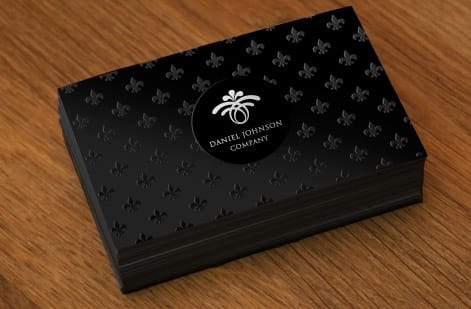
Size is the first decision because it drives postage. Compact rectangular cards fall inside the Postal Service definition of a postcard and qualify for the postcard rate, which requires a minimum size of about three and a half by five inches, a maximum of about four and a quarter by six inches, and a minimum thickness of seven thousandths of an inch. Go beyond that envelope and the piece mails at letter or flat rates instead. Neither outcome is wrong, they are simply different price points for different amounts of space.
Stock comes next. Mailers are printed on cover weights rather than text weights because the card is handled by machines and by people without any protection. Heavier stock feels more considered in the hand and resists bending in a full mailbox, and it also raises both the print cost and, past a point, the thickness that postage is measured against. Ask for a physical sample and hold it before committing a five figure run to a paper you have only seen on a screen.
Finish is the last layer. Gloss coating makes photography and saturated color pop, matte reads calmer and more premium, and uncoated or writable coatings matter when part of the card needs to accept a pen, a signature or a handwritten note. Keep the palette consistent across drops so the third card is recognized as yours before it is read, which is exactly the argument made in the guide to choosing your brand colors.
Designing the offer panel and the address panel
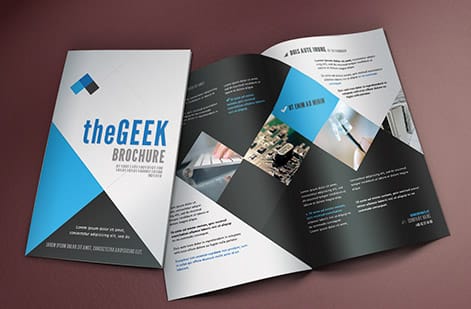
Treat the offer panel as a headline with support, not a brochure in miniature. One dominant message, read from arm length in under two seconds, then one supporting line, then the action. Put the offer where the eye lands first, keep the body copy to a few short lines, and make the action unmistakable: a code to mention, a number to call, a short address to type. Logos belong on the card, but they are not the message.
The address panel is engineering. Reserve the address block area, leave the upper right corner free for the indicia or stamp, keep the bottom strip clear for the routing barcode, and avoid printing dark art or heavy patterns behind any of it. Contrast in that region has to be high enough for automated readers, so a white or very light background under the address is the safe choice. Anything you add there should be small, quiet and outside the reserved zones.
Then build the file to print specification. Set the document to the exact trim size, extend background art past the trim as bleed, hold important text well inside a safe margin, supply images at print resolution rather than screen resolution, and convert the artwork to the press color mode so the color you approve is the color that prints. Layout habits carry across formats, and the composition lessons in these medical print designs translate directly to a two panel card.
What determines postage and how the two costs stack

Printing and postage are two separate bills, and confusing them is the most common budgeting mistake. Print cost is set by quantity, size, stock, coating and turnaround, and it falls sharply with volume because press setup is fixed and gets spread across the run. Postage is set by the Postal Service and does not benefit from your print quantity in the same way. It depends on the physical piece and on how much work you take off the carrier.
Four things move postage: the size and thickness of the card, the mail class you choose, how deeply the mailing is presorted, and how machine readable the addresses are. A fully route sorted saturation mailing pays the least per piece. A marketing class mailing to a targeted list pays somewhat more and travels a little slower. First class costs the most, moves fastest and gets forwarded or returned when an address is stale, which is the reason to use it when the list quality matters.
Quote every option on a single line: cost per piece delivered, printing plus postage combined. A larger card at a higher postage rate can still win if it converts better, and a cheap card that nobody reads is the most expensive outcome available. Run the numbers on both before the press runs.
Working backward from the in home date

Mailers are the one channel where the calendar is not fully yours. Once the trays leave the dock, delivery timing belongs to the carrier network. So plan the campaign in reverse. Pick the week the card should be in mailboxes, subtract delivery time for the mail class, subtract addressing and sorting, subtract print turnaround, subtract proofing and preflight, and whatever date is left is the real art deadline.
Build slack into that chain deliberately. Files fail preflight, stocks run short, and mail volume spikes around holidays, tax season and elections, which stretches delivery windows across the whole network. A campaign tied to a hard date, an event, a sale weekend, a seasonal service window, should carry several extra days at every step rather than one large buffer at the end.
Then record the drop date, which is the day the mailing was actually inducted. That single date anchors your measurement, because the response curve is read from it rather than from the day you approved the artwork.
Measuring response so the next drop is smarter

Mail is measurable if you give it a way to be counted. Put a unique code on the card, or a short dedicated landing page, or a phone number used nowhere else, or a physical coupon that gets collected at the counter. Without one of those, every result gets attributed to whatever channel happens to have the last click, and mail quietly funds a report it never appears in.
Watch the curve rather than a single number. Response to a mailer typically builds through the days after the in home window, peaks and then tails off over several weeks, so judging a drop after three days tells you almost nothing. Log the drop date, the quantity, the routes or list segment, the offer and the format, then score each campaign on cost per response and revenue per thousand pieces.
Change one variable at a time between drops. Same list, new offer. Same offer, new format. Same everything, new routes. Four disciplined drops teach you more about your market than forty guesses, and the record you keep becomes the most valuable asset in the program. Consistent branding across everything else you print, from branded work shirts to vehicle and window graphics, compounds the recognition each drop earns.
Putting a mailer program together and what printing costs
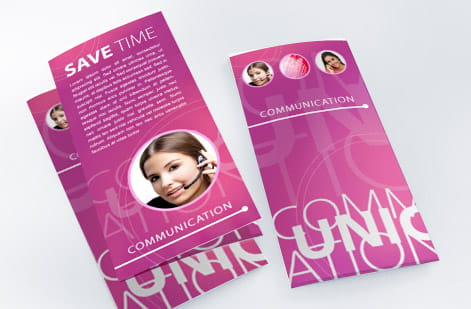
A first campaign is easier than it looks. Pick one audience you can describe in a sentence, write one offer with a deadline, design a card that says it at arm length, print a quantity you can afford to repeat, and mail it. Direct mail postcards open at 500 pieces for $89.68, and the same run can go up to 6 by 11 inches on 16pt cover when saturation coverage calls for a bigger card. Then do it again to the same audience four to six weeks later with a different angle. Repetition on a stable audience is what turns mail from a lottery ticket into a channel.
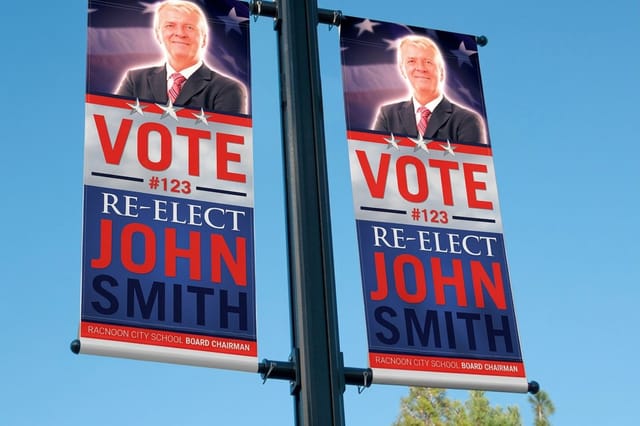
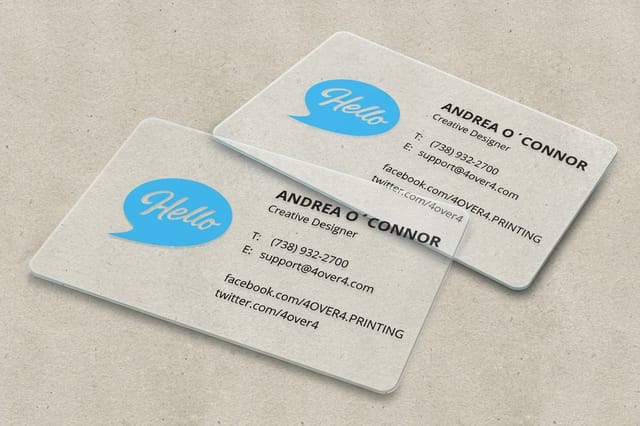
On the print side, price is driven by quantity, size, stock, coating and turnaround, and 4OVER4 prices those live on each product page rather than through a quote queue. Order paper samples before a large run so you can feel the weight and the coating in hand, and give the file a real preflight instead of a glance. When the campaign expands past cards, the same press and the same color standards cover the rest of what you print, from large format banners to plastic cards and branded gear, so everything you hand a customer looks like it came from one company.
Order free paper samples first at 4over4.com/free-samples, then configure the run when the stock is decided.
Wally explains the mailer
Two panels, one job each
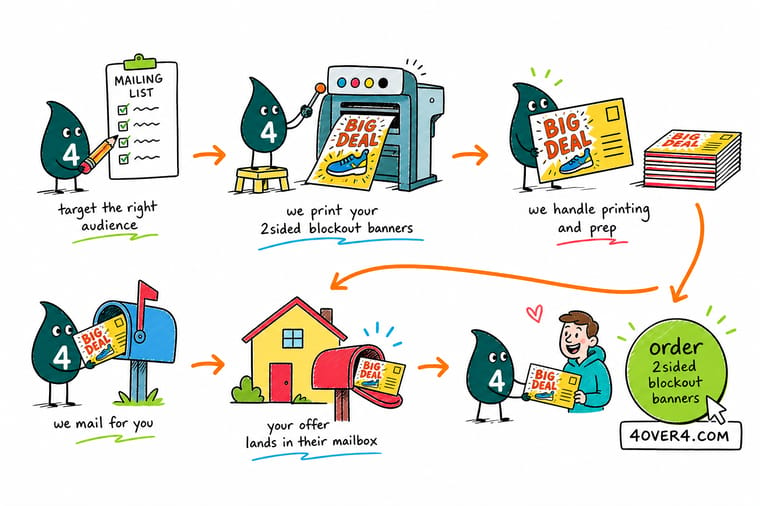
Wally reads every mailer twice. First the offer panel, from arm length, to see whether one idea comes through before the card reaches the counter. Then the address panel, up close, to check that the address block, the indicia corner and the barcode strip are all clear of artwork. If both passes are clean, the card is ready for the press and for the carrier.
Shop print for direct mail →
Infographic
A postcard mailer from offer to response
One frame, seven stages, from the offer to the response you count. Keep it beside your campaign calendar and book the art deadline about two weeks ahead of the in home week, with 4 business days of that window going to printing direct mail postcards once the file passes preflight.
The stages overlap in practice. Design and list selection often run together, and measurement starts the day the mailing is inducted rather than the day the first response lands.
Specs and pricing
Live specs and pricing, product by product
Every 4OVER4 product page carries its own specification sheet and a live price grid, so you can compare quantity breaks and turnaround before you commit to a run. One product page below shows exactly that.

| Quantity | Price Per Unit | Total |
|---|---|---|
| 1 | $108.75 | $108.75 |
| 2 | $108.74 | $217.47 |
| 3 | $108.74 | $326.22 |
| 4 | $97.76 | $391.02 |
| 5 | $97.76 | $488.78 |
| 6 | $97.76 | $586.53 |
| 7 | $89.28 | $624.98 |
| 8 | $86.77 | $694.18 |
Print it
What campaigns order alongside a mailer drop
See it in use
Mailer work customers sent through us






%22%2F%3E%3Ccircle%20cx%3D%2242%22%20cy%3D%221%22%20r%3D%2217%22%20fill%3D%22%2314b8a6%22%20opacity%3D%220.15%22%2F%3E%3Ccircle%20cx%3D%2240%22%20cy%3D%2250%22%20r%3D%225%22%20fill%3D%22%2314b8a6%22%20opacity%3D%220.1%22%2F%3E%3Crect%20x%3D%2272%22%20y%3D%22-7%22%20width%3D%2227%22%20height%3D%2210%22%20rx%3D%224%22%20fill%3D%22%2314b8a6%22%20opacity%3D%220.08%22%20transform%3D%22rotate(7%2080%2030)%22%2F%3E%3C%2Fsvg%3E)
Explore more
Where to go next





By the numbers
Printing you can count on for every drop at 4OVER4
Common Questions
Common questions about postcard mailers
What is a postcard mailer?
A postcard mailer is a printed card sent through the mail with no envelope, so the message is visible the moment it is picked up. One side carries the offer, the other carries the address block, the postage indicia and usually a short supporting message. Because there is nothing to open, a mailer gets read or discarded in the few seconds it takes to walk from the mailbox to the kitchen counter, which is why the offer has to be legible at arm length.
Saturation mail or my own list, and which card size fits each?
Start with the audience and the offer, then work back to the format. A neighborhood service business that wants saturation coverage of a few routes usually picks a larger card and mails every address on the route. A business mailing to its own customer records usually picks a smaller card at the postcard rate and personalizes the message. Once the audience and the mailing method are set, the size, the stock and the coating follow from the budget and the volume.
What does a postcard mailer cost and how are prices set?
Two costs sit side by side. Printing is priced by quantity, size, paper stock, coating and turnaround, and the unit price falls steeply as the run grows because setup is spread over more pieces. Postage is priced separately by the Postal Service, based on the size and thickness of the card, the mail class and how well the mailing is sorted. Budget both, and quote them per piece so you can compare formats fairly.
What sizes, stocks and finishes are available for postcard mailers?
Common mailer sizes run from compact cards that qualify for the postcard rate up to oversized formats used for saturation mailing. Stocks are usually heavy cover weights so the card survives handling, with heavier options for premium campaigns. Finishes include gloss coating for saturated color, matte for a softer look, and uncoated or writable coatings when part of the card needs to take pen or a handwritten note. Ask for a sample before the full run.
How long does a postcard mailer take to print and ship?
Print turnaround depends on the stock, the coating and the quantity, and it starts after the artwork passes preflight, not when the order is placed. Addressing and sorting add time, and delivery time depends on the mail class you choose. A safe plan books the art deadline about two weeks ahead of the week you want the card in homes, with more room around holidays and election season when mail volume spikes.
Do I need a mailing list, or can I mail every home on a route?
Both routes exist. Saturation mailing sends the same card to every address on a chosen carrier route, which suits restaurants, dentists, gyms and other businesses that draw from a radius. Targeted mailing sends to a list of specific names and addresses, which suits repeat customers, past leads and narrowly defined prospects. Saturation costs less per piece and needs no names. Targeted costs more and earns it back through relevance.
How do I know whether the mailer worked?
Give the card its own way of being counted. A unique promo code, a dedicated landing page, a distinct phone number or a physical coupon to bring in all give you a clean signal. Record the drop date, then watch the response curve for the three to four weeks after the in home window. Compare cost per response across drops rather than judging a single mailing on gut feel.
Get Started
Pick the size and the mailing method, then price the drop
Bring the artwork to 4OVER4.COM and print the campaign on stock that survives the mail stream, with live pricing, real proofing and turnaround you can plan an in home date around.
Legal Disclaimer
Gold Standard guarantees apply to all standard orders placed through 4over4.com. Price match requires verifiable proof of a competitor's published price for an equivalent product with matching specifications and turnaround time. Satisfaction guarantee covers manufacturing defects and print quality issues. Contact support with order number and documentation.
