
Direct Mail Examples That Get Responses, From Postcards to Political Mailers


Nadia is our customer education voice, built from the knowledge of our production team, with over 20 years in printing.
The direct mail that gets answered is built from one offer, one action and a date, printed in the size band you budgeted for. Below are nine formats printers run every week, from a 4 x 6 recall card to a 6 x 11 political mailer, each with the size, the stock and the real starting price behind it.
Direct mail examples at a glance
| Piece | Typical trim | USPS band | Why it works | Product at 4OVER4 |
|---|---|---|---|---|
| Persuasion mailer | 6 x 11 in | Letter band | Room for a photo, a record and a disclaimer without folding | Oversized postcards |
| Saturation card | 6.5 x 9 in | Flat band, EDDM eligible | Hits a whole carrier route with no mailing list to buy | Direct mail postcards |
| Recall reminder | 4 x 6 in | Card band | Cheapest postage, one line of copy, a date already filled in | Standard postcards |
| Personal ask | #10 envelope | Letter band | Closed envelope buys the two seconds it takes to open it | Printed envelopes and letterheads |
| Multi-service mailer | 8.5 x 11 folded | Letter or flat, depending on fold | Carries a price list without looking like a price list | Direct mail brochures |
Size bands are set by USPS and are theirs to change, so confirm current dimensions and rates before a run. As this page went up, the postcard band stopped at 4.25 x 6 inches and the flat band started past 6.125 x 11.5 inches. You can order direct mail postcards in nine sizes from 4 x 6 to 6 x 11 inches on 14pt or 16pt cover straight from the configurator.
What the mail that gets answered has in common
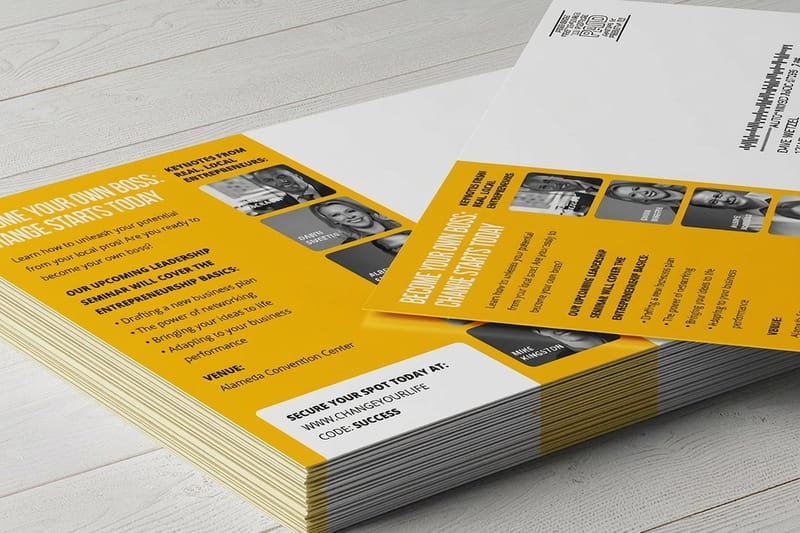
The direct mail pieces that pull a response are almost always the plainest ones: a single offer, a single action, and a date the reader can hold against a calendar. Everything below is a real format printers run every week, described by what it does rather than by how it looks.
Look at any mailing that worked and the same skeleton is underneath it. A reason the piece arrived now, an offer stated in numbers, one way to respond, and a deadline. The pieces that fail usually fail because they carry three offers, or because the phone number is set at nine points under a photograph.
The second thing they share is that the format was chosen before the artwork. A 4 x 6 card and a 6 x 11 card are not the same piece at different scales. One pays postcard postage and gives you about forty words of usable space. The other pays letter postage and gives you room for a headline, a photograph and a paragraph of proof. Our walkthrough of a full direct mail campaign covers the sequence, and the cost-per-piece breakdown shows where the money actually goes.
The size band decides the postage before you draw anything
USPS sorts mail into bands. A card between 3.5 x 5 and 4.25 x 6 inches, and no thicker than about 0.016 inches, mails at the First-Class postcard rate. Go one eighth of an inch taller and the same piece is a letter. Grow past 6.125 x 11.5 inches and it becomes a flat, which is the class Every Door Direct Mail Retail requires.
That ladder is why a 5 x 7 card is an expensive 4 x 6 rather than a cheap 6 x 9. Decide the band, then design inside it. Confirm current dimensions and rates with USPS before you commit a run, because the thresholds are theirs to change.
The list does more work than the design
A mediocre card to the right two thousand households beats a beautiful card to the wrong twenty thousand. Homeowners in a five-year-old subdivision, patients who have not booked in eighteen months, registered voters in three precincts: those are lists with a reason attached.
When you have no list, saturation mail is the honest alternative, and building or renting a list is the step most first-time mailers skip. Our mailing services handle addressing, sorting and drop-off once you have one.
Nine direct mail examples worth copying
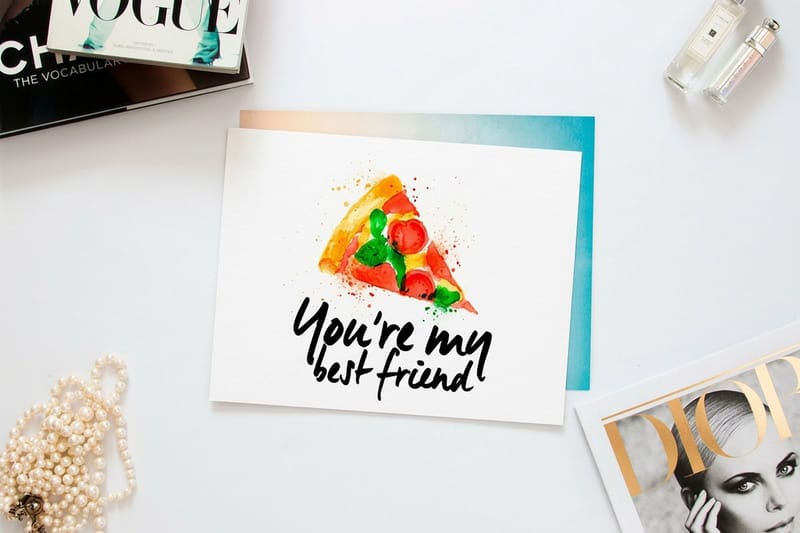
Each of these is a format plus the reason it works. Take the structure, not the wording. The prices quoted are the live starting prices at 4OVER4.COM so you can put a rough number on any of them before you design.
They are ordered by how quickly you can get one in the mail, so a business mailing for the first time can start at the top and work down as the list gets better.
Examples one to five: cards that carry one offer
1. The appointment reminder with the date already on it. A 4 x 6 card that says the patient is due, names the month, and gives a number. It works because the reader has nothing to decide except whether to call. Print it on standard postcards, which start at $16.48, and mail it at the postcard rate.
2. The just-sold card with the actual address. A 6 x 9 card showing one house, the street name and what it sold for. Neighbours read it because it is about their street. Vague market updates get binned; a specific address does not. See postcard layouts by occasion for the arrangement.
3. The new-business saturation drop. A restaurant or a clinic opening on a corner mails every household on the surrounding carrier routes with one dish, one price and an opening date. No list to buy. It has to be flat size to qualify, which is where direct mail postcards at $89.68 and our EDDM service come in.
4. The lapsed-customer card with a reason to come back. Not a discount for everyone. A card that says it has been a while, names the last service, and offers something specific for thirty days. Variable data printing puts the last visit on each card, and that is a production setting rather than a separate design job.
5. The seasonal card timed to the trade, not the calendar. Gutter cleaning mails three weeks before the leaves drop, not in December. Tax preparers mail in the second week of January. The offer is ordinary; the timing is the whole idea.
Examples six to nine: letters, folds and heavier pieces
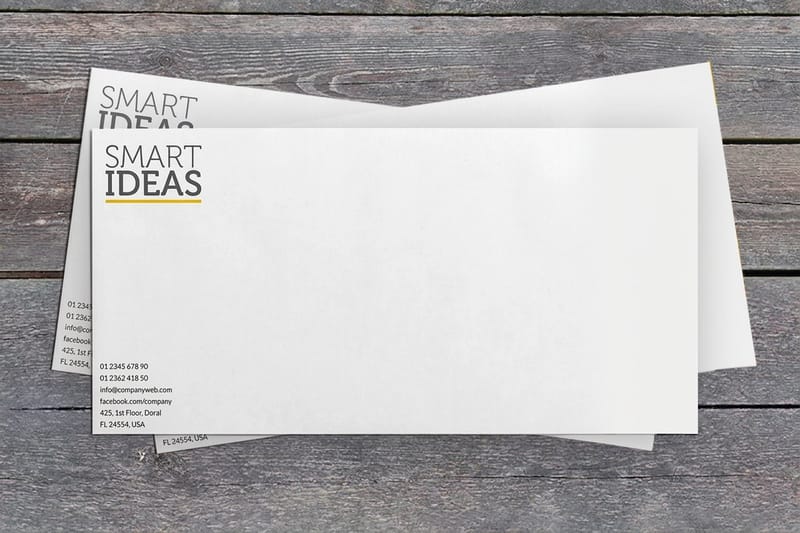
6. The plain stamped letter for a personal ask. A #10 envelope with a real stamp, a printed letterhead inside, and a signature. Nonprofits and law firms use it because a closed envelope buys the two seconds it takes to open it. Printed envelopes start at $142.99 and standard letterheads at $99.95.
7. The folded self-mailer for a business with five services. A single card cannot list HVAC repair, install, ducting, maintenance plans and financing without becoming a menu. A folded postcard at $84.36 puts the hook on the outside and the list inside, so the reader chooses to open it. If one card is enough for your offer, the HVAC Postcards video shows five sizes in the mailbox. If you would rather hand off the addressing and postage too, the Vistaprint mailing services alternative that mails it all for you covers that route.
8. The brochure mailer for a considered purchase. Schools, clinics and equipment dealers mail direct mail brochures from $238.73 because the decision takes a week and the piece has to survive on a kitchen counter until then. Heavier stock is the point, not a luxury.
9. The dimensional mailer for a short B2B list. Fifty prospects, an envelope with something inside it that is not flat, and a letter that refers to it. The cost per piece is high and the list is tiny, so the arithmetic only works when one new client pays for the whole mailing. Other formats worth testing sit alongside it.
Political campaign direct mail, and what changes
Political mail follows the same rules as commercial mail, with three additions: a disclaimer that has to be readable on the printed piece, a delivery date that is fixed by the election rather than by your schedule, and a voter file that changes which household gets which version.
The default format is a 6 x 11 card. It sits in the letter band, it is large enough to hold a photograph and a paragraph without folding, and it stands out of a stack of standard letters. Campaigns usually run three to five versions of the same piece across different precincts, which is a variable data job rather than five print jobs.
The deadline is the part that catches first-time campaigns. Mail that arrives after the ballots have gone out is a donation to the printer, and standard bulk mail can sit for days. Plan backwards from the in-home date, allow for proofing, and read how delivery options change the arrival window before you pick a class.
Three versions of one card, not three cards
A persuasion mailer, a contrast mailer and a turnout mailer are different arguments to different lists. Build one layout with the headline, the photograph and the closing line as variables, and you get three pieces from one design and one press setup.
The turnout piece is the one campaigns underinvest in. It carries no argument at all: the polling place, the hours, and the date. It goes to people already on your side. Practical detail beats persuasion at that stage. Designing political mailers and political postcard ideas cover the layouts.
The disclaimer is a printing problem, not a legal footnote
Federal candidate and committee mail carries a paid-for disclaimer with specific legibility and contrast requirements, and many states add their own for local races. A disclaimer set in reversed six point type over a photograph technically exists and practically does not.
Set it in a clean box, on a solid background, on the address side where it will not fight the artwork. Check your own state and local rules, or your compliance counsel, because the requirements vary by office and by jurisdiction.
Direct mail pricing and specs at 4OVER4.COM
Size, stock, coating and quantity set the print cost, and the size band sets the postage. At the base setup, 4 x 6 inches on 14pt gloss cover printed on the front, 500 direct mail postcards cost $89.68 and 5,000 cost $241.51, under 5 cents a card before postage. The live configurator below prices every other size and stock, so you can put a print figure next to your postage estimate before you commit.
Quantity and price
Direct mail postcard pricing and specs
Live configurator numbers on mailable card stock, where the per piece cost drops as the run grows.
| Quantity | Price Per Unit | Total |
|---|---|---|
| 500 | 17.9¢ | $89.68 |
| 1,000 | 17.1¢ | $170.53 |
| 2,000 | 9.35¢ | $186.95 |
| 3,000 | 6.84¢ | $205.13 |
| 4,000 | 5.58¢ | $223.31 |
| 5,000 | 4.83¢ | $241.51 |
Large runs step down in price, and bulk discounts apply on top. You can also earn coins on every order and spend them on the next drop, which matters when a campaign mails four times in a season.
Stock, coating and what survives the mail stream
Mail gets machine-sorted, stacked wet, and shoved through a slot. A 14pt card takes that and arrives flat; a 100lb text sheet mailed unfolded arrives creased. For anything card shaped, 14pt or 16pt cover stock is the working default, and 16pt is noticeably more rigid on anything above 6 x 9 inches.
Print it
Direct mail postcards, ready to drop
Mailable sizes on heavy card stock, printed and handed to the post office for you.
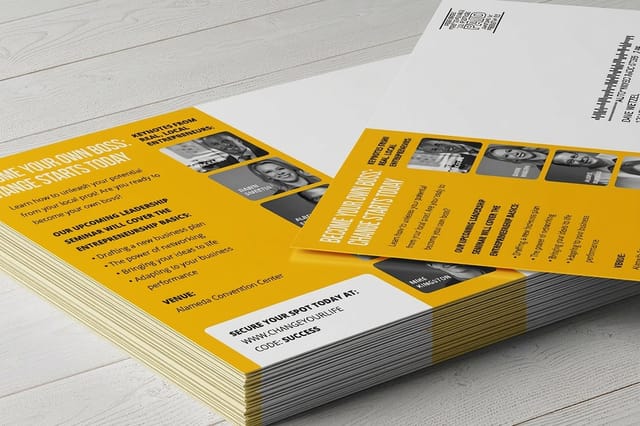
Every mailable format sits together on the direct mail printing category, so you can compare card stocks against folded pieces and envelopes without opening five tabs.
Coating is the trade-off most people get wrong. Gloss lifts photography and shrugs off rain, but nothing writes on it, so a card that asks for a handwritten note or a filled-in appointment time has to be uncoated or matte on that side. Matte also cuts the glare that makes small type hard to read at a kitchen counter. Ask for a free proof and hold the real stock before the run, because coating decisions are impossible to judge on a screen. For addressed letters, pair printed envelopes with matching letterheads so the pieces look like one mailing.
Which example fits your industry
The same nine formats land differently depending on who is on the list, so the pick changes by business type.
- Real estate agents. Just-listed and just-sold cards to the surrounding streets, at 6 x 9 or larger so they do not sit inside the letter stack. One address, one number, one photograph.
- Dental and medical practices. Recall cards at 4 x 6 with the patient name and the last visit merged in. Cheapest postage band, highest response of anything a practice mails.
- Restaurants and local retail. EDDM saturation on flat-size cards to the carrier routes within a ten-minute drive. No list to buy, and the whole route gets it on the same day.
- Political campaigns. A 6 x 11 card in three to five precinct versions, plus a plain stamped letter for the donor file. Disclaimer on the address side, in a box.
- Nonprofits. A #10 envelope, a printed letterhead, a real signature and a reply device. The envelope is doing the work, so it should not look like a bill.
- Home services. A folded self-mailer that keeps five services legible, timed to the season the work happens in rather than to the marketing calendar.
Response varies widely by sector and offer, and the industry comparison is a better starting point than a single headline figure. If you are weighing mail against paid channels, the direct mail and digital comparison sets both against the same budget.
Blanks that keep artwork from coming back rejected
Starting from a correctly sized blank saves the round of rejected artwork that trips up most first mailings. 4OVER4.COM builds its blanks to exact product specs, with bleed, trim and the address-side clear zone already marked, including the barcode strip along the bottom right of the address side. Pull one from the blank template library before you open your design app.
Start fast
Postcard templates and print-ready blanks
Mailing-side layouts and exact size blanks so your artwork lands inside the cut line and clear of the barcode zone.

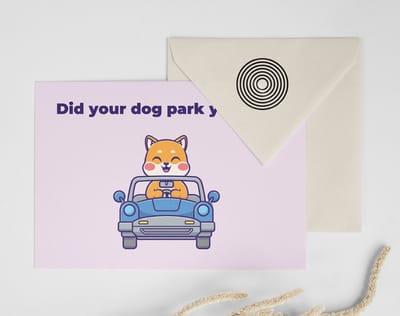
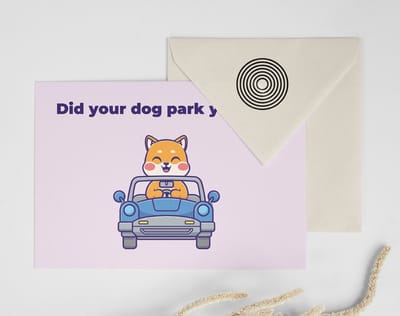
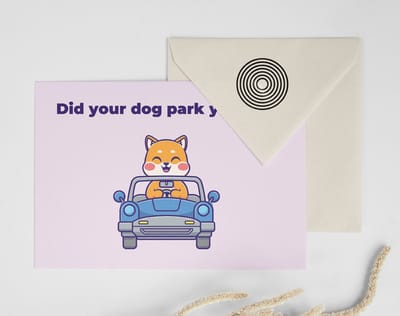
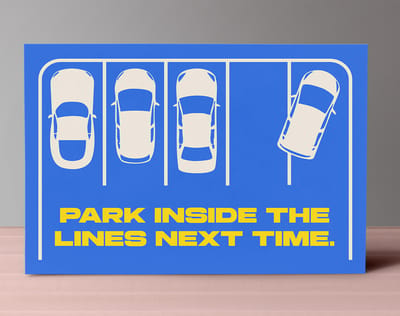
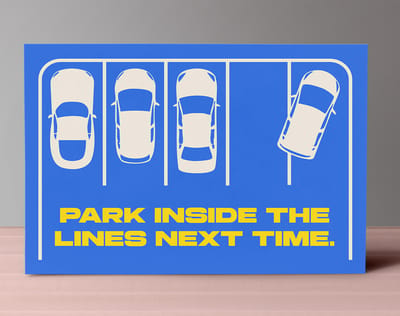
If the address side is where you are stuck, addressing a postcard correctly and EDDM postcard sizes cover the two rules that get mailings turned away at the counter.
Wally picks the format before the artwork
Size band first, offer second, artwork last
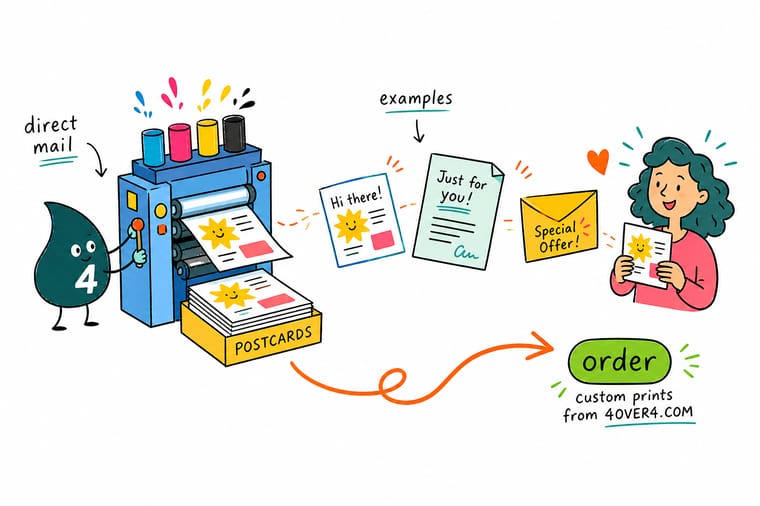
Stay at or under 4.25 x 6 inches for the postcard rate, go to 6 x 9 or 6 x 11 when you need a photograph and a paragraph, and move to flat size when the campaign is an EDDM route drop. Print on 14pt or 16pt cover, keep the bottom right of the address side clear for the barcode, and leave one side matte if anyone has to write on it.
Order direct mail postcards →What to remember about these direct mail examples
Design rules that hold at every size
- One offer, one action. Every extra offer on a card halves the attention the first one gets. If two things must go out, mail twice.
- Put a date on it. A deadline the reader can check against a calendar turns an interesting card into a scheduled task. Open-ended offers get set aside and forgotten.
- Respect the barcode clear zone. Keep artwork and copy out of the bottom right of the address side. A design that crosses it gets rejected at the counter after the run is printed.
- Make the response route obvious. One phone number, or one short URL, set large enough to read at arm length. A QR code that lands on a homepage teaches people not to scan your codes.
- Print one and mail it to yourself. Hold the proof, look at it upside down on a kitchen counter next to the rest of the post, and then decide whether the headline still works.
Explore more
More ways to print and mail
Folded postcards run 50 for $84.36 in 5 business days and oversized 50 for $51.62 in 3.
Product Direct Mail Postcards Flat-size cards built for EDDM and addressed route drops. Product Oversized Postcards The 6 x 11 card behind most campaign mail. Product Printed Envelopes A closed envelope for the letters people actually open. 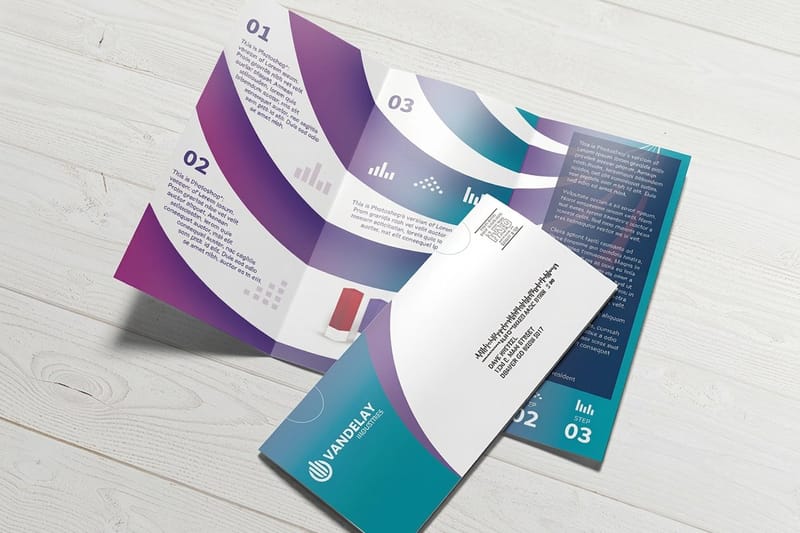 Product Direct Mail Brochures Heavier pieces for decisions that take a week.
 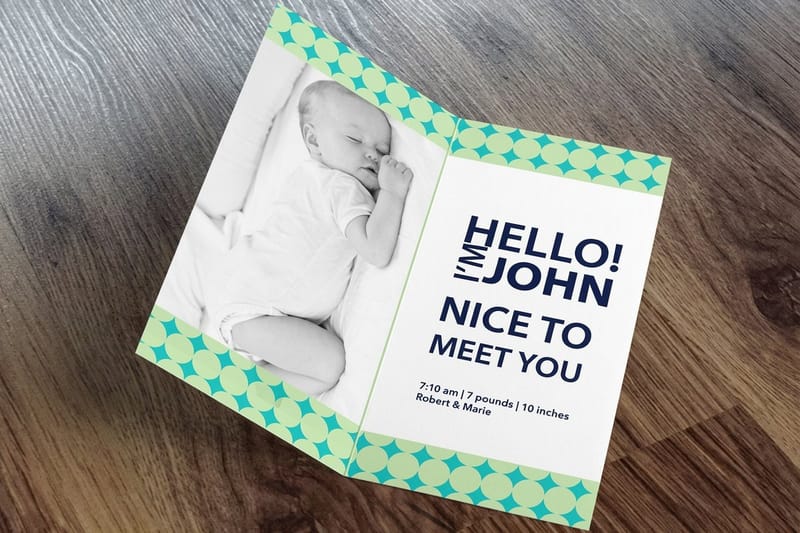 Product Folded Postcards A hook outside, five services inside, one mailing.
  Guide What Is EDDM How saturation mail works and what it costs.
 Ready to print your next mailing?
Pick the size band, drop in your artwork or a free blank, and 4OVER4.COM prints it on heavy mailable stock and hands it to the post office for you.
Common questions about direct mail examples
What is the most effective direct mail format for a small business?
For a first mailing, a flat-size postcard sent to the carrier routes around the business, because it needs no mailing list and it arrives on one day across the whole area. It carries one offer, it cannot be left unopened, and the cost sits mostly in postage rather than in production. Once you know who responded, the next mailing goes to a real list at a smaller size and a lower postage band. Direct mail postcards at 4OVER4.COM start at $89.68, and standard postcards for addressed follow-up start at $16.48.
What size should a political campaign mailer be?
Most campaigns run 6 x 11 inches. It sits inside the USPS letter band, it holds a photograph, a headline and a paragraph without folding, and it looks different from the standard envelopes it arrives with. Some campaigns go larger into flat size for a final turnout piece, which costs more per unit and arrives with more presence. Whichever size you pick, place the paid-for disclaimer in a clean box on the address side rather than reversed over a photograph, and check the rules for your specific office with your compliance counsel.
Do postcards or letters get better responses?
They answer different jobs. A postcard delivers a single offer to a large list at the lowest postage, and the message is read whether or not the recipient meant to read it. A letter in a closed envelope suits a personal ask, a renewal, or anything that needs more than sixty words, and it costs more per piece in both printing and postage. Nonprofits and law firms mail letters for that reason; restaurants and dentists mail cards. Our comparison of postcards against letters works through the arithmetic on both.
How far ahead should I print a direct mail campaign?
Work backwards from the date you want it in home, then add time for proofing, printing, addressing and the mail class you chose. Standard bulk mail is not a guaranteed delivery window and can sit for several days, so campaigns tied to an event or an election need a buffer of at least a couple of weeks beyond the print turnaround. Approve the proof quickly, because that is the step that most often eats the buffer. If the date is tight, ask about a faster mail class before the job goes on press rather than after.
Can I mail the same card to different neighbourhoods with different offers?
Yes, and it is the normal way campaigns and multi-location businesses work. Build one layout and treat the headline, the image and the offer line as variables, then supply a spreadsheet with a column that says which version each address gets. Variable data printing merges them on press, so you pay for one design and one setup instead of three separate jobs. It is the same mechanism that puts a recipient name or a last-visit date on each card.
