How Holographic Stickers Are Made: The Full 2026 Process

How Holographic Stickers Are Made - From Raw Film to Rainbow Shine
Holographic stickers are made by embossing microscopic patterns onto metallized film, then laminating printed designs over that film to create a shifting rainbow effect. 4OVER4 produces custom holographic stickers using precision printing on iridescent vinyl, backed by 5 Gold Guarantees that cover quality, on-time delivery, and satisfaction. With 150,000+ businesses served and 10,000+ reviews at a 4.8/5-star average, these aren't just pretty labels - they're a proven branding tool.
Holographic Stickers
Starting from $322.98
Order Premium Custom Holographic Sticker Printing
Ever watched a holographic sticker catch the light and wondered what's actually going on inside that thin piece of material? The color shifts aren't paint. They're not ink in the traditional sense. They're the result of physics - light bending, splitting, and bouncing off microscopic grooves pressed into metal-coated film. That's what makes holographic stickers so hard to replicate and so effective at grabbing attention.
This guide breaks down every step of how holographic stickers are made, from the raw materials to the final die cut. You'll understand the science, the production methods, and why the process matters when you're choosing stickers for your brand, packaging, or creative projects.
The Science Behind Holographic Film
Holographic stickers get their rainbow shimmer from a principle called light diffraction. When white light hits a surface covered in tiny, precisely spaced grooves, it splits into its component wavelengths - red, blue, green, violet - and reflects them at different angles. That's why holographic stickers shift color as you tilt them.
The grooves responsible for this effect are incredibly small. We're talking about patterns measured in nanometers, far too fine for the human eye to see. These patterns are originally created using laser interference - two laser beams intersect on a photosensitive plate, and the resulting interference pattern gets recorded as a physical texture. That texture becomes the master hologram.
Think of it like a vinyl record, but instead of storing music in grooves, it stores light information. The grooves on a holographic master are arranged so precisely that they control exactly how light bounces off the surface. Different groove spacings produce different colors at different viewing angles.
This is why holographic effects can't be easily faked with standard printing. You can't reproduce nanometer-scale patterns with a regular inkjet or offset press. The effect is physical, not chemical. It's built into the structure of the material itself.
"We switched to holographic labels for our cosmetics line and saw a 35% increase in shelf pickups within the first month. People literally can't stop reaching for the shiny thing."
- Rachel K., cosmetics brand founder
How the Master Hologram Gets Created
Everything starts with a master hologram. A laser setup splits a single coherent beam into two paths. One beam hits the subject (or a computer-generated pattern), and the other serves as a reference. Where these beams meet on a photoresist-coated glass plate, they create an interference pattern - alternating bright and dark lines at microscopic scale.
After exposure, the plate gets chemically developed. The interference pattern becomes a physical relief - tiny ridges and valleys etched into the surface. This master plate is extremely fragile and valuable. It's the mold from which all production holographic film will be stamped.
Modern holographic masters are increasingly generated by computer. Dot-matrix holography uses software to calculate the exact groove patterns needed, then writes them onto the master plate using an electron beam or laser writer. This allows for custom patterns, logos, and even animated effects that shift as you move the sticker.
From Master to Metal Shim
The glass master can't go directly onto a production line. It's too delicate. So manufacturers create a metal copy called a shim (or stamper) through a process called electroforming.
The master gets coated with a thin layer of silver or nickel to make it conductive. Then it's placed in an electroplating bath where additional nickel builds up on the surface over several hours. When the nickel layer is thick enough (usually around 0.3mm), it's carefully peeled away from the master. This nickel shim is an exact negative copy of the holographic pattern.
Multiple shims can be made from a single master, and shims can be used to create sub-masters for high-volume production. A single master hologram can eventually produce millions of identical holographic stickers.
Embossing - Where the Rainbow Gets Stamped Into Film
This is the step where holographic film actually gets made. The nickel shim is mounted onto a heated roller or flatbed press. A roll of clear polyester film (usually PET, around 12-25 microns thick) passes under the shim at high pressure and temperature.
The heat softens the film just enough for the microscopic holographic pattern to be pressed into its surface. As the film cools, the pattern locks in permanently. This process is called hot stamping embossing, and it runs at speeds that can produce thousands of meters of holographic film per hour.
After embossing, the film gets metallized. A thin layer of aluminum (typically 40-60 nanometers) is deposited onto the embossed surface through vacuum deposition. The aluminum acts as a mirror, reflecting light off the embossed grooves and creating the visible holographic effect. Without this metal layer, the grooves alone wouldn't produce much visible color.
Some holographic films use a transparent metallization process instead, allowing you to see through the holographic layer. These are called transparent holographic films and they're popular for overlays where the underlying print needs to remain visible. Explore more about holographic printing options to see the range of effects available.
Types of Holographic Patterns
Not all holographic stickers look the same. The pattern embossed into the film determines the visual effect. Here are the most common types you'll encounter when ordering holographic stickers.
Rainbow holographic film is the most recognizable - it produces a scattered, multi-color sparkle effect that shifts across the entire spectrum. This is the classic "holographic" look most people picture.
Dot-matrix holographic patterns are computer-generated and can include custom images, text, or logos that appear to float or animate within the holographic field. These are common in security applications.
Pillar or column holographic film creates a striped effect with bands of color that sweep across the surface. It's a cleaner, more geometric look compared to rainbow scatter patterns.
Printing Your Design Onto Holographic Material
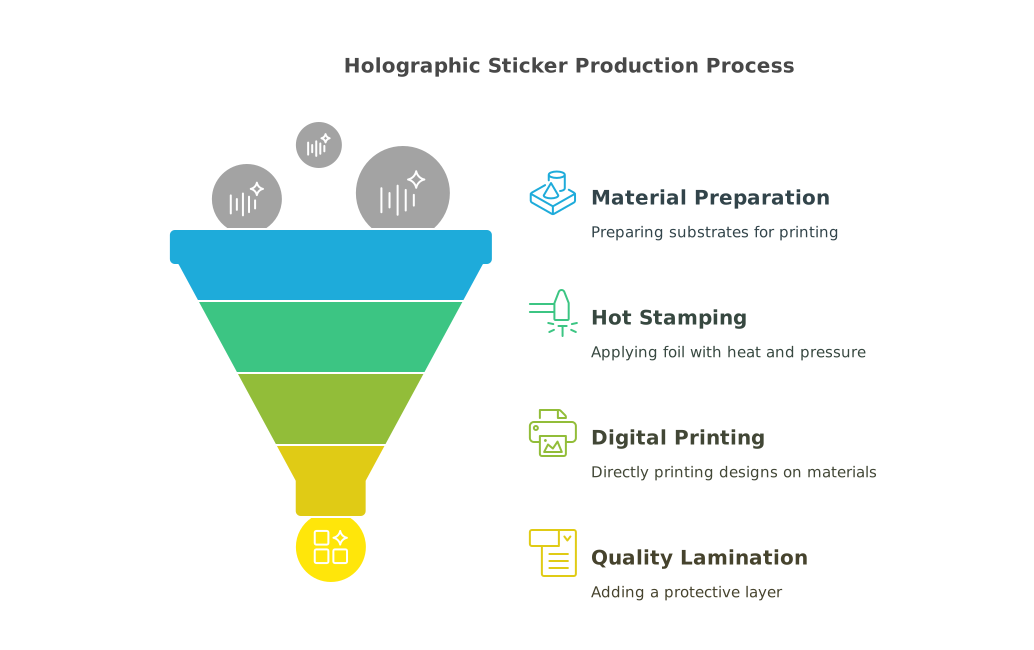
Once you have holographic film, the next step is getting your actual design onto it. This is where holographic sticker production diverges into two main approaches, and understanding both helps you pick the right one for your project.
Method 1 - Printing Directly on Holographic Vinyl
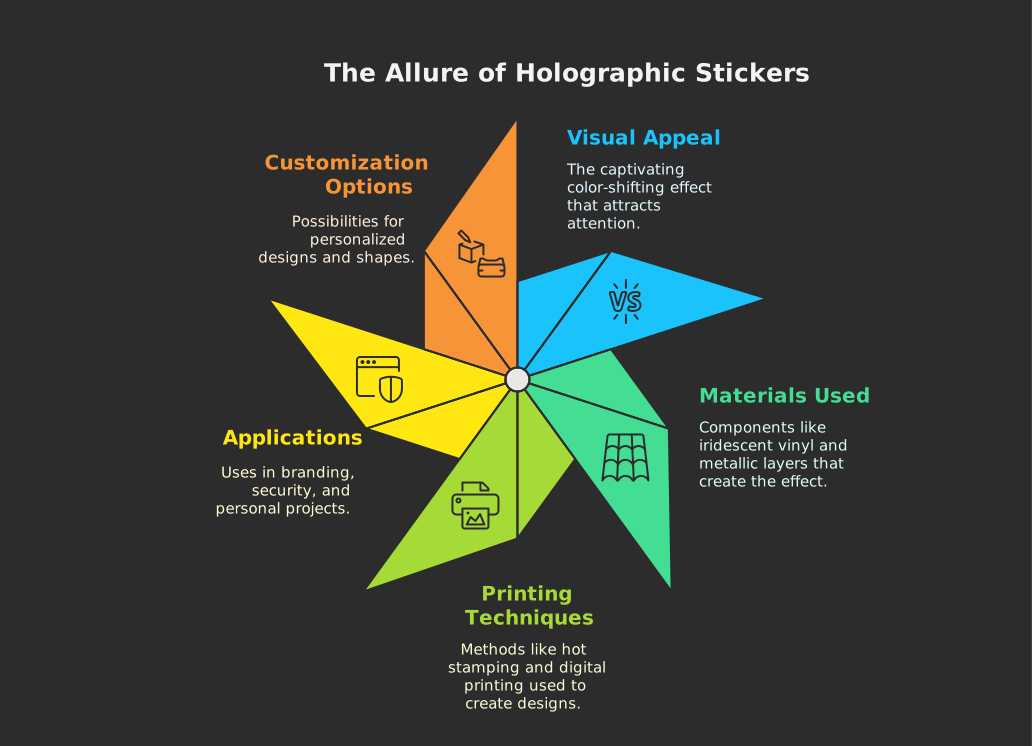
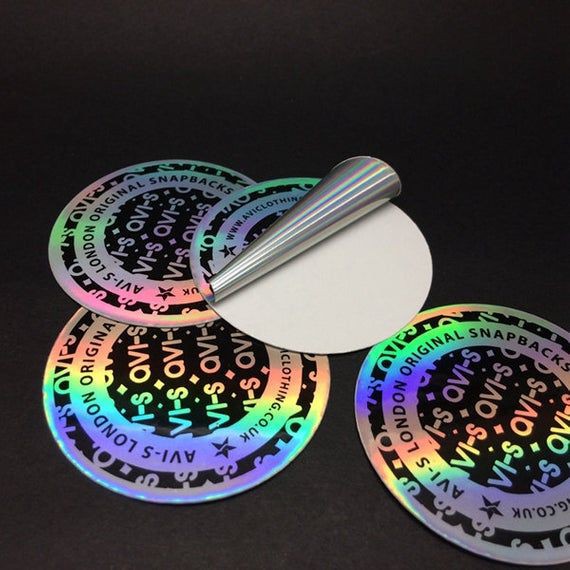
The most common method for custom holographic stickers involves printing your design directly onto holographic vinyl using UV-curable or eco-solvent inkjet printers. The holographic effect shows through the printed areas, especially where the ink coverage is lighter or where parts of the design are left unprinted.
White ink is often printed first as a base layer. Without it, the holographic shimmer beneath would wash out darker colors. The white acts as a barrier, giving CMYK inks a solid foundation to sit on. Areas left without white ink let the holographic rainbow shine through.
This method gives designers a lot of creative control. You can decide exactly where the holographic effect appears - maybe only in the background, or only in certain design elements like stars or highlights. The rest of the sticker gets full-color printing with crisp, opaque colors.
4OVER4 uses this approach for custom holographic stickers, printing your uploaded artwork directly onto premium iridescent vinyl. The result is a sticker where your brand colors stay true while the holographic material adds that unmistakable shimmer.
Method 2 - Holographic Foil Stamping Over Printed Stickers
The second approach works in reverse. Your design gets printed on standard sticker material first, then holographic foil is selectively applied to specific areas using a heated die. This is called holographic foil stamping or hot foil transfer.
The foil only adheres where the heated die makes contact, so you get precise holographic accents - a logo, a border, text, or decorative elements - against a fully printed background. The contrast between matte or glossy printed areas and the holographic foil creates a premium, layered look.
Foil stamping requires a custom metal die for each design, which adds setup cost. It's more economical at higher quantities where that die cost gets spread across thousands of stickers. For shorter runs, direct printing on holographic vinyl is usually more cost-effective.
"Our brewery uses holographic foil-stamped labels on our limited edition releases. Customers collect them. They literally peel the labels off the bottles and stick them on their laptops."
- Marcus D., craft brewery owner
Lamination and Protective Coatings
Holographic stickers need protection. The metallized layer that creates the rainbow effect is thin and vulnerable to scratching, moisture, and UV degradation. That's why lamination is a standard step in holographic sticker production.
A clear laminate film (usually polyester or polypropylene) gets applied over the printed holographic surface. This laminate can be glossy, matte, or soft-touch, and each finish changes how the holographic effect looks. Glossy laminate amplifies the shimmer. Matte laminate softens it into a more subtle, diffused glow. Soft-touch laminate adds a velvety texture while maintaining a muted holographic effect.
For stickers that will face outdoor conditions - think bumper stickers, equipment labels, or outdoor signage - UV-resistant lamination is a must. It prevents the holographic layer from fading and keeps the adhesive from degrading in sunlight. Indoor stickers can get away with lighter lamination, but even a basic clear coat extends the life of the holographic effect by years.
Some manufacturers also apply a scratch-resistant hard coat to the laminate surface. This is common for holographic stickers used in high-wear applications like product packaging that gets handled frequently or ID badges that live in wallets.
If you're looking for other eye-catching label options beyond holographic, 3D Lenticular Stickers offer a completely different dimensional effect that pairs well with holographic designs in product lines.
Die Cutting - Shaping the Final Sticker
After printing and lamination, the holographic sticker sheet needs to be cut into individual stickers. Die cutting is the standard method, and it comes in several forms depending on the order size and shape complexity.
Kiss cutting cuts through the sticker material and laminate but not through the backing paper. This leaves individual stickers on a sheet that customers can peel off one at a time. It's the most common format for sticker sheets and promotional handouts.
Through cutting (or die cutting) slices through everything - sticker, adhesive, and backing. This produces individual stickers that are ready to apply. It's the standard for roll stickers used in packaging lines and labeling machines.
For custom shapes, a steel rule die or digital cutting plotter traces the outline of your design. Custom Die Cut Stickers can be any shape - circles, rounded rectangles, or complex contour cuts that follow the exact outline of your logo or illustration.
Digital cutting plotters have made short-run custom shapes much more affordable. There's no need for a physical die - the plotter uses a blade guided by your digital file. For runs under a few thousand, this is faster and cheaper than ordering a custom steel die.
Quality Control and Security Features
Holographic stickers serve a dual purpose for many businesses. They look great, and they're hard to counterfeit. The holographic effect itself is a security feature because reproducing the nanometer-scale embossing patterns requires specialized equipment that counterfeiters typically don't have access to.
For brands that need additional security, holographic stickers can include tamper-evident features. These stickers are designed to break apart or leave a visible "VOID" pattern on the surface if someone tries to peel them off. This makes them ideal for warranty seals, authentication labels, and product packaging where proof of tampering matters.
Serial numbering, QR codes, and unique identifiers can be printed onto holographic stickers during the production run. Each sticker gets a different number or code, allowing brands to track individual products through their supply chain. When combined with the holographic effect, these features create a multi-layered authentication system.
4OVER4's quality control process checks every batch for color consistency, holographic effect uniformity, adhesive strength, and die-cut accuracy. With a 99.8% on-time delivery rate and quality backed by a 100% satisfaction guarantee, you're not gambling on whether your holographic stickers will look right when they arrive.
"Holographic Stickers /5"
| Quantity | Price Per Unit |
|---|---|
| 100 | $3.23 |
| 1,000 | $0.38 |
| 5,000 | $0.13 |
| 25,000 | $0.07 |
Corner Specs
Foil Stamping
Lamination
Applied By
Applied To
Core Diameter
Unwind Position
Proof Options
Real-World Applications - Who Uses Holographic Stickers and Why
Understanding how holographic stickers are made helps you appreciate why they work so well across different industries. Here's where they show up most often.
Product packaging and retail. Cosmetics brands, supplement companies, and food producers use holographic labels to make products pop on crowded shelves. A holographic accent on a lip gloss tube or protein powder container signals premium quality before the customer even reads the label. Check out Logo Sticker Design Ideas for more ways to use branded stickers in your marketing.
Event and entertainment. Concert promoters, festivals, and sports teams use holographic stickers as collectible merchandise. The visual effect makes them feel special - like something worth keeping rather than tossing. They work as VIP passes, backstage credentials, and limited-edition fan items.
Security and authentication. Pharmaceutical companies, electronics manufacturers, and luxury goods brands use holographic stickers to verify product authenticity. If a product doesn't have the holographic seal, it's likely counterfeit. This application alone drives a big portion of global holographic sticker production.
Small business branding. Independent makers, Etsy sellers, and small-batch producers use holographic stickers to add a premium feel to their packaging without premium costs. A holographic logo sticker on a kraft mailer instantly elevates the unboxing experience. For more creative branding approaches, browse our Printing Articles library.
Creative and personal projects. Planners, scrapbookers, and sticker collectors drive a massive consumer market for holographic stickers. The visual appeal is the entire point - these stickers exist to be admired, traded, and displayed. If you're exploring other creative print projects, take a look at Diy Greeting Card Design Ideas for seasonal inspiration.
"I run a small candle business and adding holographic stickers with my logo to every box completely changed how customers perceive my brand. People photograph the packaging and share it online without me even asking."
- Tanya L., handmade candle business owner
Choosing the Right Holographic Sticker for Your Project
Now that you know how holographic stickers are made, here's how to pick the right option for your specific needs.
For maximum shimmer and full-surface holographic effect, go with direct printing on holographic vinyl. The entire sticker surface catches and reflects light, creating the most dramatic visual impact. This works best for stickers where the holographic effect is the main attraction.
For selective holographic accents on a full-color design, choose holographic foil stamping. You get precise control over which elements shimmer and which stay flat. This approach works well for luxury branding where subtlety matters more than all-out sparkle.
For outdoor durability, make sure your holographic stickers include UV-resistant lamination and waterproof adhesive. Standard indoor holographic stickers will fade and peel in direct sunlight within months. Outdoor-rated versions can last 3-5 years.
For security applications, request tamper-evident holographic material with sequential numbering. The combination of holographic effect plus tamper evidence creates a strong anti-counterfeiting barrier.
If you're drawn to dimensional effects but want something different from holographic, 3D Lenticular Stickers create actual depth and motion illusions using a completely different technology. Some brands combine both holographic and lenticular stickers in their product lines for variety.
For design inspiration that translates well to holographic stickers, check out Classy Business Card Design Inspiration - many of the same design principles (clean typography, bold contrast, strategic use of metallic effects) apply directly to holographic sticker design.
And if you're just getting started with 4OVER4, grab a set of Free Business Cards to experience the print quality firsthand before committing to a holographic sticker order. Sometimes seeing the quality up close is all the convincing you need.
Want more creative print marketing ideas? Browse Funny Print Ad Examples for campaigns that prove print doesn't have to be boring.
Blank Templates

"Ordered how holographic stickers are made from 4OVER4 and the quality blew me away. Sharp colors, premium feel, arrived 2 days early."
"Been using 4OVER4 for how holographic stickers are made for a year. Consistent quality every time. The online designer made it easy."
"Switched to 4OVER4 and saved 40% on how holographic stickers are made. Better quality than my old printer. 60+ paper options."
"4OVER4's how holographic stickers are made helped us look more professional. Clients notice the difference."
What to Remember About Holographic Sticker Production
- The holographic effect is physical, not printed. Microscopic grooves embossed into metallized film diffract light into rainbow colors. This is why holographic stickers are nearly impossible to counterfeit with standard printing equipment.
- Two main production methods exist. Direct printing on holographic vinyl gives full-surface shimmer. Holographic foil stamping adds selective metallic accents to specific design elements. Your choice depends on budget, quantity, and desired visual impact.
- Lamination determines durability. UV-resistant laminate is non-negotiable for outdoor holographic stickers. Indoor stickers benefit from scratch-resistant coatings that protect the thin metallized layer underneath.
- 4OVER4 backs every holographic sticker order with a 100% quality guarantee and 99.8% on-time delivery rate. With 150,000+ businesses served, the production process is dialed in for consistency.
- Security features add real value. Tamper-evident materials, serial numbering, and QR codes turn holographic stickers into authentication tools - not just decorative labels.
- Design files need white ink layers. Without a white base, CMYK colors printed on holographic material look washed out. Plan your artwork with this in mind, or explore Graphic Design Portfolio Examples for layout inspiration that translates well to holographic formats.
- Branding and Packaging
- Security and Authentication
- Creative Projects
- Event Decor and Custom Art
- Use Bold Graphics: High-contrast designs with bold fonts and shapes enhance visibility. For example, pairing solid logos with light-reflective materials increases the stickers' visual pop.
- Choose Colors Strategically: Lighter colors amplify the holographic effect, while deeper tones emphasize details. Combining both adds depth without overwhelming the design.
- Incorporate Transparent Areas: Clear sections let the holographic material shine. Overlaying text or patterns on transparent spaces builds a multi-dimensional effect.
- Match Sticker Shapes with Artwork: Custom-shaped designs, such as die-cut logos or geometrically coordinated icons, match specific branding needs seamlessly. Explore custom holographic stickers for creative solutions.
Common Questions About Holographic Sticker Production
What are the best practices for how holographic stickers are made?
Start with high-resolution artwork (300 DPI minimum) and include a white ink layer beneath your CMYK colors. This prevents the holographic film from washing out dark tones. Choose UV-resistant lamination for any sticker that will face sunlight. Request a proof before full production to confirm the holographic effect interacts with your design the way you expect. For other surface-applied print products, explore Adhesive Wall Fabric options.
How do I choose the right holographic sticker type for my project?
If you want full-surface rainbow shimmer, go with direct printing on holographic vinyl. For selective metallic accents on a full-color design, choose holographic foil stamping. Security-focused projects need tamper-evident holographic material with sequential numbering. Budget matters too - direct printing is more cost-effective for short runs under 1,000 pieces, while foil stamping becomes economical at higher quantities.
What makes holographic stickers effective for marketing?
Holographic stickers grab attention through light diffraction, creating color shifts that the human eye naturally tracks. This makes products stand out on retail shelves and in unboxing experiences. The perceived premium quality of holographic materials increases brand trust. They also double as anti-counterfeiting tools, which builds consumer confidence. For other attention-grabbing print marketing, check out Aluminum Floor Graphics for high-traffic spaces.
How much should I budget for holographic sticker production?
Holographic stickers cost more than standard vinyl stickers due to the specialized metallized film and embossing process. Direct printing on holographic vinyl typically runs 20-40% more than equivalent non-holographic stickers. Foil stamping adds setup costs for the custom die, making it pricier for short runs but competitive at quantities above 2,000-5,000 pieces. 4OVER4 offers transparent pricing with no hidden setup fees, and every order ships with a 100% quality guarantee.