
Inside the Paper Life Cycle: From Tree to Recycling


Emma is our prepress and print production voice, built from the knowledge of our production team, with over 20 years in printing.
How a Sheet Begins Life in a Managed Forest

The paper life cycle runs in five stages, forest, pulp mill, paper machine, press and recovery, and a single wood fiber can make that loop five to seven times before it grows too short to bond. Each stage changes the sheet a printer later runs, which is why the stock you pick for a card or a flyer decides most of its footprint. The life cycle of paper starts long before a press ever touches it. Most printing fiber in North America comes from working forests that are planted, thinned and harvested on a rotation, closer to a slow crop than to a wilderness. Softwoods such as pine and spruce give the long fibers that carry strength, while hardwoods such as maple and birch bring the short fibers that make a smooth, printable surface.
What arrives at a pulp mill is rarely a whole prime log. Sawmill chips, thinnings and residue make up a large share of the feedstock, because the valuable straight timber goes to lumber first. Paper has always been built partly from what the lumber industry leaves behind, and that detail changes how you should read the footprint of a printed job.
From there the wood is broken down into pulp. Chemical pulping cooks chips in a solution that dissolves lignin, the natural glue holding fibers together, and leaves clean cellulose that resists yellowing. Mechanical pulping grinds the wood instead, keeps far more of the mass and uses much more electricity, which is why newsprint feels rougher and ages faster. The pulping route chosen at this stage decides brightness, stiffness and how well the sheet will hold ink years later, which is why two papers of the same weight can behave nothing alike on press.
Stage one: pulping and cleaning
Pulp is washed, screened and often bleached. Modern mills use elemental chlorine free or totally chlorine free sequences, so the effluent looks nothing like the mill wastewater of forty years ago. The output is a wet slurry that is more than ninety percent water.
Stage two: the paper machine
That slurry sprays onto a moving wire screen, drains, presses between felts and runs through heated dryer cans. The fibers align with the direction of travel, which creates grain, the reason a sheet folds crisply one way and cracks the other.
Stage three: surface and finish
Coating stations add clay or calcium carbonate for gloss and ink holdout. Calendering squeezes the sheet smooth. Skip both and you get the toothy uncoated stocks that soak up ink and look handmade in the best way.
Print it flat
Custom die-cut paper shapes
One material, any outline, and trim waste that goes straight back into the recycling stream.

What Happens to Paper on Press
Printing is the shortest stage of the whole cycle and the one that decides how the piece ends. Offset presses lay a thin film of oil or vegetable based ink onto the sheet, and the ink sits in the surface rather than on top of it. Digital toner fuses plastic pigment to the fiber with heat. Both are recyclable, but they behave differently in the repulper.
Format matters as much as ink. A flat sheet trimmed square wastes very little, while shaped work leaves a skeleton of offcuts around every piece. Those offcuts are clean, unprinted or lightly printed paper, and a good print shop bales them for recovery instead of sending them out with general trash. Ordering a custom die-cut shape is not automatically wasteful, provided the layout nests efficiently and the trim goes back into the loop.
The one thing that genuinely breaks the cycle is what gets added after printing. Plastic lamination, thick UV varnish and heavy foil turn a paper product into a composite. Mills can handle small amounts, but a fully laminated piece is closer to a plastic card than to a sheet of paper, so save those finishes for work that truly needs the durability.
Print picks
Three paper formats that stay in the loop
Live pricing, single-material construction, and stocks that repulp without a fight.
 Any Shape Size Paper Die-Cut 50 for $87.00 Cut any outline you want from a single flat sheet, with trim waste that stays recyclable.
 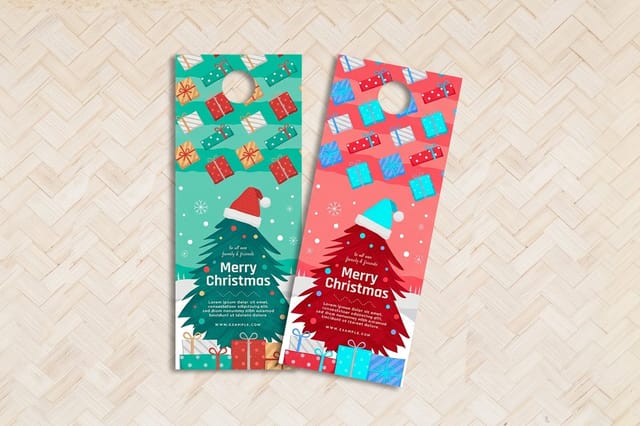 Christmas Tree Door Hangers 250 for $252.51 Heavy card stock shaped and hung on a knob, then folded back into the paper stream after the season.
 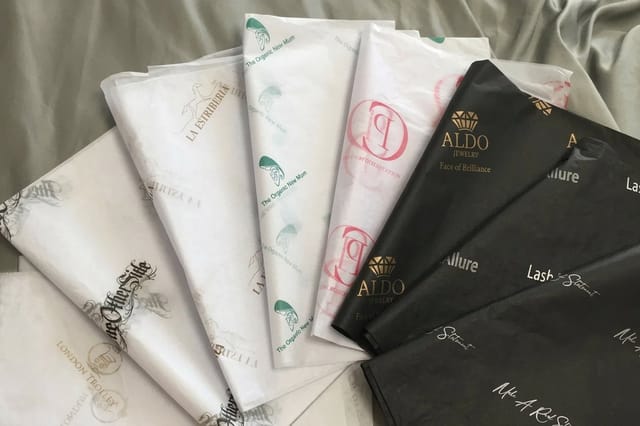 Custom Tissue Paper 100 for $126.32 Thin, short-fiber paper printed with your brand, the last honest use of a fiber before it retires.
 Inside the Recycling Loop at a Paper Mill
Recovered paper arrives baled and sorted by grade. Old corrugated containers are their own category, mixed office paper another, and printed commercial work usually lands in the sorted white or mixed grades. Grade discipline is the whole game, because contamination is what turns a bale into landfill rather than raw material.
In the hydrapulper the bales drop into warm water and agitate until the fibers separate again. Screens pull out staples, plastic windows and tape. Cleaners spin off heavy grit. Then comes deinking, where surfactants lift ink particles off the fiber and air bubbles float them to the surface in a flotation cell, carrying the pigment away as a gray sludge.
- Collection and sorting. Mixed paper is separated by grade, since a clean single grade is worth several times a contaminated mixed bale.
- Repulping. Water and agitation break the sheet back into individual fibers within about twenty minutes.
- Screening and cleaning. Metal, plastic, adhesives and grit are pulled out before they can scar the new sheet.
- Deinking. Flotation and washing strip pigment, which is why recycled sheets can reach respectable brightness.
- Refining and forming. The cleaned stock goes onto a paper machine exactly like virgin pulp does.
Every trip through that loop shortens the fiber a little. Cellulose strands fray, lose bonding surface and eventually pass through the screens as fines. That is the real limit on recycling: not willingness, but fiber length. A given fiber survives roughly five to seven cycles before it is too short to hold a sheet together, which is why fresh fiber has to keep entering the system even in a perfectly efficient one.
How Recycled Content Changes the Sheet You Print On
Recycled stock earned a bad reputation in the 1990s that it no longer deserves. Early recycled sheets ran dusty, picked lint onto blankets and printed a muddy gray. Deinking and screening have improved since then, and a modern recycled sheet at the same basis weight prints close enough to virgin that most clients cannot pick it out of a stack without a loupe. On a standard 2 by 3.5 inch business card at 4OVER4.COM, the recycled choices include 14pt uncoated and 15pt cover with gloss on one side, both with 30 percent post-consumer fiber, and 13pt uncoated and 18pt kraft made from 100 percent post-consumer fiber.
There are still honest differences worth planning around. Recycled sheets usually sit a touch warmer and less bright, which flatters skin tones and earth palettes and slightly dulls electric blues. They can be marginally bulkier at the same weight, so a folded piece may feel more substantial. Heavy solid coverage is the toughest test, because any dust in the sheet shows in a large flat field of color.
If you want to see it rather than read about it, get the same artwork printed on two or three stocks before committing to a run. Our free printing samples guide walks through how to request them, and the paper stocks explainer covers how matte, gloss, linen and kraft each handle ink.
Quantity and price
Die-cut paper pricing and specifications
Real configurator numbers. Longer runs spread the press setup across more pieces and drop the unit cost.
| Quantity | Price Per Unit | Total |
|---|---|---|
| 50 | $1.74 | $87.00 |
| 100 | 91.0¢ | $91.00 |
| 200 | 51.2¢ | $102.50 |
| 300 | 37.7¢ | $113.00 |
| 400 | 30.9¢ | $123.50 |
| 500 | 26.6¢ | $133.00 |

Eco Stocks That Still Look Expensive
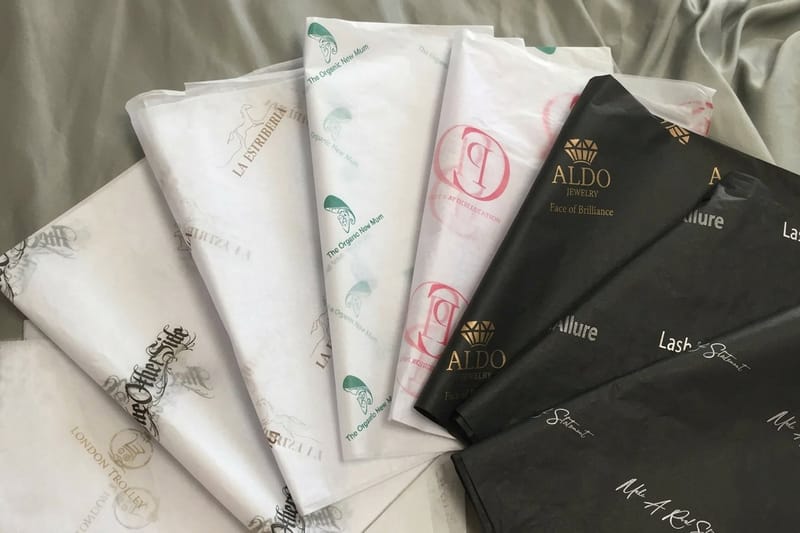
The sustainable choice and the beautiful choice are not opposites. Uncoated recycled sheets have a soft tooth that photographs well and feels considered in the hand. Kraft carries visible fiber flecks that read as honest rather than cheap. Even tissue, the thinnest paper most brands ever buy, can be printed with a repeating mark that turns packing material into part of the unboxing.
Weight communicates more than any eco claim printed on the back. A light sheet says disposable no matter what fiber it came from, while a substantial cover weight signals that the piece is meant to be kept, and a kept piece is a piece that is not being thrown away. Specify one grade heavier than you think you need for anything you want people to hold on to.
- Uncoated recycled cover. Warm, matte and easy to write on, ideal for cards, tags and hangers.
- Kraft. Unbleached and flecked, with the lowest processing burden of any common stock.
- Tissue and wraps. Short-fiber paper that puts recovered pulp to work in packaging.
- Mineral and stone papers. A different chemistry entirely, covered in our stone paper explainer.
Seasonal card stock
Christmas tree door hangers
Heavy shaped stock with no plastic parts, so the whole hanger recycles as one piece after the season.
Designing Print That Recycles Cleanly
A designer decides the end of life of a printed piece months before anyone throws it away. Keep the construction to a single material and the piece stays recyclable. Mix paper with plastic film, adhesive vinyl or a metal grommet and you have built something a sorting line will reject unless a person separates it by hand, which almost never happens.
Practical rules help more than good intentions. Use soy or vegetable based inks where the press supports them. Choose a matte aqueous coating over lamination when you need scuff resistance. Reserve foil for small accents rather than full coverage. Design large-format signage so the paper element separates from any rigid backing, and specify one stock across a campaign so leftovers can be pooled instead of scrapped.
Format choice does real work too. Paper based promotional items keep the whole gift inside one material stream, an idea we explore in five corporate gift ideas made from paper, and print-heavy formats like brochures can be planned for reuse rather than a single mailing, as in ten brochure ideas you have not thought of yet.
Packaging that recycles
Custom printed tissue paper
Short fibers do their last useful work as wraps and packing, printed with your brand instead of plastic filler.
Where Printed Paper Actually Goes Next
Recovery rates for paper in the United States sit near the top of all packaging materials, and corrugated cardboard leads by a wide margin because it is collected in bulk from businesses rather than piece by piece from homes. Printed commercial work does less well, mostly because it is discarded in ones and twos, often in a bin that also holds coffee cups and food waste. The construction decides the rest: a 14pt uncoated card with no laminate goes back to a mill as clean sorted paper, while the same card under a 3 mil plastic laminate becomes a composite that a mill accepts only in small amounts.
Not every fiber that leaves the loop is lost. Short fines become molded pulp trays and egg cartons. Rejected material is sometimes burned for energy at the mill, which is a poor second to recycling but better than burial. And paper that reaches landfill breaks down slowly under anaerobic conditions, which is the outcome worth engineering out of your projects.
- Back to a mill. The best outcome, and the one clean sorting makes likely.
- Into molded pulp. Fines too short for printing still make packaging trays and protective forms.
- Into compost. Uncoated, food-soiled paper composts where a mill would reject it.
- Into energy recovery. A last resort for contaminated bales, ahead of landfill.
- Kept in use. The quiet winner: a piece good enough that nobody throws it out this year.
Compare stocks
Popular printed formats, side by side
Stock, finish, size, quantity, turnaround and price for the formats people order most.
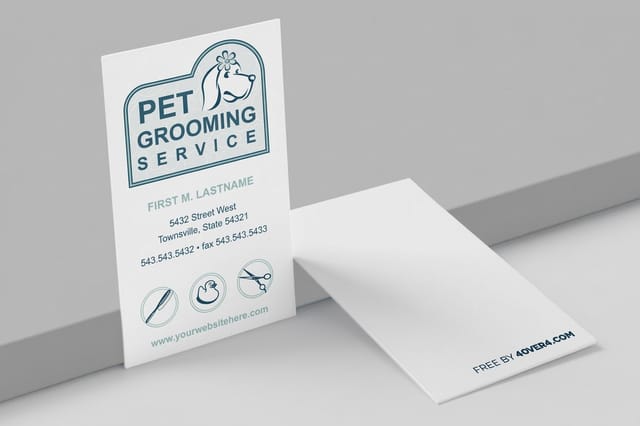 free business cards | 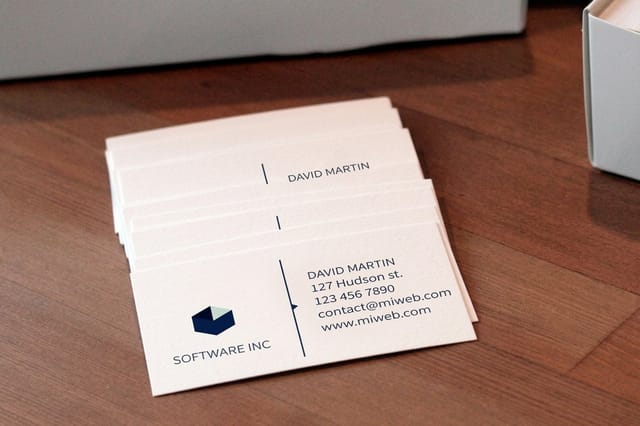 Standard Business Cards |  3D Lenticular Business Cards | 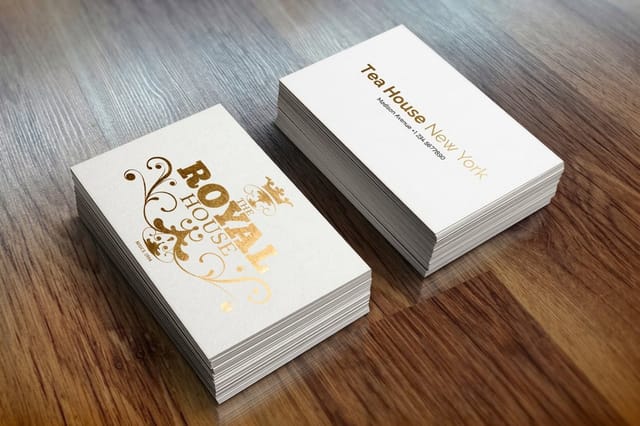 Metallic Foil Business Cards | |
|---|---|---|---|---|
| Min price | Free | $17.57 | $690.88 | $222.13 |
| Paper / stock | 14pt Gloss Cover | 14pt Gloss Cover | 31pt Lenticular Lens | 16 Point Silk Laminated |
| Finish | - | Standard Finish | - | - |
| Size | 2" x 3.5" | 2" x 3.5" | 2" x 3.5" - Vertical | 2" x 3.5" |
| Default qty | 200 | 100 | 500 | 500 |
| Turnaround | 5 business days | 3 business days | 22 business days | 7 business days |
| Rating | ||||
| View & customize | View & customize | View & customize | View & customize |
Closing the Loop on Your Next Print Order
Turning all of this into a decision takes about five minutes at ordering time. Pick a stock with recycled content where the design allows it, keep the finish simple, order the quantity you will genuinely use rather than the one that looks cheapest per piece, and specify a format that separates cleanly at the end. Those four choices decide most of the footprint of a print run.
Set the file up properly and you avoid the most wasteful outcome of all, which is a reprint. Correct sizing is where jobs go wrong most often, and our paper sizes and ordering guide covers how to match artwork to stock before you upload. If you are weighing us against another supplier on stock choice, the paper types comparison lays out the differences in plain terms.
A short checklist before you upload
- Stock. Recycled or uncoated unless the job needs a coating to survive handling.
- Finish. Aqueous or matte over lamination whenever durability allows it.
- Quantity. Order what you will distribute, then reorder rather than store boxes.
- Construction. One material per piece, so the whole thing recycles as one thing.
Start fast
Templates and print-ready blanks
Free layouts plus exact-size blanks, so your file fits the sheet and nothing gets reprinted.
Wally walks the paper loop with you
Five stages, one material, and the choices that keep it circling
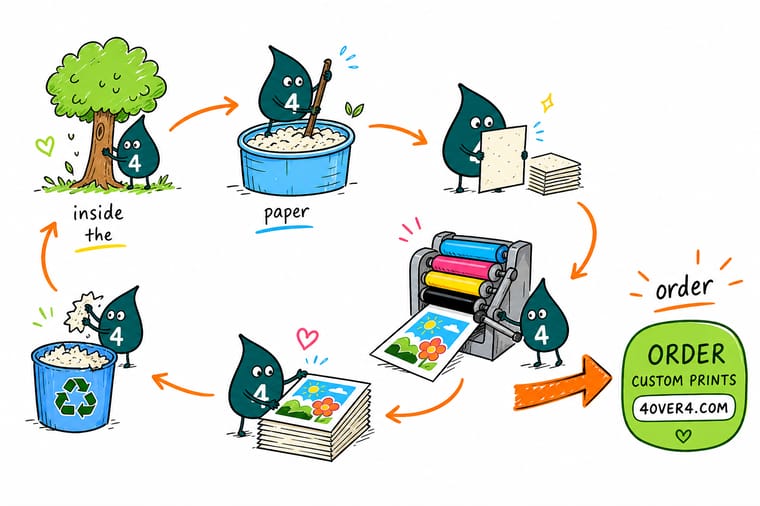
Think of paper as a relay. Wood or recovered bales become pulp, pulp becomes a sheet, the sheet becomes your printed piece, and the piece goes back to a mill to start again. Fiber gets a little shorter each lap, so the goal is simple: keep the piece to one material, keep the finish light, and pick a weight worth holding on to. Wally will point you to the stock that does all three.
Print on a recyclable stock →What to Remember About the Paper Life Cycle
Keep reading
Paper guides worth bookmarking
How matte, gloss, linen and kraft take ink, why stone paper skips the tree, how to get free samples of each stock, and how to match paper sizes to your artwork before you upload.
Guide Paper Stocks Explained How matte, gloss, linen and kraft each take ink. Guide Stone Paper Explained A tree free sheet with a very different life cycle. Guide Get Free Printing Samples Feel the stock before you commit to a run. Guide Paper Sizes and How to Order Match artwork to stock and avoid a reprint. Explore more
More on paper, stocks and printing choices
Tissue paper runs 100 for $126.32 on 10lb or 18lb white tissue and takes 18 business days.
Product Any Shape Size Paper Die-Cut Any outline you want, cut from a single recyclable sheet. 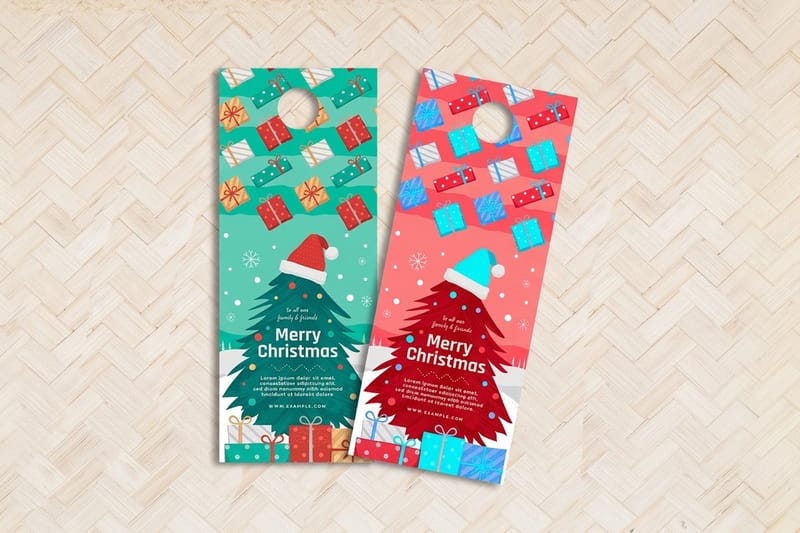 Product Christmas Tree Door Hangers Shaped card stock built for one season and one material. Product Custom Tissue Paper Short-fiber paper printed with your brand for packing and wraps.
  Guide Printing Paper Stocks Explained Matte, gloss, linen and kraft compared side by side.
 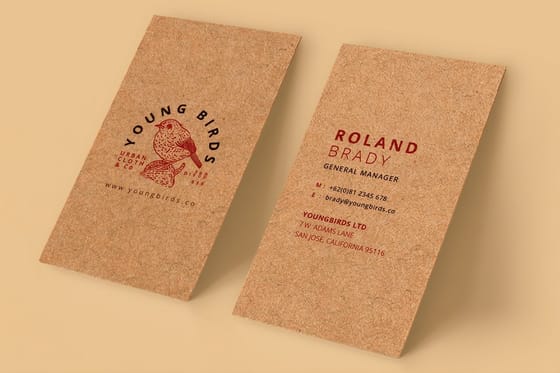 Guide Stone Paper Explained What mineral paper is and where it makes sense.
  Guide How to Get Free Samples Hold the recycled sheet before you order the run. Guide Paper Sizes and Ordering Set the file up right the first time.
 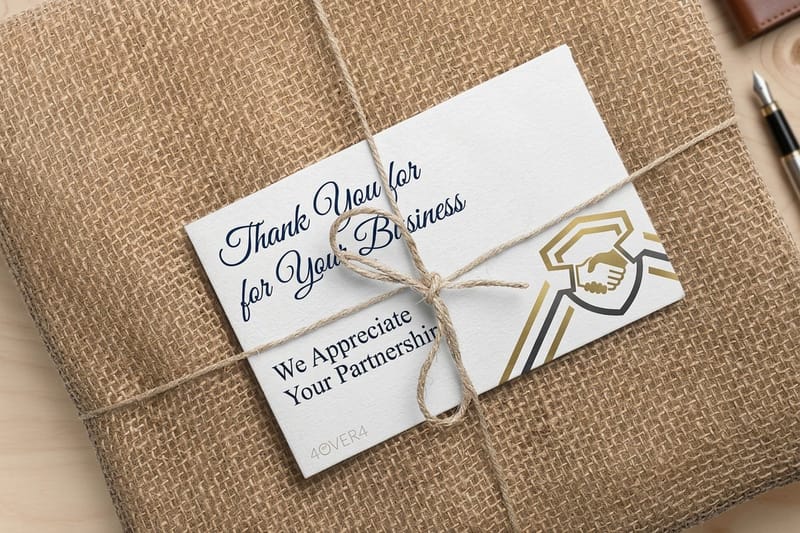 Article Corporate Gifts Made From Paper Single-material gifting that stays in the loop.
  Article Ten Fresh Brochure Ideas Formats worth keeping instead of binning.
  Alternative Paper Types Compared Stock and finish options next to Vistaprint.
  Alternative Invitations at Print House Prices Card stock choices and pricing, compared.
 Ready to put a fiber back to work?
Choose a stock that repulps cleanly, keep the finish honest, and print something people keep. Configure your paper, upload artwork, and see live pricing before you commit.
Paper Life Cycle Questions, Answered
What is the life cycle of paper?
The life cycle of paper runs through five stages. Wood from managed forests and sawmill residue is pulped, the pulp is cleaned and formed into a sheet on a paper machine, the sheet is printed and converted into a finished product, the product is used, and then it is recovered and repulped into new paper. Each pass shortens the fiber slightly, so fresh fiber enters the loop to replace what wears out. Coatings and laminates are the main thing that pushes a printed piece out of that cycle.
How do I choose the right paper for a sustainable print job?
Start with the job, not the label. If the piece will be handled once, choose an uncoated or recycled stock and skip lamination entirely. If it has to survive weather or repeated handling, use the lightest protective coating that will do the work, since aqueous recycles far more easily than plastic film. Keep the whole item to one material so it sorts cleanly, and specify a weight heavy enough that people keep it. Our paper stocks guide compares the common options.
What does printing on recycled and eco paper cost?
Recycled stocks are priced alongside their virgin equivalents rather than at a premium, so the format and quantity drive the number far more than the fiber source does. Custom die-cut paper shapes start at $87.00, printed tissue paper starts at $126.32, and shaped door hangers on heavy card stock start at $252.51. Per-piece cost falls sharply as quantity rises, because press setup is a fixed cost spread across the run. Configure a quantity on any product page to see live pricing before you commit.
What sizes, stocks and finishes are available?
You can print on 60+ paper stocks at 4OVER4.COM, from lightweight text weights through heavy covers, including uncoated, recycled, kraft and specialty sheets. Sizes run from standard trims to fully custom shapes cut to your own outline. Finishes include matte and gloss aqueous, soft touch, spot UV, foil and embossing, though the heavier the finish the harder the piece is to recycle later. If you are unsure how a stock will look with your artwork, request samples before ordering the full run.
How long does printing and shipping take?
Turnaround depends on the product, the finish and the quantity, and it is shown on every product page once you configure your options. Flat printed items on standard stocks move fastest, while die-cutting, folding, foil and other finishing steps add production days. Shipping time then depends on your distance from the production facility and the service you select at checkout. If you have a fixed in-hand date, order with a few days of margin so a proof revision does not put the delivery at risk.
