
The Print Essentials Every Brand Kit Needs


Marcus is our print marketing voice, built from the knowledge of our production team, with over 20 years in printing.
What a Brand Kit Actually Is
The print essentials every brand kit needs are business cards, letterhead and envelopes, presentation folders, stickers, notepads, signage and packaging. Ask five people what a brand kit is and you will get five answers: designers usually mean the digital package of logo files in a few formats, a color palette, two or three typefaces, and a short usage sheet, while business owners usually mean something you can hold. Both are right, and the gap between them is where most new brands stall out.
The print essentials, with sizes and starting prices
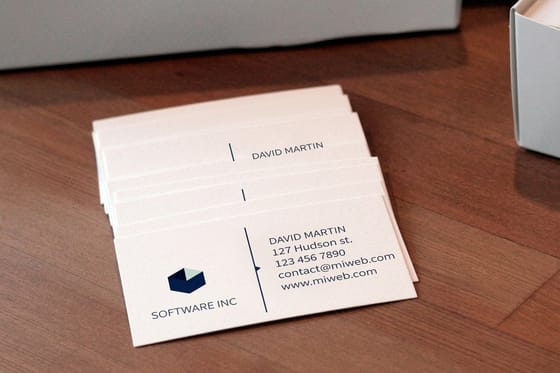
- Business cards. 100 for $17.57 at 2 by 3.5 inches on 14pt gloss cover, printed in 3 business days.
- Letterhead. 50 for $99.95 at 8.5 by 11 inches on 70lb uncoated text, in 5 business days.
- Die cut stickers. 25 for $93.37 at 2 by 2 inches, in 5 business days.
- Notepads. 25 pads for $93.37 at 4.25 by 5.5 inches, 50 sheets each, in 7 business days.
- A banner. A 2 by 3 foot 2 sided blockout banner from $108.75, in 4 business days.
The useful definition is simple. A brand kit is the identity plus every physical piece that identity gets printed on. The digital half tells the printer what to do. The printed half is what a customer actually sees, holds, and keeps. A logo nobody has ever received on paper has not been tested yet.
4OVER4.COM has printed 10 billion+ pieces since 1999 for more than 150,000 businesses, and the pattern in those orders is consistent. Brands that order their essentials as one batch look assembled. Brands that add a piece at a time end up with a card on one white stock, a folder on another, and signage in a slightly different blue. Nobody can name the problem, but everyone feels it. This checklist exists so you can order the set once and stop guessing.
The identity layer
Logo in vector plus a stacked and horizontal lockup, a one-color version for tight spaces, the palette in CMYK and Pantone for print, and the fonts. Naming and color come first for a reason, and if either is still open, our guide to choosing brand colors is the right place to settle it.
The stationery layer
Business cards, letterhead, envelopes, notepads, and thank you cards. This is the layer that carries your name through everyday contact: a meeting, an invoice, a handwritten note in a shipment.
The sales layer
Presentation folders, one-page sell sheets, rack cards, brochures, and price lists. Anything a prospect leaves with after a conversation belongs here, and it needs to survive a briefcase without looking tired.
The presence layer
Signage, banners, booth graphics, window decals, and stickers. This is the layer that makes a small company read as an established one the moment someone walks up to your table or storefront.
Start here
Brand starter kits
Bundled print essentials for a new brand, so the whole set arrives matched.

The Print Essentials Checklist Every New Brand Needs
Work through this list in order. The first four items earn their keep in week one, the rest fill in as you meet customers in person. Nothing here is decorative, and every piece has a moment where it is the only thing representing you in a room you are not standing in.
- Business cards. The one piece you will hand over hundreds of times. Pick a stock with weight before you pick a finish.
- Letterhead and envelopes. Quotes, invoices, and contracts stop looking improvised the moment they arrive on branded paper.
- Presentation folders. They hold everything else, keep a proposal from arriving loose, and give your pitch a cover.
- Stickers and labels. The cheapest brand surface you own, and the only one customers apply for you.
- Notepads and thank you cards. Low cost, high recall, and the fastest way to make a follow up feel personal.
- Signage and banners. Storefront, event table, or pop up, the sign is your name at a distance.
- Packaging. The last touchpoint of a sale and the first of the next one.
Stickers deserve more credit than they get in a startup budget. They ride on laptops, bins, packaging, and shop windows for months, and there are more uses than most owners think, as our roundup of ways to use logo stickers lays out. If you are still choosing a name before any of this gets printed, browse the lists for art and craft businesses, cleaning businesses, or food trucks first.
Print picks
Three pieces that finish a brand kit
Live prices, ready to customize with your logo, palette, and copy.
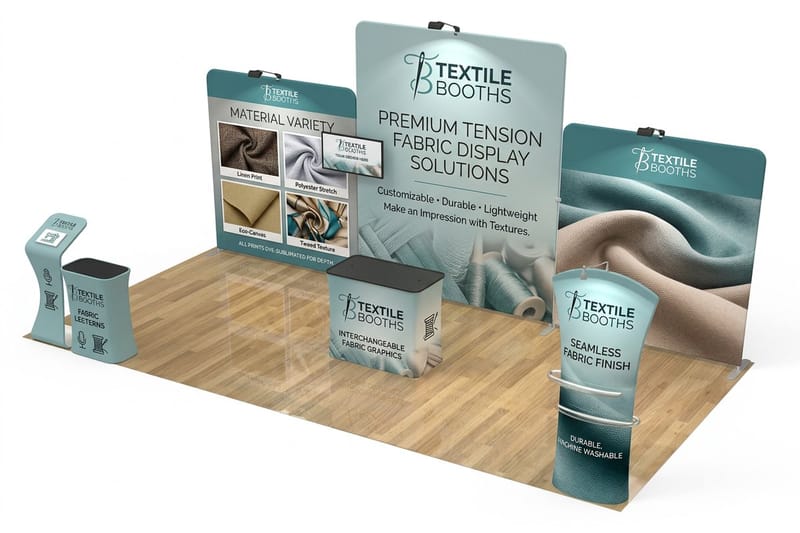
 Fabric Booth Kits $2599.00 each Wrinkle-resistant fabric graphics that pack flat and set up as a full branded wall.
 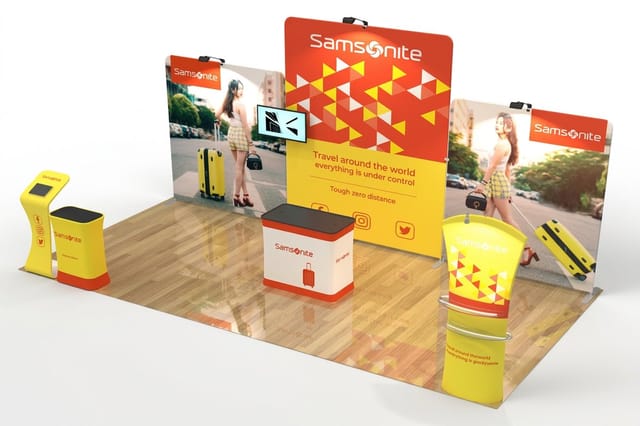 Trade Show Booth Kits $2599.00 each Frame, graphics, and case together, so your brand kit travels as one unit.
 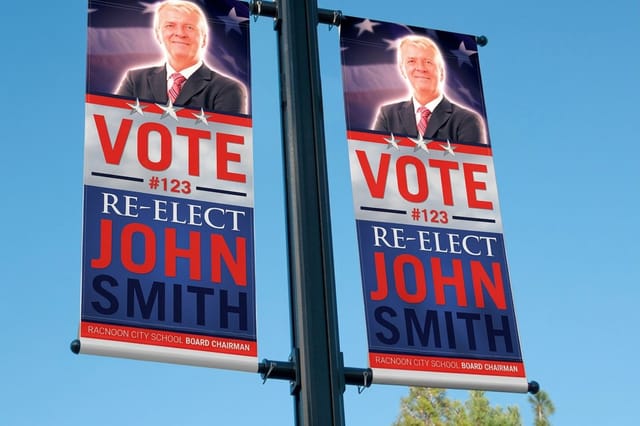 2 Sided Blockout Banners $108.75 each Two printed faces with an opaque core, so neither side bleeds through the other.
 Stationery That Carries Your Logo Every Day
Stationery is the quiet engine of a brand kit. It never gets a launch post, but it shows up in every invoice, every contract, and every follow up letter for years. Get it right once and it keeps paying without further thought.
Order business cards, letterhead, and envelopes in the same run whenever you can. Same press, same paper batch, same color build, which means the white behind your logo is genuinely the same white on all three. Split those orders across months and small shifts creep in that are obvious only when the pieces sit side by side on a desk.
- Business cards. A heavier stock signals care before anyone reads a word. Leave the back mostly clear so people can write on it.
- Letterhead. Keep the header light and the margins generous. It has to work behind a printed invoice, not compete with it.
- Envelopes. A return address in your typeface turns ordinary mail into something worth opening.
- Notepads. Cheap per sheet, and they sit on a client desk long after the meeting ends.
- Thank you cards. Four handwritten lines on branded stock outperform most paid ads for repeat business.
One practical rule: decide your paper weight and finish before you order anything, and write it down in the brand sheet next to the color codes. That single line saves every future reorder from becoming a fresh decision.
Taking the Brand Kit Into the Room
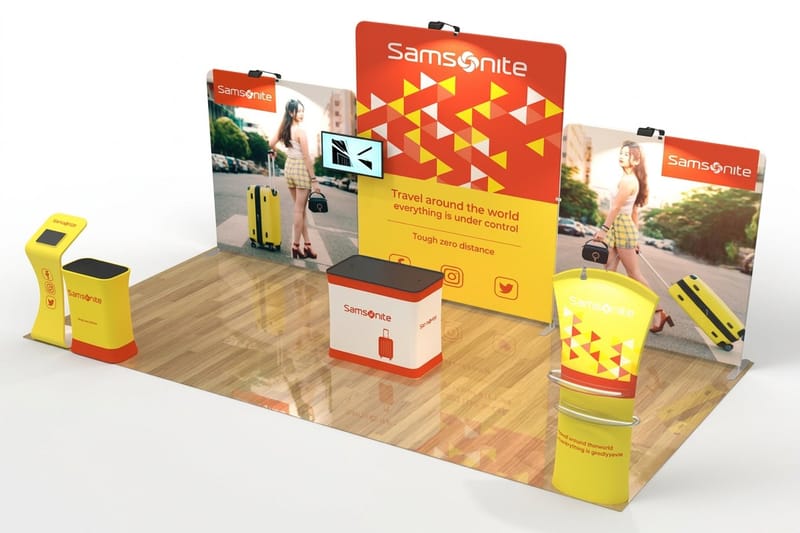
Paper covers everything that arrives by hand or by mail. The moment you take a table at a market, a conference, or a community event, you need the large format half of the kit. It is the same identity at ten feet instead of ten inches, and it is where a new brand either looks ready or looks borrowed.
Start with a banner. A two sided banner earns its place in a busy hall because both approaches to your table see your name, and a blockout core stops the reverse artwork from ghosting through. Add a retractable stand or a fabric wall and a folding table becomes a booth.
Match the event pieces to the paper pieces deliberately. Same logo lockup, same palette, same typefaces, same tone in the copy. Someone who takes your card at a show should recognize the envelope your invoice arrives in three weeks later without thinking about it.
How Many of Each Piece to Order
Quantity is where budgets get wasted in both directions. Order too few and you pay setup costs again in six weeks. Order ten years of cards on day one and you will be storing a box of outdated phone numbers. For a first year that usually means 500 business cards at $36.26, only $18.69 more than 100, then 100 letterheads at $105.44 and 50 notepads at $126.32.
A reasonable starting point for most small businesses is a year of stationery and a season of event material. Cards and stickers scale cheaply, so buy those in depth. Anything printing a price, a promotion, or a staff name should stay in shorter runs until it is settled. The price table below shows how the per piece cost falls as quantity climbs, so you can find the point where the next tier stops paying for itself.
One more consideration before you commit: check the specs against how the piece will be used. Indoor or outdoor, single or double sided, hemmed or grommeted. A banner that lives outside needs a different build than one that hangs behind a table for a weekend.
Quantity and price
Banner pricing and specs
Real configurator numbers. Watch where the per piece cost stops falling.
| Quantity | Price Per Unit | Total |
|---|---|---|
| 1 | $108.75 | $108.75 |
| 2 | $108.74 | $217.47 |
| 3 | $108.74 | $326.22 |
| 4 | $97.76 | $391.02 |
| 5 | $97.76 | $488.78 |
| 6 | $97.76 | $586.53 |

Materials and Finishes Worth Paying For
Every printed piece involves the same trade: spend a little more per unit, or spend nothing and hope nobody notices. The honest answer is that people notice on some pieces and never on others, so put the money where hands go. Business card stock alone runs from 14pt gloss cover to 24pt ultra thick, soft touch, linen and kraft, while a fabric booth kit prints on 8.8oz tension fabric as a 10 by 10 foot wall from $2,599.
Business cards, folders, and packaging get handled, so weight and finish matter there. Internal forms and short run flyers do not need a premium build. For anything that lives at an event, fabric beats vinyl on wrinkle resistance and packs down small enough to check as luggage, which is why fabric booth graphics have quietly taken over trade show floors.
- Soft touch or matte. A quiet, tactile finish that suits service brands and premium goods.
- Gloss. Makes color pop, which is what you want on food, retail, and event graphics.
- Spot gloss or foil. Reserve it for the logo alone. Used everywhere, the effect disappears.
- Uncoated and kraft. Warm, writable, and honest, and the natural fit for makers and small batch brands.
- Fabric. Wrinkle resistant, matte under venue lighting, and reusable show after show.
Event material
Fabric booth kits
Wrinkle resistant fabric that packs flat, travels well, and sets up in minutes.
Packaging and the Unboxing Layer
If you ship anything, packaging is part of the brand kit, and it is the piece customers are most likely to photograph. A plain box with a branded sticker, a printed insert card, and a piece of tissue costs very little and completely changes how an order feels on arrival.
Keep it simple at the start. A logo sticker to seal the package, a thank you card with a handwritten line, and a small insert explaining care instructions or a reorder code. That is a full unboxing experience for a few cents per order. For inspiration on what other small brands do well, see these brand packaging examples, and if sustainability is part of your positioning, work through the eco friendly packaging ideas before you order a pallet of anything.
Show ready
Trade show booth kits
Frame, printed graphics, and a travel case together, so the presence layer of your brand kit ships as one unit.
Comparing Formats Before You Commit
Once the checklist is settled, the remaining decisions are format decisions. Which banner size, from 2 by 3 up to 4 by 10 feet for a blockout banner, which finish, which turnaround, 4 business days for the banner against 8 for a fabric booth kit. These are easier to make side by side than one product page at a time, because the differences are usually in the specs rather than the pictures.
Look at three things in particular: the smallest quantity you can order, the turnaround at that quantity, and whether the piece is built for indoor or outdoor life. Those three answers eliminate most options quickly and leave you with a short list you can actually choose from.
Compare formats
Popular banners, side by side
Material, size, quantity, turnaround, and price in one view.
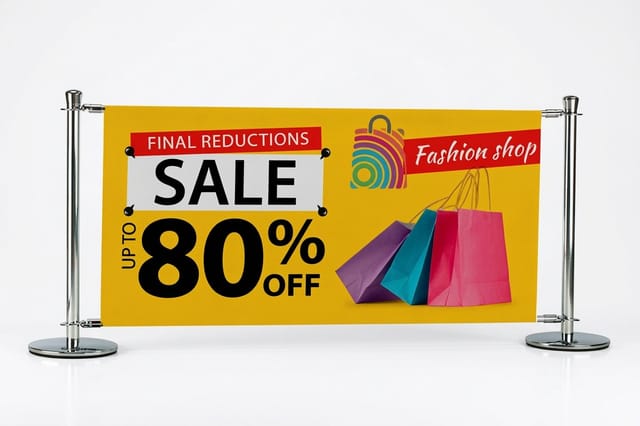 Indoor Banners | 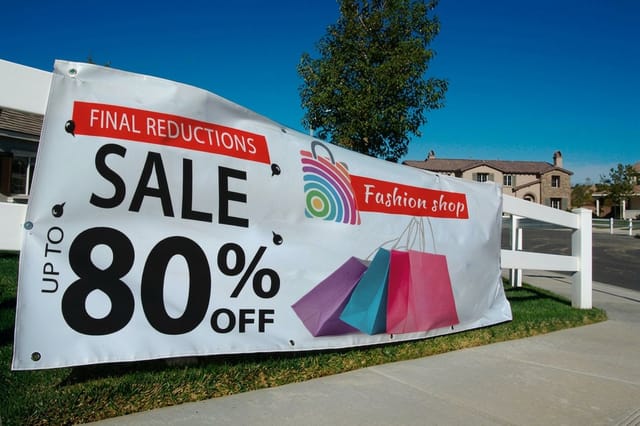 Outdoor Banners | 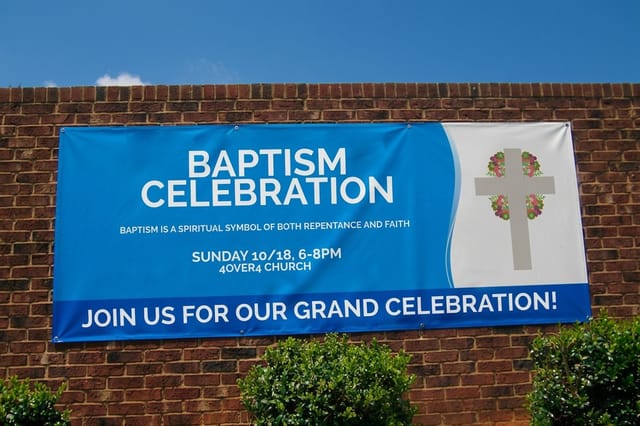 Business Banners | 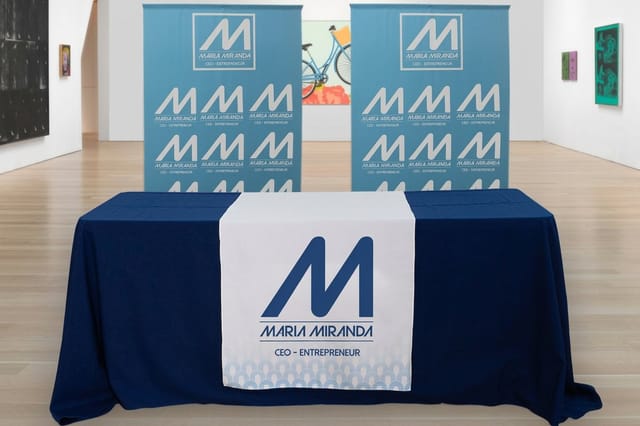 Fabric Banners | |
|---|---|---|---|---|
| Min price | $25.00 | $79.00 | $43.92 | $57.20 |
| Paper / stock | 13oz. Smooth Blockout Vinyl | 13oz. Outdoor Vinyl | 13oz. Scrim Vinyl | 5oz Economy Polyester |
| Size | 12" x 24" | 2' x 4' | 2' x 6' | 24" x 72" |
| Default qty | 1 | 1 | 1 | 1 |
| Turnaround | 2 business days | 3 business days | 2 business days | 4 business days |
| Rating | ||||
| View & customize | View & customize | View & customize | View & customize |
Build the Files Once and Reuse Them
The last step is the one that saves the most time later. Set up each piece at the correct size with proper bleed and safe margins, save the working file, and name it plainly. Every reorder and every seasonal variation then starts from a file that already prints correctly.
You do not have to start from a blank canvas. Print ready templates give you the exact trim, bleed, and safe zone for each product, and blank templates give you the dimensions to drop into your own design tool. Between the two, the setup work for an entire brand kit is an afternoon, not a week. Then use the online designer to place your logo, type your details, and send it straight to press.
A short file discipline that pays off
- Keep vectors vector. Never rebuild a logo from a screenshot for a large format piece.
- Convert color intentionally. Screen RGB and press CMYK are different worlds. Set your print values once and reuse them.
- Respect the safe zone. Anything closer than an eighth of an inch to the trim risks being cut.
- Name files for humans. Product, size, and version, so the right file is obvious in a year.
Start fast
Templates and print ready blanks
Free layouts plus exact size blanks so bleed and safe margins are right the first time.
Wally packs your brand kit
The identity files first, then every piece they get printed on
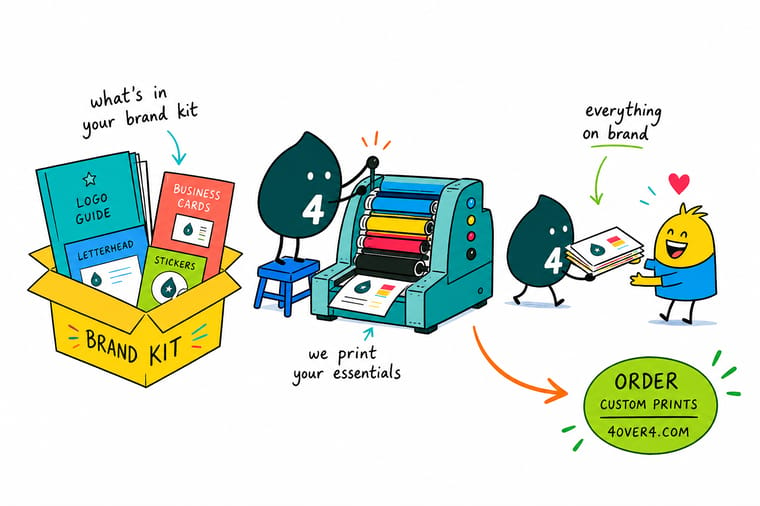
A brand kit is not just a logo folder. It is the cards you hand out, the letterhead your invoices land on, the folder your proposal arrives in, the stickers customers stick on their laptops, and the banner behind your table at a show. Print the core set in one run so the stock and the color match everywhere, then add event pieces when you book your first booth. 4OVER4.COM prints all of it from one place, so the whole kit looks like it came from the same brand, because it did.
Browse brand starter kits →The Short Version of the Checklist
Explore more
More on building a brand worth printing
Business banners run 1 for $43.92 in 2 business days and fabric booth kits 1 for $2,599.00 in 8.
 Article Farm Printing Essentials from Invitations to Grain Tickets Print that keeps a farm running: harvest and barn event invitations, numbered grain tickets, scale forms, and
 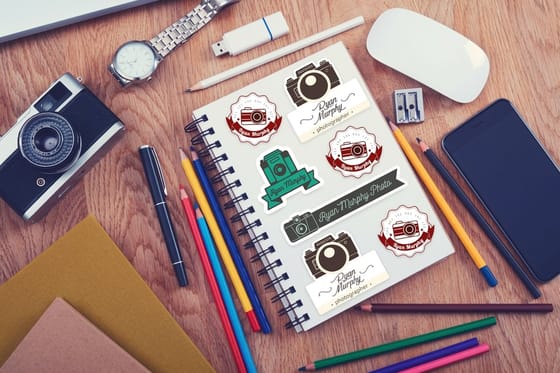 Article Custom Photography Labels That Brand Every Print You Deliver Custom photography labels brand every print, album, and package a photographer delivers. Compare materials, fi
 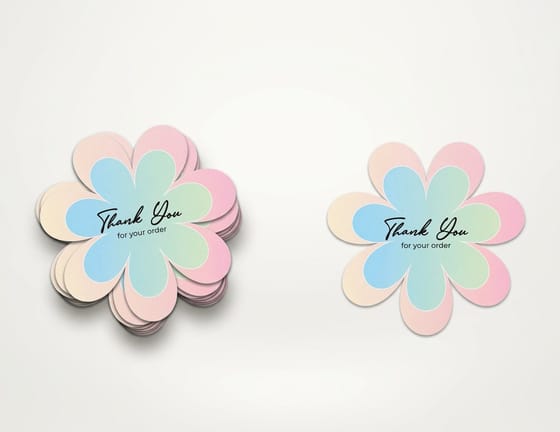 Article 11 Print Brand Awareness Ideas That Keep You Top of Mind 11 print brand awareness ideas that put your name in front of people repeatedly, from stickers and signage to Kit Starter Kits Bundled print essentials for a brand launching from scratch.
 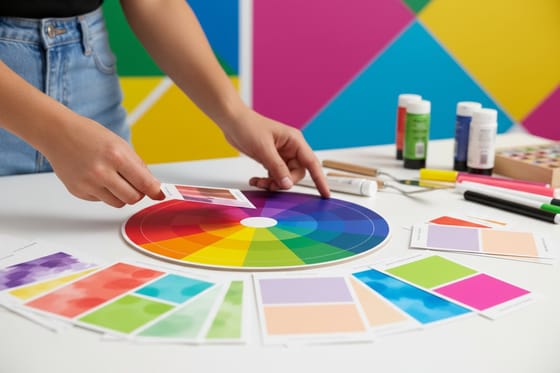 Article Choosing Your Brand Colors Pick a palette that survives the jump from screen to press.
  Article Brand Packaging Examples How small businesses make an unboxing feel expensive.
  Article Eco Friendly Packaging Ideas Seven ways to ship greener without losing the brand.
  Article Ways to Use Logo Stickers The cheapest brand surface you own, put to work.
  Article Art and Craft Business Names A hundred name ideas for makers and studios.
  Article Cleaning Business Names Name ideas for residential and commercial cleaning.
  Article Food Truck Name Ideas A hundred names for mobile kitchens and pop ups.
 Ready to print the whole brand kit at once?
Pick your pieces, upload the logo or design online, and 4OVER4.COM prints the set on matched stock so every touchpoint looks like the same company.
Brand Kit Questions, Answered
What is a brand kit?
A brand kit is your identity plus every printed piece that identity appears on. The digital half is the logo in vector, a color palette in CMYK and Pantone, your typefaces, and a short usage sheet. The printed half is the essentials checklist: business cards, letterhead, envelopes, folders, stickers, signage, and packaging. The files tell the printer what to do, and the printed pieces are what customers actually receive. Settling the palette first makes everything downstream easier, which is why our brand colors guide is worth reading before you order. For the stationery, see how to print professional letterhead, from stock and ink to matching envelopes. If notecards join the set, read custom personalized stationery that matches, from notecards to letterhead.
How do I choose the right brand kit for my business?
Start from how you meet customers. If most of your business happens in meetings and by mail, weight the kit toward stationery: cards, letterhead, envelopes, and folders. If you sell at markets, shows, or a storefront, put the budget into banners and booth graphics first. If you ship goods, product packaging and stickers matter more than either. Most brands need a little of all three eventually, but ordering in that priority means every dollar is working within a week rather than sitting in a box.
What does a print brand kit cost and how are prices set?
Price is driven by four variables: quantity, size, material, and turnaround. Per piece cost drops steeply as quantity rises because setup is a fixed part of every run, so a thousand cards never costs ten times a hundred. Material and finish add the next layer, and a rush turnaround adds the last. At 4OVER4.COM, 2 Sided Blockout Banners start at $108.75, while a complete Fabric Booth Kit or Trade Show Booth Kit starts at $2599.00. Every configurator shows live pricing as you change options.
What should I print first if my budget is small?
Business cards and stickers. Cards are the piece you will hand over most often, and stickers are the cheapest brand surface you own, with the useful quality that customers apply them for you. Add letterhead and envelopes as soon as you are sending quotes or invoices, then a presentation folder once you are pitching in person. Signage and booth graphics come when you book your first event. Ordering in that sequence means nothing sits unused while you wait for demand to catch up.
How long does it take to print a full brand kit?
Turnaround depends on the product and the options you pick, and it is shown on every product page before you order. Paper pieces like business cards, letterhead, and folders move fastest, and rush options exist when a launch date will not move. Large format pieces such as banners and booth kits take longer because of finishing work like hemming, grommets, and frame assembly. If you have a show on the calendar, order the event pieces first and let the stationery follow.
