
Is Print Marketing Dying or Quietly Outworking Digital Ads


Print marketing is not dying. The print that existed only because attention had no cheaper channel moved to digital and stayed there, while the print that does something digital cannot do, land as a physical object in a specific place, kept working. The useful question is which of your campaigns is one of those jobs, and the honest answer is local saturation, high-consideration purchases, the moment of service, and follow-up to people who already bought from you.
Print versus digital, job by job
| The job | How digital does it | How print does it | Which one usually wins |
|---|---|---|---|
| Blanket a neighborhood | Radius targeting on social or search, priced per impression | EDDM by carrier route, every occupied address, no opt-out | Print, when the offer is local and the product is bought locally |
| Reach people already interested | Search intent, retargeting pixels, lookalike audiences | A mailed list you rented or built yourself | Digital, by a wide margin. Intent is what search sells |
| Test ten versions of an offer | Ten creatives live by lunchtime, killed by dinner | One version, printed, mailed, judged in a fortnight | Digital. Print is the wrong tool for rapid iteration |
| Stay in the room after the pitch | A follow-up email that lands in a stack of other emails | A brochure on the desk that has to be physically thrown away | Print, for anything with a long consideration window |
| Be there at the moment of service | A push notification the customer already muted | A door hanger, a card in the bag, a flyer on the counter | Print, because the moment is physical |
| Prove what the spend did | Platform-reported conversions, generous last-click credit | A code, a phone number or a URL used nowhere else | Digital reports faster. Print reports cleaner when you set it up |
Read the table as a division of labor rather than a scoreboard. Most budgets that work put search against intent and mail against coverage, then point both at the same landing page with separate tracking. You can order direct mail postcards in EDDM-friendly sizes straight from the configurator.
Print did not die, it got specific
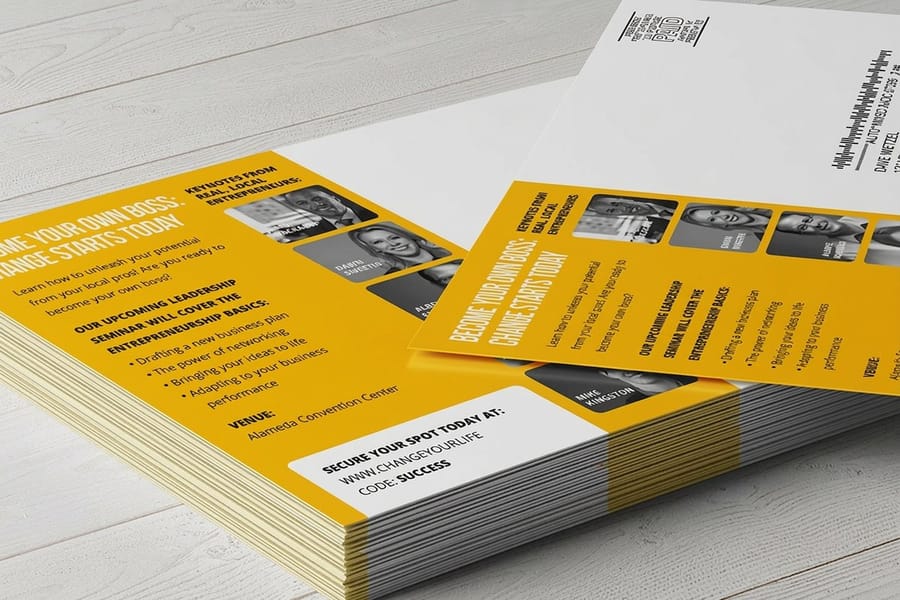
The obituary gets written every few years, usually by someone whose budget moved to a channel that reports its own results. What actually happened is narrower and more interesting: the print that existed only because there was no cheaper alternative went away, and the print that was doing a job digital cannot do stayed.
Classified ads went to the internet and never came back. Newspaper display, phone directories, printed catalogs sent blind to a rented list: all of that was buying attention by volume, and digital buys attention by volume for less money with better reporting. Nobody should mourn it. Meanwhile direct mail, door hangers, brochures and cards kept working, because their advantage was never volume. It was being a physical object in a specific place at a specific moment.
That distinction is the whole answer to the question. Print marketing is not competing with digital advertising for the same job any more. It lost the jobs it was going to lose. What is left is the part digital has no version of, and a marketer who writes off the whole category is throwing out the useful half with the dead half. Our comparison of digital and traditional marketing lays out the split in more detail.
The one advantage nobody can engineer away
A digital ad can be blocked, skipped, muted, scrolled past or simply never rendered. A mailed piece has to be picked up and moved. Somebody handles it, looks at the front for a second, and decides. That second is the whole transaction, and it happens whether or not the recipient wanted it to.
This is not a persuasion argument, it is a physics argument. There is no ad blocker for a postcard in a stack of mail and no scroll gesture for a door hanger. That is why direct mail postcards survived a decade of predictions and search-engine display formats did not.
Cost per impression is the wrong comparison
Print always loses a cost-per-impression argument, because print charges for a physical object and printing, paper and postage have floors that a served impression does not. If cheap impressions are the goal, buy digital. That is settled.
The comparison that matters is cost per qualified response in a defined area. Digital impressions are cheap and diluted across people who will never buy from you; a carrier route is expensive per piece and every piece lands in a household that could physically walk into your shop. Run the maths on your own numbers before you accept either channel’s marketing about the other.
Where print still outperforms a digital ad
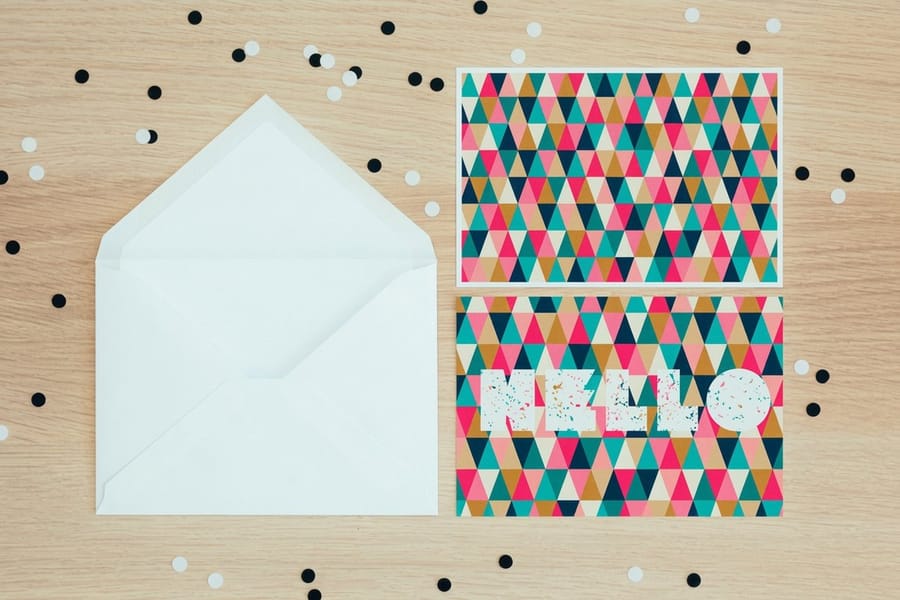
Four situations, consistently. Local saturation, high-consideration purchases, the moment of physical service, and following up a warm relationship. If your campaign is one of those, print is not the nostalgic option, it is the correct one.
Local saturation is the clearest case. A restaurant, a dentist, a gym, a roofer, a salon: the buyer has to be within a short drive, and there are only so many households in that drive. USPS Every Door Direct Mail lets you buy carrier routes without renting a list, which removes the single biggest barrier that used to make direct mail a big-company channel. The retail version caps you at 5,000 pieces per ZIP code per day and requires a piece larger than a letter, which is why 6 by 9 and 6 by 11 postcards dominate that channel rather than the small 4 by 6 size.
High consideration is the second case. Somebody choosing a contractor, a clinic or an installer is comparing three options over two weeks. An email is read once and archived. A printed brochure sits on the kitchen table and has to be actively thrown away, and in a two-week comparison the piece that stays visible is doing quiet work every day.
The moment of service is physical, so the ad should be
Service businesses have a window that no channel targets better than paper. The crew is on the street. The van is parked. Neighbors can see the work happening. A door hanger on the forty houses either side, left the same afternoon, ties the offer to something the recipient already noticed. No targeting parameter reproduces that. Our guide on whether door hangers actually work for marketing campaigns covers the drop patterns and the legal side of leaving them.
The same logic runs inside the transaction. A card in the bag, a flyer on the counter, an insert in the box: each one costs a fraction of a click and reaches someone who has already paid you money once. Business cards are the cheapest reorder mechanism most small businesses own, and most of them still hand out a card designed a decade ago.
Warm lists respond to paper better than they respond to email
A customer who bought from you two years ago is in an email list that they mentally filter, alongside every other brand that ever got their address. The same customer receives very little addressed mail. Scarcity in the channel is doing work that has nothing to do with the creative.
This is where a printed flyer or a seasonal postcard to your own past-customer list tends to beat a broadcast email on revenue per contact, even at twenty times the cost per contact. Test it on a small segment first, with a code that only appears on the printed piece, and let your own numbers decide instead of an article.
Where print is the wrong buy
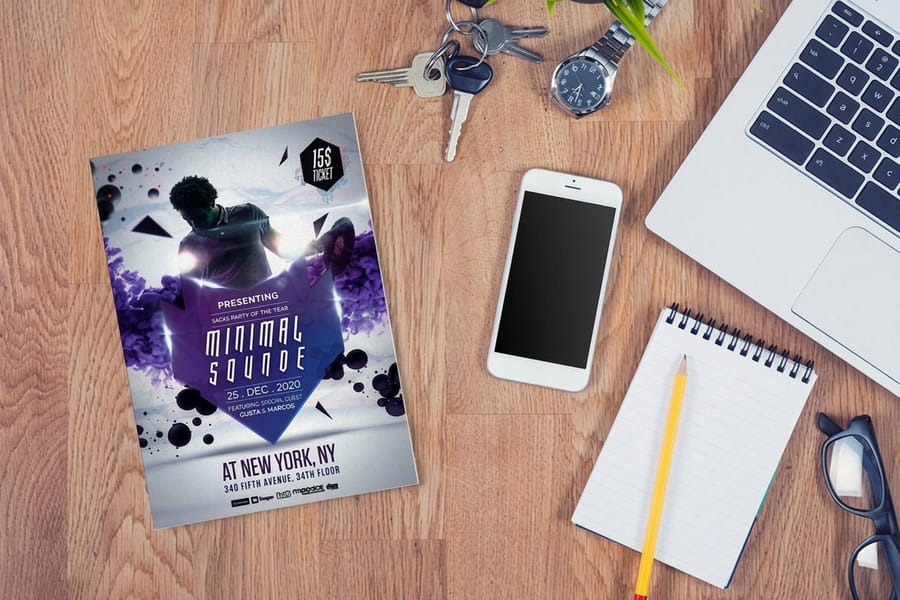
A page that only lists advantages is an advert, so here is the honest side. Print has three real limits, and pretending otherwise is how marketers get burned once and then write it off forever.
The first limit is the feedback loop. You commit the artwork, the quantity and the postage before a single response exists. By the time you know the offer was wrong, the whole run is already in letterboxes. Digital lets you kill a bad creative in an afternoon; print does not, which means the thinking has to happen before the file is uploaded rather than after.
The second is intent. Print cannot find the person who typed your service into a search bar ten minutes ago. If your category is bought at a moment of need rather than on a schedule, search is where that customer is, and no amount of mail volume substitutes for being present at the moment of the query. The small business digital marketing guide is the right starting point for that half of the budget.
The third is margin. Postage plus print gives every mailed piece a hard cost floor. If your average order value is small and your repeat rate is low, the arithmetic does not close no matter how good the creative is. Sell something with a decent lifetime value, or use print only on lists warm enough to convert at a rate the maths can carry.
The mistakes that make print look worse than it is
Most failed print campaigns fail for reasons that have nothing to do with print. A mailer with no offer and no deadline. A list bought on price rather than fit. One drop instead of three, judged as if a single exposure were a campaign. Artwork that was designed for a screen and set in type too small to read at arm’s length.
File preparation kills more of them than anyone admits. Artwork sent in RGB shifts on press, images pulled from a website land soft at print size, and anything closer than an eighth of an inch to the trim risks getting cut. Set up the file at 300 DPI in CMYK with 0.125 inch bleed on all four sides before you upload it. Our guide to creating print-ready files walks through it, and it is the difference between a campaign judged on the offer and a campaign judged on a muddy photograph.
How to measure print so the argument ends
The reason this debate never resolves inside a company is that digital channels report their own results and print reports nothing at all. Fix that and the argument becomes arithmetic. Put a promo code on the mailer that appears nowhere else, or a phone number used on no other channel, or a QR pointing at a landing page nothing else links to. One of the three, chosen before the artwork is finished rather than after.
Then hold geography constant. Mail into one set of carrier routes and deliberately not into a comparable set, and watch the difference in enquiries between them over the following six weeks. That control is stronger than any attribution model, because it compares your business against itself rather than against a platform’s own reporting.
Quantity and price
Direct mail postcard pricing and specs
Live configurator numbers, where the per unit cost drops as the run grows, which is what makes a three-drop sequence affordable.
| Quantity | Price Per Unit | Total |
|---|---|---|
| 500 | 17.9¢ | $89.68 |
| 1,000 | 17.1¢ | $170.53 |
| 2,000 | 9.35¢ | $186.95 |
| 3,000 | 6.84¢ | $205.13 |
| 4,000 | 5.58¢ | $223.31 |
| 5,000 | 4.83¢ | $241.51 |
You can also earn coins on every order and redeem them against future printing, which matters more on print than on digital because print budgets are committed in lumps rather than spent by the click.
Stock, size and postage decide the real cost
The printing quote is only part of the number. Size drives postage class, postage is usually the larger half of a mail campaign, and a piece that misses a postal size band by a quarter of an inch can cost more to send than to print. Decide the mailing size first, then design into it. For anything going out as EDDM the piece has to be larger than a standard letter, which pushes most campaigns to 6 by 9 or 6 by 11 rather than the 4 by 6 postcard people picture when they hear the word.
Print it
Direct mail postcards, ready to drop
EDDM-friendly sizes on heavy stock, printed full color both sides.
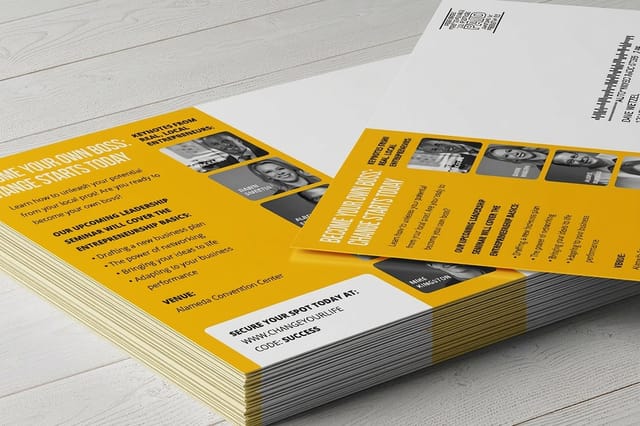
Stock does quieter work. A postcard on light stock arrives creased at the corner and reads as junk before anyone gets to the offer; a heavier card survives the sorting machinery and feels like something worth keeping on the fridge. Gloss lifts photography, matte reads calmer and takes a handwritten note, and uncoated stays writable if you want staff to add a name. If you are mailing inside envelopes instead, our rundown of full-color envelope sizes for marketing mail covers which sizes stay inside the cheaper rates.
What to run, by business type
The right print format is decided by how your customers buy, not by what looks good in a portfolio. Here is the split that holds up across most local businesses.
- Restaurants and local retail. EDDM on the carrier routes inside your realistic drive time, three drops over six weeks, one offer with an expiry date. Judge it on redeemed codes, not on how the artwork feels.
- Home services and trades. Door hangers dropped the same day the crew is visible on the street, plus a postcard to the same route two weeks later. The van is the ad; the hanger is the call to action.
- Clinics and professional services. Brochures for the consideration window and a newsletter to the existing patient or client list. High consideration and high lifetime value is the exact profile print is built for.
- B2B with a long sales cycle. Leave-behind brochures and a card that does not look like everyone else’s, mailed to a short named list rather than blasted. Small volume, high value per response.
- Ecommerce brands. Package inserts and a postcard to past buyers. Skip cold mail entirely unless your average order value can absorb the postage.
Whatever the format, the campaigns that work locally share a structure. Print marketing campaigns that promote a business locally covers the sequencing, and these print marketing tips cover the offer itself. For the creative end of it, ten funny print ads worth studying show what a single strong idea does on paper, and nineteen genuinely bad print ads show the failure modes to avoid. Short runs on the digital printing collection keep the cost of testing an idea low enough to be worth doing.
Blanks for the pieces above
Most print campaigns that disappoint were lost at the file, not at the idea. 4OVER4.COM sizes its blanks to exact product specs, so bleed and trim are already marked and your headline is not sitting a millimetre from a cut line. Grab a print-ready blank from the blank template library before you start designing.
Start fast
Blanks for the pieces above
Postcard blanks in EDDM-friendly sizes, with the address panel kept clear.


Wally settles the print versus digital argument
Different jobs, not different eras
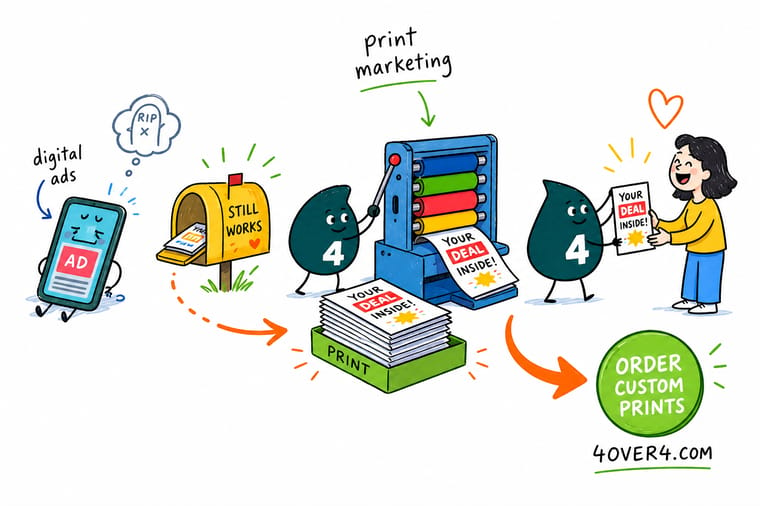
Buy search for intent and mail for coverage. Put one offer and one deadline on the printed piece, give it a code that exists nowhere else, budget three drops to the same carrier routes instead of one, and set the file up at 300 DPI in CMYK with 0.125 inch bleed. 4OVER4.COM prints the postcards, flyers and door hangers that carry it.
Order direct mail postcards →What to remember about print versus digital
Rules that decide whether a print campaign works
- One offer, one deadline. A piece with three offers has none. Pick the single thing you want the reader to do and put an expiry on it, or you will never know whether the mail worked.
- Readable at arm’s length. The recipient decides in about a second while standing over a bin. Headline large, offer larger, everything else supporting. Screen-sized type does not survive the walk from the letterbox.
- A code that exists nowhere else. A distinct promo code, phone number or short URL per drop is the only honest measurement print has. Reuse a code across channels and the report becomes fiction.
- Three drops, not one. A single mailing is a test of your luck on one particular Tuesday. Budget for a sequence to the same route before you decide whether the channel works for you.
- Print-ready before pretty. 300 DPI, CMYK, 0.125 inch bleed, live copy kept clear of the trim. Fix the file first; a beautiful design printed from a website image looks like a cheap business.
Explore more
The formats that still carry a local campaign
A mailed postcard costs $0.18 a household at 500 and a door hanger $1.16 at 250.
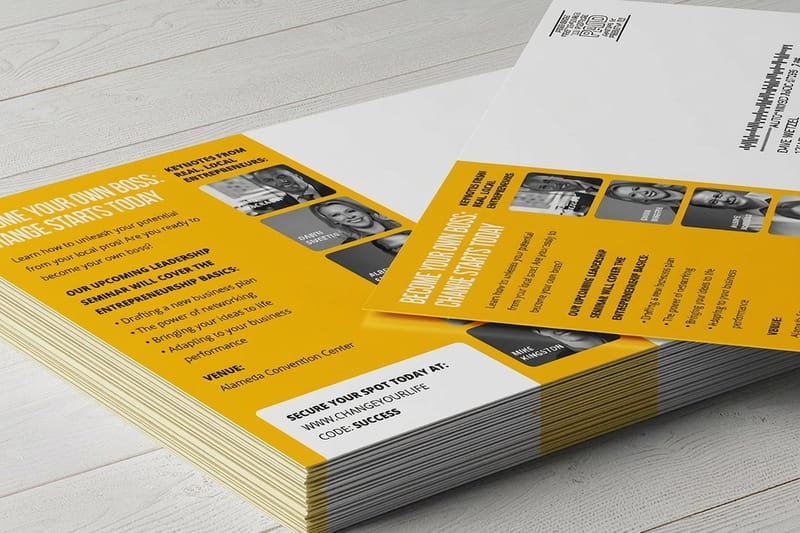 Product Direct Mail Postcards EDDM-friendly sizes for saturating a carrier route.
 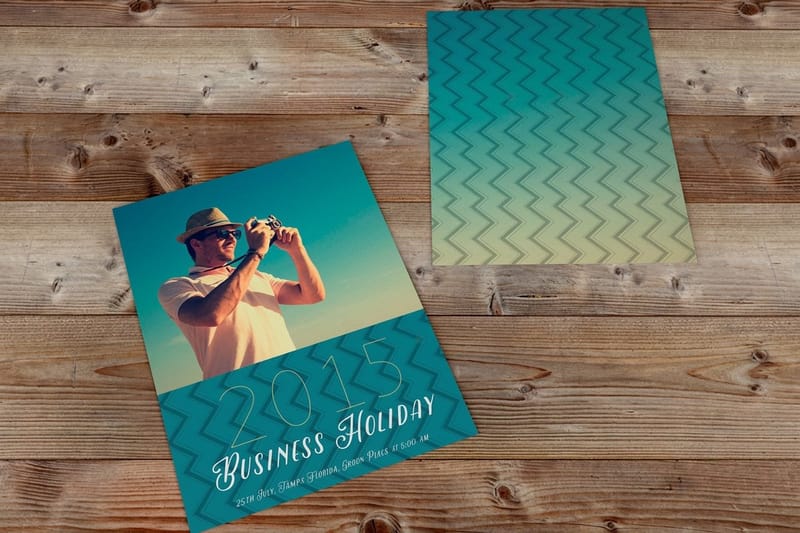 Product Standard Postcards Full color both sides, the workhorse of local mail.
 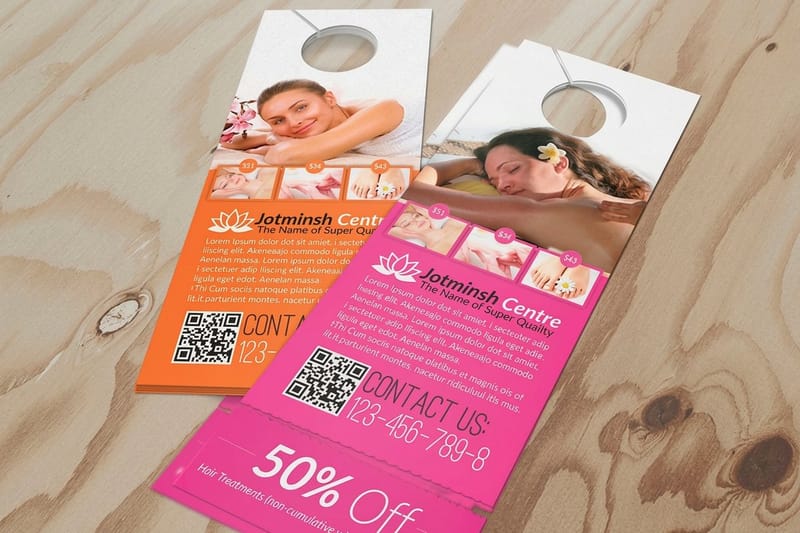 Product Door Hangers The same-day drop while your crew is still on the street.
 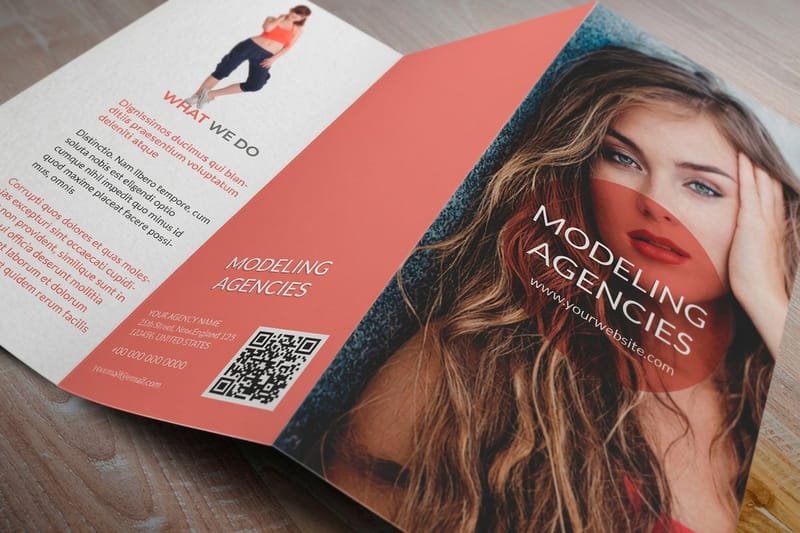 Product Brochures The leave-behind that survives a two-week comparison.
 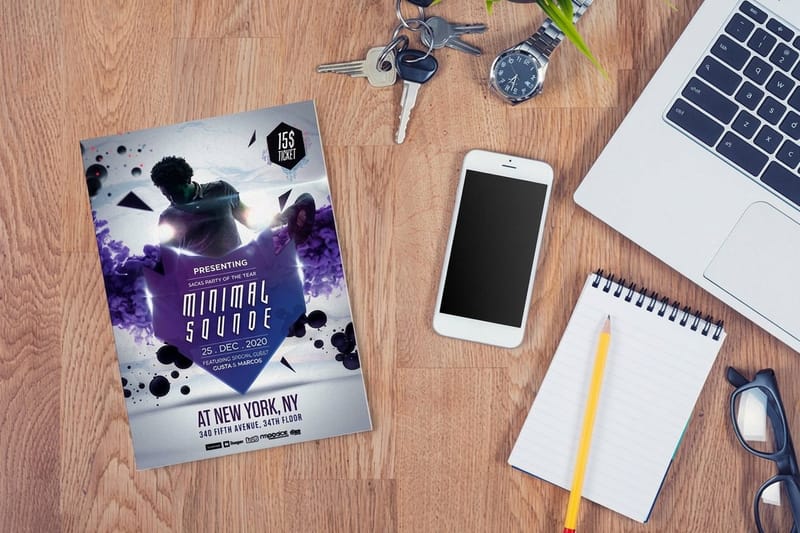 Product Flyers Cheap enough to test an offer on a small segment.
  Category Digital Printing Short runs, fast turnaround, every marketing format.
 Ready to put print back in the plan?
Pick your size, drop in your design or a free template, and 4OVER4.COM prints it sharp on heavy stock, as fast as your drop date needs.
Common questions about print marketing
Is print marketing actually dying?
No. What died was the print that existed only because there was no cheaper way to buy attention: classified ads, phone directories, blind catalog drops. Those moved to digital and will not come back. Direct mail, door hangers, brochures and cards kept working because their advantage was never cheap reach, it was being a physical object in a specific place. A mailed postcard cannot be blocked, skipped or scrolled past, and no platform update changes that. The correct question is not whether print is alive but whether your specific campaign is one of the jobs print does better, which is usually local saturation, high consideration purchases, the point of service, or follow-up to people who already bought from you.
Does direct mail still work for small businesses?
For local businesses it often works better than it did ten years ago, because the volume of mail competing for the same letterbox fell while the volume of email and ads competing for the same screen exploded. USPS Every Door Direct Mail is the practical route: you buy carrier routes rather than renting a list, and the retail option is capped at 5,000 pieces per ZIP code per day with a piece that must be larger than a standard letter. That is why 6 by 9 and 6 by 11 postcards dominate the channel. It works when the buyer has to be nearby and the offer is concrete. It does not work when your average order value is too small to carry print plus postage.
How do I measure a print campaign against a digital one?
Give the printed piece something that exists nowhere else: a promo code that only appears on the mailer, a phone number used on no other channel, or a short URL or QR pointing at a landing page nothing else links to. Then compare cost per qualified response, not cost per impression, because print will always lose an impression comparison and that comparison does not decide anything. Hold the geography constant as well: run mail into one set of carrier routes and not another, and compare the change in enquiries between them. Without one of those controls, last-click attribution will hand every sale to whichever digital channel the customer touched last.
Should I run print instead of digital ads, or both?
Both, aimed at different jobs. Search advertising catches the person who is looking for your service right now, and nothing in print substitutes for that. Mail reaches the households that will need you in three months but are not searching today, which is most of your market at any given moment. Run the two into the same landing page with distinct tracking, and expect the mail to lift the performance of the search campaign, because people who recognize a name click on it more often. Set the split by job rather than by a fixed percentage of budget.
What is the biggest mistake people make with print advertising?
Mailing once and calling it a test. A single drop measures one particular week, and response to a first exposure is the weakest number in the whole sequence. Budget for three drops to the same route before you judge the channel. The second most common mistake is file preparation: artwork sent in RGB shifts on press, images pulled from a website print soft, and anything within an eighth of an inch of the trim can get cut. Build at 300 DPI in CMYK with 0.125 inch bleed on every side, then judge the campaign on the offer rather than on a muddy photograph.
