What You'll Learn About Hand Lettering
Hand lettering tutorial and examples can turn anyone from a total beginner into a confident lettering artist. You'll learn the core strokes, tools, and styles that make hand lettering stand out on print materials. 4OVER4 has printed 10 billion+ cards - and hand-lettered designs consistently grab attention. With 1,000+ products in the 4OVER4 catalog, your lettering work has plenty of places to shine once you're ready to print.
Why Hand Lettering Still Matters in a Digital World
Hand lettering is the art of drawing letters by hand rather than typing them. It's personal. It's textured. And it stands apart from every generic font on the market. Whether you're designing wedding invitations, branded packaging, or custom postcards, hand lettering gives your work a human touch that digital type simply can't replicate.
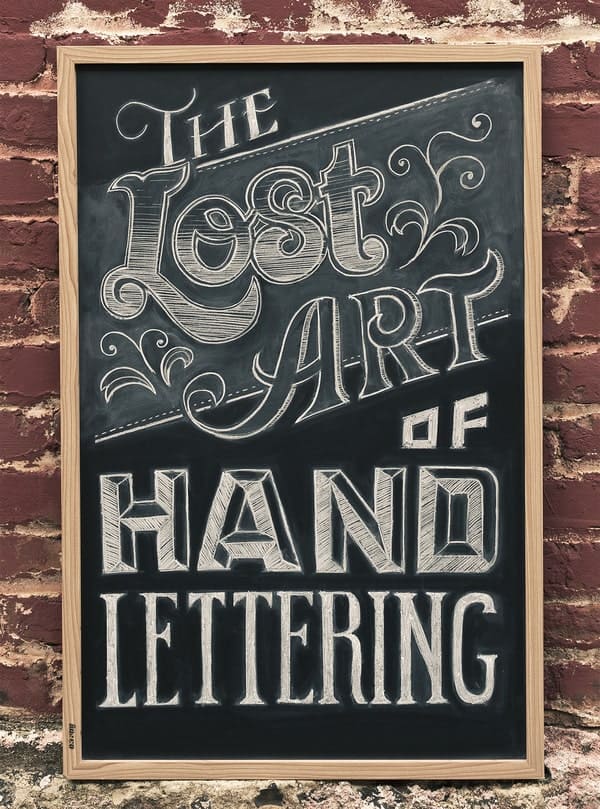
This hand lettering tutorial and examples guide walks you through the fundamentals - from basic strokes to full compositions. You'll see 20 distinct lettering styles and learn how to create your own. If you're looking to apply your lettering to printed pieces, 4OVER4 offers Design Templates that make it easy to upload your artwork. You can even request Free Samples to see how your hand-lettered designs look on real paper stocks before committing to a full order.
Ready to pick up a pen? Below you'll find visual inspiration and practical techniques to build your skills from scratch. Browse our full library of Design Templates to see how lettering pairs with professional print layouts.
A Step-by-Step Hand Lettering Tutorial for Beginners
Hand lettering starts with understanding how letters are built. Not typed - built. Every curve, every thick downstroke, every thin upstroke is a deliberate choice. That's what separates hand lettering from handwriting. You're drawing letters, not writing them.
Let's break this down into manageable steps so you can start practicing today.
Gather Your Tools
You don't need expensive supplies to begin. A pencil, smooth paper, and a basic brush pen will get you started. Here's what works well for beginners:
- Brush pens - Tombow Dual Brush Pens or Pentel Fude Touch Sign Pens offer great flexibility for thick-and-thin strokes
- Smooth paper - Rhodia or HP Premium LaserJet paper prevents ink from bleeding and feathering
- Pencil and eraser - for sketching layouts before inking
- Ruler or guidelines sheet - consistency depends on even baselines and x-heights
- Tracing paper - useful for practicing over printed exemplars
Once you're comfortable, you can explore pointed nibs, watercolor brushes, and digital tablets. But start simple. Mastery comes from repetition, not from owning fancy tools. For more creative print projects, check out our guide on How To Make Flyers - hand lettering on a flyer design is a real attention-grabber.
Learn the Basic Strokes
Before you letter a single word, practice individual strokes. Hand lettering is built on a small set of foundational movements:
- Downstrokes - apply pressure for thick lines as you pull the pen downward
- Upstrokes - release pressure for thin, delicate lines going upward
- Ovals - the building block for letters like o, a, d, g, and q
- Curves - compound curves form letters like s, n, and m
- Entrance and exit strokes - the connecting lines that flow between letters
Spend at least 15 minutes on stroke drills before attempting full letters. This builds muscle memory. Think of it like warming up before a workout. Your hand needs to learn the pressure variations that create contrast between thick and thin lines.
Build Letters from Strokes
Once your basic strokes feel natural, start combining them into lowercase letters. Begin with simpler forms - i, l, t, u, n - before moving to more complex letters like g, k, and z. Here's the progression that works:
Group 1 (straight strokes): i, l, t, f. These use mostly vertical downstrokes with minimal curves.
Group 2 (basic curves): n, m, u, h, r. These introduce the overturn and underturn strokes.
Group 3 (ovals): o, a, c, e, d, g, q. Oval-based letters require smooth, consistent curves.
Group 4 (complex): s, k, b, p, w, x, y, z. These combine multiple stroke types and often trip up beginners.
Work through each group methodically. Don't rush to words until individual letters feel solid. If you're interested in applying lettering to printed materials like custom envelopes, our guide on How To Make Envelopes shows you how to pair hand-lettered addresses with professional printing.
Connect Letters into Words
Connecting letters is where hand lettering gets tricky - and fun. The key is maintaining consistent spacing and angle throughout each word. A few tips:
Keep your letter slant uniform. Whether you letter upright or at a 55-degree angle, stick with it across the entire word. Inconsistent slant makes lettering look sloppy fast.
Use guidelines. Draw light pencil lines for your baseline, x-height, ascender line, and descender line. These four lines keep your letters proportional and aligned. Erase them after inking.
Don't rush the connections. The exit stroke of one letter should flow naturally into the entrance stroke of the next. If a connection feels forced, lift your pen and start the next letter fresh. Not every letter needs to connect.
Add Style and Personality
Once you can letter clean, readable words, it's time to develop your own style. This is where hand lettering becomes genuinely creative. Experiment with these approaches:
Bounce lettering - vary the baseline position of each letter slightly for a playful, organic feel. Some letters sit above the baseline, others dip below.
Flourishes - extend entrance and exit strokes into decorative swirls. Use them sparingly. A single elegant flourish on a capital letter can define an entire piece.
Mixed styles - combine script lettering with block letters or sans-serif caps. This creates visual hierarchy and contrast within a single composition.
Embellishments - add small illustrations, banners, or decorative elements around your lettering. Floral accents, geometric frames, and simple line drawings pair beautifully with hand-lettered text.
For more creative inspiration across different print formats, visit our Faq Hub where you'll find dozens of design and printing guides.
20 Hand Lettering Examples to Spark Your Creativity
Seeing diverse lettering styles helps you figure out what resonates with your own aesthetic. Here are 20 distinct approaches worth studying and practicing:
Script and Calligraphy Styles
1. Brush Calligraphy - fluid, expressive strokes created with a brush pen. The thick-thin contrast gives each letter dramatic movement. Perfect for wedding invitations and greeting cards.
2. Modern Calligraphy - a relaxed, contemporary take on traditional calligraphy. Less rigid rules, more personality. Bounce lettering fits naturally here.
3. Copperplate-Inspired Script - elegant, formal, and precise. High contrast between hairline upstrokes and bold downstrokes. Ideal for certificates and formal stationery.
4. Hand-Drawn Script - warm and imperfect on purpose. The slight irregularities give it charm. Great for branding that wants to feel approachable. If you use rubber stamps alongside your lettering practice, our guide on How To Clean Rubber Stamps keeps your tools in top shape.
5. Italic Script - a slanted, flowing style that reads quickly and looks sophisticated. Works well for body text in hand-lettered compositions.
Bold and Display Styles
6. Vintage Signage - inspired by hand-painted shop signs from the early 1900s. Serif letterforms with dimensional shadows and aged textures. Nostalgic and eye-catching.
7. Chalkboard Lettering - bold, playful, and slightly rough around the edges. The chalkboard aesthetic works beautifully for restaurant menus, event signage, and social media graphics.
8. Graffiti Lettering - urban, bold, and full of energy. Thick outlines, wild colors, and exaggerated proportions. Not for every project, but unforgettable when it fits.
9. 3D Block Letters - add drop shadows, bevels, or perspective to flat letters for a dimensional effect. These pop on posters and packaging. For a truly dimensional printed piece, check out Custom Magnets Faq to see how hand-lettered artwork translates to physical products.
10. Retro Bubble Letters - round, inflated letterforms with a playful 70s or 80s vibe. Fun for kids' events, casual branding, and poster art.
Decorative and Artistic Styles
11. Floral Typography - letters intertwined with botanical illustrations. Roses, leaves, and vines grow from the letterforms themselves. Romantic and detailed.
12. Watercolor Lettering - soft, blended color fills inside hand-lettered outlines. The unpredictable nature of watercolor makes each piece one-of-a-kind.
13. Embossed Lettering - designed to look raised or pressed into the surface. When printed with actual embossing or spot UV, the tactile result is stunning.
14. Geometric Lettering - letters constructed from circles, triangles, and straight lines. Clean, modern, and architectural in feel.
15. Fun Illustrated Lettering - letters surrounded by or built from playful illustrations. Animals, food, objects - anything goes. Perfect for children's books and playful branding.
Minimalist and Contemporary Styles
16. Minimalist Sans-Serif - clean, simple, hand-drawn sans-serif letters. The slight imperfections distinguish them from typed fonts while keeping a modern feel.
17. Monoline Lettering - consistent stroke width throughout, no thick-thin variation. Created with a fine-tip pen or marker. Sleek and uniform.
18. Monogram Lettering - single or interlocking initials designed as a decorative unit. Popular for personal branding, wedding logos, and embroidered goods.
19. Mixed Media Lettering - combining hand lettering with collage, photography, or digital elements. The hand-drawn text grounds the composition with a personal touch.
20. Negative Space Lettering - letters formed by the space around them rather than drawn directly. Clever, attention-grabbing, and perfect for logos and poster designs.
Want to fold your hand-lettered designs into a printed brochure? Our guide on How To Fold A Brochure walks you through layout and folding techniques. And if you'd like to feel the paper quality before printing your lettering work, grab Free Samples from 4OVER4 to test different stocks.
Below you'll find blank templates that can serve as starting points for your hand-lettered print projects.
Blank Templates
Mistakes That Hold Back Your Hand Lettering Progress
Even dedicated beginners hit the same walls. Here are the most common hand lettering mistakes - and how to fix them before they become habits.
Skipping stroke drills. Jumping straight to words without practicing basic strokes is like trying to run before you walk. Spend at least 10 minutes on drills every session. Your letterforms will improve dramatically.
Gripping the pen too tightly. A death grip kills the fluid movement you need for smooth curves. Hold your brush pen loosely and move from your shoulder, not your fingers.
Ignoring guidelines. Freehand lettering without penciled guidelines almost always results in uneven baselines and inconsistent letter heights. Draw your lines. Erase them later.
Rushing the process. Hand lettering is slow by design. Each stroke is intentional. Speed comes naturally after hundreds of hours of practice - don't force it.
Using the wrong paper. Cheap copy paper bleeds and feathers, ruining your brush pen tips. Use smooth, coated paper designed for markers. 4OVER4 prints on 60+ paper types, so when you're ready to print your lettering, you'll find a stock that matches your vision perfectly.
Print Your Hand Lettering on Products That Do It Justice
Your hand lettering deserves more than a sketchbook. 4OVER4 offers 1,000+ products where your lettering artwork can come to life - from business cards on thick, textured stocks to postcards with vivid color reproduction.
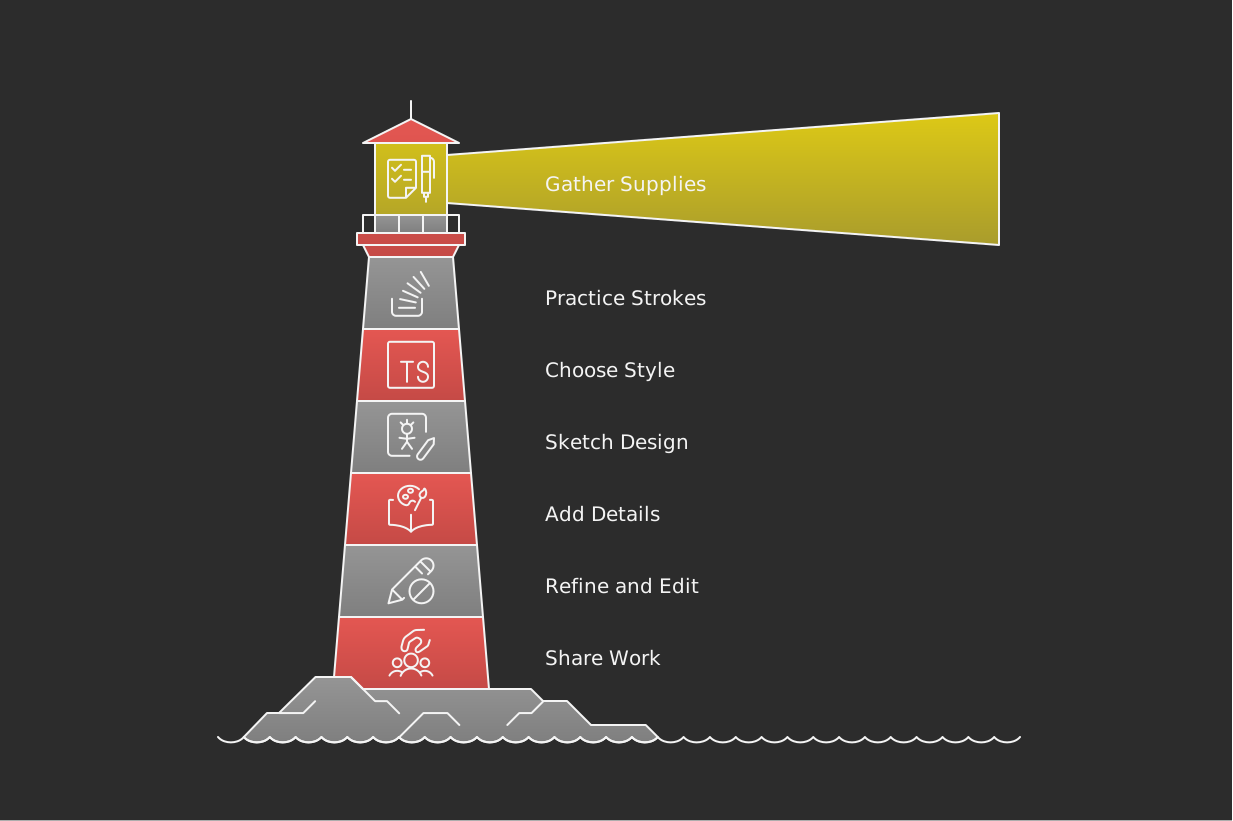
- Gather Your Supplies: You'll need paper, pencils, pens, markers, or brushes depending on your preferred style.
- Practice Basic Strokes: Start by practicing basic lettering strokes such as upstrokes, downstrokes, and loops to get a feel for your tools.
- Choose a Style: Experiment with different lettering styles until you find one that resonates with you.
- Sketch Your Design: Lightly sketch your design on paper before committing to ink to ensure accuracy and proportion.
- Add Details: Once you're happy with your sketch, go over it with ink or color to add depth and detail.
- Refine and Edit: Don't be afraid to make mistakes—use an eraser or white gel pen to clean up any errors and refine your design.
- Share Your Work: Share your hand lettering creations with others to inspire and motivate fellow lettering enthusiasts.
For a truly eye-catching result, try printing your hand-lettered designs on 3D Postcards. The lenticular effect adds motion and depth that makes hand-drawn artwork feel alive in someone's hands.
"Ordered hand lettering tutorial and examples from 4OVER4 and the quality blew me away. Sharp colors, premium feel, arrived 2 days early."
"Been using 4OVER4 for hand lettering tutorial and examples for a year. Consistent quality every time. The online designer made it easy."
"Switched to 4OVER4 and saved 40% on hand lettering tutorial and examples. Better quality than my old printer. 60+ paper options."
"4OVER4's hand lettering tutorial and examples helped us look more professional. Clients notice the difference."
Below you'll find specific product options and reviews from customers who've printed their hand-lettered designs with 4OVER4.
Your Hand Lettering Questions, Answered
What's the difference between hand lettering and calligraphy?
Hand lettering is the art of drawing letters, treating each one as an illustration. Calligraphy is the art of writing letters with specific pen strokes in a single pass. Hand lettering allows for more creative freedom since you can sketch, erase, and refine. Calligraphy follows stricter rules about stroke order and pen angle. Many artists blend both techniques in their hand lettering tutorial and examples practice.
How long does it take to get good at hand lettering?
Most beginners see noticeable improvement within 2-4 weeks of daily practice (15-30 minutes per session). Developing a consistent personal style typically takes 3-6 months. The key is regular practice with stroke drills, not just lettering full words. Muscle memory builds over time, and your control with brush pens improves steadily with repetition.
What's the best pen for hand lettering beginners?
The Tombow Dual Brush Pen is the most recommended starter pen. It has a flexible brush tip on one end and a fine tip on the other. The Pentel Fude Touch Sign Pen is another great option - it's smaller and easier to control. Start with brush pens before moving to pointed nibs or dip pens.
Can I print my hand lettering on custom products?
Yes. Scan or photograph your lettering at 300 DPI minimum, then clean it up digitally using free tools like GIMP or Canva. Upload the high-resolution file to 4OVER4 and print on business cards, postcards, stickers, or any of 1,000+ products. Visit the Help Center if you need file preparation guidance.
Do I need to learn digital tools for hand lettering?
Not at all. Hand lettering is fundamentally an analog skill. However, learning basic digitization (scanning, vectorizing in Adobe Illustrator or Inkscape) lets you use your lettering in print and digital projects. Many lettering artists work entirely on paper and only digitize when they need to reproduce their work.
What paper weight works best for printing hand-lettered designs?
For printed products featuring hand lettering, heavier stocks like 16pt or 32pt cardstock showcase the artwork beautifully. Thicker paper feels premium in the hand and gives your lettering the weight it deserves. 4OVER4 offers 60+ paper types so you can match the stock to your design's personality - from smooth and sleek to textured and rustic.