
Choosing Notebook Paper and Quantity Before You Order a Branded Run


Two decisions set the whole order: the weight of the paper inside and the quantity band you land in. Each behaves differently, and past a point spending more stops buying anything.
Order 70lb uncoated text inside and a 14pt or 16pt coated cover outside, and buy the quantity one band above your real need only if the unit price actually steps down. 60lb text ghosts under a gel pen, 80lb stops it and thickens the block. Spiral is the only binding that lies flat. The unit price falls because a single setup is divided across more copies, so it drops fast early and flattens once paper and binding are all that is left.
Quick answer
Paper weight decides the feel, quantity decides the price
Inside pages: 70lb uncoated text for a giveaway, 80lb if people will write on both sides with a rollerball. Cover: 14pt or 16pt coated with matte lamination. Binding follows the use, and spiral is the only option that stays open on a desk. On quantity, the unit price falls because one setup gets divided across the run, which means the early jumps are worth chasing and the late ones mostly buy storage. Price two quantities side by side and compare the unit cost, not the total.
What the Paper Choice Actually Decides
Two numbers do most of the work in a notebook spec: the text weight inside and the cover weight outside. Everything else is a preference.
Text weight controls show-through. 60lb text sits around 89 gsm and is thin enough that a gel pen leaves a visible ghost on the reverse. 70lb, roughly 104 gsm, is where that stops being distracting, and it is the weight most branded notebooks should be. 80lb text, about 118 gsm, feels closer to a journal and takes a rollerball on both sides without complaint, but it thickens the block, which matters once you are punching a coil through it.
Coating is the choice people get backwards. A gloss or satin coating sits on top of the fiber, so ink from a ballpoint skates and a gel pen stays wet long enough to smear against the facing page. That is exactly why coated stock is right for the cover and wrong for the pages. Inside, uncoated. Outside, a 14pt or 16pt coated cover, and matte lamination if the books will live in bags, because gloss lamination shows every scuff and thumbprint under conference lighting.
| Stock | Roughly | How it behaves | Use it for |
|---|---|---|---|
| 60lb text uncoated | 89 gsm | Light. Ghosting under gel and rollerball, fine with pencil and ballpoint. | High page counts that still need to stay slim. |
| 70lb text uncoated | 104 gsm | The middle. Both sides usable with most pens, no noticeable strike-through. | The default for a branded giveaway notebook. |
| 80lb text uncoated | 118 gsm | Substantial, near opaque, adds real thickness to the block. | Journals, anything people keep and write in daily. |
| 14pt or 16pt coated cover | Cover weight | Rigid, holds color, needs lamination to resist scuffing. | The cover, always. Never the pages. |
If you want the longer version of the stock argument across every product we print, the best paper for printing covers it by job type, and paper types for brochure printing explains what a coating does to ink coverage.
Binding: What Each One Costs You
Pick the binding by how the notebook gets used, not by how it photographs. There is one honest question: does it need to stay open on a table while someone writes?
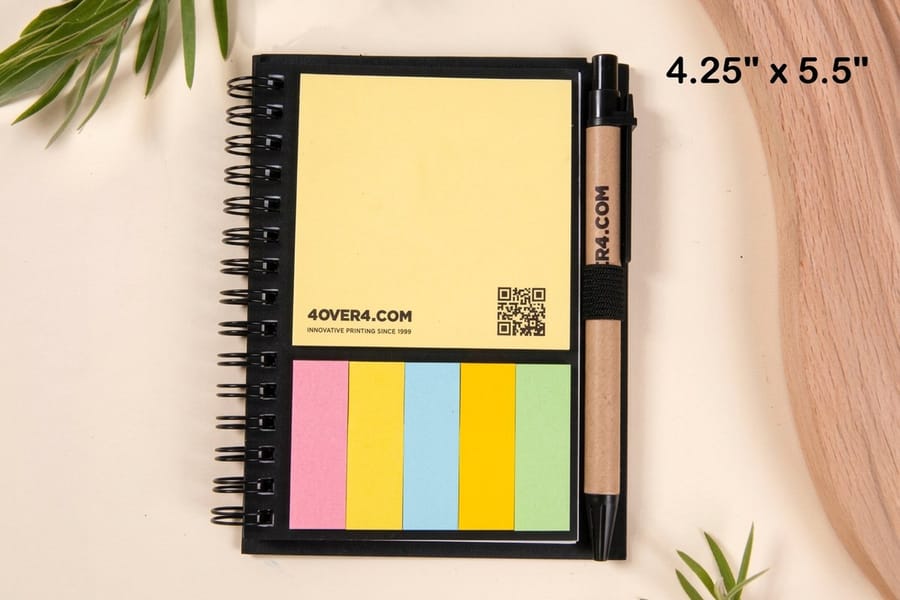
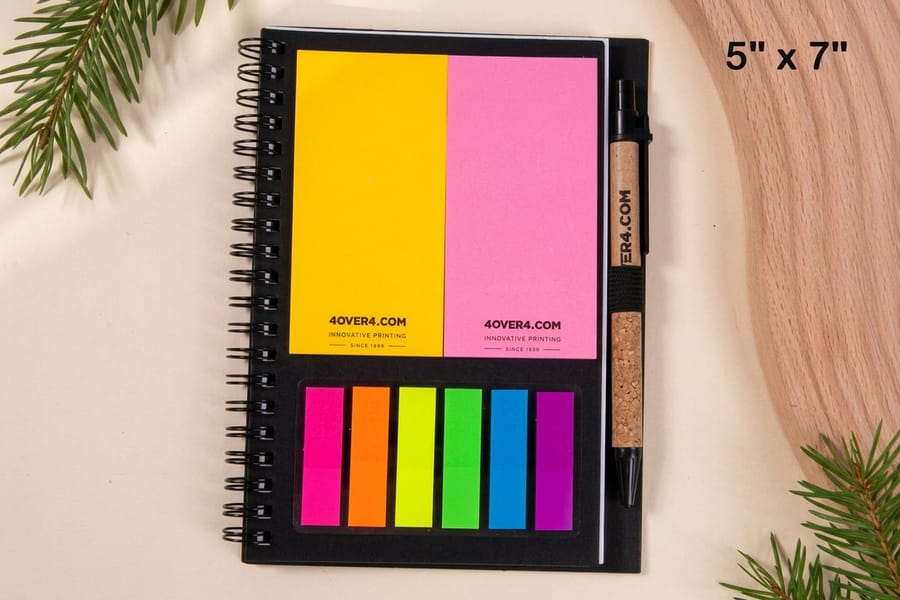
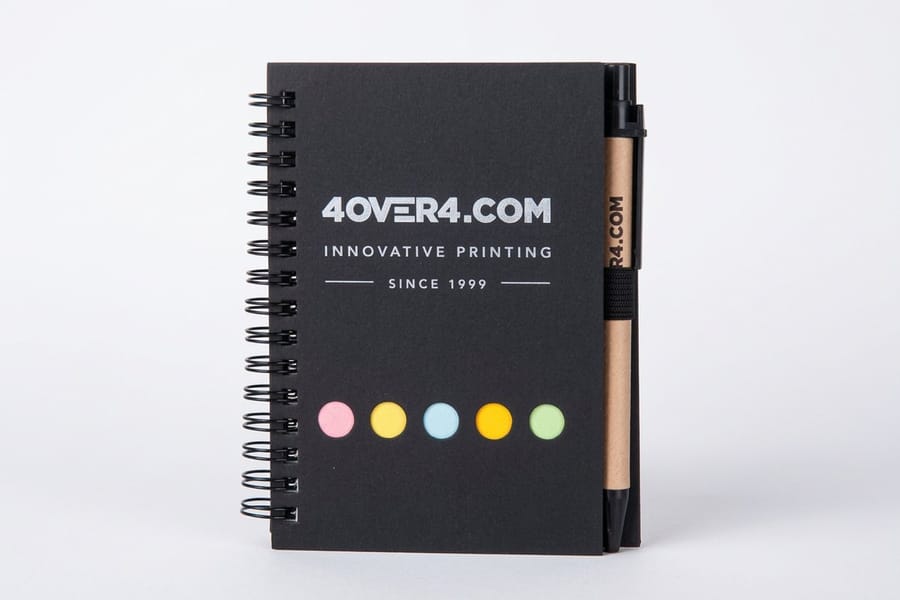
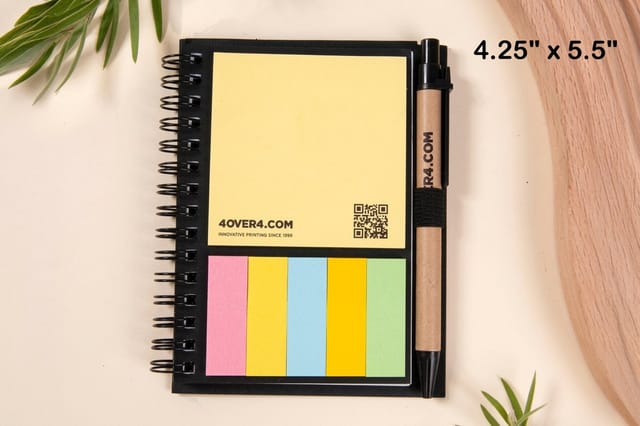
Spiral, whether plastic coil or wire-o, is the only one that does. The block opens a full circle and folds back on itself, so a notebook takes up half a desk instead of a whole one, and nobody has to hold the page down. That is why deluxe spiral notebooks at $5.00 are the standard for training sessions and trade shows. The cost is aesthetic: a coil looks like a workbook, and it catches on things in a bag.
Perfect binding, the glued flat spine, looks like a book and gives you a printable spine, which is genuinely useful if the notebook will sit on a shelf with your name on it. It also swallows roughly a quarter inch of the inside margin, and it will not stay open without a hand on it. Saddle stitch, two staples through the fold, is the cheapest of the three and the most restricted: page counts must divide by four, thick blocks creep so the inner pages need trimming allowance, and past about 64 pages the staples start to fight the fold.
Whatever you pick, the bound edge eats space. Keep live text and logos at least 3/8 inch clear of a coil punch, and design the inside margin wider than the outside one. Our guide to booklet paper, finish and binding goes deeper on the page-count rules if you are also printing a workbook or a program.
How Quantity Breaks Actually Work on a Notebook Run
The unit price falls with quantity for one reason: the setup is divided across more copies. Plates or a digital makeready, the first sheets pulled to get color right, the binding machine set to your coil and punch pattern, all of it happens once. Order 25 notebooks and each one carries a large share of that. Order 1,000 and each one carries a sliver.
What does not change is the per-copy cost. Paper is paper, ink is ink, and the coil takes the same seconds to close on copy 10 and copy 1,000. That is the floor the curve approaches and never crosses, and it is why the second half of the quantity range feels disappointing after the first. Going from 25 to 100 usually changes the unit price a lot. Going from 1,000 to 2,000 changes it a little.
So price it, do not guess it. Configure your target quantity, note the unit price, then configure the next band up and note that one. If the unit price barely moves, the extra books are storage, not savings. If it drops sharply, you found a real break and it is worth stretching. The same behavior across other products is laid out in how bulk printing price breaks work.
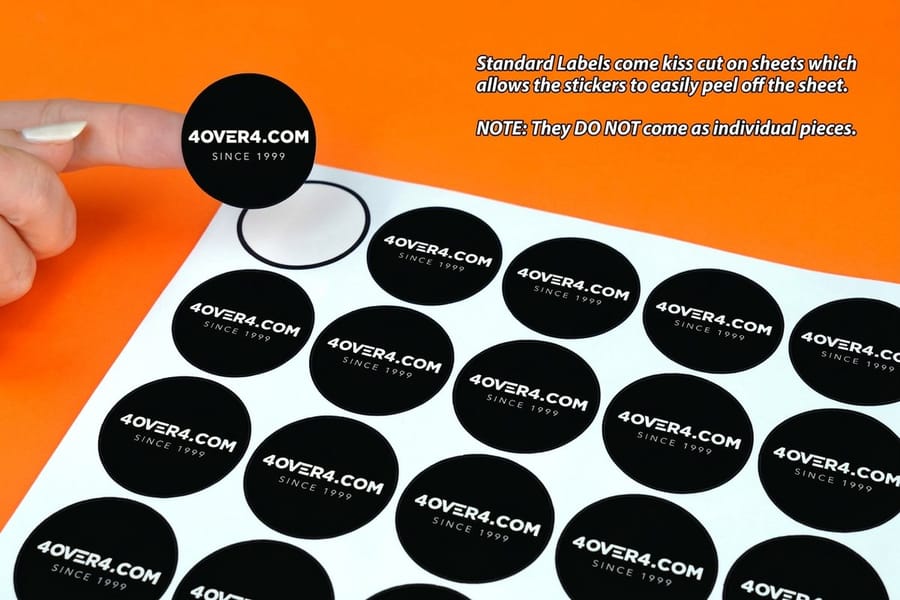
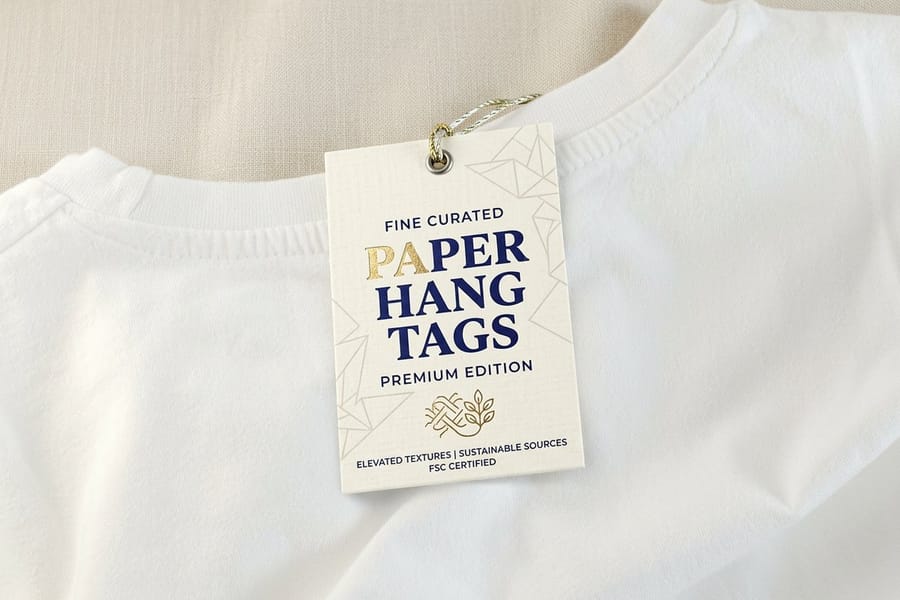
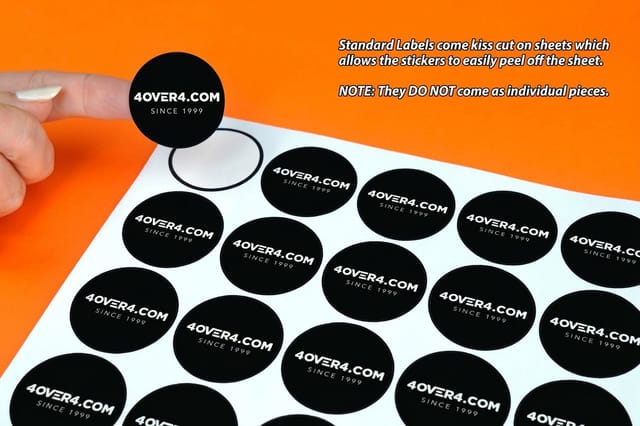
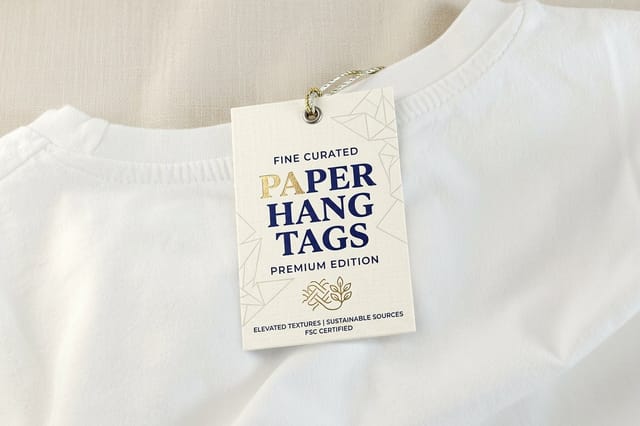
One trap worth naming: every distinct artwork is its own setup and its own band. Two cover designs at 250 each is two runs, and both sit higher on the curve than a single run of 500. If you need variety, print one cover and differentiate afterward with a standard label from $23.88 or a paper hang tag from $25.27, both of which carry their own quantity breaks independent of the notebook.
Ordering a Branded Run Without a Reprint
A notebook has more ways to go wrong than a flyer, and almost all of them are file problems caught too late. Build the cover at final trim size with a 1/8 inch bleed, keep everything you care about 3/8 inch off the punched edge, supply the interior as ordered pages rather than spreads unless you have been asked otherwise, and convert fonts to outlines. If file setup is where you get nervous, choosing the right file type for printing covers what to export and why.
Check the interior tint on stock, not on screen. Uncoated paper drinks ink, so a 20 percent gray rule that looked right on a monitor prints noticeably lighter. Order samples before a large run if the grid color is doing brand work.
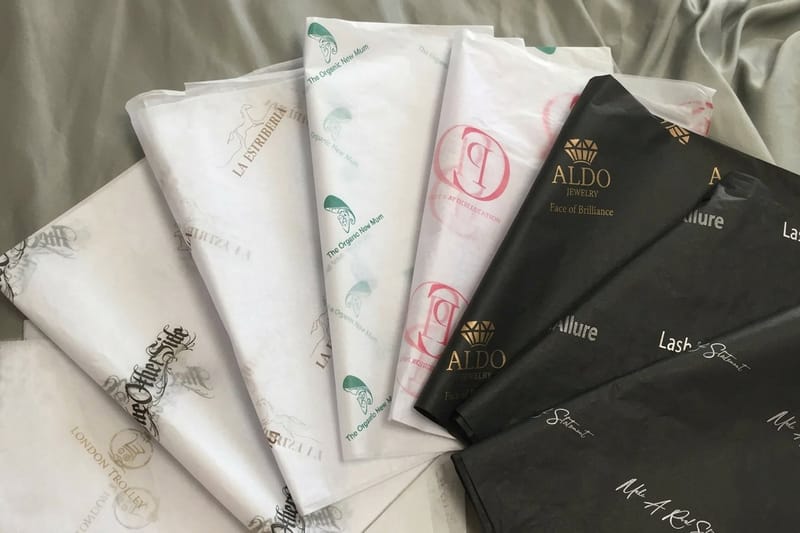
Then decide how it arrives. A notebook handed over loose is a notebook; the same notebook wrapped in branded custom tissue paper with a hang tag is a gift, and it costs a fraction of upgrading the notebook itself. For conference welcome kits, a printed greeting card from $56.02 tucked inside does more for recall than an extra 10 pages. There is a full argument for the event use case in custom notebook printing for events and conferences, and the wrapping side in custom branded wrapping and tissue paper.
More on planning dated and seasonal print runs sits in the calendar and notebook guides, which is worth a look if this order repeats every year.
Wally explains the quantity break
One setup, divided across the whole run
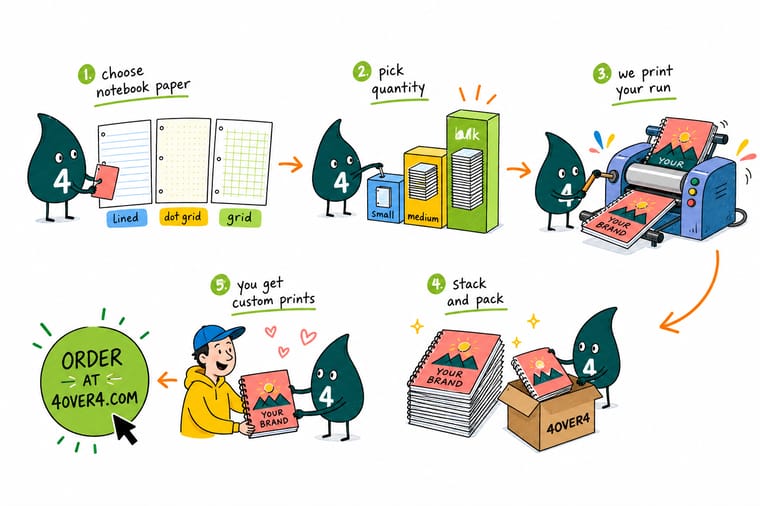
Wally sets the press up once. That cost gets split across every notebook in the order, so 25 copies each carry a big slice of it and 1,000 copies each carry a crumb. What never changes is the paper, the printing and the coil, and that is the floor the price settles onto. Wally's advice: price your quantity, price the next one up, and compare per copy. If the number barely moves, you are buying a closet full of notebooks, not a discount.
Configure a spiral notebook run →Specs and pricing
Notebooks and the add-ons that brand them
Live configuration options and starting prices straight from the 4OVER4.COM configurator, including the two cheapest ways to vary one cover design.

Print it
Order the run and the pieces around it
Explore more
Where to go next



By the numbers
The printer that handles a bulk notebook run
Common Questions
Your bulk notebook questions, answered
What paper weight stops pens showing through a notebook?
70lb text handles ballpoint and pencil on both sides without ghosting that bothers anyone. Gel pens and rollerballs put down more ink, so 80lb text is the safer call if you know your audience writes wet. Markers will strike through anything in the text-weight range, so if the notebook is meant for sketching, plan on writing one side only or move to a heavier stock. 60lb text is the thinnest we would put in a branded run, and it is a page-count decision more than a quality one: it keeps a 100-page notebook slim enough to sit flat in a bag.
How many pages can a spiral notebook have?
Coil binding is the most forgiving format on page count because the punch does not care how thick the block is until the coil diameter runs out. Every sheet is two pages, so the count is always even, and there is no multiple-of-four rule the way there is with saddle stitch. What actually limits you is coil size against page thickness: a thick block on 80lb text needs a wider coil, which adds bulk and cost. Ask for the maximum page count at your chosen text weight before you finalize the layout rather than after.
Where does the price per notebook actually stop dropping?
It flattens once the setup cost has been spread thin enough to stop mattering, and after that the unit price is basically paper plus binding plus handling. The practical way to find that point is to price your target quantity, then price the next band up, and compare the unit cost rather than the total. If doubling the quantity moves the unit price by a few percent, you have passed the useful break and you are just buying storage. Our guide to how bulk printing price breaks work walks through the same math across product types.
Should the lines inside be printed black?
No. Rules and dot grids are printed in a light gray or a tint of your brand color, usually somewhere around 15 to 25 percent of a solid, so they guide the hand without fighting the handwriting. Full-strength black rules make every page look like a form and they scan badly, because a phone scanner picks up the rule as strongly as the writing. If you are using a brand color for the grid, check it on the actual uncoated stock: uncoated paper absorbs ink and every tint prints lighter than it looks on a screen.
Can I put two different cover designs in one order?
You can, but price it as two orders because that is what it is. Each cover design is its own setup and its own quantity band, so 250 plus 250 lands in a worse position on the curve than 500 identical books. The cheap way to get variety is to print one cover and vary something applied afterward: a printed label from $23.88 for a department name, or a paper hang tag from $25.27 tied to the coil for an event.
How far ahead should I order notebooks for an event?
Work backwards from the date, and put a proof round in the plan rather than hoping the first file is right. A branded notebook has more places to go wrong than a flyer: cover bleed, spine or coil clearance, page order, and the inside margin on the bound edge. Build the file at final size with a 1/8 inch bleed, keep live content at least 3/8 inch clear of the punched edge, and check the turnaround options in the configurator against your ship date before you approve anything.
Get Started
A deluxe spiral notebook costs $5.00 and ships in 1 business day
Pick the text weight, choose your cover stock and coil, and see the unit price move as you step through the quantities.
Legal Disclaimer
Gold Standard guarantees apply to all standard orders placed through 4over4.com. Price match requires verifiable proof of a competitor's published price for an equivalent product with matching specifications and turnaround time. Satisfaction guarantee covers manufacturing defects and print quality issues. Contact support with order number and documentation. On-time delivery rate based on tracked orders 1999 to 2026. Individual results may vary based on shipping carrier performance.
