
What Size Are Business Cards? Standard & Custom Dimensions


The U.S. standard is 3.5 x 2 inches, the same footprint as a credit card. Here is every dimension that matters, from international formats to the bleed and safe zones that keep your file print-ready.
The standard business card size in the U.S. is 3.5 x 2 inches (88.9 x 50.8 mm), the same size as a credit card, so it fits any wallet or cardholder. Build your file at 3.625 x 2.125 inches to include a 0.0625 inch bleed, keep text at least 0.125 inches inside the trim, and set 300 DPI with CMYK color. International cards run smaller, 85 x 55 mm in Europe, so print a local batch for overseas clients.
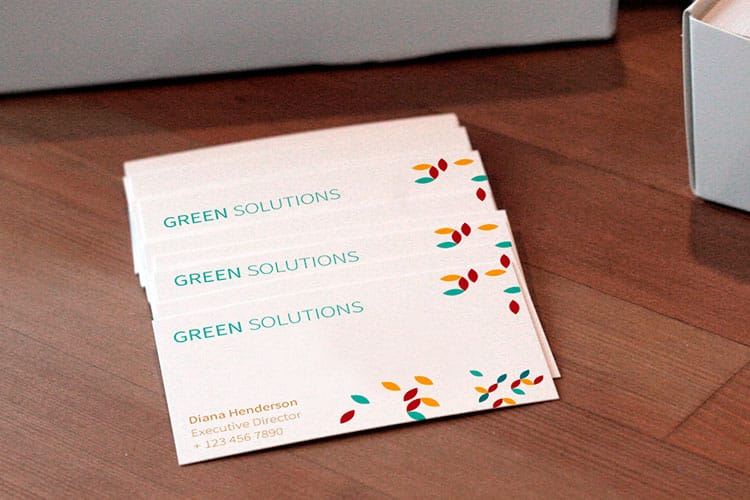
Quick answer
Business card dimensions at a glance
The standard business card size in the United States is 3.5 x 2 inches (88.9 x 50.8 mm), the same size as a credit card, so it fits any wallet or cardholder. Design the file at 3.625 x 2.125 inches to include bleed, keep text inside the 3.25 x 1.75 inch safe zone, and export at 300 DPI in CMYK. 4OVER4.COM prints this standard size along with square, folded, and die-cut formats across 60+ paper stocks.
Why getting your card size right matters
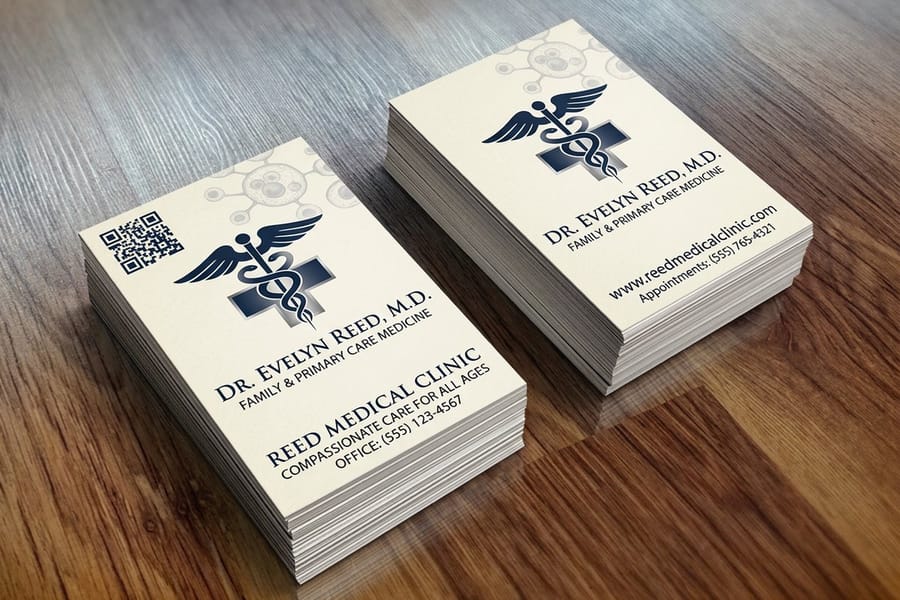
So what size are business cards, exactly? In the U.S. the answer is 3.5 x 2 inches. Simple enough. But here is where people trip up. They design their card without accounting for bleed, safe zones, or the fact that other countries use completely different dimensions.
Get the size wrong and your text gets cut off, your logo sits too close to the edge, or your card just looks off. 4OVER4.COM has printed over 10 billion cards, and sizing mistakes are still one of the most common issues we see in uploaded files.
This guide covers standard dimensions, international sizes, bleed requirements, and how to set up your file correctly. Whether you are designing your first card or your fiftieth, you will walk away knowing exactly what dimensions to use. And if you are working on other print projects, check out our guides on how to clean rubber stamps or how to fold a brochure for more hands-on tips.
Standard business card size in the U.S.
The standard business card size is 3.5 x 2 inches. That is 89 x 51 mm if you prefer metric. This dimension has been the industry standard for decades, and there is a good reason it stuck. It fits perfectly into standard wallets, cardholders, and Rolodexes, and some people still use those.
When you hand someone a card that is this size, they do not have to fold it, trim it, or figure out where to put it. It just works, and that is the whole point. If you are printing with 4OVER4.COM, this is the default size for standard business cards, and it is what most customers order.
Business card size at a glance
The standard business card size in the United States and Canada is 3.5 x 2 inches, which is 88.9 x 50.8 mm, usually written as 89 x 51 mm. That is the trim size, the card you hand over. The file you send has to be slightly larger than that, and the type has to sit slightly inside it. Every number you need before you open the document setup dialog is in one table here:
| Measurement | Inches | Millimeters | Pixels at 300 DPI |
|---|---|---|---|
| Trim size, the finished card | 3.5 x 2 in | 88.9 x 50.8 mm | 1050 x 600 px |
| Document size with bleed | 3.625 x 2.125 in | 92 x 54 mm | 1088 x 638 px |
| Bleed on each side | 0.0625 in | 1.6 mm | 19 px |
| Safe zone, the live area | 3.25 x 1.75 in | 82.6 x 44.5 mm | 975 x 525 px |
| Margin from trim in to text | 0.125 in | 3.2 mm | 38 px |
| Credit card, for comparison | 3.375 x 2.125 in | 85.7 x 54 mm | not applicable |
Read it as three rectangles stacked on each other. The artwork and any background color run all the way out to 3.625 x 2.125 inches, the blade cuts at 3.5 x 2 inches, and the logo, name, phone number and QR code all stay inside 3.25 x 1.75 inches. Set the document to 300 DPI and CMYK before you draw anything rather than 72 DPI RGB, because a screen file has less than a quarter of the pixels per inch a press needs and the type prints soft. Pixel figures are rounded up where the math lands on a half pixel.
Printing the U.S. standard? Order standard 3.5 x 2 inch business cards. If the card is not a plain rectangle, if you want rounded corners, a circle or an outline shaped like what you sell, die-cut any shape business cards take the same 0.0625 inch bleed and the same 300 DPI CMYK file, just built to your shape. Free blank templates with the bleed and safe zone already drawn are further down this page.
How big are business cards in other countries?
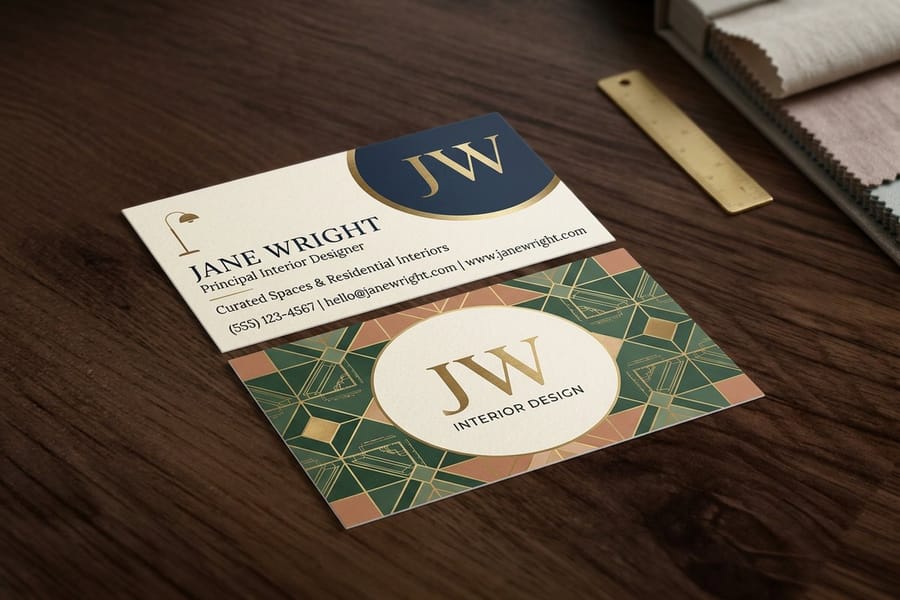
If you do business internationally, you need to know that card sizes vary by region. The differences are small, we are talking millimeters, but they matter. A U.S.-sized card will not sit flush in a European cardholder, so here is the breakdown:
| Region | Inches | Millimeters | How it differs from the U.S. card |
|---|---|---|---|
| United States and Canada | 3.5 x 2 in | 89 x 51 mm | The North American standard and the baseline for this page. |
| Europe, ISO standard | 3.346 x 2.165 in | 85 x 55 mm | Slightly narrower and taller, about 4 mm each way. |
| United Kingdom | 3.346 x 2.165 in | 85 x 55 mm | Follows the European standard, same 85 x 55 mm. |
| Japan | 3.582 x 2.165 in | 91 x 55 mm | A bit wider than European cards at the same height. |
| China | 3.543 x 2.126 in | 90 x 54 mm | Close to the Japanese format, 1 mm narrower and shorter. |
Two things to get right when you print a foreign size. First, the bleed and the safe zone move with the trim: keep the same 0.0625 inch bleed on all four sides and the same 0.125 inch margin off the trim, measured from the new dimensions and not from 3.5 x 2 inches. Second, a layout built for 3.5 x 2 inches will not simply scale into 85 x 55 mm, the proportions are different, so give the foreign batch its own layout instead of stretching the U.S. one and cropping the logo.
If you are attending trade shows abroad or working with international clients, consider printing a separate batch in the local standard. Check out the guide hub for more printing guidance across different formats.
Alternative business card sizes
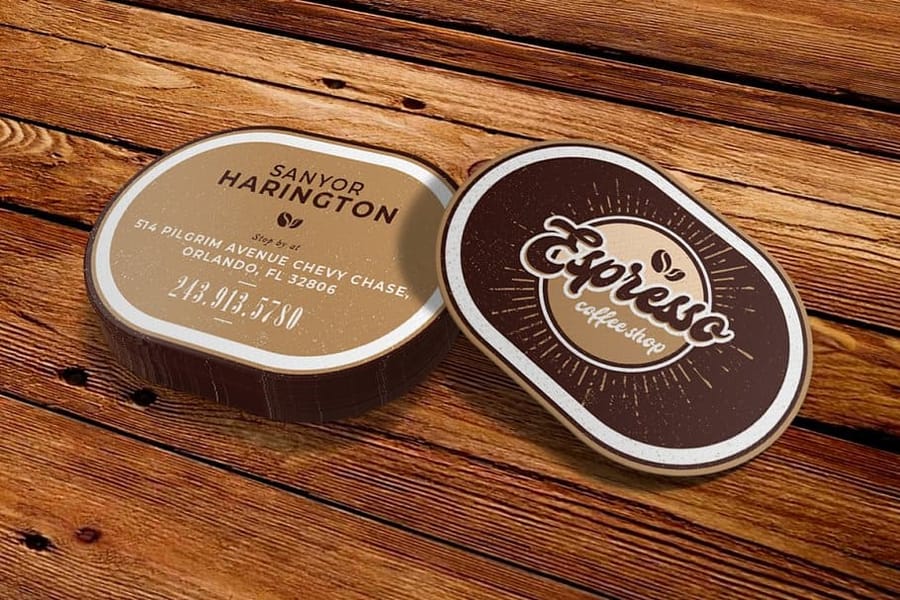
Not everyone wants a standard rectangle. Some brands go bold with non-traditional sizes. Here are the most popular alternatives:
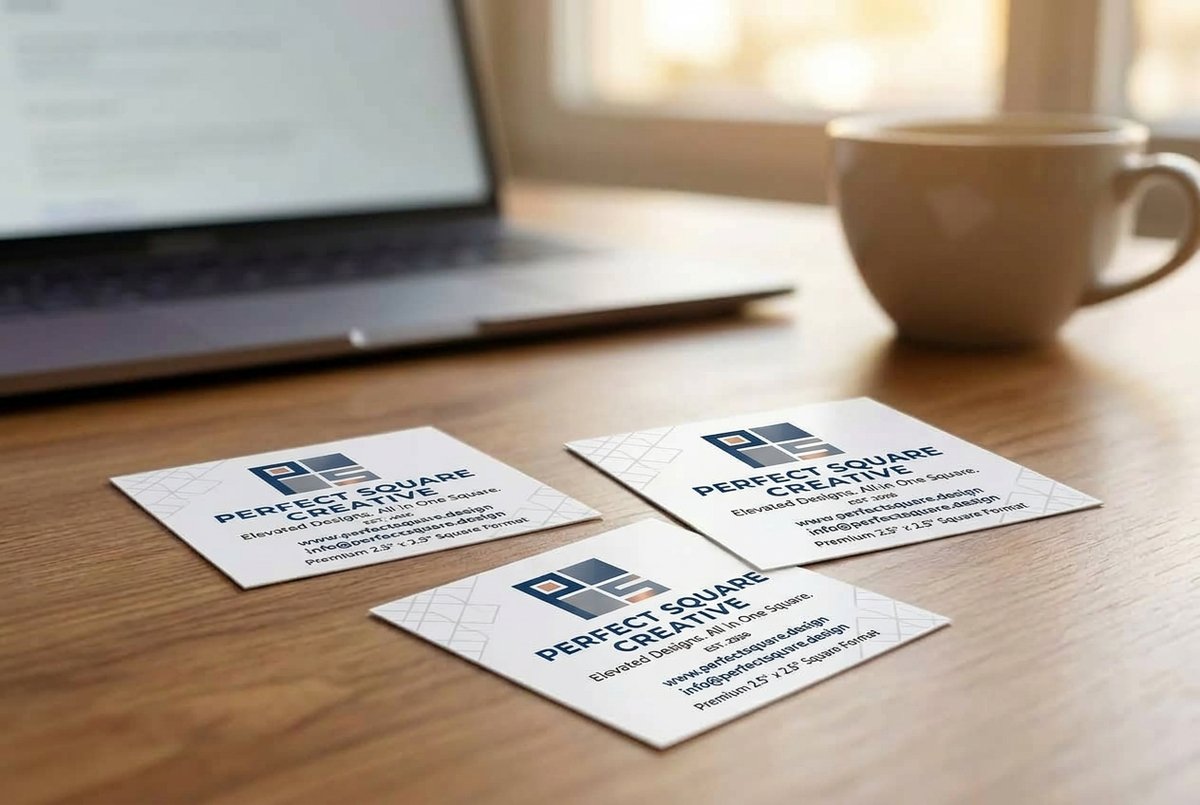
- Square cards: 2.5 x 2.5 inches, modern, eye-catching, great for creative professionals.
- Mini cards: 3.5 x 1 inch, slim and memorable, perfect for a quick contact handoff.
- Folded cards: 3.5 x 4 inches that fold to 3.5 x 2, double the real estate for menus, maps, or appointment info.
- Die-cut cards: custom shapes, circles, rounded corners, or any shape that matches your brand.
4OVER4.COM offers 3D lenticular business cards and black business cards for brands that want to stand out even further, plus die-cut any shape business cards for a fully custom outline. A non-standard size or shape can be a conversation starter, but keep in mind that if the card does not fit in a wallet, it might end up in the trash.
Bleed, trim, and safe zones explained
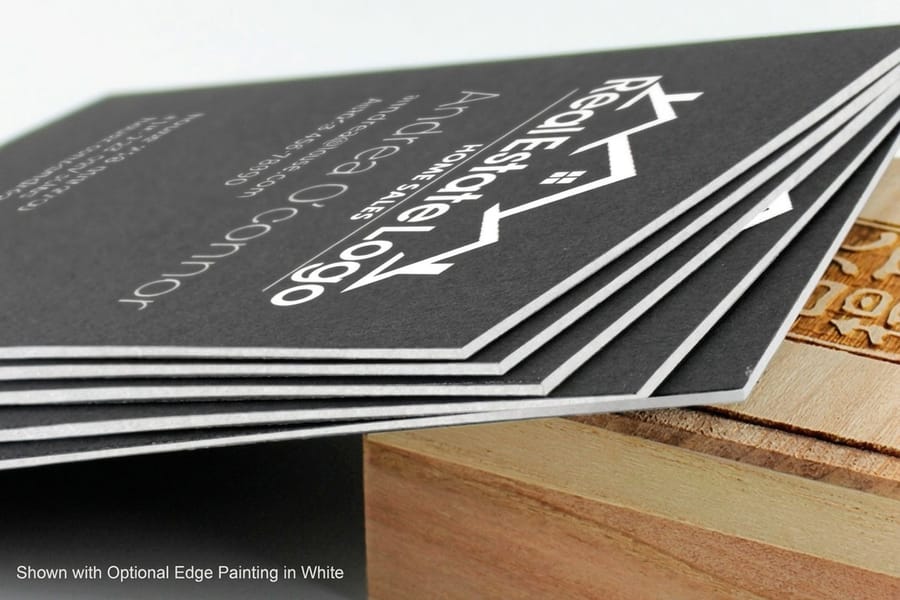
Here is where most sizing mistakes happen. The trim size is 3.5 x 2 inches, that is the final card. But your design file needs to be bigger than that.
What is bleed on a business card? Bleed is the extra area around your design that gets cut off during printing. For business cards you need 0.0625 inches (1/16 inch) of bleed on each side, which makes your total file size 3.625 x 2.125 inches. Cutting machines are not perfect down to the pixel, so if your design goes right to the edge with no bleed you will get thin white strips along one or more sides. Extend any background colors, images, or patterns all the way to the bleed line rather than stopping at the trim.
The safe zone keeps your text intact. Keep text, logos, and key design elements at least 0.125 inches (1/8 inch) from the trim edge. That means your safe area is roughly 3.25 x 1.75 inches. Anything outside this zone risks getting trimmed or sitting uncomfortably close to the edge, and a half-cut phone number is not a great look.
4OVER4.COM provides blank templates with bleed, trim, and safe zone guides already built in. Download one, drop in your design, and you will know exactly where everything lands, no guesswork.
Setting up your business card file correctly
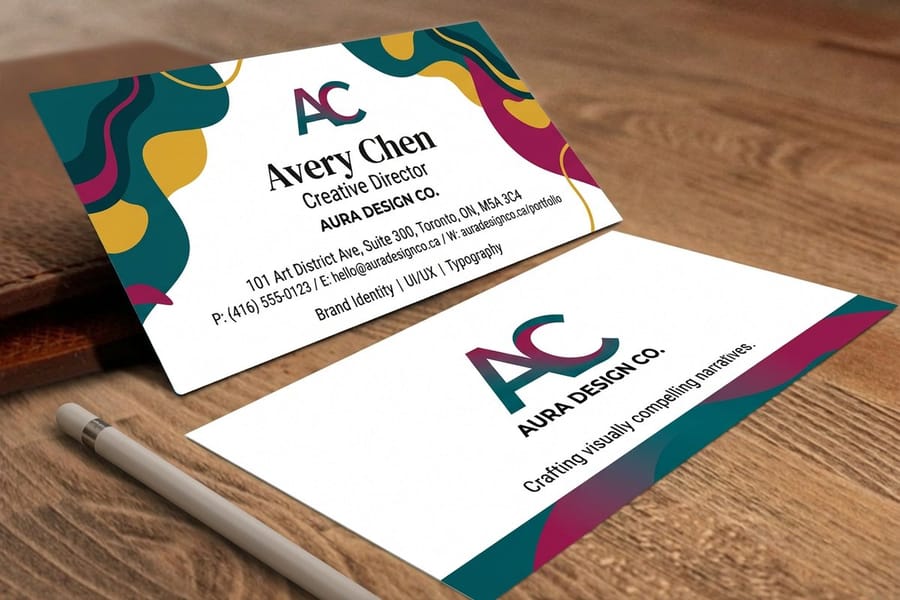
Knowing the standard business card size is step one. Setting up your file properly is step two. Here is what your file needs:
- File dimensions: 3.625 x 2.125 inches, which includes bleed.
- Resolution: 300 DPI minimum, anything lower looks blurry when printed.
- Color mode: CMYK, not RGB. RGB is for screens, CMYK is for print.
- File format: PDF preferred. AI, PSD, and EPS are also accepted.
- Fonts: outlined or embedded, because if the printer does not have your font it will substitute something else.
If you are designing in Canva, Illustrator, or Photoshop, set your document to these specs before you start. Do not design at the wrong size and try to resize later, because that stretches everything and drops your resolution. Learn more design tips for print projects like how to make flyers and how to make envelopes.
Orientation, rounded corners, and die-cut shapes
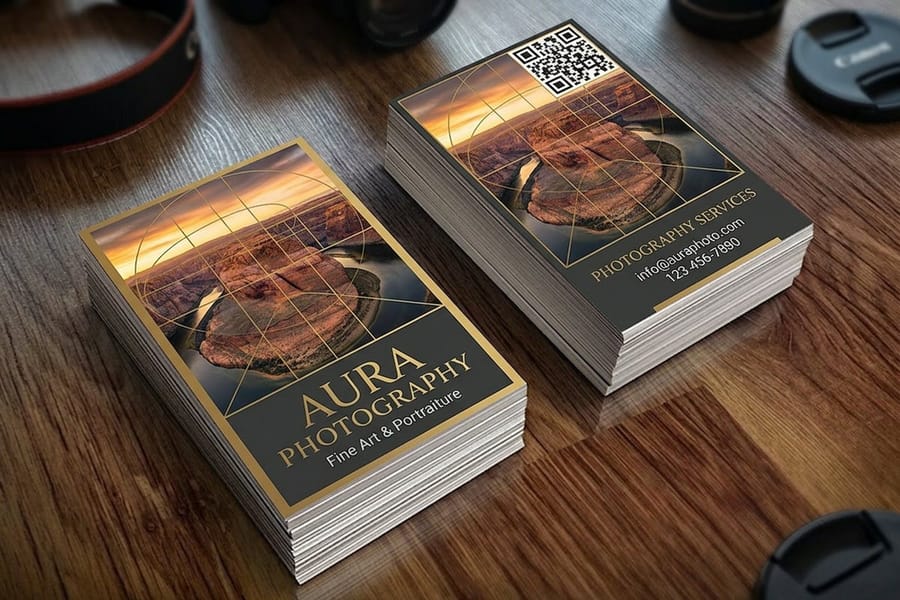
Most business cards are horizontal, and landscape is the traditional format people expect. But vertical portrait cards are gaining popularity, especially among designers, photographers, and creative agencies. The dimensions stay the same either way, 3.5 x 2 inches, you are just rotating the layout. A vertical card can feel fresh and modern, but make sure your content still reads naturally.
Rounded corners do not change your file dimensions. You still design at 3.625 x 2.125 inches with full bleed, and the rounding happens during finishing, after the card is printed and cut.
Die-cut cards are different. If you are creating a custom shape you will need a die line, a vector path that shows the cutter exactly where to cut. 4OVER4.COM's design team can help with this, or you can browse the showcase for inspiration on creative card shapes and order die-cut any shape business cards when you are ready.
Paper stock and how it affects the feel
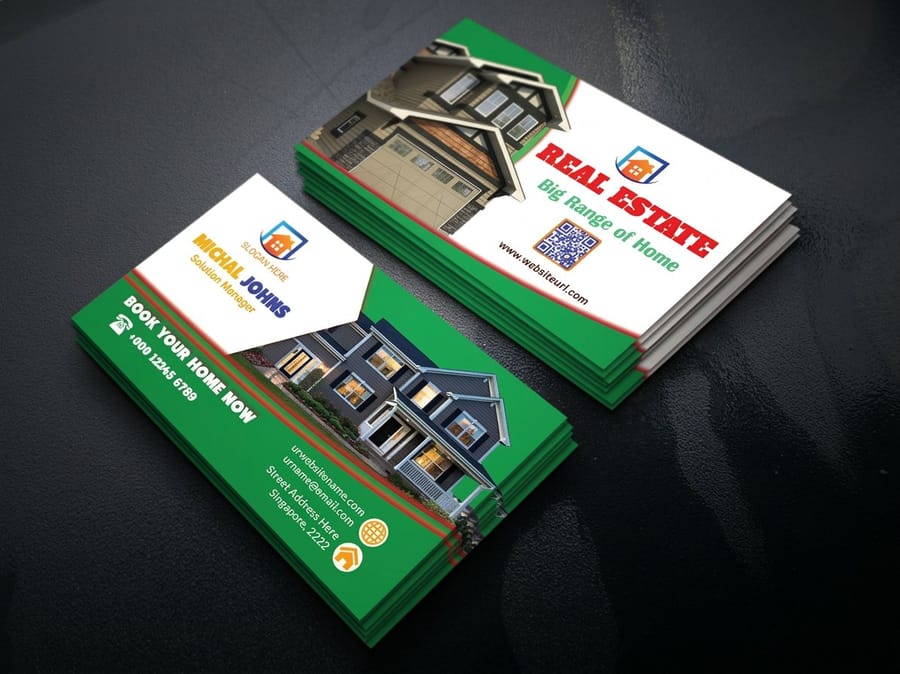
Size gets your card into someone's hand. Paper stock determines whether they keep it. A flimsy card on thin paper says budget. A thick, textured card says you take this seriously. 4OVER4.COM offers 60+ paper types for business cards, and these are the most popular options:
- 14pt uncoated: lightweight and writable, great for appointment cards or budget-friendly runs.
- 16pt gloss or matte: the sweet spot, about the thickness of a credit card, professional without being over the top.
- 32pt ultra-thick: three times thicker than standard, hefty, rigid, impossible to ignore, and people keep these.
- Kraft paper: a natural, earthy look, perfect for eco-conscious brands or rustic aesthetics.
Pair your stock with a finish. Soft-touch matte feels velvety, spot UV adds a glossy pop to specific elements, and foil stamping catches the light. These details turn a standard-size card into something people remember. If sustainability matters to your brand, explore green printing options that use recycled and eco-friendly stocks, and if you are planning an event, browse invitations printing to match your cards with event-ready materials. Into creative print projects? You might also enjoy learning about custom magnets for another tactile marketing piece.
Sizing errors that ruin your print run
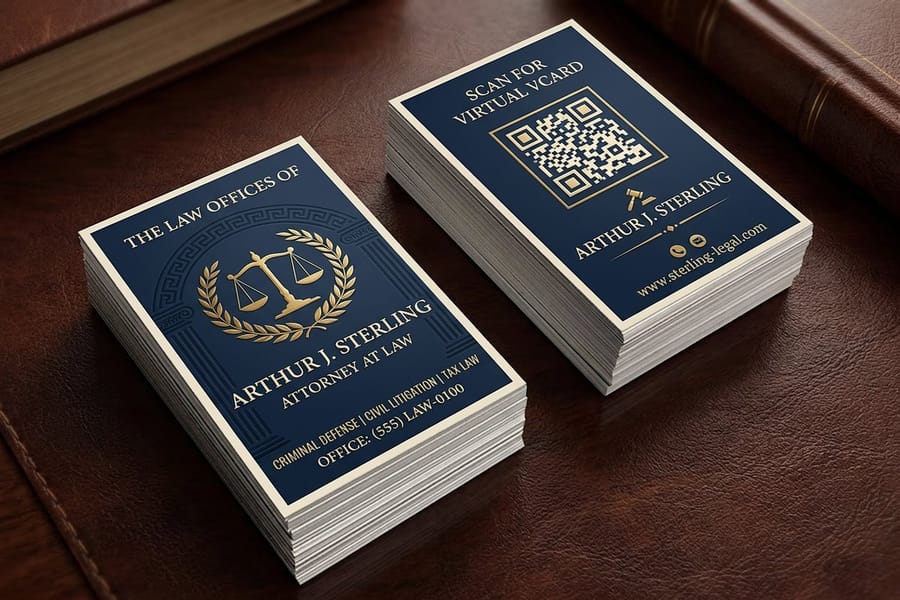
Even experienced designers make these mistakes when setting up business card files. Here is what to watch for:
Designing at the trim size instead of including bleed. Your file needs to be 3.625 x 2.125 inches, not 3.5 x 2. Skip the bleed and you will get white edges on your finished cards.
Placing text too close to the edge. Keep all important content inside the safe zone, at least 0.125 inches from the trim line. Text near the edge looks like an accident, not a design choice.
Using RGB color mode. Your screen shows RGB and printers use CMYK. That bright blue on your monitor will print darker and duller if you do not convert, so always design in CMYK.
Low resolution images. 72 DPI looks fine on a screen but prints blurry. Set your file to 300 DPI from the start and do not upscale a low-res image expecting magic.
Assuming international sizes match U.S. standards. They do not. If you are wondering what size business cards are in Europe, it is 85 x 55 mm, not 89 x 51 mm. 4OVER4.COM can print custom sizes if you need cards for overseas contacts.
Wally explains card sizing
Get the dimensions right before you design
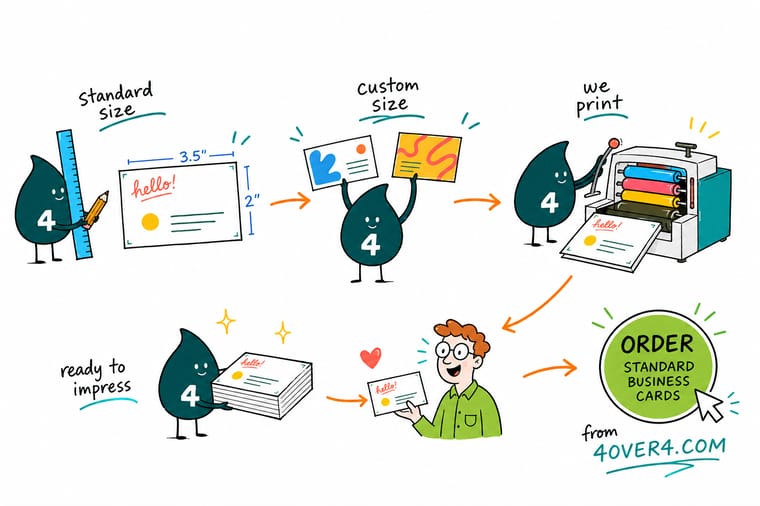
Wally treats a business card like a tiny billboard: nail the 3.5 x 2 inch trim, add the bleed, and keep your text inside the safe zone, and every card prints clean edge to edge. Skip the bleed and you get white slivers, crowd the edge and your phone number gets clipped. Start from the right dimensions in CMYK at 300 DPI, and 4OVER4 prints a card that slides straight into any wallet.
Order business cards →Specs and pricing
Standard business card specs and pricing
Once your file is set at the right size, here is what a standard 3.5 x 2 inch card gives you at 4OVER4.COM, with live specs and price-per-unit straight from the configurator.
| Quantity | Price Per Unit | Total |
|---|---|---|
| 100 | 17.6¢ | $17.57 |
| 200 | 11.5¢ | $23.07 |
| 300 | 9.15¢ | $27.46 |
| 400 | 7.96¢ | $31.86 |
| 500 | 7.25¢ | $36.26 |
| 600 | 6.77¢ | $40.64 |
| 700 | 6.43¢ | $45.04 |
| 800 | 6.18¢ | $49.43 |
Print it
Cards worth printing at the right size
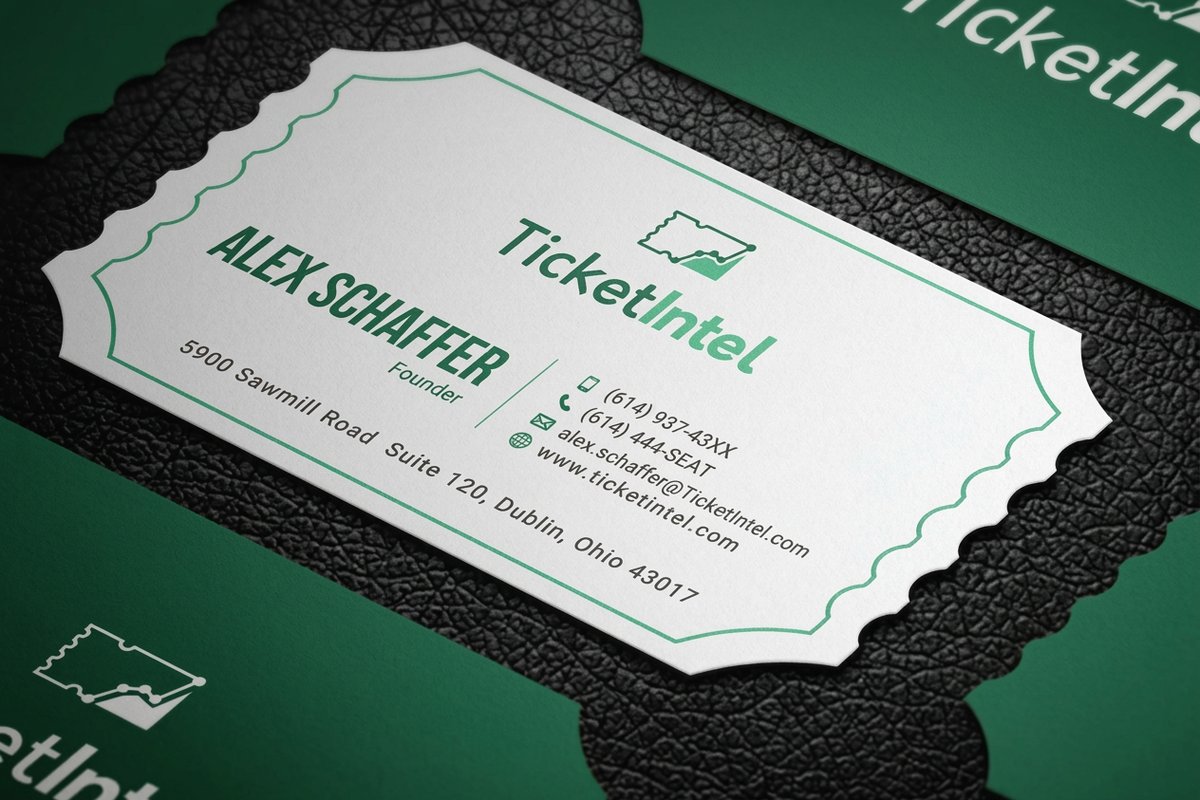
Now that you know the standard business card size and how to set up your file, pick your product. Start with standard 3.5 x 2 inch cards, go square, or run a custom die-cut shape.
Start free
Free business card design templates
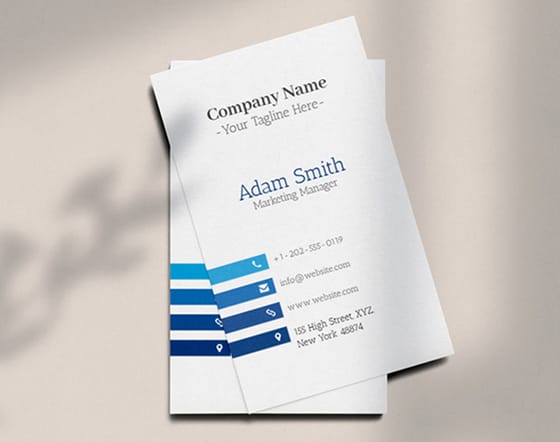
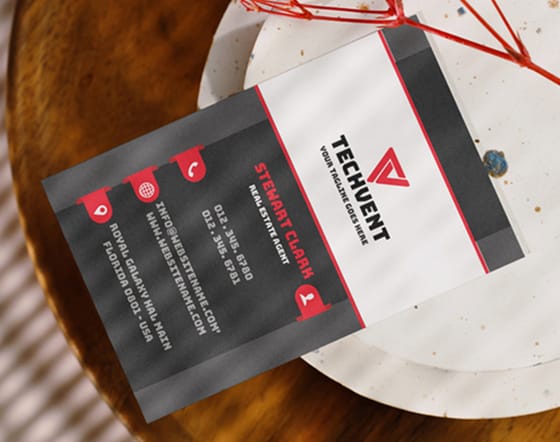
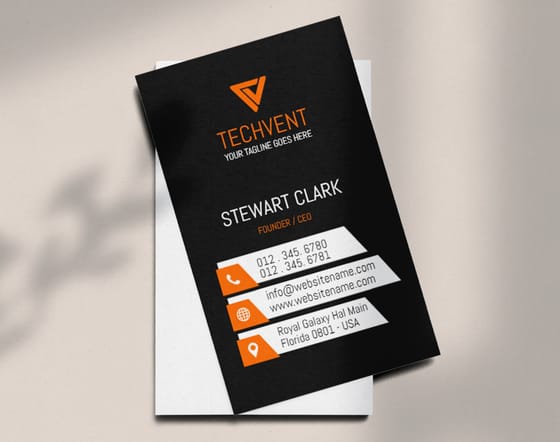
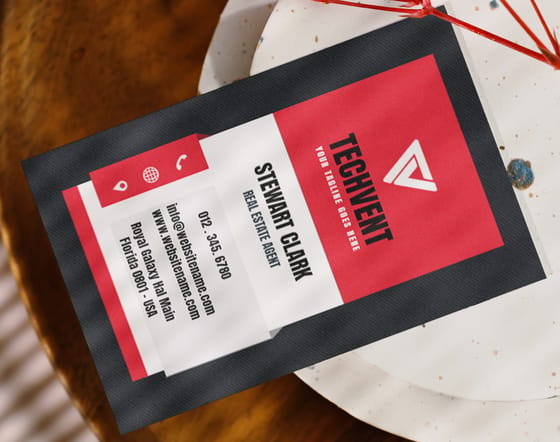
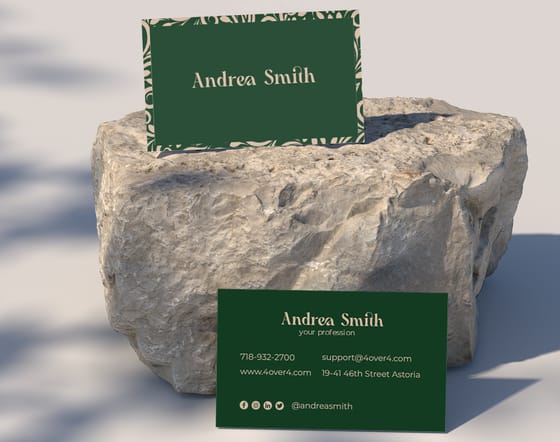
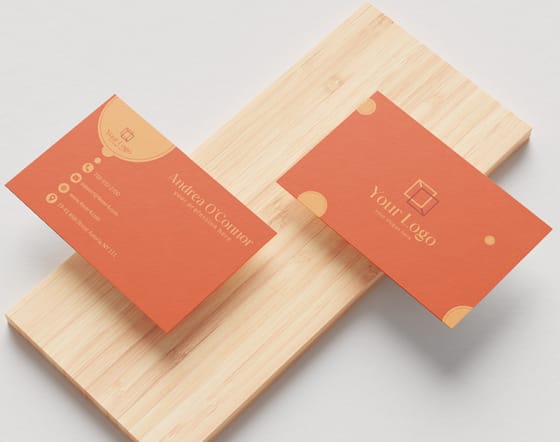
Open any of these ready-made layouts in the online designer, drop in your details at the correct size, and send it straight to print.
See it in use
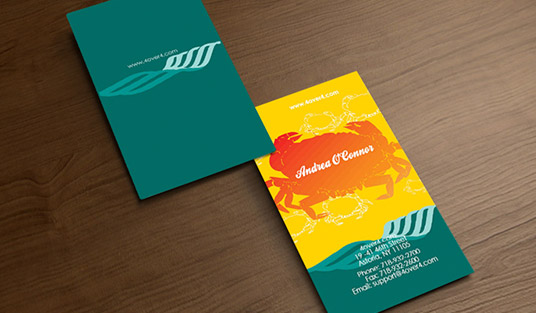
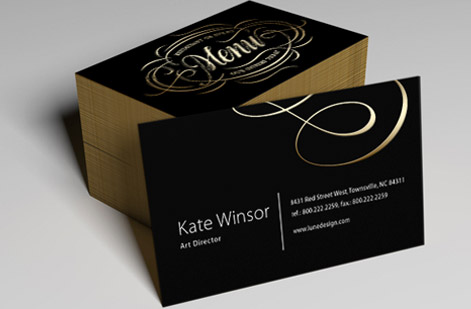
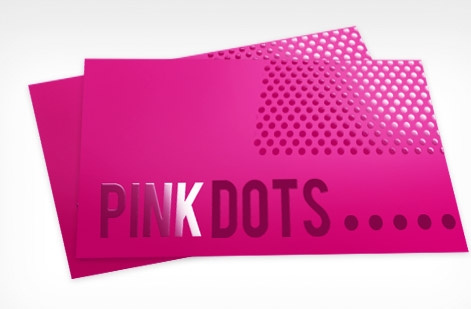
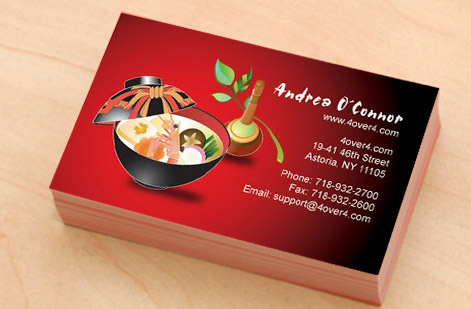
Real business card work, printed in-house
Explore more
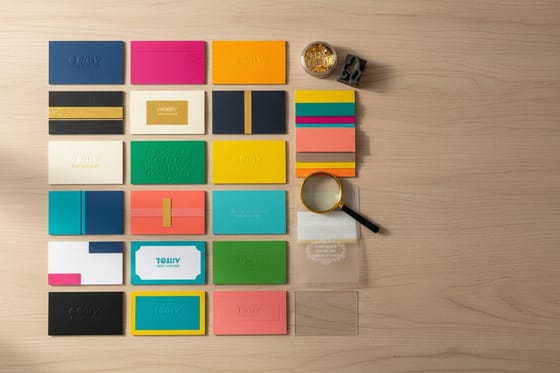
Where to go next

By the numbers
Printing you can count on at 4OVER4
Common Questions
Your business card size questions, answered
What is the standard business card size in the U.S.?
The standard business card size is 3.5 x 2 inches (89 x 51 mm). This is the most widely used format in the United States and Canada. It fits standard wallets and cardholders, which is why it has been the go-to size for decades.
How big are business cards compared to a credit card?
A standard business card is almost identical in size to a credit card. Credit cards measure 3.375 x 2.125 inches, while business cards are 3.5 x 2 inches. The difference is barely noticeable, which is why business cards slide into wallet slots so easily.
What size should my design file be for a business card?
Your design file should be 3.625 x 2.125 inches to include the required 0.0625 inch bleed on all sides. Set resolution to 300 DPI and use CMYK color mode. 4OVER4.COM provides downloadable blank templates with bleed and safe zone guides already marked.
What size is a business card in pixels?
At 300 DPI a standard 3.5 x 2 inch business card is 1050 x 600 pixels. Build the canvas at 1088 x 638 pixels so the 0.0625 inch bleed is carried on all four sides, rounding the half pixel up, and keep text and logos inside the middle 975 x 525 pixels, which is the 3.25 x 1.75 inch safe zone. Set the document to 300 DPI and CMYK before you start: a 72 DPI screen file has less than a quarter of the pixels per inch a press needs, so it prints soft no matter how sharp it looks on a monitor.
Are business cards the same size everywhere in the world?
No. The U.S. standard is 3.5 x 2 inches, but European cards are 85 x 55 mm, slightly narrower and taller. Japanese cards are 91 x 55 mm. If you do international business, consider printing region-specific sizes so your card fits local cardholders.
Can I print business cards in a non-standard size?
Yes. Popular alternatives include square cards (2.5 x 2.5 inches), mini cards (3.5 x 1 inch), folded cards (3.5 x 4 inches that fold to standard size), and die-cut cards in custom shapes. 4OVER4.COM prints all of these formats across 60+ paper types.
What is bleed on a business card and why does it matter?
Bleed is the extra 0.0625 inches of design that extends beyond the trim line on each side. It gets cut off during production. Without bleed you risk white edges appearing on your finished cards because cutting machines have slight variations on each pass.
Get Started
Ready to order business cards at the right size?
Pick your size and stock, drop in a print-ready file, and we print sharp, edge-to-edge cards that fit any wallet.
Legal Disclaimer
Gold Standard guarantees apply to all standard orders placed through 4over4.com. Price match requires verifiable proof of a competitor's published price for an equivalent product with matching specifications and turnaround time. Satisfaction guarantee covers manufacturing defects and print quality issues. Contact support with order number and documentation. On-time delivery rate based on tracked orders 1999 to 2026. Individual results may vary based on shipping carrier performance.
