
Business Letter Format on Letterhead, Measured Line by Line


Emma is our prepress and print production voice, built from the knowledge of our production team, with over 20 years in printing.
Every measurement, in order, for a letter typed on a branded sheet. Where the date starts, what the margins are, how the signature block spaces out, and what changes on page two.
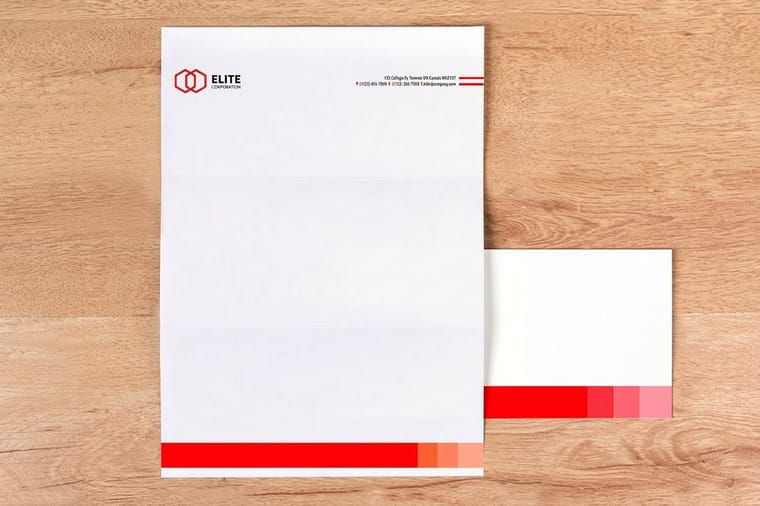
On letterhead, use full block: date, inside address, salutation, body, closing and signature block all flush to a 1 inch left margin, single spaced, with one blank line between parts. Start the date 2 inches from the top edge, keeping at least half an inch clear below the printed art, and leave 1 inch margins on the right and bottom. Skip your own address, since the letterhead carries it. End the salutation with a colon, leave four blank lines after the closing for a signature, and print any second page on a blank matching sheet.
Quick answer
Flush left, 1 inch margins, and the date 2 inches down
The letterhead decides the top margin and nothing else. Everything you type hangs off the same left margin the logo sits on, single spaced, one blank line between parts. The date goes 2 inches from the top edge or half an inch below the lowest printed element, whichever is lower on the page. The right and bottom margins stay at 1 inch, the salutation takes a colon, and the closing gets four blank lines beneath it so a pen has somewhere to go. The diagram below maps every zone against the sheet.
The Business Letter Format, Line by Line
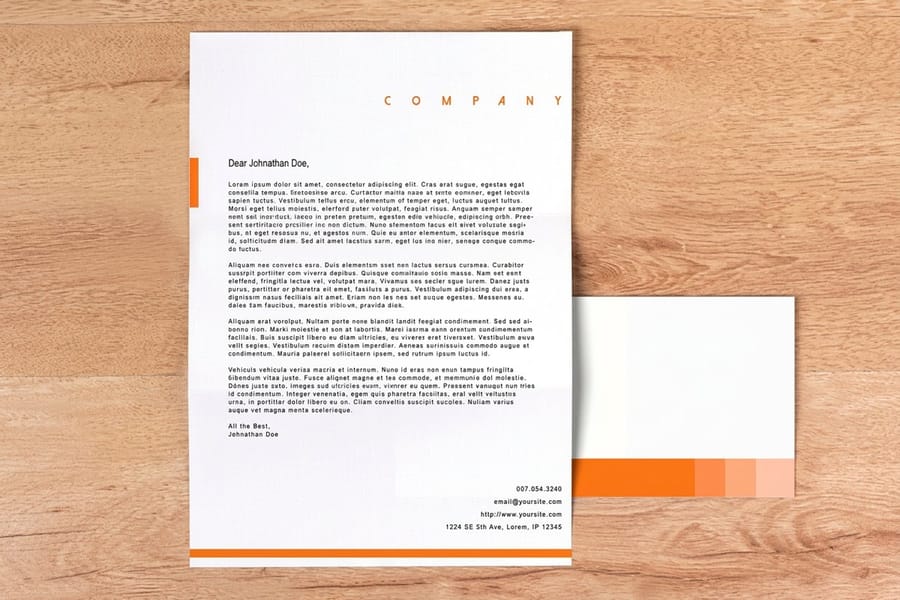
Work from the top of the sheet down. Every element below hangs off the same left margin, single spaced within itself, with one blank line between parts unless the table says otherwise.
| Element | Where it sits | Space after it |
|---|---|---|
| Date | 2 in from the top edge, flush left. Write it out: October 14, 2026. | 1 blank line for a long letter, up to 4 to push a short one down the page. |
| Inside address | Recipient name, title, company, street, city, state and ZIP, one line each. | 1 blank line. |
| Reference line | Optional. "Re: Invoice 4417" or a file number, flush left. | 1 blank line. |
| Salutation | Dear plus courtesy title and last name, ending in a colon. | 1 blank line. |
| Body | Single spaced, no first line indent, paragraphs kept under 5 lines. | 1 blank line between paragraphs, 1 after the last. |
| Closing | Sincerely, Regards or Respectfully, capital first word only, comma after. | 4 blank lines, the space for an ink signature. |
| Signature block | Typed name on one line, job title on the next. | 1 blank line if anything follows. |
| Notations | Enclosure, Enclosures (2), or cc: with the copied names beneath. | Nothing. This is the last thing on the page. |
Two details in that table do real work. The variable gap after the date is how typists have balanced short letters on the page for a century: a four line letter with one blank line under the date floats at the top of the sheet and looks unfinished, while pushing the date down centers the block. And the four blank lines after the closing are not decoration, they are the physical room a pen needs. Cut them to two and every signature you receive will collide with the typed name.
Every letterhead we print is 8.5 by 11 inches, so the measurements in this table apply as written to the sheet you order. When the letter runs to a second page, add blank sheets of the same paper to the same order, from half to twice the letterhead quantity, and the continuation page matches the first.
If you are still building the sheet these lines sit on, our guide to creating a letterhead covers the artwork side, and the blank template library gives you a correctly sized layout to start from at no cost.
Margins, Type Size, and the Zone You Must Leave Empty
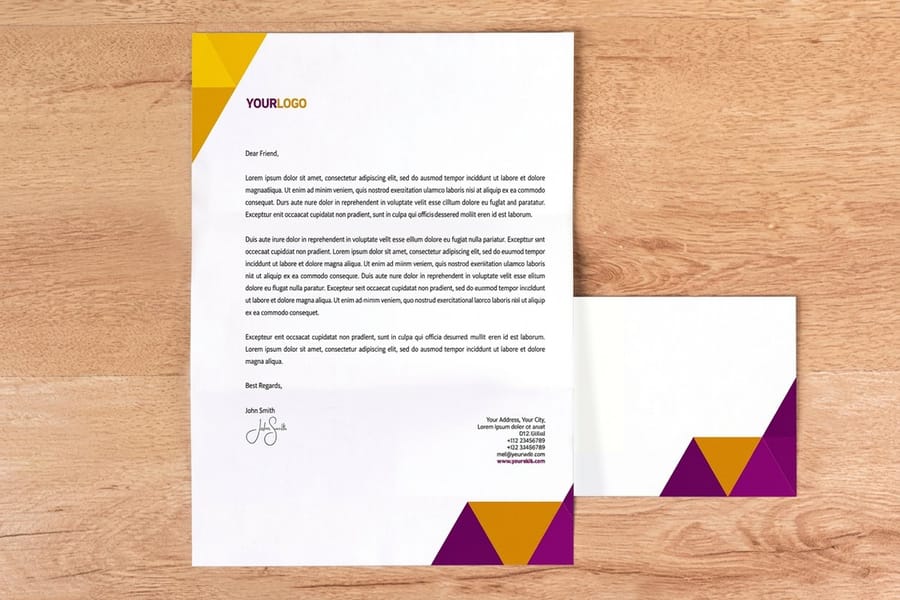
Margins are 1 inch left, right and bottom on US Letter. The top is the only one that changes, and it changes because of the letterhead, not because of a rule.
Measure the lowest printed element on your sheet, add half an inch, and that is your minimum top margin. A letterhead with a logo bar ending at 1.5 inches gives you a 2 inch top margin. A tall centered mark ending at 2.25 inches gives you 2.75 inches, and the letter simply starts lower. The half inch is not aesthetic caution; it absorbs the small feed shift you get when a preprinted sheet goes through a printer a second time.
The bottom needs the same treatment if your letterhead carries a footer bar with the website and social handles. Set the bottom margin to clear it by half an inch too. Body text running over a printed footer is the most common way a good letterhead gets ruined, and it happens because the designer put the footer in and the writer never looked at page bottoms.
For type, use 11 or 12 point in a plain reading face. Times New Roman at 12, Georgia at 11, Calibri at 11 and Arial at 11 all sit in the right range. Do not set the body in the display font from the logo, and do not set it in the brand color. Body copy prints as 100 percent black, which keeps it sharp on an office laser and readable on a fax or a scan. Our letterheads print at one size, 8.5 by 11 inches, in black or full color on the front, so measure where the art stops on your approved file before you set the top margin in Word. The letterhead design tips guide goes deeper on pairing the letterhead face with a body face that does not compete with it.
Full Block, Modified Block, and Semi-Block
Three formats are still in use, and on letterhead the choice is less about tradition than about whether your alignment fights the printed design.
| Format | Date and closing | Paragraphs | Use it when |
|---|---|---|---|
| Full block | Flush left, same margin as everything else. | Flush left, blank line between, no indent. | Nearly always. It is the default for business correspondence and the only one that lines up cleanly under a left aligned logo. |
| Modified block | Date and closing start at the horizontal center and run right. | Flush left, blank line between, no indent. | A centered letterhead, or formal correspondence where the house style calls for it. Legal and academic offices still use it. |
| Semi-block | Same as modified block: date and closing at center. | First line of each paragraph indented half an inch. | Rarely. It reads as older correspondence, and the indent plus the blank line between paragraphs is redundant spacing. |
The trade-off is honest. Modified block looks more traditional and more formal, and on a letterhead with a centered logo it genuinely balances better, because the date lands under the middle of the mark instead of hanging alone on the left. On a left aligned or offset logo, that same centered date looks like a mistake. Match the format to the letterhead, and once you pick, apply it to every letter that leaves the office. A folder of letters in three formats does more damage to a company's polish than any single layout choice.
One more rule that survives all three: never mix a centered date with a left aligned closing, or the reverse. They move together.
Printing the Letter and the Rest of the Set
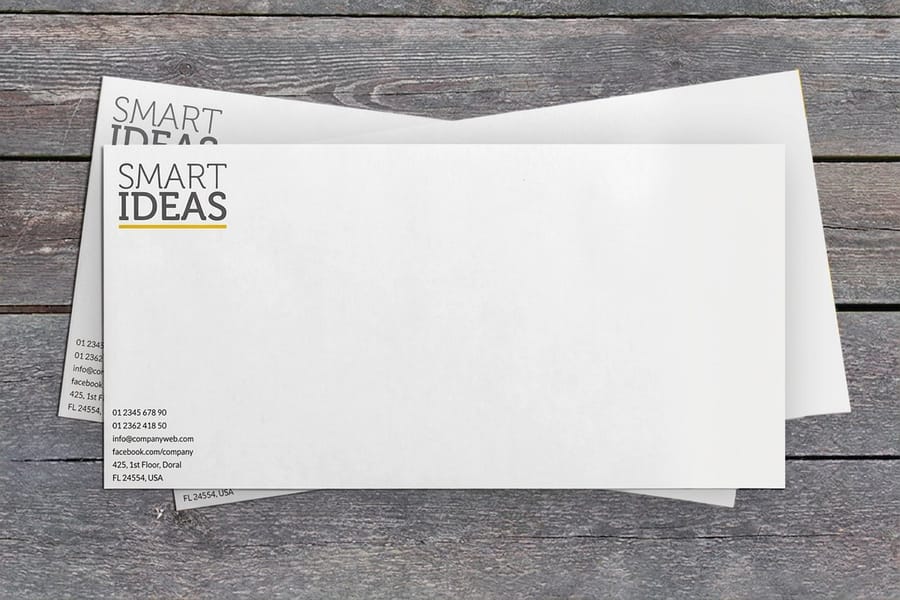
Two ways to get a letter onto branded paper, and they fail differently. Printing the letterhead in your Word header means one pass through the office printer, perfect registration, and a logo that comes out only as well as that printer renders it. Ordering preprinted sheets means an offset or digital press does the branded part properly, on paper an office printer cannot buy, and your printer only lays down the black text afterward.
The preprinted route wins on anything a client or a regulator will hold. Standard letterheads start at $99.95 on uncoated stock chosen to feed and fuse cleanly, so a preprinted sheet still runs through the laser printer on the front desk.
Finish the set while the artwork is open. Printed envelopes start at $142.99, and a #10 with the same return address turns two pieces into one identity. Add notepads from $93.37 for internal notes and callbacks, and keep the same left margin and logo position across all three so the pieces read as a family. Our stationery set guide walks the whole family, and the envelope size guide settles what fits folded and what needs a flat mailer.
The options for the set, from the configurator:
| Option | Letterheads | Printed envelopes |
|---|---|---|
| Size | 8.5 by 11 inches. | #10, 4.125 by 9.5 inches, regular or window, plus #9, #7 3/4 and smaller sizes. |
| Paper | 70# Uncoated Text, 24# Royal Laid in Bright White, Natural White or Gray, 28# Royal Linen Bright White. | White Wove, Royal Laid in Bright White, Natural White or Gray, Royal Linen Bright White. |
| Ink | Black or full color, one side or both. | Black, one or two PMS inks, or full color, on the front. |
| Smallest run | 50 sheets. | 250 envelopes. |
| Extras | Blank matching sheets for page two, perforation, three-hole punch, folding. | Peel and seal or security tint on #10. |
| Production | 5 business days. | 7 business days. |
Where preprinted letterhead is the wrong call: high volume runs where the content changes every time and nobody keeps the sheet, and any workflow that prints on both sides of the page. Letterhead is a first page product. Page two prints on the blank matching sheet, which is why letterhead is ordered in a quantity you expect to use within a year rather than in the largest break available. Compare the stocks side by side in the letterhead printing category, or check the weights in our letterhead paper guide before you commit to a quantity.
Wally lines up the letter
Two inches down, one inch in, everything flush left
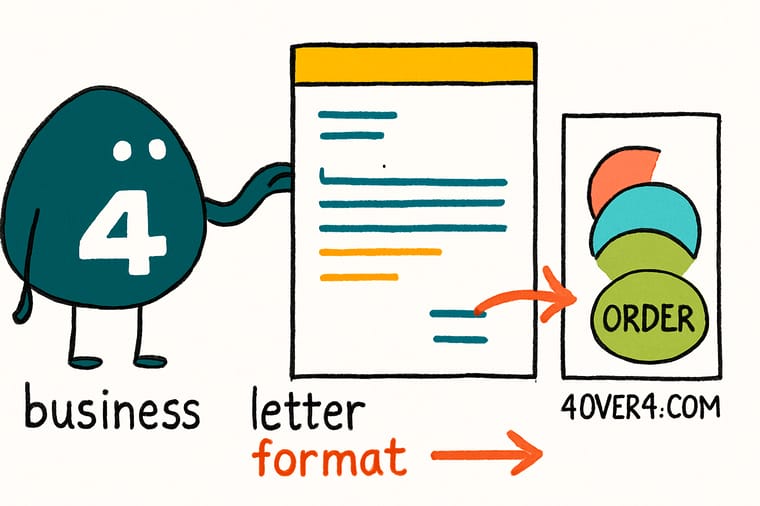
Wally puts a ruler on the sheet before he types a word. Two inches from the top for the date, or half an inch below wherever the printed logo stops, whichever sits lower. One inch on the left, right and bottom, and the left margin lines up with the edge of the logo above it. Date, address, salutation, body, closing, name: all the same left edge, one blank line between them, four blank lines after Sincerely so a signature fits. He never retypes the company address, because the letterhead already said it.
Print letterhead that fits the format →%22%2F%3E%3Ccircle%20cx%3D%2242%22%20cy%3D%221%22%20r%3D%2217%22%20fill%3D%22%2314b8a6%22%20opacity%3D%220.15%22%2F%3E%3Ccircle%20cx%3D%2240%22%20cy%3D%2250%22%20r%3D%225%22%20fill%3D%22%2314b8a6%22%20opacity%3D%220.1%22%2F%3E%3Crect%20x%3D%2272%22%20y%3D%22-7%22%20width%3D%2227%22%20height%3D%2210%22%20rx%3D%224%22%20fill%3D%22%2314b8a6%22%20opacity%3D%220.08%22%20transform%3D%22rotate(7%2080%2030)%22%2F%3E%3C%2Fsvg%3E)
Specs and pricing
Letterhead and envelope stocks, sizes and starting prices
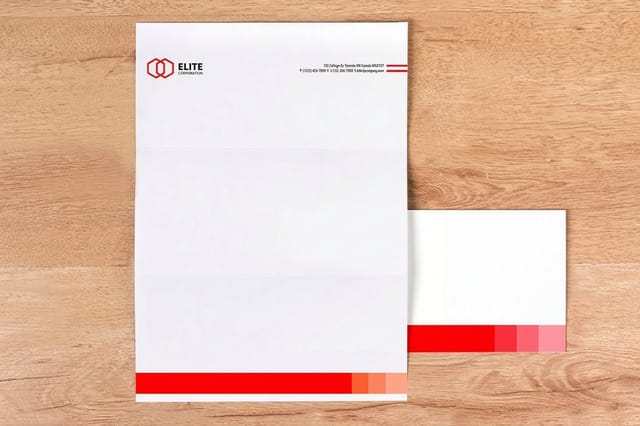
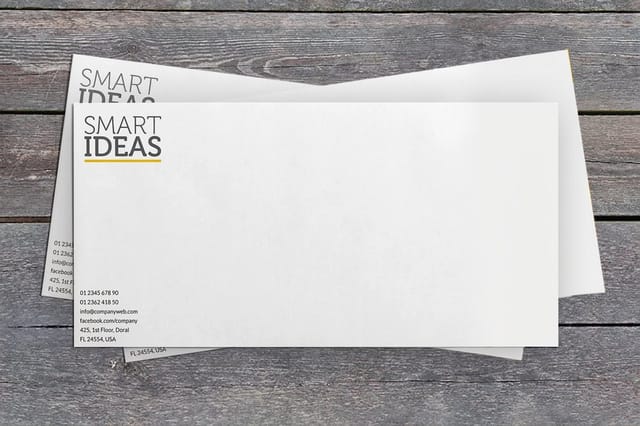
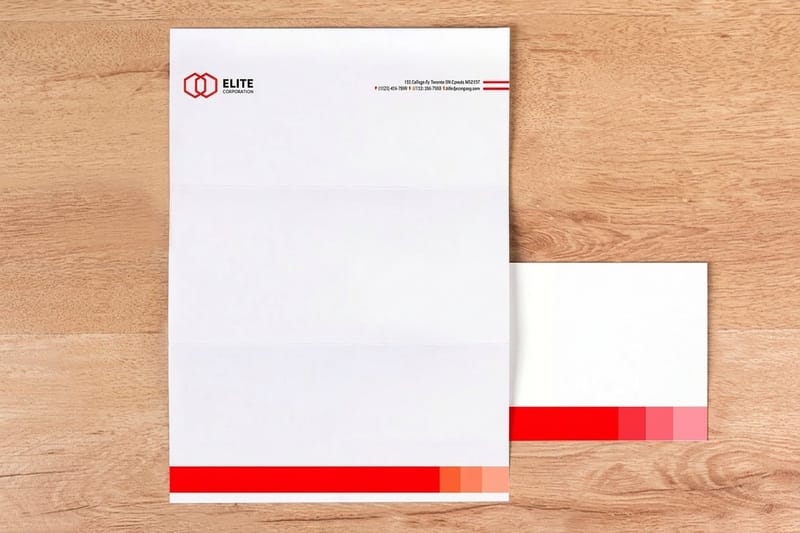
Letterheads print at 8.5 by 11 inches on five papers, from 70# Uncoated Text to 28# Royal Linen Bright White, with 5 business days of production. The #10 envelope that takes the letter folded in thirds comes in the same Royal Laid and Royal Linen papers, so sheet and envelope match.
Sheet and #10 envelope
Order the sheet, then the envelope

Letterhead design and paper
Where to go next


Since 1999 in Queens
Stationery print across 25 years on press
Common Questions
Your letterhead formatting questions, answered
How far down the page should the date start on letterhead?
Two inches from the top edge of the sheet covers most letterhead designs, because the printed art usually stops between 1.5 and 1.75 inches. The rule that matters more than the measurement is clearance: leave at least half an inch of white space between the lowest printed element and your first typed line. Word defaults to a 1 inch top margin, which drops the date straight into the logo, so set the top margin manually before you type anything. If your letterhead runs deeper, push the date down rather than shrinking the gap.
Do I include my own address in a letter on letterhead?
No. The letterhead already carries the company name, street address, phone and website, and repeating it in the body is the single most common giveaway that someone pasted a generic template onto a branded sheet. Start with the date. The only exception is a personal detail the letterhead does not show, such as a direct extension or a department mail stop, and that belongs in the signature block at the bottom, not at the top.
Should the salutation end with a colon or a comma?
A colon, in US business correspondence. "Dear Dr. Whitfield:" is standard, and a comma marks the letter as personal rather than professional. British usage drops the punctuation entirely. If you do not know the recipient gender or preferred title, use the full name without a courtesy title, and if you have no name at all, address the role: "Dear Hiring Committee:" beats "To Whom It May Concern:", which reads as a letter nobody bothered to research.
What goes on the second page of a business letter?
A blank sheet of the same paper, never a second letterhead. At the top left of page two, type the recipient name on line one, "Page 2" on line two, and the date on line three, then leave three blank lines and continue the body. Two other habits keep it clean: never let a page break fall so that only one line of a paragraph carries over, and never break the closing away from the last body paragraph. If the letter runs to two pages by three lines, tighten the body instead.
Can I run preprinted letterhead through an office laser printer?
Usually yes, with two cautions. First, stock: uncoated 24 lb bond or 70 lb text feeds and fuses reliably, while coated or heavily varnished sheets can shed toner because there is nothing porous for it to key into. Second, registration: a sheet fed a second time can shift by a sixteenth of an inch or so, which is invisible unless your text sits tight against the logo, and is exactly why the half inch clearance rule exists. Our standard letterheads print on uncoated stock chosen to run through office equipment without drama.
Which envelope matches a standard letterhead?
A #10 envelope, 4.125 by 9.5 inches, which takes an 8.5 by 11 inch sheet folded in thirds. Fold the bottom third up first, then the top third down, so the letterhead ends up on the outer face and the recipient sees it as the letter comes out. If the letter must arrive unfolded, for example a certificate or a signed contract, move to a 9 by 12 inch envelope and do not fold at all. Matching the envelope print to the letterhead costs little and is the difference between a set and two unrelated pieces.
Get Started
A 50 sheet letterhead run is $2.00 a page
Pick your stock and size, upload the artwork or start from a blank template, and we print letterhead that runs through your office printer without a fight.
Legal Disclaimer
Gold Standard guarantees apply to all standard orders placed through 4over4.com. Price match requires verifiable proof of a competitor's published price for an equivalent product with matching specifications and turnaround time. Satisfaction guarantee covers manufacturing defects and print quality issues. Contact support with order number and documentation.
