
Hand Sanitizer Labels Have to Survive Alcohol and Carry Drug Facts


Two problems, one label. The material has to shrug off the alcohol that runs down the bottle, and the back panel has to carry the Drug Facts block FDA requires on an over the counter drug. Sizing it, choosing the stock, and laying out the required copy all follow from that.
Print hand sanitizer labels on a polypropylene film facestock with a laminate or UV coat over the ink, because alcohol is a solvent and paper labels wick it and smear. The back panel has to carry a Drug Facts block laid out to 21 CFR 201.66 with type no smaller than 6 point, since FDA regulates alcohol hand sanitizer as an over the counter drug. Size the label from the bottle: circumference is diameter times 3.14, minus about an eighth of an inch so the ends meet without overlapping.
Quick answer
Film and laminate on the outside, Drug Facts on the back
A sanitizer label fails in two places: the material and the panel. Alcohol dissolves what water leaves alone, so the facestock is polypropylene film and the print sits under a laminate or a UV coat. The panel is regulated, because FDA classifies alcohol hand sanitizer as an over the counter drug, which means a Drug Facts block in fixed order at 6 point or larger, plus identity, alcohol percentage and net contents on the front. Size comes off the bottle itself, and small bottles are where the panel and the surface run out of room at the same time.
What a Hand Sanitizer Label Has to Say
Hand sanitizer is not a cosmetic and it is not a cleaning product. FDA treats alcohol based hand sanitizer as an over the counter drug, which is why the back of every bottle on a store shelf carries the same boxed panel that a bottle of aspirin does. That single fact drives most of the label layout.
The Drug Facts panel follows 21 CFR 201.66. The blocks run in a fixed order, the headings are bold and larger than the body copy, and the whole panel prints in one color against a contrasting background. Here is the sequence:
- Active ingredient. The alcohol and its concentration, written the way it appears in the formula, for example ethyl alcohol 70 percent by volume. CDC guidance for consumer use sits at 60 percent alcohol and above.
- Purpose. Antiseptic. One word, its own column, aligned with the active ingredient.
- Uses. What the product does, stated within what the monograph allows. This is where brands get into trouble by adding disease prevention claims that the panel does not support.
- Warnings. For external use only. Flammable, keep away from heat or flame. Keep out of eyes, ears and mouth. Stop use and ask a doctor if irritation or rash occurs. Keep out of reach of children, and if swallowed get medical help or contact a Poison Control Center right away.
- Directions. How much, where, and how long to rub, plus adult supervision language for children.
- Other information. Storage, typically below 104 degrees Fahrenheit, and avoid freezing or excessive heat.
- Inactive ingredients. Listed alphabetically, in one run.
The front of the bottle, the principal display panel, is separate and shorter: the product identity, the alcohol percentage, and the net quantity of contents in both fluid ounces and milliliters. The name and place of business of the manufacturer, packer or distributor has to appear on the label somewhere as well, and most brands put it under the Drug Facts panel where there is room.
Two practical warnings from the press side. First, the flammability line is not decorative, so do not let a designer shrink it to balance the layout. Second, if your artwork came from a bottle produced in 2020, check it: the temporary FDA policies from that period were withdrawn at the end of 2021, and a lot of recycled templates still carry that era's wording. We print the label you approve, so have a regulatory reviewer sign off on the panel before it reaches our label printing configurator.
Materials That Survive Alcohol, Not Just Water
Every sanitizer bottle drips. A pump throws a little down the shoulder, a squeeze bottle leaves a film on the panel, and the hand that grabs the bottle next is still wet. Water resistance is not the test. Solvent resistance is.
| Facestock | How it takes alcohol | The look | Where it belongs |
|---|---|---|---|
| White BOPP film | Does not absorb. With a laminate or UV coat over the print, the ink survives repeated wiping. | Clean opaque white, matte or gloss. | The default for pump and flip top bottles, and the safest home for the Drug Facts panel. |
| Clear BOPP film | Same durability as white film. The exposed adhesive edge is the only weak point. | No label look on a clear gel. | Front panel branding, as long as a white block is flooded behind the Drug Facts area. |
| Metallized film | Durable, but scuffs show more than on white film. | Premium, reflective. | Retail and gift sets. Never behind small regulated type, where the reflection kills legibility. |
| Coated paper | Handles a splash if fully laminated, but the cut edge is raw and wicks over time. | Warm, uncoated feel is possible. | Cartons, cases and refill jugs that live in a stockroom, not the bottle in a customer's bag. |
Adhesive matters as much as the face. Most sanitizer bottles are PET or HDPE. PET takes a permanent acrylic without complaint. HDPE has a lower surface energy and needs a more aggressive adhesive, and a soft squeeze bottle needs a conformable film that flexes with the panel instead of tenting at the corners. Ask for the adhesive by behavior, not by name: permanent, works on HDPE, holds above 100 degrees.
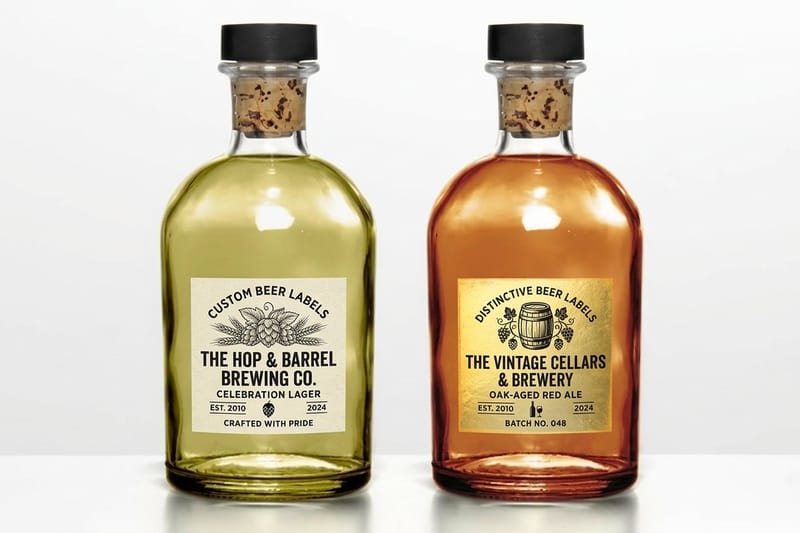
Wet environment bottle labels are a solved problem in another category, which is worth borrowing from. Shaped wine labels start at $10.99 and are built for condensation, ice buckets and hands that are never dry, and the same die cut shapes work on an oval sanitizer bottle. The beverage label printing range is the closest catalog neighbor to a sanitizer bottle in shape and handling, and beer labels are the wet strength end of that family.
Before the run, do the test a printer would do. Apply a sample to the real bottle, wait 24 hours for the adhesive to reach full bond, then rub the printed area 20 times with a cloth soaked in 70 percent isopropyl alcohol. If any color transfers to the cloth, the coating is not enough. Order free samples and run that test on your own bench before you commit.
Bottle Size to Label Size, and How to Measure
Label width on a round bottle comes from arithmetic, not from a dropdown. Measure the diameter, multiply by 3.14 for the circumference, then take off about an eighth of an inch so the two ends of a wrap label stop just short of each other. Overlapping ends are the number one cause of a label lifting a week after it ships.
Height is simpler and gets ignored more often. Only the straight wall of the bottle takes a label cleanly, so measure from where the shoulder starts curving down to where the base rolls in, then subtract a quarter inch total for a margin at both ends. A label that climbs onto the curve will wrinkle no matter how good the applicator is.
| Bottle | Typical diameter | Full wrap label | What to watch |
|---|---|---|---|
| 1 oz pocket | 1.1 in | 3.3 x 1.5 in | A full Drug Facts panel will not fit at legible type. Use the small package format or a carton. |
| 2 oz | 1.35 in | 4.1 x 2 in | Tight. Expect to split branding and panel across a front and back pair rather than one wrap. |
| 4 oz | 1.6 in | 4.9 x 2.5 in | The first size where the full panel fits at 6 point without a fight. |
| 8 oz pump | 2.0 in | 6.1 x 3 in | The common retail size. Leave room for the pump collar shadow at the top. |
| 16 oz pump | 2.6 in | 8.0 x 4 in | Wide labels want a film with some stiffness or they bubble on application. |
| 1 gal refill jug | Flat panel | 6 x 5 in | Flat panels take paper, but the jug lives in a stockroom and gets handled wet. |
Treat those numbers as a starting point and then measure. Two suppliers can both call a bottle 8 oz and be a quarter inch apart on diameter, which is the difference between a clean butt joint and a visible strip of bare plastic. The reliable method costs nothing: wrap a strip of paper around the bottle, mark where it meets, lay it flat, and read the number.
Build the file with an eighth of an inch of bleed past the trim and keep every piece of live copy an eighth of an inch inside it, because a die cut has tolerance and regulated type trimmed in half is a reprint. Correctly sized layouts live in the blank template library, and the complete label printing guide covers the die, the roll direction and the finish choices in more depth.
Ordering the Run and Printing Around the Bottle
Buy the bottles first. It sounds obvious and it is still the most common sequence error we see, because a label designed against a rendering rather than a physical bottle almost never fits the bottle that arrives. Get the bottle in your hand, measure it, then start artwork.
Plan for the lot code separately. Alcohol content drifts as a bottle sits, so most sanitizer brands print a lot number and a date somewhere on the pack. Baking that into the main label means a new print run every batch. A small white satellite label applied at fill time, or a coder that prints onto the film, keeps the expensive full color run stable across batches.
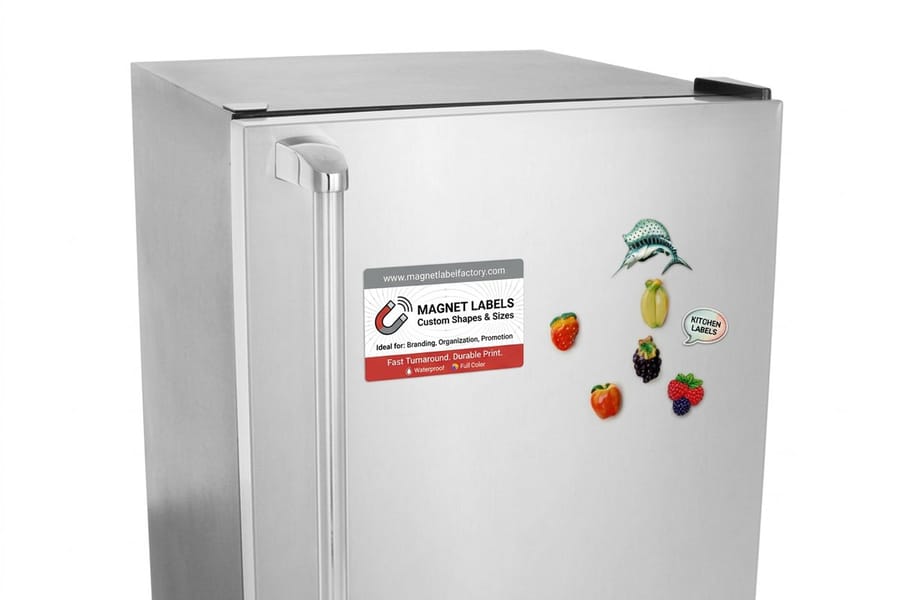
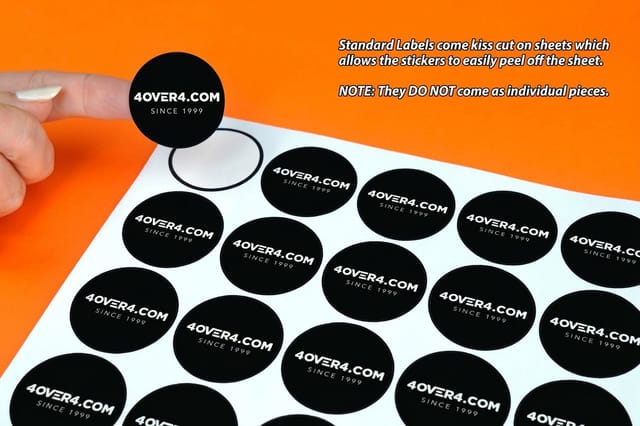
The rest of the print list around the bottle is worth setting up at the same time. Standard labels start at $23.88 and cover the bottle itself in the sizes above. Standard address labels start at $23.88 and handle case and carton marking for outbound stock, which sits in the address label printing range. For a wall dispenser or a metal refill cabinet, magnet labels start at $19.68 and come off cleanly when the station moves, which beats scraping adhesive off stainless steel.
One last thing to settle before you order: who signs off on the panel. We print exactly what you approve on the proof, and a regulated label is the wrong place to discover a missing warning after 5,000 pieces are in a box. If you are still deciding where to place the work, how to choose a label printing company lists the questions worth asking, and the bottle label range shows what the same materials look like on other products.
Wally explains sanitizer labels
Film beats paper, and the back panel is not yours to design
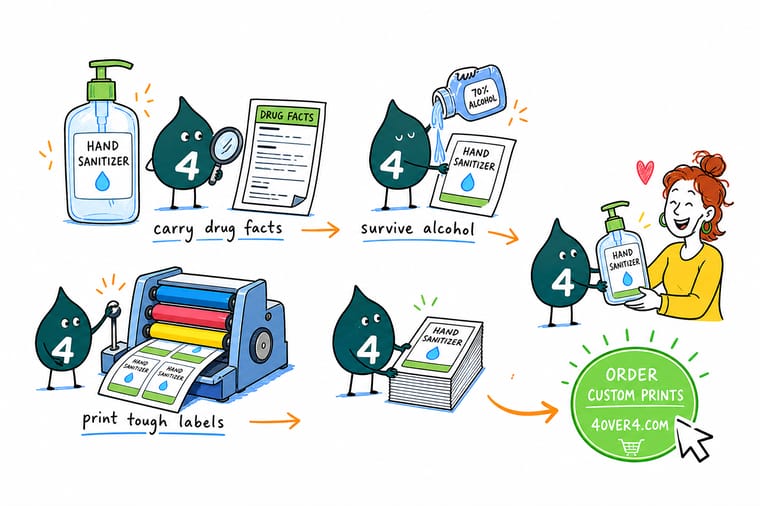
Wally squirts a pump bottle and watches the alcohol run down the side. On paper that drip lifts the ink and clouds the edge within a week. On film with a laminate over the print it beads and wipes off. Then he turns the bottle around, because the back is where the rules live: Active ingredient, Purpose, Uses, Warnings, Directions, Other information, Inactive ingredients, in that order, at 6 point or bigger. Wally measures the bottle before he draws anything, because circumference is diameter times 3.14 and a label that overlaps itself peels.
Configure custom labels →Specs and pricing
Label options, sizes, and starting prices
Standard labels start at 25 for $23.88 and ship in 3 business days. Shaped wine labels start at 25 for $10.99.


Print it
Order labels that hold up on a wet bottle
Explore more
Where to go next
By the numbers
Facestocks that shrug off alcohol
Common Questions
Your hand sanitizer label questions, answered
Does a hand sanitizer label need a Drug Facts panel?
Yes. FDA regulates alcohol based hand sanitizer as an over the counter drug product, not as a cosmetic, so the label carries a Drug Facts panel laid out to 21 CFR 201.66. The blocks run in a fixed order: Active ingredient, Purpose, Uses, Warnings, Directions, Other information, Inactive ingredients. The headings are bold, the panel is a single color on a contrasting background, and the body type is no smaller than 6 point. The front of the bottle separately needs the product identity, the alcohol percentage, and the net contents in both fluid ounces and milliliters.
What label material holds up to hand sanitizer?
A polypropylene film facestock, usually white BOPP, with a laminate or a UV coating over the printed side. Alcohol is a solvent, and it reaches the label two ways: the drip that runs down the bottle after a pump, and the wet hand that grabs the bottle. Film does not absorb it and a laminate keeps the ink from lifting under repeated wiping. Coated paper with a full laminate survives an occasional splash, but the cut edge stays exposed and eventually wicks, so paper belongs on the shipping carton rather than on the bottle.
Can I use a clear label on a sanitizer bottle?
You can, and clear film on a clear gel bottle looks expensive, but there is a catch that trips up a lot of first runs. The Drug Facts panel has to be legible in one color against a contrasting background, and black type printed on clear film sitting over a translucent gel is not legible. The fix is to flood a solid white block behind the panel area so the back of the label reads as black on white while the front keeps the no label look. Same rule applies to metallized and foil films.
What size label fits an 8 oz sanitizer bottle?
A typical 8 oz pump bottle is about 2 inches across, which gives a circumference near 6.3 inches, so a full wrap label lands around 6.1 by 3 inches once you subtract the gap. That is a starting point, not a spec. Two 8 oz bottles from two suppliers can differ by a quarter inch in diameter, which is enough to make a label overlap or leave a visible strip of bare plastic. Measure the bottle you actually bought with a strip of paper wrapped around it, then order.
How small can the Drug Facts type be?
Six point is the floor for the body text in a standard Drug Facts panel, with the headings larger and bold. FDA does allow a reduced format for small packages with 12 square inches or less of surface available for labeling, which covers most 1 oz and 2 oz sanitizer bottles, and lets you drop some of the barlines and tighten the layout. If the panel still will not fit and stay readable, the usual answers are an expanded content label with a peel back ply, or a carton around the bottle that carries the full panel.
Are the FDA temporary hand sanitizer policies from 2020 still in effect?
No. The temporary guidances that let distilleries and other non traditional manufacturers produce and label hand sanitizer were withdrawn effective December 31, 2021. If your artwork was copied from a bottle produced under those policies, or from a template downloaded in 2020, it is out of date. Have the panel reviewed against the current requirements before you commit to a print run, because the label is the cheapest part of the product to get wrong and the most expensive to reprint.
Get Started
25 standard labels cost $23.88, or 96 cents each
Pick your size off the bottle you actually bought, choose a film stock with a coating over the print, and we turn your approved artwork into labels that stay put through every pump.
Legal Disclaimer
Gold Standard guarantees apply to all standard orders placed through 4over4.com. Price match requires verifiable proof of a competitor's published price for an equivalent product with matching specifications and turnaround time. Satisfaction guarantee covers manufacturing defects and print quality issues. Contact support with order number and documentation. On-time delivery rate based on tracked orders 1999 to 2026. Individual results may vary based on shipping carrier performance.
