
Discount Cards Raise Money Because Local Businesses Fund the Offer


The mechanics of a discount card fundraiser, start to finish: how sponsors are signed, what belongs on the card, how to set the price, and how many to print the first year.
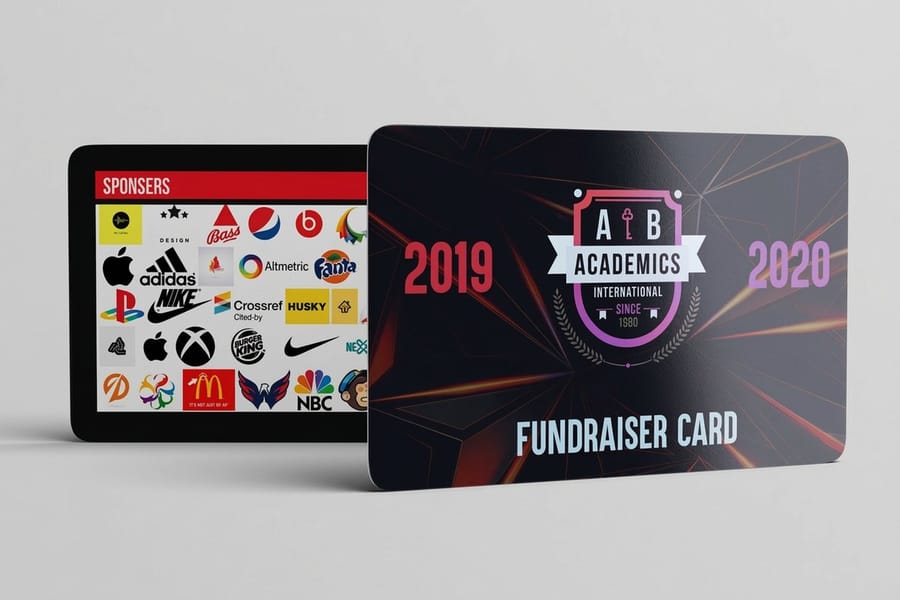
A discount fundraising card is a wallet card listing offers from local merchants, sold by a school or nonprofit at a fixed price. The merchants pay nothing: each one signs up to honor a stated discount until a printed expiration date, the buyer's money goes entirely to the group, and the group's only cost is the print bill. The first few sales cover printing and the rest is profit, so the two things that decide whether the fundraiser works are the quality of the offers on the back and the number of people willing to sell.
Quick answer
Merchants donate the offer, buyers pay the bill, the group keeps the rest
No sponsor writes a check. Each business signs an agreement to honor one stated discount for card holders until a printed end date, which costs them nothing until a customer walks in. The group prints the card, sells it hand to hand at $10 or $20, and covers the print bill out of the first handful of sales. Everything after that is profit with no wholesale cost and no split with a fundraising company. The card lives or dies on whether the offers on the back are things a household buys every month.
Where the Money Comes From, and Where It Goes
Three parties touch a discount card program, and only one of them ever writes a check.
The sponsor signs an agreement to honor a stated offer for everyone carrying a valid card until a printed end date. They pay nothing. What they give up is margin on visits they might not otherwise have had, and what they get is a year of their name in a few hundred wallets in their own neighborhood.
The group collects the sponsors, pays the print bill, and sells the cards. That print bill is the only real cost in the program, which is what makes the margin so unusual. There is no product to buy at wholesale and no split with a fundraising company.
The buyer pays for the card, and that is the entire revenue line. Divide the print total by the card price to find your break-even. An order at $226.11 against a $20 card is paid off by the first twelve sales, and every card after those twelve is money the group keeps whole.
The reason the model works is that the sponsor's contribution costs them nothing at the moment they agree to it. A shop owner who would decline a $200 ad in a program book will sign a 10 percent offer in five minutes, because the cost only lands if a customer actually walks in. Understand that and the sponsor pitch writes itself. You are offering advertising that is only paid for out of business you brought them.
The finished card is a wallet card, and the format is not negotiable if you want it used. Plastic discount cards print at 3.375 by 2.125 inches, the same footprint as a bank card, so it sits in the slot next to a debit card instead of getting folded into a pocket and lost.
Signing Sponsors Who Are Actually Worth Printing
The sponsor list is the product. Everything else on the card is packaging. A buyer scans the back, finds two offers they will use this month, and hands over the money. If they find none, no amount of card design saves the sale.
So sort candidates by purchase frequency, not by how much you like the business. Pizza, coffee, car wash, ice cream, haircuts, oil changes, dry cleaning and takeout all get bought on a repeating cycle. A furniture store, a roofer or a dentist is a once-every-few-years purchase, and their offer will sit on the card doing nothing but taking up type space that a frequent-use merchant could have filled.
Before you print anything, check what is already circulating. If two other schools in town ran the same card last fall and both listed the same three restaurants, you are the third ask that owner has heard this season and the buyer has seen those offers already. That is the moment to widen the radius or change the mix rather than push ahead.
Get every agreement in writing, and make it cover these six things:
- The exact offer wording, spelled the way it will be printed on the card.
- Whether it is one use per visit or unlimited for the life of the card.
- Whether it combines with the merchant's own coupons and promotions.
- The start date and the end date, matching the date you will print.
- A named contact at the business who will brief the counter staff.
- Written permission to print the logo, with a vector file supplied.
That last one causes more schedule slip than anything else on the list. Chasing usable logo files from ten small businesses takes longer than the printing does, so ask for the file in the first meeting rather than after the artwork is laid out. If several sponsor marks have to sit together on one panel, our guide to putting multiple businesses or logos on one card covers how to keep the layout readable at wallet size.
Be honest with your committee about what this costs. Not dollars, hours. Ten sponsors is roughly ten in-person visits plus the same number of follow-up calls, spread over a few weeks. A group that cannot staff that legwork will do better selling something off a shelf.
What Goes on the Card, and What It Should Be Printed On
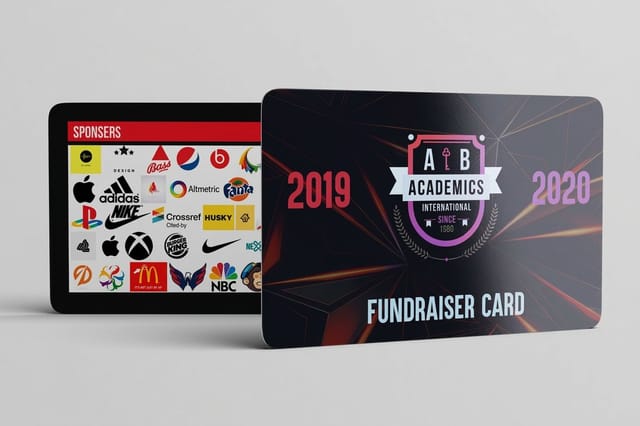
The front carries your organization, the card year and the expiration date. The back carries the sponsor list. Keep that split and the card reads correctly in the two seconds a cashier gives it.
Print the expiration date on the front, large enough to read without turning the card over. This is the detail groups skip and regret. Sponsors sign for a defined period, and if counter staff have no printed date to check, old cards keep getting honored, the merchant quietly stops accepting them, and next year's sign-up conversation opens with a complaint. A date on the front also gives you a clean reason to sell a new card every season.
On the back, give each sponsor one line: business name, the offer in plain words, and a location if the chain has more than one. Resist the urge to add terms under every entry. Put the shared terms once, in a single line at the bottom, and keep the offers themselves scannable.
Material is the other decision, and it follows how long the offers run.
| Material | How it survives a wallet | Best for | The trade-off |
|---|---|---|---|
| Plastic wallet card | Bends and springs back, keeps its printed surface, still legible after a year in a back pocket. | A twelve month program where sponsors need traffic all year. | Highest print cost of the three and the longest lead time. |
| Coated card stock | Corners soften within weeks, creases where it folds, ink scuffs against keys. | A short seasonal push, or a card that lives on a fridge rather than in a wallet. | Looks tired well before you go back to re-sign sponsors. |
| Laminated paper card | Holds up far better than bare stock until water reaches a cut edge, then the corners delaminate. | A middle option when plastic is outside the budget. | Adds a finishing pass, so the saving against plastic is smaller than it looks. |
Read the middle column first. If the expiration date on your card is twelve months out, the card has to physically last twelve months or the sponsors stop seeing the traffic they signed up for, and the second year of the program dies quietly. That is the whole argument for plastic fundraising cards over paper, and it is a durability argument rather than a prestige one.
One thing to leave out unless you truly need it: sequential card numbering. Numbering every card is variable data work, it adds cost and time, and most groups never use the numbers for anything. Skip it unless you are tracking cards back to individual sellers.
How Many to Print the First Year
Count sellers, not population. The quantity that matters is how many people have agreed to walk up to a neighbor and ask, multiplied by how many each one is asked to sell.
Work it like this. If 180 students each commit to five cards, that is 900, and you order 1,000. The extra hundred covers cards damaged in backpacks, replacements for the ones that go missing, and the handful you hand to each sponsor to keep at their own counter. Ordering against the size of the school or the length of the mailing list is how groups end up with four boxes in a closet.
Under-ordering is the more expensive mistake. A second run pays setup again on a small quantity, and it lands after the selling window has already cooled, so the cards arrive to a committee that has moved on. Rounding up to the next quantity break at the start costs less than reprinting almost every time.
On budget: plastic fundraising cards start at $226.11 at 4OVER4.COM, and ready made cards start at $5.00 when you need something in hand before the sponsor artwork clears approval. Take the total on your quote, divide by the run, and compare it against your card price. That per-card number is the only cost figure that matters to the committee.
Two supporting pieces are worth the small spend. Give volunteers something to hand a shop owner in the first meeting, and free business cards from 4OVER4.COM put a card in every canvasser's hand for nothing. Give each signed sponsor a small sign for the register too, because staff who can see the card art are far less likely to wave a buyer away, and counter cards are printed for exactly that spot. Browse the wallet-size stocks and finishes on the business card printing category, and if you also run an appointment-based service like a school clinic or a booster car wash, appointment cards use the same footprint and the same press.
When the campaign launches, the flyer that announces it does more work than most committees expect. Our roundup of postcard examples for small businesses has layouts worth borrowing for the take-home sheet.
Wally explains the discount card fundraiser
The shop signs an offer, the neighbor pays for the card
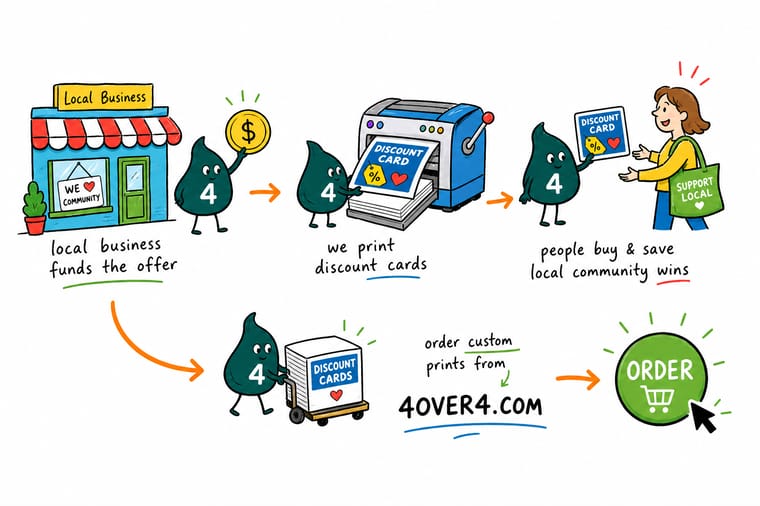
Wally walks into ten local shops and asks each one for one offer, not a donation. Nobody opens the register, so nine of them say yes. He prints the offers on the back of a wallet card, puts his group's name and an expiration date on the front, and the sellers take it door to door. The first dozen cards sold pay the printer. Every card after that is money the group keeps. The trick is picking sponsors people visit every month, because a discount on a new roof looks generous and sells nothing.
Order plastic fundraising cards →Specs and pricing
Card formats, quantities and starting prices
Compare the card options a fundraising committee actually chooses between, with live configuration choices and starting prices straight from the 4OVER4.COM configurator.



Print it
Print the card your sellers will carry
Explore more
Where to go next



By the numbers
Fundraising cards printed by a shop that has been here 25 years
Common Questions
Your discount card questions, answered
Do local businesses pay to be on a discount fundraising card?
Almost never. The standard arrangement is in kind: the merchant agrees to honor a stated discount for everyone holding a valid card, and the group prints the offer at no charge to the business. That is the reason this fundraiser is easy to sell to a shop owner. You are not asking for a donation out of the till, you are asking for repeat visits from families in the neighborhood. A few groups do charge a small sponsorship fee for premium placement on the front of the card, but adding a cash ask to the pitch slows the sign-up rate noticeably, and the sign-up rate is what determines whether the card is worth selling at all.
How much should we charge for the card?
Price it at a single bill, so $10 or $20, and let the offers justify the number. A buyer decides in about three seconds whether the list on the back is worth a twenty, so if you want to charge $20 the card needs at least two or three offers a household will genuinely use every month. If your sponsors are thinner than that, charge $10 and sell twice as many. Do not price on cost. Your print bill per card is small next to the face value, and the buyer is comparing the card against the discounts, not against paper.
How many sponsors should we put on one card?
Eight to twelve offers is the practical ceiling on a wallet card at 3.375 by 2.125 inches. Below eight the card looks thin and buyers hesitate. Above twelve the type drops to a size older buyers cannot read at arm's length, and the card stops being scannable at the point of sale, which is exactly when it needs to be read. If you sign more sponsors than fit, print two versions or move the overflow to a companion piece rather than shrinking the type.
Plastic or paper for a fundraising card?
Plastic if the offers run for a full year, paper if the campaign closes in a couple of months. A plastic wallet card bends and springs back, keeps its printed surface, and is still legible after twelve months in a back pocket, which matters because a card the buyer throws away in week six stops driving traffic to the sponsors who signed. Paper is cheaper up front and perfectly fine for a short seasonal push. Plastic fundraising cards start at $226.11 at 4OVER4.COM, and ready made cards start at $5.00 if you need something to hand out while the artwork is still being approved.
Does the card need an expiration date printed on it?
Yes, and it should be on the front where a cashier sees it, not buried in the terms on the back. Sponsors sign an agreement for a defined period. Without a printed date, counter staff have no way to refuse an old card, the merchant quietly stops honoring it, and your next sign-up conversation starts with a complaint instead of a yes. Print the month and year, make it match every signed agreement, and change it on the reprint.
What quantity should a first-time group order?
Work from your sellers. If 180 students each agree to sell five cards, that is 900, and you order 1,000 because the extra covers damaged cards, replacements, and the handful you give to sponsors for their own counters. Do not order against the size of the school or the mailing list. Cards are sold hand to hand by people who have to ask, and the number of people willing to ask is the real constraint. Under-ordering is the more expensive mistake, because a second run pays setup again for a small quantity.
Is a discount card the same thing as a gift card?
No. A gift card carries stored value that the holder has already paid the merchant for. A discount card carries no value at all until it is presented, and the money paid for it went to the nonprofit rather than the business. That difference is why the program does not create a balance anyone owes. Put the terms in writing with each merchant anyway, listing the exact offer, whether it stacks with other promotions, and the end date, and check your own state rules before you print if the offers involve alcohol or regulated services.
Get Started
Sponsors signed? Get the cards printed.
Send us the sponsor panel and the expiration date, pick plastic for a full year or paper for a seasonal push, and we print a wallet card your sellers can carry from the first weekend.
Legal Disclaimer
Gold Standard guarantees apply to all standard orders placed through 4over4.com. Price match requires verifiable proof of a competitor's published price for an equivalent product with matching specifications and turnaround time. Satisfaction guarantee covers manufacturing defects and print quality issues. Contact support with order number and documentation. On-time delivery rate based on tracked orders 1999 to 2026. Individual results may vary based on shipping carrier performance.
