
How to Choose an A-Frame Sidewalk Sign That Survives Your Curb


Tobias is our voice for cutting, binding and large format, built from the knowledge of our production team, with over 20 years in printing.
Three panel sizes, four frame materials, and one measurement that decides most of it. Pick the A-frame that fits your sidewalk and stays upright on it.
Choose an A-frame in this order: the frame footprint your sidewalk can spare, the panel size the message needs to be read at, then the face material. The range offers three panel sizes only, 24 by 18, 22 by 28 and 24 by 36 inches, and the frame that holds them is always larger than the panel. A black steel frame holds a windy corner better than molded plastic; a full 24 by 36 inch face on a light frame is the combination that blows over. Every price buys a complete unit, frame plus a printed sign for each side, from $65.90. For the boards alone, read a-frame sign boards explained, sizes that fit and what they cost.
Quick answer
Frame footprint first, panel size second, face material last
The frame is always bigger than the panel, and on a narrow sidewalk that footprint is the real constraint. Measure the clear walking width in front of your door, then work backwards: a 24 by 36 inch face needs a frame around 25 by 45 inches open, a 24 by 18 inch face fits a frame under 32 inches wide. Wind decides the material, because a big face on a light plastic frame is a sail. The face material is the last call, and it is only about whether the message changes daily or has to read after dark. Whichever size you pick, every panel prints on 4mm corrugated plastic with 4 business days of standard production, and you upload a PDF, JPG or PNG at the full panel size, 24 by 18, 22 by 28 or 24 by 36 inches.
Start With the Corner, Then Pick the Sign
Go outside and measure the clear width of the sidewalk in front of your door, then stand there at the time of day you most want to be seen. Those two observations settle most of the decision before you look at a single product page.
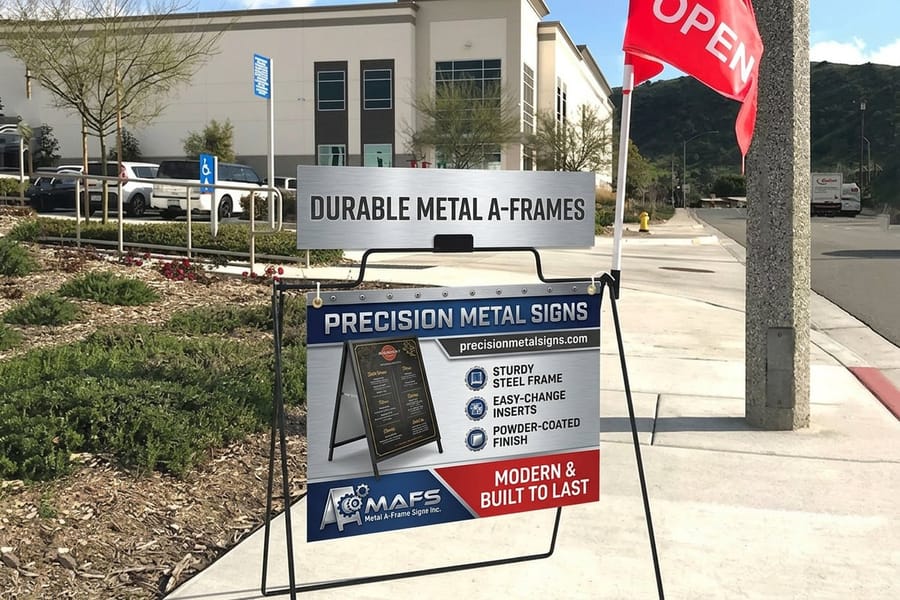
Width first, because the frame footprint is the thing that has to fit, and it is always larger than the panel. A Signicade holding a 24 by 36 inch face stands 25 by 45 inches open. A metal A-frame holding a 24 by 18 inch panel is 27.75 by 31.5 inches. On a generous forecourt the difference is academic. On a narrow city sidewalk with a clear-path rule, it is the whole decision.
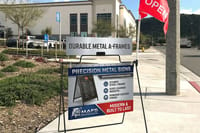
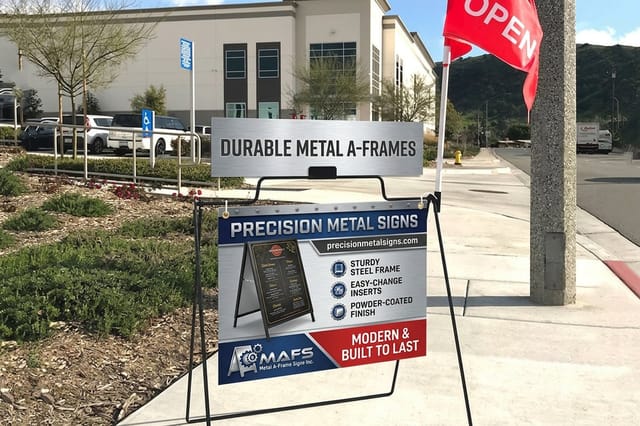
Then look at the wind. Corners that funnel air, seafront streets, and anywhere with a gap between buildings will find the weak spot in a light frame carrying a big face. A 24 by 36 inch panel is a sail, and a molded plastic frame under it will travel. That is the case for the metal A-frame sign, whose black steel frame is the heaviest base in the range and starts at $65.90 for the frame plus a printed panel.
Last, decide who carries it. A sidewalk sign goes out at open and comes in at close, every day, usually by whoever is on shift. Plastic frames like the Simpo A-frame are the light ones, and if the frame is heavy enough that staff start leaving it out overnight, you have bought a theft risk rather than a sign. The Simpo A-frame story shows how light that frame is to carry. Browse the range against your own measurements on A-frame signs printing.
Three Panel Sizes, and What Each One Reads At
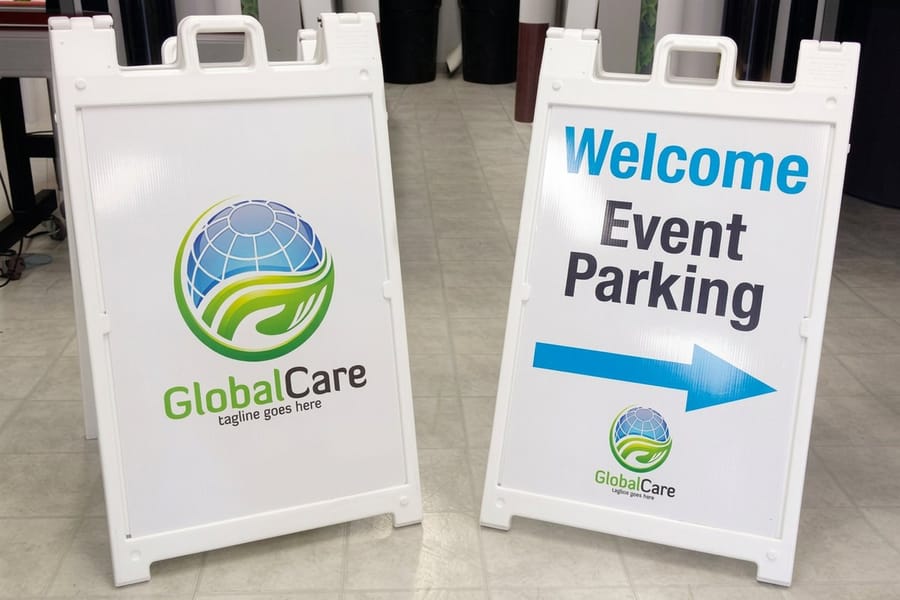
The whole A-frame range runs on three panel sizes. Once you know which one you need, the list of frames shortens to two or three products and the choice gets easy.
| Frame | Panel size | Frame footprint, open | From |
|---|---|---|---|
| Metal A-frame | 24" x 18" | 27.75" x 31.5", black steel | $65.90 |
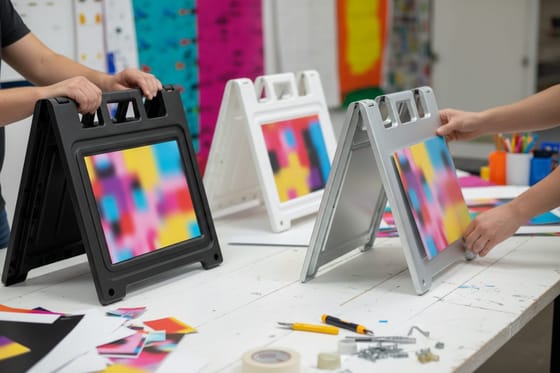
| Quik Sign | 24" x 18" | 31.7" x 26", white plastic | $163.67 |
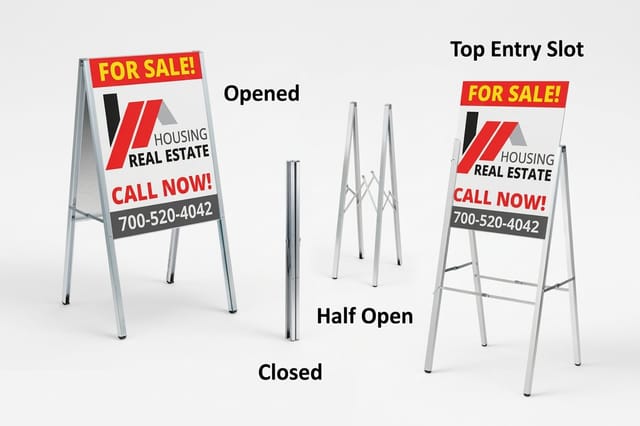
| Aluminum A-frame | 22" x 28" or 24" x 36" | 26" x 44.5", satin aluminum | $146.07 |
| Simpo A-frame | 22" x 28" | 24.375" x 37.25", white plastic | $163.67 |
| Signicade | 24" x 36" | 25" x 45", white plastic | $182.32 |
| Signicade Deluxe | 24" x 36" | 27" x 46.125", white plastic | $196.60 |
| Panel size | Frames that hold it | Signs per unit | Upload at |
|---|---|---|---|
| 24" x 18" | Metal A-frame, Quik Sign | One double sided sign on the metal frame, two on the Quik Sign | 24 x 18 in |
| 22" x 28" | Aluminum A-frame, Simpo | Two, same art or a different design each | 22 x 28 in |
| 24" x 36" | Signicade, Signicade Deluxe, aluminum A-frame | Two, same art or a different design each | 24 x 36 in |
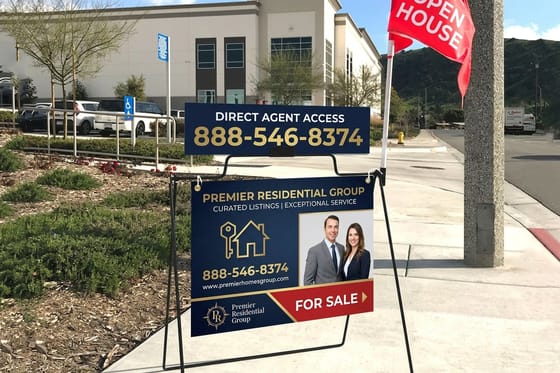
All panels are 4mm corrugated plastic with 4 business days of standard production. Read the second and third columns of the first table together. The 24 by 36 inch panel is the one people picture when they say sidewalk sign, and it is the only size that carries a headline plus two lines of detail and still reads from across a parking lot. The 24 by 18 inch panel is a landscape format that suits a short message and an arrow, which is why the metal frame ships with real estate add-ons: a 24 by 6 inch rider, an open house pennant, and top-corner grommets.
The 22 by 28 inch panel in the middle is the underrated one. It reads from well down the block, it catches noticeably less wind than a full sheet, and on the aluminum frame it costs less than either plastic frame holding a bigger face. If you want the sizes laid out beyond the A-frame range, our A-frame sign sizes guide covers the dimensions in detail, and yard signs vs A-frames vs banners is the one to read if you are not yet sure a stand is the right format at all.
Coroplast, Reflective Vinyl or Dry Erase
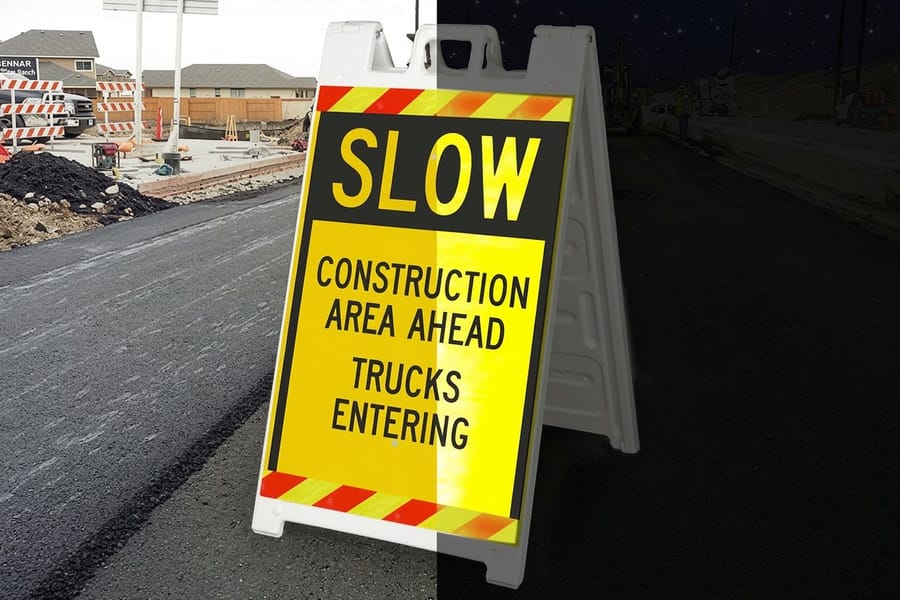
Frame chosen, the next decision is the face, and it is really a question about how often the message changes and whether anyone needs to read it after dark.
The default is 4mm corrugated plastic, the same rigid weatherproof stock behind coroplast yard signs. It is the right call for a message that stays put for a season: your name, what you sell, the arrow to the door. It shrugs off rain, it survives being knocked over, and reprinting a pair of panels later costs a fraction of a new kit. Our guide to what coroplast signs are covers how the flutes behave outdoors.
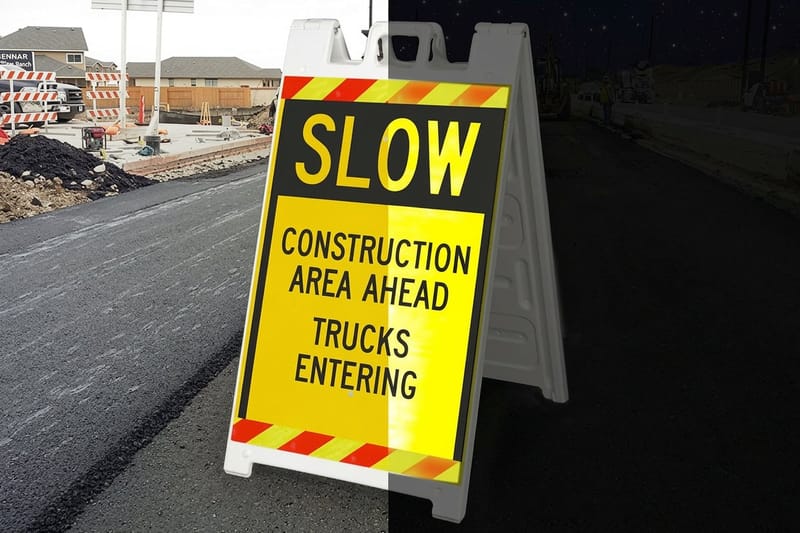
Reflective vinyl changes one thing and it matters more than people expect. The reflective Signicade A-frame prints on adhesive vinyl with a reflective film over it, so headlights and streetlight bounce straight back and the sign still works at 9pm. It starts at $163.67 and slides to $144.99 each on a set of 10. The reflective Signicade A-frame story shows one on the street, and the Reflective Signicade A Frame video walks through the build. If you close before dusk, skip it and put the money into panel size instead.
Dry erase lamination is the third option, and the only one that lets you change the message without a reprint. The dry erase Signicade holds fixed branding in the printed vinyl and leaves a wipeable area for today's special, from $185.63, or about $152.67 each on a set of five. The dry erase Signicade story shows one in use. The trade-off is honest: marker handwriting will never look like print, so keep the logo and the phone number in the printed layer and only hand-write the thing that genuinely changes.
What a Complete Unit Costs and Where the Money Goes
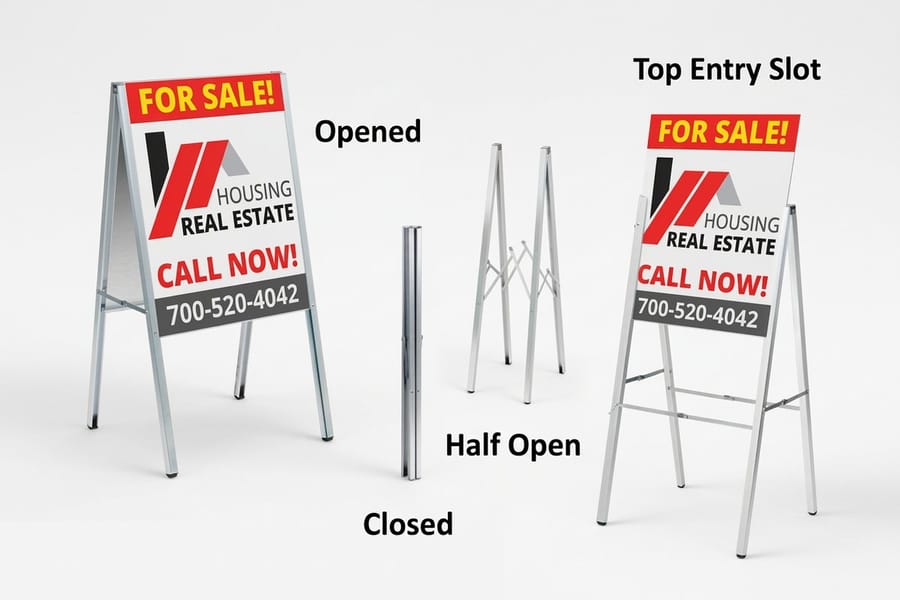
Every price in this guide buys a complete unit, meaning the frame and the printed faces together, one per side. That is worth saying plainly because the sign trade often quotes a panel and lets you discover the stand is separate.
The spread is wider at the bottom than the top. A metal A-frame at 24 by 18 inches starts at $65.90 and falls to roughly $54 each at ten, which makes it the cheapest way to put a run of signs along an open house route or across several storefronts. Once you reach the 24 by 36 inch panel, the whole group sits between $163.67 and $196.60, so at full size you are no longer paying for size. You are paying for the face and the frame material.
Turnaround is 4 business days as standard across the range, with 3-day, 2-day and Next Day rush available, and every job gets a free online proof before it runs. Supply print-ready PDF, JPG or PNG artwork at full panel size. If you are building the file yourself, start from a correctly sized layout in the blank template library, and keep the headline high on the panel: the bottom few inches of an A-frame sit below knee height and get blocked by passing feet.
One last sanity check before you order. If the sign will live on grass rather than concrete, a stake is cheaper and steadier than a stand, and yard signs printing is the right aisle. If you are outfitting a whole frontage rather than one door, how to make custom signs walks through mixing formats without the artwork drifting apart, and Signicade vs aluminum vs plastic settles the frame argument for good.
Wally picks an A-frame
Measure the sidewalk before you pick the panel
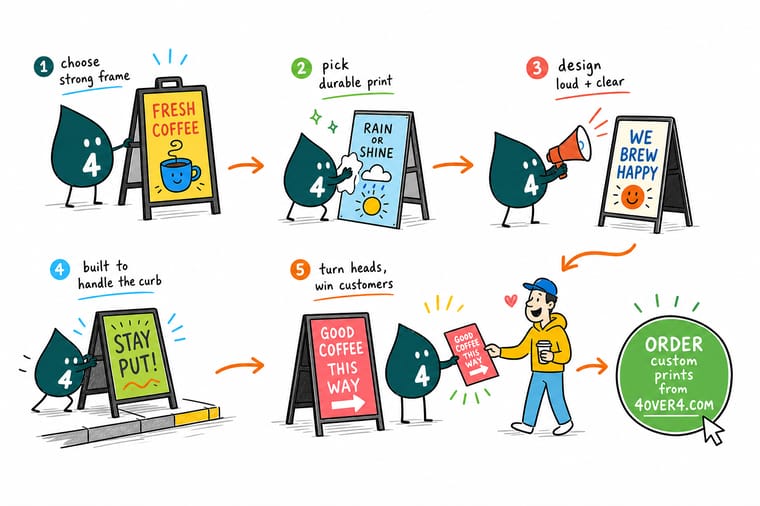
Wally does it in the same order every time. He measures the clear width of the sidewalk, because the open frame is always wider than the printed panel. He stands where the customer walks and checks how far away the message has to work from. He notices whether the corner funnels wind, and if it does he reaches for the steel frame instead of the plastic one. Only then does he choose the face: coroplast if the message stays, reflective vinyl if it has to read after dark, dry erase if the special changes every morning.
Shop A-frame sidewalk signs →
Specs and pricing
Frames, panel sizes and starting prices side by side
The three frames that cover most sidewalks, with live configuration choices and starting prices straight from the 4OVER4.COM configurator. The Signicade holds a 24 by 36 inch panel in a 25 by 45 inch white plastic frame from $182.32. The aluminum A-frame takes 22 by 28 or 24 by 36 inch panels in a 26 by 44.5 inch satin silver frame from $146.07. The metal A-frame holds a 24 by 18 inch panel in a 27.75 by 31.5 inch black steel frame from $65.90. All three run 4 business days of production.

Print it
Put a sign on the curb that works both directions
Every unit prints a face for each side, with the same art on both or a different design on each: what you sell for people walking towards you, where the entrance is for people walking away. The metal frame adds a 24 by 6 inch rider or an open house pennant as options.


Explore more
Where to go next
Compare Signicade, aluminum and plastic frames on weight and price, see every panel and frame dimension in one table, decide between a stake and a stand, and learn how coroplast weathers, then shop A-frame and sidewalk signs.


By the numbers
The sidewalk sign side of our catalog
Common Questions
Your A-frame questions, answered
What size is a standard A-frame sidewalk sign?
The panel most people mean by standard is 24 by 36 inches, which is what a Signicade, a Signicade Deluxe and a plastic A-frame all hold. The frame around it is bigger than the panel: a Signicade stands 25 by 45 inches open, the Deluxe 27 by 46.125 inches. The other two sizes in the range are 22 by 28 inches, used by the Simpo and the aluminum frame, and 24 by 18 inches, used by the metal frame and the Quik Sign. Measure the clear width of your sidewalk first, because the frame footprint is what has to fit, not the panel.
Will an A-frame sign blow over on a windy corner?
A light plastic frame with a full 24 by 36 inch face is the combination that goes over, because that panel is a sail. Two things help. Drop the panel size, so a 22 by 28 or a 24 by 18 catches less wind, and move to a metal frame, which is heavier at the base and holds its ground better than a molded plastic one. If your corner is genuinely exposed, a metal A-frame at 24 by 18 inches is the honest answer even though it reads from closer.
Do I need a permit to put a sign on the sidewalk?
Often, and it varies by city rather than by sign. Most municipalities regulate portable signs on public sidewalks, and the common conditions are a minimum clear walking path, a limit of one sign per business frontage, placement within a set distance of your own door, and removal at closing. Some cities require a permit and a fee, some only enforce the clearance. Check your local sign ordinance before you order, because the rule that usually bites is the clear-path width, and that is what decides your maximum frame footprint.
Which A-frame still works after dark?
The reflective Signicade. Its 24 by 36 inch face is printed on adhesive vinyl with a reflective film over it, so it shows full color in daylight and bounces headlights and streetlight back once the sun goes. It starts at $163.67 and drops to $144.99 each on a set of 10. A standard coroplast panel is not reflective, so after dark it only reads as far as your own storefront lighting throws.
Can I change the message without buying a new sign?
That is exactly what the dry erase Signicade is for. The printed vinyl carries your fixed branding, and the dry erase lamination over it takes a marker for today's message and wipes clean for tomorrow. It starts at $185.63, with a set of five working out to about $152.67 each. If the message changes seasonally rather than daily, printing fresh coroplast panels is cheaper than the lamination upgrade.
Can I print a different design on each side?
Yes, on every frame in the range. Each order includes a printed face for both sides, and you choose the same art on both or a different design on each. That matters more than it sounds on a one-way street or a corner: one face can say what you sell to people walking towards you, the other can say where the entrance is to people walking away. All of them print front only on the panel, with a free online proof before the job runs.
Get Started
Order a metal A-frame from $65.90
Pick the frame that fits your walkway, choose a 24 by 18, 22 by 28 or 24 by 36 inch panel, and we print both faces and ship the complete unit.
Legal Disclaimer
Gold Standard guarantees apply to all standard orders placed through 4over4.com. Price match requires verifiable proof of a competitor's published price for an equivalent product with matching specifications and turnaround time. Satisfaction guarantee covers manufacturing defects and print quality issues. Contact support with order number and documentation.
