
How to Design Thank You Postcards People Keep


Nadia is our customer education voice, built from the knowledge of our production team, with over 20 years in printing.
A thank you postcard is a note and a mail piece at once. Split the back one way, keep the size inside the postcard rate, pick a stock a pen can bite, and write something specific.
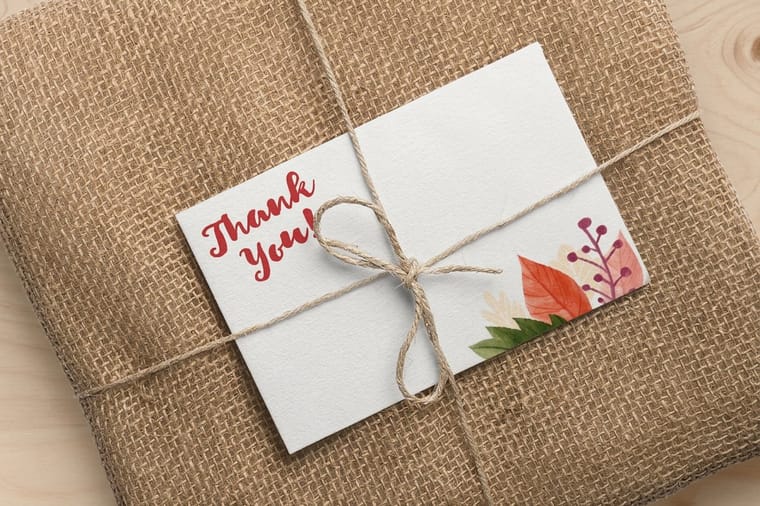
Design a thank you postcard at 4 by 6 inches, split the back down the middle with your message on the left and the address block and stamp on the right, and keep the bottom 5/8 inch of the address side completely empty for the USPS barcode. Print the front coated and the back uncoated so a pen actually writes on it, build the file with 0.125 inches of bleed at 300 dpi in CMYK, and keep the message to about forty words that name the person and the exact thing they did.
Quick answer
Two halves on the back, one clear band at the bottom
A thank you postcard is designed back first. The message sits left of center, the address block and stamp own the right half, and the lowest 5/8 inch stays empty so the barcode has somewhere to go. Hold the card to 4 by 6 inches and 0.016 inches thick and it mails at the USPS postcard rate. Coat the front for looks, leave the back uncoated so ink from a pen sinks in instead of smearing, and spend the forty words you have on one specific thing the person did.
Lay Out the Back as Two Halves
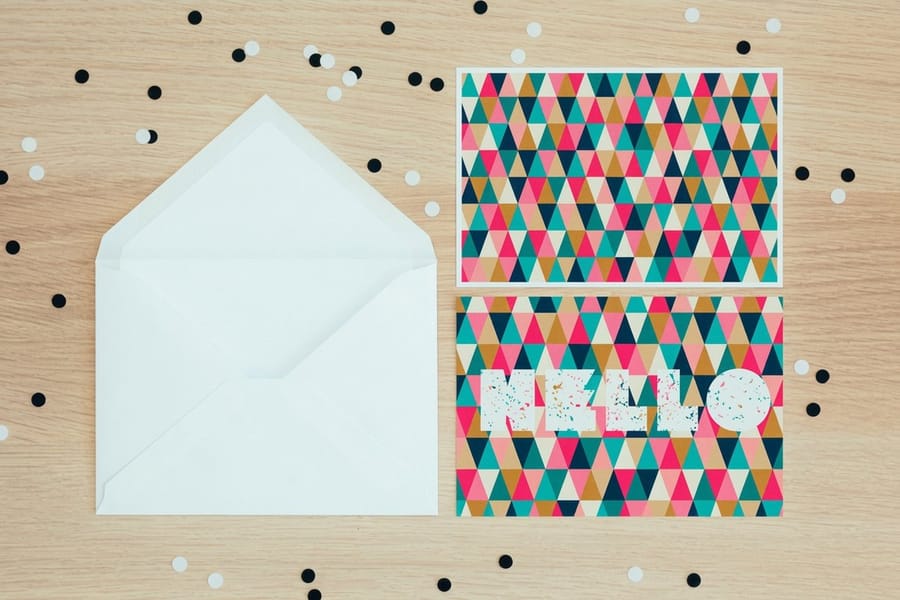
Every rule about thank you postcard design comes from one fact: the back of the card has to hold a personal message and a machine readable address at the same time. Draw a line down the middle and the rest follows.
The left half is yours. Put the printed opening line there if you are using one, then leave four or five lines of clear space for handwriting. Ruled lines printed at 20 percent gray help people write straight without competing with the ink, and they keep the message from creeping into the address zone.
The right half belongs to the post office. Address block roughly in the vertical middle, stamp or indicia box in the top corner, and nothing else. The part people forget is the bottom: the lowest 5/8 inch across the entire width is reserved for the barcode, so a background tint that runs to the bottom edge, a logo tucked in the corner, or a return address dropped too low all sit in the wrong place. Our postcard address side layout guide maps the zone exactly.
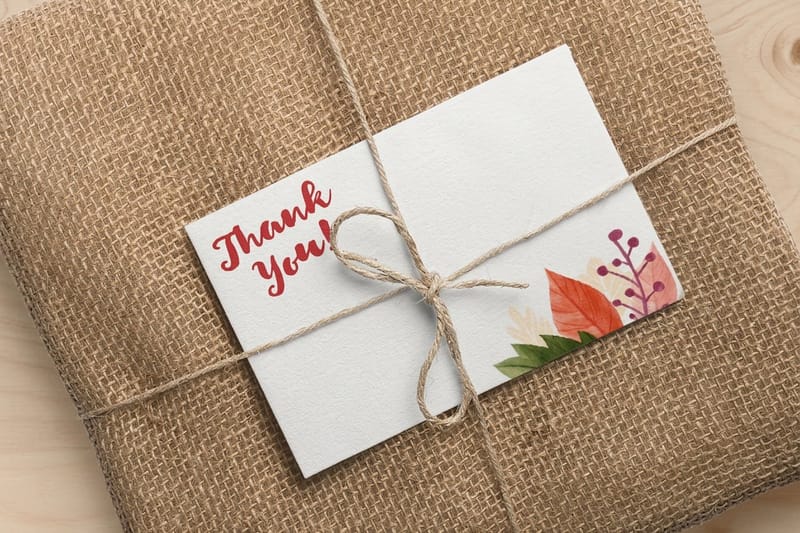
The front is the easy half. One image, the words "thank you" or nothing at all, and your logo small in a corner. A front that already contains a headline, a phone number and a website is a promotional postcard wearing a thank you as a costume, and people read it that way.
Size, and the 4.25 by 6 Inch Cutoff That Sets Your Postage
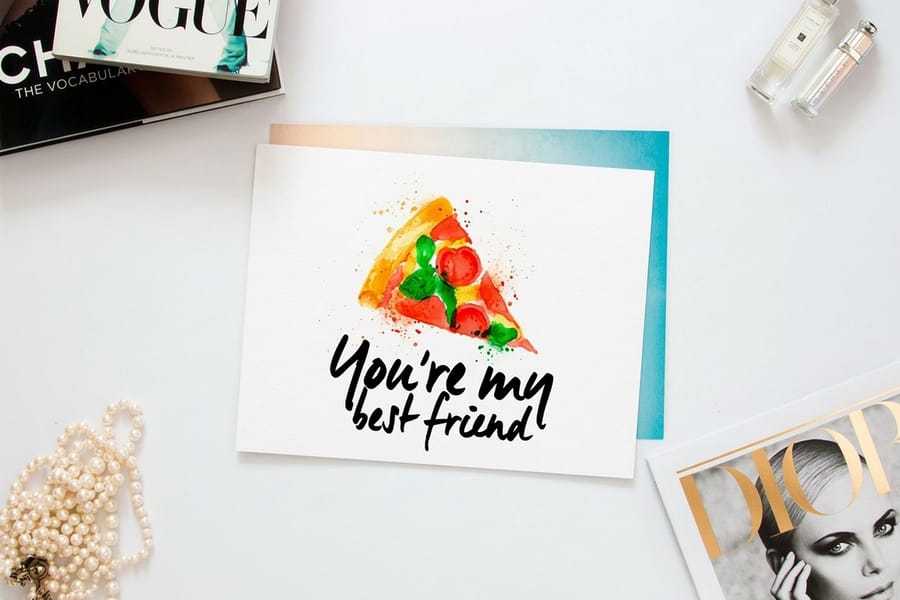
Postage, not printing, is what makes size an expensive decision. USPS charges the postcard rate only for a rectangular card between 3.5 by 5 inches and 4.25 by 6 inches, with a thickness between 0.007 and 0.016 inches. Cross any of those limits and the card mails as a letter.
| Size | Postage tier | Handwriting room | Best for |
|---|---|---|---|
| 4 x 6 in | Postcard rate | Four to five short lines beside the address. | The default. Personal notes sent one at a time or in weekly batches. |
| 5 x 7 in | Letter rate | Six to eight lines, or a printed note plus a signature. | Client thank yous where the card is meant to be propped on a desk. |
| 6 x 9 in | Letter rate, and flat rate above 6.125 in tall | A full note with room for a photo on the back. | Year end thank yous and anything doubling as a mailer. |
| 6 x 11 in | Flat rate | More than a thank you needs. | Skip it here. That size is a marketing piece, not a note. |
Thickness catches people out more often than dimensions. A 16pt card measures close to 0.016 inches, which is right at the ceiling, and adding lamination pushes it over. If you want the heft of a thick card and the cheap rate, order 14pt uncoated rather than 16pt laminated. That rules out die cut laminated postcards at the postcard rate, because they print on 16 point silk or gloss laminated stock. The postage by size and rate tier guide works through the arithmetic, and our postcard printing range lists which stocks hit which thickness.
Stock and Coating Decide Whether a Pen Works
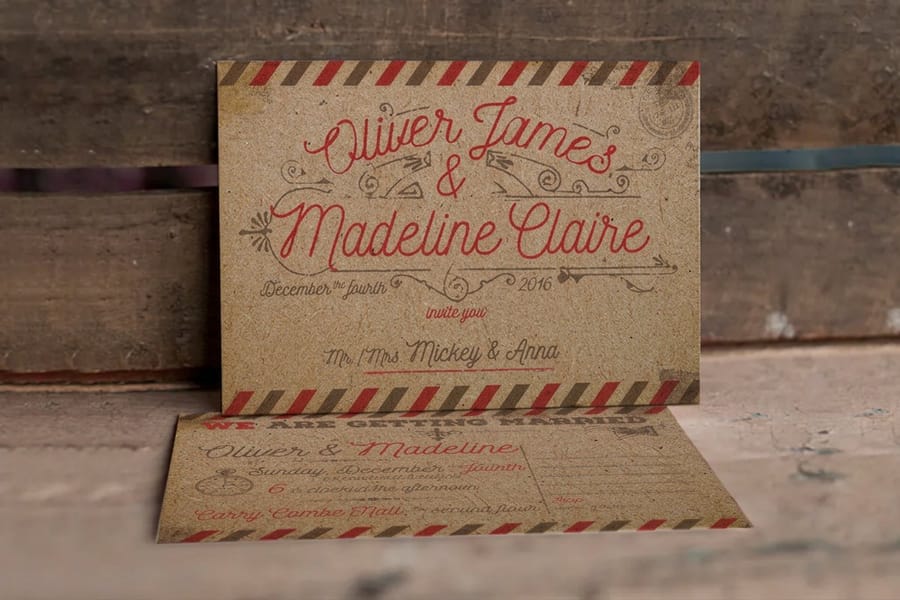
This is the trade-off that ruins the most thank you postcard runs, and it never shows up until the boxes arrive. A glossy card photographs beautifully and repels ink. Ballpoint skids across an aqueous or UV coated surface, gel pen sits wet on top of it, and a stack signed in the morning offsets onto itself by lunchtime.
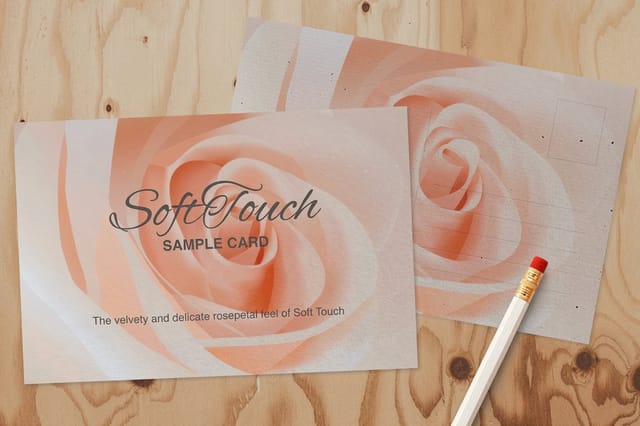
So pick the coating per side. Gloss or soft touch on the front where the artwork lives, uncoated on the back where the message goes, and the card behaves in both jobs. Soft touch postcards start at $29.44 and give the front a suede feel that makes people hold the card longer, which is exactly what you want from a note. Leave the reverse uncoated and it still takes a signature.
If you want the whole card writable, uncoated is the honest choice. Kraft postcards start at $28.49 and are uncoated through, so pen, pencil and a rubber stamp all bite. The catch is color: uncoated brown stock soaks ink, so photographs come out flatter and darker than the screen shows, and pale tints shift warm. Design for it. Line art, single color marks and heavy type look intentional on kraft. A full bleed photo does not.
On weight, 14pt is the everyday postcard stock and 16pt is noticeably more rigid in the hand once the card is bigger than 4 by 6. Our postcard paper and cardstock guide compares the stocks side by side, and the blank template library has correctly sized files with the bleed and safety already drawn. To feel each postcard paper before you order, request a sample pack first.
What to Write, and Why Specificity Is the Whole Job
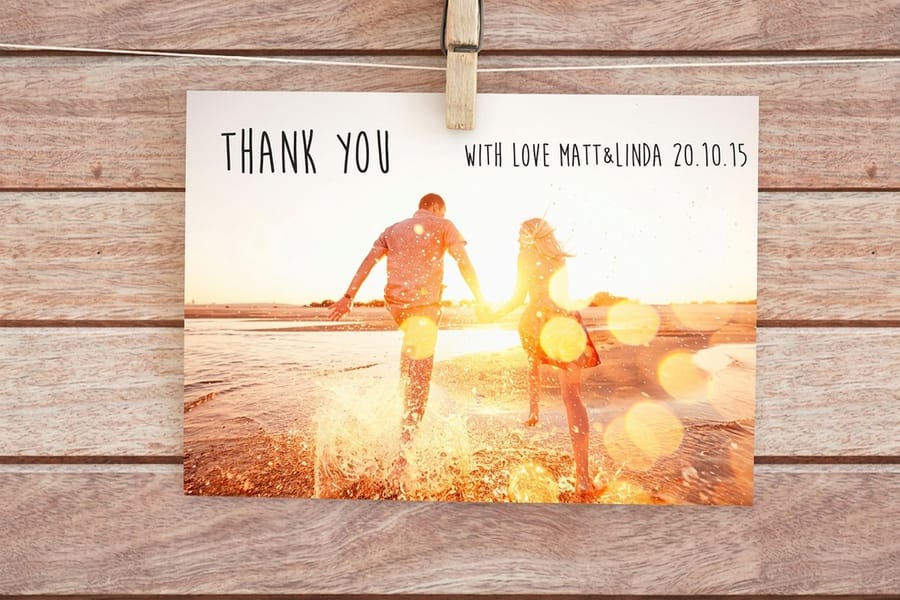
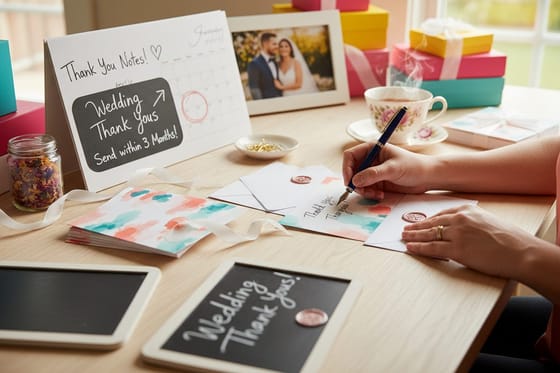
A thank you postcard has room for about forty words. That constraint is a gift, because it forces out everything that was never worth reading. Name the person, name the exact thing, say what it made possible, sign it.
| Occasion | The specific detail to name | Send it within |
|---|---|---|
| First order | What they bought and who packed it, by name. | Ship it in the box, or mail within 48 hours. |
| Referral | Who they sent, and what came of it. | Two days, while the introduction is warm. |
| Interview | One thing from the conversation only you two discussed. | 24 hours, before the decision meeting. |
| Repeat client | The job number or project name, and the year you started working together. | Any time. Unprompted lands harder than seasonal. |
| Event or donation | What the contribution paid for, in plain numbers. | A week, with the total once you have it. |
Two habits raise the response every time. Sign in real ink, not a scanned signature set in the artwork, because a printed signature is visible from across a desk and it tells the reader the card was addressed to a list. And do not attach an offer. The moment a thank you carries a discount code it becomes a promotion, and the goodwill you were buying evaporates.
For longer notes, or anything where the message should not be readable by whoever collects the post, move to a folded format. Folded thank you cards start at $38.22 and give you an inside panel plus an envelope. Our guide to writing a thank you card covers the longer wording, and when to send thank you cards handles the timing by occasion. If you are still choosing between the two shapes, folded versus flat postcards compares them directly.
Wally explains the thank you postcard
Message left, address right, bottom band empty
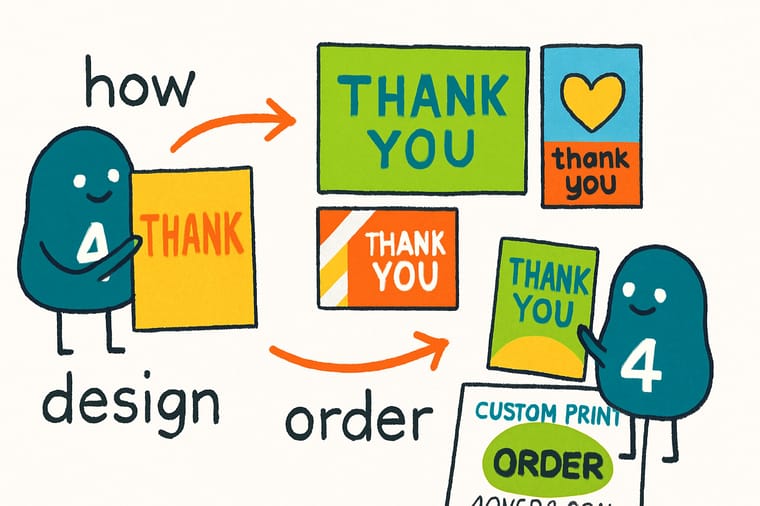
Wally turns the card over first, because the back is where the design actually happens. He rules a line down the middle: message and signature on the left, address and stamp on the right, and the bottom strip left bare so the barcode has room. Then he checks two things. Is it 4 by 6 inches and thin enough to keep the postcard rate, and is the back uncoated so a ballpoint bites instead of skidding. Front coated, back bare, forty honest words, signed in real ink.
Print flat thank you cards →
Specs and pricing
Sizes, stocks, and starting prices
Flat thank you cards come in 4.25 by 5.5, 5 by 7 and 6 by 6 inches from 25 cards, standard postcards in 14 sizes from a 2.5 inch square to 6 by 11 inches from 50, and folded cards close to 4.25 by 5.5, 5 by 7 or 6 by 6 inches, all on 14pt gloss cover as standard with uncoated stocks for writing on. Compare them side by side, with live configuration choices and starting prices straight from the 4OVER4.COM configurator.


Print it
Order thank you postcards that get kept
Order the flat thank you card when it goes out in an envelope, the standard postcard at 4 by 6 inches on an uncoated back when it mails at the postcard rate, and soft touch postcards on 32pt to 80pt board when you hand it over in person.
%22%2F%3E%3Ccircle%20cx%3D%2249%22%20cy%3D%2220%22%20r%3D%2224%22%20fill%3D%22%232dd4bf%22%20opacity%3D%220.15%22%2F%3E%3Ccircle%20cx%3D%2254%22%20cy%3D%2227%22%20r%3D%22-3%22%20fill%3D%22%232dd4bf%22%20opacity%3D%220.1%22%2F%3E%3Crect%20x%3D%2279%22%20y%3D%22-9%22%20width%3D%2234%22%20height%3D%2220%22%20rx%3D%224%22%20fill%3D%22%232dd4bf%22%20opacity%3D%220.08%22%20transform%3D%22rotate(44%2080%2030)%22%2F%3E%3C%2Fsvg%3E)
Explore more
Where to go next
The thank you card guide lays out the folded, enveloped version panel by panel, and the address side guide marks the barcode clear zone. The timing guide covers when to send one by occasion, and the postage guide shows which sizes keep the postcard rate.
By the numbers
Postcards and cards printed at 4OVER4
Common Questions
Your thank you postcard questions, answered
What size should a thank you postcard be?
Start at 4 by 6 inches. It is the largest card that still qualifies for the USPS postcard rate, which caps at 4.25 by 6 inches and 0.016 inches thick, and it leaves enough room for four or five handwritten lines beside the address block. Go to 5 by 7 or 6 by 9 when the piece is doing marketing work and you want the extra surface, and budget for letter or flat postage instead. Standard postcards start at $16.48 at 4OVER4.COM and oversized postcards start at $51.62, so the card itself is rarely the expensive part of the decision.
Can you handwrite on a printed thank you postcard?
Only if the side you are writing on is uncoated. Aqueous gloss, UV coating and soft touch lamination all sit on top of the fiber, so ballpoint ink beads up and gel ink stays wet long enough to smear against the next card in the stack. The usual setup is a coated front where the artwork lives and an uncoated back where the message goes. If you want the whole card to feel warm under a pen, kraft postcards are uncoated through and take pencil, ballpoint and stamp ink cleanly.
What do you write on a thank you postcard?
Three moves and then stop. Name the person, name the exact thing they did, and say what it made possible. "Thank you for the referral to Marisa, we printed her whole opening set last week" does more than a paragraph about valuing relationships. Skip the sales ask entirely. A thank you that carries a coupon reads as a promotion with a polite opening, and people file it accordingly.
Should I send a thank you postcard or a folded thank you card?
Postcards win on speed and on being read, because there is no envelope to open and the message is visible the moment it is picked up. Folded cards win on privacy and formality, which matters for condolences, wedding thank yous, and any note that names money or a contract. Flat thank you cards start at $19.77 and folded thank you cards start at $38.22, so the folded option roughly doubles the print cost before you add envelopes and the extra postage.
How much bleed and margin does a thank you postcard need?
Build the file 0.125 inches larger than the finished size on every edge for bleed, and keep type and logos at least 0.125 inches inside the trim, 0.25 inches if the design has a border. Borders are the classic trap: a thin frame that sits too close to the trim line looks visibly uneven on one side once the stack is cut, because cutting tolerance shifts by a fraction across a lift. Set artwork at 300 dpi in CMYK and start from the correct size in our blank template library.
How soon after the event should the postcard go out?
Inside a week, and within 48 hours for anything transactional like a first order or an interview. The point of a thank you is that it arrives while the person still remembers the moment. If you are mailing a batch, print the run in advance with the artwork and the closing line, leave the message area blank, and handwrite and mail in small daily batches rather than holding the whole stack for one big send.
Get Started
Order 50 soft touch postcards from $29.44
Pick the size that protects your postage, leave the back uncoated so a pen bites, and we print thank you cards and postcards that arrive ready to sign.
Legal Disclaimer
Gold Standard guarantees apply to all standard orders placed through 4over4.com. Price match requires verifiable proof of a competitor's published price for an equivalent product with matching specifications and turnaround time. Satisfaction guarantee covers manufacturing defects and print quality issues. Contact support with order number and documentation.
