
How to Mail Brochures


Fold your brochure for letter-rate postage, meet the USPS address and sealing rules, then pick the mailing class that fits your run. Here is the routine that gets every piece delivered without wasting a dollar.
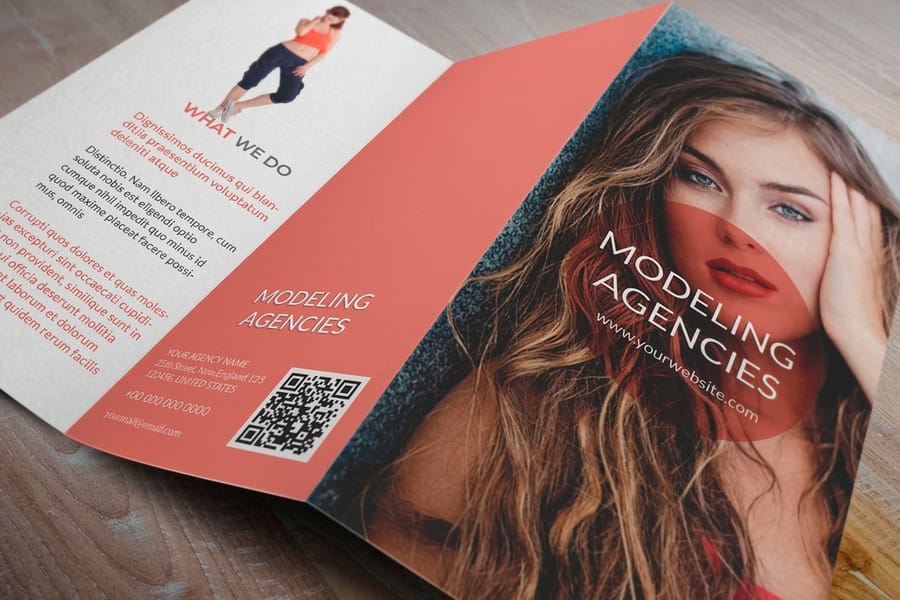
To mail brochures, fold to a mailable size first: a tri-fold finishing near 3.67 by 8.5 inches keeps you at cheaper letter-rate postage. Meet the USPS rules for the address panel, barcode clearance, and sealing tabs, then choose a class: First-Class for small runs, or USPS Marketing Mail and EDDM once you clear 200 pieces. Build a tracking code into the design so you can measure the response.
Quick tips
Quick tips for mailing your brochures
Fold for letter rate before you design so postage stays cheap, then meet the USPS rules for the address panel, barcode zone, and sealing tabs. Match the mailing class to your run: First-Class for small batches, and USPS Marketing Mail or EDDM once you clear 200 pieces. Clean your list through NCOA and add a tracking code to every piece. 4OVER4.COM customers who prep this way get campaigns delivered on time and on budget.
Watch it printed
See standard brochures on the press, in 153 seconds
Why mailing brochures the right way matters

Brochures are one of the most effective direct mail pieces you can send. They are tangible, informative, and give you far more real estate than a postcard. But printing a great brochure is only half the job. If you do not mail it correctly, it ends up lost, damaged, or returned, and every dollar you spent on print goes with it.
Learning how to mail brochures the right way saves you money and gets your message into the right hands. The short version: choose the right fold, meet USPS size requirements, pick between Every Door Direct Mail (EDDM) or a targeted list, and prep your files correctly. 4OVER4.COM has helped 150,000+ businesses print and mail brochures that actually get opened.
This guide covers everything from USPS regulations and postage costs to folding styles and mailing list strategy. Whether you are sending 200 brochures to a neighborhood or 20,000 across a region, the steps are here. Browse the brochure showcase for real examples, and if you keep your own print gear sharp, our guide on how to clean rubber stamps is worth a look too.
USPS brochure mailing regulations at a glance
The brochure mailing regulations that decide your postage come down to three measurements and a tab. A folded brochure mails at the cheaper letter rate only while the finished piece stays inside 6.125 inches in height, 11.5 inches in length and 0.25 inches in thickness. Break any one of those limits and USPS reclassifies the piece as a flat, and you pay the higher flat rate on every piece in the drop.
| Spec | Letter rate | Flat rate |
|---|---|---|
| Maximum height | 6.125 inches | anything taller than 6.125 inches |
| Maximum length | 11.5 inches | anything longer than 11.5 inches |
| Maximum thickness | 0.25 inches | anything thicker than 0.25 inches |
| Shape | rectangular, longer than it is tall, even thickness across every panel | rectangular, oversized, still flexible |
| Typical mailable size | 8.5 by 11 inches tri-folded to about 3.67 by 8.5 inches | 8.5 by 11 or 8.5 by 14 inches mailed unfolded |
| Tabs on a folded self mailer | 1 tab on the top edge of the open flap, 2 tabs on heavier stocks | 2 tabs, placed to suit the fold |
| Minimum stock for a self mailer | 80lb cover | 80lb cover |
| Minimum volume for USPS Marketing Mail | 200 pieces or 50 pounds | 200 pieces or 50 pounds |
| Permit | none for stamps or a meter, Marketing Mail permit at around 275 dollars a year for bulk, none for EDDM Retail | same rules by class |
Two habits keep a mailing out of trouble. Fold a printed sample and measure the finished piece with a ruler rather than trusting the flat artwork size, because a heavy stock folded three times gains thickness fast and 0.25 inches disappears sooner than people expect. Then check tab placement against the USPS Quick Service Guide for your fold before the run: a tab in the wrong spot, or an open edge with no tab at all, gets the brochure torn on the sorting equipment or surcharged at acceptance. If the piece is going out as a self-mailer with no envelope, print it on at least 80lb cover and keep one clear address panel free of artwork.
Pick the right brochure size and fold for mailing
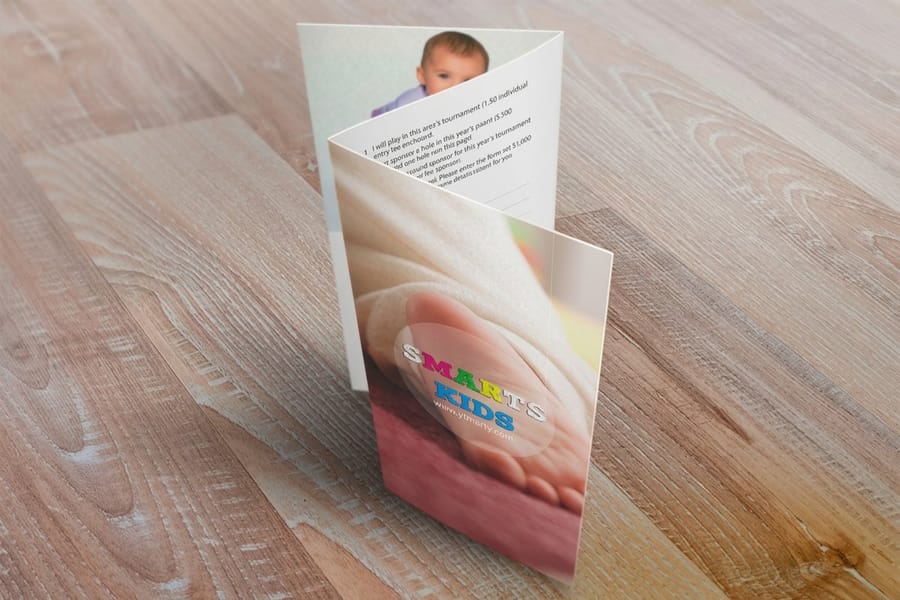
Your brochure's size and fold directly affect postage rates. USPS classifies mail by dimensions and weight, so this decision matters before you even think about design. The most common mailable brochure sizes are 8.5 by 11 inches (letter fold or tri-fold) and 8.5 by 14 inches (gate fold or accordion fold). Both fit standard letter-size requirements when folded properly.
A tri-fold brochure folded to roughly 3.67 by 8.5 inches qualifies as a letter. That is important because letter-rate postage is cheaper than flat-rate postage. If your finished piece exceeds 6.125 inches in height, 11.5 inches in length, or 0.25 inches in thickness, USPS bumps it to flat rate, and that costs more per piece.
Not sure which fold works best? Our guide on how to fold a brochure breaks down every option with visuals. For most direct mail campaigns, the classic tri-fold keeps costs low and looks professional.
Mailing a catalog or a booklet rather than a folded sheet
A catalog breaks the letter rules on thickness long before it breaks them on height or length. Once the finished piece is thicker than 0.25 inches, USPS stops treating it as a letter and mails it as a flat, and flats cost more per piece in every class.
What changes when you cross that line:
- The class still applies. First-Class, USPS Marketing Mail and EDDM all carry flats, so the 200 piece minimum and the presort rules work the same way. You pay the flat price instead of the letter price.
- Sealing changes. A bound catalog needs no tabs on a stitched spine, but a loose or saddle stitched piece with an open edge still needs tabs or wafer seals.
- The address panel does not change. Delivery address in the lower right read zone, return address upper left, and the bottom 5/8 inch clear for the barcode.
Print a sample, fold or bind it, and measure the finished thickness with a ruler before you price the drop.
Understand the USPS brochure mailing regulations that set your postage
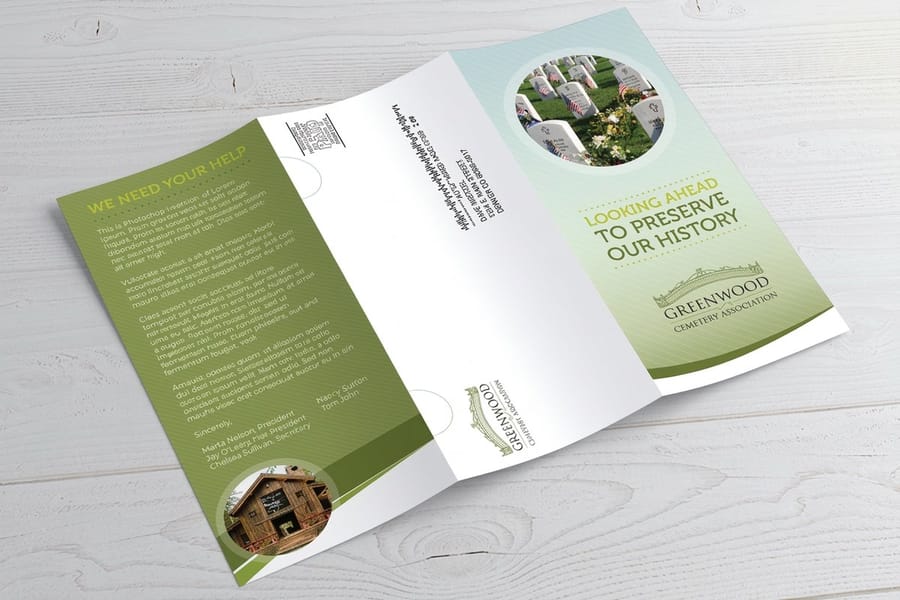
USPS has specific rules for mailing brochures, and missing even one can delay your entire campaign. These are requirements, not suggestions. Ignore them and your brochures get returned or destroyed in the sorting machines. Here is what you need to get right.
- Address placement: The delivery address must appear on the lower-right portion of the address side, inside a defined read zone that is clear of graphics and text.
- Return address: Required in the upper-left corner of the address panel.
- Barcode clearance: Keep the bottom 5/8 inch of the address side completely clear for the postal barcode.
- Tab or seal requirements: If your brochure is not in an envelope, you need wafer seals or tabs to keep it closed during processing. USPS requires at least one tab on the open edge for letter-size pieces.
- Paper weight: Pieces under 3.5 ounces qualify for First-Class letter rates. Go heavier and you pay more.
If you are weighing envelope options instead of a self-mailer, our guide on how to make envelopes covers the DIY approach, or you can order custom envelopes that match your branding.
Choose your mailing method

You have three main options for getting brochures into mailboxes, and each one fits a different budget and campaign goal.
First-Class Mail is the simplest route. You put stamps on each brochure (or use a postage meter) and drop them at the post office. Current rates for a standard letter are around 0.73 dollars per piece. It is fast, typically 1 to 3 business days, but expensive at volume. It works best for small batches under 200 pieces.
USPS Marketing Mail (formerly Bulk Mail) drops your per-piece cost sharply. Rates start around 0.22 to 0.35 dollars per piece depending on how you sort and prepare the mailing. The catch is that you need a minimum of 200 pieces (or 50 pounds), a USPS Marketing Mail permit, and mail presorted by ZIP code. Delivery takes 5 to 14 business days.
Every Door Direct Mail (EDDM) is perfect when you want to blanket a neighborhood without buying a mailing list. You pick carrier routes on the USPS website and every address on those routes gets your brochure. Rates start around 0.23 dollars per piece with no permit needed. You bundle by route and drop off at the post office. Visit the guide hub for more on direct mail strategy.
Permit imprint, postage meter or stamps: how you actually pay for the postage. The class decides the rate, the payment method decides the labor.
- Permit imprint. This is the printed indicia in the corner where a stamp would sit, and it is what nearly every bulk brochure drop uses. You open a USPS Marketing Mail permit, pay the annual fee of around 275 dollars plus a one-time mailing fee, and USPS draws the postage from your account when the mailing is deposited. It qualifies you for the presorted 0.22 to 0.35 dollar rates, and it only earns back the fee once you are past the 200 piece minimum and mailing more than once, but it takes stamping and metering off the job completely and the indicia can be printed with the brochure.
- Postage meter. Right for the business mailing a few hundred pieces a month at First-Class rates. You print postage per piece at a small discount off the 0.73 dollar retail rate, with no permit, no presort and no minimum, so a short run can go out the same afternoon. The trade-off is the meter rental and the handling time, which stops making sense at volume.
- Stamps. Best for small drops under 200 pieces and for lists where the piece should not look like bulk mail. A real stamp on a self-mailer reads personal, which is worth the 0.73 dollars per piece on a short, high-value list, and it needs no permit and no account.
- EDDM Retail. Sits outside all three. No permit, no meter, no mailing list: you bundle by carrier route and pay at the counter at around 0.23 dollars per piece.
How much does it cost to print and mail brochures?
How much do brochures cost from start to mailbox? Your total spend has two parts: printing and postage. On the printing side, cost depends on paper stock, quantity, and finish. A standard tri-fold brochure on 100lb gloss text might run 0.08 to 0.25 dollars per piece at volume. Heavier stocks like 100lb cover or specialty finishes push that higher. Order custom brochures from 4OVER4.COM to see exact pricing for your specs.
On the postage side, here is a rough comparison for 1,000 brochures:
- First-Class Mail: around 730 dollars (at 0.73 dollars per piece).
- USPS Marketing Mail: around 220 to 350 dollars (presorted rates).
- EDDM: around 230 dollars (at 0.23 dollars per piece, no list cost).
So for 1,000 brochures, your total campaign cost (print plus postage) could range from roughly 300 dollars with EDDM to over 900 dollars with First-Class. The smartest move for most businesses is Marketing Mail or EDDM. The savings add up fast.
Build or buy your mailing list
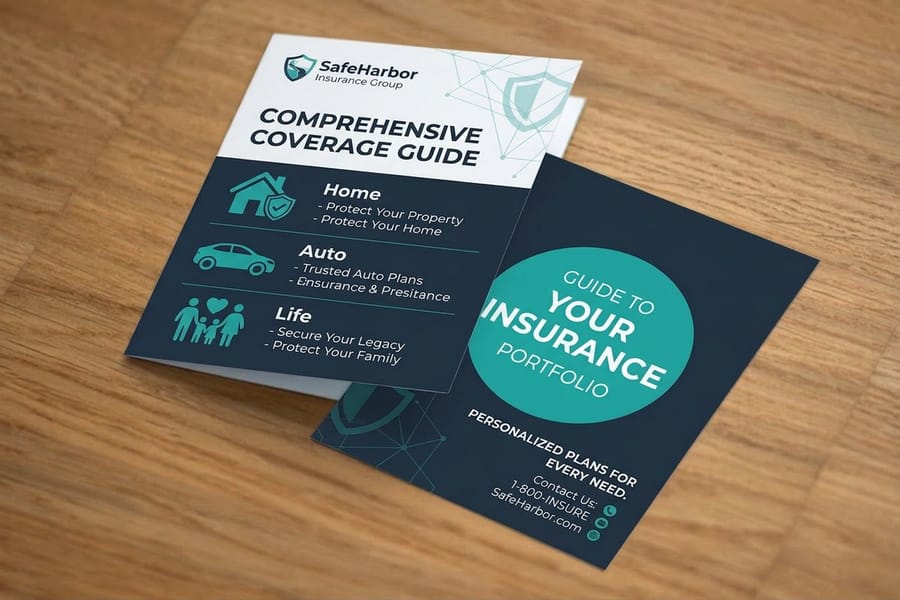
Unless you are using EDDM, you need addresses, and you have two paths here.
Build your own list from existing customers, leads, event signups, and website contacts. This is free and highly targeted. People who already know your brand are more likely to respond. Keep your list clean by removing duplicates, fixing formatting, and verifying addresses through the USPS National Change of Address (NCOA) database.
Buy a targeted list from a mailing list provider. You can filter by demographics, geography, income, homeownership, and more. Expect to pay 0.03 to 0.15 dollars per name depending on how specific your targeting gets. A good list makes or breaks a campaign. Cheap lists with bad data waste your entire print and postage budget.
If you are running complementary campaigns, you might pair brochures with other printed materials. Learn how to make flyers for a lighter-weight alternative, or explore custom magnets for a leave-behind that literally sticks around.
Prepare your brochures for the mail stream
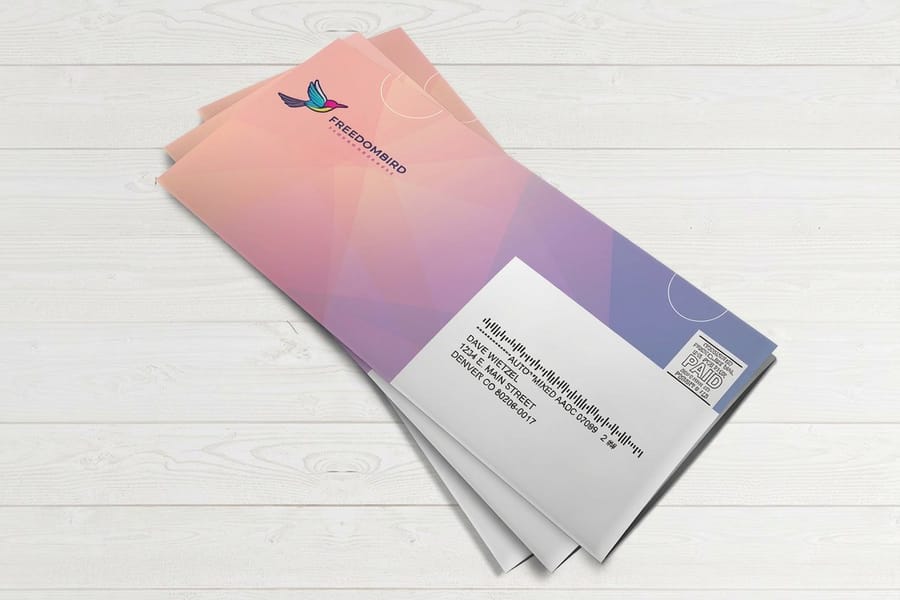
Once your brochures are printed and your list is ready, prep work begins. This is where most first-timers trip up.
Addressing: For Marketing Mail, you print addresses directly on the brochure panel or use adhesive labels. Inkjet addressing is cleaner and more professional. Format addresses to USPS standards, meaning all caps, no punctuation, and ZIP+4 when possible. Leave that panel clear of artwork at the design stage, because a background image behind the address block is the most common reason a piece comes back rejected.
Tabbing: Self-mailers (brochures without envelopes) need tabs or wafer seals. For a standard tri-fold, place one tab on the top edge of the open flap. For heavier stocks, two tabs are recommended. USPS has specific tab placement rules based on the fold type, so check their Quick Service Guide for exact specs.
Sorting and bundling: Marketing Mail must be presorted by ZIP code. Bundle pieces facing the same direction, secure with rubber bands or trays, and attach facing slips. If that sounds like a lot of work, many print shops, including 4OVER4.COM direct mail brochure services, handle sorting, tabbing, and delivery to the post office for you. Browse the showcase to see how other businesses designed their mailable brochures for real campaigns.
If you would rather have the fold, the tabs and the address panel handled in one place, our mailable brochures for direct mail are set up for the letter-rate sizes above, and standard custom brochures run the same folds on stocks from 100lb gloss text up to 100lb cover if you are prepping the drop yourself.
Track your results and improve
Do not just mail brochures and hope for the best. Track what happens after they land.
Use unique phone numbers, custom URLs, or a code from our free QR code generator on each brochure so you can measure response rates. The Direct Marketing Association reports that direct mail response rates average around 4.4 percent for house lists and 2.9 percent for prospect lists, far higher than email's typical 0.6 percent.
Test different versions. Send half your list a tri-fold and the other half a bi-fold. Change the headline. Swap the offer. Track which version drives more calls or website visits. Direct mail is measurable when you build tracking into the design from the start, and pairing brochures with invitations printing gives you a multi-touch push that lifts response even further.
Mistakes that derail brochure mailings
Even experienced marketers make these errors when figuring out how to mail brochures. Avoid them and you save time, money, and frustration.
- Skipping the address panel in design. Designers forget to leave space for the mailing address, barcode zone, and return address. Build the address panel into your layout from day one.
- Wrong paper weight for self-mailers. Paper that is too thin gets destroyed in USPS sorting machines. Use at least 80lb cover stock for unprotected self-mailers.
- No wafer seals or tabs. USPS rejects unsealed self-mailers, so do not skip this step.
- Dirty mailing lists. Bad addresses mean wasted postage. Run your list through NCOA validation before every mailing.
- Ignoring postage class requirements. Sending 500 pieces at First-Class rates when Marketing Mail would cut costs by 60 percent just throws money away.
4OVER4.COM prints brochures on stocks built to survive the mail stream. Pair that with proper prep and your pieces arrive looking sharp.
Wally explains brochure mailing
Fold it right and USPS does the rest
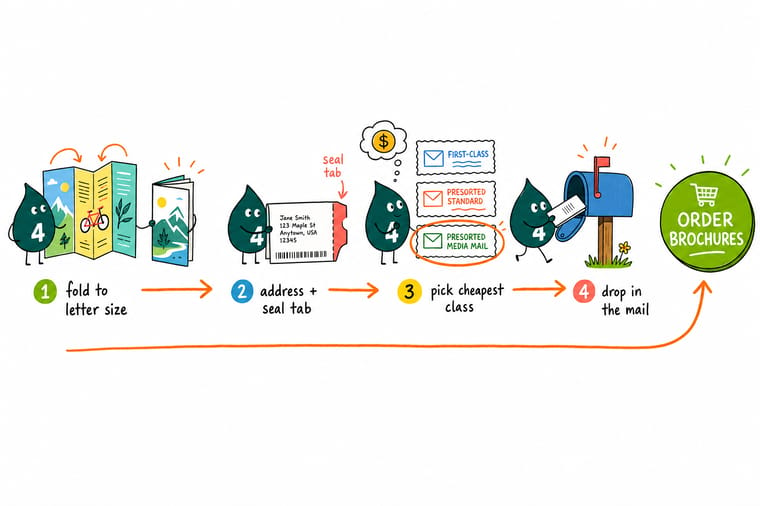
Wally treats every brochure like a tiny billboard on the move: fold it to letter size, leave a clean address panel, and USPS carries it for pennies. Skip a tab or oversize the fold and the machines eat your budget. Pick the class that matches your run, add a tracking code, and let 4OVER4 print brochures built to survive the mail stream and land looking sharp.
Order brochures →Specs and pricing
Brochure specs and pricing for direct mail
When you are ready to print, here is what standard brochures and made-to-order direct mail brochures give you at 4OVER4.COM, with live specs and price-per-unit straight from the configurator.


| Quantity | Price Per Unit | Total |
|---|---|---|
| 50 | $1.14 | $57.11 |
| 100 | 82.4¢ | $82.38 |
| 200 | 53.3¢ | $106.55 |
| 300 | 41.0¢ | $123.02 |
| 400 | 34.9¢ | $139.49 |
| 500 | 31.2¢ | $155.97 |
| 600 | 26.7¢ | $160.36 |
| 700 | 23.5¢ | $164.75 |
| Quantity | Price Per Unit | Total |
|---|---|---|
| 500 | 47.7¢ | $238.73 |
| 600 | 41.1¢ | $246.31 |
| 700 | 36.3¢ | $253.88 |
| 800 | 32.7¢ | $261.47 |
| 900 | 29.9¢ | $269.05 |
| 1,000 | 27.7¢ | $276.63 |
| 2,000 | 17.3¢ | $346.10 |
| 3,000 | 13.9¢ | $415.57 |
Print it
Best brochure products for direct mail campaigns
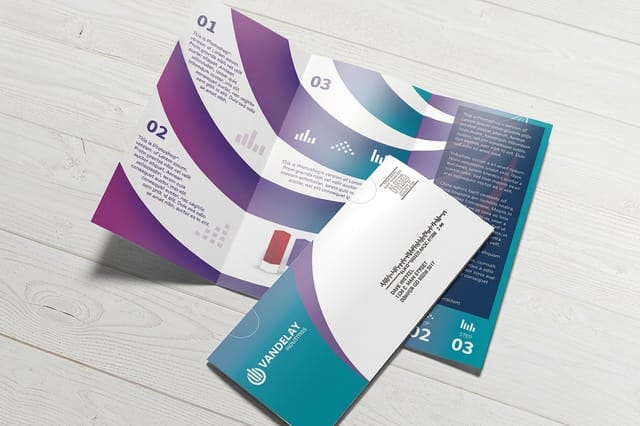
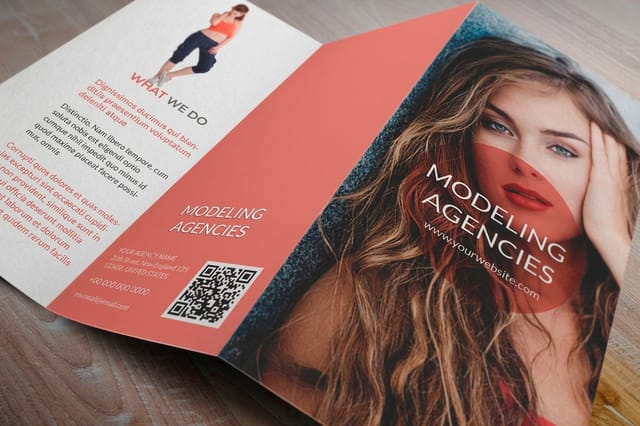
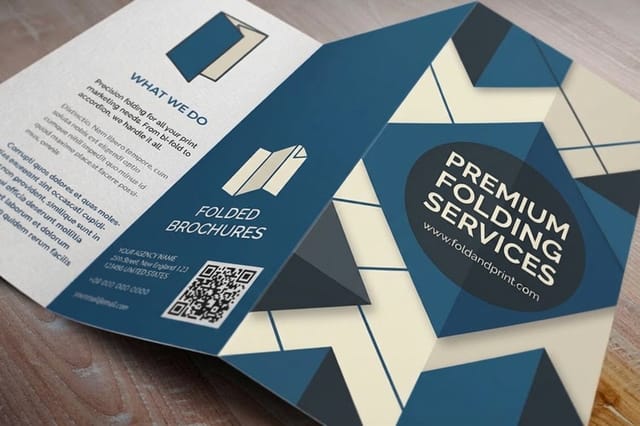
Direct mail brochures come with addressing and mailing services included, so you skip the sorting headaches. Standard brochures work when you want to handle distribution yourself, and folded brochures give you every mailable fold in one product.
See it in use
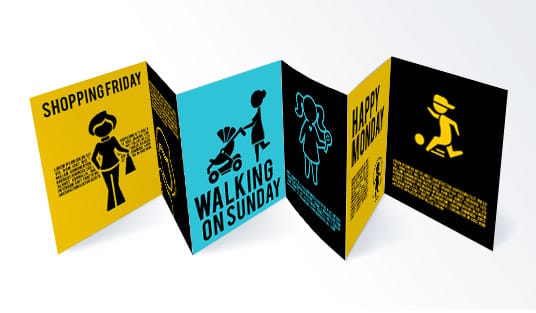
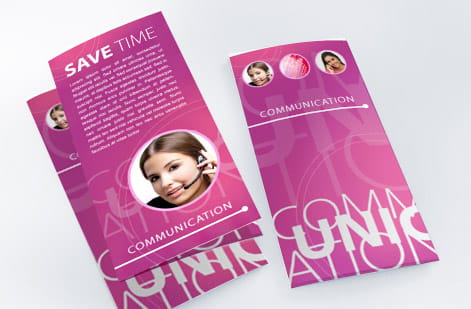
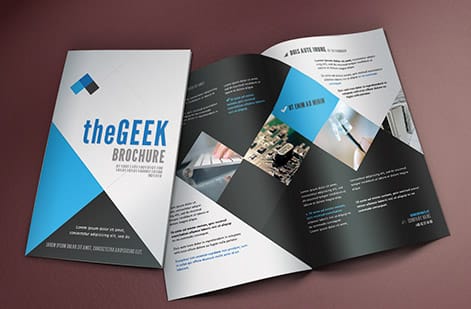
Brochures customers printed and mailed




Explore more
Where to go next


By the numbers
What a mailed brochure run draws on
Common Questions
Common questions about mailing brochures
How many stamps do I need for a catalog envelope?
It is not really a stamp count. Weight and thickness set the class first, and a catalog in an envelope is almost always a flat rather than a letter, so it needs flat postage rather than a letter stamp. Take one made up piece to the counter, have it weighed and measured, and buy that exact value, or run the batch through a meter. Stacking Forever stamps to reach the amount overpays and the piece still gets pulled for manual handling.
What is the best way to mail a magazine?
As a flat. For a handful of copies, First-Class flats at the counter is the simplest route. For a real mailing, USPS Marketing Mail flats cut the per piece cost sharply once you clear 200 pieces and presort by ZIP code. Registered publishers mailing on a schedule can qualify for Periodicals rates, which are cheaper again but come with their own application. Whatever the class, leave a clear address panel and keep the bottom 5/8 inch free for the barcode.
Does a catalog count as media mail?
No. Media Mail covers books, sheet music, educational film and similar media, and it excludes advertising. A catalog exists to sell products, so it does not qualify, and using Media Mail for one risks the piece being inspected, reclassified and charged at the correct rate anyway. Use USPS Marketing Mail flats for a targeted list, or EDDM when you want to cover whole carrier routes.
Can I mail a brochure without an envelope?
Yes. Self-mailer brochures are common and cost-effective. You will need wafer seals or tabs to keep the piece closed, a clear address panel on one side, and paper stock of at least 80lb cover to survive postal sorting equipment. Make sure your finished folded size meets USPS letter dimensions so you avoid flat-rate pricing.
Do folded brochures need tabs to mail?
Yes. Any folded brochure mailed without an envelope has to be sealed shut, and USPS wants tabs or wafer seals for that, not staples or glue dots. On a standard 8.5 by 11 inch tri-fold in a lighter stock, one tab on the top edge of the open flap is enough. On heavier stocks, or where the open edge runs the full length of the piece, use two tabs. Placement depends on the fold, so check the USPS Quick Service Guide before the run: an untabbed or wrongly tabbed brochure gets torn on the sorting equipment or surcharged at acceptance. Print self-mailers on at least 80lb cover so the piece survives the trip.
What size brochure can mail at the letter rate?
Any brochure whose finished folded size stays inside 6.125 inches in height, 11.5 inches in length and 0.25 inches in thickness mails at the letter rate. The workhorse is an 8.5 by 11 inch sheet tri-folded to roughly 3.67 by 8.5 inches, which clears all three limits and still gives you six panels. An 8.5 by 14 inch sheet also mails at letter rate once it is folded down, but send either one unfolded and USPS treats it as a flat, which costs more per piece. Fold a printed sample and measure it before you commit to the run.
How much does it cost to mail 1,000 brochures?
Postage alone runs roughly 220 to 350 dollars using USPS Marketing Mail, or about 230 dollars with EDDM. Add printing costs of 80 to 250 dollars depending on paper stock and finish. Total campaign cost for 1,000 brochures typically falls between 300 and 600 dollars. How much brochures cost overall depends on your mailing method and print specs.
What's the cheapest way to mail brochures in bulk?
EDDM (Every Door Direct Mail) is usually the cheapest option at around 0.23 dollars per piece with no mailing list purchase required. USPS Marketing Mail is a close second, starting around 0.22 dollars per piece if you presort by ZIP code. Both require a minimum of 200 pieces.
Do I need a permit to mail brochures?
For First-Class Mail, no permit is needed. You just buy stamps. For USPS Marketing Mail, you will need a Marketing Mail permit (annual fee around 275 dollars) plus a one-time mailing fee. EDDM Retail requires no permit at all, which makes it popular for small businesses trying direct mail for the first time.
What size brochure is best for mailing?
An 8.5 by 11 inch tri-fold brochure is the standard choice. When folded, it measures approximately 3.67 by 8.5 inches, which qualifies for letter-rate postage. That keeps costs low while giving you six panels of content.
How long does it take for mailed brochures to arrive?
First-Class Mail delivers in 1 to 3 business days. USPS Marketing Mail takes 5 to 14 business days. EDDM typically arrives within 7 to 14 business days. Plan your campaign timeline around these windows, especially for time-sensitive promotions or seasonal offers.
Get Started
Ready to print and mail your brochures?
Pick your fold, drop in your design, and we print brochures on stocks built to survive USPS sorting and land in every mailbox looking sharp.
Legal Disclaimer
Gold Standard guarantees apply to all standard orders placed through 4over4.com. Price match requires verifiable proof of a competitor's published price for an equivalent product with matching specifications and turnaround time. Satisfaction guarantee covers manufacturing defects and print quality issues. Contact support with order number and documentation. On-time delivery rate based on tracked orders 1999 to 2026. Individual results may vary based on shipping carrier performance.
