
How to Make a Custom Hardcover Journal, From Cover Board to Binding


Emma is our prepress and print production voice, built from the knowledge of our production team, with over 20 years in printing.
Cover board, wrap, binding, paper and finishing, taken in the order a bindery needs them, with the trade-offs that decide whether the book opens flat and whether the logo survives the die.
A custom hardcover journal is four decisions in a fixed order: the wrap that goes over the greyboard, the binding, the paper inside, then the foil or deboss pressed into the cover. The order is not optional, because finishing is applied to the wrap before the case is built, and because the inside paper sets the spine width that the case is cut to. The wrap is the decision that limits everything else: leatherette and cloth take a die but not four-color printing, and only a laminated printed paper cover carries a photograph.

Quick answer
Board, wrap, binding, paper, then the die
Work outward from the board and nothing gets ordered twice. Greyboard makes it a hardcover. The wrap over that board decides whether the cover can carry artwork or only a stamped mark. The binding decides whether the book lies flat under a writing hand. The inside paper decides which pens work and, through the block thickness, how wide the spine and the case have to be. Foil, deboss and emboss are pressed into the wrap before the case is assembled, so cover finishing is committed early and cannot be added later. For the print order itself, our guide on how to print a custom hardcover book from file to bound case walks through the files a bindery asks for.
How to make a hard cover journal
Make a hard cover journal in five decisions
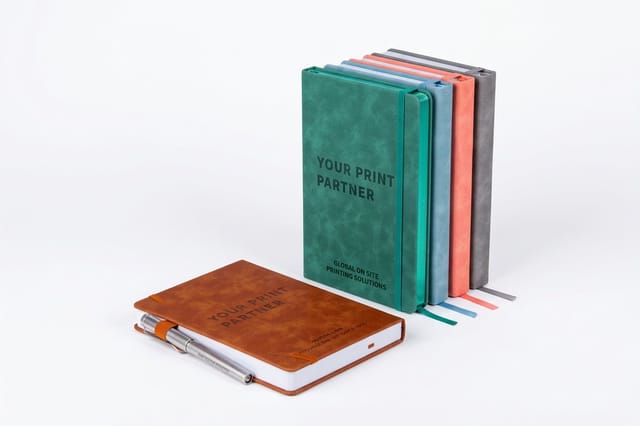
To make a hard cover journal, choose the board, the wrap, the binding, the paper and the cover mark, in that order. For a finished cased book with your logo, choose embossed notebooks; for a plain gift, ready-made leather journals come at 5.75 x 8.25 inches in blue, green, gray, mocha or pink, from $10 for one, with no logo added. For a printed cover with your own artwork, perfect bound books print at 5.5 x 8.5, 6 x 6, 6 x 9 or 8.5 x 11 inches with 40 to 300 inside pages and an optional velvet, silk or gloss laminated cover, from $375.05 for 10; they are soft cover, so pick them when artwork matters more than the board.
Start With the Board, Then Choose What Wraps It
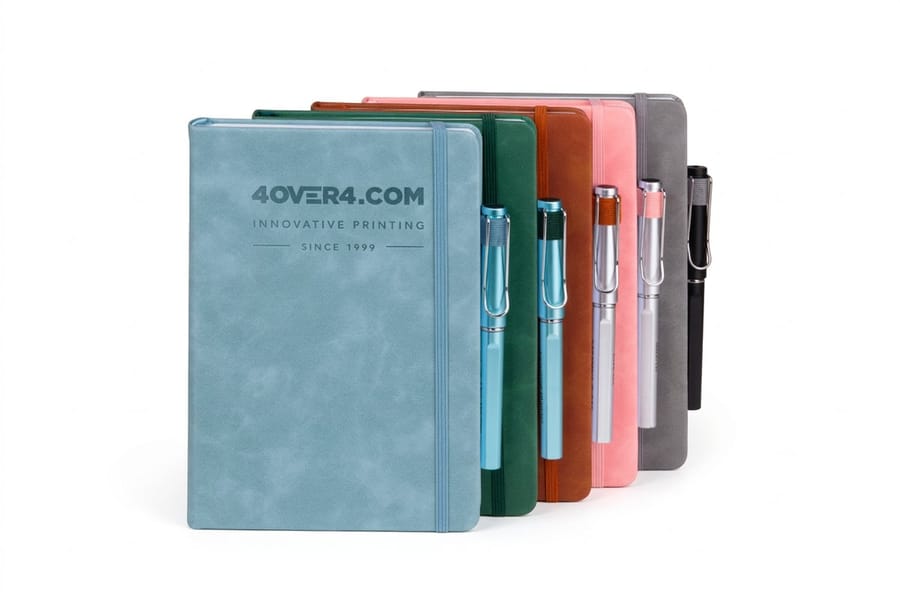
Every hardcover journal starts as a piece of greyboard, the dense recycled board that gives the cover its snap. The board is the same whatever you order. The decision that changes both the look and the price is what goes over it.
PU leatherette. Soft, warm to the hand, available as a swatch of solid colors, and the standard for executive gifts. It takes a die beautifully, which means blind deboss and foil both look sharp on it. What it will not do is accept four-color printing, so a leatherette cover carries a logo, not a photograph. It also hides fingerprints, which matters more than people expect on a book that lives on a desk.
Book cloth. Woven texture, more character, and the one that reads as a proper book rather than a corporate item. Foil works, but the weave eats fine detail, so a delicate logo comes out fuzzy. Keep the artwork bold.
Printed paper, laminated. The only wrap that gives you the whole cover as a canvas. Full-color art, gradients, photographs, edge to edge. The trade is durability at the corners, where a laminated paper wrap scuffs before a leatherette one does. Matte laminate looks better and marks more easily than gloss.
If you are weighing board against a heavy folded stock, the distinction is worth reading properly in our cover stock and cardstock comparison, and the lighter option gets its own treatment in soft cover journals explained. For the leatherette route, leather journals configure the wrap, the size and the finishing in one place.
Binding: Which Spine Lies Flat and Which One Fights You
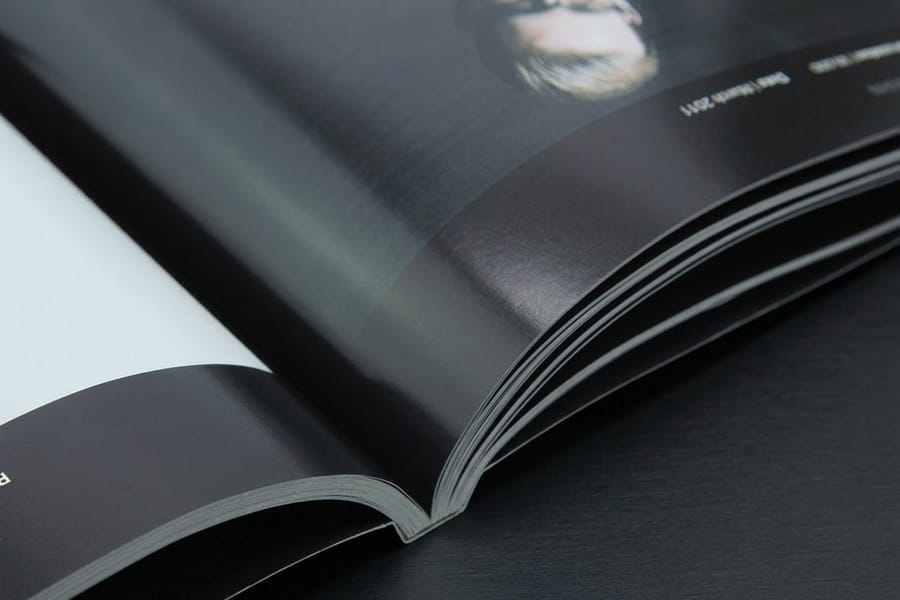
A journal is a book somebody writes in, and that changes which binding is right. A book you read only has to open. A book you write in has to stay open under the heel of your hand while you work down a page.
| Binding | How the spine holds | Opening behavior | Best use |
|---|---|---|---|
| Sewn case bound | Folded sections stitched together, then cased into the boards. | Opens near flat and improves with use, because the thread hinges. | Executive and gift journals meant to last years. |
| Perfect bound | Pages milled at the spine and glued to the cover. | Resists lying flat, and forcing it stresses the glue line. | Manuals and page-heavy books that get read, not written in. |
| Spiral coil | A plastic coil threaded through punched holes. | Lies dead flat and folds back on itself completely. | Working notebooks used on a knee or a job site. |
| Wire-o | Twin loop wire through square punched holes. | Flat, with pages that turn more cleanly than coil. | Planners and dated journals with tabbed sections. |
Read the opening column, then the last one. Sewn case binding costs the most and is the only one that gives you a rigid cover and a flat page at the same time. Coil gives you the flattest page of all, and takes away the printable spine, so a shelf of coil journals shows nothing but wire. That is a fair trade for a site notebook and a poor one for a boardroom gift.
Perfect binding is the trap. It is the cheapest way to get a hardcover look, and it is the one people force open. Once the glue line cracks, pages start to release. If the recipient will actually write in the book every day, pay for sewn. The full breakdown lives in our guide to binding types, and you can see the two glued formats in perfect bound books and spiral coil books.
The Paper Inside, and Why It Resizes the Cover
Inside paper is chosen for one thing: the pen the recipient actually uses. Everything else is preference.
70lb to 80lb text is the working range for a journal, and it handles ballpoint, gel and rollerball without argument. Move toward 100lb text if the book is going to somebody who writes with a fountain pen or a marker, because those inks sit wet on the surface long enough to travel. Uncoated is the right surface, since a coated sheet repels ink and smears under the side of a hand.
Two words get used interchangeably and should not be. Ghosting is seeing a faint shadow of writing through the sheet, and it happens at every weight, on every journal, forever. Bleed-through is ink physically coming through to the other side. Ghosting is normal. Bleed-through means the sheet is too light for the pen, and no amount of paper brightness fixes it.
Then the part that catches people out. Sheet count times paper caliper gives the bulk of the block, and the bulk sets the spine width, and the spine width sets the size of the case. Switching from 70lb to 100lb on a 160 page journal makes a visibly fatter book and a differently sized cover. Decide the paper first, then let the case be cut to it. Ruling is the last call: lined for note takers, dot grid for people who mix diagrams with text, blank for sketchers. Quantity pricing behaves the same way it does for notebooks, which is covered in bulk notebook printing and quantity breaks, and dimensions for a cover layout come from the blank template library.
Foil, Deboss and Emboss on the Cover
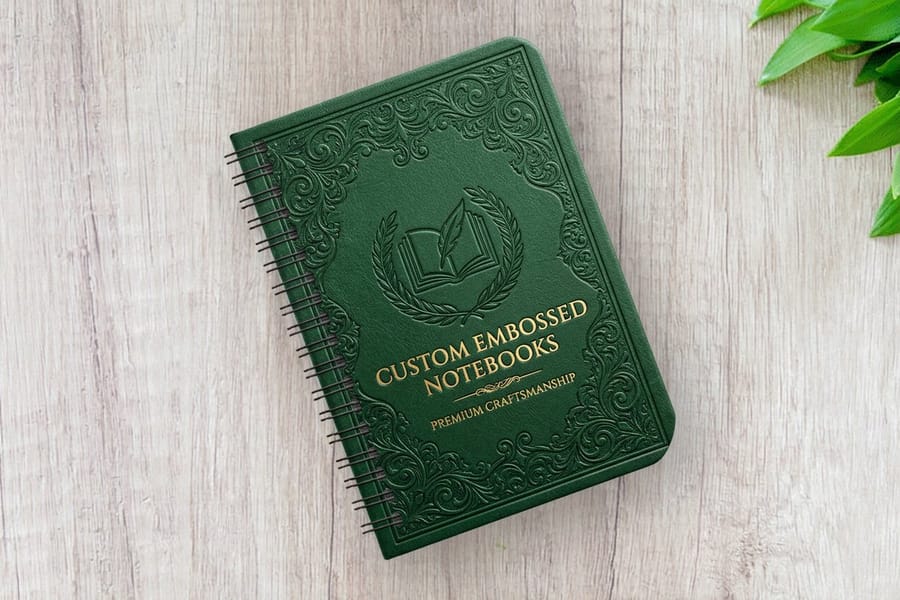
Cover finishing is a metal die pressed into the wrap under heat and pressure. The die is the same whichever effect you pick, which is why the cost gap between them is smaller than the visual gap.
Blind deboss presses the mark down into the wrap with no ink and no foil. It is the quiet option, it costs the least of the three, and it forgives a slightly soft line because there is no color edge to look at. Foil stamping uses the same die with a foil ribbon, so the mark comes out in metallic gold, silver, copper, or a flat pigment color. It reads as a gift the second somebody sees it. Emboss raises the mark instead of pressing it in, and it needs a matched pair of dies rather than one, so it sits at the top of the three.
The limit is line weight, and it is the reason most cover finishing disappoints. Strokes under roughly half a point tend to close up in a soft PU wrap, because the material flows back into the recess. Type below about 6 point fills in the counters, so an e becomes a blob. Book cloth is worse again, since the weave breaks up any fine edge. When a logo has a solid mark next to a line of small legal text, the usual answer is to stamp the mark and leave the text off the cover entirely.
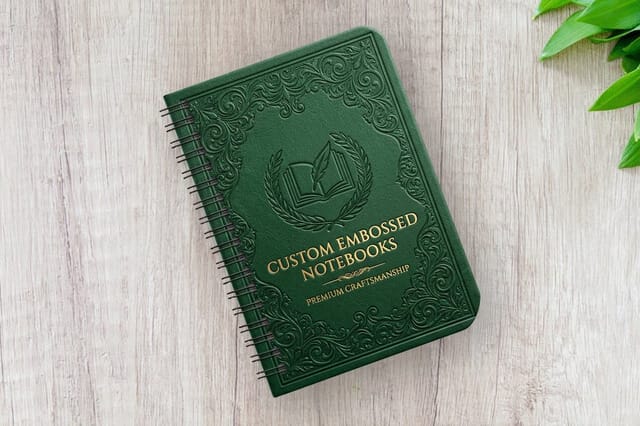
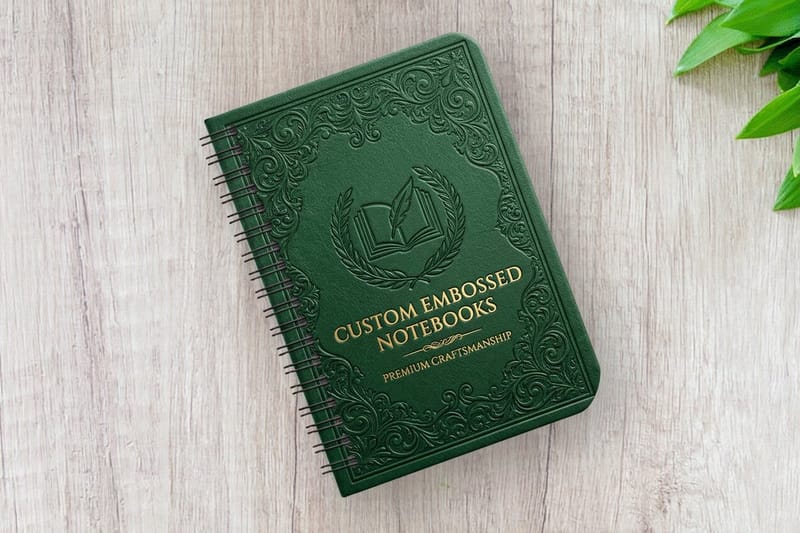
Position matters too. A die too close to the spine hinge sits on the curve of the joint and stamps unevenly, so keep the mark inside the flat field of the front board. Embossed notebooks show the pressed-cover result, the die process is explained in custom embossing and stamping, and foil color behavior is covered in gold and silver foil printing.
What a Custom Journal Costs, and Who Should Order Which
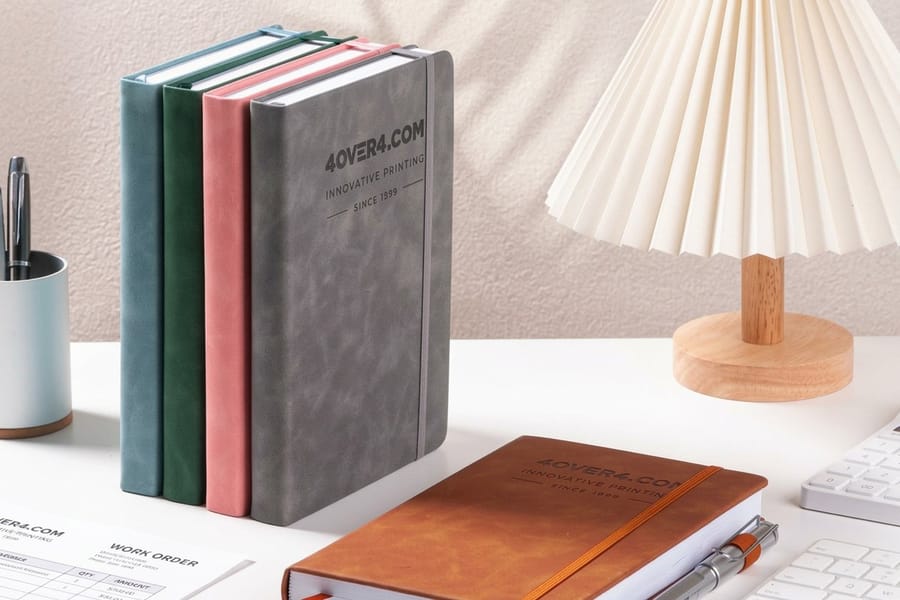
Prices split along the same line the whole guide runs on: the cover, then the binding.
Ready-made leather journals start at $10.00 for a plain suede hardcover with no mark added, and ready-made deluxe spiral notebooks start at $5.00; neither takes a logo. Embossed notebooks start at $763.37 and perfect bound books at $375.05, priced on the run rather than the single copy, so check the quantity ladder in the configurator before comparing them to a per-book number.
For a client or executive gift, take the leatherette case, blind deboss or gold foil, sewn binding and 80lb uncoated paper. It is the combination people keep on a desk. For a conference giveaway that has to hit a unit price across a few hundred people, a coil book with a printed cover does the job and nobody expects it to last a decade. For a training manual or a workbook, none of this applies and you want perfect bound books or a stitched format from the book printing range instead.
The full set of journal and notebook formats, with live configuration and current pricing, sits under notebook printing.
Wally builds a hardcover journal
Board, wrap, die, then the pages go in
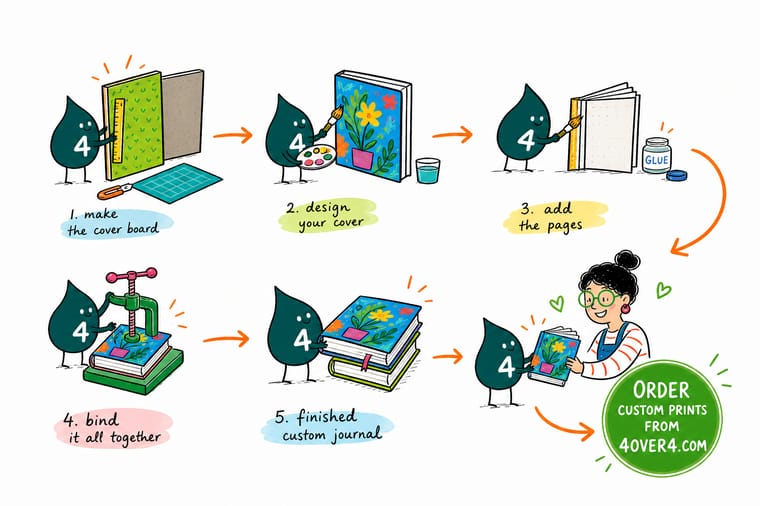
Wally cuts the board, wraps it, and stamps the logo while the cover is still flat on the bench. That is the only moment the die can reach it. Then he sews the pages into sections, glues the endpapers, and cases the block into the finished cover. Ask him for a photograph on a leatherette wrap and he will hand you a printed paper cover instead. Ask him for hairline type on a deboss and he will show you what happens when the material flows back into the recess.
Configure leather journals →
Specs and pricing
Journal formats, sizes, and starting prices
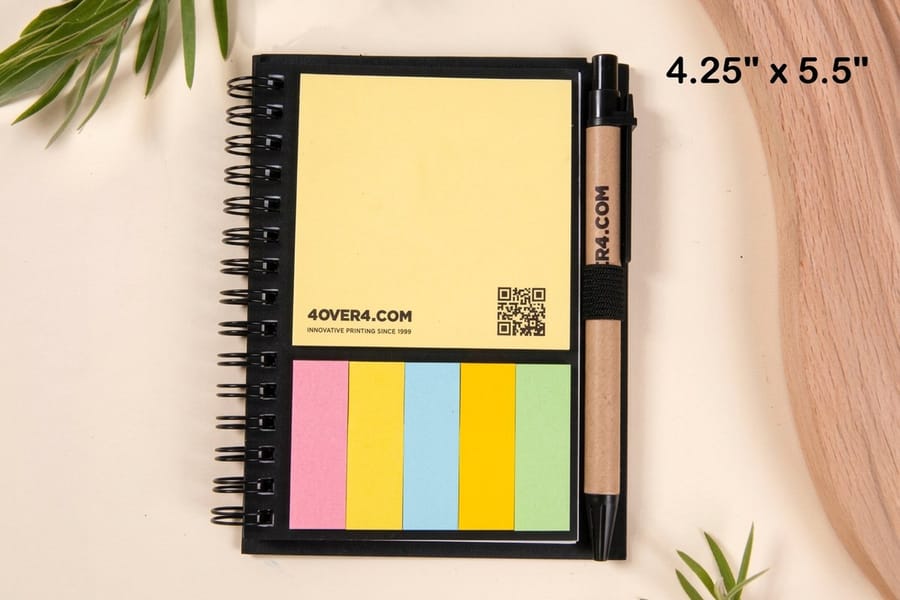
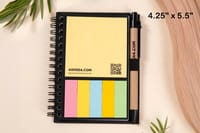
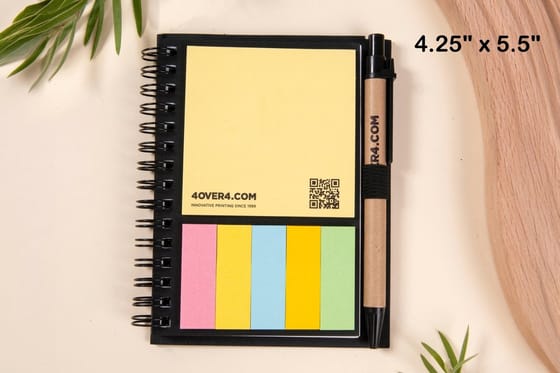
Leather journals start at $10 at 5.75 x 8.25 inches in five colors, deluxe spiral notebooks at $5 in 4.25 x 5.5 or 5 x 7, and embossed notebooks at $763.37 for 50 with a 31pt cover and Wire-O binding. Compare the cased and coil formats side by side, with live configuration choices and starting prices straight from the 4OVER4.COM configurator.
Print it
Order a journal worth keeping on a desk
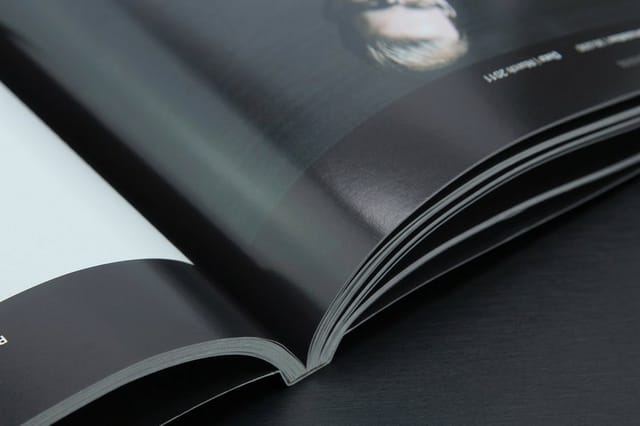
Order plain leather journals for a client or executive gift, embossed notebooks for a logo cover people notice across a table, and perfect bound books when every page carries your printed content.
Explore more
Where to go next
Read the binding comparison before you pick a spine, the embossing guide before you set the cover mark, and the bulk notebook guide if the order runs to hundreds.
By the numbers
Journals and notebooks among 1,000+ products
Common Questions
Your custom journal questions, answered
What is a custom hardcover journal actually made of?
Five layers, assembled in a fixed order. A rigid greyboard gives the cover its stiffness. A wrap goes over the board, and that wrap is either PU leatherette, book cloth, or printed paper with a laminate. An endpaper glues the inside block to the case. The block itself is folded and sewn sections of text paper. Behind the spine sits a hollow tube glued to the case but not to the block, which is the part that lets the cover swing open without dragging the pages with it.
Can you print a full-color photo on a leather journal cover?
Not on a leatherette or cloth wrap. Those surfaces take a die, so foil stamping and debossing work well, but they do not accept four-color process ink. If the design needs a photograph, a gradient, or more than a couple of flat colors, the cover has to be printed paper wrapped over the board and laminated. Many corporate journals split the difference: a leatherette case for the feel, and a printed belly band or a printed first page for the artwork.
Which binding lies flat when you write in it?
Sewn case binding opens closest to flat and gets better as the book is used, because the thread hinges rather than the glue. Coil and wire-o lie perfectly flat and even fold back on themselves, but the coil catches on bag zippers and there is no printable spine. Perfect binding, where the spine is glued, is the cheapest hardcover route and the one that fights you. People force a perfect-bound journal open, and forcing it is what cracks the glue line after a few months.
What paper weight stops ink showing through?
70lb to 80lb text is the everyday journal range and handles gel and ballpoint pens without complaint. Move up toward 100lb text if the recipient writes with fountain pens or heavy markers, because those inks sit wet on the surface long enough to soak in. Watch the difference between ghosting, where you can faintly see writing from the other side, and bleed-through, where the ink physically comes through. Ghosting is normal at any weight. Bleed-through means the sheet is too light for the pen.
Foil or deboss for a company logo?
Deboss when the logo has weight and you want restraint, foil when the journal is a gift and needs to read as one. Both need the same die, so the cost difference is the foil itself and the extra pass. The real deciding factor is line weight. Strokes thinner than about half a point tend to close up in a soft leatherette, and small type under roughly 6 point fills in. A logo with fine legal text next to a solid mark usually gets the mark stamped and the fine text dropped.
How do I know how thick the finished journal will be?
Multiply the sheet count by the caliper of the paper and add the two boards plus the wrap. Bindery people call it bulk, and it is the number that sets the spine width. It matters because the case is cut before the block goes in, so an inside paper switch late in the process resizes the cover. If you are picking between weights, decide the paper first and let the case follow it.
Is a hardcover journal worth it over a soft cover?
It depends on how long the book has to survive. A hardcover protects the block, keeps a flat writing surface on a lap or a knee, and holds its shape in a bag for years. A soft cover is lighter, cheaper per unit, and perfectly good for a conference giveaway that gets used for one quarter. If the journal carries a brand and is meant to stay on a desk, the board earns its cost.
Get Started
Order 10 perfect bound journals from $375.05
Pick the wrap, choose sewn or coil binding, set the paper weight, and add a blind deboss or a foil stamp. We build the case around your block and ship it.
Legal Disclaimer
Gold Standard guarantees apply to all standard orders placed through 4over4.com. Price match requires verifiable proof of a competitor's published price for an equivalent product with matching specifications and turnaround time. Satisfaction guarantee covers manufacturing defects and print quality issues. Contact support with order number and documentation.
