
How to Make a Fridge Magnet Calendar People Keep All Year


Jordan is our labels, packaging and sustainability voice, built from the knowledge of our production team, with over 20 years in printing.
A magnet calendar is a single sided print job with a hard deadline. Here is the size that keeps the year readable, the stock that mails, and the drop date that decides the whole return.
Lay the twelve month grid and your contact block on one face, order it as a 4 by 7 or 5 by 7 magnet in 17pt or 35pt stock, and mail it on a carrier card or as a magnet postcard. The back is the magnet, so nothing prints there. The face size is the real constraint: on a 4 by 7 the dates land near 6 point, which reads in the hand but not from across the kitchen.
Quick answer
One face, twelve months, and a January deadline
A fridge magnet calendar is a one sided print job on flexible magnet stock. Set the year grid and your brand block on the front, choose 17pt if the piece is going in the mail or 35pt if it is going into someone's hand, and let the face size decide how big the dates can be. Print in October or November so the calendar lands in the first half of January, because a dated piece loses a twelfth of its value every month it waits.
Sizes, and How Much Year Actually Fits

Pick the face size first. Every other layout decision follows from it, because a magnet calendar has one printed side and a fixed footprint, and the month grid, the logo and the phone number are all competing for the same rectangle.
The numbers below come from dividing the face, not from a design rule. Take a 4 by 7 magnet. Keep an eighth of an inch clear at the edges, hand the bottom inch and a quarter to your brand block, and the grid gets roughly 3.75 by 5.25 inches. Three columns of months by four rows puts each month in about 1.25 by 1.3 inches. Seven day columns inside that leave every date numeral a cell near 0.18 inches wide, which lands the dates around 6 point.
| Face size | Layout that works | Dates land near | Order it for |
|---|---|---|---|
| 2 x 3.5 in | Contact block first, a six month strip at most. Twelve months here is a smudge. | 4 pt if forced | Business card magnets where the calendar is a bonus, not the point. |
| 3.5 x 4 in | Twelve blocks three across, brand band about three quarters of an inch. | 5 pt | Reading at arm's length. Fine on a home office door, weak on a kitchen fridge. |
| 4 x 7 in | Twelve blocks three across and four down, brand band an inch and a quarter. | 6 pt | The standard promo calendar magnet, and the one that mails easily. |
| 5 x 7 in | Same grid with air around it, plus room for an offer line under the logo. | 7 to 8 pt | Calendars people are meant to read from a step back. |
Six point type is legible in the hand and invisible from the sink. That is the trade-off nobody mentions when they sell you a calendar magnet, and it is the one that decides whether the piece gets used or just sits there. If the year has to be readable across a kitchen, you either buy the larger face or you print six months and mail twice. Our refrigerator magnet sizes guide maps each stock size to a job, and sizes run out to 11 by 17 on the custom option listed under magnets printing.
Where the magnet hangs decides the pick. On a kitchen fridge read from across the room, order the 5 by 7 inch face on 35pt, so the dates land near 7 to 8 point and the piece stays flat on a warm door. On a filing cabinet or an office door read at arm's length, a 3 by 4 or 4 by 6 inch face on 17pt does the job, and the lighter stock is the one that mails.
The stock magnet sizes are 2 by 3.5, 3 by 4, 4 by 6 and 5 by 7 inches, plus any size you set, from 25 pieces with a 5 business day standard turnaround. Upload one full color front, with an eighth of an inch kept clear at every edge, because the back is the magnet.
Magnet Stock, Coating, and the Side You Cannot Print
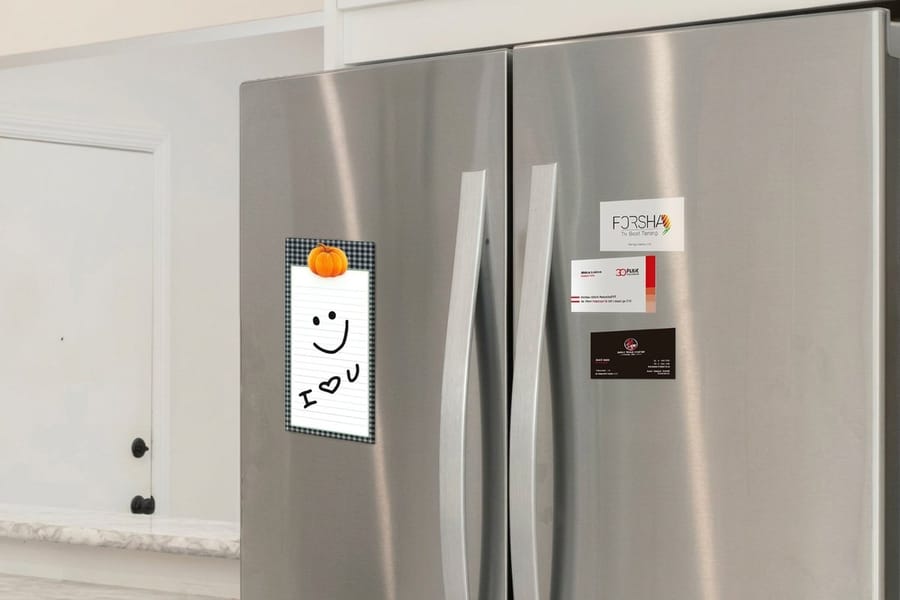
There is no back. The back face is the magnet itself, ferrite powder in a rubber binder, so we print magnets on the front only. Everything you would normally push to the reverse of a card, the license number, the hours, the QR code, has to earn a place in the front layout or come off the job. On a calendar that pressure is real, because the grid is already eating most of the face.
Stock is the second decision and the one people get backwards. Both indoor stocks print identically: same full color, same UV coating, and a loupe will not separate them. What changes is behavior. The 17pt is light and flexible, which is why it mails. The 35pt is roughly twice the material, stays flat through a year on a warm door, and grips hard enough to pin a stack of school notices under it. Standard magnets start at $19.68, about 79 cents a piece at the smallest run of 25, and the stock choice does not move that number much.
The UV coating matters more on a calendar than on any other magnet, because this piece has to survive twelve months of steam, cooking grease and cleaning spray while people touch it. Direct sun through a kitchen window is what actually kills the face, and a magenta heavy design fades first, so keep the year grid in a dark ink rather than a pale tint. If the family is meant to write on the piece, that is a different product: dry erase magnets carry a wipe clean lamination built for markers, from $33.99, and the dry erase magnets story shows that wipe clean face in use. The layer by layer build is in how custom refrigerator magnets are made, and you can start the file from a correctly sized layout in the blank template library. To order the plain printed version, go to our custom refrigerator magnets.
Mailing a Magnet Calendar Without Wrecking the Postage
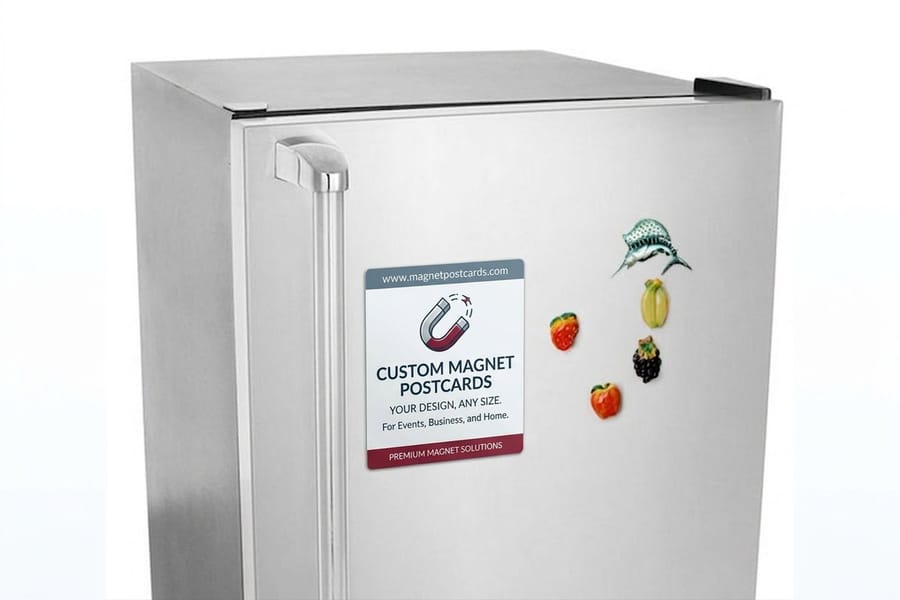
A magnet mails, but not the way a postcard does. Bare flexible magnet stock is heavy for its size and awkward on automated mail equipment, so the reliable route is a carrier card or an envelope, on 17pt stock, which stays under the quarter inch thickness limit for letter mail. Weight moves the postage, not the magnetism, so weigh a finished sample at the counter before you buy postage for the whole list. That single step has saved more campaigns than any design choice on this page.
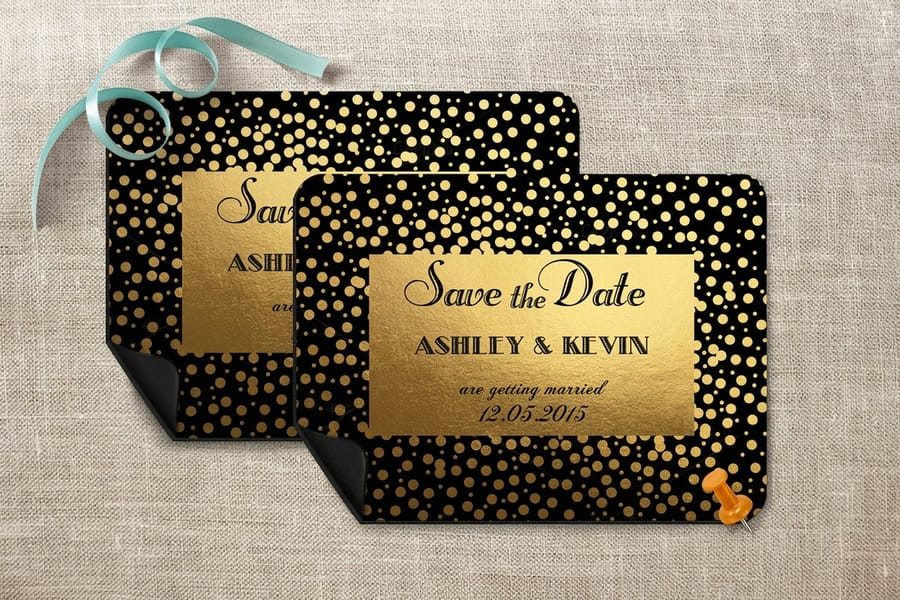
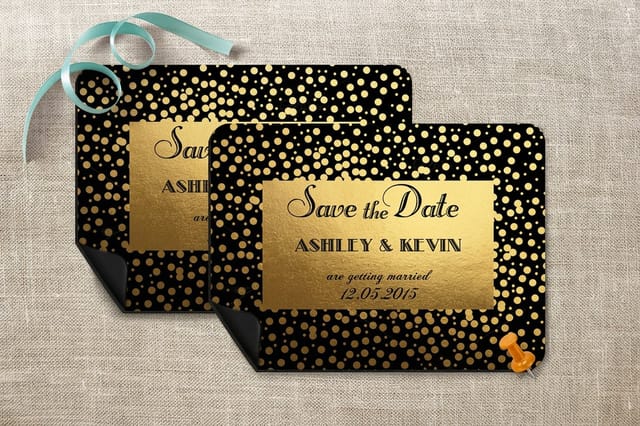
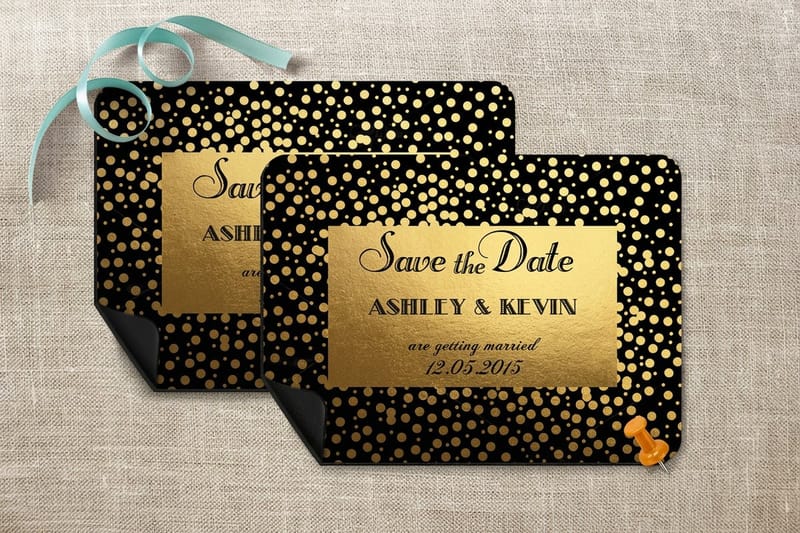
Magnet postcards from $19.68 are the piece built for this job. They mail as a card, carry the calendar and the message on the printed face, and peel to a magnet the recipient sticks wherever they like, which quietly solves the stainless steel door problem. Save the date magnets from $19.68 are the same construction aimed at a household event, and they are the most common mailed magnet we print.
Plan the drop backwards from the first week of January. Print in October or November, allow for addressing and postage, and land the piece while people are still deciding what goes on the door. A calendar that arrives in February is competing with one that is already up. If you miss the window, do not throw the run away: print a twelve month grid that starts at your mailing month. Our guide to how postcard mailers work covers list handling and the mailing panel, and how to plan and print a custom calendar covers the calendar year itself.
The Year-Round Advertising Math, and Who Should Skip It
The argument for a calendar magnet is duration. A flyer gets one look. A magnet with a usable year on it stays at eye level in the room the household stands in every day, and at about 79 cents a piece on a 25 count run of standard magnets, the cost per month of wall time is small enough that the arithmetic works even at a low response rate. The calendar is what buys the wall time, and the phone number underneath it is what gets paid.
Two rules make the difference between a magnet that stays up and one that comes off in March. Give the recipient information they want on their own terms, which means a full readable year rather than a logo with a month strip attached. And never build the piece around an offer that expires, because the day the coupon dies the magnet goes in the bin and takes your brand with it. Put the offer in the brand band as a standing line, not a deadline.
Skip the format when your customers are offices rather than homes, when your service is a once in a decade purchase nobody plans for, or when the buying decision happens on a phone far from a kitchen. A wall calendar is a different animal for a different room: standard calendars start at $812.59 because they are a multi page, multi image piece for a client gift or a reception wall, not a mailer. Plain standard postcards from $16.48 remain the cheaper way to make a single dated announcement. If you are weighing a magnet against an adhesive for the same job, magnets against stickers makes the honest comparison, and magnet advertising explained covers where the format pays off across a year.
Wally explains calendar magnets
Twelve months, one face, and a January deadline
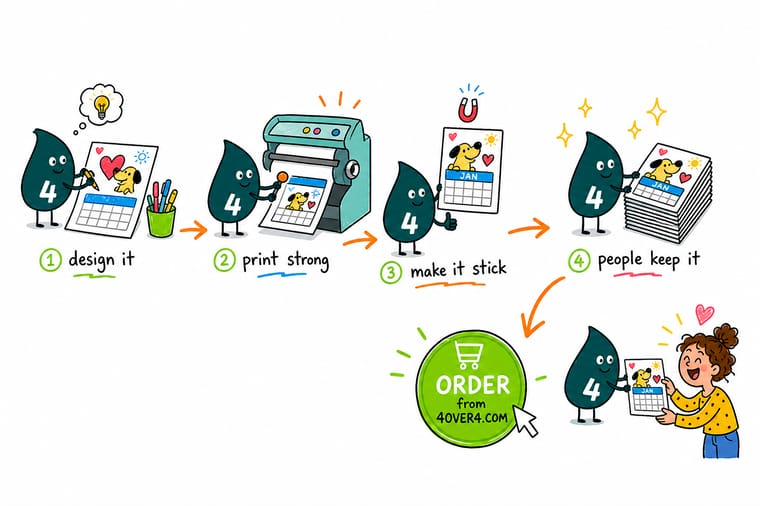
Wally only gets one side to work with, because the back of the magnet is the magnet. So the year grid goes on top, the phone number goes in the band at the bottom, and the face size decides how big the dates can be. He picks 4 by 7 for a mailing and 5 by 7 when somebody has to read it from the sink. Then he gets it in the mail in early January, because a calendar that shows up in February is somebody else's calendar.
Order calendar magnets →%22%2F%3E%3Ccircle%20cx%3D%2248%22%20cy%3D%2220%22%20r%3D%2223%22%20fill%3D%22%23334155%22%20opacity%3D%220.15%22%2F%3E%3Ccircle%20cx%3D%2254%22%20cy%3D%2227%22%20r%3D%22-3%22%20fill%3D%22%23334155%22%20opacity%3D%220.1%22%2F%3E%3Crect%20x%3D%2278%22%20y%3D%22-9%22%20width%3D%2233%22%20height%3D%2220%22%20rx%3D%224%22%20fill%3D%22%23334155%22%20opacity%3D%220.08%22%20transform%3D%22rotate(43%2080%2030)%22%2F%3E%3C%2Fsvg%3E)
Specs and pricing
Magnet sizes, stocks, and starting prices
Standard magnets and magnet postcards both print in 5 business days from 25 up, at 2 by 3.5, 3 by 4, 4 by 6 or 5 by 7 inches or any size you set, on 17pt or 35pt indoor magnet with a UV coated face. Business card magnets use the same two stocks at the 2 by 3.5 inch wallet size.


Print it
Order a calendar that stays on the door
Standard magnets start at $19.68 for 25 pieces. Pick 35pt for a calendar that stays flat on a fridge door all year, and 17pt for one that travels in an envelope.

Explore more
Where to go next
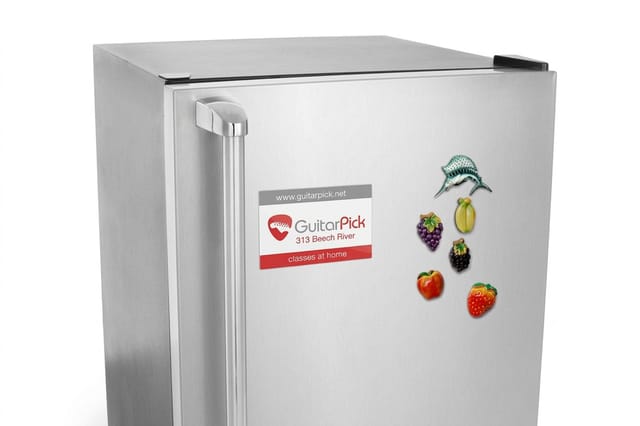
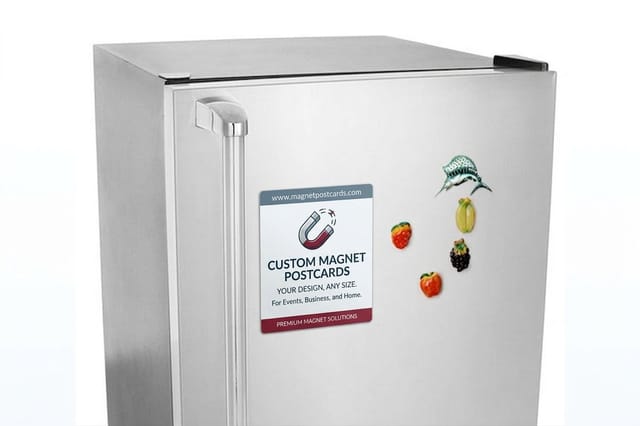
Read the refrigerator magnet sizes guide to match a 4 by 6 or 5 by 7 inch face to the job, and the calendar sizes guide to set the magnet against wall, desk and pocket formats.


By the numbers
Magnet calendars on 17pt indoor stock
Common Questions
Your calendar magnet questions, answered
What size should a fridge magnet calendar be?
4 by 7 inches is the default, and 5 by 7 is the one to choose if the calendar has to be read rather than glanced at. The reason is arithmetic. Keep an eighth of an inch clear at the edges, hand the bottom inch and a quarter to your brand block, and a 4 by 7 face leaves a grid of roughly 3.75 by 5.25 inches. Twelve month blocks three across and four down make each block about 1.25 by 1.3 inches, and seven day columns inside that give each numeral a cell near 0.18 inches, so the dates end up around 6 point. Move to 5 by 7 and the same grid gains about a quarter of an inch per month block, which lifts the dates to 7 or 8 point.
Can you print the calendar on the back of a magnet?
No. The back face is the magnetic side, so every magnet we run is printed on the front only. A calendar magnet is a single sided piece by construction, which is why the layout has to carry the year grid and the contact details together. If you genuinely need two printed sides, the answer is a printed card paired with a separate magnet rather than one piece.
How do you mail a magnet calendar?
Put it on a carrier card or inside an envelope rather than dropping a bare magnet in the mail, and order it on 17pt stock so it stays flexible and sits under the quarter inch thickness limit for letter mail. Weight is what moves the postage, not the magnetism, so weigh a finished sample at the counter before you buy postage for the whole list. Magnet postcards are built for exactly this: the piece mails as a card and peels to a magnet.
When should I order calendar magnets?
Print in October or November and aim to land the piece in the first half of January. A dated calendar is the one marketing item with a hard expiry, and every week it sits in a box is a week of wall time you paid for and did not get. Anything arriving after the end of January competes with a calendar the household already put up, and most of those get binned. If you missed the window, print a twelve month grid that starts at your mailing month instead of at January.
Should I order 17pt or 35pt magnet stock for a calendar?
Print quality is identical, so decide on how the piece travels. If it is going in an envelope or on a carrier card to a mailing list, 17pt is the one built for it. If your team is handing calendars across a counter, at a trade show or with an installed job, 35pt is about twice the material, resists curling at the corners over a year on a warm door, and grips firmly enough to hold a school notice underneath it.
What if the customer has a stainless steel refrigerator?
A lot of stainless is not magnetic. The austenitic grades used on many appliance doors ignore magnets completely, and no stock or thickness changes that. The campaign still works, it just moves to the filing cabinet, the range hood, the dishwasher panel or the toolbox, which are usually painted steel. A magnet postcard helps here because it arrives as a readable card first, so the message lands even if the door is dead. The full explanation sits in our guide to how custom refrigerator magnets are made.
Should the calendar carry the year or be undated?
Print the year. An undated grid saves nothing worth having, because the day columns still have to be laid out for a specific year, and a calendar without a year reads as filler that nobody trusts enough to hang. The real cost control is quantity: order the count you will actually mail this season rather than a two year supply, because leftover dated magnets are landfill in January.
Get Started
Order magnet postcards in 25s, printed in 5 business days
Pick a 4 by 7 or 5 by 7 face, choose 17pt for mailing or 35pt for handing over, and we print full color magnets with a UV coated face built for a kitchen.
Legal Disclaimer
Gold Standard guarantees apply to all standard orders placed through 4over4.com. Price match requires verifiable proof of a competitor's published price for an equivalent product with matching specifications and turnaround time. Satisfaction guarantee covers manufacturing defects and print quality issues. Contact support with order number and documentation.
