
How to Use Packaging Inserts to Turn One Order Into Repeat Sales


Jordan is our labels, packaging and sustainability voice, built from the knowledge of our production team, with over 20 years in printing.
Packaging inserts, the thank-you cards, buckslips, discount cards, and instruction sheets in the box, are the cheapest retention media a brand owns. This guide covers which insert to print for which outcome, how to write it, what sizes and stocks hold up in transit, and what packaging printing actually costs.
Packaging inserts are printed pieces placed inside a shipped order to do one job each: thank the buyer, offer a dated reason to reorder, explain how to use or care for the product, or ask for a referral or review. Use one primary insert per shipment, write it the way you would say it out loud, print it on a cover weight that will not curl in transit, and put a unique code or short link on it so you can measure which card actually earned its cost.
Start here
What a packaging insert does in a shipped box
A packaging insert is a printed card, slip, or folded piece that ships inside the box with the product. It reaches a customer at the single warmest moment in the relationship, right after the tape comes off, and it costs a fraction of what it takes to acquire that customer again through advertising. The formats that pull hardest are the thank-you card, the buckslip carrying one offer, the dated reorder card, the instruction or care card, and the referral card. Choose one primary piece per shipment, give it a measurable code, and reprint the winner.
Why the insert in the box outperforms most of your ad spend

The moment a customer cuts the tape on a box is the only time your brand has undivided attention with no competing feed, no other tabs, and no price comparison happening. A printed insert lands in that window. It costs cents per piece, it arrives with a product the buyer already chose to pay for, and it does not have to win an auction to be seen. In the box that means a card on 14pt to 18pt cover sitting on top of the product, the first thing the hand touches after the tape.
That is why insert strategy belongs in the retention budget rather than the packing supplies budget. A well written packaging sleeve or thank-you card is the cheapest way to ask for the second order, and the second order is where most small brands actually become profitable. The companion piece on insert ideas that drive repeat sales is worth reading next, and the roundup of brand packaging examples for small businesses shows what a considered unboxing looks like in practice.
What is a packaging insert?

A packaging insert is a printed piece placed inside a shipped order next to the product. It is not the box, not the label, and not the shipping paperwork. It is a card, a slip, a folded sheet, or a small booklet whose only job is to say something useful to a person who is already holding what they bought. The small booklet version prints as standard booklets of 8 to 60 pages from 25 copies, and our article on product insert printing shows how brands personalize each one.
The common formats are a thank-you card, a buckslip that carries one narrow offer, a discount or reorder card, a care and instruction card, a referral card meant to be handed to somebody else, and a sampler card that introduces the next product in the line. Each one has a different job and a different tone, and mixing those jobs onto a single card is the fastest way to make all of them invisible.
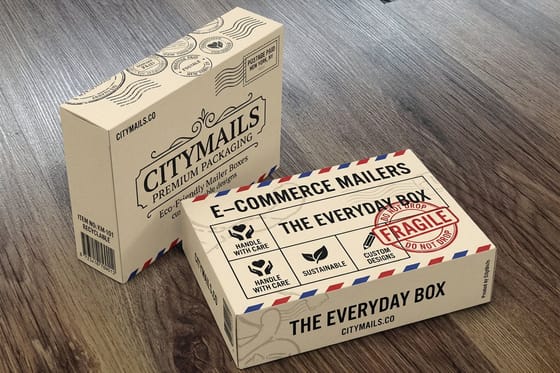
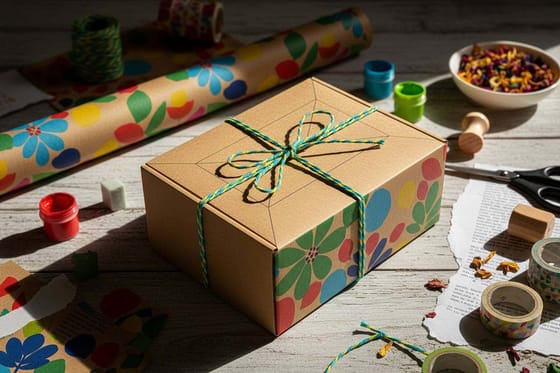
Inserts also work with the rest of the package rather than against it. A branded sleeve, a printed tape line, and a card in the same type family read as one system, the way different types of flyers serve different moments in a campaign. If the outside of your box is still a plain mailer, the kraft packaging box approach pairs naturally with uncoated insert stocks.
The thank-you card: earn the second order by sounding like a person

The thank-you card is the insert most brands print first and write worst. Generic gratitude reads as a form letter, and a form letter in a box you paid for feels colder than no card at all. The fix is specificity. Name the product, name the person or the team who packed it, and say one true thing about why the order matters.
Keep it short enough to read standing up. Three or four sentences is plenty. Sign it with a real first name. Put your support email or phone on the back rather than crowding the front, so the card looks like a note instead of a contact sheet. If a customer ever needs to reach you, the card is already in the drawer where they put important things.
Resist the urge to bolt an offer onto the thank-you. Gratitude that immediately asks for money stops being gratitude. Let the thank-you card be pure, then let a second, smaller card carry the offer.
Discount and reorder cards: give the next purchase a deadline

A reorder card works when it removes friction and adds urgency at the same time. Friction goes away when the code is short, typed easily on a phone, and printed large enough to read without glasses. Urgency comes from an expiry date. An open ended coupon gets filed and forgotten, while a code that runs out at the end of next month gets used or consciously ignored, and either outcome teaches you something.
Match the discount to the repurchase cycle. Consumables that run out in thirty days should carry an offer that expires just after that. Durable goods rarely need a discount at all, and a cross sell to an accessory or a refill will beat money off a product the customer already owns.
Give every code its own life. One code for the insert, another for email, another for the pack-in that goes to wholesale accounts. That is how you learn whether the printed card earned its place. The innovative packaging ideas roundup has more angles for brands testing this for the first time.
Buckslips: one narrow slip that sells exactly one thing

A buckslip is a long, narrow printed slip, traditionally about the proportions of a dollar bill, which is where the name comes from. Direct mail has used them for decades because the shape forces discipline. There is room for a headline, a short block of copy, and one call to action, and there is no room for a second idea.
That constraint is the value. Use a buckslip when you have one thing to say that is worth saying loudly: a new product launch, a subscription upgrade, a limited restock, a referral bonus. Print it on the same stock family as your other inserts so the set feels intentional rather than accumulated.
Buckslips also slide neatly into slim mailers and under a sleeve without adding bulk, which keeps shipping weight and dimensional charges where they were. Layout logic carries over from flyers, so the thinking in different types of flyers for businesses applies directly to the slip in the box.
Instruction and care cards: cut returns before they happen
Support tickets and returns cluster around the first ten minutes of ownership. A customer who cannot get the product working, or who washes it the wrong way, does not write to you first. They write a review or start a return. A printed instruction card intercepts that moment because it is physically in the way when the box opens.
Write it as steps, not paragraphs. Number them, keep each one to a single action, and use the words your customers use rather than the words on your spec sheet. If a step commonly goes wrong, say so plainly and give the fix on the same card. One card that prevents a single return has already paid for a whole print run.
Care instructions do the same job over a longer horizon. Storage, cleaning, shelf life, and what to do with the packaging when it is empty all belong here. Brands that want the disposal line to be a selling point should read the eco friendly packaging ideas piece before writing that paragraph.
Referral and review cards: turn one happy box into two customers
Referral inserts work best in pairs. Print two identical cards, or one card meant to be torn in half, and say so on the front: keep one, give one away. The physical act of handing a card to someone is doing the work that a share button does badly, and the person receiving it gets a recommendation from a friend rather than an ad from a stranger.
Review requests need the opposite of pressure. Ask once, point to one specific place, and make the destination trivially easy to reach with a short link or a QR code. Do not ask for five stars. Ask for an honest note about the one thing they were unsure about before buying, because that is the review that convinces the next shopper.
Small format cards are ideal here since they fit anywhere in the box and cost very little per unit. If you want the piece to stick around on a desk or a fridge, the ideas in creative ways to use custom sticky notes translate well to referral inserts with a second life.
Sizes, stocks, and finishes that survive the trip

Most insert cards land in one of three shapes. Postcard proportions give you room for a headline, an image, and an offer. Business card proportions suit referral and code cards that are meant to be kept or handed on. Buckslip proportions run long and narrow for a single message. Pick sizes that fit flat inside your existing mailer so nothing has to be folded at the packing bench.
Stock choice is where inserts are usually underspecified. Light text weights curl and crease in transit and read as disposable. A heavier cover stock in the 14pt to 18pt range holds its shape, survives handling, and feels consistent with a product the customer paid real money for. Uncoated and kraft stocks suit natural, refill, and apothecary style brands and take pen ink if you are adding a handwritten line. Coated stocks hold saturated color when the card carries product photography.
Finishing is the last decision. Matte keeps type legible and photographs well for customers who post their unboxing. Gloss makes color pop on image heavy cards. Soft touch adds a tactile signal that costs more per piece and is worth it only when the product itself is premium. For color and material direction, the current packaging design trends are a useful reference before you commit ink to stock.
How to build an insert program in five steps

Treat inserts as a small system with a feedback loop rather than a one off print job. Five steps get you from an empty box to a program that improves every reorder.
- Step 1. Pick the one outcome. Repeat purchase, fewer returns, more reviews, or more referrals. Choose one for this quarter. The insert you print is decided by that choice, not by what looks nice.
- Step 2. Write the card before you design it. Headline, three or four sentences, one call to action. If the message does not fit, the message is not finished yet.
- Step 3. Choose format and stock. Match the card size to your mailer, choose a cover weight that will not curl, and keep the type family consistent with your box, sleeve, and tape.
- Step 4. Make it measurable. A unique code, a short URL, or a QR that lands on a page built for that card. Without it you will never know which insert earned its cost.
- Step 5. Print a test run, then scale. Run a few hundred, ship them for a month, read the codes, then reprint the winner at a quantity that brings the unit cost down.
Once the loop is running, the only real work each quarter is rewriting the card that underperformed. Everything else stays in place.
What inserts and packaging cost, and how printing prices are set
Print pricing follows five variables: quantity, size, stock, how many sides print, and finishing. Quantity moves the number most because press setup is a fixed cost spread across the run, which is why a thousand cards rarely costs anywhere near double what five hundred costs. Size and stock move the paper cost. Finishing such as gloss, matte, or spot coating adds a pass on press.
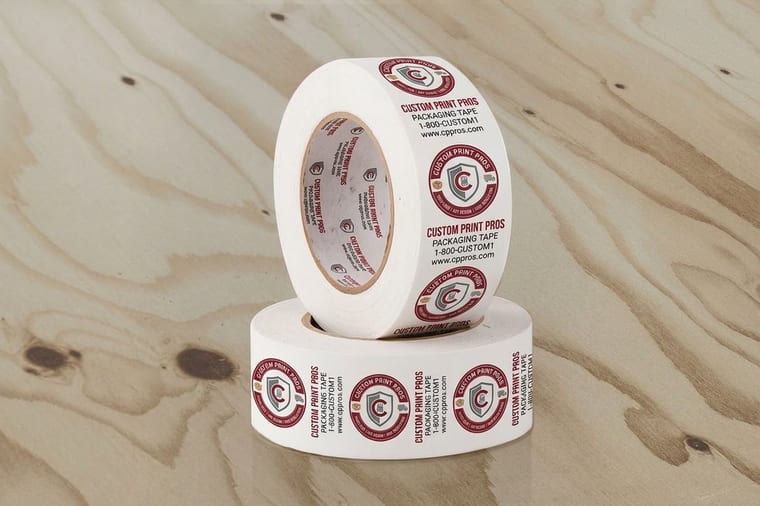
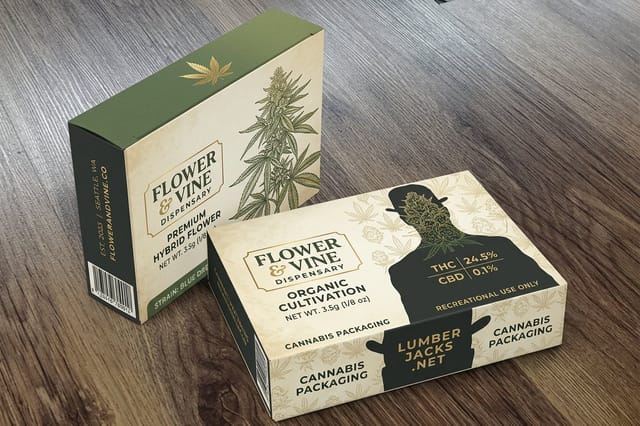
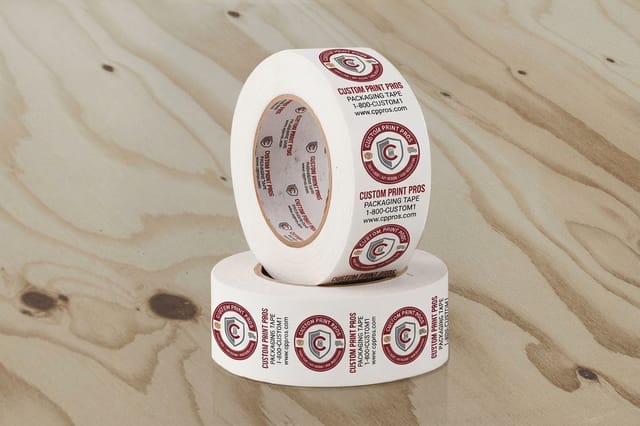
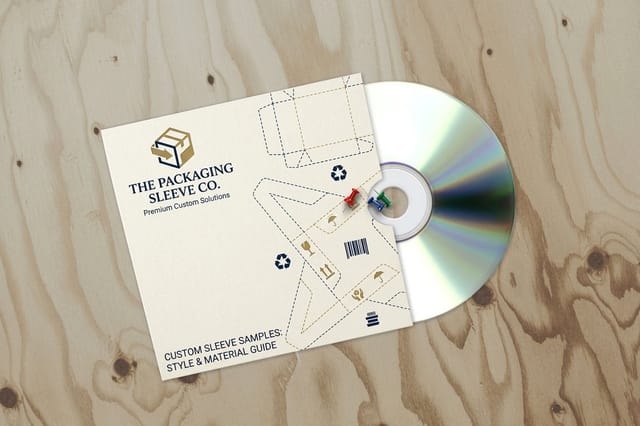
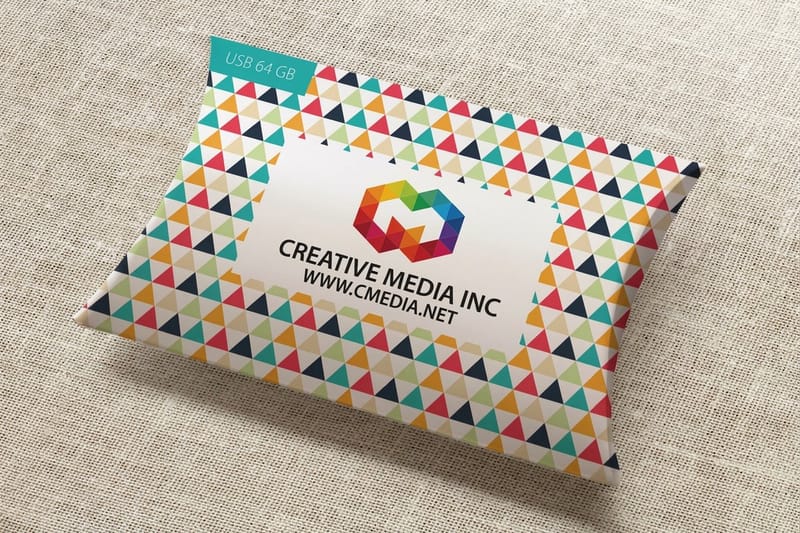
For the packaging around the insert, packaging sleeves start at $438.25, printed packaging tape starts at $347.11, and cannabis packaging starts at $711.78, with live pricing shown as soon as you choose quantity and options. Order free paper samples before you commit so you can feel the stock weight in your hand, and browse the full packaging printing collection when you are ready to spec the whole unboxing at once.
Wally explains inserts
The card in the box is talking to someone who already said yes
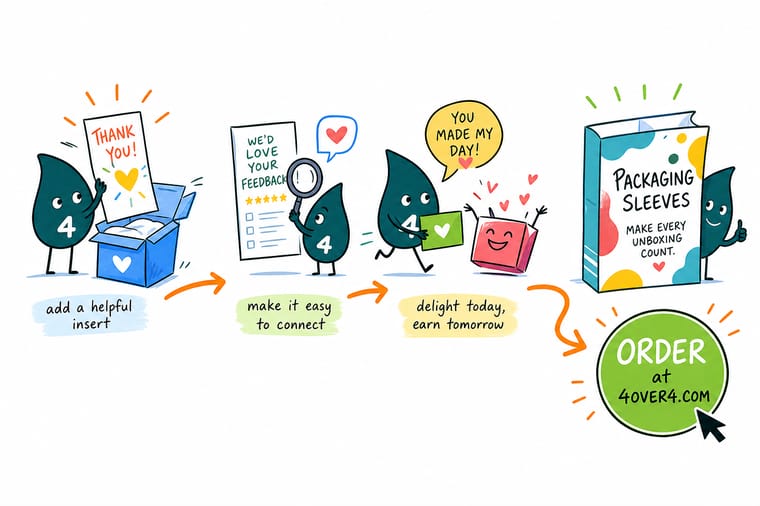
Wally packs every box like a conversation. The product answers the question the customer asked. The insert asks the next one. He keeps it to a single card with a single job, writes it the way he would say it out loud, prints it heavy enough that it does not curl on the truck, and puts a code on the back so he knows by next month whether it worked.
Design and print packaging →
Infographic
The 7 packaging inserts at a glance
One frame, seven inserts: thank-you card, reorder card, how-to card, buckslip, referral card, review card and sampler card. Save it, pin it above the packing bench, and use it to decide what goes in the next box before the print run is ordered.
Few brands need all seven at once. Pick the one insert that matches this quarter's goal, print a short test run, read the codes it brings back, and let the results decide what goes in the box next.
Specs and pricing
Packaging sleeve specs and live pricing
When the insert copy is written, the packaging around it is the next decision. Check the stock options, sizes, and current pricing before you lock the run.

| Quantity | Price Per Unit | Total |
|---|---|---|
| 100 | $4.38 | $438.25 |
| 200 | $2.25 | $450.34 |
| 300 | $1.52 | $455.83 |
| 400 | $1.15 | $461.32 |
| 500 | 93.4¢ | $466.82 |
| 600 | 80.5¢ | $483.29 |
| 700 | 73.0¢ | $510.76 |
| 800 | 65.2¢ | $521.74 |
Print it
Build the whole unboxing at 4OVER4

Explore more
Where to go next

By the numbers
Insert stocks, sleeves and tape in one place
Common Questions
Common questions about packaging inserts
What is a packaging insert?
A packaging insert is any printed piece you drop into a shipped order alongside the product. It can be a thank-you card, a buckslip with a single offer, a discount or reorder card, a care and instruction sheet, a referral card, or a sampler card. It is not part of the box structure and it is not a label. Its whole purpose is to speak to a customer at the exact moment the box opens and attention is at its highest.
Which insert should I print first?
Start from the outcome you want. If most buyers never order twice, lead with a dated reorder offer. If support tickets are about setup, lead with an instruction card. If the product is gifted often, lead with a personal thank-you card and a referral card. Pick one primary insert per shipment, add at most one secondary piece, and give every card a code or short link so you can tell which one is doing the work.
What do packaging inserts and packaging cost, and how are prices set?
Print pricing is driven by quantity, size, paper stock, how many sides print, and any finishing such as gloss, matte, or spot coating. Larger runs lower the unit cost sharply because setup is spread across more pieces. At 4OVER4 packaging sleeves start at $438.25, printed packaging tape starts at $347.11, and cannabis packaging starts at $711.78, with live pricing shown once you pick quantity and options.
What sizes, stocks, and finishes are available?
Insert cards are commonly printed at postcard and business card proportions so they sit flat inside a mailer or box, while buckslips run long and narrow. Stocks range from light text weights to heavy 16pt and 18pt cover, with uncoated, matte, gloss, and soft touch finishes. Kraft and uncoated stocks suit natural and refill brands, while coated stocks hold saturated color for bold product photography.
How long does printing and shipping take?
Turnaround depends on the product, the finish, and the quantity, and it is quoted at checkout before you pay. Simple flat cards on standard stocks move fastest. Structural packaging, custom sleeves, and specialty coatings need more production time. Order proofs early, approve artwork the same day it lands, and build a few extra days into any launch that depends on inserts arriving before inventory ships.
Should the insert be personalized by hand?
A short handwritten line on a printed card works well at low volume and reads as genuine. Once volume grows, keep the printed card and swap the handwriting for a signed name block, a batch number, or the first name of the person who packed the order. Consistency matters more than the appearance of a personal note that clearly came off a press.
How many inserts should go in one box?
Two is usually the ceiling. One card carries the primary message, and a second small piece can carry a sticker, a sample, or a care note. Beyond that the pile reads as junk mail and the customer stops sorting. If you have more to say than two cards can hold, print a small folded piece instead of adding another loose card.
Get Started
Order 100 packaging sleeves from $438.25 and slip the insert in
Bring your card, sleeve, or tape artwork to 4OVER4.COM and print it on stock that holds up in transit, with live pricing and turnaround shown before you order.
Legal Disclaimer
Gold Standard guarantees apply to all standard orders placed through 4over4.com. Price match requires verifiable proof of a competitor's published price for an equivalent product with matching specifications and turnaround time. Satisfaction guarantee covers manufacturing defects and print quality issues. Contact support with order number and documentation.
