
Large Format Printing Explained From Sizes to Materials


Large format covers anything too wide for a standard press sheet: posters, banners, rigid signs, and displays. Here is how the sizes, materials, resolution, and mounting actually work, so you can pick the right one the first time.
Large format printing is any print produced wider than a standard press sheet, roughly 18 inches and up, run on wide format machines onto paper, vinyl, fabric, or rigid board. You pick it by matching the material to where the piece lives: paper posters indoors, vinyl or mesh banners outdoors, foam core or aluminum for freestanding signage. Resolution runs lower than small format because the piece is read from a distance, and price scales with square footage, material, and finishing.

Start here
Large format printing in one paragraph
Large format printing is simply print made too wide for a normal press, output on wide format machines onto paper, vinyl, fabric, or rigid board. The whole subject comes down to four decisions: how big, what material, how sharp, and how it mounts. Get those four right and a poster, a banner, or a freestanding sign all become straightforward orders. The size chart below maps the most common formats at a glance.
Watch it printed
See large format posters on the press, in 101 seconds
What large format printing actually means
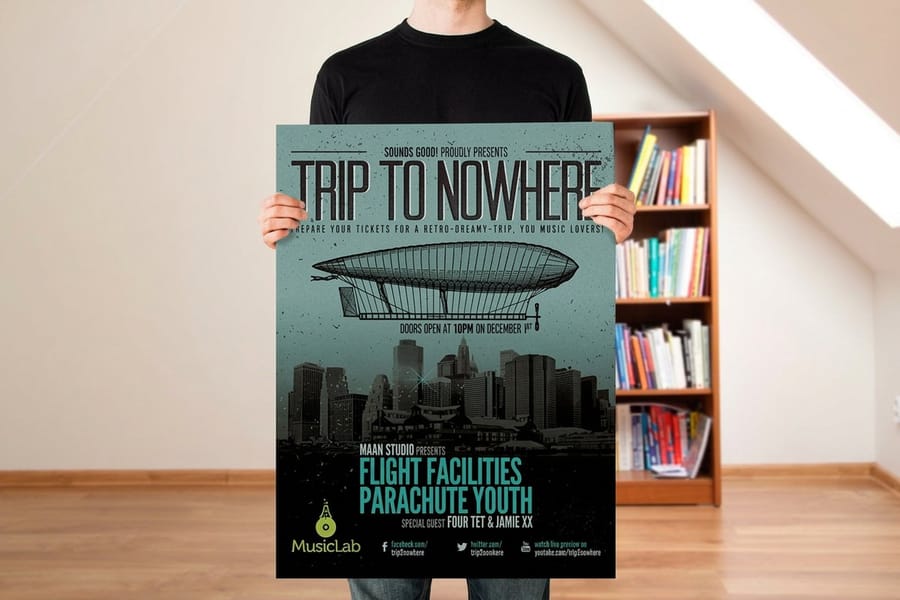
Large format, sometimes called wide format, is any print wider than a standard press sheet can hold. In practice that means pieces from about 18 inches wide up to banners many feet long. Instead of the sheet-fed presses that run business cards and flyers, these jobs go on roll-fed or flatbed wide format machines built to lay ink across a much larger area.
That single difference in equipment is why one family covers so many products. A paper wall large format poster, an outdoor vinyl banner, and a rigid foam core sign are all large format, even though they feel like different products. Once you understand the category, choosing between them is really just choosing a material and a size.
Choose your material by where the piece will live
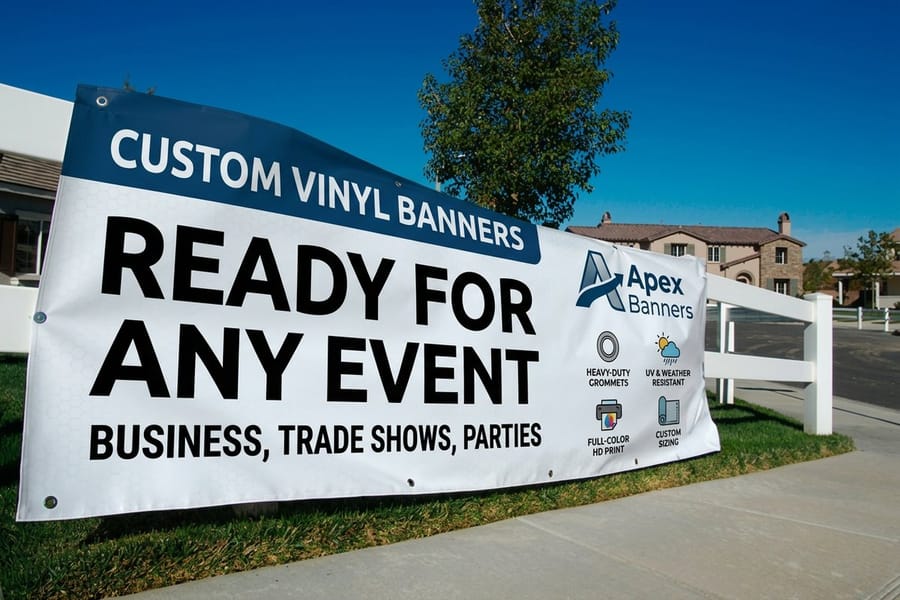
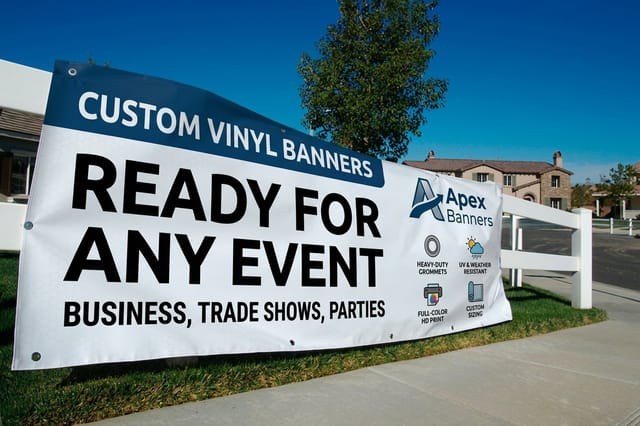
Material is the first real decision, and the environment makes it for you. Indoors, paper posters and lightweight foam core look clean and cost less. Outdoors, you need something weatherproof: heavy vinyl for a rugged banner, mesh vinyl when wind is a factor so air passes through, or fabric for a softer, wrinkle-resistant look at trade shows.
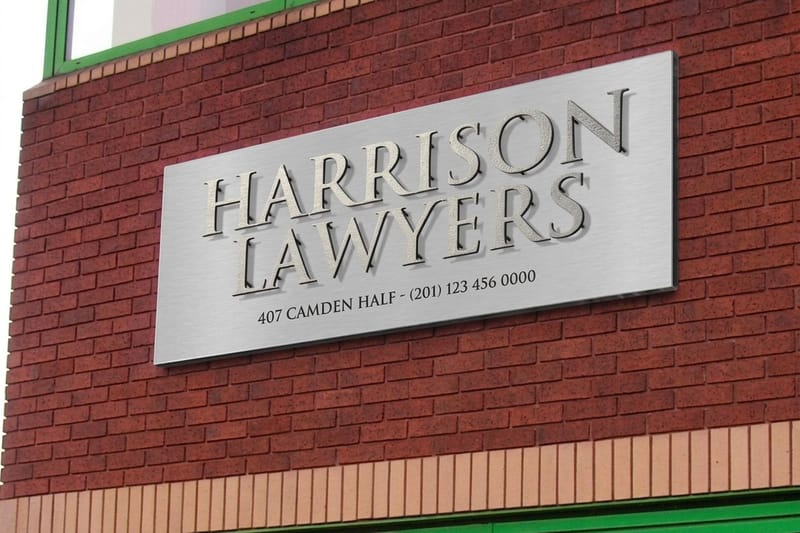
For freestanding and rigid needs, foam core works for short-term indoor signage while aluminum handles long-term outdoor use. If you are not sure which fits, our online design tool at the 4OVER4 designer lets you set the product first and build to its exact template, and the full large format printing range lists every material side by side. When you want portability, a retractable banner stand rolls the whole graphic into a carry case.
The sizes large format actually comes in

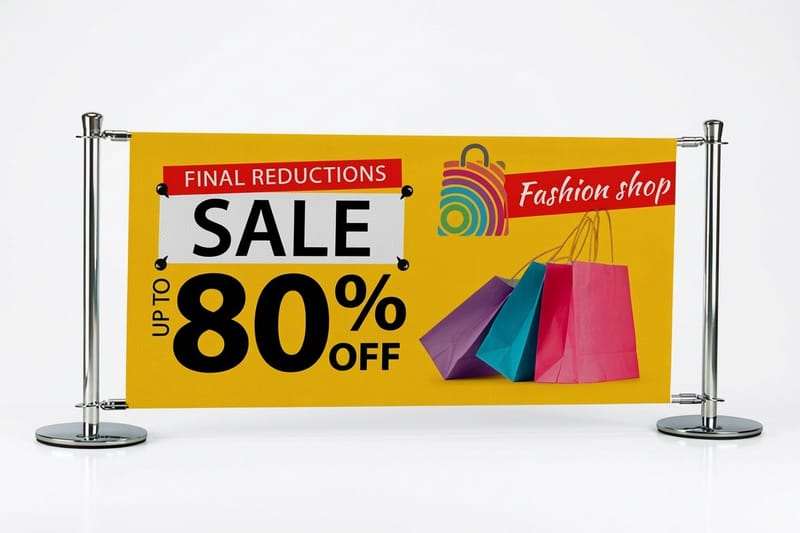
Posters cluster around a few standards: 18 by 24 inches for a small wall piece, 24 by 36 inches as the everyday large poster, and 27 by 40 inches for the classic movie one-sheet. Banners are usually sold in feet, with 2 by 4, 3 by 6, and 4 by 8 being the common runs, and most banner products let you enter a fully custom size when your space is unusual.
| Piece | Common sizes | Usual material | Typical viewing distance |
|---|---|---|---|
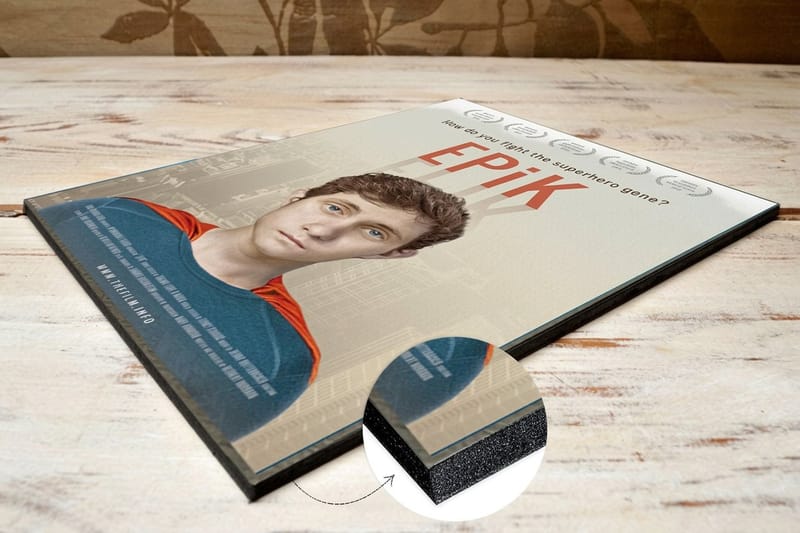
| Posters | 18 by 24, 24 by 36, 27 by 40 inches | Poster paper, mounted when the piece has to stand on its own | Arm's length up to a few steps |
| Banners | 2 by 4, 3 by 6, 4 by 8 feet, or a fully custom size | Vinyl with hemmed edges and grommets punched along the border | Ten or twenty feet, often more outdoors |
| Yard signs | 18 by 24 inches, with larger panels going up from there | Rigid panel on a wire stake | The sidewalk or a car rolling past |
| Foam core signs | 18 by 24 inches and up, cut to the space | Foam core board, rigid but light enough for an easel | A few steps, indoors |
| Window graphics | Measured pane by pane and ordered as a custom size | Vinyl sized to the glass | From the sidewalk, through the window |
| Trade show backdrops | Built out in feet, 4 by 8 and wider | Banner material hung on a retractable stand | Across the aisle |
Read the table left to right: the piece decides the material, and the viewing distance decides how much resolution the file actually needs, which is the next section. If two rows fit your job, order the one people will stand closest to, since that is the one that has to hold up under a second look.
Rigid signs follow their own conventions, with yard signs landing at 18 by 24 inches and larger panels going up from there. The safe habit is to measure the exact space first, then order to it, because a banner an inch too wide for a fence rail is a real headache. Build your artwork at the final size whenever you can, or at a clean fraction of it, so scaling stays predictable.
Resolution: sharp is about viewing distance
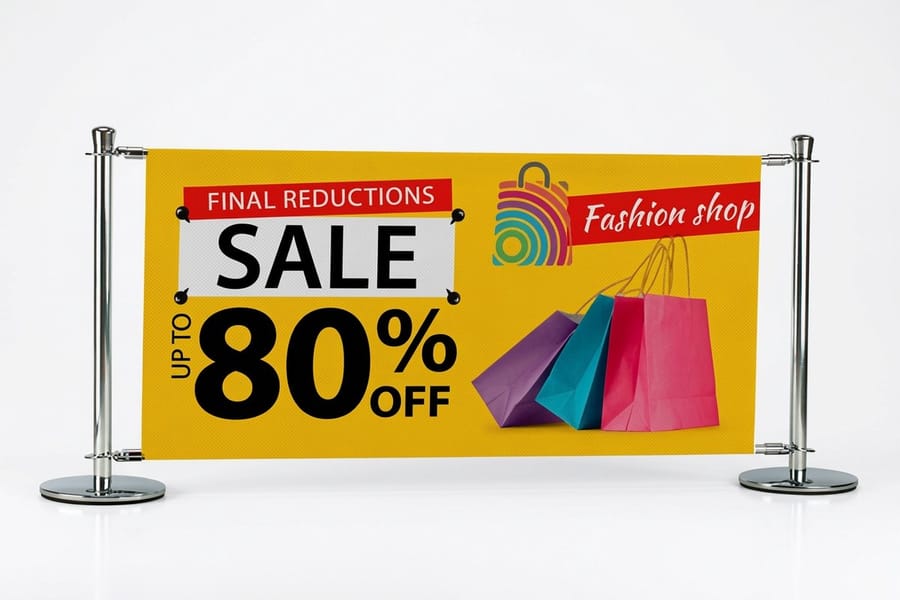
Here is where large format breaks from small format. A business card needs 300 DPI because you hold it inches from your eyes. A banner hanging over a doorway is read from ten or twenty feet away, so it can print beautifully at 100 to 150 DPI at final size. Your eye simply cannot resolve the difference at that distance.
The catch is that DPI is measured at the printed size, not the file size. An image that looks fine small can fall apart when it is scaled to fill a four foot banner, so check it at 100 percent zoom in your layout. Keep logos and text as vectors so they stay razor sharp at any scale, and when in doubt, source photography larger than you think you need.
Mounting and finishing: how it goes on the wall
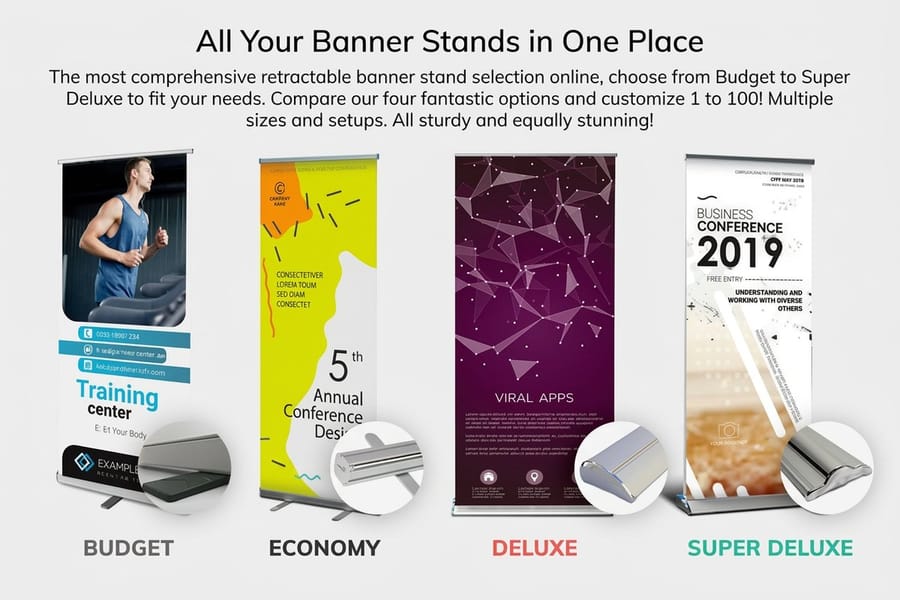
A printed sheet is only half the job. Banners get hemmed edges for strength and grommets, the metal rings, punched along the border so you can zip-tie or rope them to a structure. Outdoor banners on poles use sewn pole pockets instead. Each of those is a finishing option you select at order time, so decide how the piece will hang before you check out.
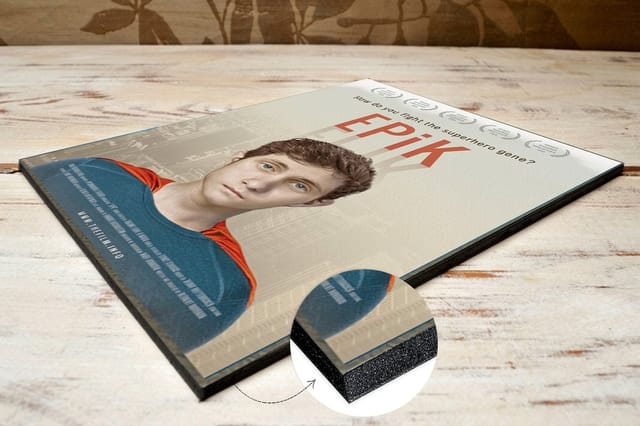
Rigid and portable pieces have their own hardware. Mounted posters come already bonded to a stiff backing so they stand on an easel or hang flat, while retractable banner stands and fabric banner systems pack the graphic and its frame together for events. Choosing the display method up front keeps your file setup and your budget aligned.
What large format costs and how price is set

Large format is priced by area first. A bigger piece uses more material and more ink, so a 4 by 8 banner costs more than a 2 by 4 in the same vinyl. On top of square footage, the material tier matters: mesh and premium fabrics run higher than standard vinyl, and rigid aluminum costs more than foam core. Finishing like grommets, hemming, and stands adds a modest, predictable amount.
Quantity still helps. Printing ten identical event banners lowers the per-piece price versus a single one, the same way it does with small format. You set every option in the live configurator and the total updates as you go, so you can watch exactly what a heavier stock or a larger size does before you commit. Start with a single large format poster to see the pricing model in action.
Wally sizes up your large format job
Big print is four simple choices
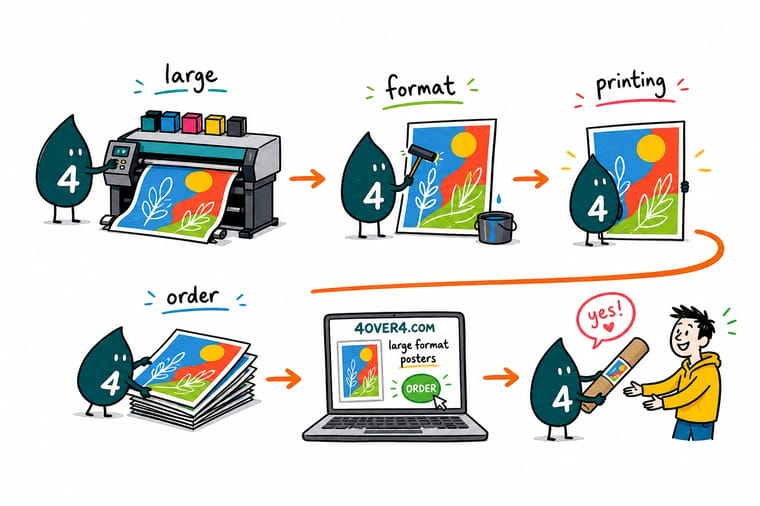
Wally treats every large format piece as four quick calls: how big, what material, how sharp, and how it mounts. Measure the space, match the stock to indoors or out, build the file at final size, and pick your finishing. Get those four right and 4OVER4 prints a poster, banner, or sign that fits the wall on the first try.
Order your large prints →Quick reference
Large format at a glance
The four decisions behind every large format order, with the typical answers that work for most projects.
| Decision | Get it to | Why it matters |
|---|---|---|
| Common sizes | 24x36 posters, 3x6 banners | These cover most walls and displays, and every product also accepts a fully custom size. |
| Resolution | 100 to 150 DPI at final size | Large pieces are viewed from a distance, so they stay sharp at lower resolution than small format. |
| Material | Paper indoors, vinyl outdoors | The environment picks the stock: paper and foam core inside, weatherproof vinyl and aluminum outside. |
| File format | Flattened PDF with vector text | A press-ready PDF keeps color and type predictable, and vectors stay crisp at any scale. |
| Bleed | 0.25 in past every edge | Large format uses a slightly wider bleed than small format so trimming and hemming never clip your art. |
| Finishing | Grommets, hems, or a stand | Decide how it mounts before ordering so the finishing matches how the piece will actually hang. |
Step by step
Order a large format print in 6 steps
- Measure the exact space Get the real width and height where the piece will hang or stand, then order to that. A banner sized to the space beats one you have to trim on site.
- Pick the material for the environment Indoor and short term leans paper or foam core. Outdoor and long term needs vinyl, mesh, or aluminum. Let the location choose the stock.
- Set the file at final size Build your artwork at the printed dimensions, or a clean fraction of it, so nothing has to be scaled unpredictably later.
- Keep text and logos as vectors Vector type and marks stay sharp at any size, while photos should be checked at 100 percent zoom to confirm they hold up large.
- Choose the finishing Add grommets, hems, pole pockets, mounting, or a stand so the piece is ready to display the moment it arrives.
- Upload and watch the price Set your size, material, and finishing in the configurator, see the total update live, and place the order for print.
Specs and pricing
Live large format poster specs and pricing
Here are the live sizes, materials, and price per unit for large format posters at 4OVER4, straight from the configurator.

| Quantity | Price Per Unit | Total |
|---|---|---|
| 1 | $25.00 | $25.00 |
Print it
Bring your large format project to 4OVER4
See it in use
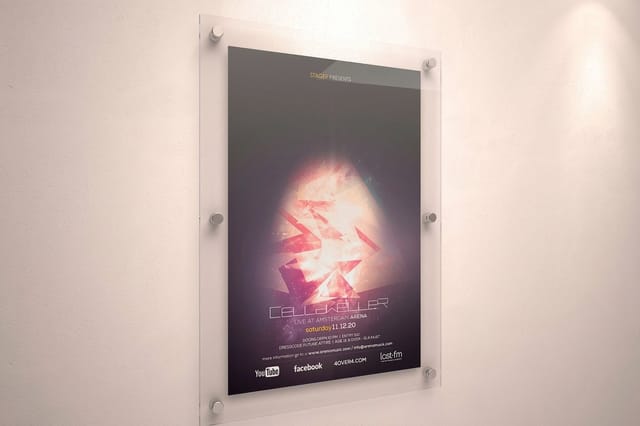
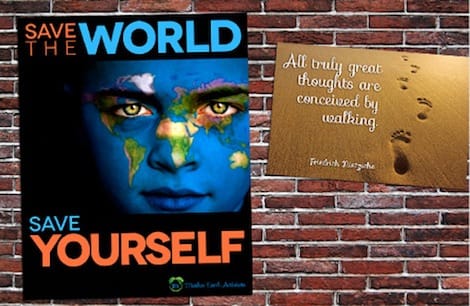
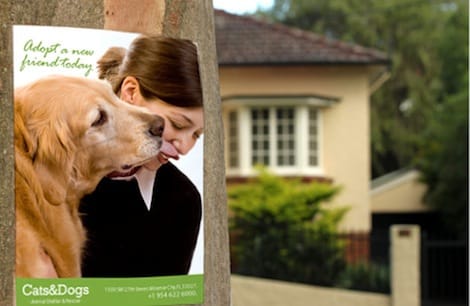
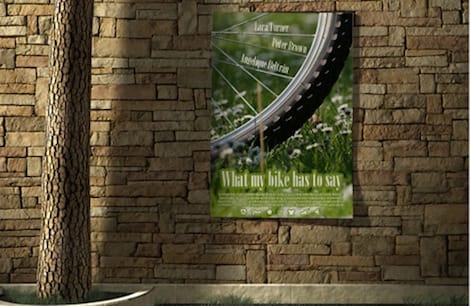
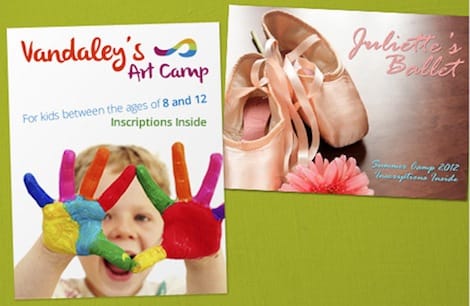
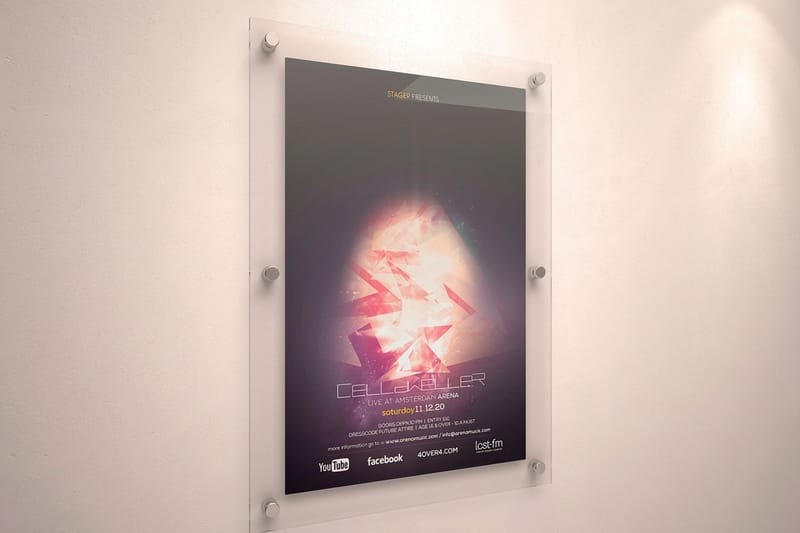
Posters at full large format size, from customer files




Explore more
Where to go next

By the numbers
Large format across 60+ stocks and 1,000+ products
Common Questions
Common questions about large format printing
Is 24x36 a large format print?
Yes. Large format starts where a standard press sheet ends, roughly 18 inches wide, and a 24 by 36 inch poster is the everyday large format size. It runs on a wide format machine onto poster paper, or mounted to a rigid backing when it has to stand on its own, and a file at 150 to 200 DPI at that size prints sharp from a few feet away.
How to make a large format print?
Measure the exact space first, then pick the material for where it lives, paper or foam core indoors and vinyl, mesh or aluminum outside. Build the file at the finished size, or a clean fraction of it, keep text and logos as vectors, and check photos at 100 percent zoom. Choose the finishing, grommets, hems, mounting or a stand, then upload the PDF and the configurator prices it live.
What is large format printing?
Large format printing is any print produced wider than a standard press sheet, roughly 18 inches and up, run on wide format machines rather than sheet-fed presses. It covers posters, banners, rigid signs, and freestanding displays, printed onto paper, vinyl, fabric, or board. The defining trait is width: once a piece is too wide for a normal press, it becomes a large format job, which is why so many different-looking products share the same production family.
How do I choose the right large print?
Start with where the piece will live. Indoor and short term pieces do well on paper posters or lightweight foam core. Outdoor or long term pieces need weatherproof materials like heavy vinyl, wind-friendly mesh, or rigid aluminum. Then match the size to the exact space you measured, and pick a finishing method, grommets and hems for banners, mounting or a stand for rigid and portable pieces. Environment, size, and finishing together point you to one clear product.
What does large format printing cost and how is price set?
Large format is priced by square footage first, so a bigger piece costs more because it uses more material and ink. On top of area, the material tier matters, with mesh, premium fabric, and aluminum costing more than standard vinyl or paper, and finishing like grommets, hemming, and stands adding a small predictable amount. Quantity still lowers the per-piece price on identical runs. Every option is set in the live configurator, where the total updates as you adjust size, material, and finishing.
What sizes, materials, and finishes are available for large prints?
Posters commonly run 18 by 24, 24 by 36, and 27 by 40 inches, while banners come in feet, often 2 by 4, 3 by 6, and 4 by 8, with custom sizing available on most products. Materials range from paper and foam core for indoors to vinyl, mesh, and fabric for banners and aluminum for rigid outdoor signs. Finishes include hemmed edges, grommets, pole pockets, mounting to a rigid backing, and portable stands, all selectable at order time.
How long does large format take to print and ship?
Turnaround depends on the material and finishing you choose plus the shipping method, since a simple paper poster moves faster than a hemmed and grommeted outdoor banner. The product page shows the available production speeds and shipping options for your exact configuration, and the live configurator reflects how each choice affects the timeline so you can plan around an event or deadline before you order.
Do large format files need to be full size or can they be scaled?
The cleanest approach is to build your file at the final printed size so nothing has to be interpreted, but you can also work at a clean fraction, such as half scale, and let the press enlarge it evenly. What matters is resolution at final size and keeping text and logos as vectors so they stay sharp. Raster photos should be checked at 100 percent zoom in your layout to confirm they hold up once the piece is printed large.
What size is considered large format printing?
Large format starts where a standard press sheet ends, so anything too wide to run through a normal sheet-fed press is large format. In practice that means posters at 18 by 24, 24 by 36, and 27 by 40 inches, banners sold in feet at 2 by 4, 3 by 6, and 4 by 8, yard signs at 18 by 24 inches with larger rigid panels above that, and window graphics or trade show backdrops measured to the space. Most banner products also accept a fully custom size, so measure the fence rail, the window, or the wall first and order to that number rather than rounding to the nearest standard.
What resolution do large format files need?
Not the 300 DPI a business card needs, because you are not holding a banner inches from your eyes. A banner read from ten or twenty feet away prints beautifully at 100 to 150 DPI at final size, and the closer the piece will be viewed the higher up that range you should sit. The trap is that DPI is measured at the printed size, not the file size, so an image that looks fine on screen can fall apart once it is scaled to fill a four foot banner. Check every photo at 100 percent zoom in your layout, keep logos and text as vectors so they stay razor sharp at any scale, and source photography larger than you think you need.
Get Started
Ready to print something big?
Bring your artwork to 4OVER4 and print it as a poster, banner, or rigid sign on the size and material your space calls for. Set every option and watch your price update live.
Legal Disclaimer
Gold Standard guarantees apply to all standard orders placed through 4over4.com. Price match requires verifiable proof of a competitor's published price for an equivalent product with matching specifications and turnaround time. Satisfaction guarantee covers manufacturing defects and print quality issues. Contact support with order number and documentation. On-time delivery rate based on tracked orders 1999 to 2026. Individual results may vary based on shipping carrier performance.
