
How Letter Printing and Mailing Services Work, File to Mailbox


Nadia is our customer education voice, built from the knowledge of our production team, with over 20 years in printing.
Upload a letter and a list; get printed, inserted, addressed and postmarked mail. The service does a defined list of things, the stationery has a price, and variable data earns its keep in one place.
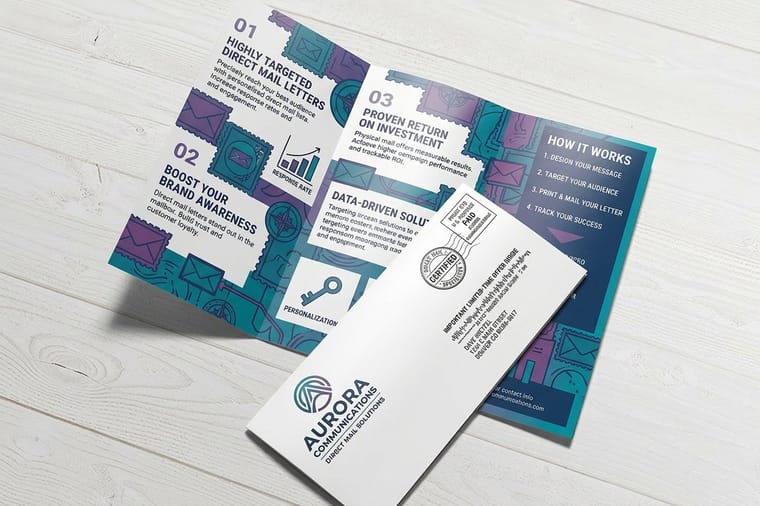
A letter printing and mailing service prints your letter, folds it, inserts it into an envelope, addresses each piece from your mailing list, applies postage, and hands the trays to USPS. You supply one print-ready PDF and one spreadsheet; the service does everything a mailroom would. The letter body prints identically for everyone while variable data personalizes the address block, salutation, and any field your list carries. At 4OVER4.COM the service starts at $238.73 as direct mail letters.
Quick answer
One file and one list in, mailed letters out
The service splits every letter campaign into a flat part and a variable part. The letter itself, letterhead art plus body copy, prints once and identically for the whole run. The mailing list stays out of the picture until the addressing stage, where it personalizes each envelope or window, the salutation, and any merged field. That split is why the handoff is so small, and it is also the warning: whatever is wrong in the list prints on every affected piece, exactly as uploaded.
What You Hand Over, and What the Service Handles
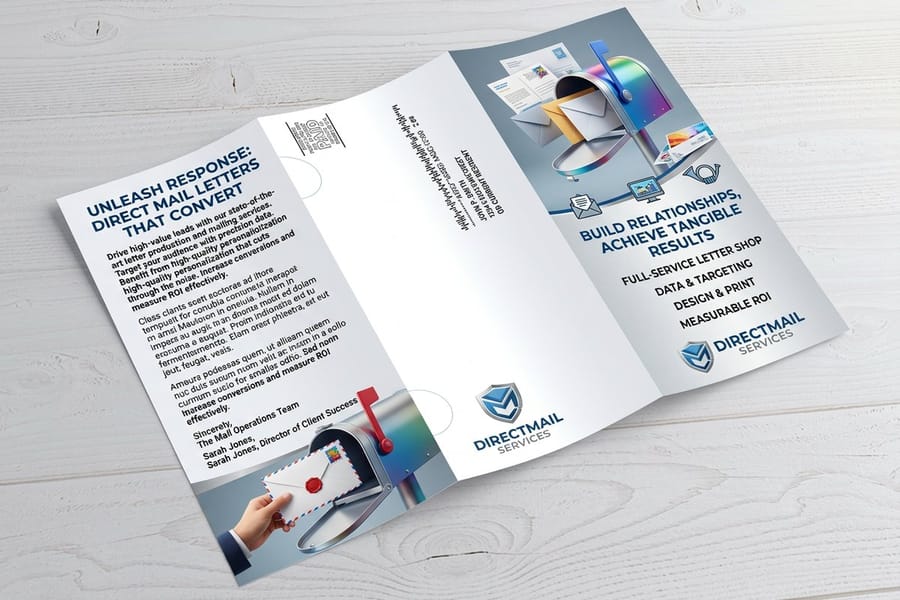
Your side of the job is two uploads. The letter itself goes in as a print-ready PDF at 8.5 by 11 inches, with the letterhead art and body copy already in place. The recipients go in as a spreadsheet, one row per person, with the address split into clean columns.
Everything after that is production. The letter prints in one run, since the body is identical for everyone. Machines fold each sheet, usually a tri-fold to fit a standard #10 business envelope, insert it, and seal the flap. The addressing pass then merges your list onto each piece, either printed directly or positioned to show through a window. Postage is applied and the finished trays are inducted at USPS, which is the point where your mail enters the delivery stream.
| Choice | Options on direct mail letters |
|---|---|
| Sheet size | 8.5 x 11, 8.5 x 14, 9 x 12 or 11 x 17 inches |
| Paper | 70# uncoated text, 100# gloss or silk text, 100# gloss cover |
| Printing | Full color one side or both sides |
| Fold | Trifold, half fold, Z-fold and six other folds |
| Quantity and price | 500 for $238.73, 1,000 for $276.63, 3,000 for $415.57 |
| Time | 4 or 6 business days to print, then 1 to 4 business days of mail processing |
For letter printing and mailing, upload the letter as a PDF at the size you ordered with the letterhead art in place, and the list as a spreadsheet with one row per recipient. Add a free online proof if you want to see the merged salutation before the run.
The reason to buy this as a service rather than a print order is the middle of that sequence. Printing 2,000 letters is easy; folding, stuffing, sealing and addressing 2,000 envelopes by hand is a week of someone's time and a repetitive-strain complaint. Direct mail letters at 4OVER4.COM start at $238.73 with the production work included, the direct mail letters story walks through the product, and the direct mail services collection holds the postcard and mailing options that sit alongside it.
Letterhead and Matching Envelopes Do the Convincing
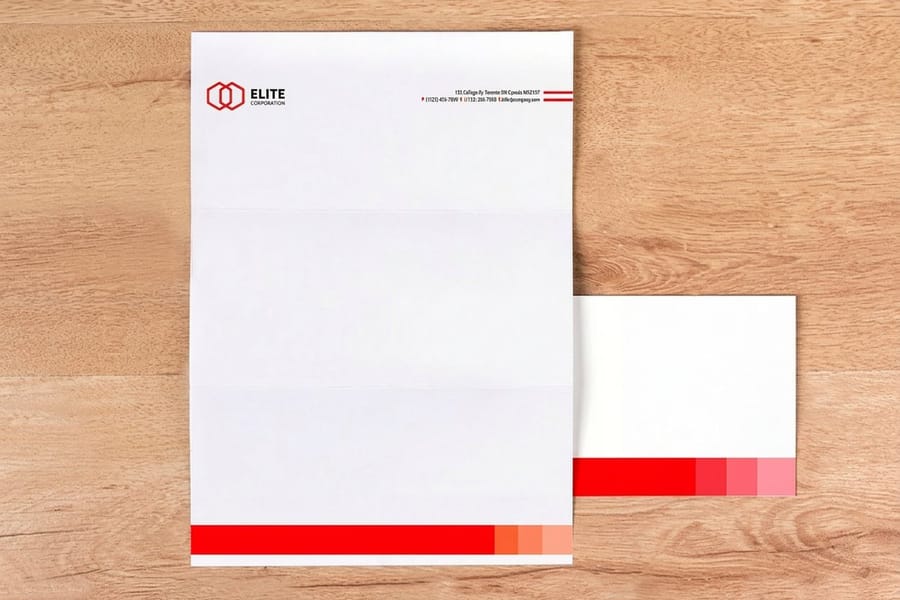
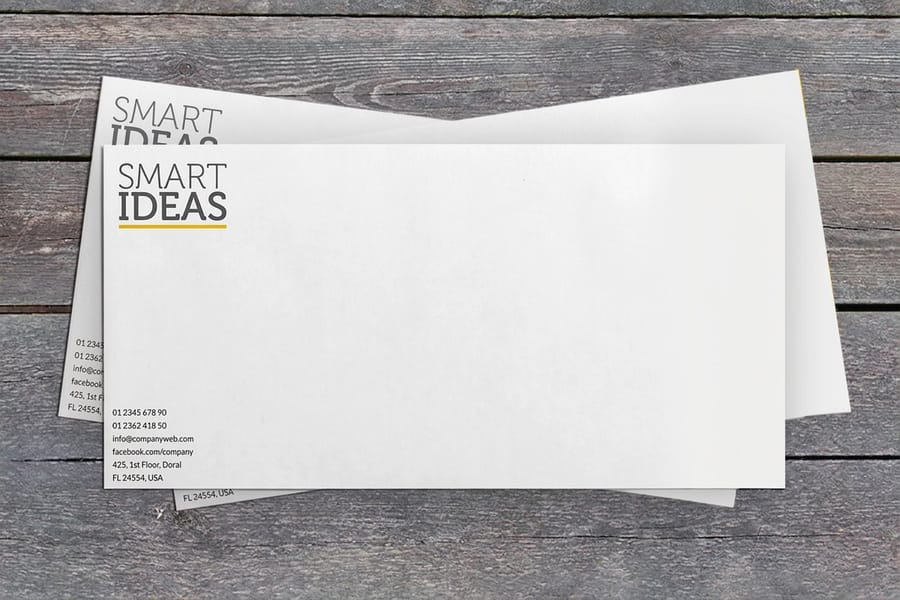
A letter persuades before anyone reads it. The stock, the letterhead, and the envelope decide whether the piece reads as correspondence or as bulk advertising, and that judgment happens in the second between pickup and opening.
| Piece | What it does | Starts at | When to order it |
|---|---|---|---|
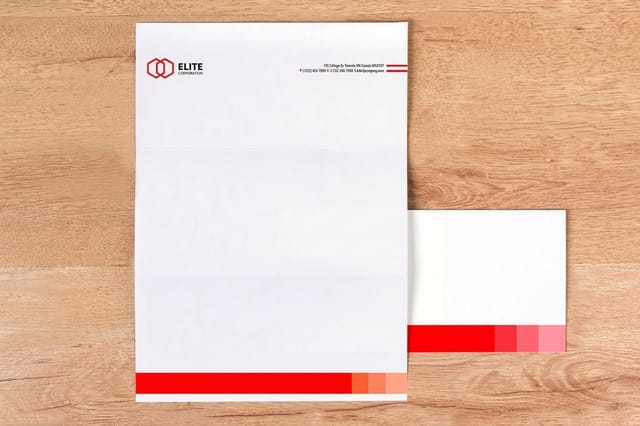
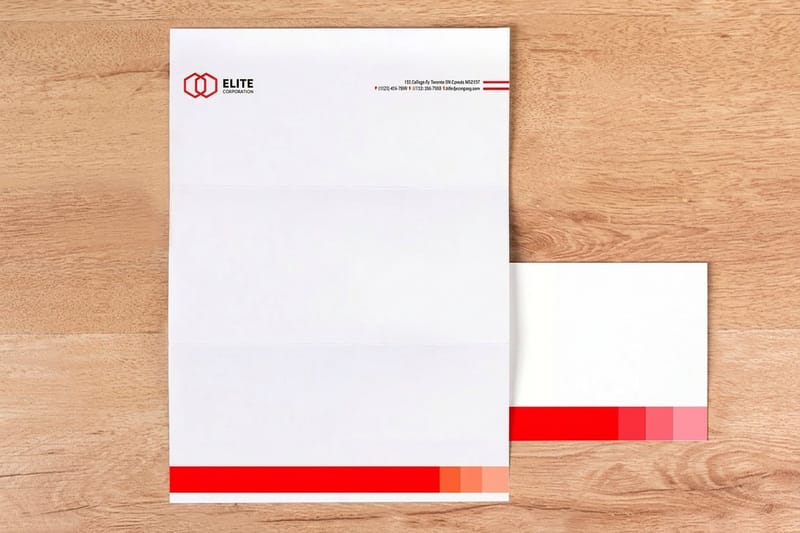
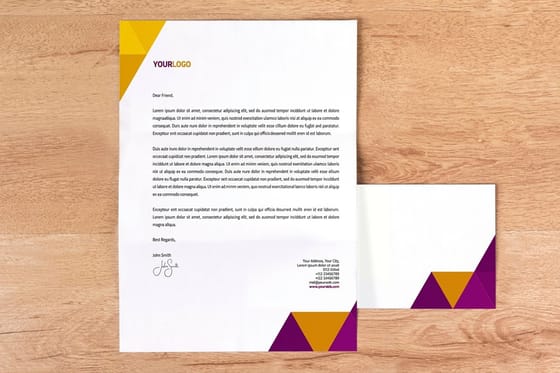
| Letterheads | Text-weight sheets with your logo and contact block, made to feed through office printers. | $99.95 | As office stock, so every printed page leaves the building branded. |
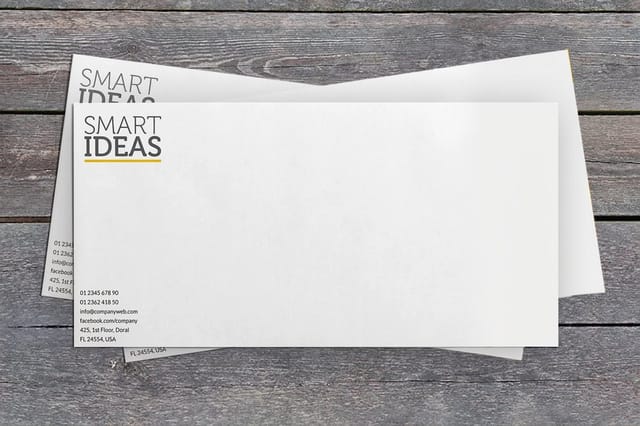
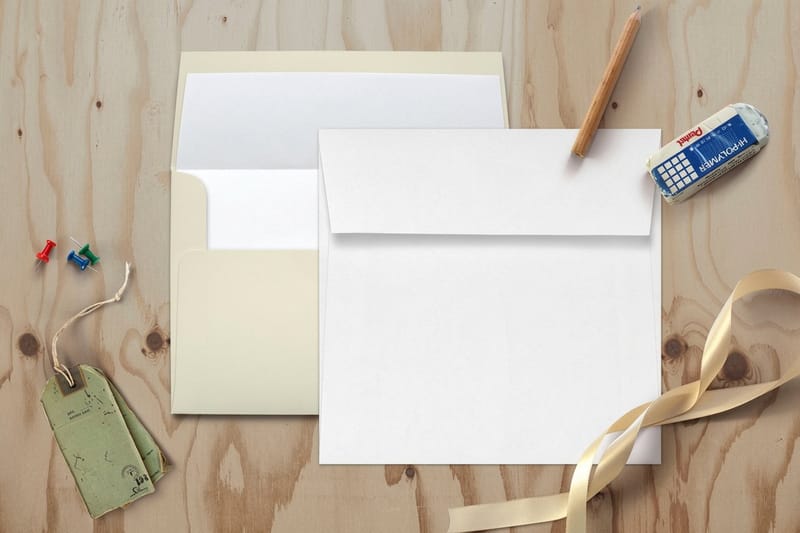
| Printed envelopes | Envelopes carrying your return address and branding, ready for stuffing. | $142.99 | When mail goes out steadily from the office rather than in one campaign. |
| Direct mail letters | The full print, insert, address and mail service for one campaign. | $238.73 | When a whole list needs the same letter and nobody wants to stuff envelopes. |
The practical split: hold letterheads and envelopes as stationery for day-to-day mail, and let the campaign letters carry the same artwork inside the mailing service, where the letterhead prints as part of the letter file. Same brand on the page, one less inserting step, no raiding the office supply cupboard for 2,000 envelopes. The letterheads category has the size and stock options, and the blank template library gives you a correctly sized layout to design into.
Variable Data Turns One Letter Into a Thousand Personal Ones
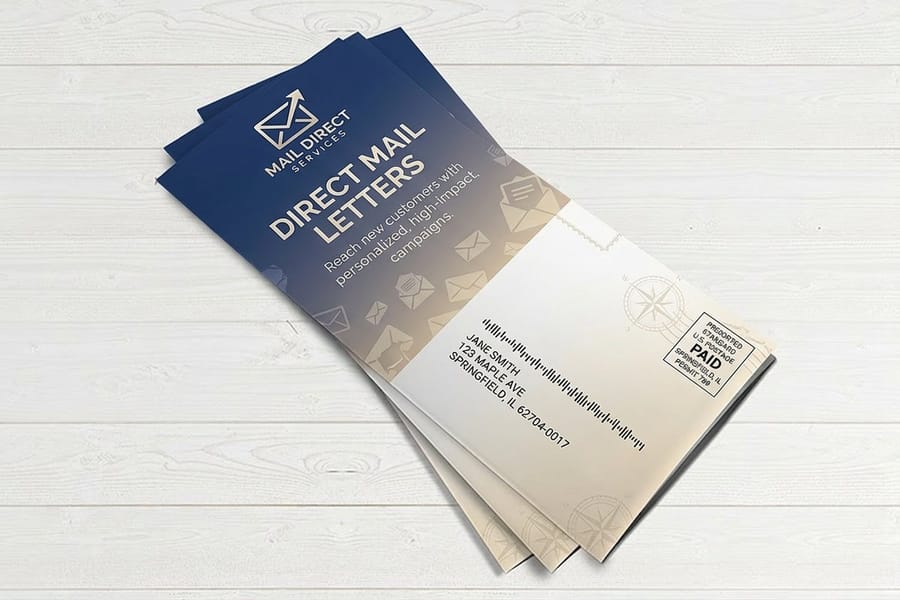
Variable data printing merges spreadsheet columns into each recipient's letter as it prints. The address block is the mandatory case. The useful cases go further: a salutation with the recipient's first name, an account number on a notice, last year's gift amount in a donor appeal, a renewal date in an insurance letter, a unique code that tracks response back to the campaign.
Two rules keep a merge from embarrassing you. First, the press prints your data exactly as supplied. A column with DAVE in capitals prints DAVE in the salutation; a misspelled surname mails misspelled. Personalization done wrong lands worse than no personalization, so clean the list before upload, not after the proof. Second, keep a fallback for blank fields. A salutation built as Dear FirstName needs a rule for rows where the first name is missing, or somebody opens a letter addressed Dear .
The list itself is the other half of the work. A house list of customers or donors nearly always outperforms rented data because the relationship already exists; rented lists buy reach into households you could not otherwise address. Our guide to building or renting a mailing list covers both, and the business letter format guide shows where the merged fields sit on a properly laid out letterhead page.
Address Clean Up With CASS and NCOA
Every row on the list prints, mails and gets paid for, so clean the addresses before upload rather than after the proof. 4OVER4 is CASS certified for direct mail, and the certification only helps a list that arrives in usable shape. Five checks cover most of it:
- Split the address. Name, street, city, state and ZIP each in its own column, never one pasted block.
- Remove duplicates. One row per person, so a customer on two old lists gets one letter.
- Run NCOA. Check the list against the postal change of address records, so a customer who moved is mailed at the new address.
- Fill the blanks. Give every empty first name a fallback, or the salutation prints Dear with nothing after it.
- Read the capitals. The merge prints DAVE as DAVE, so fix the case in the spreadsheet.
A bad address costs the whole piece. On a letter run mailed First Class, each undeliverable row wastes $0.705 of postage on top of its share of the print price, which starts at $238.73.
What It Costs, and When a Letter Beats a Postcard
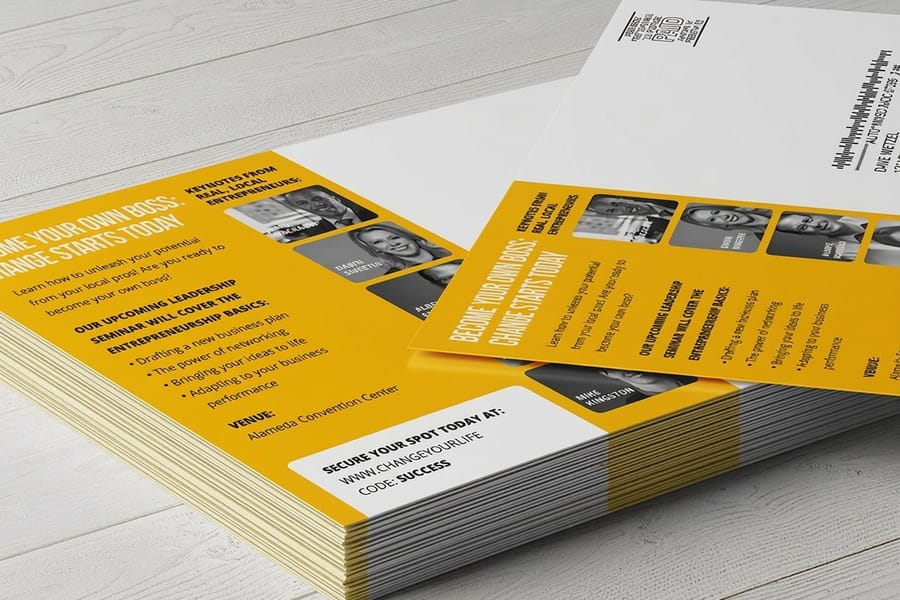
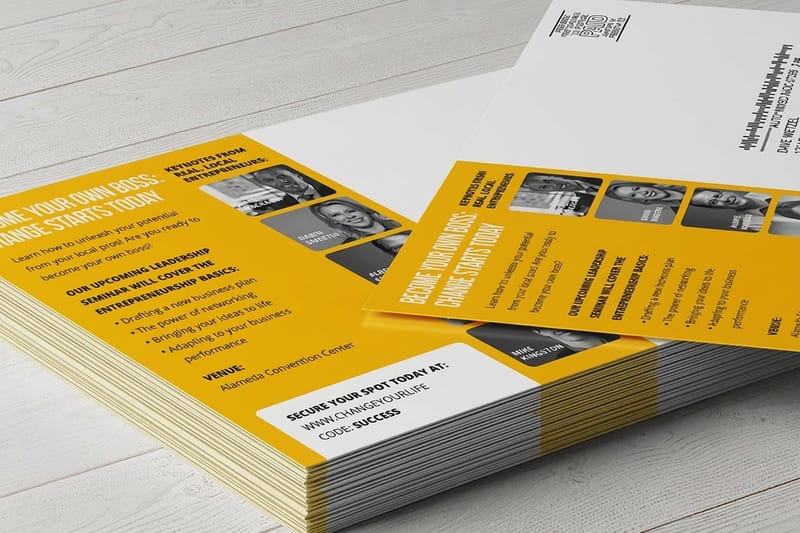
A letter is the expensive format in direct mail, and every part of the premium buys something. The envelope buys privacy. The insertion buys the moment of opening, which is attention a postcard never gets. The page buys room: a case made in paragraphs, a signature, a P.S. that restates the offer. At 4OVER4.COM, direct mail letters start at $238.73 while direct mail postcards start at $89.68, and postage per piece runs higher for letters as well.
So the decision is not which format is better; it is what the message needs. Billing, legal notices, donor appeals, financial and insurance offers, and anything carrying personal data belong in an envelope. Sales, openings, event reminders, and offers that fit in one sentence belong on a postcard, where the message is read before the recipient decides whether to care. Insurance Postcards show that postcard route for a one-line insurance offer. The full comparison lives in postcards vs letters.
One honest limit: a letter only works if it gets opened, and an envelope that screams advertising gets binned sealed. A window envelope with a clean return address outperforms teaser copy for official mail. For appeals, a directly addressed envelope on decent stock reads as correspondence. If the campaign logic leans on the envelope, the window envelope setup guide covers the placement rules, and the direct mail marketing guide puts the letter in the wider campaign picture.
First Class Mail or Standard for a Letter Run
Postage class is the one choice in the mailing step that moves the bill by more than a few dollars. On direct mail letters the configurator offers two classes, and on direct mail postcards one.
| Mail piece | Postage class | Postage per piece | Mailing service fee |
|---|---|---|---|
| Letter | First Class | $0.705 | $250 per 500 pieces |
| Letter | Standard | $0.471 | $250 per 500 pieces |
| 4 x 6 postcard | First Class | $0.515 | $125 per 500 pieces |
Mail processing takes 1 to 4 business days after printing. Use First Class for billing, legal notices and anything carrying personal data, the same pieces this guide puts in an envelope. Standard fits an offer with a flexible date: on 500 letters it saves $117 in postage. Leftover pieces are discarded or shipped to you, and you pick which when you order.
Wally explains print and mail
You send a file and a list, Wally runs the mailroom
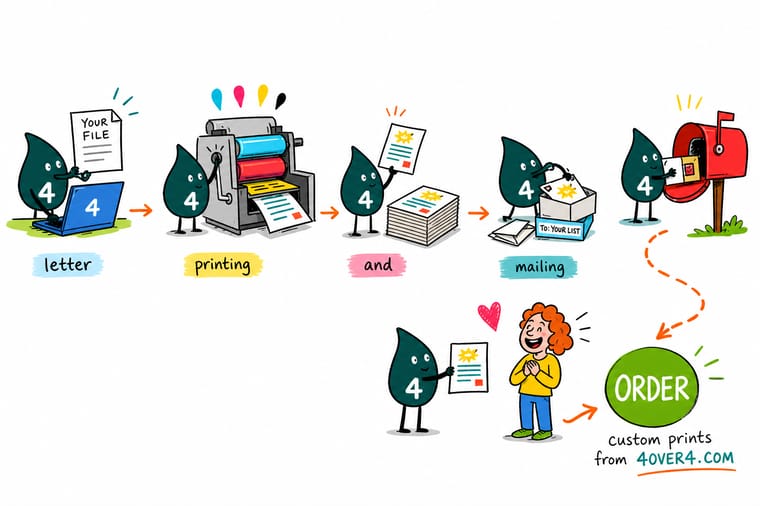
Wally prints the whole run of letters in one pass, because the body is the same for everyone. Then his folding machine tri-folds each sheet into a #10 envelope, the addressing head reads your spreadsheet one row at a time, and every envelope gets its own name before the postage goes on and the trays roll to USPS. His one warning: he prints the list exactly as you sent it. Fix the typos before upload, because Dear DAVE mails just as fast as Dear Dave.
Order direct mail letters →
Specs and pricing
Letters, letterheads and envelopes, priced live
Direct mail letters start at 500 for $238.73, with mailing at $250 per 500 plus postage. Letterheads start at 50 for $99.95 on 70# uncoated text, 24# Royal Laid or 28# Royal Linen, in 5 business days. Printed envelopes start at 250 for $142.99 in 41 sizes, #10 regular and window among them, in 7 business days. Compare the mailing service against ordering the stationery on its own, with live configuration choices and starting prices straight from the 4OVER4.COM configurator.
Letters, letterheads and envelopes
Put the campaign in the mail

List, format and envelope guides
Where to go next

CASS certified for direct mail
Letter and mailing work, measured against our delivery record
Common Questions
Your letter mailing questions, answered
What does a letter printing and mailing service actually include?
Printing the letter, folding it, inserting it into an envelope, sealing, addressing each piece from your mailing list, applying postage, and inducting the finished trays at USPS. You supply two things: a print-ready PDF of the letter and a spreadsheet with one row per recipient. At 4OVER4.COM this is the direct mail letters product, starting at $238.73, and the price covers the production work rather than just the printing.
Can the letters print on my company letterhead?
Yes, and there are two ways to do it. Either the letterhead artwork prints as part of the letter file, header, footer and logo on the same pass as the body copy, or you have us print a run of standard letterheads, from $99.95, and hold them as stock for office use while the mailed campaign carries the same design. For a mailing, printing the letterhead art into the letter file is cheaper and removes an inserting step.
What is variable data printing on a letter?
Any field that changes per recipient, pulled from a column in your spreadsheet and printed into that recipient's letter. The address block is the minimum. Beyond it you can merge the salutation, an account number, a donation amount from last year, or a unique promo code. The press does not care how many fields change; what matters is that every column is clean, because the merge prints your data exactly as supplied, typos included.
Do I need a window envelope or a printed address?
A window envelope shows the address block through a die-cut opening, so the envelope itself never needs personalization and one envelope design serves every recipient. Printing the address directly on the envelope looks more like personal correspondence but adds an addressing pass on the envelope stock. Windows win on cost and are standard for invoices and notices; direct addressing reads warmer for appeals and offers. Our window envelope setup guide covers the fold and placement rules that keep the address visible.
Where does the mailing list come from?
You either mail your own house list, customers, donors, lapsed accounts, or you rent one targeted by geography, demographics, or industry. House lists respond better because the recipients already know you. Whichever source you use, deduplicate it and verify addresses before upload, since undeliverable pieces are printed and paid for like every other piece. Our guide to building or renting a mailing list walks through both routes.
When should I send a letter instead of a postcard?
Send a letter when the message needs privacy, length, or formality: billing, legal and compliance notices, donor appeals, insurance and financial offers, anything with a signature. Send a postcard when the message survives being read in one glance on the way to the recycling bin, sales, openings, reminders. The postcard is cheaper per piece, direct mail postcards start at $89.68 against $238.73 for letters, but an envelope gets opened in private and gives you the room to make a case.
Get Started
We print, fold, insert, address and mail the run
Upload the letter, upload the list, and we print, fold, insert, address and mail the whole run, with your letterhead on every page.
Legal Disclaimer
Gold Standard guarantees apply to all standard orders placed through 4over4.com. Price match requires verifiable proof of a competitor's published price for an equivalent product with matching specifications and turnaround time. Satisfaction guarantee covers manufacturing defects and print quality issues. Contact support with order number and documentation.